
The Biorevolution Podcast · Louise von Stechow
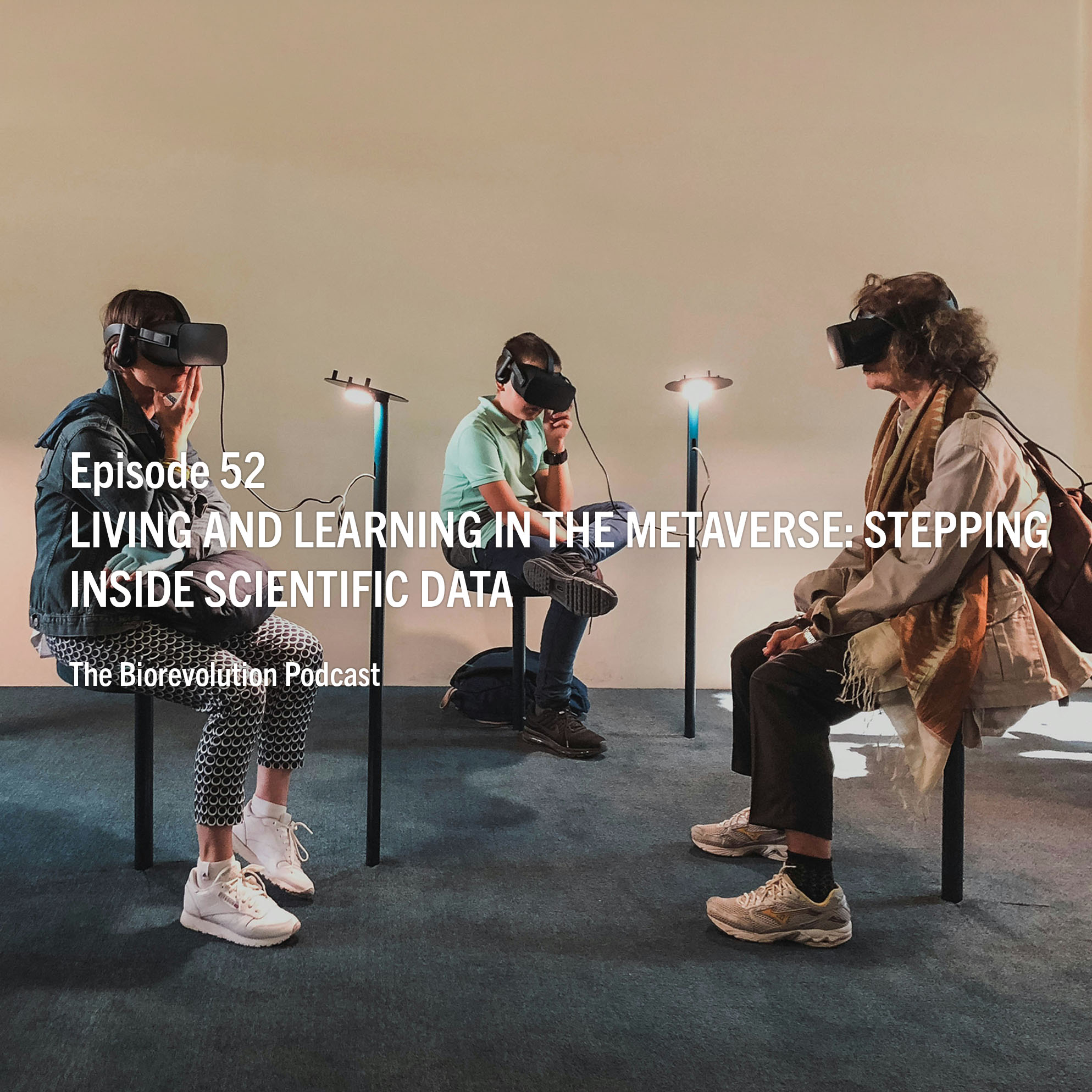
For centuries, scientists have relied on visual representations to make sense of the world, from anatomical drawings and microscopy images to increasingly complex computational visualizations. Yet most scientific data still ends up on a flat screen. Extended reality (XR), including virtual and augmented reality (VR, AR), offers new ways of interacting with information. Researchers can step inside a dataset, such as the Human Reference Atlas (HRA) and move around structures, manipulate them with their hands, change scale, and explore the same virtual space together. With Dr. Andreas Bueckle, Research Lead at the Cyberinfrastructure for Network Science Center at Indiana University Bloomington, we discuss what a metaverse for scientists could look like and what scientists can learn from gamers about virtual spaces. Find Andreas’s website here: https://andreas-bueckle.com/ Find Andreas’s LinkedIn here: https://www.linkedin.com/in/andreas-bueckle/ Watch Andreas’ TEDx talk “Living and Learning in the Metaverse”: https://www.youtube.com/watch?v=BpnLKoAK1YE Explore the HRA Organ Gallery: https://humanatlas.io/hra-organ- Disclaimer: Louise von Stechow & Andreas Horchler and their guests express their personal opinions, which are founded on research on the respective topics, but do not claim to give medical, investment or even life advice in the podcast. Learn more about the future of biotech in our podcasts and keynotes. Contact us here: scientific communication: https://science-tales.com/ Podcasts: https://www.podcon.de/ Keynotes: https://www.zukunftsinstitut.de/louise-von-stechow Image: Lucrezia Carnelos via Unsplash
0:04Speaker 1: The Biorevolution podcast.
0:06Speaker 2: Your hosts?
0:07Speaker 1: Luise von Stechhoff
0:08Speaker 2: and Andreas Roichler.
0:11Speaker 2: Welcome to the BioreVolution Podcast, this time again from Berlin!
0:15Speaker 2: And I'm excited we have a guest who will be talking about living learning in the metaverse – stepping inside scientific data….
0:23Speaker 2: …I might try to translate it.
0:26Speaker 2: We're moving from text N-to D into three D and less text maybe... But easy, as always we start with a quote.
0:35Speaker 1: We do and today I think it will quote one of the tech people who have not quoted yet because i'm seeing that recording all these friendly individuals to make our lives so much easier.
0:45Speaker 1: So Today It Will be Mark Zuckerberg Who seems quite invested in this idea of virtual spaces hanging out together in virtual spaces and moving parts of our life there.
0:56Speaker 1: And something that he said is the metaverse will be the successor to mobile internet, so this maybe a bit more broader understanding.
1:06Speaker 1: today we'll dive into what it could mean for science and scientific data visualization.
1:11Speaker 2: Along the way you might solve your problem if people take Metaverse as company versus a platform or an idea, whatever might coin for that and we'll get to it.
1:23Speaker 2: But first off Dr Andreas Büchles with us research lead in the cyber infrastructure of Network Science Center at Indiana University in Bloomington.
1:32Speaker 2: nobody knows where Bloomingt is but anyways its somewhat close to Chicago Illinois.