
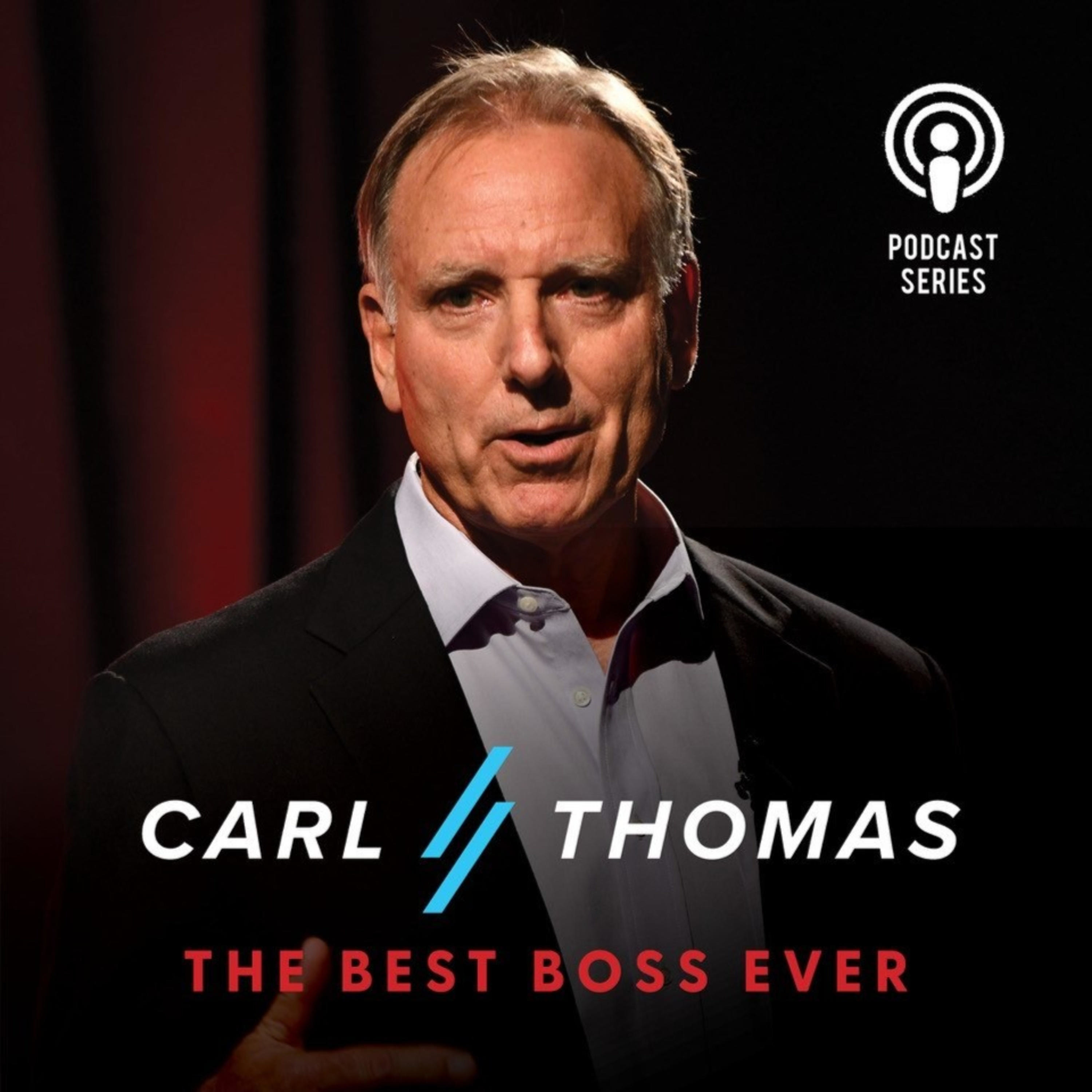
The Best Boss Ever · Carl Thomas
Carl discusses what endurance is and how it influenced his business career, including the Origin Story of how Triathlon became an Olympic Sport in Sydney, Australia, in 2000.
speaker-0: But if you talk to any of them today, they will tell you they are all victims of in their 20s and early 30s, which then was a good idea because those guys were the leaders and everybody in the sport emulated what those guys were doing. And in retrospect, they were doing it wrong. speaker-1: Welcome to the Chief Endurance Officer Podcast. I'm your host, Greg McDonough. Each week we hear real-time stories from athletes and CEOs on how to maximize performance through an endurance mindset. Let's get started. Well, welcome to the show. I am pumped for our guest today. He is a seasoned executive with a proven track record of securing over 400 million in verifiable business growth across sports, entertainment, media, technology sector. Got significant leadership roles in Universal Studios, Association of Volleyball Professionals, CAT Sports, and Speedo, one of my favorites. At ASM Global, he played a critical role in assembling a partnership team that had helped achieve revenue growth that led them to a $2.3 billion acquisition. Another fellow podcast host of the Best Boss Ever podcast. Please welcome Carl Thomas. Carl, it's great having you on the show. speaker-0: Greg, can't thank you enough for having me. Really looking forward to this session. speaker-1: As we talked before, I love getting into the endurance mindset. So, Carl, can you tell me how your endurance mindset has impacted your life unexpectedly? speaker-0: ⁓ well, I'm still at it. you know, one of those things that, you know, people look at me and then that I have six grandchildren, and they Well, wait, you're clearly not old enough to have six grandchildren. And the fact of the matter is I do have six grandchildren, but ⁓ the factor is ⁓ I summed ⁓ in sort of quit, never give up, keep going, and find the ways and means to adjust along the way. ⁓ as either you get older, in which in my case clearly has has happened and is the case, the dynamic or environment changes that requires you to pivot or adjust or or sort of look at it through a different lens, right? And I think the willingness to innovate, explore, adapt, ⁓ pivot, use whatever word you want, combined with your unwillingness to and give up. Together those things for a pretty darn good combination. speaker-1: Very well said, and and th that combination is spot on. would love to draw some parallels to what you've seen in sport with those characteristics and how it plays out in business. speaker-0: Right. Well, quick over overview, sorry, Greg, for you in my sporting background and career. I was a competitive swimmer from the age of six, was fortunate enough to get an athletic scholarship to attend UCLA, which I did. I never played water polo, but loved the of water polo because my high school team didn't have a water polo program. So when I got to UCLA as a scholarship swimmer, I was immediately required to get in the pool and join the water polo squad, which back then at a perennial NCAA Division contender, well over 10 national championships ⁓ in water polo. was a I was a member of two of those NCA championship teams. But I I learned early on as I got in the pool as an incoming sort of rank green freshman at UCLA with seven first team All Americans on my team in water polo. I I literally, you know, had a if you will, a sort of a cursory understanding of the game, but I learned really fast because I got my butt kicked up and down the pool by these guys. good news is I ended up making the starting UCLA water polo team, as I mentioned, w we won two national championships there. importantly for me, that experience led to me an offer to compete on the US national water polo team, which I did. you know, at the same time I swam all the way through college, went to the nineteen seventy two, now I'm really gonna date myself, Olympic trials, and finished in the two hundred IM. miss the US Olympic team by less than half a second. speaker-1: That's r super insightful, Carl, and I appreciate that. stuck on the the half a second 'cause you know, I've ⁓ been that level. I I love doing an endurance events. I'm a triathlete at heart. but what it makes me appreciate from that competitive perspective, and especially as you get even shorter distances swimming down to like the fifty free, is how precise and how close ⁓ those that get on the television to make it to the team and those that just miss. And I'd love to hear sort of sort of the the mentality, the mindset it takes to to be on both ends of that, you know, split second one difference. when like standing on the starting block knowing that, you know what, this could be a point ⁓ one miss or a point ⁓ one make and and how that kind of impacts you personally. speaker-0: Well, y you don't trust me, it's not that fun being on the wrong end of that point ⁓ one. and in and in my case and in my era, if you will, because things have changed, Greg, so dramatically in terms of everything. Nutrition, training regimens, focus, ⁓ mechanics, e everything from split second that one might get. an advantage off the starting block, to you everything from you swim in the lane to minimize obstruction or ripple effects, or even in case of moving way over next to a competitor and getting a little bit of a drag off that competitor, those all those nuances ⁓ been far more dramatic. and focal points, I think, of performance, at least on the swimming pool, certainly I was competing. But but back to the question of, you know, what did endurance or the of endurance teach me from the from the sporting life? I had the, you know, really extraordinary and career swimming in water polo. I I can't Thank all the people enough from coaches to teammates to early on my parents who put up with a lot of crap doing it, as you would know. know, to lifelong partnerships ⁓ and relationships and friendships that I formed out of the pool, both in business and socially. those things stay with because, you know, I'll I'll use a another Sporting analogy. When when you're in the fourth quarter a really tough water bottle match and the game is tied and are f flagged dead tired because you've gone up and down the pool w way too many times, but you're in the game because you're on the starting six and the expectation is that you will perform until the final ⁓ And that mentality was instilled in us as a as a college team by now deceased Hall of Fame coach Bob Horn at UCLA. And he preached you always the fourth quarter. And so we were ⁓ likely, I at the time, the most highly conditioned team in terms of our ability to sprint. swim and stay in the game. There is one comment that stayed with me. spoke of that that those early days when I was a freshman and get my butt kicked all over the place by these guys. And I was pretty I was pretty dejected at one point. And I you know he recognized that. My coach did and he called me into his office. We an appointment and I went, ⁓ God, you know, this is not going to be good. Cause he's just going to throw me off the team. This is going to work at all. And to my amazement He sat me down in a very encouraging way and he looked right at me and he said, Listen, in his words, right? He used this phrase a lot, don't get your dauber down. So you have a great career on your horizon and water polo because you have one thing I cannot teach you. And that is speed and the pool. I can teach you all the other things about the game, the strategy, the mechanics, the the the teamwork, the level of play that's required, spatial requirements, because in water polo it's very similar to soccer, which we're all experiencing right now with the World Cup as we record this, we're getting the ball to open space and getting your teammates an opportunity to come onto the ball unobstructed, which was the speed that I was gifted with in the pool allowed me to do. And I it was like a fifteen minute meeting. It was short, sweet, and to the point, and I left that super encouraged and I never looked back. speaker-1: And y you mentioned the World Cup. I'm a big, big what I call football since my parents are British, but soccer. And we are in the middle of the World Cup and excited for the US match tonight. Carl, just the you mentioned, you know, tools and resources ⁓ athletes had when you were going through your professional career compared to what athletes have today. And one of the things that comes to mind, right? I love doing endurance triathlons, so Iron Man distance racing. And the amount of Technology, the amount of training, the amount of co different types of coaching, the things that are available to me just as a back-of-the-pack finisher are night and day compared to when my wife started this 15 years ago. And that's a sh pretty short period of time and not on the the elite professional level. But for you to give the the audience some insight of of where sport has been compared to where it is today, and perhaps give us some insights of where you think five, 10, 15 years from now, as speaker-0: I love speaker-1: technology and AI and nutrition and body composition. Like we're just getting we're learning and learning and learning. What's the ultimately what's the future gonna bring? But love to do the comparison backwards first. speaker-0: Sure. so let's just talk about ⁓ and how women men start in sport. It's in youth sport. when I a kid, there was a local swim club. there wasn't a local soccer club. there was popcorn or football. I'm not even gonna say was youth basketball. There was little league baseball. but certainly not lacrosse. and then when you got to high school, that's when sort of more organized sport came into play, but not for girls, only for boys. so that's a huge difference. Interestingly, in swimming, Greg, as you know, from the very first swim practice I went to, there were girls and boys in the pool at the same time. And that other than my high school boys swimming team. And my collegiate men's swimming team, club I ever swam for had both men and women in the pool at the same time. I spent four years at the Santa Clara Swim Club in the heyday of George Haynes, who arguably is one of, if not the best historical ⁓ swimming coach ever, certainly among the top five. and he he ran a super tight ship on the one hand, but he always injected humor. And good natured fun and know, you will, this sort of all for one and for all mentality. But listen, you get in a in a training session at Santa Clara Swim Club or the University of Texas or back in the day, Mission Viejo with Mark Schubert, and you had former Olympians, current Olympians, and prospective Olympians all around you. So the the notion of the sort of rising tide that lifts all boats is 100% true. And it's as true today as it was 40 years ago. the differences, as I alluded to earlier in nutrition, regimens, the understanding of physiology and how you know, of the neurology, if you will, intersects with the physiology and where where breaking points are physically. because if you talk you know, historical triathletes and ⁓ we'll talk about triathlon ⁓ triathlon in a second. But you talk to Mark Allen, you talk to Dave Scott, you talk to Scott Tilly and Scott Molina, the big four of the eighties. You virtually couldn't find a triathlon race in the world that one of those four guys was a participant in that he didn't win or didn't hit the podium. Those guys were that good. But if you talk to any of them today, they will tell you they are all victims now. Of overtraining in their 20s and early 30s, which then a really good idea because those guys were the leaders and everybody in the sport emulated what those guys were doing. And in retrospect, they were doing it wrong. It impede their performance at the time because everybody was sort of, you know, on the same playing field at the same time. And I'd and I'd say that's actually true today. the different eras ⁓ from youth all the way up to and through elite. And if you're fortunate enough to be in a sport that has professional ranks and you go on to be a professional, good for you. But the but those environments tend to travel with and then the next generation comes up, the next generation of athletes, the next generation of coaches, the next generation of scientific evidence, the generation of nutritional study. And if if you if there's one thing that that you could look at today, that I think is ⁓ hugely than it was when ⁓ I growing up as an athlete, was the science of nutrition. How and when to feed your body, how and when to hydrate, not just how and when, but what to do it with the benefits of, you know. the right meal composition at the right time to optimize performance. W this whole notion of carbo loading back in the 80s, where people would go to the Iron Man and two days or three days before the event eat three plates full of pasta, you know, it was a thing. And ⁓ and it was actually a fun thing to do, but did it actually, in truth, deliver nutritional value for that individual? I rather think not. But, you know, the sport of triathlon is is relatively new in the world. I mean, on who you talk to, you can go back to sometime in the 70s when triathlon sort of had its first heyday. There are those that will go back decades prior to that. But, you know, it sort of came into the public consciousness in the late 70s, when Barry McDermott, then a sports illustrated journalist, wrote a story about the Iron Man. And the the Iron Man at the time I want to say was two years old. and it originated not in Kona, where it has been for the last few decades, but on the island of Oahu. And it combined three existing events that took place on Oahu, the Dukonomoku open water rough water swim, which is where the you know, mileage for the Iron Man swim came from. ⁓ there was a bicycle race around the island of Oahu, and that's where your 140 mile plus bike ride came from. And there was the Honolulu Marathon. So the early folks who said, okay, let's put all those three together and see if we can do them all in one day. That that's how it started. so Barry writes an article about it. I at the time I am at Speedo Swimware. I spent seven years at Speedo. and I read that article and I went, you know, that's super interesting and sort of ruminated on it. And then you ⁓ what at Speedo, the 1980 Olympics get, you know, boycotted by the US ⁓ in the of the Russian invasion of Afghanistan. And so no US athlete goes to Moscow. But the there's less right, around not only the Olympic Games, but sport in general. And so I I'm I'm looking, we're we we at Speedo were were looking deeply into research. And there was an it no longer exists, was Sporting Goods Manufacturers Association, who was continually investing in research. And it was a trade, trade organization. ⁓ And terms participatory sports, The top three sports in which individuals participated, whether they were weekend warriors or Johnny Cum Lately's or more, you know, athletically inclined students who were swimming, cycling, and running. three sports, and I think that's probably true today, if you just did the raw data analysis in the aggregate, swimming, cycling, and running would still ⁓ rank as the top three participation sports because people, you know, walk out the door and do them all. so as I as as that research came to the fore, I went back to that sports illustrated article and I said, listen, and you know the the Iron Man c continued to gain fame. And while Julie Moss was crawling across the finish line on ABC's Wide World of Sports, everybody, if you haven't seen that YouTube clip, just go find it. It's pretty amazing. But that really that really put triathlon on on the on a on a global format. And the wide world of sports back then in the early 80s was the creme de la creme of, you know, aggregated events that were not mainstream. And so I looked at that and I said, listen, this was, you know, Frank Shorter through 70s. Jim Fix writes his book about running. And there's sort of fascination with endurance. ⁓ Athletics. you look at the Iron Man format and you look at it today, and going to call it a Groulathon, and I called it a Gruulathon 45 years ago because it is. Now it has stood the test of time, and a lot of folks still do it, you and your wife included. For the weekend warrior. And I think still today, anybody who trains for a marathon, if their goal is three hours or less, that's a that's a pretty darn good goal. And it takes a fair amount of focus, training, regimen, you know, the endurance mindset to get your body in shape to to clip under three hours in a full marathon. So I came up with a a triathlon format while the vice president at Speedo. And we rolled this format out in five cities in 1982. And the initial format was 2k swim, 30k fight, 35k bike, 15k run. We adjusted that format in 1983 to 1500 meters swim 30 pay 35k by 15k run. And then in 1984, looked around and I said, This this isn't this doesn't make sense for couple of reasons. so I ⁓ I adjusted format again. So we're now in our third year of what then was called the Bud Light US triathlon series. We got Anheuser Busch to come in as the naming right sponsor, and we adjusted the the distances and the format to 1500 meter swim, which then ⁓ was the longest swimming competition in Olympic in in the Olympics, 1500 meters, and it was only for guys, it wasn't for women. 40K bike, which is a standard time trialing distance, still is today in cycling, and a 10K run. And everybody knew what a 10K run. And 10,000 meters was the longest track event in the Olympic track and field competition. Not the road event. So we adjusted format in 1984. We also introduced wave starts 1984. We also introduced age designations by cap color in the swim. So we put ⁓ all together, and that sort of was an aha moment for the sport of triathlon because it brought into play not only more recognizable, understandable, and doable. Distance, but it brought into play safety measures with the brightly colored caps in the open water swimming. And it and it brought into play more safe starts, and we were able to stagger the starts. And so had, you know, the advancement of timing systems was ⁓ early, it was still happening. so you add all those things together, and ⁓ we've what is today still the Olympic distance. And while I was doing that, we're three years in, I'm still at Speedo Swimwear. I I left Speedo in in after 1984. But co-founded what is now USA Triathlon. it wasn't called that then. one of the members of the board of directors. And one of the things did at the US triathlon series as USA triathlon sort of into ⁓ own, Is we required every participant in our series to become then a TriFed USA member. What that did was it provided a stable membership base for the Federation. In exchange, we got the benefit of the TriFed insurance policy, so we didn't have to go shop insurance on the outside. then we continually and consistently looked to improve both the Federation in terms of sanctioning rules and regulations, a sanctioning governing is the in the end, national governing bodies international federations are are more about rules, regulations, ⁓ and if you membership than they are about creation and event management. ⁓ And that's that's a really interesting nuance. And I think NGBs, national governing bodies, for that aren't familiar, struggle with difference between being a sanctioning body, a governing body, a rules and regulations body, and or an management at the same time. Those two things are dramatically different and much require lit literally no overlap in expertise to execute on both sides. So, you know, at same time we were doing the USA triathlon national governing body, I co founded what became the International Triathlon Union, which now World Triathlon, and was first treasurer of that organization and the president, now deceased Canadian, McDonald. He and I chased the IOC all over the world for about four years, lobbying to have triathlon included in the Olympic Games. We were in Barcelona in 1992 at the IOC executive meetings, about four months in advance of the Barcelona Olympic Games in 1992. ⁓ Juan Antonio Samaranch was still the IOC chairman slash CEO. their their meeting broke, and he obviously knew who we were because we've been, you know, chasing him all over the world for all these years. And he walks right up to us in in that at the as that meeting broke and he shook out his hand and he said, Congratulations. are now recognized. You have recognition. And Les and I looked at each other and said, Thanks, great. And then he walked away. And look at Les and I said, Well, what the hell does that mean? Recognition. Turns out what it meant was the IOC in recognizing ITU. ⁓ As the one and only international federation and sanctioning body for a triathlon worldwide, built an impenetrable fence around the ITU as the one, the only, the exclusive. And 12 months later, we were co-opted onto the Olympic program for Sydney 2000, both men and women. Interestingly, and then I'll leave the subject you want to ask me more, and I'm happy to rant on about this as long as you want to. when initially started the U.S. light. ⁓ trashlon series. We gave out prize money. The prize money grew over the twelve years we operated the series. It grew every year. And we always, from the very first event, awarded equal prize money to both men and women. That never changed. From nineteen eighty two to nineteen ninety four, it was always equality for men and women in terms of prize money. speaker-1: That's awesome. Carl, and when we chatted a few months ago, a few weeks ago, hearing these stories and knowing what this audience wants to chew on, me like you're bringing us back to the beginning. It's fantastic. I'm I'm curious with like Super Try and T one hundred and these new formats that are coming in, do see the sport developing again or this a just a different slice, different audience? Like Give us a sense of what five, ten years from now looks like for the sport. speaker-0: Well, it's gonna continue grow. innovation will continue. you about AI. I mean, AI from training regimen. Coaches can, you know, go on there and ⁓ do whatever do. They can publish on Substack, they can do whatever they want. But at the end of the day, AI is information, it's ⁓ methodology, process, facts, figures. You gotta check ⁓ but you know. It is what it is, but nothing takes the place of the physical requirement for training. Regardless of format, I love the relay concept. I love that that triathlon is now engaged in in relays and Olympic competition. I think that's awesome. I and it, you know, I think the the the limitations are as far as individuals or groups allow themselves to imagine what might be next. So I'm a huge proponent of the future is not set in stone. It will evolve. It has to evolve. You're either coming together or you're coming apart, right? You're not staying in the same place. speaker-1: what I love about where triathlon is today, like to when I started, like I was a soccer player, swimmer, a little of track, but mostly to stay in shape for soccer season. Triathlon wasn't a thing ⁓ in youth I mean, you'd over the summers, you'd swim in high school s winter swim, you'd you had your year round clubs. And I entered triathlon this through swimming, where many enter it running, but it back Fifteen years ago, 10 years ago when I started, it was much more of a secondary sport. Like I couldn't play soccer anymore because my knees were just aching. And it's much easier for me to go forward and backward than it is side into side. And so I shifted over to Triathlon and I've fallen in love with and and now you're seeing it being introduced at a much younger level. Any or insights on just sort of that develop how welcoming Triathlon has as a sport relative to other sports that have been around and and popular? speaker-0: Well, I think, you know, there's been fits and starts there, Greg. I mean, listen, back in the eighties, ⁓ ⁓ Man group launched an Iron Kids program, which was a version of what you've just described in terms of youth sports. A number of kids, I can't tell you exactly how many, participated in that and got their exposure to triathlon through these through these youth groups. I know a lot of parents, generation below me, who are triathletes, love triathlon, and and they've taken on the obligation, responsibility to expose their kids to triathlons, to take them to events, to where kids are, you know, a kids division, if you will, or a youth division is part of an event and encouraging their kids to to get involved. I think this is one of the things where The Federation and responsibility rests. great local triathlon clubs for kids. Every city has you know, a triathlon club, or they used to, I don't know if they do anymore. But the point being, from my perspective, there should be a solid initiative, if it's not already substantially underway, ⁓ by triathlon USA. to encourage, to support, to promote, to sanctioning rules, regs, and guidelines in place for youth divisions in ⁓ many triathlon events as as possible. speaker-1: That's awesome. Yeah, my seventeen, soon to be eighteen year old, I think, is counting down the day to tow the starting line with me and I'll be tickled, I'll be crying the whole way around for sure when that's when that happened. Carl, tell us a little bit about what you're doing now. What you what are you doing these days? Well speaker-0: Well, still still at it. you the ASM Global role. you know, I've done I've had a blessed career. I've been in lots of different segments of the sporting media and entertainment industry. ASM Global was formed in two thousand nineteen by the merger ⁓ of was the ⁓ Management Group. Almost a 50-year-old company, Philadelphia-based, that was owned at the time by a private equity firm out of Toronto, Onyx Capital. and the AEG Facilities Management Group. For those of audience that don't know, AEG stands for the Anschutz Entertainment Group. They own what is now Crypto.com Arena, was the staple center in LA Live. They own all of the surrounding. elements of LA Live, including the JW Marriott Hotel and the and the Ritz Carlton Hotel there. They own the LA Kings Hockey League Club. They also ⁓ ⁓ LA Galaxy MLS Club. And they own the facilities where the Galaxy play, the Dignity Health Sports Park in Carson. Both those locations, LA Live as well as Dignity Health Sports Park, will be featured venues in the LA twenty eight Olympic games. So then the pandemic came. new CAO CEO started. ⁓ I'd worked for him twice before at Universal Studios and then tick and again at tickets.com. ⁓ is Ron Benzian, best boss I ever had. He was the impetus in the origin story around my podcast, the best boss ever. He was the very first guest, and we're now, I don't know, 112 or 113 episodes in. It's really fun to do. so I went to work there at ASM. We we were the sort of greatest story never told in the world of sport. We managed three hundred and fifty venues worldwide. That number's actually up to four hundred and fifty now. Seven NFL stadiums, a number of NBA arenas, number of NHL arenas, number of MLS venues, and then fifty plus arenas in the in the US where none of those sports participated. and then, know, they they really have a An aggressive revenue creation strategy. was part of a new management team that came in highly focused on generating revenue. we were on the commercial partnership side. We had all these venues and we found multi-venue partnerships. We had naming rights partnerships. We we secured millions and of dollars worth of ⁓ revenue generation naming rights. You you you you and I both know. that i any arena in town ⁓ has that houses any major sports franchise ⁓ and stadiums for that's matter are named. Sofi stadium in LA, Allegiance Stadium in Las Vegas, State Farm Stadium in Glendale, Arizona, where the Cardinals play. and the list goes on and on and on. so, you know, the the the Backstory there where there was a minimal, if you will, appreciation of or focus on revenue generation as opposed to just venue management contracts. we were part of a group that came in and started a commercial partnership team from scratch. There were two of us. We grew the team to fifty worldwide in combination corporate as well as local venue sellers where it was appropriate. And, you drave a f drove a fair amount of revenue for the company, as did you know, all of the other revenue generation elements from ticket sales to food and beverage to parking to and premium and VIP lux experiences and all these in all these venues. And then the company got sold, which is why we were all brought in because we all knew what the the what the what the drill was, get the company to sell, which we did a little over eighteen ago. ⁓ Legends, which was the organization founded by Jerry Jones and the Dallas Cowboys about 20 years ago. came in with a private equity backing, Sixth Street Capital, out of San Francisco. Sixth Street is also a player in the world of sport. They own Bay City FC, which is the women's NWSL club in San Francisco, and they have significant investments in Real Madrid and FC Barcelona and and others. So that'll work great. And then, you know, my then boss and I started respective consulting businesses. And then at the first of the year, we merged those consulting businesses into an agency called Driven DRVN Sports and Entertainment. We've got five clients, and we do variety ⁓ of of performance from strategy, sales strategy, revenue generation, revenue growth. And, you know, working with our clients in at least three instances to expand their presence in the sport and entertainment sectors. speaker-1: helpful, Carl. You know, it's interesting and it's ironic that you're talking about naming rights. And I've been getting a lot of pleasure looking at the World Cup stadiums and how creative those like you look at Levi's and they covered up their name with what looks like the back of some jeans, or you look at Gillette and it's like shaving cream has covered the name. And I it would have been fun to sit in that room and come up with those creative ideas. ⁓ you you could have just put a black sheet over it. But but it instead they've gone the other way. speaker-0: Well, no, that sort of broke the mold for for lack of a better description. I loved that creativity there on both those counts, Greg. Interestingly, the IOC and the LA twenty eight organizing committee have you looked at it differently, historically, until what will come two years hence in LA, all the Olympic that carried naming rights, the same thing had happen. You had to cover the name of the stadium. What the LA twenty-eight, and ILC came up with was in an in a city like ⁓ Los Angeles, where there was a one hundred percent commitment to not build new venues, any any new comp sites ⁓ one hundred portable will be collapsed and removed. post games. What that required though SoFi Intuit Dome, Crypto.com Arena, the Honda Center in in Anaheim, where Ducks play, Dignity Health Sports Park, where the Galaxy play. So what they came up with was a a methodology allow the name of the stadium to stay in place for the Olympic Games, provided big proviso. That SoFi or Crypto.com or Intuit paid incremental money for the right to have their name stay on an Olympic venue through ⁓ 28 games. Honda did it, Intuit did it, SoFi did it, crypto there. They're they're all going, Yeah, why wouldn't we do this? It's hedging our bet, and we already have this massive investment over 20, 30, 40 years. We're we're not gonna let the biggest sporting event ever to come to Los Angeles and not be beneficiaries of that with our brand name and the reasons we got into the venue naming rights business in the first place. speaker-1: That's super insightful. Carl, an audience never wants to get in touch with you. What's the best way for them to find you? speaker-0: I'm super easy. LinkedIn, Carl A. Thomas. You can find me on LinkedIn, not hard at all. driven R V N sports and entertainment. You can get to me through the website. you know, it's I'm I'm really easy to find. And most importantly, check into and check out my podcast, The Best Boss Ever. those four words. YouTube, Spotify, Apple, and wherever else are listened to. I'm and and my website there is the bestboss ever dot com. And all my contact information is on all of those places. So I'm the pretty darn easy to find. speaker-1: That's awesome. And it's a great show for those of you who haven't taken a listen. It's eye opening for sure. Carl, it's been great having you on the show. Audience members, if you got some value today, please subscribe. Please share our content. Please go find Carl on his social media and his podcast. Come check us out at Chief Endurance Officer dot com. Carl again, it's been great having you on the show. And I really truly appreciate the stories that you shared. I've I I had no understanding of how speaker-0: Real speaker-1: This sport that I love sort of has morphed and ebbed and flowed and ebbed and continues to grow and impact my life. So thank you for that. speaker-0: Yeah, well there's plenty more stories where those came from, Greg. It was a really a pleasure and the these conversations are always so fun. So I can't thank you enough for thinking to have me on the show. speaker-1: My pleasure as well. Thank you for tuning in to the Chief Endurance Officer Podcast. To hear more inspiring stories and strategies around the endurance mindset, be sure to subscribe below or visit us at Chief Endurance Officer.com. Until next time, keep pushing those limits.