
The Barbless.co Fly Fishing Podcast · Hogan Brown & Chad Alderson
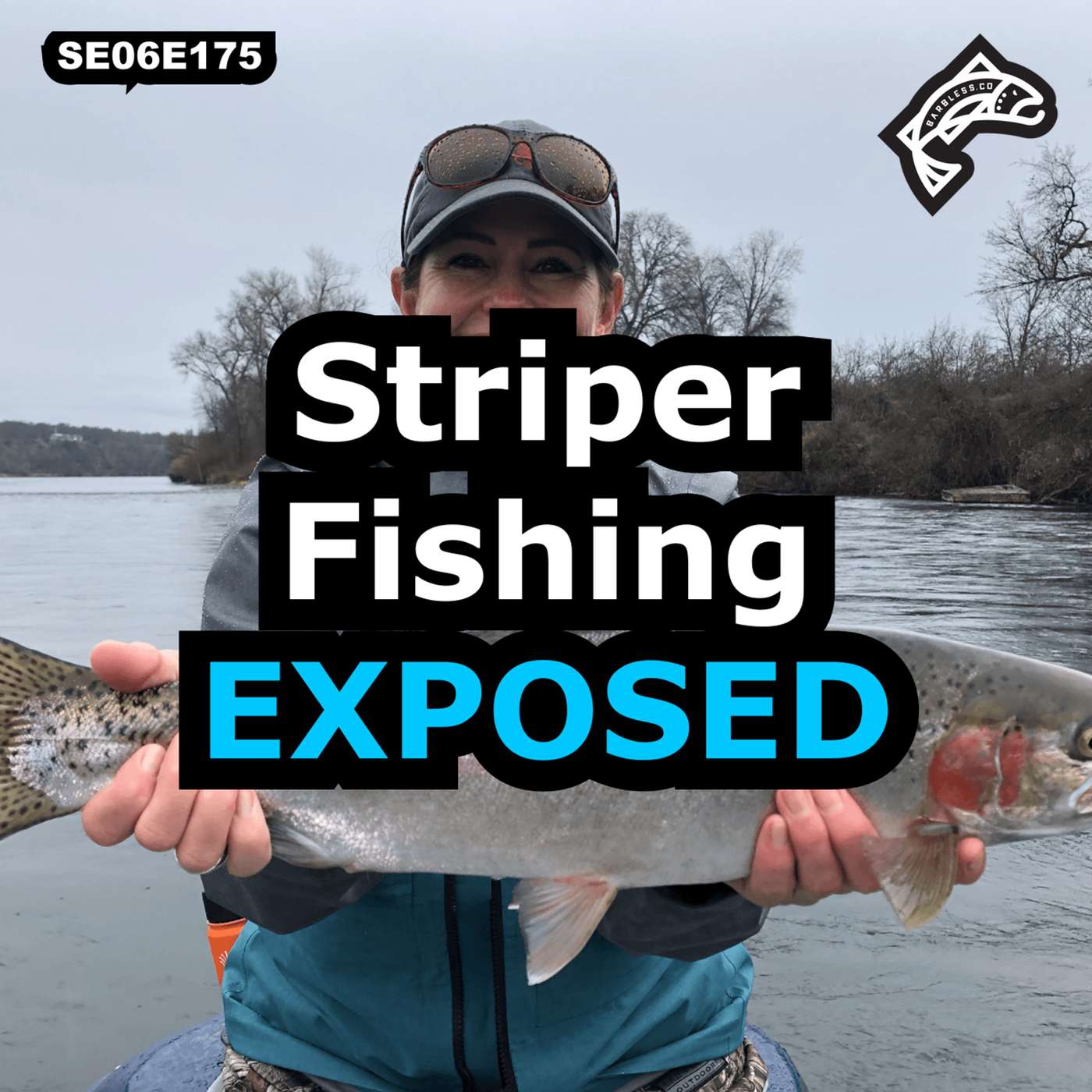
Hogan at the Barbless Podcast is Co-Releasing an episode of the Wet Fly Swing Podcast where Hogan sits down and talks with Dave Stewart about Northern California Striper Fishing and his history in Fly Fishing. Make sure to check out all the back episodes of the Wet Fly Swing as Dave hosts a bunch of great guests [https://wetflyswing.com/](https://wetflyswing.com/) Introduction In this unique episode of The Barbless Podcast Channel, host Hogan Brown collaborates with Dave Stewart from the Wet Fly Swing Podcast. Listen in as Hogan shares insights into his guiding experiences, the challenges of fishing in Northern California, and the intricacies of targeting striped bass. Key Topics Discussed The unique weather patterns in Northern California and their impact on fishing conditions. Insights into guiding and fishing for striped bass on the Sacramento River. The transition from traditional trout guiding to bass and other species. Upcoming events such as the fly fishing film tour in Nevada City, California. The challenges and rewards of hosting a podcast. Important Quotes "It's just close to like big game salt fishing as anyone can get in a freshwater environment in our area.""A lot of fly fishermen go bass fishing when the fishing is good. But to really say I'm gonna be a bass guide, that's a big mental jump."Key Takeaways Seasonal Fishing Insights: The best time for striped bass fishing is from May to October when the weather is stable. Gear Preparation: Ensure you're equipped with 9-10 weight rods, and be familiar with intermediate to type seven shooting heads. Guiding Challenges: Transitioning from trout to bass guiding requires a significant shift in technique and mindset. Podcasting Ventures: Hogan took over hosting duties for The Barbless Podcast Channel, emphasizing interesting stories and diverse fly fishing experiences. Action Items Consider booking a guided trip with Hogan for the optimal striped bass experience in the summer months. Explore the upcoming fly fishing film tour in Nevada City for a chance to engage with the community and enjoy fishing films. Listen to The Barbless Podcast Channel for more insights into unique fishing experiences and expert interviews. Conclusion This episode of The Barbless Podcast Channel offers a behind-the-scenes look at fly fishing in Northern California. Hogan Brown shares his journey and expertise, providing listeners with valuable knowledge about fishing for striped bass and the trials and triumphs of guiding in diverse waters. Tune in to hear more about upcoming events and explore the captivating world of fly fishing. Full episode page, transcript and guests
Speaker 1: Hot podcasting from Chico California. This is the Bartlett fly fishing podcast. Where we discuss North fly Fishing, guiding fisheries signs and management, conservation and more. No better, fish better. Here's your host, Hogan Brown. Speaker 2: Hey, everybody. This Hogan Brown, Welcome back to the Barb podcast excited to share another episode with you. Kind of a different episode today. I am actually c releasing this episode with another podcast. The wet fly swing podcast with Dave Stewart. He actually reached out to me and wanna interview me on his podcast about some of the things I do here on the Barb podcast and then some of the guiding I do for striped bass. So I thought everyone would find the episode pretty interesting and told Dave, we could release it together, so that episodes come up here in a minute. But other than that, it is the first week of February here in Northern California, and I'm looking outside and it could also be the first week of March April May or June by the weather. It is... I I I say absolutely gorgeous. With, like, a whole lot of guilt in my stomach because I know how bad we need a couple more storms. And, this kinda pseudo spring that we're having has me feeling very nervous which is a change in pace of my, very comfortable and very happy of, say, November early December, with all the rain and storms we we did get. So you know, keep doing your rain dances, keep crossing your fingers for some storms coming in soon. But at the same time, you know, enjoy being outdoors and living in Northern California. If you do, if not, hopefully, the weather's nice where you are as well. In fishing, most of my fishing the last couple weeks has been guiding out on lake Gore. The lake continues to come up despite the fact that we have not had many storms. It is a pretty impressive to see. Over the last week, we got up to, which is, I I guess I call the normal boat ramp at Bid W Marine, the main boat ramp. So we are no longer using the lower, the lowest boat ramp is well underwater, and the middle boat ramp, which is kinda like the new boat ramp is... I think you could still use it, but it... It's getting up the water's getting up over kind of the lip. So most about boat traffic going down the the main boat ramp. Fishing been good, not great, but good, mostly floating and fly fishing, cold does all get out in the morning and then kinda warming up, at least for the the lake as the day goes on. The river for stripe fishing has been decent. I got out one day kinda of poked around. The river, lower sack is crazy low, kinda scary low down by us. So, you know, any water coming out of the reservoirs are going into Lake cha is definitely getting held back, and, you know, any rays in the river is gonna be tri based at this point and without any storms. It's just... It's not coming up. So there's that and then the lower Hub, I've I was out... Haven't been on the lower you in a while. I I... I I was out there a couple weeks ago, maybe three, four weeks ago, and it... They're holding basically every drop of water back in that Yu waters shed in, you know, spa Ing b bull, it's all the reservoirs horse. And the flows coming out of ing brighter. Gosh as low as I've ever seen them as low as they get, you know, about five fifty to seven fifty depending on, you know, what gauge you read or whatnot and fishing been good to fair, from talking to chuck and some of the guys that have been out there, but it is, you know, my theory on the U that that, I guess that flow is there's there's just not enough room for everybody. Know, to put a boat down the middle of the run, and, you know, you can get some runs and such, but, you know, with the the mythical Sq hatch and that, you know, the... It just crowded. If there's one fisheries that, you know I continue to see the growth of our sport every time I go out there it is the lower Hub. It's just packed with people most days, least that I've been out there. Who knows. Maybe there's varying or different reports, but I tend to stay away from it based on, you know, being a drift boat guide when the flows get this low, especially in the winter when a lot of people show up to efficient. So coming up, try to I think what's coming up. April first, Cast hope. We are hosting a fly fishing film tour, stop in Nevada City, California. We we've hosted this a few years in a row. We you know, obviously, with Covid took a year. I think, a year, maybe two years off. But we're bringing it back tickets are on sale. You can get those at the the Cast website under the events. You can buy them in person at real wrangler. In Nevada City, California, or you can go to any of the Cast up social media and click a link or an event and steer your way towards those tickets. It's twenty dollars. They're sierra about a beer. Lots of good auction and ralph items that we've been tracking down and getting. And I've seen a couple of the trailers for the films. There's a really great film in there by a good buddy of mine Jesse males, about tarp and fishing and just just a lot of good good stories, a lot of good fishing movies and, you know, usually a great way to spend the evening. And so that's coming up Friday, April first. Other than that, trying to think anything else coming up. I got my fly shop catalog in the mail. I'm sure that's coming to a lot of people's. You know, once again the fly shop did a a great job putting together a catalog. I I I looked at the cover and they they put the forty fourth catalog and I was like man. I've been looking at this thing for a long time. I think that catalog lives next to most people's toilet or somewhere that they look at it and kinda w stair away at it. For me it's choosing my toilet, but that may too much information for the listeners, but I guarantee I'm not the only fly fishing person that has it in the bathroom. Great job on the catalog this year, tons of cool new products. That's one thing, you know, the fly shop catalog always kinda find something that I haven't seen to put in the catalog, which is always kinda cool whether it's a fly pattern or you know, this year they had a pair of shoes in there from a shoe company. I'd never seen. They they find some cool stuff. So look for that in the mail not hop online and request that. And yeah, Hope you enjoy this podcast. It's a little different. I'm actually the one getting interviewed. It was an odd experience to be honest with you, but I think it turned out pretty well. So thanks for tuning everyone and look forward to sharing the next podcast with you next time. Take care. Speaker 3: A lot of times what happens is the guy sees the fish layer because how a bass eats is they open their mouth suck water in. And then clamp on the fly. And not until, you know, if we're not visually watching the event, not until that fish clamps on the fly, do we feel the fish? So if you see that fish open its mouth, that's when guys go, oh, they try to set the hook and all you do is you see that fly just come straight out of the fish mouth as a clamps down. Speaker 4: That was hooked and brown reminding us that all we need is a little patience. Speaker 5: River stripe tips and the most diverse state by species today on the Wet Fly swing fly fishing show. Welcome to the Wet Fly swing fly fishing show where you discover tips, tricks and tools from the leading names in fly fishing today. Speaker 4: Hey. I was going today. Thank you for stopping by the Fly fishing show. Please take a quick moment and visit us on Facebook. Wet advice swing dot com slash Facebook, and you can connect with the private group there. Just kick starting the group over there. So come on over and ask a question for an upcoming guests. Before we get started, let's hear from our sponsors. Anglers coffee, roast a full range of coffees with one goal in mind, delivering excellent coffee to every single angle. With a blend for every taste, a dry dropper on the go tea bag option and a roast sample, you know Joe at Anglers has you covered. Head over to Swing dot com slash anglers to support a sustainable company with un surpass taste right now. That's fly swing dot com slash anglers, a n g l e r s. To get going right now. Truss designs, engineers and manufactures industry leading outdoor products and premium apparel from their patented game changing tele fly rod carrier and their specialized waterproof cases and fly boxes to their magnetic nip system that are revolution how people snip their line. Please head over to wet fly swing dot com slash truss to get started today. That's wet fly swing dot com slash tres T, S t to support this podcast and an amazing product and brand today. Hogan Brown, the host of the barb podcast is here to break down some tips on river stripe, We also get into a little bit of his background on how he first got started guiding and some of the species he's still focused on today. We will discover some great tips, some step by step, and we're gonna be taken back. Little bit back in time to find out who were some of his biggest mentors. So without further ado here is Hogan Brown. How's it going, Hogan? Good, man. How are you? Good. Thanks for, thanks for taking all the time to dig into it today. We're gonna we're gonna probably talk a lot about, California with a focus on California, but probably some of the stuff we'll hopefully apply broadly to some other areas, but you got a lot going. You know, obviously, it's a diversity of species down there. So I think today we might dig into Stripe a little bit. But you've also got a podcast going and that's another big interest for me. I've been slowly trying to connect with people. And I didn't know Chad and Nick had them on in the past. Yeah. But before we get into the Barb podcast and you're, you, guiding and everything, take us all the way back real quick to the start of how you got to fly fishing, they will take it back to where you are now. Oh, man. Speaker 3: Okay. So I grew up in a little... Little, I don't know if you call at a town. I call it more of like a berg. I think I... It's got a Zip code and a post office. So I grew up in Penn Valley, California, which you know, you usually have to stretch it out about two or three towns for people people to really get a visual idea of where it is. But it's kinda close to grass Nevada City, and then Grass Nevada city is about an hour and a half up in the foot hills from Sacramento and then another hour to the top of the mountain into truck. So people kinda around at the base of the Sierra in Nevada foot hills and such. And I'm an only child, and I grew up on about a a twenty acre kinda cattle property ranch in the foot that was kinda of backed up to a Creek called Deer Creek, which is a to Lower Hub River. And both my parents worked a lot. They were... My dad was a college counselor and professor and my mom was a fourth grade teacher, and I was home alone a lot, and you know, most of my friends lived in more residential communities, and I didn't have... You know, you couldn't ride your bike anywhere or anything like that. So I I kind of, you know, was, I guess drawn to things I could do on my own. And always liked fishing, but very early on, the lower Yu, which Deer Creek dumps into a heavily restricted wild trout tail water, which we really only have the option to fly fish it. So it was like, that's what everybody did out there and that's kinda what I had to learn how to do if I wanted to fish it. So I was probably about ten, eleven years old when I really started, like, okay. I'm gonna figure this out. You know, And my dad was an outdoor sky. Like, we camped and did stuff like that. My mom was super supportive. And so, you know, they kinda threw gasoline on the fire and took me out and stuff, but they definitely didn't jump into it as heavy as I did, you know, Speaker 4: Cool. So, yeah. You got started from an early age and in the U, and we've talked a little bit about the U, but we've had at least one episode and we just did one where we talked about the Sierra in Nevada. Now, tell me us on Ci ads. I always get this screwed up. Sometimes you hear people say Sierra Nevada. Right? It's is it always the Sierra Nevada with an s? Man, you know, I always say Nevada because it's Speaker 3: I think of Nevada well, I honestly, probably... But I say Sierra Nevada is because it's so big. It has to be plural. You know. But like, yeah, It's a giant mountain range or whatever. Yeah. But I don't know what Nevada translates to, so I don't know if it is plural. Nevada all, I know Nevada could translate to multiple mountains Speaker 4: in some of her reach and. That's right. Okay. Good. This is good to know because on that last episode, I was trying to figure out the title and I think I had... I was like, okay. I think it's Sierra Nevada, but I guess be either. So I guess I won't feel bad if somebody calls to be out on it. Yeah. No. Most people in our region, if you say Sierra Nevada, Thinking of a beer, not a mountain range. And I think when people say Sierra nevada, that clarifies that it is the mountain geographical region, not the, you know, beer. That's right. That's what it feels to be. Feels like seal Nevada is the better way. So... Yeah. So either way, you you grew up in a pretty amazing place and and and started fishing early. And then... And then once you got in... I mean, from there, so your... Your kid when does this become? For you, you know, where you see this like as a business. Speaker 3: Oh, man. I started working in a fly shop. There was a fly shop in downtown about a city where I worked, it's now not there anymore. It kinda changed hands and names, but... Nevada City Anglers was right in downtown about a city about thirty minutes from my house that's kinda like the town we would go, you know, get groceries and such in. And I was going in there all the time. For, I mean, ever since I was young, And then I wanna say about sixteen, seventeen years old, a, a gentleman bought it, by the name of Jeremy Gray, and he bought it from the original owner who realistically needed to make money at the flash shop to pay his bills, and Jeremy bought it, and his wife was a an executive intel, I think at the time in Granite Bay and he had just left a a really high stress job at the federal reserve in San Francisco. So the fly shop, I think was kinda his dream. And, basically, he needed someone, so, like, answered the phone and pretend that he was working. While he went fishing. And so, you know, I started working there on Sundays in a couple days after school during the week and such, and you know, that was kind of the beginning of I guess my first job in the fly fishing industry in Jeremy, and a gentleman by the name of Ralph would there really kinda helped me along in seeing it is not necessarily a hobby, but a way to make money when they... You know, Jeremy. Thought I should get a guide license, and that was a big, like, I guess the first thing that I was like, wow. You know, maybe I'm like, I don't wanna say better at this than other people, but good enough to make a living at this or, like, make more money than know, what he's paying me to vacuum him the place and, you know, take care of the cat when he's not there. Mh. So, yeah. I got my guide license right around seventeen eighteen years old, and that was, you know, you start guiding at that age and, you you know, your your other buddies are making, like, five bucks an hour, you know, at the movie theater flipping burgers, and I remember I was making, you know, two seventy five two hundred dollars a day. And Speaker 4: that was a big, like, oh, wow. Okay. Let's do this. So, you That was it. That was it. So you jumped the guiding and what was that take us there? Like, it sounds like you just jumped into and you felt good because I know I've heard a lot of guide stories where people sometimes love it and sometimes not so much. But... Did you, like, right away? It feels it sounds like you just knew it was the thing? Yeah. You know, Speaker 3: I just... At the time, I was... You know, I went to high school, and I I didn't get into any big colleges or nothing. So I was just... Kinda taking community college classes. Right? My local community college, and, you know, I know exactly what you're saying and and I I just... I jumped into it and I didn't... Never you thought about it. Yeah. I I was so hungry to learn everything I could. I saw life fishing is just this... My... And I still see it this way, you know, thirty some years later or whatever. Like... This une ending puzzle of something that I need to figure out and learn. You know, it was one of those few things in my life that just presented this continuous challenge, not that a lot of things don't present challenges, but it was one of those things that presented a challenge and that I I could actually figure out, Like, I wasn't a really good student. I mean, I I was a decent athlete, but I was never, you know, I was middle of the pack and never seemed to get out what I put in. And, you know, fly fishing really felt like this thing that, like, I was putting in the effort, and I was really getting a lot out of it. And Guiding just afforded you that opportunity to spend more and more and more time on the water. You know? Speaker 4: And that's all I really wanted to do at that stage of my life. I just wanted to be on the water. That's cool. Yeah. Yeah. A really cool story because you... Yeah. I mean, you found that thing that you're kinda you're passionate that you're good at, and, you know, who, if you're getting into fly fishing, doesn't wanna get more time on the water. And then... And then once you got into the guiding, how did you... Because you do have so many species. You know, there's so many things to do in California, you know, throughout the whole year. Right? How did you... When you first got going where you just starting out with, like, a sort of thing or how how did that all You've evolved? Because now you're, like, the Stripe, Right? Is the big thing? Yeah. Yeah. So, I mean, I I I think... Speaker 3: You know, I had a lot of good mentors in my life, it coming up in the industry that really kinda pointed me in the direction. And, you know, Jeremy and Ralph would, you know, Ralph was a wade fishing guide in guided the the north... Work the U a lot. And I started guiding the North fork of the U lot and spending time on that and doing a lot of walk and wade stuff. But, you know, the reality is in our area the the kinda the big... The the place people wanted to go was the lower Hub river. That was the work you know, it's a trophy tail water two hours from Sacramento, hour and a half from Sacramento and, you know, two and a half hours from Bay area, and, Jeremy and a a buddy of his Dennis Carlton started teaching me how to row drift boat. You and that was, you know, that kinda of put me on the course of being a a a lower hub drift guide, and it was, you know, I was out there with a lot of guys. They were twenty years older than me. And, you know, there was not a lot of young people in fly fishing at the the late nineties, you know, early two thousands. And so I kinda had to cut my teeth among some of the... As I say, Gru gentleman on the river. And, when I moved to... I moved to Chico, California in two thousand one to, I I finally got enough credits to leave the junior college realm, and went to chico State, the probably the biggest trout featuring in the state is the lower Sacramento River and Redding. And so I started working at a fly shop in Chico and met, a man by the name of Will tu and then another gentleman, Jason Lo. And these two guys really kinda took me under the wing and kinda gave me that that graduate course and guiding. And I kinda went to trout fishing because that's where the trips were. Right? Yeah. No. Yeah that's what people wanted to do. Trout and steel had, you know, as much as I do other things, trout and steel had wall be king in the fly fishing industry. So... Mh. That's just where the money was. And, you know, as as deere went on, I started to realize that, you know, driving two hundred miles a day round trip and roanoke a bow for or nine hours is probably not the most sustainable way to make a living, be a good husband, be a good father. And I realized as I watched some of the older gentleman that I had guided with. You know, your body starts to break down, you know, the divorce has happened if you're living away from home for months at a time, and I I started to realize that, like, there... There's gotta be a different way to do this. And at the time, probably, another one of My really, I guess, dear friends and close mentors man by the name of Mike Costello, who I was guiding with it or at the time. Started to really transition his business to stripe for fishing in the delta because that's where he worked. That's where he lived. And, you know, he wanted to be home for baseball practice, home for dinner and realized... I don't know if he ever verbal it, but the idea of running a trolling motor in the delta is a whole lot easier than, you know, back a drift boat up and down the lower sac. And I kinda watched how he was starting to shape his life with a young child and you know, a guy whose family was important to him, and I... You know, I was on one side you're watching guys get divorce and lose their families, and you're watching Mike make these moves to solidify his families, and I thought, you know, I gotta figure out how to guide minutes for my house and, in a boat that doesn't beat my body up every day and, you know, try to figure out how to be a good husband in a family man and still spend all that time on the water that I wanted. So that's led me to stripe her and bass and a lot of stuff that are really close. There you go. That's a... Sounds like a smart move. Speaker 4: Smart move for your body, Ed for your family. Speaker 3: It sounds smart now, but, I mean, it was it was not... It was a gamble at the time. Right? Like, you know, the fisheries that I guide, no one guided. I'm no one even really Speaker 4: thought they were viable fisheries. So... Oh, wow. Are people now are there people guiding it now? Is it pretty popular? Speaker 3: There's a couple of us that you know, do it. They're all kinda guys we all work together for guys that I've kinda brought under and shown the fisheries and, you know, it's a high learning curve, and it's a high cost of entry. You know, big boat. You have to have a boat. You gotta have a boat. You gotta have a Captain's license. You gotta... Right. You know, you got... There's some hoops you know, that you gotta jump through and that, you know, it's a big jump, you know, a lot of fly fish fishermen in, you know, oh, yeah. They... If you ask them, the Oh fish for bass. But, you know, most fly fishermen in go bass fishing when the fishing is good. You know? To really say I'm gonna be a ba guide and, you know, guide five to seven days a week and put people on fish every single day. That's that's a big mental jump from being a trout guide. Alright. That's a whole different skill set. Speaker 4: Is it when you compare to a truck guide? I mean, the level of difficulty is is it just much much higher for being a guide for stripe? Speaker 3: I think so. But part of it is because, you know, I would say if you were, you know, it's kinda like if you're a if you're a sprinter, and then all of a sudden, somebody says you need to be a a shot foot throw. Like, you just don't have the skill set going in. You know, most of us that grew up trout fishing or our whole fishing references trout with a fly rod. It's a big shift to ba species guiding. You know, I always kinda tell people, you know, like, ba species, there's there's times when they just won't eat. Like, you could put a bleeding dead crate fish min in front of them, and they won't eat it. You know? Yep. And with with trout, I've always figured, like, we're gonna find a few fish that are gonna jump on a fly. Like, we're... We can, you know, we can find the pattern find the fish. We'll find them I you, there's gonna be some really tough days as we all have. But, like, On most of our fisheries, we can find a fisher two on a given day. You know, there's there's where the bash just don't eat. You know, you can find them. They're there. You see you know? Yeah. So there's not gonna take. Yeah. I just... I... I don't wanna upset trout fishermen. But, I mean, it was hard for... It was a lot harder for me to figure out bass fishing than it was Trout fisher. Gotcha. And and when they don't eat, are you knowing that kind of... Speaker 4: A little ahead, are you out there on a trip, and I'll send you like, oh, man. They're not eating today? Is that something that how do you deal with that if that happens? Yeah. You know? I mean, big things with ba species that Speaker 3: you know, we deal a lot with biometric pressure, light conditions you know, you can kinda look at the barometer in those transitional seasons in the spring and the fall and kinda know what's gonna happen. You know? But there's definitely days in the summer when the weather been beautifully stable for months, and then all of a sudden you're like, they ain't eat today. And the more time, I think with any fishing, that the thing that the good guides, the new guides, you know, there's there's young guides that just have great instincts. And then there's... Guys that have been on the water that have massive amounts of encyclopedia reference of what to do and what to try. You know? And you know, when the fishing gets tough, we just start trying some of that stuff. There's ways to find them and find fish that are gonna eat, but there's definitely days. You know, where we don't get them to eat. Speaker 4: Yeah. Know. So if somebody is listening now and they're... You know, there's probably some people are listening that are... Interested in getting a trip getting a guide. If they weren't, you know, is there another way to do it, like, could somebody actually... It sounds like you need a boat, Speaker 3: or there other boats you could, describe that if somebody likes the Diy cell. Is that doable? Oh, yeah. Sure. Like, if you like to get out and do it on your own, you know, it's it's definitely not a wade beneficiary. It's a really big river. Though there are some spots that you could get out and wade and it if the fish efficient moved into that kind of feeding zone you could have a... You know, you could have a hell of, an afternoon or an evening or whatever. But as to, like, using your own vote. I mean, if you're a competent jet boat driver, you could probably figure it out. But again, I I would not you know, don't put my recommendation on that just based on the safety environment. Yeah. Because you got tides and all sorts of stuff going on. Well, we don't have tides in the river. It's just... I mean, it's a... You know, we're we're well up from any title and, Oh, you're... Yeah. Yeah. So you're up that. So you're basically dealing with? Is it just normal. Yeah. Big River, Big water. Yeah. Big River. You know, like, the biggest thing that you know, even if you're a competent Jet boat pilot in our river where a lot of people is, you know, dragging a trolling motor down in the rivers. Kind of a dangerous thing with all the snags and rocks, and, you know what I mean? So... Mh. You know, what a lot of people do that are, you know, maybe don't have a jet boat or not, you know, they're... Or, I guess, I would say, I'm I'm nervous running a jet boat on any river that I haven't been on just because... Yeah. You know. I got a good good amount of, I guess, logical fear to it. But there's floats you can do. You know, if you have a drift out or a, a kayak, a lot of guys, Kayak fish the river. You know, there's plenty of little boat ramps and car top boat ramps that you can put your put your water aircraft into, and that's a very safe way to get it down the river. Gotcha. That said, there's definitely dead water, you know, having a kicker, Yeah. I a little easier to grow than a drift though, but... Yeah. Speaker 4: Let's take a quick break for a word from our sponsors. The fly fishing film tour is back. Don't miss this year's two thousand twenty two f three. T as it returns to theaters near you for another big season. For me, I remember that first time I went to an F three t event early on as we were getting the podcast started and rolling, It was such a cool event I met Elliott from the Drake podcast was at that event. Talk to him backstage and the bonus was hanging out with the friends with a beer and watching some great anglers, filmmakers and storyteller teller on the big screen. I'm really excited to get back on these local events and proud to have f three t as a sponsor this year. Please head over to wifi fly swing dot com slash f three t to find a show near you and get a super dose of inspiration as you plan for your next big fishing trip. That's wet fly swing dot com slash f three t or head over to fly film tour dot com. Boom Now back to the show. It's You know, the Kayak is. I mean, I've I've seen some of these kayak. Right? They got all sorts of, like, the, you know, bling they throw on a motors and. Oh gosh. Yeah. Yeah. Yeah. For sure. You could totally could. Yeah. You... I could see somebody out there with the Bad, Kayak. That's just... Doing whatever he's got everything and he's going for Stripe. Is that... Do you ever see that? Do you see somebody with a kayak out there, like, hooking a stripe? Oh, yeah. There's some... There's some... Speaker 3: And by no means, do the dudes on the river have the really bling out fishing Kayak. They're usually you know, kinda of the the young Cage kids that are going to the Chico State town or, like, you know, they they've they got some beat kayak that they bought off Craigslist and, like... Sure. You know, you kinda look at them and you're like, alright. Yeah. That that that make it. Yeah. That kid's definitely ditched class a few times to do this. He knows what's up. You know? Yeah. You we see a lot of the tricked out Kayak on some of the lakes we guide. So... What was that you back of the day? Or do you? Dizzy ditching class to go fishing. Oh, yeah. No. I I mean, I I ended up getting a college degree, but it was in history. So I mean, you basically just had to read and kinda remember stuff. And... But yeah. I spent a lot of time on the water. I guided a ton. You know, I mean, I I didn't I get to fish... I guess I got to fish a lot, you know, and I I fished a lot, but, like, you know, I was going to class two days a week and guide, you know, four to five days a week. Like, there there was not... I was kinda paying my own way doing my own thing, and, you know, I'd had taken so long to get through school that, you know, the idea of having parents. You were in it. Yeah. The idea of having my parents pay for. It was not really. I didn't feel good about that since I wasted a whole lot of their money early on. So... Gotcha. Yeah. No. I mean, I I... If I ditched class, I was gonna do it to guide. So... Yeah. You were doing it. You're guiding it. And this is, like you said, at seventeen, You were you're were full on guiding at seventeen. Yeah. I was seventeen eighteen. I I really... Forget. I mean, there was a there was an area there where I was probably shouldn't be guiding, but I was going and guiding and getting paid under the table and doing all those things you do at a small fly shop in a small town. So... Yep. Yep. Doing Yeah. Just doing it making it happen. Now Yeah. Speaker 4: Well, the... You know, I wanna dig into a little more on the river stripe and the whole thing, and and we'll kinda let it go at least see where what are other topics we can dig into. But take me to the... Before we get into it at the Barb podcast because I... Yeah. You know, definitely, I met Nick. Up a If a few years ago, and... Or sorry. I met Chad, and I know Nick we had him on the podcast. Talk about how that came to. I... Because I don't know that story. Oh, sure. So Speaker 3: I've known Nick, me and Nick. Gosh. And so Nick a pretty... That whole story I just told, that, Nick went to Chico state worked in a Oh, wow. Yeah. There's two fly shops in Chico. I worked at one Nick worked at the other, I think being and Nick have known each other probably for twenty years and kinda, you know, just bop along through life kinda, you know, in the same town in the same kinda area. I'm at Chad through Nick when they started up the barb podcast. And, you know, Chad an incredibly intelligent human being probably Yep. One of the most successful and smartest people I know. And you know, they wanted to start the podcast, and I said, hey, man. I'll I'll support you guys in any way. This is great. You know, help... You, I'll be on it, help you out introduce you to people. Give you a list of cool peep, you know, whatever and So it just kinda started out as, like, two of your buddies is doing something that was pretty cool and just trying to help them and support them. And then maybe a year or so ago, two years ago. I don't know. I forget. Chad, you know, asked me and like, hey. Would you wanna come and host some episodes. And I was like, yeah. I mean, I I don't have time to do anything else, but I'll show up and talk. And, you know, And I told them at the time. I was like, you know, you guys do some pretty pretty high level stuff. Like, I was told those guys. I'm like, dude your podcast, like, I can't multitask. And your podcast, like, I gotta listen to. And, you know, they're dense. There's information. Like, you do your homework and, like, there... It there's a lot of effort and time put into it. And that's not gonna be my podcast. Like, I'm gonna call my buddies and, yes with them. And we're gonna talk about interesting stuff, and they're like, great Yeah. Yeah. And like, so they were, like, yeah. That'd be awesome. So I started hosting some podcast podcasts with those guys. And then, you know, life kinda took those guys in different directions. Nick had his second kid and, you know, Nick's got two kids and diapers, two boys, which... Wow. You know, and Chad was... Looking to make a change. You wanted to get out of California. He was gonna move to Arizona and Chad was just like, hey, do you wanna take over the podcast. And I'm like, wow that sounds like a ton of work, but you know, I kinda wanted to live on and, you know, continue to be what it is. And so I, you know, chad dropped off a box of stuff in my house and really didn't give me much of a choice. So I was like, okay. Well, I guess I'm gonna do this and You know, I've changed it. It's not. I can't put in the time and energy to it as you probably you know, know what it takes that Chad and Nick put into it. You know, I've I've basically... And I'm pretty upfront about that. Like, I've been in the fly fishing industry now. Well over twenty years, and I basically try to bring on interesting guests that I've met in the industry. And kinda new people too that are doing cool new stuff, you know, Mh. So much apply fishing is, you know, I guess, you know, the calendar image or the, you know, if you come through Instagram. You know, the average angle is gonna see a hundred pictures of stuff that they don't have the money to go do. You know what I mean? And I kinda try to go against the grain and bring people on that are doing new and interesting and different stuff and doing stuff that we can all do or, you know so... Speaker 4: Nice. No. I'm glad you, kept it going, and I I know and Chad because we were talking there and he was you know, he was going big on the podcast, and then, you know, it kinda came quick I was like, oh, it's like, he's heading out, and I was, yeah. I was little worried because you always hate to see a good podcast go away. You know, Yeah. Yeah. So it's good to see you a kept going. Has it been now that you got it rolling a little bit. Are you doing Speaker 3: are you doing like every, bi weekly or how you doing? Yeah. You know, I I was I was doing one every every two weeks, and I'm kinda back on that. You know it's it's one of those things where, like, if it becomes work, it's not fun. Yep. And you know, my goal is to put one out every two weeks, but, you know, life and family and work come up. I I I... It's a soft release date. I I guess, you know, so I took a few weeks off over Thanksgiving. I got a few in the can. I'll probably pump out over the next couple weeks, and then, you know, who knows? We'll see. Yeah. I try to make it fun. So if it's not fun and it's work and defeats the purpose. Speaker 4: Nice. Nice. What is one? I'm just curious like, episodes wise that you've done Solo that has been one that's Roy resonated with, you know, your Speaker 3: either your listeners or just yourself that you members or Oh, yeah. For sure. I always gravitate towards people doing different stuff, and, you know, finding their own way and doing their own thing and I talked to George Rave, a good buddy that I knew for a long time. And you know, George Grew up in Redding California now, owns of fly shop in San Francisco, like, in the heart heart of the city. And one of George's things that he told me when he right around the time he built the shop. I mean, it's his shop. He didn't buy it from anybody. Was that his goal was to get people to fish locally not drive hours out of the city. Oh. No. This whole thing is to, you know, pioneer surface underneath the Golden gate bridge and all these crazy little back waters of the San Francisco Bay that people can, you know, take bart to and buses too and you know, and he's done it. I mean, he's probably grown fly fishing within the city of San Francisco exponentially over, you know, the course of his time running the fly shop because he's created access that people can go fish. Like, before work or on a Saturday morning or, you know, they don't have to, you know, drive three hours out of the city to find fish water. So that one listening to George talk about that and how he did that was really interesting. Then another one it... I... It's gonna release this week. I, interviewed these guys. They create these videos called the Short bust diaries, and interviewed a guy by the name of Adam who's in charge of them and these guys. Buy short bus school buses off Craigslist and completely retro fish them and then go live and fish out of them for, like, months of a time. Did you say retro fish or retro? Retrofit. Like, they got these school pipes Okay. And turn them into, you know, they they basically turn them into, like, Rv. You know? That's amazing. And then go live and fish out of them for Speaker 4: it months at a time. That's the base. I think the word that came v, I thought I heard you say was retro fish. No. Actually might be a new word we could create here. Yeah. They definitely fish. I don't know how retro fish they deal by that. Yeah. So Speaker 3: Chad and Nick's podcast was super educational, and they found these incredible guests and... Yeah. They had species they dug into. Like, do you do the, like, the the species biology stuff I I... You know, I do to some degree, but it's like, those aren't the podcast podcasts that I enjoy listening to. So those aren't the podcasts that I do. You know? I mean, I totally get it, but like, my podcast listening as while I'm doing, like, three other things. Right? Like, and I just don't have the bandwidth or the time. Because those podcasts, like, it's, like, reading a book. Like, you wanna sit there and listen to that thing, Like, I found with certain in podcast they did. I'd take notes. I mean, it was, like, rehash at college lecture. Yeah. Yeah. And that's great and hugely informational, but it takes disgusting amounts of work, and it's not the type of podcast that, like, I listen to on an average basis. So It's just not the type that I've made. Speaker 4: I always think of it. I've said this before of but the three e's, you know, in your podcasting or probably doing anything. But, you know, edu... You gotta have kind of at least a couple... Well, you got the educational. Entertainment and emotional. Right? So Yeah. Doing in an episode. You gotta you gotta have at least one. If you don't have one of those then you're really in trouble and and having two is really good. If you can get all three then you're, like, knocked at the episode out of the park. Right? So Yeah. So you're... It sounds like you're going more to the more more to the... Well while, there's education, I'm sure, but also entertaining. Right? You guys are just having a chat and people are listening while they're driving and it's kinda getting to know some new places and... Absolutely. And I I I always... I mean, there's definitely an educational point a bit of, you know? Speaker 3: Deficit episode with Adam Adams from North Alabama, the guy from the short diaries. And, like, learning about fishing in North Alabama. Like, I I had no idea. You know, the guys a really sharp cat, and he... I had no idea, but North Alabama has the most species of freshwater fish of any other state. Oh, wow. There's more species of freshwater fish in Alabama than any other state in the union. And it also has more species of cray fish than any other state in the unit. So, like, you throw those two together, like, that's a pretty cool state deficient. You know? And like... So you know, we didn't break down to the depth that, like, Nick and Chad used to break down. But, like, there's definitely Speaker 4: educational stuff you know, in there. Yeah. Yeah. You dig into it. You're probably more just like how I do it, you know, I like to... Now, you know, we've had spent a good chunk of time. I love here on the back... Like the podcasting. Right? Is Yeah. For me, it's interesting because I I have a podcast. I love to listen to how you how you did it. And then and also people listen here are probably gonna shoot over to the Barb. Right? And check out that episode with the with adam of rights because it sounds interesting. Yeah. Yeah. That'll go up. That'll go Monday assuming nothing catastrophic happens or us, excuse me, Wednesday. Oh, good. Yeah. Yeah. Well, and we're... These are always retro because so we're doing total... This episode won't go live probably for a month and a half or something like that. Gotcha. But no, this is great. Well, let's dig into something on try just because I know some people are gonna be, they're gonna wanna hear some some some of that educational stuff. Sure. Sure. So take us in it sounds like, you know, a big part of this is obviously if you wanna do it right. You know, calling you or somebody who could really get you out there, but there's a few other ways to do. Let's just bring it to the water and talk if somebody was coming in, like, tomorrow or out. Let's just start there. First of all, you know, talk about timing. So if somebody was gonna do a trip. They called and they said hey I wanna go for stripe in the river What do you tell them? When when's the best time when were they booked that trip? So, you know, our stripe in the in the Sacramento river, there's a, Speaker 3: mig run fish that comes up out of the bay in the spring so that's, like March April May, depending on the spring in Northern California, which is, you know, hitting a moving target on most years. And then we have our resident population. So then we have fish that live in the river three and sixty five days out of the year. And the best time that I always tell people is about May through October. Best stripe for fishing usually results when you have consistent. Weather conditions. So, you know, once you get into that kinda mid to late May through first part of October, that's where you have the most consistent weather conditions throughout the year. You can definitely in September and October start to get into some, you know, bar swings and pressure fronts coming in, and you can even get into that in the late May, first part of June, but, you know, those are book ends. We fish all winter, but winter is incredibly volatile. You know, we're actually having a winter this year in Northern California. So that's right Yeah. I heard. You have guys against some rain. Yeah. Or well, that's that's southern even this right. Yeah. Yeah. You get the weather? Yeah. So I mean, like, on a on a normal winter, the river will blow out from say November to April. You know, you just can't fish it. It's too much rain. We're we're down in the river system. So you know, it is a dam controlled river, but, you know, the amount of that dump into it, you know, will blow it out with, you know, for most of the winter. So, first of all, timing, I'd say, most people shooting, like, June July, August, September. You know? Yep. Okay. So June July, so that's good because now we're we're swinging around, Speaker 4: you know, December, January, and it'd be good time to connect with you and, hey. I wanna get out there in whatever June, July, August. What Speaker 3: what do you tell somebody if they... If kind of book a trip now getting ready for that? Is there anything they need to be getting prepared for? Oh, yeah. Sure. No. So, I mean, it's... The beauty of what we do is it's, you know, it's just close to like big game salt fishing as anyone I think can get in a fresh freshwater environment in our area, you know? We throw nine and ten way rods with, you know, shooting heads and, you know, big, sometimes heavily weighted, sometimes not flies and, you know, just that set up right there for most trout anglers is a is a big jump. Right? You know? Mh. So, you know, kinda getting comfortable with the bigger rods and the bigger flies and the shooting heads and being able to, you know, cast distance, our fish or, you know, stripe, unlike like, large mouth or other types of bass are not structure oriented feeder. So our fish hunt. So, you know, covering water for a a hunting fish is huge. You know, it's not bass fishing where you gotta put it right on that lily pad and that fish is right under that lily pad. It's Right. You know, you have to cast it out to this flat, and there's a school of five fish cruising somewhere in here. And the longer that fly moves through the water, the longer those fish have to find it. So, you know, distance is important, but you know, there's a lot of types of fishing in the summer that we do that doesn't require the the long distance casting. So that's not like a a hindrance for people. The other thing, the big thing for a lot of our our guys that come out that are, you know, coming from a trout or steel head background is the ability to strip set. You have to strip set stripe. You can't lift the rod and trout set them. And, the the... I guess the ten with which you fight and strip set and drive the hook into a stripe is usually not something that your average t angle is comfortable with. I mean, we fish, you know, two off to four hooks with, you know, anywhere from twenty pound to thirty pound test, and, you know, you really... You got strip set of fish and, you know, you're not gonna break them off if you break them off and, you know, at you tip your cap. So it's a little different game, You know, it's a big game salt fishing, you know a, fresh freshwater environment is what we tell people, You know? So there's site fishing opportunities. You know, you gotta lead fish and, you know, Gotcha. Yeah. So I mean, I think just kinda getting down. Yeah. You're just polishing up kinda some of those more niche techniques that people honestly in in a lot of areas in Northern California, Oregon gonna wash in, you know, gotta get on a plane to go do. Speaker 4: Yeah. That's that's the cool thing is they I could literally head down there and get a look of that experience. And... And just so so... You know, again, if somebody listening and they're thinking about maybe putting this together. So line wise? So nine ten, and then what line you mentioned the shooting heads. Like, if somebody is gonna go grab a line. What what would that look like? Speaker 3: So we run, you know, if you're really gonna do it, You know, one of the beauties of being in a a boat, I I guess, good or bad. You could bring a lot of gear in a boat. You know? So we usually have three rods a client. We have an intermediate shooting head, type three shooting head and then a type seven shooting head. You know, one of the big things when you're looking at, you know, obviously, we have our favorite brands and lines and all that stuff. But one really important thing and I I've bet Steel had Fisherman will will understand this too is having a line with a braid core, not a mono core. Because with a strip set, you don't want any flex in that line. You know, if you have mono cord fly lines, then there's a huge flex, you'll actually watch the guy He sets up on the fish, the line of flex. Right. Right. And I I think that's... I'm not a steel head guy, but I think that's a thing in steel had fishing as well on that swing, but Yeah. Yeah. Speaker 4: Yeah. Yeah. No. I hear it. I think that's going. And and as far as the companies, I mean, obviously, there's... We can name, you know, half a dozen great company. I'm just curious just so if somebody wanted to grab. What what are you guys what are the... If they picked up your rod. What would they have on there? Yeah. So a lot of guys, Speaker 3: the airflow sniper lines. Okay. We're designed by a couple of us here in Northern California Delta and River stripe guides. So those are kinda you know, if you pick up any of our rods, they're gonna have the airflow sniper lines on them just because. Speaker 4: That's great. I love that. Yeah. That's a great name too. The sniper. That's perfect. So saying, okay. So they got the sniper, they get... Get the rod, and then mh, Yeah And all the leader stuff that's pretty straightforward it sounds like... Yeah. Speaker 3: And liter... Guess, right, What length that... Like, say you're fishing that syncing you just go up kind of a short short leader. Yeah. So we run... You know, it all depends on kind of the water conditions. Usually the lighter the head, the longer the leader. So one thing that we do do that's kind of, I guess, different is you know, we'll run, like, thirty pound flu off the fly line to a eighty to hundred and fifteen pound. Swivel. We run a swivel, and then we go from the swivel off to usually anywhere from fifteen to twenty five pound flu. And the swivel is it does a couple different things. One, it's a break point. For the line if you get snagged on something. But it... The the more important thing is it, you know, stripe are big head shaker and rollers, you know, and it allows this is my theory in a couple of our theories. It it allows a kind flex point or a spin point and doesn't allow them to load up on the fly and throw it. So it's harder for them, I think to throw the fly at the boat usually. Mh. Gotcha. So the swivel kind of important thing. Speaker 4: Let's take a quick break for a word from our sponsor. To shop providing superior quality products at an affordable price an amazing resource for flight tying materials, tools and fly fishing accessories. Tokens as you covered when looking for unique in house products but also supports and supplies, materials and tools from other leading fly brands you know and trust. Tokens is now offering their mystery fly tying box where they simplify the process for you and choosing materials. You're only one click away from these hand, pick subscription tying box boxes that are packed with value at almost half the cost. And I recently made a order through Tokens and the experience was perfect. After a a recent trip, a nip for trial, I had to replace my tungsten beads and some jig hooks and a few other items. The products arrive in a couple of days from Tokens with a nice little card, a bonus value and a welcome note from the To family. Since two thousand five, Tokens has been over delivering on price and customer service, so it's time to discover for yourself what the buzz is all about. Head over to Wet fly swing dot com slash tokens and take a look at their diverse selection of products today. That's wet fly swing dot com slash t o g e n s. Tokens. Okay. Now back to the show. Okay. And and just give us a couple of flies just so we can round this off. Oh, yeah. Sure. So Speaker 3: if you look at any of the fly shops in Northern really or Central California anywhere around the Delta. They'll have a fair selection of what we call Delta cloud. Okay. You know, it's basically a kind of a bigger flash year, you know, Bob Clause style, claus min tied. Usually with synthetic, maybe some buck tail in there if you're really gonna bulk it up. But you know, a lot of the pug style lies, we fish And to be honest, there's a lot of the flies we fish are tied locally or, you know, patterns that we've swapped with each other. There's just... It's such a a niche market within the world of fly fishing to, you know, walk into a fly shop and have a a was this or you know, real fly, Taiwan. It's... There's just not enough people doing it. But do you go in, you know, George and the San Francisco has probably one of the best most innovative guys is a guy by the name of Steve for Steve. Who ties some flies for George. You know, any... You know, Dan Bland was kind of the father of a lot of the the flies for the Delta and stuff. So I mean, the a bland and whistler or any of that stuff. You know? Speaker 4: Okay. Alright. You know. This is perfect. We... Yeah. Definitely lots of people. We haven't had on the show, but we did have En rico, Pug on. Yes. Episode two ten. So we talked a little about his supplies and how that to be a pretty cool story there. Yeah. We fish a lot of his flies in the dead of summer. We cite fish a lot with Pug flies. Oh, gotcha. Yeah. Okay. So... And then take us now on the water. So Sure it's a little rundown. So we got the gear. How are you guys? Are you, like just trolling slowly up downs. Like, how are you... And how are you find the fish all that stuff? Yeah. So, I mean, we run we run big Speaker 3: my boat. We have a cup... All of us that usually have a couple different boats, but there's really only at this point, there's really only two of us that do it. Me and my partner Chuck Reg, And we have, you know, smaller skips, like, seventeen foot skips, and then we have our big boats are twenty two and twenty foot boats, and You know, you'll put on the boat ramp put in a boat ramp and blast up or down River and start fishing certain spots based on the time of day. But you're side drifting. You know, so you're drifting down, usually a a bank at some distance away from the bank or a big flat that cuts into the bank and you're, you know, cashed in and stripping into stripping buckets, you know, sometimes double hand salt strip style, sometimes, you know, real ticketing in, tease them in with a lighter fly and a lighter line. You know, sometimes you'll come in, you know, behind a big root ball and have to throw it up behind the root ball like streamer, fishing for trout, you know? Oh, wow. Are these different than... Because you mentioned that they're not necessarily cover oriented like a bass. But they still do Speaker 4: occasionally you utah target. I guess, I'd think of that, like, how do you find those or it's just something that you've over years of dialed in where they are. Oh, yeah. No. So so how do we find... You know, the... We basically work up the food chain first. Speaker 3: So you know, we basically work up the food chain. I mean, we spend stripe go to places in the river to eat. So we basically start at the bottom, which is weeds and, you know, weeds and basically timber and such like that that, you know, how's macro vertebra and microorganisms and we... Then we find the, you know, the smaller fish then we find the pike in the blue gill, and we kind of work our way up and, you know, there's areas where it's, like, you know, we talk a lot about you know, bait, you know, we talk a lot about... You know, hey, there's a big ball of pike min in, you know, Nickel slew, and it's it's not that there's a big ball of stripe and nickel slew. It's that there's bait there and stripe find bait. You know? So, you know, we're basically fishing areas that our fish are gonna go to feed. So you know, getting a stripe to hit a fly is not always easiest thing. And so, like, you know, you can... A lot of gear anglers, we'll just, you know, drop anchor in a deep hole and soak a sa in the bottom of the hole and wait for a stripe to run into it, eat it. But, you know, a stripe down in deep water is not actively feeding stripe. You know, the a big thirty forty pound stripe may only eat once a week or twice a week. You know? So where we go is we try to target areas where these fish are gonna go to eat. So we're that we are fishing up for actively feeding fish. Gotcha. So you know, you may hit a flat or a big bank with a bunch of snags on it and catch no fish, and then you roll into a weed flat where there's a big hard weed edge and you, you know, just Molly h. You know what it... Oh, wow. It's a lot of covering water. Yeah. It's a lot of covering water. You know, there's definitely days where it's every spot we hit. We catch couple fish and then there's days where we fish ten spots, and then, you know, we hook three twenty pound fish in one spot. Oh, wow. And when you're going down. So describe the side drifting a little bit. Is this something where you're kind of idling in the river or how how are you doing that? No. No. So you're... A lot of times, it all depends on the current we're in, but, you know, we run a a bow mount trolling motor. And so a lot of times you're drifting with the current and kinda keeping the boat to the same speed of the current, like you would, like, probably for a trout anglers. Yeah. Like, growing back growing. Yeah. It's very similar to fishing streamers, you know, cast out, stripping it in, you know, in a bank in a bass boat on a lake. You know, cast drip, cast strip, you know. Gotcha. There's a lot of... It sounds like there's a lot of diversity in what you're doing out there It's a a little bit of everything. As far as you're... There's not one technique. Oh, no. Absolutely not. And it's a... It's a river. I mean, it's the the... It's the largest river in the state and incredibly diverse. You know, I mean, we'll fish it it. You know, I mean, we're efficient twenty two foot boats up and down it. I mean, it's a big, big water. Speaker 4: Are you guys Speaker 3: catching, like, other species other than stripe out there while you're doing this? Oh, yeah. We catch all sorts of stuff. I mean, there's small mouth bass, large mouth bass, spotted bass, carp, salmon. We catch salmon, steel head, you know, Speaker 4: we catch all sorts of stuff. So... That's amazing. So you're... So you're out there. I mean, you could... I mean, is it more like most of our stripe? Or are you just kind of it's a... Any cast as kind of you never know? Speaker 3: It kinda depends on the the time year and, like, you know, I mean, we spend so much time out there that, like, we kinda know. Like, there's definitely cold. Right. There's big s where it's, like, okay We're gonna go in here and get some large mouth. Or there's creek mouths where you're like, okay. The small mouth are in there. There's cart flats where it's like, oh, let's go cart fishing. There's definitely spots when the salmon are in there where the salmon will surprise you. You know, I Salmon will eat a a cloud min, like, a stripe or eats a claus or mano. You know? So, you know, you'll set up on a fish and all of a sudden, it's a, you know, thirty pound king salmon, and you got, you know, a king on your line where you thought you had a a stripe. That's crazy. There's a native species in there called pike min. You know, we get some enormous pike min. You know, you catch fifteen pound pike min that, you know wow, just you know, be fish. So Geez. That's correct. Yeah. You you you never know, man. I mean, it's... You never know which I've caught Catfish. I mean, you catch all sorts of stuff. So it's cool that way. You know, I mean, it's an incredibly diverse healthy fisheries that you never know what you're gonna get. That's cool. And and it's a good... That like you said, if you go out the Jude July, August you're get some pretty good weather. Oh, yeah. It's... You know, it's hot in the summer. I mean, I wouldn't kid anybody. I mean, it's hot Northern California in the summer, but the the beauty is stripe fishing is the hotter it is. Usually the better the fishing is. So... All the better, the about the comics. Yeah. I mean, we fish seven to three usually in the summer, you know, seven Am to three Pm. So we get off before the, you know, the scorching part of the day, but most of your big fish come eleven Am to two Pm. Gotcha. And what are your? I'm just curious boat wise. We we did a whole series on, like, drift boats. Yeah. I'm curious What are your what's your boat? What's, like, a name? Give me? I'm just curious to so we get a picture of it. Oh, yeah. Yeah. Sure. So you know, a lot of us run most people on the river are gonna run, you know, Lowe's or g threes, Speaker 4: bigger center console style Gotcha it. You know, flat bottom. Like, a boat you could take... Oh, flat bob it, so you wouldn't really be taking this out in the ocean. No. No. No No No. Speaker 3: As you get into it, I had a boat built by a builder in Southern Oregon, rogue jet boat works. Yeah. So I have a I think I'm actually, I I... If I'm not the first, I'm the second, you know, guy that they built or a fly fishing guy that they built, like, a center console style boat for. So Flat and flat, like, almost flat? No. No. I mean, mine's a mine's twenty two foot with a two twenty five on it, and, you know, it's that is a big... Yeah. It's a ten degree boat, eight degree, ten degree I forget. But I mean, I could take my boat out bay or something like that, but you don't wanna take a jet out anywhere where there's weeds or anything, you know. But... Oh, gotcha. Yeah. This is... So you're running a jet. Yeah. Yeah. You have to on the river Yeah. So center console, you know, looks like a bay boat. You know, we basically outfit them, like, if you... If your listeners are familiar with what a Bay boat is. It's a deck in the back deck in the front, you know, two guys stand in cast and strip into stripping buckets. Speaker 4: So... That's cool. So I think we paid the picture a little bit here. I mean basically, if they wanted to get out with you. They could just basically Speaker 3: bring their own gear, you... It sounds like you have gear for us. Oh, yeah. We have everything. We... You know, most of our guys you know, the the uses for nine and ten weights for most of our clients is pretty not very useful. So, yeah. We have all the gear people need. Yeah. Yeah the nine and ten weight definitely are the the specialty I mean, the the eight weight, you know, that would be a... You could use that for steel head or whatever Right? But it's Yeah. We get, you know, you can get away with an eight weight, you know, but a lot of people's eight weights are look they're are usually at least in our neck of the woods. They're like, the nine and a half foot eight weights and that nine and a half foot rod is just nine times at ten somebody's gonna break a tip or do something like that. Like, the shorter rods with the shooting heads are a lot nicer. Speaker 4: Lot nicer. And what about the tie... So if they are... If you are coming out in the summer, Mh. Fishing you mentioned the pressure, the lighting, stuff like that. When is the best... When do you guys get going to take? Like, are you leaving early later? Or how are you doing that? No. So the the beauty of the summer is around here, the weather usually very consistent. Right? It's just a degree of hot. You know, so it's either ninety or a hundred and five, you know, or maybe eighty years. You know, it's it's very consistent Speaker 3: pressure. The barometer is usually very consistent. Most days we mean at seven Am, at a boat ramp usually anywhere from five to thirty minutes out of the town at Chico, California. And then, you know, we usually get off the water about three to four sometime in there, you know, here the hottest part of the day is usually, like, four to six Pm. So... Oh, okay. I kinda get off the water before then just because there is a little bit of a lull at that hottest part of the day in the bite, and then, you know, you can stay out till dark. A lot of lot of local guys will come out after work and till dark, and I try to get off the water before. Those guys get out there. Yeah. It's cool. And that gives you a kind of a normal, like, a, like, a nine to five day. Right? If you're if you're... Yeah Man. I mean, I'm I can make soccer practice and, you know, have dinner with the kids, you know, hang out be a dad. Speaker 4: There you go. Yeah. You found that... You found it... Is it... Do you find that people or more? I I think at the bass thing. We've talked about this with a few small mouth bass episodes where that's started out as nobody was doing it? And now there's, Like it's really popular, especially in the Midwest and other areas. You think Stripe is gonna keep on that? We're just kind of... And I'm not sure other areas where people are fishing from around the country. Is this a really? I guess there's two questions there. This a really unique, then also, do you see this growing? Speaker 3: Well, you know, Northern California has had a strong history. Of stripe fishing, you know, in the Delta and the San Francisco Bay, and even in the rivers during the mig runs. I mean, stripe fishing in Northern California is right up there with Trout and steel head. Mh. It's just, you know, it's not easily accessible to a lot of people. And, the river, you know, when I started doing it fifteen some years ago, like nobody ate it, you know, I look... I'd pull into the boat ramp and pull fry rods out. People looked at me. Like, I just landed on Mars and I was, you know, an alien or something. You know? So the river fishing has definitely grown. It's it's grown a lot in the conventional world, you know, a lot of guys conventionally fish the river for stripe. But they kind fish different seasons than we do. You know, they're big... They fish a lot in the fall in the winter, because they're bass guys. Right? And then spring summer fall their bass fishing. So Oh. Yep. Yeah. I mean, I I don't think I think it's grown absolutely. I don't know if the river is gonna get any bigger than it has gotten based on, the cost of entry. Right? Gotcha. A boat not cheap. No. No. Yeah. You're talking. Yeah. Probably whatever those boats are fifty k even more. Right? I mean, some of these boats are out of control. Yeah. Lots a lot of money. I definitely think the the lake bass fishing and the bass fishing on lakes and stuff is is definitely growing in our state and you know, I mean, California is in the gears fishing or the bass fishing world. I mean, it's like Alaska to trout fishing for Fly fishermen. You know what I mean, this is this is where guys wanna come to bass fish. So if fly fishermen can kinda convert or at least get some some of the flying anglers alerts to kinda pick up and try different things. I think it's better for everyone. You know? Yeah. And by bass, you're not just talking stripe. You're talking to all the different ba species. Oh, I'm... You know, I'm talking large mouth, small mouth, spotted bass. I mean, we have world records, you know, you could throw a dart and find a a spot guys called a world record bass in California. Speaker 4: Yeah. It's it's cool. That's cool. You know, I definitely... We we dug into it them. I'm just curious the rest of your year as you go out there. So you've got this going? I mean, how much of this is Stripe and how much are you still doing some other guiding or is this, like most of the what you do now? Speaker 3: You know, I I do a I do a little bit of marketing for various companies and you know, try to... Oh, gotcha. Yeah. Yeah. You know, So I I I run a little small marketing operation and such, and then I'll do that. And then I I guide for... We spend a lot of our winter months guiding for spotted Bass, in some of our reservoirs like lake Or, lake S. And then I still spend, you know, I'll be on the lower Hub of this week. I mean, I spent a lot of time guide my home water. That's probably about the only trout fishing that I... I'll do anymore as guide the lower you, but just because that's where I grew up, and, you know, I spent some time in the winter on that. Speaker 4: Gotcha. Well, maybe we'll maybe we'll leave that one for the next week you bucks episode And. Maybe you could take us out here. We have a little segment. We do sometimes the the two twenty two top tips flies and sure resources for... Let's keep it on, the stripe that we already talked about some flies. So again, somebody's out there fishing with you or getting ready to do it. What what are a couple of tips you you would tell somebody if they're kind of trying to get into that first fish. Speaker 3: So if you're fishing, keep your rod tip down and strip through the fish, that's gonna help you on the hooks that, you know, fish grabs keep stripping hard, and, strip your fly all all the way to the boat. They will eat it rod, you know, leader in the rod tip. Oh, wow. So those are the two things is I give the crash course every morning. That's it. That I'm, like, sc through the fish that eat you from lit your rod and strip it all the way into the boat so you can see the fly. Speaker 4: What is that like when you you strip it all the way into the boat and then a big, like, you said thirty pound, whatever fish eats it. What take us there? What what's that look like? Oh, it's just utter chaos. I mean, a lot of times, Speaker 3: a lot of times it's the client pulling and the fly out of the vicious mouth versus the fish. Alright. So you have to... You have to be careful still. Yeah. So, you know, basically, what happens when you do that is you're gonna see this I mean, you may see a school at twenty five to ten pounder just pop out of the depths and you're pulling your fly up the cast or a lot of times what happens is the guy sees the the fish flare. Because how a bass eats is they open their mouth suck water in and then clamp on the fly. And not until, you know, if we're not visually watching the event not until that fish clamps on the fly, do we feel the fish? K? So if you see that fish open its mouth, that's when guys go, oh, They try to set the hook, and all you do is you see that fly just come straight out of the fish mouth as it clamps down. And that's where the heartbreak en sue. So. Speaker 4: You gotta wait to feel the fish, strip through the fish. Wait to feel. So so wait to feel so strip. So you're stripping in and then you're... And then you feel it, then you really do a big strip set all the way as far as you can. Yeah. Then then you hammer hammer him. As I say you wanna lob them. So That's right. This is cool. And then it gives us a couple of resources. Obviously, it sounds like there's not maybe a ton, but if you were to send somebody out to somebody? Sure. You know, another book magazine video, fly shop whatever... Where would you send those people? Is there a couple of other resources out there that could dig in? Yeah. Absolutely. Speaker 3: You know, if you can find any of it, mike Costello and John Sherman wrote a really great book. John did all the photography and Mike Costello wrote the book on Fly fishing The delta. Cool. That's a great book out there. I think it's out of print, but you could probably snoop around and find some. Sure. Dan Bland runs a a website and a message board, which is basically all stripe dudes. Many of them, you know, from the older generation with just full of knowledge. You know, fans a good resources. He's kinda the godfather of it. And, fly fishing specialties in Sacramento kinda sits right in between They sit right on the American River, which is another great stripe River and then, you know, an hour or two to the... You know, I guess, a sacramento forty five minutes to the Delta and an hour up here. They have all the gear you would possibly need to do any of the stripe fishing in Northern California. Speaker 4: So... There you go. That's great. Awesome. And what about for you? Do you have... I'm not sure if you get out or have plans they, like, have another, like, a bucket list Speaker 3: destination trip? Do you have anything or do you stick pretty close to home? Man, I I stick pretty close to home. I I have a eleven and and thirty harold old boy. So, like, oh, wow, you know, I a we fish every opportunity we can and Yep. You know, I I'm not... I feel like there's so much still to learn on the waters that I guide and I fish that I I just if I have the opportunity, I just... I go where I go where local because it it just still is so interesting to me and so much I feel I can learn. You know? Speaker 4: Yeah. It's diverse. Yeah. You got you got... You guys are in a cool spot. So... Yeah. So nice. Well, yeah. Anything else before we get out here, you wanna... You know, if we're thinking about stripe, you wanna give a shout out to or or maybe even what you have come in the next year whatever. No, man. I mean, I'll just be out, you know, we're we're gonna go chase some spotted baths today, and then Speaker 3: you know, see what the winner holds for California. That's the, you know, that's the big but, you know, see how much water we get. And... See what happens to our lakes and our reservoirs and Yep. You know, the one thing that's always nice about being a basket guide or a stripe guide is you know, those fish species are not as pressured or harmed. They're a little more they're a little more drought tolerant and resilient than your, you know, Yeah. Wild steel head or wild trout. So... Speaker 4: I know. Yeah. That is one of those. It's yeah. It's kinda one of those catch whatever you wanna call crazy things because, yeah. As you guys see more wildfires out there. Yeah. Maybe more more flooding or whatever it is. It's like, yeah, that the the the invasive, I I mentioned this to, you know, at Episode two nineteen. We talked about Stripe Stripe Bass with A, and and he mentioned, You know, we're were just talking about that. How it's essentially, it's not a native species, but he feels like it kinda almost is now. Right? It's here. It's, you know, it might as well take advantage of it. Oh, yeah. I mean, it's been here for... Speaker 3: Yeah. I mean, they've been here a hundred and fifty some years, and, you know, the thing about California is, you know, even where our native native species live now whether you wanna steel head trout Salmon. It's not their native water way. You know? There's... Right. There should not be Rainbow trout in King Salmon in Redding California when it's a hundred and ten degrees. You know? Yeah. There you go. So it. Yeah. I think we're so It's the... So it's not just the... I mean, we've changed the Humans. Right? Have changed things so much that there's really not Yeah. Yeah. Even our quote, native species don't live where Speaker 4: they're native range. So I mean... That's it. Yeah. That's totally yeah. No. It's it. It's good. I I love that you got this going up here. We'll send people out to, let's see, yeah, h g b fly fishing dot com. Right? Yep. That's it. You can get on all the socials and all that type of stuff from there or message me, email me whatever you wanna do. Perfect. Alright. Hogan, Thanks for your time today. This has been a lot of fun and, definitely love that you got the podcast still going and I'll keep up with that and put links to everything we talked about in the show notes and send people your way. So, yeah, Thanks for taking all the time today. Oh, yeah. Thanks, Dave. Bye bye. Speaker 3: There you go. Speaker 4: Og Brown, you can find all the show today. Wet swing dot com slash two eighty four two hundred and eighty four. Found this podcast. Helpful. Please share it on Facebook. That'd be great if you could do that. Also, you can leave a review for this podcast to head over to fly swing dot com slash love. Love will get to their easy way to leave a review. I wanna thank you today for stopping by and checking out the show. Appreciate your support. Appreciate everything you do for the podcast and hope I can serve you on a new upcoming episode. See you soon, see you on the river or see online. Speaker 5: Thanks for listening to the wet fly swing fly fishing show For notes and links from this episode, visit wet fly swing dot com.