
The AP Strange Show · AP Strange
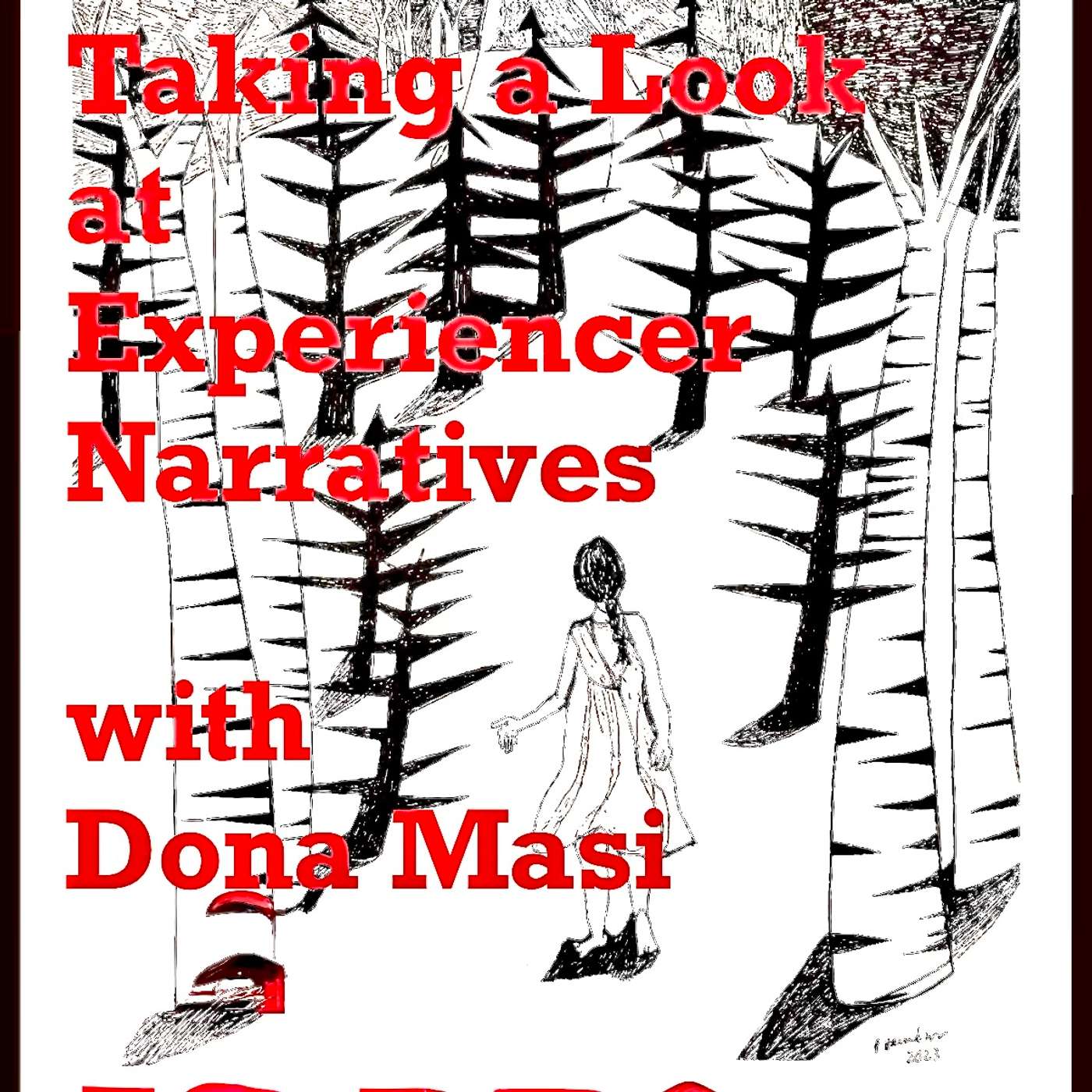
This week, author, journalist, playwright, and editor Dona Masi joins AP for a discussion about alien abductions and her novel inspired by them, The Taking. Her book is a coming of age story for a young girl named Vera, who must navigate the normal trials of growing up alongside troublesome dreams and strange experiences she can't explain- or even tell anyone about. The story is a heartfelt and sympathetic tale which speaks to the isolation of experiencers, and as the story unfolds one gets a sense of the private struggles abductees might deal with. In conversation, she and AP discuss the book and some of the real-life accounts that inspired it- notably, the Betty and Barney Hill Incident which occurred in Dona's home state of New Hampshire, the accounts of Whitley Strieber, and others. Dona also relates some of her own personal experiences, as well as her inspirations and philosophies regarding how she writes fiction. Throughout the interview, she and AP explore the various ways storytelling impacts us all, notable UFO events and how they are studied, and much more! For more on Dona and her work, and to order your own copy of The Taking, click here: https://donamasi.com/
AP Strange: Pardon me while I have a strange interlude. But there is nothing else. Life is an obscure oboe bumming a ride on the omnibus of art. Among the misty corridors of pine, and in those corridors I see figures, strange figures. Welcome back, my friends, to the AP Strange Show. I am your host, AP Strange. This is my show, and today's show is brought to you by the Zeta Reticuli Travel Agency. Book through Zeta Reticuli if you want your journey interrupted and out of this world. So tonight on the show, we have an author and a playwright, a journalist, and an editor. She has written articles for Foster's Daily Democrat, Seacoast Newspapers, Portsmouth Press, and among other things. What we're gonna talk about tonight is her novel, which is a theme that's on brand for this show and things that my listeners would like to read about, and that is alien abduction. Welcome to the show, Donna Massey. Thanks for joining me. Dona Masi: Hello. Nice to be here. AP Strange: Yes. So, yeah, I mean, I I enjoyed the book. It's a it's a it's a I I really appreciate the treatment of of the subject matter in it because for one thing, you're you're very respectful of the phenomena of alien abduction. And, like, I don't feel like it was sensationalized in the way that sometimes that that trope can be, you know, and it's also kind of a a really touching tale. So what inspired you to write The Taking? Dona Masi: Well, I've always been interested, very interested in the topic of UFOs and alien abductions all my life and studied a lot. Always read lots of books about it, watched documentaries. So it follows my lifelong interest in the topic, which was one of the key things that led me to write it. And as a writer, I I came up with the idea of which is the story and the taking, of combining a story about a father and daughter and family relationships and, you know, the love between a parent and child with the alien abduction phenomenon. And in the story, you know, the the young girl is an abductee, and she and her father have to find you know, are are coping with this along the way. Sometimes they don't know about it, and sometimes and then eventually they do know everything that's going on with her. I've decided at one point that I really wanted to explore the human the impact on human beings who are alien abductees because I don't really think I don't think that's really handled very much in fiction, at least that I'm aware of. Usually, it's when you talk about aliens, it's, you know, interstellar visitors and just spaceships, and a lot of it takes place in space. But I thought that it would make a really emotional and dramatic story. And as a writer, I felt that I would be really interested in writing with writing about it, and I would stick with it. Now one thing that was a big influence and led me to write it is that I read books by John Mack, who's a psychiatrist from Harvard. He's passed away, but he treated about 80 or 90 people who purportedly were alien abductees and he was trying to try to find a way to help them cope with the experiences. Maybe just find some purpose in it, make sense of it as best they could to help them find a way to just live with it and maybe have some sort of happy normal life despite this strange and disturbing mystery that they were being affected by. And that made me really curious about even further, more curious about the impact on human beings because, you know, if this is happening, and I think it is, that's my opinion, what a thing to have to deal with as as a person. AP Strange: You Dona Masi: know? The interruptions in your life, the loss of control, the not knowing when it's gonna happen again. And then the impact on the people who love you too, who wanna protect you, but they really can't. And what do they do? And so I thought that would, as I said, make a really powerfully emotional and suspenseful story. And that's what led me to write it. AP Strange: Right. Yeah. And, you know, in addition to all of those things that you just mentioned, there's the ridicule factor where people don't feel like they're able to come forward with their story or they have no one to talk to. I think that's changed a bit nowadays but especially back, you know, Mac was kind of a pioneer for actual therapeutic treatment for people that have this. Right? You know? Mhmm. Yes. At the time, you'd see Whitley Streeber appear on TV, and people would make fun of him to his face, like, on on the talk shows and stuff. Right? Dona Masi: I know. And it affected his writing career too. You know, he wasn't taken as seriously as a as a writer after he pay became public with his stories, his claims of being abducted all his entire life. It's true. Yeah. I still think there's a stigma that people try to avoid, but, yes, I agree with you that it is there's probably more people who are open to act actually listening to what people have to say if they claim that they are have been abducted by aliens and not readily dis dismiss them as crazy. They may not believe them, but maybe they'll be willing to listen anyway, which is very important. AP Strange: Right. Yeah. And and because it's framed really well in your book and not trying to give too much away here, but I feel like the alien theme is works on a number of levels because there's when you're when you're a quote unquote alien abductee, I guess you are also alienated. Right? And you feel alienated from other people. And then with the fictional town name of Pangaea, it evokes the idea of one big island. Right? And each person is their own island and dealing with their own problems. Yeah. It's kind of a coming together, you know. So so yeah. I mean, what was that intentional? You're you're it seems like you you kind of focused on on the coming of age aspect of it, which is awkward and rocky and and something that's difficult to deal with anyway, but also, you know, this theme of being alone. Dona Masi: Yes, it was. I mean, the isolation, you know, the alienation, as you say. And, you know, before the character, the main character realizes what's happening, there's a lot of underlying tension and uncertainty and disturbance in her emotional life. And, you know, because she is bothered by a lot of things, she doesn't understand what's happening to her. She just knows how she feels. And things come out in dreams for her. And and then at some point, you know, everything gets pieced together because of a particular event that acts as a trigger for her memories to come back and for her to recognize the dreams that she's had as reflections of what's happened to her. AP Strange: Right. Dona Masi: So yeah. And the type the the name of the town, Pangea. Yeah. You're right. Yeah. It's like a big island. I mean, millions of years ago, it was one gigantic landmass, you know, before the continent split up. I also gave it that the town that name because I wanted to to try to to have the book have an sort of an epic feel to it. You know? AP Strange: Yeah. It almost gives it, like, a fantasy like quality that that's the name of the town. But it's Dona Masi: like a AP Strange: it's a it's it's a rural town in in New Hampshire, right, which I could picture very easily because I've been to New Hampshire a million times. Dona Masi: You're or or or AP Strange: well, you Dona Masi: live in New England? Yeah. AP Strange: Massachusetts. Yeah. Yep. You're from but you you live in New Hampshire. Dona Masi: I do. Yes. Yeah. Yeah. So the woods are a character. Character. You know, the the setting is not a is like a character in some ways because it's definitely important to the story. A lot of the events, you know, take place in nature. And, you know, I mean, New Hampshire has a lot of woods. Right? Massachusetts has a lot of woods. It's it's simple similar terrain. So there's a lot of, you know, dark nights and thick forests, and it's that in itself can be very eerie. So, you know, I think that adds to the atmosphere of this of the book and chilly winters. Yes. Right. AP Strange: Because some of the some of the important drama unfolds when there's snow on the ground in the book. So Yep. You definitely get that that cold New England feel for some of it. Yeah. Yeah. Excellent. So being a a a New Hampshire resident, I imagine I have to imagine that Betty and Barney Hill might have influenced the writing of this book, the Betty and Barney Hill incident. And is that something that has Sure. Been with you for a long time as a huge. Right? Dona Masi: Yeah. I've always known about it since I was a kid, you know, because it happened in New Hampshire long time ago in 1961, and I was always really fascinated by that story. And then, you know, so I knew about it, but then I learned a lot more about it later on, you know, from reading about it. And I also had the occasion to talk with Kathy Martin, who's the niece of Betty and Barney Hill and she's a ufologist and has been at that for years and years and years and she's like the scholar of the Betty and Barney Hill alien abduction case. Yeah. And when I met with her, she told me a lot of details that were in a book she was writing at the time or just about to publish that really weren't known to the public yet. So I felt really, really lucky talk to her and learn so much more, and I was really glued listening listening to her. You know? Right. I've also listened to the trans transcription tapes from their hypnosis sessions with doctor Simon. AP Strange: Mhmm. Dona Masi: Because they were treated by him. They they they were having disturbing dreams, etcetera, and they went to him for some help. They didn't know what the root cause was, but they were they you know, making them very anxious, so they went to a psychiatrist. And so a lot of their their memories came out during these hypnotic hypnosis sessions that they had with doctor Simon. So, certainly, the whole idea of the dreams, you know, telling someone what's happening in bits and pieces. I certainly incorporated that into my story as well. Yeah. And as a matter of fact, Betty and Barney, this weekend, my husband and I went to the White Mountains. We actually rode the cog railway up the Mount Washington. You know, you can go on a train at the top of Mount Washington. But we made a point of going to Lincoln where we stopped at the Betty And Barney Hill historic Marker that the state put up to, you know, mark that incident. Yeah. And it's pretty cool. You know? It's an official state marker with the seal on it. And how many states have have a marker to a UFO in incident, you know, an alien abduction incident? You know? And AP Strange: who would have thought that that would last longer than the old man on the mountain? The old granite face on the mountain that was nearby that slid off, like, what was that, like, twenty years ago? You're gonna have this the the marker to the alien abduction. We outlive that. It's pretty wild. Dona Masi: Yeah. You know, I put it I put the picture that I took on Facebook, and I actually had some people. Well, one person send me a marker from Texas. It was a it was a marker of some other historical things that happened at the same location, but it mentioned the case from, like, the eighteen nineties where a UFO supposedly crashed on somebody's farm. It hit its the guy's windmill and came down and crashed there, and the locals, it had the alien inside was killed, and they buried him in their local graveyard, in their church graveyard. So they had the the marker talked about that. AP Strange: Yeah. I think they call it, like, the the Martian grave or the spaceman's grave Dona Masi: or something AP Strange: like that. Yeah. Yeah. Is that Aurora, Texas, I think? Dona Masi: Yes. Aurora, Yep. AP Strange: Yep. I had a former guest who I need to have back at some point, Tooey Snyder, writes all about cemeteries and things, and she lives in Texas. So so she talked about that a little bit while she was on the show. It's a wild story. Dona Masi: Yeah. AP Strange: But did you go to the gas station that has, like, the unofficial museum in it? Dona Masi: In the mountains White Mountains? No. We we didn't we didn't do that. AP Strange: Oh, okay. Dona Masi: I should. Next trip. AP Strange: Right. Yeah. If you're over there anyway, it it takes, like, a couple minutes to see everything. So it's really just clippings on poster board that are just in a gas station. It's very it's very slapped together, but they have a big mural on the outside of of a big gray alien that's all kind of stretched out. Dona Masi: And Yeah. AP Strange: That's where I went because the time I was up there last was during the winter and the snow drifts were about eight feet high on either side of the road. So there's no way I was finding that marker. Dona Masi: Right. AP Strange: Yeah. But beautiful country up there. Yeah. Dona Masi: Yeah. It is. I was just gonna say speaking about Betty and Barney Hill, in Durham, New Hampshire, which is right next door to me. In fact, that's the town where I was raised, Durham. The University of New Hampshire has the in their special collections in the library, they have the Betty and Barney Hill artifacts from that case. Yeah. AP Strange: Yeah. Have you been to see that and go Dona Masi: through it? Yeah. Once. A long time ago. And also in Portsmouth, which is where they live, the town where they live, which is very nearby too. There's oh god. Some ant antineum where they have artifacts from the Betty and Barney Hill case too. Oh, display. Yeah. AP Strange: Right. And they're I think they're buried in Portsmouth because I've been I've been to their gravesite before too. Yeah. Dona Masi: I should do that. I'm so close. AP Strange: I find that It's easy to find because they No. If I recall, they don't really have standing stones. They're kind of those ones that are set in the ground. So it's I own the only reason I found it was because I went with somebody that knew exactly where they were and we just walked right over there. So, it's it's not obvious. You know, you can't just scan scan the faces of gravestones but Yeah. So I take it that you probably are going to go to the Exeter Festival if you're in that area, in that general region. Dona Masi: Yeah. I probably will. I've been once before a couple of years ago. It was fun. It definitely was. Yeah. AP Strange: Yeah. Exeter is a good time. Mhmm. It's a nice town. Speaking of Kathy Martin, I met her there at one point, and that that was really nice. She she's very, you know, she's very personable and easy to approach. Dona Masi: You know? Yeah. She is. Yeah. Yep. AP Strange: So the the book that she had been working on, is that the one she wrote with Stan Friedman about the Betty and Barney Barney Hill case? Dona Masi: It is. It's called captured the Betty and Barney, a hill UFO experience or incident. I have a copy of the book. When I saw her, she gave me I guess it was published. Yeah. Because she gave me an autographed copy of her book, which was nice. Yeah. AP Strange: She gave me one that I guess they had sent them out preautographed, and I asked her for an autograph. She's like, oh, there it's already in there. And it was the the card actually had Stan Friedman's autograph on it too. And I was like, oh, wow. Because he had already passed by that time. Yeah. In fact, she did a presentation about him at that at that year at the conference. Dona Masi: Oh, did she? AP Strange: Yeah. Yeah. Dona Masi: Yeah. Talk about a trailblazer in science, you know, for the UFO and alien abduction phenomenon. AP Strange: Yeah. Dona Masi: He was talking about it, you know, loud and proud before many people wanted to even go near it. AP Strange: Right. Right. Yeah. And I I feel like we don't really have any Stanton Freedman's out there today. I feel I feel like those those are shoes that have never been filled. Yeah. Yeah. But but, yeah, I did always enjoy when I was younger, whenever there'd be, like, a news report about UFOs or something, he'd he'd be the guy they called in. They said Mhmm. Give a statement on it. You know? So I remember seeing him on TV and stuff a lot. Dona Masi: Yeah. Me too. AP Strange: Yeah. Yeah. Good stuff. So I'm glad Dona Masi: you like my book. I was just gonna say, I'm glad you like my book. That makes me happy, The Taking. AP Strange: Yeah. Yeah. It it it is gave me a lot to think about because I wasn't quite expecting it when there there basically, there's a tale told in three parts. So so you have, like, these little jumps jumps forward in time, I guess, with some of it. And and yeah. I was really I was really kinda taken by it, especially in the introduction of the character whose experience kind of mirrors Vera, the little girl in the story, and and introducing him as somebody that is is kind of the opposite end of Vera's perspective where she's young and just feeling out her way in the world and also dealing with these crazy experiences that she only half remembers. And he's at the opposite end where he's been dealing with it for his whole life practically. Yeah. You know, quietly, you know, and knows what she's going through but can't tell anybody. Yeah, That that that was that was a really, I thought, effective way to to kinda show the different dynamics of of the of the abductee experience. Dona Masi: Yeah. Thank you. Yeah. And the effects of isolation and alien you know, when you keep it a secret for a long, long time. AP Strange: Right. Yeah. Yeah. So, I mean, it does deal with some some darker themes I guess but I I don't I don't know for people that haven't for my audience's benefit, would you characterize it as like a scary book? Or because, I mean, there there are elements to it that that are I don't know. I guess every we were talking before the show and you were talking about how everybody sort of responds to some of these scenarios differently. Right? Mhmm. So so some people might find it scary. I wonder if people that that are experiences would find it kind of like triggering in a way. Dona Masi: Possibly. Yeah. I think that there's definitely scary moments in it and tension and suspense where you're wondering what's gonna happen for sure. Maybe, you know, can't wait to turn the page or you don't or you're too scared to turn turn the page. But it's not full on scary every single moment throughout the book too. That's you know, I mean, there are there's a lot of different elements in it. There's, you know, the relationship between the father and daughter, and like you said, it's coming in age story. So there's the, you know, the relate the dynamic between them. Like many father daughter or parent child relationships, there's conflict. You know? There's there's not getting along. There's you know? So there there's that part of the story, but it's also very key to the alien abduction story too. And there are some I think there's some funny moments in it too. You know? I wanted to make it well rounded so that it's a really human story. You know? Because it is about people. It's about about people. People. And so, yeah, sure, there's scary moments. So I guess people can expect that they may be scared. Some people more scared than others possibly. It depends, like you said, you know, how they deal with these things, what their reactions are to it. And maybe if you're an alien abductee, it might be scarier. I don't know. But and it's it's eerie. You know? It's it's a lot of eerie moments. So, yeah, I guess you could put in the taking, that's my book's title, I you could expect that you probably are gonna be scared sometimes or at least tense and, you know, worried about the characters. I hope people will will be concerned about the characters and what's happening to them. Yeah. And wanna, you know, want everything to turn out right. AP Strange: Right. Right. Well, I mean, before we were recording, we were talking about the various settings where you sometimes read things that that can be upsetting. And you had mentioned where where you were when you first read communion by Willie Dona Masi: Oh, yeah. Willie. Freak out. Yes. AP Strange: Right. Dona Masi: Yep. Well, I was living in Cape Cod by myself near the beach in a neighborhood that was pretty deserted because it was just mainly for summer houses and people had left for the season. And so I was reading the taking. I mean, not the taking. That's my book. The communion by Whitley Strieber, which is another book about alien abductions. And this one, he says, is nonfiction, and the author, Whitley Strieber, claims that he's been an abductee all his life. And so it was I couldn't read it at night after a while because it scared me to death. And I would wake up in the middle of the night, and I couldn't go back to sleep, or I'd have terrible dreams, or I couldn't go to sleep. So I finally it's like, forget this. You know? I've gotta read this in broad daylight if I'm ever gonna get through it because it's just it's just causing me too many sleepless sleepless nights and disturbing dreams. So Yeah. To avoid that. But, yeah, that was a powerful book. And, you know, as you said, he's he's a professional writer, and he writes fiction, and he writes horror horror genres. So he knows how to scare people scare you. AP Strange: Right. Yeah. Absolutely. But I could see that being in kind of a deserted town. I mean, you're in a ghost town during during I've done to even just like Coastal Maine in the winter. It's like nothing's open. Like none of those places that you love to go in the summer are open. Know? So Yeah. You get that kind of ghost town feel and you're like, oh, spooky. Dona Masi: Well, didn't mind. You know, I never minded being there by myself except when I read that book, and I never mind walking minded walking around at night in the dark with my dog or, you know, going down to the beach by myself. I never felt worried about it, but that was the only time Right. Reading that book. AP Strange: Yeah. Yeah. Well, it goes to show you how effective his writing is. And yeah. Dona Masi: So And how scary the alien abduction phenomenon AP Strange: Right. Dona Masi: Can be. AP Strange: Now you said you had nightmares, which, you know, sounds like Vera in the book. So I have to wonder, do you have any of your own personal experiences with with UFOs or or with weird unexplained things in general? Dona Masi: Well, I did have one experience when I was young, seven years old, and actually the book isn't bought The Taking, my book, isn't autobiographical at all, except I did borrow from this one experience that I had, and I used that in the book. But when I was seven and it was in second grade and I was at school, And before I get into it, I just wanna say that there are times I'm not sure whether it really happened or not. Sometimes I wonder if it was a dream, I imagined it, or if it was a real experience. AP Strange: Mhmm. Dona Masi: But it's very vivid, and it had a wicked impact on me. So I was at recess, and I was sitting on a swing, I think. Some I was sitting down somewhere, swinging bench. I was kind of by myself, but there were other kids in the in the playground. And I looked up and be above me, like, at an angle, but hovering very close in the air. It's hard to judge how high up it was. Couple 100 feet, but it was it was close. You know? Mhmm. I saw a cigar shaped object. The tips of it were sticking into two clouds that were on either end of it. And to me, it looked like it had windows. And it was very, very, very shiny, like crazy shiny, you know, like highly polished silver. And it also reflected the sun and with their it was like a prism where they had little reflections of blue and green and blue and pink and whatever. You know? So that was so distinctive and and vivid. And I was curious the first when I was looking at it, I was startled by it, but I wasn't scared yet. I just said to myself, wow. That that looks like a plane, but it doesn't have any wings. In other words, like, what is it? AP Strange: Right. Dona Masi: So I'm looking at it, And first, I turned happened to turn my head away, and I looked away. And then I looked back at it. It was still there in the sky above me. But I had the sensation that I had lost time between when I turned my head away from it and didn't wasn't looking at it and when I looked back on it. Like, I knew that time had passed or I felt it like time had passed. I didn't know how long. I did had no idea what happened in between those two actions Right. That I took. But I really had a distinct feeling that something had happened. And that's when I got really scared. When I felt that feeling and I looked back up at it, I just then became completely terrified by it where I wasn't before. I was kinda maybe a little nervous or startled, but I wasn't so scared. But I just took off running back to school. And by the time that I took off running, there was no one else in the playground at all. All the kids were gone, and I was by myself. And I ran to school, and I ran down the hall, went to my classroom. The class had already started. The teacher was in front of the room doing lesson or something. And I was thinking to myself as I was heading to the classroom that my teacher was gonna be mad or upset with me because I wasn't in I was late. You know? Right. Like, where were you? But she didn't say anything to me at all, and nobody seemed to react to me kind of bolting through the door into the room like I did pretty fast. And I just walked to my desk, and I sat down. And when I sat down, it seemed like I forgot it right then and there. I forgot what had just happened to me. And the thing was throughout the years is that all of a sudden I would I would remember it again. And it was like you know how you forget where you put something and then you're like if you find it, you're like, oh, yeah. I remember putting that down there. You know, keys or something. It wasn't that kind of sensation. It was like it was a complete blank. It was like a an experience I'd never known about, and I was remembering it again. And then I would forget it, and I'd forget it for I don't know how long. I'd forget it. Could've been years went by or months or whatever, and I'd remember it again. And it was every time I did, it was like that same sensation. Like, was an entirely new experience to me. And I'm like, well, what's that? Until and I don't know how many times this happened, but there was one at one point when it I remembered it, and it just stuck in my head for good in there in my conscious memory. So I've and I don't know when that happened either, but I do remember it all now. AP Strange: Mhmm. Dona Masi: And I've never forgotten it since that occasion when I finally did remember it entirely. AP Strange: Right. Dona Masi: So as I said, I I'm not sure. AP Strange: Right. I was gonna say you're still left with doubts about it because now at this point, it's been forgotten and retrieved a number of times. And and and, you know, like, some people I think I think consensus is that the more times you try to remember something, more distorted it becomes, you know, because you start adding details to fill in gaps. And I've always been wondering about that with my own memories. But to me, it sounds like a linear set of events that doesn't strike me as being dreamlike. Know, it seems like it sounds more like a memory than than a dream, right? Dona Masi: I think so. You know, sometimes I'll say it sounds dumb, but sometimes I'll just try to test myself to to see what my reaction is. If I deny or or or affirm it, you know, I'll say, no. That didn't happen. That was just a dream, or I imagined it. But then I'll get this this voice in my head or this sensation. It's like, no. That wasn't a dream. That wasn't anything that you imagined. That was a real experience. And I get really anxious thinking about it. And other times I'll say to myself the opposite thing. I'll say, yeah, that really happened. That really did happen. And it's almost like I get this feeling of, yeah, it did happen. Yes, it happened. So I don't know. That's just very subjective and maybe, you know, I who knows? People say things are coincidence and your mind's playing tricks on you. But then other times, who knows? You know, your inner self is maybe telling you a real truth that happened, you know, because you record some some traumatic experiences in every cell in your body, you know, that are there. I mean, that's so maybe it's the sense sensation that I felt at the time coming back to me when I start getting this the feeling like, yeah, it really did happen. I guess the only way that I would ever maybe begin to know for sure is if I went and had, you know, like, hypnotic regression. And it would that was proposed to me once, and I I haven't done it. But, you know, it it would be interesting. Part of me is a little afraid to find out for sure whether it's true or not, especially, I guess, if it's true. Although I'd be like, wow. Wow. You know? AP Strange: Well, that's that's what I was gonna ask is would you wanna know what what happened in that space or time? Dona Masi: I'm not sure, to tell you the truth. I'm I'm just not really sure that I wanna know. I'm not so sure that I've gone ahead and done it. But then I say, what the heck? Why don't you just do it and find out, you know, what's to be scared of, what's what's to be scared of. You know? Other than that experience, any paranormal experiences I have, I don't know whether I call them paranormal. I've never seen what I think is a ghost. That was my only sighting of a UFO or encounter with one. But I do oftentimes have precognitive well, not often, but I have had many times precognitive dreams, you know, where I dreamed about events that were gonna hap that happened or in my dreams, and then they turned out to have happened. Sometimes they're they're symbolic. You know? There's a lot of symbolism in them. Sometimes they're more literal. But even when they're symbolic, there have been times that when something has happened, it'll suddenly hit me that I dreamed that this was going to happen. My dream was warning me about this. Yeah. You know, with a lot of symbolism. And, you know, sometimes I do have sensations that people that I know that have died are near. You know, I've never seen them. But, you know, like, if I turned around, I I maybe wouldn't see them, but that somehow they're there. Or I did have one experience with my a couple of experiences with my parents. They both are passed away. And a few years ago when I was at their grave, and it was about a year ago, a year after my mom had died. And when my mom died, we played the song oh god. What's the name of that song? It's a Nat King Cole song, Stardust. Stardust Yeah. Memories. Because, you know, my dad used to sing. He was a singer, and he would sing that song. And and my mom, you know, put stardust on his grave when he passed away. I'm trying to make a long story short. We played that song at their at my mom's memorial service. And when I went to visit their grave, and this was a year later in the anniversary of memorial service, I queued up my phone to Nat King Cole playing Stardust. And I and I said, well, mom and dad, you know, if you're around, you know, give me a sign. You know, let me know you're here. So I played the song, and it was a really clear, really calm day. AP Strange: Mhmm. Dona Masi: No wind. As soon as that song queued up, the a big wind kicked up, and the flag, the American flag in the cemetery was just, like, whipping around, like, a gust of wind, and the leaves were flying all around. And I just was like, that's odd. Did that have anything to do with my parents trying to tell me that they are they do hear me and they know I'm here or whatever? Who knows? I don't know. But then the odd thing about it was another odd thing about that day is that I I decided to leave, and I had a chair I was sitting on. I packed it up, went to the car, put it in the back seat, and, you know, there was nothing on their grave. No. It was just the grass. And I before I left, I turned around to say goodbye to them. And there was, like, this leaf, one little leaf right on their grave, and it's, like, going like this. It's waving around like a, you know, like a cup back and forth. Like, it's waving goodbye to me. And I just said, maybe they're waving goodbye to me. I don't know. That was that was an interesting experience that I had that day too. AP Strange: Yeah. Well, I mean, that's that's really interesting that that that that was like another major experience in addition to the UFO event from childhood because you know, a lot of people have pointed out that there seems to be a connection, you know, Whitley Streeber especially between the what we consider to be alien abduction phenomenon and life after death. Mhmm. So so, yeah, it's kinda striking that you have those those two those two separate events and then and there tends to be that kind of correlation anyway as far as some experiences are concerned. Yeah. Dona Masi: Maybe. I like to have proof of these things if they can be proved. I don't like to jump to conclusions. You know? AP Strange: Right. Dona Masi: But at the same time, when you get sensations about things, well, maybe that is really telling you something. Maybe you should listen to them. Maybe there's truth there. AP Strange: I tend to think so. Yeah. And I feel like if it's not hurting anything to to to to go with it, then then why not? Right? Especially especially if it's a nice thing, like, if you feel like your folks are there. You know? Dona Masi: Yeah. It was very nice. Yeah. It was was comforting, and I I would like to have something like that happen again. AP Strange: Mhmm. Yeah. Yeah. I I mean, I I have gotten that. In fact, I had that happen the other day. I was at work, and I had a I had a number of synchronicities involving eagles when my grandfather passed away. And I was I was thinking about him over the weekend and then I was at work And I was getting my stuff together outside the truck and big shadow on the ground. And I look up and there was a bald eagle flew right over my head. And then it just flew in circles over me for a while, and it was only, like, 30 or 40 feet up. Like, it wasn't flying super high. And then it just flapped its wings and flew off in the direction it came from. And I was like, wow. Yeah. Dona Masi: That's really nice. That's really beautiful. AP Strange: You know? So I certainly I certainly know the feeling. You know? But and and, yeah, it's it's it's nice the way that you explained it because some of these things really are simple, and you you don't need to read into it too much. You know? Just take it as it is and say, well, maybe. Like, you know, maybe they're waving goodbye, but and and if it makes you feel good that they are, like, what's the harm? Right? Dona Masi: Right. There is no harm. There is. Except we tend tend as humans because we only work, you know, generally or always operate in this one the reality that we know, you know, with a 5¢ where it's marked by the five senses, what we can perceive with them. We tend to just kinda doubt ourselves when we have those things and looking always for a logical or rational or normal explanation, I guess, is the right word I wanna because who's to say it's not logical or rational to believe that, you know, spirits visit us, for an example. Right. But a normal explanation. AP Strange: Yeah. Yeah. And, I mean, I think you can strike a balance with those two things and, you know, still lead a happy life, a sane life, you know? And I mean, that's kind of the other central theme. What everybody's hoping for for young Vera in the taking is that there will be a way for her to navigate life even though she has these abduction experiences that no one would be able to stop or protect her from. A it's a matter of living with it and and living a productive life anyway as long as you have a supportive a support group, I guess, or an emotionally supportive family unit. Dona Masi: So Yeah. People who believe who believe her. AP Strange: Right. Right. Yeah. Because Exactly. Yeah. Yeah. I mean, big part of the struggle is with her father, you know, and this is something I was thinking about when you were telling your story, especially the forgetting and remembering again is that you have a practical life that you need to lead. And if you remember off the cuff this experience, and I think in the book, the father kind of understood that there was a reality to what was happening, but didn't want to admit it or didn't want to accept it. But, you know, and I feel like with with your experience of forgetting the event entirely but then having it come back is I mean, because you have to live your life in the meantime. Right? Like, it's you if you remember this experience while you're having your morning coffee, you still have to get out the door and go to work. So you you you can't dwell on it. Dona Masi: Right? Yeah. AP Strange: Yeah. Yeah. Dona Masi: Right. So yeah. Well put. AP Strange: Right. So so yeah. I mean, the the father character yeah. He mentioned some of it being funny, and he he does he does seem like the kind of character that was that that was kind of, I guess, I've heard this described as an unmade bed. You know, he's kind of all over the place, you know, like a little bit like he's trying his best, but he he is always home late, like, doesn't get there in time to make dinner and stuff like that and struggling as a single father. So Dona Masi: Yeah. AP Strange: What what was that based on anybody that that you read about or that you know or anything like that? Or Dona Masi: Well, you know, I think my father wasn't wasn't like John in the father in the way that he was, you know, always trying he wasn't a single parent, But and and the struggles that John has are a little different than my father did, although I think he did struggle to be a parent in some ways. You know? Like, he he lacked patience and what have you. But I think John is very much like my father in a lot of ways. So I do think that I was writing about my father or putting instilling some of him into the character of the book. Also, my husband too, to some extent as well. AP Strange: I think Dona Masi: that I think that John embodies the two of them. And it's kinda funny. I am writing another book right now, and the the main character in the book also is an at least one side of my father too. You know? I mean, he's not exactly like him or anything, and it's a fictional character, but there's I can you know, I'm thinking about things about my dad as I'm writing that character as well. So, you know, we we write about our experiences that certainly make have an impression on us and people we're familiar with, you know, when we learn about human nature nature about from observing them and living with them and knowing them. So I think it's natural for some of that to happen. And I thought, you know, I like the idea of putting a struggle of a father daughter, using a father daughter relationship in the book and the, you know, one that is full of love and they adore each other, but it's got a lot of trouble in it too. You know, they can't, they're trying to fit together and get along, but they conflict a lot. And part of that is personalities and being a single parent being raised without a mother around and also the underlying events that are going on that neither one of them are are aware of, you know? AP Strange: Yeah. For such no longer to and time. Including the questions around the mother's absence. Right? You know? Because as far as Vera knows, she just took off one day and that, you know, that's that gets unraveled as the story goes along. But yeah. Yeah. A lot going on there with those two those two characters. So and the dog. I appreciated the fact that they have a dog because you must be a dog lover in real life too. Dona Masi: I am. Yeah. And and, you know, plus the dog the dog is, like, an emotional support dog for Vera too. Mhmm. And sometimes in the story, you know, when she's left alone and when she's feeling nervous, scared, or sad. Mhmm. It's the dog is always there for her. AP Strange: Yeah. Yep. I I I was really touched by near the end where she's upset, and she has to help basically help the dog up onto the bed, like, lift the dog because he can't get up on the bed anymore because it's too old, you know. And I could relate to that because it's like I've had those old dogs. I have a real soft spot for older dogs because they're so pathetic and they just want to they're happy with that whatever little attention they can get and you know. Yeah. Otherwise, they sleep. Yeah. So Dona Masi: Well, part of that, you know, a part of the time I was writing the book was when my dog was really old and, you know, we were struggling with her, you know, aging, and it was hard to accept that she couldn't go for walks anymore. You know? And Yeah. Just to like like, on a person be getting older and you're realizing they're changing, and they're never gonna be the same again, and everything that you shared with them before is no more. And it's it's kind of it's really sad, and it's hard to accept. So I was going through that with my own dog who passed away ultimately. Right. But, you know, the, like, she can't hear, she can't see, she can't she won't go for walks anymore, and it was just kinda heartbreaking. Yeah. So that's what I think I was probably in that zone with that when I was writing that that into the book. AP Strange: Right. Right. Yeah. I think anyone anyone of us that's ever had a dog knows that feeling, you know, when they get to that age, it's it's tough. And, you know, decisions to make at that point. Yeah. Yeah. So oh oh, I was gonna say it also kinda reminds me of, again, the Betty and Barney Hill encounter because they had their little dog, Delsy, with Dona Masi: Yes. They did. Yeah. AP Strange: Yeah. Right. Yeah. Dona Masi: Who was hiding underneath the seat during the whole thing. Dog was scared to death. AP Strange: It was like a dachshund, I think. Dona Masi: Yes. AP Strange: So yeah. Yeah. It's crazy. Well, do you have any any particular UFO cases that that you find particularly interesting or that may have inspired this besides the besides the hills? Dona Masi: Well, let's see. I think that going back to John Mack again, Doctor. John Mack, the psychiatrist, think I was fascinated by I'm fascinated by the story about the children in Zimbabwe AP Strange: Mhmm. Dona Masi: Who back in the mid nineties, I guess, they were outside the it was, again, recess, which is when I had my experience as well. And because it involved children, I think that that was you know, I thought it was would be interesting to to show a child going through this experience. You know? But 200 schoolchildren were outside at recess in the school in Zimbabwe, a rural school, when a craft appeared and landed and aliens got it out of the craft and started interacting telepathically with with these kids. Mhmm. And this lasted a good, you know, minutes, ten, fifteen minutes, I guess. And they were just like, woah. They were they were all very scared, but they all said they many of them said they received messages from these aliens. Some of them were similar. The actual details of the events were the same reported the same from every child who was there that day. Their stories were very consistent. And doctor Mack actually went to Zimbabwe, and he interviewed these children because, of course, he had treated these all these people who, you know, were probably alien abductees, and that was the explanation for their their post traumatic stress or trauma they were going through. And so he knew how to work with people and ask them questions that weren't gonna be condescending, that were gonna try to help them tell their story and get to their truth of the matter. And there's actually a documentary on Netflix, I don't know if you've ever seen it, about that case and about his doctor Mac's visit to Yeah. Zimbabwe to and speaking with those children. And in it, he's very soft spoken with them. They're very you know, it's obvious that they're very quiet and shy and respectful and and scared. And I But they tell their stories. You know, answer all of his questions and they answer very honestly. They don't try to know, they just are, whereas before a lot of them, they were adults reported how their teachers didn't believe them and wouldn't even listen to them and their parents wouldn't believe them and other adults that they told wouldn't believe them. And some in some cases, their parents wanted them to just be quiet about the whole thing and not to tell anybody about it outside the family and to stop talking about it. Some parents were more open to it, but that had an impact on some of those kids. They said that you're not being able to talk about it openly and honestly and have a question or just you're imagining it, sent clear messages to them that they really maybe shouldn't say things that that were bothering them or that were on their minds because they weren't going to get a sympathetic reaction to what they And had to some of them have spent their lives as adults being reticent about sharing what's on their mind and what they really think and what they really feel or because of that treatment. And so, and, but Doctor. Math was very, Mac was very gentle and sympathetic and he got them to talk. He they drew he had them draw pictures of what they saw. Mhmm. The beings that they drew, there were lots of similarities in how they looked and in the craft that they came down on, which, look, I think was, you know, just your typical flying saucer type of of shape. Mhmm. And the messages that they received telepathically, they said that these aliens, you know, walked right up to them, that they were practically nose to nose with them. AP Strange: Mhmm. Dona Masi: And some kid they most of them are really scared. Some of them weren't scared, but most of them were very scared. And then when they come back, and I've as I said, I've seen them talk as an adult. They're still scared, many of them, by what they experienced. They're still stunned by it, and they stand by their stories. You know? We didn't imagine it. It really, really happened. And 200 eyewitnesses, because that's how many about how many kids were in the playground. That's a lot of people. AP Strange: Right. Dona Masi: You know, they're children. Okay? Alright. The kids make up stuff, but I don't know. AP Strange: Yeah. Two hundred two hundred children, you know, being consistent with the story seems pretty that seems more outlandish than an actual flying saucer landing to Dona Masi: me. Yeah. Yeah. AP Strange: Yeah. And Dona Masi: And so oh, I'm sorry. Go ahead. AP Strange: Finish your gonna say, had to wonder, like, what the what the culture it's not it's not something I've looked into extensively this case, but I had to I have to wonder culturally how prevalent the whole alien contact idea was, like, far as pop culture goes or anything like that. I don't I don't know if that was, like, much of a thing in Zimbabwe at the time but I Dona Masi: yeah, I don't AP Strange: know if it were to happen here. You know, there was a case II was familiar with here that took place in Massachusetts. It was actually Webster Lake in Massachusetts that some kid had witnessed a flying saucer rise out of Webster Lake and and I I I think I lost the recording but I could probably find it again. It was one of those Newfork phone calls to Bob Gribble where they recorded the whole call. And it was a police officer from Webster, Mass that was talking about it. And one of the things he said was, like, he seems like a like a good kid. He's got a good head on his shoulders. He doesn't he's not into a whole lot of sci fi science fiction stuff. Mhmm. So I don't think he made it up, you know? Yeah. And I had to I had to think, like, well, this is 1987. Like, what small boy in 1987 wasn't watching, like, Star Wars? Right. Right. That seems kinda weird. But, yeah, it it makes me wonder though what what the cultural references would have been in Zimbabwe for children of that age. You know? Dona Masi: Well, that's a good question. I don't know. I I think that'd be one to investigate. I do know it was a religious school. Yeah. And I think that that played into maybe the teachers not wanting to accept it, not wanting to take it seriously what the what the kids were saying. I definitely do. But the interesting part about it is that the head the principal of the school at the time, she didn't believe its kids' stories either. But then she came out a bunch of years later. I don't know how long it was, but they've had follow-up interviews with her. And after that, she said she had her own UFO experiences at her house. Yeah. Yep. So on several occasions that she was visited, and I think she thought that she was abducted one time. So, you know, before before that, she didn't believe the kids, but then she because of her own experiences, she she claims to have had, she began to realize that they were telling the truth. They were making it up. AP Strange: Right. Yeah. And I think that I think that tends to happen too where, you know, the people have to have it happen to them before they recognize. Mhmm. Or in other cases, people spend a lot of time looking into it and then suddenly have a memory return of something that happened to them. Right? So Dona Masi: Right. Yeah. Yes. Oh. Absolutely. AP Strange: Yeah. Dona Masi: Some sort of trigger triggers the memory. AP Strange: Right. Yeah. Maybe it's like people wonder why they were into this because I don't know. Your story was your story from school was was it kinda hit me in some spots because I had a missing time experience when I was in school as well. But I I was I was inside the building, and I could relate to that kind of uncanny, like, anxious feeling when when what you're seeing doesn't match what it should be, you know, where that time just went away. But, yeah, I got I got a little chilled. So I was still still thinking about it. Yeah. Dona Masi: When yeah. You mean just now you felt got a little chill when you recalled it? AP Strange: Well, when When you do. When you were telling your story and you talked about the the feeling of missing the time. Yeah. But, yeah, here just now too. Because it I mean, it was weird. It was in the space of time it took me to go to my locker at the end of the day before I had to report to homeroom and then be dismissed when the bell went. You know? I went to my locker like everybody else and the whole hallway was full of people at their lockers. I got my books and bags together. Went to close my locker door and the hall was empty. Went to my homeroom and no one was in there except my teacher who was like, she basically looked at me and said, why are you here? You don't have detention or anything. You don't need to be here and Dona Masi: Woah. AP Strange: And I realized that I somehow missed everybody going back in their rooms and the bell ringing and everybody leaving Dona Masi: the And AP Strange: and yeah. Exactly. But I I sprinted to the front of the school building in the just in time to see the last bus leaving the parking lot. Dona Masi: It's like a little a glitch in time or something or Right. You know? AP Strange: Yeah. It's like I opened the locker door and just fell into a time slip or something and just fell inside the locker and popped back out five minutes later or something like that. You know? Very strange. Mhmm. Dona Masi: Yeah. Definitely. AP Strange: But but, yeah, it's funny. It's funny how how memories can be triggered that way. So yeah. Well, as far as as far as your process goes, what what's what's your approach to writing when you when you come up with a story like this? Because you write in several different mediums. So, I'm just kinda it it's always curious to me when you when when you have a writer that can that can switch gears like that, writing writing plays, writing novels, and writing articles. So do you do you have a creative process or a philosophy guiding the what what you do when you get behind the keyboard? Dona Masi: You mean for writing fiction or writing AP Strange: Yeah. Dona Masi: Well, I'm not I don't I don't really I don't start with any outlines or anything. Usually it's the idea that comes to me, and I usually sit down and develop it further as I write, although I do sometimes take breaks when I'm not sure what's going to happen next. And then I just usually it comes to me. I felt like while I was writing the taking, I wasn't sure what was going to happen next at certain points. And but I just sort of stepped back, and something was gestating unconsciously within me. And then I'd get an idea, and I'd like it's like, that's it. That will work. The ending, for example, was one thing that I wasn't sure for the longest time how I would end it. But then I got the idea for it, and I said, yeah. That works, I think. And that really pulls everything together. And that kind of says a lot about what I'm thinking all along, which is that I don't wanna present any answers here because I don't have them. Vera doesn't have them. John doesn't have them. It's a huge mystery, and we don't know. And so I like the idea of leave some ambiguity ambiguity there. AP Strange: Right. Dona Masi: And so yeah. You know, I just I mean, I think that when you're figuring out what's gonna happen next in from scene to scene or chapter to chapter or moment to moment, a lot of it comes out of what you've built already. I mean, it really definitely, and it has to come out from what you've built already. Those logical things that are gonna happen. I don't mean logical in the sense that they're just normal things, but I mean, emotionally logical. Okay, so, you know, this has just happened. How is that person going to feel as a result of that happen? What is that going to make them do next? What's that going to make somebody else do? So it's cause and effect. And so as you build these causes, the effects present themselves as you go along. AP Strange: Right. Yeah. And it's like an exploratory process, I guess. So you're kind of letting your characters guide their own fate in a in a way. Right? Dona Masi: Yeah. To some extent. I mean, yes, to a large extent. You have yes. Your characters are guiding you along the way. And also the the storylines that you've put into the book are guiding you because you have to see them follow through with them and bring them to a climax, etcetera, and a resolution. So those elements are are all at work there. And then, of course, there's also the writer's brain that's at work too. You know what I mean? You're not just being led along entirely. You're actively engaging your conscious and unconscious thoughts, I think, in the writing process too. You know? So that as you're thinking something consciously, maybe falling where you're going, and then unconsciously as a result out of that, you get a it it's also an emotional reaction too, I think, too. When you feel like you really know what's gonna happen next and that's the right thing to do, it's like a definitely an emotional reaction you have that you feel. You know? Yeah. If for lack of a better way of explaining it. AP Strange: Yeah. I mean, I I haven't written very much fiction, but I I I kinda do know that feeling where yeah. You almost kinda gotta feel what the character feels or try to draw upon your personal experience to to to put that in there. Right? Dona Masi: Yeah. Yeah. It's like yeah. It's like the the writer, the artist, or this is true for acting too because I've done a lot of acting. The actor, the character, the actor, and the character are kind of become one. The writer and the story become one, but still you've got the actor, the trained actor with the technique and the skill that's there, you know, producing producing it as making it happen. I'd say that if I had a philosophy about writing, and I was asked this once, I had to think long and hard of it on it. Not that I you know, to put it into words. So I finally came up with is is that I I write from the heart and to the heart. That's what I wanna do in books. Mhmm. Write from my heart and to write to other people's hearts so that they're emotionally stirred by the story, you know, like they care about the characters. It's emotionally evocative for them. So they're really in the moment with the book. If I can achieve that, I think that that's makes or any writer can. I think that helps to make a book successful. And those are the kind of books that I like to read too. You know? Right. I wanna be emotionally moved by the story and care about the characters and swept away in in it. AP Strange: What what fiction authors have have inspired you over the years? Dona Masi: Well, I've always loved John Steinbeck, and I think the book, the grapes grapes of wrath is one of my all time favorite novels. And, you know, when I think about and I think I I thought one day that, you know, I'd love to write like John not as I don't know if I would ever write as well as John Steinbeck, but I wanna write I wanna strive to write like John Steinbeck because he packs a lot of emotional power in his in his stories. And he a lot of he appeals to the the senses, sounds, you know, sights, all of the 5 the 5¢ everything really is very vivid and visceral in his books. Right. You know? And I and I so that he really captures the reader in a lot of ways. And his stories are very emotional and they're very meaningful. And because I'm interested in writing things that are meaningful. I know I don't mean to sound pretentious, but I want to say things that are, you know, are there might inspire somebody, move somebody, bring up important questions about human life, about human human beings, you know? Mhmm. And and he does that, and many writers do. And I think that's what makes a classics a classic book and that can withstand this the test of time. But there's so much energy in The Grapes of Wraths, and it's such an epic story. And like I said, I like epic stories. I like I I named my story Pange, my town Pange because I like that epic feel of just, you know, the wide not just here, but the wider world, maybe the the universe, you know, pulling all of that in there. The ages, the eons, you know? And you get a lot of that out of Steinbeck's work and many other really great writers. So him, I like Hemingway. Let's see. Who else do I really like? From for modern writers, I like Colson Whitehead. I think he's great. Elizabeth Strout. Yeah. Those are some of my favorite AP Strange: Okay. Cool. Dona Masi: Favorites off the top of my head. Yeah. AP Strange: Well, it's good stuff. I mean, I I do I I agree with you too that, there is a certain quality about about writers that they're considered classic for a reason, right? Like Steinbeck is still read. Grapes of Wrath is a old, pretty old book at this point but it's still it's still read today by new readers every year, you know, so there's a reason some of these things stick around and and I can relate to to the that aspiration where you're like, I want my writing to be of a quality that it will still be relevant years later. Right? So yeah. Dona Masi: Yeah. I think we timeless. You know, you you hope that they things will be timeless. Some writers are concerned about that. I mean, I don't know if I'm able to achieve that, but I'm that's And it's not necessarily for the sake of my name lasting forever or anything, but just the story being a timeless story that could fit into any era because the characters because people, as much as we're different from, you know, past generations, hundreds of years ago, whatever, we're all the same, basically. We're still the same, all of us. You know, our needs, our desires, our longings, etcetera. The universal of stuff about humanity. I think that there's always so much fantastic stuff to explore in that in fiction. AP Strange: Yeah. Absolutely. And science fiction, especially, like, can get real speculative with it because you can almost pull a one two punch with people where where you you've got them into this outlandish, like, a a fantastical world. But then you're you're bringing that really human element in with Mhmm. You know, stories that are very down to earth ultimately. Dona Masi: So Yeah. Yeah. Yeah. Well, I think characters are I think a lot of people enjoy a book more when they can like the characters or or they're they're they care about them or they're interested in them. You know, some characters are not likable, but if you find them fascinating and interesting, you know, that that makes a book so much better. And I like I like characters. When I watch TV or a movie or whatever, stories with good characters, no matter what the genre, make me interested in this in it. AP Strange: Yeah. Yeah. No. I agree. And and I mean, you do have that. And when you're talking about timelessness, I was I I was thinking about asking, but I I didn't know if you'd I I didn't know if it'll come off the wrong way, but it doesn't seem to be tied to a specific time period. There there's not a lot to to indicate, you know, that this happened a long time ago or, like, current day, but it's it's just kind of this. Am I wrong about that? I didn't I didn't know if this was if there was supposed to be a a a time frame setting on it, but it did kind of have a timeless quality to me reading it because I wasn't so concerned about that. It just felt like a universal growing up experience. You know? Dona Masi: Yeah. That's good. That's good. That that that's what you were thinking about most mostly. Well, you know, it's modern day. I think I mentioned, you know, texting a couple of times, but I didn't wanna get over gadgety or you know what I mean? I wanted it. I I didn't want that to be the focus, like, to have a bunch of teenagers that are all always texting each other and that I I wanted it to fit into more generally into people's imaginations. I mean, there's cars. There's, you know, there's there's modern things there, but, you know, it's certainly so I don't think it's I think I think that if if you know, it's certainly not meant to be set hundreds of years ago or anything. It's modern ages, but I didn't wanna overly work on on you know, make that a big part of the story. AP Strange: Yeah. I mean, that's that that that's kinda what I was getting at is that it could have been really any time in the past twenty, thirty years that it took place. Either any any way you did it, it would work. Right? So Dona Masi: yeah. I hope so. AP Strange: Yeah. So but yeah, no, I did kind of like that about that a lot, but I like that part of the story because it did feel timeless to me. It felt like it was outside of time. Like Pangaea was was kind of its own little oasis of reality where where things were a little bit more flexible. Mhmm. Because notably, I mean, they don't even really leave the town until the end of the book. When they go to the beach. Right? Dona Masi: So Yes. That's right. Yeah. Yeah. Yeah. It'll most of it, it does really take place right there in that in that small town. AP Strange: Yeah. And things kind of change when they when they go to Maine and go to the lighthouse. Yeah. Wow. Yeah. I'm just putting that together right now. Well, Dona Masi: that's that's a good sign, you know, that you think back on it and you could still thinking and finding things in the book. You know what I mean? Finding AP Strange: Yeah. I mean, even when Dona Masi: to wonder about. AP Strange: Right. I I I've had, like, TV shows and stuff that I've watched where it's gotten on my nerves or something. But then I'm sitting there working on it, and I'm like, no. You know what? I I it's actually a pretty good show if I'm still sitting here, like, wrestling with it and trying to figure out what was going on and what this meant or something. You know? So Dona Masi: It lingers with you. AP Strange: Yeah. It stuck with me. So I I guess I have to concede even though it might have irritated me at a point that it was good. So but, yeah, I mean, I I like when when I can read something and and and then while talking about it, realize something about the book because as I just did now, because it's it's almost like, yeah, there's kind of layers there that I didn't know. I don't maybe I'll have to read it again. So but that also leads me to wonder, is there a the taking two in the works, or do you plan to pursue the alien abduction theme any further in future works? Dona Masi: I think that if I were to write another book about alien abduction, it would be a sequel to this book, which I haven't begun yet. I'm writing another book, but it's not about alien abductions. Just because I wasn't read well, I had an idea for another story that I wanted to write that was just like with The Taking, the story of The Taking, it's like I wanted to write that story. I had a lot of high interest in it. And so this one, it was forming in my mind and I was very interested in putting it down on paper and writing it. But I think that there's enough going on in The Taking that I could write a sequel about it because there are storylines that I could continue with in another book. And I actually, you know, have thought about the plot somewhat. You know, it's not every not everything's fleshed out in my brain or anything, But I have thought about the plot, and I have ideas for it too. So I do think, yeah, I could write it. I could write a sequel about The Taking because there is the material in the original book Yeah. That would yield a sequel. AP Strange: Yeah. And then while you're writing the unrelated book, you know, every once in a while, you can just kinda tack on a new you know, you know, put a put a make a mental note about some plot line or something. Yeah. Yeah. As we go. Yeah. Dona Masi: But you know what I'd like to do? I'm digressing a little, but I'd really like to write. And I was encouraged to do this by somebody who's a screenwriter himself to write as on a pilot for a limited series for the taking. Adapt my book and pitch it as a limited series, which, of course, is a huge undertaking. Yeah. But I think it would make a good film. You know? AP Strange: It's a good idea. Dona Masi: Episodic series. And I actually did write another scene for that that isn't in the book that I would probably put into a a pilot, like an opening sequence maybe that is different from the one in the book that would lead into from there into the rest of the story. AP Strange: Yeah. Good Dona Masi: idea. Just an add on an add on. AP Strange: Yeah. And maybe this One was Dona Masi: that was like you know, because, like, in something like that, you have, like, about you have to have an opening sequence that's really gonna grab the audience's attention and keep them there after the commercial or what have you or coming back the next time. So I thought of something that I thought was really suspenseful and would leave them, you know, on the on the edge of their seats, maybe. AP Strange: Yeah. At least Dona Masi: in my opinion. AP Strange: Make them more curious, come back, figure out what was going on. Yeah. That kind of thing. I think it's a Dona Masi: great idea. What is this? AP Strange: Right. Dona Masi: I just have to do it because I'm a little scared to write a screenplay since I never have, but it's like, well, you know, just do it and don't worry about it. Just do it. It's gonna take rewriting anyway, so just get the whole thing down on paper. AP Strange: Right. And it can't be that much different. I I would think it would be even maybe a little easier than writing, like, a stage play, but I could be wrong. Dona Masi: I don't know yet because I I mean, I've only written like one scene so far that's a new sequence. What scares me is that it's it's a completely different format. I mean AP Strange: Yeah. Dona Masi: It's all dialogue and and and so but they do have software programs where they that's set up, and you can just add that stuff that's needed and, you know, that it for a a screen script. AP Strange: Oh, okay. You know, Dona Masi: all of the and it it's like you don't have to write like, oh, camera goes over here and over there. That's not they don't even wanna see that, you know, the producers and the directors. That's their lane. You know? You're just providing story, and you have to get it down on paper. And, you know, it's so it's very it's similar in a lot of ways to writing a play, but it's a different technique. And so I I just because I've never done it before, I'm a little intimidated by it. AP Strange: Yeah. Dona Masi: But I should just get over my fear and do it and not worry about it. Right? AP Strange: Yep. There's no well, there's no better way to learn than just jumping in and doing it. Dona Masi: Than stumbling Yeah. Your way through it. AP Strange: But that's okay. That's part of it. You know? Dona Masi: Yes. AP Strange: So yeah. Yeah. Yeah. Dona Masi: I'm excited to think the by the idea of writing it because I think it will once I get started on it, I think it'll be fun. Mhmm. And I and I already know I don't wanna bore you, but I already know that from where I would at least for my first draft, where I would start it and where I would end it, where I would cut it off just for an hour long pilot. So I've got everything there. I just have to sort of, you know, put it into the formatting of the screenplay and and, you know, I might not be able to use all the dialogue that I have, but I could borrow from some of the dialogue I have and things like that. So once maybe once I get going, it will roll faster and eat more easily than I think it will or worry that it will. AP Strange: Right. Yeah. I was just getting that ball rolling to begin with. So Mhmm. Yeah. Well, excellent. And to my to to my listeners, I do heartily recommend The Taking by Donna Massey. Check that out. And where where could people find your book if they'd like to get a copy of their own? Dona Masi: Oh, sure. Yes. Well, I think the most direct easiest way to remember is go to my website, which is donnamassey.com, donamasi.com. And I have an a button right in the top right hand corner of every page in the website that if you click on it, I it goes to Amazon. So it'll take you right there for the book. AP Strange: Okay. Yeah. And then the website also has other stuff about you and the reviews and everything. Yep. Your bio Dona Masi: and everything. AP Strange: Can learn more about you. Are you on social media at all? Places that you'd like Dona Masi: to meet with people. Yeah. I'm on Facebook. I'm on Instagram. That's mainly and I'm on on LinkedIn primarily. I have a you know, I'm not on TikTok yet, but I wanna get on TikTok. But Instagram, Donna Massey, author. You know? Mhmm. And I have an author page on Facebook. If you just Donna Massey, writer. If you search for that, you'll find my web page. I mean, my excuse me. My Facebook page. AP Strange: Okay. Excellent. Well, thank you so much, Donna, for joining me on the show and and for your words, for your writing. Dona Masi: Thank you. Thank you. I really enjoyed it. It was a great opportunity, and I love talking about my book and talking with you. AP Strange: Alright. Thank you so much. Dona Masi: Thank you. Bye bye.