
The AP Strange Show · AP Strange
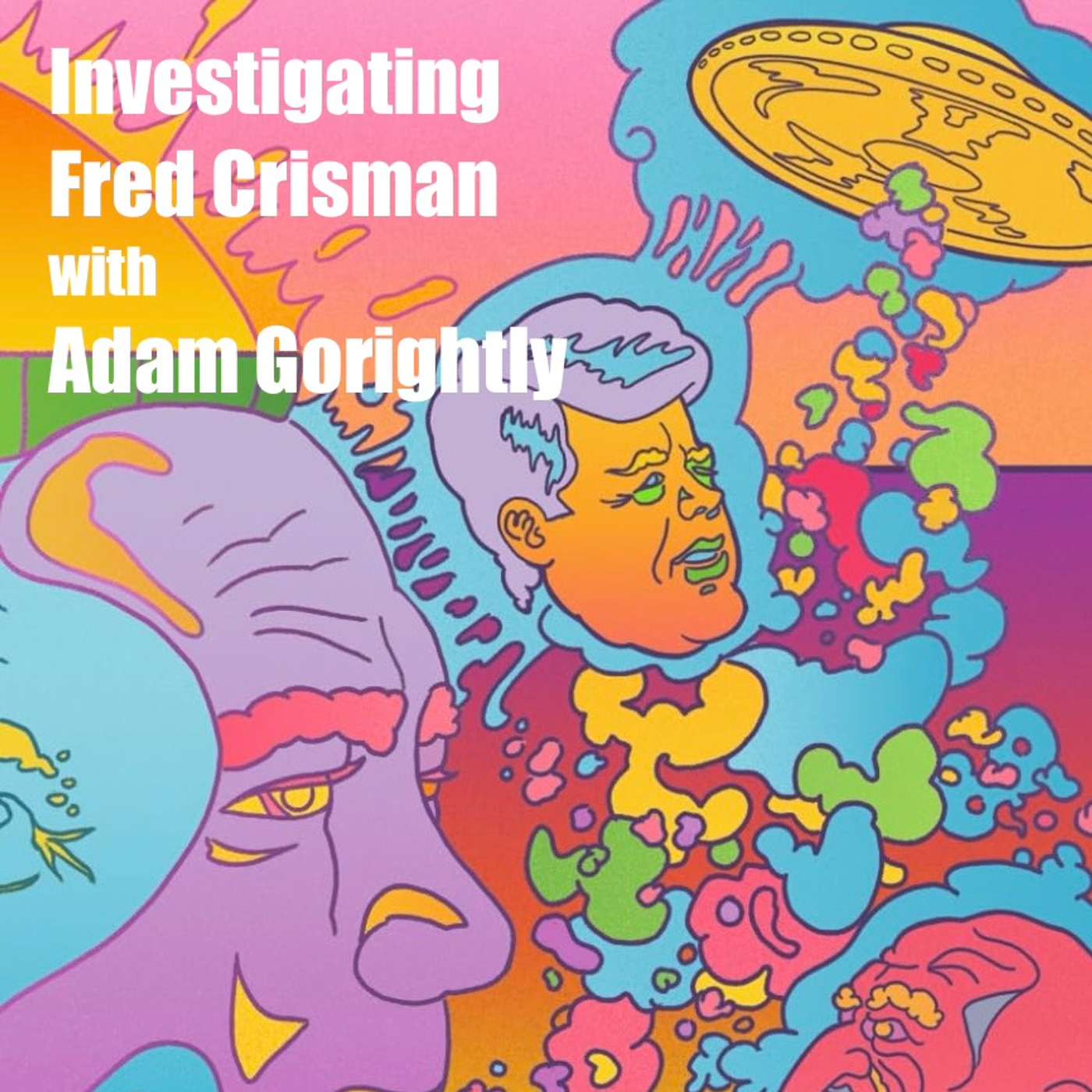
This week, AP is joined by author, researcher, and self-described "crackpot historian" Adam Gorightly for a fascinating discussion about his latest book Agent of Disruption: The Many Lives of Fred Lee Crisman. Adam has long been a singular voice in writing about all manner of weirdness, ranging from UFO history to Discordianism and JFK assassination theories, and the subject of his latest book serves as a strange nexus figure in the midst of all of it. In conversation here, Gorightly explains a bit about how Crisman played a role in some of the pivotal events that informed our modern conceptions of fringe topics- including, but not limited to, his involvement in the Maury Island UFO event and Jim Garrison's investigation into what happened that day in Dealey Plaza. His book is an amazingly comprehensive investigation into the various narratives pertaining directly to Crisman, but also the myriad ways his tall tales and cons weaved their way into subsequent cultural myth. There was simply no way to cover all of it in one interview, but listeners will be rewarded with strange anecdotes and even stranger connections made in this chat. Along the way, Gorightly and AP discuss some of the other colorful characters in Crisman's orbit, such as Thomas Beckham and the Rev. Dr. Frank E. Stranges- as well as connections to unreliable narrators such as Richard Shaver and Michael Riconosciuto- creating a mind-boggling, tangled web of weirdness which is very relevant to more recent events. In his writing and in talking about such subjects, Gorightly brings a welcome sense of levity while remaining level-headed and fact-oriented in his approach, laying out what is known and letting listeners and readers draw their own conclusions- and in this case, there's a lot to get into! The latest book is long, but it's certainly never boring; it serves as a profile of one marginal figure whose deceptions and varying motives had lasting influence suffused into the greater fringe milieu. Order a copy of Adam's new book here: https://a.co/d/00h6Ltm2 And keep up with his work here: https://gorightly.wordpress.com/
AP Strange: Pardon me while I have a strange interlude. But there is nothing else. Life is an obscure oboe bumming a ride on the omnibus of art. Among the misty corridors of pine, and in those corridors I see figures, strange figures. Welcome back, my friends, to The AP Strange Show. I'm your host, AP Strange. This is my show, and today's show is brought to you by the Maury Island Doughnut Company. It's the only doughnut company that offers flying doughnuts. Other companies may say they offer flying donuts but the only ones you can really be sure will fly are the Maury Island ones. So, get those. Use promo code Crisman at checkout and you'll get a deal on a full order of Maury Island donuts. So, tonight, on the show, this is a real thrill for me because my guest is someone who I've been reading for quite a long time. I was saying before we got started that my my being exposed to the work of of this guest, I think launched me into a new stratum of weird years ago when I first discovered his book, Historia Discordia. I'm talking, of course, about mister Adam Gorightly, everybody's favorite crackpot historian, and he has a new book out called Agent of Disruption, The Many Lives of Fred Lee Crisman. It's a book about Fred Lee Crisman, aka f Lee Crisman, aka f Lee, aka doctor John Gold. We're gonna be getting into it, but he's a wild man of mystery as is our guest. So welcome to the show, Adam. Adam Gorightly: Thanks for having me on, AP. It's a pleasure and honor. AP Strange: Oh, well, yeah. I mean, it is it is great to have you as as I mentioned before. I've I've long been a fan of your work and and I think it's high time that you and I had a chat so your your new book was as good a reason as I need to do that and I absolutely burned through it. For listeners benefit this book is it weighs in at about 548 pages, I think. Adam Gorightly: Five five sixty two with the index, I believe. AP Strange: Right. Adam Gorightly: And and I'm in I'm impressed you blew through it and you read it all? AP Strange: Oh, I read all of it. Yeah. Adam Gorightly: That's quite a feat. AP Strange: Well, as I said, I've always enjoyed your writing and I also have perhaps a kind of perverse affection for like con men and the people that just have the gall to actually pull cons and I just was astounded by the amount and variety that. Adam Gorightly: Oh yeah. AP Strange: It's just Adam Gorightly: just one after another with he and his many associates throughout the years. AP Strange: Right, so I do you want to try to give like a thumbnail on who Fred Crisman is for listeners benefit? Adam Gorightly: Well the thumbnail a lot of your, listeners may know the the basic story of Crisman or you know what's been floating around for the past few decades that, number one he was involved as a witness or participant or hoaxer perhaps in the fabled Maury Island incident which allegedly occurred, let's see what was the date, 06/21/2019, '47, just a few days before Kenneth Arnold's, sighting. I say allegedly happened because we can dig into that, a little bit more, but, he was associated involved in the, Maury Island incident. A lot of people, I mean, at the time of the incident, they really didn't know... The public didn't know all the players, and it was a story that lasted a, a few days, and that was it. It kind of... People forgot about it till the early fifties when, there was a book came out called, The Coming of the Saucers written by Kenneth Arnold and, Raymond, Palmer concerning the Maury Island incident. So, yeah, the, basic incident, I guess, you mentioned the donuts at the outstart. According... Well, let's let's back up a little bit to, Kenneth Arnold. He had his sighting 06/24/1947, which a lot of people point to as the beginning of the modern era of UFOs. It was the first story that really caught national attention leading up to that, his sighting a few days before that other people on the West Coast were having similar sightings to Arnold's actually, but just be... Those basically got, you know, some local and regional media attention, but, you know, his Arnold sighting over Mount Raynier really, blasted, the UFO phenomenon to the stratosphere. I said, you know, people point to it as the, start of the, modern era of UFOs. AP Strange: Well, that's like the reason that they called them flying saucers was based on that sighting. And, it always led me to wonder what if Moray Island had gotten more attention. Would they have been known as flying donuts? Adam Gorightly: Could be. I'm not sure. A lot of people attribute flying saucers to Arnold, but I don't think that's, necessarily true. AP Strange: I've heard I've heard different opinions on it as well, but it's popularly cited as the origin for that. Yeah. Yeah. Adam Gorightly: Right. I think that's probably wrong, but what the hell? In fact, the the terms flying saucers were being used before that. And I mentioned Raymond Palmer, who's a key player in this story with amazing stories and Fate Magazine. Prior, you know, to the... This wave started with Kenneth Kenneth Arnold and lasted for a couple weeks there in 1947 all the way up to, like, the, fourth of July weekend and the Roswell crash or whatever happened there. I was gonna say, Raymond Palmer's role in all this with amazing stories and, later with, Fate Magazine. When he heard, Kenneth, you know, Kenneth Arnold, story break, across the newswire, he got in touch with Arnold. And Arnold was quickly developing this reputation as the serious and sober, researcher because he was an actual pilot, you know, and so people gave a lot of, credibility to his sighting at the time. What he sighted, who knows, they were actually these chevron shaped, I believe it was a nine craft he saw sort of in an array. AP Strange: Yep. Adam Gorightly: And similar to other sightings of that period, a lot of them appeared as a number of ships together working in formation. That's where some of the theories that what they were actually seeing were these arrays of balloons. And... But anyhoo... And, you know, that might have been what was going on during that period. They ramped up a lot of the... These testing of the, Mogul balloons and these other weather balloons that were monitoring, you know, The Soviet Union for atomic blasts and whatnot. AP Strange: Right. Right. Adam Gorightly: So... Yeah. So Palmer, he'd been pushing... Raymond Palmer had been pushing flying discs is what they call them quite a bit prior to them. Ken Arnold's sighting flying saucers was also floating around in the zeitgeist as well. And Ray Palmer, you know, was basically kind of starting to push these stories into the mainstream more, you know, 40... 14 stories of these flying discs and flying saucers because it all... You know, so the buzz didn't start with, Arnold, but it certainly ramped up. So, Palmer got ahold of Arnold and recruited him to go to, check out the Smurry Island incident, how Palmer, got wind of it. He was, contacted by two of the witnesses. There was only two witnesses, really. Well, perhaps there was more, but perhaps there wasn't any at all, but by contacted by Crisman, Fred Crisman, and Harold Dahl who had some fragments, some strange rock formations that they saw fall down from the sky. That was the original, story. We can get into all the nuts and bolts of that, but they contacted, Ray Palmer and, Ray Palmer asked me, do you think these were actually... Could these have come from flying saucers? And it's unclear how much, you know, both Crisman and Doll were working with Palmer behind the scenes to gin this up. Anyway, started Palmer's interest. He got these rock formations and was supposed to test them in the at the University of Chicago. In the meantime, he got ahold of Kenneth Arnold and asked if he wanted to go out and investigate the Maury Island affair and to see if these two characters, Crisman and Doll, were on the up and up. AP Strange: Right. Adam Gorightly: So, yeah, the incident itself, yeah, he had the, what the Doll claimed. He was there's different stories of what, you know, actually these guys were. They've been called harbor patrolmen in some stories. Some say they were with the coast guard, military like AP Strange: unit. Right. Yeah. Every detail of the story is contested. It seems like and Yeah. It's always confused me over the years because, like, my only knowledge of Crisman was this, which I always found too baffling to to sort out and and his relation to which... I mean, I don't wanna get off track and get ahead of the game, but his relation to the JFK assassination Adam Gorightly: Oh, yeah. AP Strange: Which I'm sure we'll get to later. But, yeah, I mean, one thing I'll I'll just point out in the moment is that, like... And, I mean, we're leading up to this as well, is I feel like Palmer really saw the flying saucer reports or the disc reports as being like a confirmation of the shaver mysteries. Mhmm. It's actually have in my collection. I stumbled across it fortuitously and old amazing stories. Think it's Amazing Stories magazine where where Palmer does, like, an editorial at the beginning talking about Kenneth Arnold's sighting. And he's like, finally, we have some vindication for Richard Shaver's stories. Right. Adam Gorightly: We we should talk about Shaver a little bit. We'll get back to the actual Maury Island incident here in a moment. Yeah. But so, yeah, there was the shaver mysteries back in... I think it started in the early forties with this guy, Richard Shaver, who claimed through his arc welding gear. He was working at a either the ship... Shipyards or at the Ford plant at one time, but he heard through his, arc welder voices started talking to him, or he's picking up chatter from somewhere over time. He grew to believe that he had come in contact with these entities called the Deros. AP Strange: Mhmm. Adam Gorightly: That live, in the earth under under the earth and are nasty, devolved creatures. They devolve from a race of, extraterrestrials who came to Earth many, many, many, many eons ago. They're called the Terrans and the Atlins. And at some point, according to the whole original Shaver story, they started getting affected by the rays of the sun, so they had to retreat into the earth and built these fabulous cities there with all these strange machinery and whatnot. But over time, they went mad. Start craving mad. AP Strange: Right. Adam Gorightly: Some some of the, Atlins and the other, group Terrence were able to, bug out on what spaceships they had, but who was left behind became these weird insane diros who had supposedly abducted the earth women upon occasion and took them down into their caverns where they had all this weird machinery and doing these hybrid experiments. A lot of it sounds, know, quite similar to the Dulce Bay store, and I do think it was an influence. Yeah. On all of that. And so that... So this was through Amazing Stories magazine that Ray Palmer started publishing Richard Shaver's stories, which, they claimed were true stories even though, you know, Amazing Stories was a science fiction magazine and I got... The shaver mysteries got real popular over a few for a few years and you had a bunch of different people writing in claiming their own encounters with these nasty little creature called the deeros who live in the inner earth and one of them who wrote a letter was, Fred Crisman, even though his first letter he didn't state his name, but he claimed that, during World War II he had crashed in, Burma and discovered a date... A cave with Adiras and he and his fellow officer with him got into a gunfight with the Adiras and he was hit with a laser that left some scars on his forearm and you know that was the basic story that Crisman wrote in to amazing stories. AP Strange: I feel like you get a repeat of that years later with, Phil Schneider. Adam Gorightly: Yeah. It's very similar. AP Strange: Right. I Adam Gorightly: I I think that's where it originally came from. But AP Strange: Right. Adam Gorightly: So Palmer and Crisman had this relationship of some sort already. At least they were corresponding. And, you know, there there was other context as well later on according to Palmer that, Crisman called him on occasion and used another name. Wasn't Fred Crisman. So he's... You know, Crisman is always using, different pseudonyms and stuff and he claimed that he was in Texas at this time, discovered another, Deros cave with machinery and he's trying to get some money from Palmer to buy some top notch photographic gear so he could splot down into this cave and whatever and prove AP Strange: Right. The Adam Gorightly: Shaver's mysteries were true. That was always the thing. They were with the different readers writing into amazing stories. They were Ray Palmer was encouraging his readers to go back and bring me the truth. We know it's out there. We've gotten all these amazing reports from Richard Shabert, but we need you, our faithful audience, to help us prove that this mystery is true. AP Strange: Right. Well, you had the people writing in to to aid that effort, but you also had the people that were very angry that the the space in the magazine was being devoted to this because they were there for, like, the heady speculative science fiction stuff. Right? Yeah. Adam Gorightly: Yeah. Different camps of, science fiction fandom at that time. There... On one side, you had the more, yeah, nuts and bolts, Isaac Asimov. They want real hard science and they're those who, you know, those nut and boulders, I guess you could call them, they got pissed off at Palmer because he felt he was just, this was a whole farce and that he was duping his readers, but the fans of the shaver mysteries, they, it, you know, like I said, it became real popular for a number of years. AP Strange: Well, as a result, we got Fate Magazine, right? So that's good. That's a that's a net positive. I think I love Fate. Adam Gorightly: So... Yeah. So Crisman was, communicating prior to the Maury Island incident about, you know, this woo woo type stuff with Palmer and it, you know, he had a, Crisman had a long standing interest in, these type of science fiction and fantasy stories. He had, you know, he had some desire to be a a science fiction writer himself which I get to a bit in the book but could never quite pull it off But in some ways, you know, the science fiction paranormal writing happened with, you know, like, for instance, these these letters he would send him to, amazing stories about his own battles with the deer rose. So Yeah. Anyway, that there was this contact between Dahl and Fred Crisman. They sent the rock formations to Palmer. Palmer wanted to find out Lawrence sent Arnold to investigate the story. Thus begins the Tacoma affair. AP Strange: Yeah. Adam Gorightly: Where, and so, yeah, Arnold gets in there and gets ahold of Harold Dahl who's at first seems reluctant, but he finally gets him to come over to the... Where Arnold's staying at the Winthrop Hotel and, you know, get to the bottom of what these guys saw. Dahl claims he saw basically, these, he was out doing the harbor patrol stuff. They... You you know, the claim was they were salvage logging. You have these log blue... Booms that'll float out and, you know, they'll send them... The the logging companies will send them via water to, different lumber mills or whatever. But sometimes those booms will break open, you'll have stray, basic lumber floating around and, you know, that was a thing back at the time where there was different freelancers that go pick up, you know, these logs that were floating around salvage them. They all usually had a butt on the end to show what company it was so they'd return them for money. So that was kind of what Dahl Dahl and his crew quote unquote crew were involved in in the Puget Sound. They took off from Tacoma and Morrie Island is really close to Tacoma if you're, you know, right in Tacoma. You can look over at Maury Island. It's not, far at all. AP Strange: Yeah. Adam Gorightly: And, so on their way out there, doing their, logging salvage thing, they saw... Dahl claimed he saw five of these donut ships. And one of them started to labor and started spewing out, you know, like sick or something had was throwing up or having a case of intergalactic diarrhea. AP Strange: Yeah. Adam Gorightly: Spewing out this fiery slag, they called it, which started raining down on their on his their boat and, the other, let's see, the other four craft circled the, sick, I guess we can call them, injured, donut ship. One of them reached out and touched touched the ship as if to if to repair it. And apparently they happen... That happened. They were good to go. Then they flew off and they were gone. That was kind of the end of it. But while all this stuff was raining down, apparently one of the chunks of the material killed Doll's family dog and injured her, his, son Chuck Dahl who was also on the boat, supposedly injured his arm. Right. And, yeah, it's unclear, you know. AP Strange: Yeah. Every detail of the story comes under question later. Like, it gets told differently as time go... Like, whether or not he even had a dog. Right? Like Adam Gorightly: Yeah. I don't I I don't think so. Whether there was a crew. Right. I mean, whether they actually had a boat or did any of this work. I know that Doll had a boat, but it didn't sound like it was really seaworthy able to do this stuff. So yeah, I go through all of the difficult questions about the story as I, you know, proceed through it. AP Strange: Yeah, it's it's pretty much I mean, I haven't looked too deeply into it and I understand others have have written about it like Ken Thomas who you referred to in his book and of course Kenneth Arnold's recounting of it originally. It's it's been told plenty of times and and I've never really known what to think but you have like probably the most comprehensive because you you you cover pretty much every permutation of it. Which is is great and that's just the first couple chapters of the book, people. Like, there's so much more beyond that. Adam Gorightly: But these these guys, whoever it was, you know, I think Crisman had a lot to do with this, obviously. And Ray Palmer, you have all these tropes that came out with the Maury Island incident. Do you have... Looks like AP Strange: men in black. I mean, it's the first black really right. Adam Gorightly: You you have meta material. You have an exploding spaceship that didn't really explode. You had some missing time, but with a Charles Dahl. Yeah. The miss... Mysterious Men in Black. That happened the next day after, Saddell has a sight and they get back to the docks, back to Tacoma, where he encounters Crisman, who refers to as his superior officer. And Crisman's, he said he, as he later told Arnold, he was pissed off because he thought they'd been, him and the, Dahl and the, crew had been drinking on the job and crashed into some rocks or something and damaged the boat. And so Crisman, he wanted to go see for himself. He went out the next morning at the same time Dahl encountered a man in black who threatened him to shut up about the Maury Island incident already. Crisman went out to Maury Island where he had his own, sighting and brought back a bunch of the, material that was still screwed out along the, shoreline. AP Strange: Right. Adam Gorightly: Dull at this time, so I forget the exact number. There was, like, claimed 2,000 tons of this stuff was there. It was all over the place. So, you know, apparently, a large amount of whatever it was. Yeah. Yeah. Pounded the guys in the boat and was still there on the shoreline, so that's the basic story. So they're recounting all this stuff. Other players come in to the story. We have Air Force Intelligence who interviews Crisman and Dahl. Right. And and, they're they're not real impressed with their, story. They stay a few hours and they got to get, back for some other mission. And Crisman, before they left, gave them two intelligence officers who were with the Army Air Force, gave them some of the slag material, you know, from the donut ships and they left early that morning and supposedly Seaton Cordon newspaper accounts loaded some of that classified material, whatever it was might not have even been the slag, might have been something totally unrelated into a b 25 and they headed back to, Hamilton Base in California. They didn't get too far when the, one of the engines caught on fire and they went down in flames and the two intelligence officers who were investigating the case, they died. They also had a crewman and a hitchhiker who survived that crash. So now in the story you have also Another trope about the sabotage that You know, that's what's being hinted at that AP Strange: right Adam Gorightly: because they had that material on the craft this it needed the story needed to be covered up. There might have been sabotage involved to shut the whole thing. Down. So, you know, once again all these different tropes about some sinister and force force interfering with the investigation. You also had the anonymous telephone callers that went on with the story who were feeding right when Arnold got there and started interviewing Crisman and Dahl. The story started leaking to the newspapers, and Arnold was going crazy. What the hell is going on? How's this getting out? You know? Is it he became convinced that the room with the wind trip was bugged, but most likely it's probably Crisman who was the anonymous caller. AP Strange: Right. Well, I felt bad for, Captain EJ Smith who got wrapped up in all of this because I I don't think I realized that he had originally but it just seemed like he was kind of a last minute addition. Well, he showed up just to be a credible person, a credible airline pilot and and it just seemed like he probably showed up and was like, the hell have I got myself into? Adam Gorightly: Yeah, exactly. And, yeah, he had... Smith had... He's another one who had one of the... During this, flying saucer flap that started with Arnold's sight until, you know, the July 4 weekend. Smith as well had a UFO encounter with his crew during a flight. I forget where they were going exactly. It was commercial flight. So, yeah, he got, pulled into the story as well just to have another set of ears and eyes and somebody seemed credible trying to figure out if these two characters were on the level. AP Strange: Right. Poor bastard. Well, because neither of them really seemed to be. I mean, like Doll and Crisman both seemed really sketchy and as you go on with the the the story in the book, it it really kind of seems like Doll was under the thumb of Crisman in a lot of ways like like he had dirt on him or had some kind of control over him. That's kind of the impression I got after a while but I don't I don't know. Adam Gorightly: Well, accurate AP Strange: that is. Yeah. Adam Gorightly: That's how it comes across that I think even Arnold might have said that at one time. It looked like, Crisman was like dominating the situation with, Dahl, that Dahl was this basically, he got sucked into this and Crisman was like directing his actions and coming up with the story. Dalt seemed pretty much like a, it's a bit of a simpleton what I gather, and he wasn't real literate either. He might have been for many years. He ran a thrift store, so he's kind of a willard dealer guy. He was sharp that way, but as far as all these different elements in the story. I don't believe he met A man in black, but that's that sounds like something in Crisman's wheelhouse that he would come up with. So I saw, you know, Crisman and potentially Ray Palmer were kind of like frenemies, but they're on the same page is what the narrative was that they, know, are trying to get out and perhaps you know what, why was this going on. Why were they hoaxing it was Crisman trying to capitalize? Were they trying to make money on this? You know, quite possibly Crisman was out of a job by this time and he was kind of at loose ends. And it seemed like, you know, this whole story was, like I said, I believe, was crafted by Crisman and Palmer to cash in on the sudden flying saucer craze sweeping the nation. AP Strange: Yeah. But I mean, I think that's one of the central paradox of of Crisman is that he seems to crave attention but at the same time wants privacy or like anonymity or like and he wants to cash in on stuff but he also like wants to be hands off. It's like like he can't decide or or he's just having fun. He's just doing it for the love of the game really. I don't really know. Adam Gorightly: Yeah. And part of it, he he do this, throughout his life, you know, during the Maury Island incident, there was a day or two where he just disappeared and I think why he disappeared was, you know, this was in the aftermath of the b twenty five crash. So the authorities were talking about air air force investigators, FBI are wondering what was going on here, you know. They didn't have a full idea of even what the UFO story was at at this point, but they knew that they'd interacted with these intelligence officers died and Crisman supposedly handed them a box or something and there and so I think that's why Crisman was filling the heat the story caught up with them and he, you know, he might be facing some accountability for some type of criminal charges so that's why I think he cold his heels a few days and basically told Dahl to tell Arnold and Smith that he had had... He... That Crisman had to leave on urgent business. At that's... At that same time, the anonymous caller was, weighing in again, claiming that, one of the witnesses had been shipped to Alaska, and he was referring to Crisman. You know, I think it was... AP Strange: Well, he seemed like he would just disappear from time to time, and then there would always be, like, later some crazy story. I I mean, as as his life goes on, he becomes, a super spy sometimes, like Mhmm. An agent of disruption as the title suggests. And some of his some of his own imaginative cover stories were just like more improbable than anything else, you know? Adam Gorightly: Yeah. AP Strange: It's really hard to describe, but just the brazenness of of of his cons and almost the pointlessness of them are like that fascinating. Adam Gorightly: Yeah. They didn't ever... Nothing ever quite, paid off, you know? It paid off after he died. It's really, you know, after his death in '75 that these legends started growing around him about, you know, UFOs and the JFK conspiracy. AP Strange: Right. Adam Gorightly: The important thing for Crisman, he's weaving all these stories about himself, and there's always elements of truth in them, you know, that people can look at and point to, okay, he was, in the air force and these things, and he did, crash in Burma, believe it or not, whether he fought, you know, the Deros is another, story, but that was one of the things. There was a newspaper article that researchers have had for, you know, dating back to when Ken Thomas and others were looking into this. It was from May '46 Crisman was running for the corner of Pierce County Pierce County that Tacoma is in that county and in that article which in the Tacoma News Tribune which was basically a, this was an advertisement in essence that Crisman paid for to promote his political campaign, which he lost. I can't imagine. AP Strange: Great. Adam Gorightly: Crisman actually be in a corner, but that would have been something. But, anyway, AP Strange: can imagine him being a school teacher. Like imagine being in his classroom. Adam Gorightly: Students loved him. But, so yeah, in that article, he was, you know, giving his resume and some of the things weren't quite true. He claimed he had been studying for a law degree and that wasn't quite true, you know, but people like to bulk up their resumes running for political office and they're not always a 100% accurate. Another thing it said in the article these he had flown two eleven missions during World War two, Crashed twice. And was wounded once. And you know this was something to a Crisman sold pulled so many tall tales. I wonder if this, this is true, you know, even though it's in the new newspaper. It's like this just an advertisement he placed and two eleven mission sound like a hell of a lot for me. He was there I think active as a pilot in the, Burma, India, China theater for about a year and a half. That sounded like a hell of a lot of missions, you know, and he crashed twice and but as I started looking into all this, it was true. He did fly all those missions. He did crash twice. One one was Burma land crash. The other was in water. He was rescued by the natives, you know, so you can point to that. Okay. Maybe that's when he met the, Deros. He talked about the... But, you know, talking about elements of truth. He talked about a eight inch scar or something on his wrist where the laser got him. And so, you know, that could be something he could show people when he's telling them the story, but what you don't know is that when he was, like, 19, there was a hunting accident where Crisman shot himself in his or his cousin did, shot himself in his right wrist and Yeah. With a nine inch scar there. AP Strange: So you can Adam Gorightly: see how he's trying to weave in things to help. So, his story. AP Strange: Even with the war record, he claimed to have shot a number of Japanese planes down as well and II think it's I think it's in one of the one of the one of the appendices. Professor Spence talks about his his war record and and he he was he was flying like recon missions and transport and stuff like that. So, he wouldn't have been gunning other planes down. Adam Gorightly: No. No. Right. So, he kind of embellished upon that over the years that he was a fire fighter pilot, etc, but not to take away from his career, which was, you know, AP Strange: pretty that's impressive. Adam Gorightly: Other thing I was going to mention was that in that the... This newspaper article he claimed, you know, that those went on all those missions and then he worked with or for the forerunner of the CIA, which is escaping my memory right at the minute. AP Strange: The OSS. Adam Gorightly: The OSS. And so this was, something else that was, you know, there's no indication he ever worked directly with the OSS, but the OSS, there was a OSS unit in that, China Burma India theater and it's probable, but I'm sure you know he did quite a bit of work doing once again recons for OSS and he did shuttles of personnel, etc. So once again, there's always some little nugget of truth, even some of Crisman's more outlandish stories. And you know that this revelation that he worked with or for this OSS back in the day when that became... People became aware of that article and the claims that, Jim Garrison was making that Crisman was like some type of CIA agent who was involved in the Kennedy assassination. People, you know, newspaper article like this raised some eyebrows. Oh, maybe that confirms that he is a CIA guy. AP Strange: Right. Well, you know, it's a pro propinquity. If he was OSS, he he probably... They retained him for the CIA and tapped him to keep an eye on local politics in Tacoma. Adam Gorightly: Yes. As as revealed in the easy papers. AP Strange: Right. See, that's what I was mentioning earlier is that these grandiose tales about being like an agent of disruption as the easy papers describe it and Mhmm. Working for the CIA, but his job is to like hold it down at the local school system as the principal. Yeah. Adam Gorightly: It's a cover. AP Strange: Yeah. But what of interest is going... Like, what kind of disruption is he doing with, like, the library trust or the the town manager? Like, I I don't understand why the CIA cares. Yeah. Adam Gorightly: Well, I don't I don't think they do but Crisman was, you know, evolving this legend about him self and you know with the Easy Papers, oh boy, you gotta kind of get deep in the weeds here but this thing called the Easy Papers came out during the time he was heavily involved in Tacoma City politics, which is a whole other stories, but, Crisman at, had, you know, these different there was factions on the city council. There was the pro Crisman group that, you know, were jockeying for power against the more progressives in Tacoma and it was like an ongoing thing but Crisman sort of worked as a propagandist for this group that were trying to take down the city manager system and he would often use anonymous propaganda started this scandal sheet called the Tacoma New Times, which you know was written pseudonymously, he didn't really, people who looked into it after a while figured out was Crisman, but for city council members copies of the New Times would show up or some other other work of propaganda that Crisman's and his cronies were, you know, using to push some narrative and these documents, these different papers, broadsides or whatever would show up at these city council meetings and they'd get introduced and whoever was there to, working with Crisman, they'd bring up. And now we have this copy of the New Times claiming that the back... Whatever the, Black Panthers and the Tacoma Police Department were working together to take down the radio station where Crisman worked out. All these conspiracy theories started getting, pushed, and it's not unlike politics all these days. Very AP Strange: Oh, yeah, there were some striking similarities between the discourse that was going on in the type of propaganda that he was doing and what we see now constantly. Adam Gorightly: So, and I show examples of different hoax letters and things he created over the years. You know, while we don't know for sure that the easy papers are a fake, you know, if it was my life on it, I would bet that Crisman hoax that that certainly seems like it. There's enough personal information about where Crisman worked in schools and these type of things and this easy paper document, how it surfaced was through the Tacoma City Council. It just got ended up in the hands of different members there and what it's like a six page document and the document claims that it's written by a CIA analyst who's looking into this man, Crisman, who belongs into this secret group that's called the easy section, how he's basically agent of disruption screwing with different screwing going in and like at Boeing, he did work for Boeing a couple years, the easy papers claimed that Crisman went in there and it was basically working at this agent of disruption, they discovered there some of the higher ups that worked at Boeing were homosexuals which would cause a national security issue so Crisman's job was basically expose those people that was that's one of the claims in the easy paper and he was doing all different AP Strange: that kind of like turning everybody against each other like causing causing interdepartmental strife at Boeing. Adam Gorightly: Yeah it's it's it's very similar to like COINTELPRO, you know. AP Strange: Right. Adam Gorightly: Agents undercover agents would go and join subversive groups or anti war groups during you know the period that was all going on and try to turn them all against each other and basically undermine whatever group it was. And so, yeah. And so anyway, this document claims claims all of that. And, you know what? So why was Crisman doing that? Eventually, this document, the FBI got a hold of it. What the fuck is this? They pass it on to the CIA to see what the CIA thought. The CIA did an analysis of it and came to the conclusion that somebody was trying to smear Crisman by saying all these things against him, whereas it was Crisman basically just messing with people's minds and he had enemies on the city council so if his, adversaries there got a hold of this stock and they're probably going what the hell this guy works for the CIA and he better keep your head on the swivel around him he's like, Right. You know, this is a badass unit that actually kills people and causes all this disrupt disruption, etc. So I think that was kind of the... AP Strange: Like crazy misdirection. Yeah. Yeah. Adam Gorightly: Well, I mean, like, see. Miss misdirection, you go to a whole lot of trouble to come up with something like that, you know? AP Strange: Right. Yeah and I mean, I I don't know. Like some sometimes you just seem to get a kick out of it, but I guess that that actually serves a purpose if you're instilling fear with the idea that you're a g man that Mhmm. May or may not have a license to kill or at least know people that do, you know? Adam Gorightly: Yeah. AP Strange: You have friends that do. But... Yeah. Yeah. Well, I mean, the lengths you'd go to... I mean, you describe in in here how he had letterheads from all the different places that he somehow got his mitts on so that he could, like, forge letters from from all the you know Boeing or different churches or groups or yeah Adam Gorightly: government letterheads you know or stocks air force base yeah Yeah. He collected that stuff and he was a member of the Universal Life Church, which is a whole another thing to get into and interacted with all these diploma mills at the time. And so, it could create all these different, documents with, you know, embossed stamps like stuff you get from a law office that was going out of business, you know, or different, government entities, you know, once again letterhead. So he collected this stuff at the state sales or whatever or if he's a government office and somebody wasn't looking, appropriate, some stamp or something. And so he set up his, base of operations in the late sixties, seventies. He lived with his mom in, Tacoma And he had a basement office and in there he had three different typewriters so he could produce letters with different fonts and he had all these this collection of once again all these different, documents and letterheads and stuff he could use for what his son Fred Crisman Junior referred to as his pops disinformation work. And, yeah, a lot of the times it was dealt with, you know, this, behind the scenes political machinations that he was involved with. Sometimes it just different enemies, adversaries. He'd grown to know and hate over the years. He would, screw with, you know, using these same methods of coming up with fake dirt on his opponents and spreading it around town just to screw with them. AP Strange: Right. Yeah. And I mean, to get back to the the pointlessness ness that I mentioned earlier, like, I I think his son had recounted a time that a boy scout leader had called the house because he he had he had meant to call the restaurant, but he accidentally called there. And so Crisman just pretended to be the restaurateur and said, oh, yeah, sure. Bring him down. They can all eat for free. So, like Yeah. Adam Gorightly: And then Yeah. I was gonna yeah then a few days later that his Crisman Junior saw his dad reading the newspaper busting up and he go he recounted the story about how he told them to come down to his restaurant and he freed them for free, feed the Cub Scouts whoever for free and so this all resulted in an incident where this you know actually happened the guy took his scout unit, into this restaurant, and, once they're all done, he refused to pay because he thought he's getting a free meal, and they had to call the cops in anyway. Right. Crisman thought this was all exceedingly hilarious. AP Strange: Yeah. And I mean, this is a point that's been made before by others. You know, I'm not... That that sometimes people hoax stuff just because it's in their nature too. Like, they get, like, they get a kick out of it. You know? Like, he had the opportunity to really screw with the scout leader and this poor restaurateur for no reason. So he took it. You know. Uh-huh. It's just wild, yeah. Adam Gorightly: Yeah. AP Strange: Because I mean, the he doesn't stand alone with this because the book is populated with characters that are weirdly kind of like him. Like he finds like minded people. Thomas Beckham, another person with many names and closely related to the aforementioned diploma mills. What was this guy's deal like He's almost worse than Crisman. Adam Gorightly: Oh yeah, he's constantly running some type of scam. I mean, as a Better yet known as a DJ or something and want to be musician when he was in his early teens. AP Strange: Right. And for me, as a Mark Evans or something like that. Yeah. Adam Gorightly: Yeah, it was a little later with Mark Evans, but yeah, one of the first scams he pulled. He pulled similar scams over the year but he advertised a concert for Ricky Nelson. Who your listeners might know from what was the show he was on? AP Strange: Was it father knows best or? Adam Gorightly: No, but he was a popular teenage idol during the time. AP Strange: Yeah, child actor turned musician. Yeah. Adam Gorightly: Aussie Aussie and Harry. It was AP Strange: the yeah. Adam Gorightly: Anyway, anyway, so Beckham at one point promoted this concert in New Orleans with Ricky Nelson. In in small print on the poster that said, not the Ricky Nelson from Hollywood but the Ricky Nelson from someplace else in Louisiana, but basically it was a scam to get people to pay to attend this event and then Not sure I don't the event concert never went off. I don't know if, Beckham pocketed the money than the split town that was often his modus operandi, but, he might, he might have intended to actually perform as Ricky Nelson at that but that was kind of the stuff he got involved with but he he's a thing that got him on Garrison's radar in New Orleans in the early sixties, Beckham became, through his mentor, a guy named Jack Martin, and we're really getting down in the weeds. I don't know if we'll have time to describe Jack Martin, but Jack Martin introduced Beckham to different diploma mills and how to become a priest by the mill and AP Strange: Yeah Adam Gorightly: Beckham did that. He got a basically, priestly accoutrements, you know, with the, Roman collar and a dark suit and started pretending that he was a reverend Beckham and he started a, charity for, basically, anti Castro Cubans that were in New Orleans during this period that needed help. So, and he finagled a storefront that he called a mission and had all this going on was it was basically it was a fraud to scam whoever, you know, out of, money with this phony charity and you know inevitably he'd get busted for it he'd skip town and move on to some other scam but it was this incident that or his involvement with this fake scam that bought Beckham to Garrison's attention, one of the things, one of the things, and that Garrison evolved this, theory and I think Beckham over time helped to push this narrative too that Beckham was like, the money handler for the Sante Castro Cubans that were involved in the Kennedy assassination and through Beckham's association with Fred Crisman, Crisman got sucked into it and, you know, this one of those things where all these different stories started getting attached to Crisman, that he was one of the three tramps that were picked up in Daly Plaza, that because he had worked for Boeing, Crisman was part of the military industrial aerospace industries that were in cahoots in the Kennedy assassination and, you know, things and that he was a high level CIA agent on and on and on. AP Strange: Right. Yeah. I mean, it it is crazy just like the birth of the flying saucer to the JFK associate assassination and the Garrison investigation. It's like two of the biggest, most most profoundly talked about things in in the history of Fortiana and conspiracy thinking. It's like and this guy's kind of right in the mix with both. Adam Gorightly: Yeah. You know, up until his death, he was relatively unknown. I mean, some UFO, UFO, they knew the name, you know, but it's like a thousand other names in these stories, but after he died in '75 somehow the legend Really took off after that. I think part of it was these rumors about the three tramps that emerged, but since then, I mean, if over time it's this legend around him has continued to grow and other things have been attached to his stories. I mean, if you just randomly started poking around on wherever you find your conspiracy theories, Crisman is now seen about seen as, connected to everything. Mind mind control programs, MK Ultra Mhmm. That he was involved in project paper clipping, you know, bringing the Nazis into The US. And even recently, I've seen him get attached to The Epstein Files or The Epstein Story, you know, so these can continue to grow and I think there might be some people out there willingly kind of inserting those narratives into this, you know, and to the Crisman legend just to see how they'll continue to grow. AP Strange: Right. Yeah. I mean, well, all this is partly thanks to you have an acknowledgment section at the back where you list a bunch of what you refer to as Crismanologists. Yes. A whole lot of people that have done a lot of looking into this over the years and Adam Gorightly: yeah, there there's there's a bunch of for sure. Yeah. AP Strange: Yeah. And I and I could see why. I mean II have to imagine that nobody's really put it all together as comprehensively as as you have with this book. It seems to cover all the bases and and you do hat hat tip to the people that came before that really dug into this stuff but Yeah. When we talk about the conspiracy theories and adjacent conspiracies, There's a sort of thing that happens when you're reading about conspiracies. I'm sure you can relate where it kind of like your hackles go up because you make a connection in your head while you're reading that you didn't expect to find and seeing the name Rocanoshuto as I was going through, I was like, wait, what? You gotta be Adam Gorightly: kidding me. Oh, yeah. AP Strange: Right. I don't know if you wanna get into that at all, but, because, Fred Crisman was friends with Michael Ricconoshuto's father and the compatriots and they they had some business arrangements together which the very end of the book is really where you kind of unpack that and the proximity to the the octopus murders and the Casalero thing. Adam Gorightly: Yeah, and I think that's, like I said recently, I'm like, seeing these other conspiracy theories related to Crisman emerging that comes from the whole Octopus story in the Promise software and that, now now there's claims that, Robert Maxwell, Giselle Maxwell's, father who had some spooky connections was selling the Promise software and this gets connected, you know, once again, Reconnaisuto and, Crisman and that's the weird, know, thing about the story that Yeah, Crisman was good friends with Marshall Ricotta pseudo and I talked about that quite a bit in the book and, you know, we have some Michael Ricconi Sciutto sightings in the book, you know, Crisman knew Michael at the time and yeah it gets it. AP Strange: That's pretty weird. Adam Gorightly: Well, gets deep into what actually where their connections were going on with... They involved with. Crisman and Marshall Reconnaissance are pretty tight, and so they were involved in a lot of this political corruption going on. And, but, you know, also how did that connect to Michael Rakanashuta, who was also was building a drug empire during this same period. How much did Crisman and Marshall Rocanosciutto know about Michael Rocanosciutto's clandestine drug business at the time. Think they perhaps knew quite a bit but it's still in. Well, AP Strange: he would have been, I mean, he would have been pretty young when when Crisman died, right? In '75 but he remembered him. Like he, I think he refers to his uncle Fred Crisman. Adam Gorightly: No, he was in his mid 20s by that time at least. AP Strange: Oh, okay. Alright. Adam Gorightly: Yeah. AP Strange: Yeah. Adam Gorightly: Probably probably in his later twenties AP Strange: Because he's another like unreliable narrator but there's always a hint of truth in what he says, right? So it's Adam Gorightly: well, yeah, he's like one of those guys who has photographic memory. It seems to me so much I heard Beckham was the same way. Can, you know, file away all these different names, you know, that sound impressive when you start rattling them off. Yeah. He was Michael Reconnaciuto Probably 68. He was in his probably 20 by then or somewhere around there. And he's mentioned in the book. During that period, this isn't mentioned in, Crisman had mentions him in his book Murder of the City Tacoma and this was during the '68, the DEA and law enforcement officials in Washington State started surveilling Michael Rakan Ishudo. They actually surveilled him for a number of years until he was arrested and indicted in 1972, then convicted and spent several years in prison, but pointing to murder the city Tacoma, the one... I think there's really only one sighting of Michael Ricconisciutto in it, and it's has to do with them finding listening devices, bugs at Marshall Reconnaciutto's office that Michael supposedly found these bugs. And the way it's presented in Murder of the City is that it's actually their adversaries on the city council and the Tacoma police are in the pocket of the city manager and the local newspaper. They're all pining against Crisman and his buddies, Marshall Reconnaciutto and that faction of the, city council. But what dawned on me recently as I was thinking about this incident with the listening devices, they claimed they found listening devices that their adversaries planted and they also planted listening devices at the police department and this type of stuff. But, what occurred to me was, well, I think there's... There could be a nugget of truth to all this about the listening devices, but, you know, what those those devices were, they were surveilling Michael Rakanashuta for his, you know, clandestine drug lab he was running during this period. AP Strange: Right. Because his dad would just give him cushy jobs at the factory and stuff because they had like a it a TNT factory and then like a kitty litter production Adam Gorightly: Rutonic place. Yeah that went on in California during the mid 70s for sure. Yeah and during his trial Marshall Rutonic Rutonic Rutonic Rutonic said that he got a loan from Michael for something like $80,000 to help him create, he was an inventor supposedly, you know, to create different scientific inventions and whatnot. And that, you know, Marshall claimed he knew knew nothing about the drug lab, but, you know, $80,000 back in... What is that? 1972? That's a good wad of money, and expect they could, cook up a lot of drugs with that. AP Strange: Right. Yeah. I mean, there was some kind of cover story for his underwater lab that they were working on a novel way to remove pollutants from the water or something like that. Adam Gorightly: Yeah. Yeah. Well, well, yeah, it's part of the deal. The underwater lab. There's early stories of Michael from like, '62 or so where he's this genius young inventor. He's getting some press in the, Tacoma News Tribunes and it talks back at that time he had this, underwater laboratory he was using to do different sonar work and during the trial, you know, it was discovered that he had this underground underwater lab where he was cooking up drugs but at that trial Marshall Rikanoshuta claimed yeah it was he was basically using that underwater lab to try to basically come up with some, ways to control, you know, pollution in the river and that these type of things. And he used that same similar excuse later on when he was busted in 1992 brand. Yeah. AP Strange: I guess if your theory is that the meth fumes will will purify the water on their way out, that it was worth a try. Adam Gorightly: Yeah. Originally, yeah, for his first bus, he wasn't wasn't meth at that point, but LSD and PCP. Then later on he got into the meth era in the early nineties and methadone. Yeah. Yeah. That's dangerous stuff. Rikanoshuda claims that all that was fake news that he was actually set up for the drug bust. He was never actually at one point he was kidnapped and they forced the Hells Angels forced him to make drugs and he'd come up with these type of stories. AP Strange: Right. And a lot of it was just to shut him up about some of the tendrils of the octopus that he could talk about, right? Adam Gorightly: Exactly. Yeah. AP Strange: But yeah. So, it's no wonder that the legend of Crisman expands when you have somebody like that involved because it's like they seem... There's always somebody to carry the torch with more wild stories that you can't really verify but seem to be on their face at least a little true. Mhmm. So... Adam Gorightly: And Michael's still around. He's still telling Crisman stories. AP Strange: Right. Yeah. Adam Gorightly: I hear. Yeah. Well, this is since that time to the in the octopus murders. They really interviewed him like ten years ago. I think one of the interviews was more recently, but I am aware of other journalists still in contact with him and, he's made additional claims about, Fred Crisman that I have not been able to confirm. AP Strange: Right. So he's he's trying Adam Gorightly: to steal AP Strange: your thunder with the book. Adam Gorightly: I won't even get won't even get into it. AP Strange: Right. Yeah. But but yeah, I mean, there's no way we could cover all of the wild characters that pop up in the book in this chat and and we shouldn't because people should go out and get the book and read about it because it's not, like I said, it's not just Crisman. Like, he managed to find somehow or just... Maybe these people attract each other, but... Because, I mean, Beckham blew my mind just with the speed and and I I don't know, like, the ability to just throw together fake organizations overnight. Mhmm. Yeah. And then fold them up just as quick when he gets caught because they didn't he never seemed to be very good about the getting away with it part. Adam Gorightly: Right. As far as far as we know, he knows how much money he made over the years and but yeah, he was a smooth talker and he taught, you know, people out of thousands of dollars. AP Strange: Right. And it was just him and Crisman just like a lethal combo and but like then they you see more and more characters like this. You get more UFO grifters involved like you cover major Wayne Ajo quite a bit. Mhmm. And some of those early chapters. And one I definitely wanted to ask you about because he comes up. You don't get him in too... Into too much depth with him, but doctor... Reverend Frank E Strange, no relation to yours truly. But Mhmm. Did you ever meet doctor Frank Strange? Adam Gorightly: I did. AP Strange: I figured you would have because you've met a lot of these old school saucer heads and contactees and stuff. So I have to know what was he like? Adam Gorightly: He's my he's my mentor. No. When I met him, he's a really nice guy, you know, he was, so that day, the, retro UFO conference at, the Integratron back in, like the mid two thousands and, you know, I I knew he was like a contactee, claimed he met with, Valtor from Venus at the Pentagon and, you know, it's just like a lot of happy horseshit, but. Right. When I met him yeah he's just a really nice guy. It was the vibe I got off him. I but you know you learn more in the book about his past criminal history. AP Strange: Yeah. And and his degree in criminology. Adam Gorightly: Which he got from Crisman and Beckham who. AP Strange: Right. Adam Gorightly: We're running their own diploma mill. That was the thing. How did all these characters meet? A lot of it had to do with these diploma mills that, yeah, I'll trade the, Doctor. Divinity certificate if you give me a a couple certificates for PhD in criminology and you know. And they they were all they were all starting their own self styled religions and you could do that through the universal life church at the time. So this... It was a nexus for all these crack pots and, free thinkers and white nationalists and, you know, all kinds of people use the universal life church to set them up as ministers and so you know Crisman and Beckham were overlapping with those networks as well as you know the Frank Strange's and Major Wayne Ajo, you know the flying saucer enthusiast of the period. AP Strange: I guess he wasn't all that popular with with other people in the saucer scene at the time because I think he said that Jim Mosley referred to him as Major Wayne a a hole. Adam Gorightly: Uh-huh. Yeah. AP Strange: Did you ever meet him? Adam Gorightly: I never met the major. No. AP Strange: No. That would... Now hit that that, rank. Was that accurate? I I can't remember from... I'm trying to keep keep track of of what ranks and titles were actually accurate. Adam Gorightly: Well, most of these guys, I usually, will think, yeah, it's probably fake, you know, just because of the circles they ran run around in. But I think actually, major, AO's military designations were correct. AP Strange: Oh, okay. Adam Gorightly: That he that he did serve with military intelligence during World War two. AP Strange: Right. Yeah. I I thought I remembered some note that you made that he may have called himself a major to to sound like Major Donald Kehoe. Oh. Because it was. Yeah. Yeah. But but Adam Gorightly: you know, why why do these guys do this? Not in the military anymore so you know that is their design oh you stick a major colonel in front of your name it's a it's the same thing going on nowadays with the UAP crowd oh wait you know AP Strange: Yeah, absolutely. And short of that, you can just get a reverend doctor ship and, Adam Gorightly: for AP Strange: the low low price of whatever Beckham was charging. Well, we have been going for a bit so I don't wanna I I don't wanna keep you keep you overly long but I absolutely loved the section on the JFK assassination because it's always, I feel like it's always great to revisit that stuff because it feels like I don't know, old school conspiracy Adam Gorightly: theory AP Strange: stuff. Adam Gorightly: Yeah. It AP Strange: kind of takes me back to to the younger days but that you know that has overlap with of course other subjects that you've written about before like Carrie Thorne and Oswald and and and connections there with within the Garrison investigation. So. Yeah. Yeah. Adam Gorightly: I I go pretty deep into the Garrison investigation in the book. Just because, you know, just to set it up to let show people how the whole thing evolved how Crisman and Beckham got involved in all this craziness and it's you know an area I looked into for many many years so. AP Strange: Yeah. Adam Gorightly: I had a lot of working knowledge of at least where to you know. AP Strange: Well because you have two books. Yeah you have two books about Carrie Thorneley's involvement. The the prankster and the conspiracy and was the caught in the crossfire I think. Adam Gorightly: Mhmm. Yeah. And what's interesting is you know people can point to Jack Martin who is Thomas Beckham's mentor basically as the person who really dropped the Kennedy assassination Garrison's lap because, you know, he made these claims right after the assassination that, David Ferry had, got traveled to Dallas on the day of the assassination to be as a getaway pilot and all of this thing. A lot of this was basically made up or kind of some theories that Martin threw together and started feeding those to Garrison which you know really got the Garrison investigation rolling so you know it's just kind of odd person who probably did the most to inspire and feed Philip Garrison's head with all these crazy ideas. Jack Martin was Thomas Beckham's mentor. AP Strange: Yeah. Yeah. I mean, it all boggles my mind because in a nation with millions of people in it, how did these same couple people cross paths? Like Yeah. It seems improbable but it's all very strange Adam Gorightly: well yeah there's there's a network with all these goose religious fringe religions and these different diploma mills and you know Jack Martin was heavily involved with that. He taught, Thomas Beckham, you know, how to, tap into that network. And, once again, yeah, a lot of the people in, Uphology were in a similar vein starting their own little religious fringe religious organizations and there you go. AP Strange: Yeah and then you add into it like political organizations like the John Birch Society and then you the discordions messing with them and Adam Gorightly: Well, yeah, this this got all folded into the Garrison investigation about these, what he referred to as odd sex and old churches that these people were involved in. One of those was the Discordian society. He lumped in... When he... You know, Garrison lumped into this... These fringe religions that he believed were somehow involved in the, Kennedy assassination. It's the whole wandering bishops thing you might have heard here in recent years that Peter Levin to help promote that the likes of Crisman, Beckham, Oswald, you know, we're all these, so called wandering bishops who use the cover of, you know, religious affiliations to travel around the country and, you know, be part of these political assassinations and other, you know, the political doings. AP Strange: Yeah. Nefarious acts of daring do. Adam Gorightly: Yeah, AP Strange: it is wild but as somebody that's looked into JFK assassination as as extensively as you have. Do you have any thoughts about like recent years and and new declassifications of files that have come out and you know, like, is there any, is there any new meat to be found there or is it all just kind of for show? Adam Gorightly: Well, the files that place the Beatles at Daily Plaza on the day of the assassination are pretty intriguing. Those just came out recently. AP Strange: The Beatles? Adam Gorightly: In claims that they used like a four way triangulation, quadration of fire to, take down JFK. That's pretty... No. AP Strange: Was Ringo in the sewer? Adam Gorightly: You go. AP Strange: Yeah. Adam Gorightly: I haven't really checked out the, JFK files that released. I heard that there wasn't that much there, and that doesn't surprise me. You know, that's, so no. I haven't come across anything recently that blew my mind. Well, as far as pop goes new information. AP Strange: Yeah. As far as pop music goes, I have my own theory about that, that, Frankie Valley knows more than he lets on about the assassination because I'd like to know what exactly he had to celebrate in December 1963. Adam Gorightly: Oh, okay. That's from which song? AP Strange: It's called Oh What a Night. Oh, December 1963. Adam Gorightly: Oh, what a night. Yeah. AP Strange: Listen to the lyrics of that song. Yeah. Adam Gorightly: You might be, you might be on to something there. I need to do do a foyer request on. Frankie Valley, he's still, yeah, he might still be alive, AP Strange: He is still alive. He is. Yeah. Okay. He won't stop touring and it's it's very sad. I wish he would because there's videos from it of him lip syncing and he just he's not there anymore. Adam Gorightly: Yeah. Not good but you know. AP Strange: Looks like elder abuse basically. Adam Gorightly: Poor guy. AP Strange: Yeah. Well, screw him. I think he shot Kennedy. So, yeah, it's my story and I'm sticking to it. But yeah, uh-uh it this is a fantastic book. I'm so glad I read it. I was a little intimidated by by the girth of this one. Adam Gorightly: Oh yeah. AP Strange: I don't Adam Gorightly: I don't I don't blame you. AP Strange: But I just kept picking it up and and it's I was fascinated. Like I said, there like there's so many different characters in here. Crisman is is really just trying to get inside his head or just trying to figure out why he does a Adam Gorightly: lot of AP Strange: the things he does and what's true and what's not. I, you know, you you really did a great job with it and I I don't know how you keep all these things straight. How long did it take to to to put this book together? Adam Gorightly: Well, the process is usually, I know you're gathering material for something. I was I was fascinated in Crisman stories, read Kid Thomas's book back in the day, you know, and I'd so always tried to stay aware and if there's any new Crisman material that popped up wherever to kind of file the way just because I had an interest in it. And I wrote a couple of articles. So I'm starting to build a little Crisman dossier, I guess you could say. AP Strange: Right. Adam Gorightly: So that was over many years and it's usually the same approach if I get enough material. Okay. I think I have enough material to start a book or start researching a book, you know, and you never know where it's gonna lead if you're actually gonna be able to pull it off, you know. So, so there's that part of it that went on a number of years. I finally got the point. Okay. Yeah. I'll write a book on, I'll dive into this. And when I actually started writing, researching, probably three and a half years I got to the point where I was almost done. And then I got in contact with Larry had put pan and who wrote the intro to the book on the old school, Chris, knowledge just started interacting with him and Richard Spence and, he just had a whole wealth of material Hapanen did. He was a Crisman researcher from way back, so then, you know, that was another year and a half in the book. So all told probably about five years. AP Strange: Wow. Adam Gorightly: Yeah. AP Strange: Yeah. Yeah. Adam Gorightly: Just keep poking poking away at it. Yeah. I mean, it's all these different names and characters and different events and, you know, over time and just slowly work at it and try to make, make it make sense for the readers and myself, you know? So, yeah, it it takes time but I I enjoy that part of it. Right? AP Strange: Well, it's... I think it takes a particular kind of crackpot historian. Adam Gorightly: Mhmm. AP Strange: I think you're just the man for the job. So Adam Gorightly: Well, thank you. AP Strange: I I very much appreciated the books. I enjoyed it quite a bit as I as I always do with your with your, books. So if my listeners want to get a hold of a copy, where can they do that? Adam Gorightly: Well, probably Amazon or a lot of places online bookshop.com, I believe, has it. That way you can actually get it from an actual book dealer mom and pop type. But, yeah, just, you know, plug in agent of disruption, the many lives of Fred Crisman into the old Google machine and, you know, that'll lead you on your way. AP Strange: Alright and are you active on social media anywhere currently that you can direct people to or? Blue Sky. I used to interact on Twitter but that's not really a thing anymore. Adam Gorightly: Twitter, I'm off of that. Yeah. I'm on I'm on blue sky and have the website adamgorightly.com and a couple of blogs, untamed dimensions and chasing UFOs. Yep. Or I sometimes will post stuff. AP Strange: I hardly recommend those especially if people haven't been there before because you have years and years worth of of blog entries and I've I've combed through chasing UFOs many a time over the years. I love that blog. Adam Gorightly: Cool. Hey, I I have one thing before we sign off. Yeah. There's a Kickstarter for Saucers, Spooks, and Kooks, the Blu ray. Have Have you heard about this? AP Strange: Oh yeah, yeah, absolutely. We gotta plug that. Adam Gorightly: Yeah, couple years back myself and Chris Graybill who directed the film based on my book Saucers, Spooks and Kooks made a documentary which came out about a year ago and we started getting a lot of inquiries, some inquiries for, hey you guys are to do physical copies, Blu ray and So we decided to start this Kickstarter to do it that launched probably a couple weeks ago. We still got fifteen days to go looking at raising. What is it here 12,000 and we're Over 4,000 so we'll see what happens, but what it will be people can go to kickstarter.com saucers spooks and kooks the Blu ray and see the different tiers we have. We'll be creating a, or we have created a Blu ray with, also some, what do you... What you call it? Chris and I did some extra commentary. Bonus material. Yeah. Mhmm. But bonus material, and there'll be extra interviews and stuff that wasn't in the original film he also made a pretty cool t shirt for one of the tiers and we're also let me look here creating or making a thousand V eight or not a 100 VHS copies for somebody people who use that technology which you saw in the film so wow there it is AP Strange: copies that's great Adam Gorightly: yeah some people are stoked about that It's Chris. AP Strange: Yeah. There's a... There's VHS purists out there. I've met them before. It's a it's a wild bunch. I I don't know. Adam Gorightly: But... He he has some information on the technology too. What what he's using. I didn't even understand what he was talking about, but apparently to make a high quality VHS, he's doing whatever it takes to do that. I can't... It's not jumping out right now at the Kickstarter page, but... And plus a special limited run of exactly a 100 analog full color shell VHS tapes for the true cassette cultists. AP Strange: Nice. Yeah. Well, that's really cool. Now he did did Christopher also do the the cover art for agent of disruption? Adam Gorightly: Oh, yeah. He did. Yes. AP Strange: It's a it's a great kind of psychedelic Peter Max esque cover art. Adam Gorightly: Exactly. AP Strange: Yeah. Adam Gorightly: Yeah. He did a he did a great job on that, and I I kind of came up with the general concept of something Peter Max, and I gave him some examples. And, yeah, we'll throw in a little three tramps here in the deer row and JFK. And, yeah, he pulled it off real real well. It came out great. AP Strange: Yeah. Well, you I don't even know what to say. Like, he he does great work. You do great work. This this has really been a blast going through this material with you and you you always continue to produce great stuff and I wish you all the best with the Kickstarter because physical media is important to have these days. Think because anything on the internet could just disappear, You know? Adam Gorightly: Indeed. AP Strange: Yeah. Can't rely on streaming or PDFs. I need my books, and I need my Blu ray. So... Folks, get on that. But thank you so much for coming on, Adam. This was this was a lot of fun. Adam Gorightly: Thank you, sir. I enjoyed it, vitally. Alright.