
The AP Strange Show · AP Strange
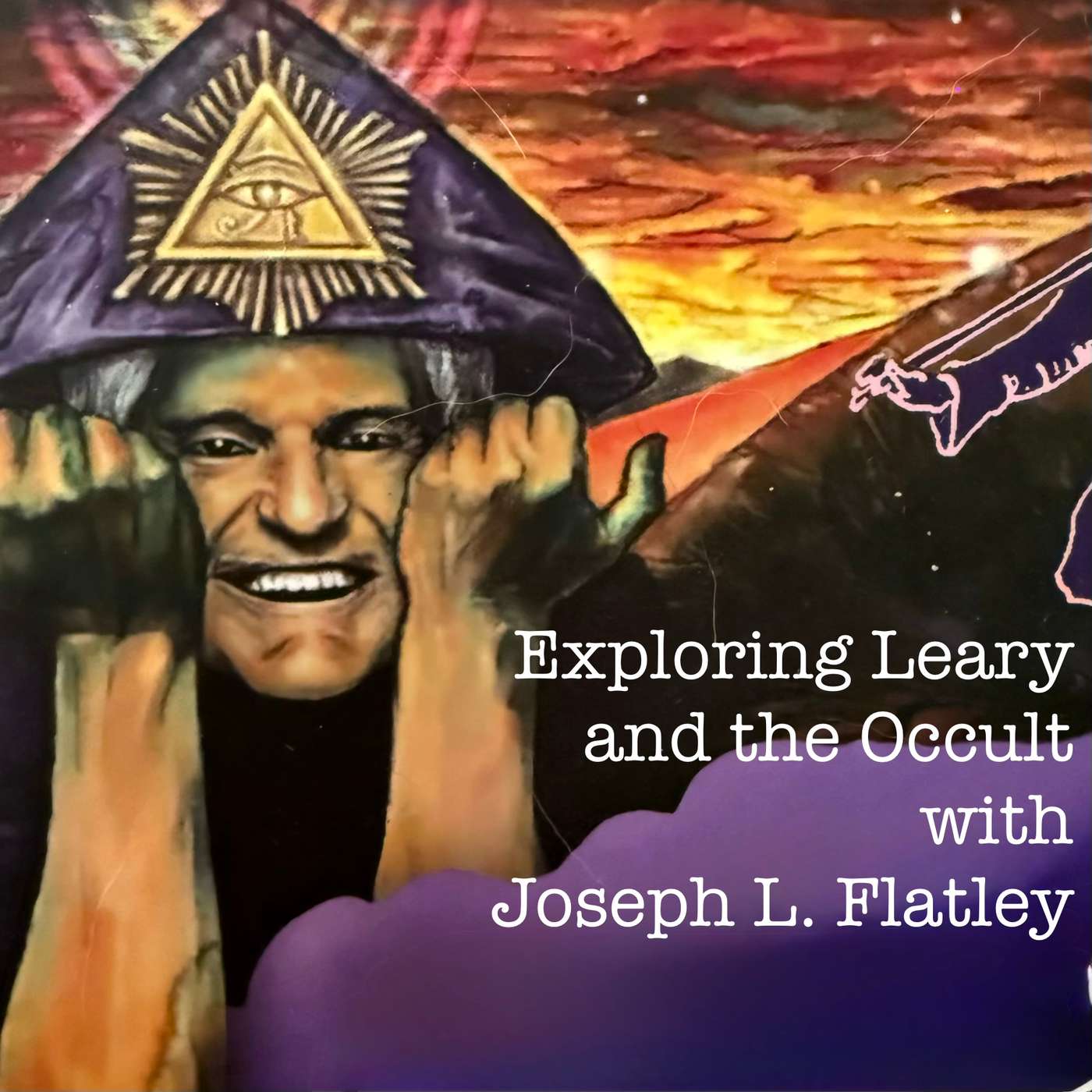
This week, Joseph L. Flatley returns to the show for a wide-ranging discussion touching on themes of magick, psychology, and subjective synthesis and how these threads weave through his recent works- including his latest book, The Occult Timothy Leary: The Tarot, Magical States, and Post-Terrestrial Evolution and his podcast series The Inner Empire. Flatley was last on the show in June of 2026 to discuss his book about Gabriel of Urantia, New Age Grifter, and in conversation this time around expand on some of the themes from that episode- and more! They discuss various forms of channeling, ideas about extraterrestrial intelligences and Leary's eight-circuit model, the legacy of Western magical organizations such as the Hermetic Order of the Golden Dawn, and the role of technology in our societal evolution. The conversation also gets into varied opinions about Leary and his legacy, and the wildly divergent points of view that inform public memory of him. There are plenty of avenues here to discuss the history of eccentric or controversial ideas, and this episode runs the gamut- and provides a nuanced look at where we are now, and where we might be headed as a species. Check out Flatley's new book here: https://www.simonandschuster.com/books/The-Occult-Timothy-Leary/Joseph-L-Flatley/9798888500842 ...and check out the Inner Empire, whereever you find podcasts!
AP Strange: Pardon me while I have a strange interlude. But there is nothing else. Life is an obscure oboe bumming a ride on the omnibus of art. Among the misty corridors of pine, and in those corridors I see figures, strange figures. Welcome back, my friends, to the AP Strange Show. I'm your host, AP Strange. This is my show and today's show is brought to you by the Lysergic Tarot Deck. It's a unique kind of tarot deck where every card will change and animate every time you pick it up. You'll might see some very strange things happening on these tarot cards and that's just part of the fun. So, tune in and drop out with the Lysergic Tarot deck and today on the show, we have a returning guest. I kind of promised he would return last time he was on. Joseph L Flatley AKA Lenny Flatley. He was on a bit ago to talk about his book about Gabriel of Urantia but today, we're talking about some of his other work including his more recent book about Timothy Leary and the podcast he's been doing a podcast series which has been very intriguing for me to listen to the Inner Empire. So welcome back to the show Lenny. Joseph L. Flatley: Hey, it's great to be here. Thanks for having me, Mr. AP. AP Strange: It's yeah. You know, like last time you were on, it was it felt like Leary would be great to talk about, but we had so much to talk about with Yeah. Yeah. Well, Joseph L. Flatley: I'll I'll keep you. Yeah. I'll I'll I'll keep you talking if, I can go all night, but Yeah. Maybe not Yeah. So, yeah, it's funny. Actually, my book, Occult Timothy Leary had just came out, and I had also just finally got the rights back to my book, New Age Grifter, which, you know, Feral House was gracious enough to take on back in 2019. But we got kind of waylaid by some legal issues with, you know, when you write about... I... You know, that book... This might be a pointless story. I'll make it quick. That book came out because I had heard, like, you know, some... Someone had a new podcast out about head... Heaven's gate. And I was like... This is, like, 2016 or something. And I was like, oh my gosh. I'm so sick of heads... Heaven's gate. I have an actual cult that still exists. So Mhmm. So I produced the podcast, and we published the book. Then we realized there's a reason that people don't... Often don't write books about cults that still exist, especially that have lawyers and lots of money to spend on lawyers. So, the Feral House, book, kinda got busted, kinda got kinda got, like, derailed by the cult's legal business, the GCCA cult. And, you know, so it's been like, you know, like, you you write a book and you sell it, and, you know, it doesn't do as well as you would hope. But in this case, was a resource and continues to be a resource for people whose family is in the cult or people who are thinking about joining the cult. They find my book and decide not to. And I just wanted to ensure that it was always there and always up to date. And, you know, my contract lapsed with Feral House, and now I own it. Now I can make sure it's always available and always up to date. So I... That just happened at the same time as the Occult Timothy Leary came out. So I guess you got the new age grifter first. AP Strange: Right. Joseph L. Flatley: So now it's time to talk... We can talk Leary. Yeah. Well I can always talk Leary. AP Strange: Yeah. And New Age Grifter came highly recommended by by mister Jeff Knox and and I had to go check it out because you know, UFO cults and and UFO religious ideas are are are huge for me But Timothy Leary is not far removed from that. I mean, not at all. No. Joseph L. Flatley: Turns out he... Yeah. He he spoke to aliens himself. Yeah. There's an interesting... I don't wanna drop ahead too much, but my current project, The Inner Empire, which is about kind of how we believe... Well, how and why we believe things and how that ties into everything from magical practice to, you know, the social media algorithm. And I saw a lot of parallel between, you know, Gabriel Varanta doing his channeling. And and, you know, and then Timothy Leary also had a moment in in prison where he was channeling higher intelligence or so he believed. And, it was really interesting to like, you know, that that's part of Leary's life that gets kind of obscured and ignored and largely because, Leary in his later years didn't really wanna talk about it. I think he was embarrassed by it. Yeah. To an extent. AP Strange: But he had a lot of crazy ideas that, you know, people were taking seriously. Like the whole Terra two thing where he's talking about life extension and moving off planet and Yeah. Some some kind of questionable physics around. Joseph L. Flatley: Yeah. And, you know, that all came from... I mean, by the time Leary was deeply into psychedelics in the early sixties, he was like, no longer a scientist. You know, I refer to him as a pseudo scientist, but I don't mean that as an insult. But he wasn't starting with the scientific method. He was starting... He really had a hermetic worldview, you know, as above, so below. But Leary had a very keen mind. He never was not at the forefront of understanding what was happening in science. And he spoke about these things in using the language of modern science. In many ways, he kind of proved that or demonstrated that that magic could coexist, could continue to exist in the scientific era. AP Strange: Yeah. Joseph L. Flatley: No. AP Strange: Well, it is kind of interesting, you know, because I never really thought about him in terms of hermetic magic aside from his fascination with Alistair Crowley which you go into quite a bit in the book. But but yeah and it but it's interesting for me to think like his counterpart during his academic LSD tests and everything was Richard Alpert who became Ram Das. So, it's kind of interesting to have this kind of I always thought of that as the more mystical magical end of things where... But really what it is is it's east and west. Like Ramdas went with like an eastern mysticism kind of thing and and Leary was more of the western hermetic kind of practice. Yeah. Joseph L. Flatley: Yeah. You know, and I mean, you know, definitely when Leary was at his most and I don't really go into maybe this is like a problem with my book. I don't really go into like his, You know, working with Eastern methodologies precisely because that's what kind of everybody knows about Leary is like, you know, meditation beads and, you know, he rewrote the Tao Te Ching and, you know, and but, you know, all of them, all those guys, they realized when when they started, you know, experimenting with psychedelics, they realized quickly that the Western academic scientific literature on it was just, you know, abysmal. You know, they were like, how... You know, they were like, we're not the first people to do acid. A lot of people when they take acid feel like they're the first first person to do acid. Right. You know? But they they knew they weren't, and they were like, well, where... Who's been talking about this? Like, they wanted to catch up with, you know, so they weren't starting square one. And they turned to mystics of the East and the West and, you know, and people like the beats, you know, all this Huxley, or he was not a beat, but, you know, Huxley or William s Burroughs and Kerouac. AP Strange: I think Huxley was the one that coined the term psychedelic. Joseph L. Flatley: Maybe. Yeah. AP Strange: Yeah. With with doors of perception. I think Joseph L. Flatley: that was AP Strange: the first use of that. Yeah. Joseph L. Flatley: Uh-huh. So, like, so they were taking all this stuff in and Leary ran with it. And the thing is it's like his literature that came out of kind of this mingling of east and west and science, it's like it almost needs like a I think Crowley was very guilty of this too where it needs somebody to interpret it for most of us just because Crowley was, you know, extremely intelligent, also didn't really care to explain anything. You know, he just wrote and Leary was kind of the same way. So I think that a lot of the western influence or the continuity between like the Golden Dawn and Timothy Leary has been lost just hiding in plain sight because like nobody's really explored it. AP Strange: Mhmm. But, yeah, I mean, to your point, like, I I I tend to think that a lot of occult knowledge and occult coming from the word hidden, you know, that's essentially just what it means is hidden or obscured is it's not necessarily hidden on purpose. It's just you know, some of the occult phraseology with it would be it's it's there for those with eyes to see, Joseph L. Flatley: right? Yes. AP Strange: So, so it's it's it requires a certain amount of dedication and and looking at it the right way for that truth to come out. So, There's no nondense way to explain it. Joseph L. Flatley: Yeah. And, like, a level of initiation. Like, if you, like, look at the path, it's like, you know, everybody freaked out when Crowley released the Golden Dawn material. He published it in the Equinox. And then, you know, Israel Regardie went one further and published even more of it in the Golden Dawn series of books, you know, the doorstop. And people were freaked out. They thought like this is the end of the golden dawn, but it really it it helped ensure that the golden dawn continues into the twenty first century. Because if you're not going through the path or in a path, none of that's gonna mean anything to you anyways. But but, you know, but if you are, you know, a student of this stuff, then it's valuable. So it's like, I think there's been a lot. I see... You know, I try to stay away from social media, but every once in a while, I get these, like, YouTube shorts or whatever they're called, like, the little the tall skinny videos that are short. And and, like... And, you know, it's usually like AIs, like, slopping about things about the occult. And one thing I've seen quite a few times is that, like, the Golden Dawn were these gatekeepers of occult knowledge and they... And then it took Alastair Crowley to to, you know, democratize it, which is like a complete misunderstanding of how magic and mysticism works. You know? The Golden Dawn did... Does. You know, there are still people working the Golden Dawn tradition. There are Golden Dawn temples around. And it's an education process and the materials doled out slowly so that you can internalize it and it changes you as a person and it sets up success in the next, you know, the next stage, the next stage. You know, Crowley did things differently. His OTO is more... It's not a magical training system as much as a a lodge or a school. I don't know how you would say it. And that's... So my my podcast, The Inner Empire, is about it's largely about the subject, the topic of the concept of subjective synthesis, which a Joseph C. Leshevsky, who was a pretty obscure magician here in rural Pennsylvania, he he was he was very old school. He called he only ref... He referred to old system magic, which is like... He basically is one of these curmudgeons that hates modern magic, but he sees modern magic as, like, the renaissance And after... You know? So we're going way back. But he had one of the most modern takes on magic. He he said that learning magic, training, magical training, something like the golden dawn does, builds what he called subjective synthesis, which is like not only knowledge, not only understanding, but it's basically utilizing the humans... The human... Very human default human ability to pick and choose what you notice, and that defines... Kind of defines reality. AP Strange: Mhmm. Joseph L. Flatley: So, like... So if you pick up a magic book and you just start reading it, you might have results. You might not have results. But this belief structure is what allows you to excel as a magician. Now the same thing that he was talking about, the, you know, the renaissance magicians were were... You know, they had their own framework of magic and... Like Giordano Bruno and they were kind of discussing the same thing. So like what I started doing is like noticing different... So at the same time I was going through some like Jungian therapy and I realized that kind of my dreams started taking on this Jungian symbolic quality. Not that like, you know, not that as many people believe that there is an objective subconscious, you know, subjective, like, universal consciousness reality, which perhaps there is. But that I could tell that, like, while I was going through therapy, it was kind of telling me how to look at the world. AP Strange: Sure. Joseph L. Flatley: And I and I started noticing all these parallels. And that's... And I think that's precisely what golden dawn training is. And the Golden Dawn is largely built around this concept of correspondences. It uses the cabalistic tree of life to create almost a... Israel regarding would call it a file cabinet where, like, every human experience, every human thought, every thing in existence can be fit into these whatever. And and if you look at the golden dawn material, which Crowley kind of ripped off and published as his own in the book seven seventy seven, you'll see, like, a tarot card means a planet means, you know, an an Egyptian god means, you know, this this perfume or this body part or whatever. AP Strange: Right. Joseph L. Flatley: That's a systematic training in the golden dawn worldview of... You you enter the golden dawn reality and you're able to perform magic in that. AP Strange: Yeah. I mean, you mentioned... You say in the in the episode about this that this becomes automatic. These correspondences start automatically coming to mind once you've learned the system and you've you've studied it. Right? So... Yeah. Joseph L. Flatley: Yeah. Yeah. It's like driving a car. AP Strange: Yeah. I Joseph L. Flatley: mean, hopefully, you're thinking about every single move you make and everything that's going on around you when you're driving. Right? AP Strange: Well, a stop sign is an octagon and also red and has a Martian quality about it. Yeah. Joseph L. Flatley: That's really interesting. Mars and the stop sign. I love it. But what what Leary did is he he kinda proved that this correspondent system can coexist in the modern world. He added the periodic table of elements, he added a modern understanding of. Evolutionary theory of. Of anthropology, of, you know, all these... He he he had found all these different things in the twenty first... Twentieth century. He didn't live the twenty first century. The twentieth century that clicked in to the golden dawn. And, you know, so my my project with the occult Timothy Leary was a kind of tracing his thought. Like I said, you know, a lot of people have talked about Leary in relation to Eastern mysticism, but I'm like, was he a Western magician? You know? And I think, yes. And also did his... You know, he wrote two big books of essentially correspondences, exopsychology, which he later retitled info psychology, and, the game of life. So I kind of, like, beat the hell out of those books trying to realize what he was saying and seeing if it really did jive with, the golden dung correspondences, if it really did jive with the science at the time, if it really did, you know, what what... I could have easily gone into this book and found out that Leary was full of but I am here to announce that he wasn't entirely full of Right. Turns out. AP Strange: Yeah, mean, I mean, well, yeah. I mean, he had what sounded like wild ideas and I think there is a tendency for the the drug culture to overshadow any the the the actual contributions he made. Yeah. Yeah. In in the public mind and the way the media would portray him. You you know and then even among counterculture types he was vilified and so. You Joseph L. Flatley: know, that whole thing is the weirdest. It just shows how wishy washy hippies are. Like... So he goes lot AP Strange: of paranoia involved as well, which was justified, I guess. But... Yeah. Joseph L. Flatley: But but, I mean, at the end of the day, it's like Leary goes to prison. He's put in solitary confinement. He's basically tortured for years and years and years over like two joints. And, you know, the left is very well aware of COINTELPRO at this point. And they can't point to anybody who went to prison, who got set up because of Leary. And... But they decided that he is a monster that, you know, and it's like, you know, it's... When he died, I remember, like, as soon as he died, the smoking gun somehow got leaked to them, like Leary's, like, FBI file, like, lot of which had not been available before that point. It's like, come on. The FBI can't even let this man, like, die and pee. You know? And then, like, soon as my book comes out, I'm not saying that they're connected because nobody cares about Lenny, but as soon as my book comes out, like, Covered Action magazine publishes their hit piece on Tim that's, like, going back to, like, these old unproven allegations, and it's just Yeah. But, like, the hippies should have known better, but they had a buck up their butt about them for something. So AP Strange: Right. Yeah. But I mean, like my my overall point is that I think if you don't, if you haven't read his work or or read much about his biography and and the writings he did, you might get this like idea that he was just crazy or that he was a that he was a spook of some kind or just like Yeah. Yeah. Joseph L. Flatley: Oh, yeah. And though though the the most publicly available stuff about him is by far the least interesting to me, like maybe because I've been studying this stuff my entire life really. But like, you know, keep like asking me like, I had a friend who was like, why aren't you doing psychedelics? He wrote a book about Timothy Leary. I'm like, well, who said I'm not? But also it's like, that to me is the least interesting part. Like, he's talking about the evolution of mankind and tying it very convincingly into Western ceremonial magic and making these concepts that seemed very ephemeral, like solid. And I'm going to talk about, you know, and I'm going to worry about, like, I don't know. I guess different strokes for different folks. What can I say? AP Strange: Right. It's Joseph L. Flatley: been a long day. But yeah. Yeah. So. AP Strange: Yeah. But I mean it gets back to what I was saying before too. The about the occult stuff is that sometimes it's you know, it's almost obscured by forces beyond our command. You know, so. Joseph L. Flatley: Yeah, because it's like you don't yeah, it's like literally AP Strange: It's less that somebody's trying to hide it and more that it just hides. Joseph L. Flatley: Well, you know, there's so much talk about occult and spirituality and UFOs and fucking paranormal in the world right now. That's really dumb and annoying because because, you know, like, the people with the loudest megaphones are really dumb and annoying, so their takes are just awful. And so it's like no matter what topic and no matter what time period, you have to really dig for the good stuff. And, you know, and the good, you know, is a cult, I guess. You're probably... I don't know. I mean, I'm one of your listeners, but I don't know what the typical AP Strange Show listeners like, but I would I would suspect you're gonna get quite a bit of Timothy Leary was a psyop or Timothy Leary was the CIA stooge or stuff like those kind of when this goes live. I've definitely passed on some podcasts because I knew they were gonna wanna drill down into that stuff, and I'm like, that does not interest me at all. AP Strange: Right. Yeah. And I didn't mean to drill down in that specifically. Just don't know what the array of opinions about him and public perception and stuff like that but. Joseph L. Flatley: Oh, yeah. For sure. AP Strange: The occult angle is much more interesting. Particularly because we were kinda leading with the UFO stuff but you know, there are there is what could be called channeled material with with with Leary and with Robert Anton Wilson at the time and what seemed to be like a telepathic communication between the two. Joseph L. Flatley: Yeah. AP Strange: And and then when you go back to Crowley or I'll come back around to Crowley because I could see being embarrassed by it because when we spoke before, I was kinda surprised when you said that you wanted to try channeling because we were talking about Gabriel channeling and you were like wanting to look into it a little more and maybe Joseph L. Flatley: try it. I didn't say that. I said that I had been channeling. AP Strange: Oh, okay. Well, either way, it was surprising. Yeah. Joseph L. Flatley: Yeah. Oh, yeah. I mean, I realized that now listening. Of Gabriel. Like Yeah. I was like, oh my gosh. Like, what is this guy doing? I was like, if there's a chance that it's like I was not at all convinced that he was just making this stuff up. I was like, we need to try it. AP Strange: Well, so yeah. So my point is that that's often used as a way to discredit people or a piece of writing. It is like, you can just tell your the average person if you say, oh, you know that that book that came out of channeling. So, like, you know, take it with a grain of salt and I mean, you hear that about Madame Blavatsky a lot where. Right. You know, like, oh, the secret doctrine was channeled. Don't listen to that and you're like, but it wasn't. But on the other hand, Crowley's the book of the law was entirely channeled and people credit the words in that like and that's where do what thou wilt comes from is the book of the law and it was and it was a 100% channeled text. So. Joseph L. Flatley: Yeah. Yeah. Channeling I have... Let let me show you some. No one will be able to see it, but I haven't shown anybody yet. This is my my channeled text of the last year of discussions with just corporate entities and some pictures in it. And, yeah, I'm like, what do I do with it? Like, it's like, I am kind of embarrassed about it. Like, honestly, like, there's nothing embarrassing in it, but it's like, it's almost like revealing too much of myself. Like AP Strange: Oh, I think so. Yeah. Joseph L. Flatley: Yeah. I was AP Strange: I I can relate as I guess is what I'm saying because Joseph L. Flatley: Yeah. Yeah. AP Strange: I say a lot of weird stuff on here and I admit a lot of weird stuff about myself, but I still hold back some things. Joseph L. Flatley: Yep. Well, part of my transmission, series of transmissions was, I was told to make a book, like, to print this. So I have these books sitting around the house. I'm like, I can't. Like, I I I did my part of the bargain. Nobody's ever gonna see it. AP Strange: Because... The book is just going to stay on your bookshelf. Joseph L. Flatley: Yeah, it's like... There's... I got got a pile of them. Maybe I'll put them on my Etsy store or something. AP Strange: What you need to do is start a secret brotherhood and then just the members of that can get the book, you know? Joseph L. Flatley: Well, yeah. I mean, yes, obviously. But also, like, people have unless people have had these kind of like communications, they don't really understand like what it is like. How would I even go down this path? The most interesting thing to me is like when you speak, when something comes from out of you, you know it's coming from out of you. Like, there's no doubt in your mind. AP Strange: Mhmm. You You mean when something's speaking through you, basically? Joseph L. Flatley: Yeah. Yeah. Yeah. Largely because, you know, you've developed this objective synthesis that allows you to like T. M. Leary, she wrote Persuasions of the witch's craft and when God talks back and hearing God's voice, I think was the other one she embedded. She's an anthropologist. I'm going to get all this wrong. I believe she's an anthropologist at Stanford. She first when she was doing her Ph. D. In the eighties, she embedded herself with the Occult community in London, perhaps, or in England somewhere. And then she started studying evangelicals in The United States and precisely what her book when God talks or whatever it's called. You know, she attended these evangelical church service and and went to, like, meetings and stuff and saw that, like, people who are hearing God's voice, they had learned that skill. And this is, again, a way of creating... This is... Again, she doesn't use the concept subjective synthesis, but it's the same thing. It's like you go through a training where you learn to recognize the void... You know, thoughts or ideas as coming from... Without you, coming from god or a god or an alien or whatever. It depends on your belief system. So it's like... So my question is, having experienced it myself, is my experience I've learned to listen to a space alien? Or is my experience I've learned that in certain contexts... Like, I've convinced myself in certain contexts that that my voice is coming from outside of me and I've internalized that so much that I don't even question it. And, you know, the mystery here, and this is what's fascinating to me is like, that's a metaphysical question that has no answer. AP Strange: Right. Joseph L. Flatley: I can't. And I think, you know, I think a lot of... Most people are probably safe to assume one or the other depending on their perspective. You know? If they're good, Chris, they're they're happy to assume that that means that God's speaking to them. If they're a materialist, they're happy to assume that their their mind playing tricks on them or there's this trained capacity. Myself being pretty pretty firmly in the, Robert Van Song Wilson maybe logic cap, I have no idea. I won't even I won't even... I don't I don't wanna know. I just know that, you know, if you take any of this stuff too seriously, you'll drive yourself nuts. So I don't take it seriously. Right. I think I had a... You know? Oh, what I wrote this article, was it maybe day and completely forgot about it, but I had kind of like Robert Anton Wilson. I wrote about it in my substack. I had a Robert Anton Wilson esque synchronicity or coincidence involving like serious. It turned out it was like on maybe day, the day that Robert Atton Wilson had his AP Strange: thing. Right. Joseph L. Flatley: One of my favorite articles in the world or, you know, it's an excerpt really in an ex... There's an excerpt from Cosmic Trigger that that Richard Metzger reprinted in his, Book of Lies where, Wilson goes through, like, the tarot two transmission of Timothy Leary and the the book of the law and shows all the similarities and basically makes the case that the same message was being sent to both of them, but it got, you know, scrambled in each individual nervous system. It's really cool. Like, Wilson and Leary are those guys who are like, sometimes you just got to, like, take an excerpt out of the book and read it because there's so... These books are so dense. AP Strange: Right. Joseph L. Flatley: And it's like you you lose... Like you miss so much good stuff just because there's so much other good stuff. AP Strange: Yeah. I mean, we were talking before I I hit the record button that the first time I encountered Leary's eighth circuit model was was in Wilson's writings and I and I plowed through and I felt like I was understanding it but then it was like, wait, what? Like, I couldn't keep it all straight in my head. I'm like, I feel like I would need to just read a page at a time and really think about it and then, kind of like come back to it and then, like, read Leary's actual writings, you know, now that I've had a primer from Raw but like, I'm like, who's got the time? Like, I think it's a cool idea but I don't know how useful it is to be Joseph L. Flatley: Yeah. I mean, AP Strange: But a lot of other people do find it really useful especially a lot of a lot of maybe logic types, you know? Joseph L. Flatley: So. Yeah. A lot of people very have a simplified, simplistic version of it. I think one of the things so The Occult Timothy Leary, my book that just came out, New Destiny Books, Inner Traditions, It's half biography. And the biography, the purpose of the biography was there seemed to be like a consistent thread running through Timothy Leary's life where he was developing this eighth circuit model of consciousness. And he never called it that. He called it neurologic. And so I traced the idea and traced his kind of the growing influence of the Western occult tradition on Leary throughout his life. And the second half of the book is basically, you know, so in the game of life, Leary, so the eighth circuit model is because everybody listening to this, I'm sure already knows. Basically, was Leary's conception of evolution. The first four circuits he called he split consciousness into eight circuits, first four of which are realms of consciousness we experience every day. And the second four are things that have been talked about forever by shamans and magicians and mystics and druggies. But turns out, Leary was able to make a very succinct and logical scaffolding out of those. So it wasn't like LSD was one experience, acid is one experience, coffee is one experience, whatever. Dip... But they all kind of exist in a continuum and do different things and are remarkably consistent from person to person. Now each of these circuits, he breaks into three stages. So we have 24 stages of evolution, 24, you know, three ver... You know, three stages of consciousness for each circuit of consciousness. So the number 24 is what I'm getting at. So the tarot trumps from the fool to the aeon, or there's there's, 22 of them. So he he... Through examining levels of evolution, stages of consciousness, and the tarot realized that the tarot deck, the the kind of accepted symbolism of each tarot card, Tarot Trump worked remarkably well to explain as a metaphor for explaining us a level of evolution or a level of consciousness. Now there's only 22 Tarot Trumps, so he invented or restored or dreamt up two additional ones. And that's... So that's the second half of my book is going through the Tarot Trumps and explaining where they fit into this Leary and worldview. And also, you know, there's a couple there's also a couple spreads in there because people want to know how to use these Leary Tarot trumps that don't actually exist anywhere. They're just like he wrote about them as a metaphor for explaining his and not just any metaphor, but he thought it was a profound metaphor, an important metaphor. He thought in one way that it was proof that man has always understood what Leary understood to be the stages of evolution because it keeps reappearing. You know, it... These things all correspond to each other, hermetic worldview. And that's the book. I don't remember. There was a point to all that. But AP Strange: Yeah. We got detoured onto the eighth circuit model somehow. Joseph L. Flatley: Well, I mean... But... Yeah. So, like, the point of the book was that, like, Leary Leary understood kind of the universality of all these things. And it was very much an exploration. It was like, if I start writing this book, like literally, so my girlfriend kicked me out of the house. I was sleeping on a mattress on the floor. I'm like, I need a bed. Mhmm. I didn't have a job. So I'm like, maybe, inner traditions will buy this book from me. And so I sold them. I'm like, Timothy Leary's tarot deck. There is no Timothy Leary tarot deck. Like, there's a book where he discusses the tarot. So I'm like, so I had to kind of like invent it, but also I had to... This is really a proof of concept because I could have written this book. I could have gone through Tim's entire life and realized that he wasn't influenced by the occult or he didn't have anything to say about Western magic. Or I could have gotten gone through the tarot deck and been like, wow, his system really has nothing to do with tarot. But what I've found and I continue to develop this idea, is that the TARO deck and the stages of consciousness and evolution that Leary laid out are surprisingly compatible. And that's really exciting because if Leary's ideas can be mapped onto tarot, now we're talking about golden dawn correspondences. We're talking about the tree of life. We're talking about the book seven seven seven. Like Mhmm. Like, the tarot is the... We're talking about, you know, astrology, which, you know, I don't know what you think about, like, reading your star signs in the newspaper or if there are even newspapers anymore. But I do know that, like, the symbolism of the houses and the zodiac and all that stuff is very powerful and potent and smart. So, yeah, so it all seems to work together really well. It's AP Strange: Well... Yeah. And I've always loved tarot. So tarot framing framing this model on Tarot for me is is super helpful. So, I was, you know, I was intrigued by that part of the book because I'm like, oh, maybe I'll finally be able to to actually, you know, well, synthesize it, I guess. Yeah. In my mind, you know, but. Joseph L. Flatley: I mean, I think there might be a you you you kind of gave me this idea earlier. Maybe there is like a. Initiatory structure that could be built that instead of focusing on Renaissance terms, Renaissance magical terms, focuses on Leary's vocabulary and Leary's stages. And, like, these are not things that we relearn from a book very well. Maybe we need to go through. I mean, this book has been a lifelong project. I read my first Timothy Leary book, Neuropolitik, which, my buddy John Alessi got out of the Loompanics Unlimited catalog in 1989 and let me read it. And it's one of my favorite Leary books because it's a collection of articles that he wrote for different like periodicals and stuff, many of which while he was in prison and or just out of prison. And... But he does... Goes into the circuits there, but it's not like a book about the circus. It's like AP Strange: Mhmm. Joseph L. Flatley: Many ways, it's almost more practical because he co wrote an article with Robert Anton Wilson, I believe, in that book on it's about Patty Hearst and My Lie and Charles Manson and How Brainwashing Works. And it's kind of like a great primer on the eighth circuit model, or at least the first four circuits. But, you know, I remember reading that and kind of like getting the download. You know, I'm in the eighth grade. It's 1989. You know, Silver Spoons is still on or whatever. And, like, Simpsons hasn't even come out yet. And and I kind of see, like, fake circuit models as scaffolding to, like... Through which to see the world. It was a very mind blown moment, and I've always kind of saw things as systems or environments or teams. I don't know. Like game theory... Like, Leary shit. And, I think I've been really lucky to have that perspective. And... But, you know, it's always been swimming around in my head and I never could really relate to the post terrestrial circuits, the levels of consciousness that we are supposed to experience once we've left the planet that Mhmm. We get, like, these four tastes of them, you know, if we use, like, the right psychoactive drug, but that's not really what we're... That's not natural to to the Earth, to human life on this planet. And, I never could really grasp that because, like, I couldn't... I wasn't thinking about going to outer space, you know, like, what's in it for me? Right? And then I started doing magic and I realized maybe these are magical circuits. And maybe... And then it kinda clicked. So, like, I could see where various magical practices are. I mean, at the end of the day, there's the idea that there are literal circuits of conscious... Literal circuits in the brain that control things like ESP or access to the Akashic records or whatever. Or... But that to me is very silly. And Leary was great at... He was a diagnostician. He's very much like Freud in that way where he could create systems and create charts and visualize how things all fit together and stuff. And he really did create a system that when you start talking about magical practice, I don't know that he ever explored this very well, You can use the eight circuit model as a way to line up and categorize and understand various forms of magical practice. That's actually something I'm working on now, like mapping mapping all these different practices to the eighth circuit model. And then at that point, it's like, well, what do you do with it? I don't know. Maybe there's like a training. Maybe there's a type of training there that's not that... That's that's similar in function to the golden dawn system, but the vocabulary is different. Maybe maybe something like that would actually be more useful to a modern human than talking about ancient Egyptian gods or whatever. I don't know. But this is Right. This is all the stuff that thinking about Leary in the in the context of magic has has me thinking about. This is what keeps me up at night, AP Strange. AP Strange: Right. Well, you know, if you're gonna be kept awake by something, because it gets you asking like the biggest questions. Right? And I I I think that's definitely a through line with especially with the podcast you're doing now and and and the culmination of the work you've done with with Leary and and Magic and and whatnot. Yeah. Is this you know, I I described it earlier as as a lot of your prior researches and work folding in on itself and connecting with everything else and you see everything as more fluid dynamic than separate subjects that you were looking at before. Yeah. With the with the kind of a through line being belief and perception and and how the mind works and interacts with the world or whether the mind creates the world, right? I mean, we get these big questions. Joseph L. Flatley: Yeah. I mean, like, yeah. I mean, I definitely see the inner empires being like a big think kind of project where it's like, you know, every once in while one of these books comes out that's like super dense and it's like it takes some very big ideas and turns them into something bite size. And somehow going from, I don't know, Inner Empire started with Ioann P. Cugliano, the Romanian scholar who wrote Eros and Magic in the Renaissance. He So in the 70s, I always butcher this name, Marcheia Eliade was his mentor. And came across this one of Giordano Bruno's lesser known works. I'm gonna butcher the Latin. It's like invinculus genera of bonds in general. And it's like basically Bruno was like... It's always fascinating because these these practical techniques that become magic or become psychology are always rooted in, like, the then current science, which is often very wrong, very wrong. So, like... So it's really like the mark of a true genius who is able to take the wrong science of their time but make something effective out of it. So in the Renaissance, they thought that your imagination, your thoughts were affected because, you know, these phantasms would come out of your eyes and grab something in your visual field and bring it back into your brain and then it would work on your brain. So, like... So they had the concept of, like, what you see or what you... You know, is what you... You know, that you... You know, like, they basically have the concept of, like, Zed Heidegger where it's like, we don't interact with the world. We interact with a model of the world that's created in our brain. AP Strange: Mhmm. Joseph L. Flatley: That's not new. Like, humans have always... Almost always understood it or at least they understood it in the Renaissance. And... But they had this, like, really ass backwards explanation of phantasms and bonds and... You know? And so he wrote he wrote treat... A treatise on basically that understanding that we don't experience the world, but we experience our experience of the world. Yeah. So he's like, well, then if you wanna manipulate people, you change their ex... How they experience the world. And how do you do that? Well, you find what... You that you find their desires, you find what really excites them, and you feed that kind of information to them. And Cooliano is like, oh my god, this is public relations. This is mass marketing. This is Madison Avenue. So like... But it's also... But that seems a little facile because, like, we're not just talking about like which pack of cigarettes you're gonna buy. We're talking about how you experience reality, what is real. And it's the same exact thing that the, you know, the social media algorithms latched on It's the exact same thing that the Golden Dawn was consciously affecting through their initiatory system. So in some ways, it's in some ways, it's like you could reduce this into something really uninteresting or non, non... You know, or, like, you know, not earth shattering. But if you truly understand the ramifications of this, it's, like, really shocking. And I think, like, ultimately ultimately, that's what my book is. It's like or my... I I want it to be a book. If there are any high priced, high powered book agents out here, give me a call. But, The Inner Empire is a, using these different different times in my work as a journalist where I realized that these things were all overlapping. Like, I wrote the Gabriel of your answer book, New Age Grifter, and on one level, that's an expose of who I believe to be a criminal enterprise that's using slave labor and ripping people off to of, you know, to give wealth to a... To an elite. But also it's also the story of subjective synthesis. How do all these people come to believe these things? How does Gabriel... How did Gabriel Virante before he passed get people to believe these things? And how did he, like, stumble onto it without really knowing? He didn't go to cult school. AP Strange: Right. Joseph L. Flatley: He never... You know, he didn't know the term subjective synthesis. I don't think he's ever read Giordano Bruno. So how did he stumble upon it? So that's kind of like the really cool thing about this is I can go through all my previous adventures as a journalist and see all this and see many examples that kind of make the story enlarge it and make it more interesting and make it more... To add depth to it. The next episode is actually, which I'm working on right now, about it's kind of a tale of Silicon Valley, including like on one hand, like the Motto 2,000 cyberpunk crew, people who understood that technology is a tool of subjective synthesis of creating your reality and wanted to create use it to create better, happier, healthier, or at least more fun realities. And the, you know, and the Silicon Valley snake oil salesman that I guess would be exemplified by Wired magazine who wanted to create an industry that instead of empowering you, enslaving you to, you know, your phone. Right. Yeah. You know, always on, always in your pocket. Actually, really fascinating. And I in exo psychology, there's there's one paragraph, it's perfect. It's like basically like Leary talking about, you know, Motto '2 thousand was fifteen years in the future, but talking about, you know, the cyberpunk self actualization, self reality creation impulse, saying that, you know, the system uses like B. F. Skinner behaviorism to all to warp our reality to and and and that was a big part of Skinner's. Know, kind of like, you know, there was the micro level of behaviorism, which was like getting a dog to salivate when you rang a bell. But then there's the macro level, he was an ardent supporter of, which would be how does society manipulate individuals to get them to do what's best for them because they don't know what's best for them. And that's awful. It's disgusting, social engineering. But that's like where, you know, Skinner was headed. And Leary was basically like, this is a dead end because at the end of the day, you know, when people are free and they have technology, there will be... There won't be... You know, operate... Operant conditioning requires an operator to be there twenty four seven to make sure you're thinking and doing the right things. AP Strange: And Joseph L. Flatley: wow. Again, Leary missed it. Like, what do we have in our pockets? AP Strange: Right. Joseph L. Flatley: Twenty four hours operant conditioning. AP Strange: Yeah. And to the point that people don't even question it, which, you know, it's like, when Facebook was kind of a new thing and I started noticing people saying like, woah, check out, like, my pasta that I'm having for dinner right now or like, I'm going to this place. Like, you know, things that are really common place on social media but when I first encountered it, I'm just like, you know, we we used to worry that big brother would be, you know, watching us all the time and now, we report directly to him and people don't seem to have a problem and nowadays, people don't even think of it at all. It's just like the internet exists as this thing that like, you know, you you still sound paranoid when you talk about and you really but but now there's these companies with these AIs. I mean, I just heard a news segment on on NPR the other day about this AI app called Muse. I think Meta is trying to roll it out, and it's supposed to be like a social agent for you that tells you, like, the example they used and the thing was like, oh, your kid's school is having a outdoor movie night on this night that you might wanna go to, but it might also rain that night. And it's supposed to be like super impressive that this AI was able to, you know, correlate weather to an event in the calendar. And like... But the only way this... Like... So essentially, you have a social secretary that's an AI agent. And and I'm like, who the hell wants that? Like, I don't want that and it's like the only way that works is if you feed it everything about you. Yeah. You have to tell it everything about you. Give it access to your... People are people are gonna give it access to their bank account to, like, all... And and I'm like, I mean, man, I grew up, like, around hackers that, like, you don't get bank information anywhere that you don't trust. Joseph L. Flatley: Like Yeah. Oh, for sure. And it's like... Especially now that we don't know what these AI models are doing or how they do it or if they're scrolling away everything that you put in your chat to, like, use against you later or something. AP Strange: I'm absolutely certain they are. It's all data collection. You know? If they're not The actual super intelligence Joseph L. Flatley: gonna take them another week. You know? AP Strange: Well, the super intelligence they keep talking about. I'm going on a tangent now. I'm sorry about that. Joseph L. Flatley: Super intelligence, by the way. AP Strange: Well, the the... Yeah, the idea that it's super intelligent, like, no, it's not. And it's not intellectual. It doesn't have like critical abilities, but it's intelligence in the respect that the way government intelligence is intelligence. They're building intel, they're building profiles on everybody. Joseph L. Flatley: Voluntary intelligence. AP Strange: Yeah. So they'll find something to embarrass you if they want to shut you up. Yeah. Or blackmail you. You know, like that's coercion has always been a pretty effective form of mind control. Joseph L. Flatley: Yeah. I mean, it pops. Yeah. I mean, I miss like so social media started and it was like, you know, this is what I had for dinner. And then. There was a point where like, it kind of like, there's a point now then like, they started just instead of like having a feed with your friends, it was like they were finding stuff using the algorithm that they thought you'd be interested in. AP Strange: Right. Joseph L. Flatley: And now I just created a TikTok account, my first ever TikTok account because I want to I just wanted to see if I could promote my podcast and if it would actually be helpful or not. Probably not, but whatever. It's just constant AI slop. Yeah. And it's like, I don't know if this is like the system eating itself or if this is what people actually want. I started noticing, I'm not proud of this, but I have started noticing that at night I'll like find myself on my phone, like watching like Twitter videos or whatever. And it's always like I get sucked into There's the one where it's all just like surveillance cam footage of people trying to shoplift from a convenience store. I love that one. I love like in China where they have pet monkeys and they dress them up like little people. I love that. And then, like... And then any kind of, like, you know, fight, like, any kind of, like, fight between, like, argument between a cop and a normal person, fucking fascinate with that. And, but I've been finding that now, like, they put in, like, the title, like, all... Exactly what I wanna hear. It's like it's like monkey dressed like human fights cop in a convenience store. I'm like, oh my god. And then you watch it, and it's like, no such thing. Just about... It's just, like, super boring, but it's like they got your attention for four minutes because you're like, I saw the hashtags. This has to be good. So it's like they're not even trying anymore. And then like, it's just... It's sad. Do find that I've found that the more I've reached a point with my social media and because like, you know, I'm a writer, journalist, also a private investigator. And a lot of times I will be in the car, like like, on a stakeout or something or waiting to somebody... For somebody and, like, you end up sitting there for, like, six hours and it's super boring. And so then you watch, you know, the monkeys dress up like little people. And then, like, you reach a point after a few hours where it's like, I cannot... I can't write. I can't think. I can't do anything. And then an actual printed book feels so good. Just like pick up a book and read. It's just like I feel myself very like I feel like with myself, it's like the digital media, like, I've reached the saturation point, and now I'm going away from it, which I never... Thank god that that's a... That human beings can do that. I didn't know. You know? You know, maybe like... Yeah, it's it's AP Strange: Yeah, no, I feel you. And I mean, I I think, you know, when Twitter died, was a big turning point for me. Mhmm. Because I used to at least feel engaged back when it was still Twitter, the the pre Elon days. And I feel I felt like I was constantly having conversations with people. Joseph L. Flatley: Yeah. Yeah. AP Strange: And you know, I literally was. I always had like several DM conversations going but also there'd be threads going on. I'd be going back and forth with people. In my experience there was largely positive. I mean, I I had had my little spats here and there with people but you know, had to fend off trolls once in a while but I I felt like it was still intellectually engaging. Nowadays, when I go on, it's all stuff that's catered to me or so whatever algorithm thinks is gonna be something that I'll just watch for a while. So, I mean, I kinda have a general rule with myself where I don't watch video content on my phone if I can help it. Like, I really, really try not to and if I feel myself getting sucked into any video stuff, I just turn it off. I mean, if it's something really, if it's something longer form like a YouTube video of a podcast or like a, you know, a brief thing that that I I think has substance to it. That's different but I can't I can't do the short form stuff. I really can't. Yeah. Joseph L. Flatley: I AP Strange: am. And I see what it does to other people too. I see people get sucked in and and people say it's like young people but it's not even just them. I mean, I get, I get them sent to me for my mother every day. I'll get real after real after real on Facebook Messenger and I'm like, mom and they're like, I I try to tell her something that's actually real like about something my son did or like a picture of the dog. And then all I get is more reels in response. I'm like, she doesn't even use this to communicate. She just sends me reels all day. Joseph L. Flatley: Well, you know, Leary... So Leary's eighth circuit model, you know, he kind of ascertained that there were these there was this whole level layer level of levels of consciousness that exist beyond. Kind of terrestrial human need that lie dormant, but we can have, you know, we can like access in some respect through drugs or through magic or yoga or space travel ultimately. But, you know, in his book, Exo Psychology was very much about these advanced stages of evolution and exopsychology because it's the psychology of leaving the planet. So he was writing about the psychology of what it will be like to live you know, high orbit mini earth over the... You know? And... But then he changed the... You know, after, you know, after the cons... He was... You know, after like the PC revolution and seeing where that was going, like early, early days, like pre Internet, he decided that information technology was possibly or probably actually going to be how we evolved. So he actually changed the title to info psychology. He was big on cyberspace. He thought that, you know, network humans were going to be could conceivably be the next phase of evolution. And I never understood what the hell he was talking about. First of all, you know, this was the Apple II era. So, you know... AP Strange: Yeah. Right. Joseph L. Flatley: It's hard to look at Oregon Trail and be like, wow, this is the future. Right? And... Or text based, whatever. And even like when the Internet and, you know, social media is popping off and it's like really like. The aforementioned. Pet monkeys dressed as humans, that's the next stage of evolution. And like what I understand that to me now, though, is that the... Our new digital reality is every bit as dramatic, probably now with AI swarms that are conspiring around us that we don't even know about. Like, the new digital reality is such a profound change, know, possibly on par with like crawling out of the ocean and getting legs or whatever, the evolutionary pressure of a fully realized digital society, not now, maybe in twenty years or fifty years or a hundred years, is every... You know, the evolutionary pressures are every bit as present and dramatic as it would be to go in space. So I think we're really in the early days. I don't think, like, the fact that, you know, Nigerian scammers are able to talk little ladies out of the Social Security checks from half a world away, like, is going to... I don't think that's a... I don't think we're really experiencing a true understanding of what digital man will be, you know, because it just seems like a joke now. AP Strange: Well, because it's being spearheaded by, you know, the Silicon Valley type of. Oh, yeah. You know, the type of kind of thing. I'm trying trying to think of more polite ways to say than what what I was gonna say but but I mean, yeah, just shitheads. There there's shitheels that are involved with a lot of this stuff, and they don't have the technological base nor do they have any idea of of scientific progress that benefits humanity. Joseph L. Flatley: Yeah. And and and Leary was pretty pre... You know, he wasn't Pollyanna Pollyanna ish about this. He, you know, he foresaw that, like, we live in a consumer capitalist culture and the drivers of change are probably going to be consumer capitalist shitheads. You know, and at a... You know, And if you're looking at it in a trajectory of fifty or a hundred years, things might look bleak. But, you know, maybe if... You know, maybe in a thousand years, things will work out. Or he also foresaw like the rise of China as, you know, like a post capitalist state that will be able to do a lot of these things just because they don't... He wasn't a fan. He was a libertarian actually. But, like, he wasn't a fan of socialism but... Or or communism or, know, state communism or China by any stretch of imagination. But he saw that as having evolutionary potential even if it's not the evolutionary potential that we would choose. Like myself, I'm not a libertarian, but I have to admit that, like, maybe maybe it's not going to be, like, worker owned collectives and social justice warriors that define the future AP Strange: as much as Joseph L. Flatley: it would like to be. AP Strange: Yeah. Mean, the shitheads seem to be winning, and I think that's probably how it's going to have to pan out, at least for now, for maybe the rest of our lives. But Yeah. I mean, Joseph L. Flatley: but, you know, change also, like, You know, my experience on this planet, which isn't that great, but not, you know, it's like. Change is very slow until it's very quick, you know? Oh, yeah. Well, AP Strange: yeah. And I've I've made that point on the show before that, you know, history moves and fits and starts sometimes. It's not not a linear progression and sometimes there's backslides. So, like, there's no reason to expect that we're just on an upward climb all the time. Joseph L. Flatley: Right. Or even most of the time. AP Strange: Right. And then what's... And I think I think the the the tech shitheads these days that will bear that out because because we're we're headed for a bubble. We're in a bubble right now. Joseph L. Flatley: We're in a big big AP Strange: AI bubble and and it's going to be catastrophic when that's because it's all imaginary money and it's all just a bunch of companies shuffling the same trillions of dollars back and forth to each other. And like But Joseph L. Flatley: it's like I was I was I heard today about like Nvidia and these different like tech companies that are like making money off of the AI bubble. It's like when you work for Nvidia or when you work for Anthropic, you have like, you know, there's so many shares before they go public. It's like these companies are all kind of like trading their shares with each other because they know that like one of them is going to go bust, but like if they can like spread the spread the damage around and, like, you know, it's like, I... You know, maybe Anthropom's gonna go bust, but if NVIDIA does well, then that'll offset my losses, and it's like yeah, that's something useful. AP Strange: Right. And the people at the top are essentially going to get away scot free. You know, they have a parachute out of there but you know, it's an escape hatch. I just see it as a as as a massive grift and just extracting all the wealth from the world. Joseph L. Flatley: Oh, absolutely. AP Strange: And and then there's gonna be very very few people that benefit from it and everybody else is gonna suffer. But ultimate... But but, you know, their hubris in doing that is it's like, who the hell do you sell things to when you've extracted all the wealth and nobody has any money to buy anything. Joseph L. Flatley: Yeah. Well, they just wanna set themselves up for, you know, for whatever's next. AP Strange: Well, the... Yeah. I mean They don't consider us Joseph L. Flatley: to be part of whatever's next. AP Strange: Right. And depending on who you're talking about or to, when you get into like people like Peter Theo and you know, his protege, JD Vance, and and you know, people of that ilk, the the what what they talk about is, you know, they ascribe to ideas like the Curtis Yarvin and all the the idea of like a a a tech or corporate based cities and things like that and, you know, city states that are ruled by corporate overlords and things and it's like, yeah. Well, thankfully for us, you know, they're winning right now but but this is unsustainable and unrealistic to actually accomplish. Yeah. But. Joseph L. Flatley: I mean, I think that's why I'm so drawn to magic is because. They can have what's out there. I you know, I'm worried about what's in here and here, you know, my height. They can't have my mind or my heart. So AP Strange: Yeah. No. I'm with you, but I love tech too. And that's the thing is, like, I end up bitching about it so much because it's so far removed from what it could be. Joseph L. Flatley: I mean, at at the point where we're talking about AI bubbles and Anthropic and all this stuff, it's like the technology is not even the point. Right. They could, you know, AI is already a massive game changer that could be an amazing, great tool for everybody. They don't even need to change like our chase RSI or super, you know, like this, you know, whatever the next level is. Like if they just stopped right now and just like, you know, we just learned how to use it well. And, I wouldn't mind having a few extra hours in my day if like the the, you know, if like I could trust Anthropic with my data or if, like, they weren't gonna, you know, if they weren't gonna screw up and bomb a children... Children's school in Iran or whatever, girl's school. And it's like... But that's the the tech elite or however you wanna phrase it, have no interest in any of that stuff. They're just they're just creating they're creating an industry, and they're creating a monstrous industry, and they're creating one that cobbles all the natural resources and threatens our privacy, threatens our welfare, probably threatens our existence to some extent all because they want to... You know, they're in a fight over who gets to be, like, the world's second trillionaire or whatever. And it's just not... So it's not... It's nothing to do with technology at this point. It's all to do with just, like, this is, like, the the new robber barons or whatever. AP Strange: Yeah. Well, it's all about bragging rights when all that's left is a giant wasteland. But Yeah. That's... Joseph L. Flatley: I mean It's great. AP Strange: It's... Yeah. Joseph L. Flatley: Like, Bill Gates to me is the absolute fucking worst. Like, he may... Has so much... He had so much money that he couldn't get any enjoyment out of it. He couldn't buy any... You know, he already owned everything he ever wanted. So he creates this nonprofit entity which is just another power grab. The Gates Foundation is another power grab. It's not about helping people or thinking outside the box. It's about now he has like basically a control over a sector of the world. Like the Gates Foundation is like his private US state department. He's like, in a sense, he's his own nation state. And then his pea brain, because all he's good at is programming, his pea brain goes, well, I wanna help the world so let's create new markets and new economies, new customers for Microsoft computers and software. And, you know, we could do something about these horrible oil wells in Africa that create sludge and waste and poison and kill people and mosquitoes, or we'll invent a new mosquito or we'll invent lasers that shoot mosquitoes out of the air. So, like, instead of solving any problems because that would affect his bottom line, he's creating all these new bullshit industries. And I think he feels left behind. Rance is almost over. I think he feels left behind by the by, the AI people, so that's why he's, like, coming out against them. You know? But, I mean, I don't know. It's all. AP Strange: Yeah, a it's a wild time to be alive. But but I mean, to your point earlier and and talking about Leary and and and his his forward looking attitude with it is that or his prognostication about where we'd end up is, you know, what I always think of is is is the dream of the original World Wide Web, you know, how so much of it was open source and it was always meant to be free. It was always meant to connect people. It was always meant to a lot of the stuff that has just become taglines for social media, which is proved to be anything but because it's fueled by rage and algorithmic stuff like that but but yeah, I mean it it it has corollaries to things in occultism and mystical thought like the the word web to begin with. I mean, the lipical webs or like the connectivity of of the the way everything in reality connects to everything else. The interconnected nature of all things. What's Joseph L. Flatley: that? Intra's net? AP Strange: Yeah, Intra's net. Yeah. Yeah. Joseph L. Flatley: I mean, like none of this stuff is necess... Like is inevitable. Like social media didn't have to be, as you aptly put it, you know, driven by hatred. You know, it's like if... I think if, you know, it was a whole bunch of old ladies sharing recipes, it never would have gotten to this place. But it's not. It's like we got these, like, you know, meta Facebook people purposefully. They're like, you know, creating hatred and division to drive engagement. And that goes back to the whole subjective synthesis concept because we notice what attracts our attention. And when our attention is attracted by something, we are trained to look at that. Creating, you know, so then you... Now you have a feedback loop where Facebook is showing you something. You're showing... Telling Facebook that you're paying attention because you watch it to the end of the video or you click on whatever, and then it drives it back to you. And that's... I mean, that's something so fundamental to how people understand and interact with the world it seems inevitable, but Facebook doesn't have to do that. And like magical practice is really the one area where I think we can learn to recognize that process and cut it off. In Leary's terminology, that's a terrestrial circuit process. It's a circuit one through four processes, the social media algorithm. If you become an adept or learn to explore the upper circuits, the first circuit five, the first function of the upper circuits, the the extraterrestrial circuits, the magical circuits is to suspend your attachment to all these things. Mhmm. It's, to to rage, to anger, to, you know, anything in the first four circuits. And then in that, it's that suspension, this... The detachment from these larval programs that renders the social media stuff and the propaganda, impossible to take hold because you're floating above it. Perhaps luckily, if you're in outer space. I, I just rememb... I just flashed on this. After Trump was elected, some like mega people had protest like through the streets of downtown Pittsburgh. And like first... And like people on the left were really upset. It's like they thought that it was like... They thought it was gonna be Charleston, but, you know, four years before Charleston or whatever, they were like they were like, the militia and the the the mega right or they're gonna march through Pittsburgh and none of us are safe and we have to go and protest them. And then, like, you know, me being a journalist, I Googled the name of one of the guys doing this protest. And it was it was this group out of out of Rhode Island who were, like, conspiracy theorists, Catholic potheads. And, yeah, it was insane. Like, I I emailed them. I'm like, we gotta hang out. So, like, they came a day early, and I watched them do an exorcism and smoke up... Smoked up. And and it it was just so funny because it's like all these protesters arrived thinking that, like, there was gonna be, like, this great fight between the two factions. And then it's just, like, three middle aged people in, like, monks robes, like, with with the bandanas and pot leaves on them. You know? Right. And and they were on the back of a flatbed truck, like like, speaking out, like, about how Trump is great and Russia is great and abortion needs to be banned. And then, like, all these all these MAGA people from all over, like, Allegheny County around Pittsburgh came in thinking it was gonna be like a like a legit MAGA protest. And it was these, like, lunatics. Like, you know? And the one guy and the guy was, you know, little old lady's, like, watching the speech, the guy goes, and another thing, marijuana prevents abortion. Like, marijuana stops abortion because if you get high, blah blah blah, and he goes into this thing. But in the context of Leary, it was kind of like he was basically saying what Leary said, pot suspends the lower circuits and allows you to reformulate them based is one of the methods that allows you to like learn how to control your instincts opposed to always having your buttons pushed. So I don't know. It's like... It seems... Maybe it seems like a cop out to say everybody should smoke pot and do yoga, but Yeah. That might be what gets us through this. I don't know. AP Strange: Well, in the Internet parlance of fifteen minutes ago, touching grass is is probably as good as smoking grass, you know, like just, you know, being outside, hanging out with a tree that might help But, Joseph L. Flatley: you know, the... Yes. And also... But the advanced... More advanced, like, magical practices that, take you into the upper circuits and suspend your attachment to the lower circuits. Like, one thing that I don't think Leary and Wilson did really well is, when you read their material, and I think this has set a lot of people, screwed a lot of people up. If you read their material, it's almost like they're saying, if you take a tab of acid, it will do this thing and you will be free and blah blah blah. It's like it's like a very short, simple mechanical. It's like a key. It's like take this pill and it will make you different or reprogram you. AP Strange: Yeah. The red pill or the blue pill. Joseph L. Flatley: Yeah. Yeah. But no, it's I mean, these practices take years and years and years, and it's not just. You know, and it's like. And maybe if you're lucky after several years, you'll start to see yourself loosen up and become less neurotic. But you know, but you know, it's... AP Strange: Well you know like with Ross writing in particular I feel like Cosmic Trigger is all about trying to grapple with that stuff and questioning it the whole time and I mean that's the question everything is you know don't believe everything you think you know like all of those like kind of great phrases that it it always blows my mind when somebody is is considers themselves like a Wilsonian on some level and and has like the kind of reductive view that you were just talking about, you know? Yeah. And how did you arrive at that? Did you even read the book? Like Joseph L. Flatley: Yeah. And I mean, if you're reading a book, you're just reading one man's attempt to grapple with these ideas and I mean. AP Strange: Yeah, but he, you know, he makes it very clear that it's he makes it very clear that that's his his experience and that your experience is going to be different. I would think it's clear to me. Joseph L. Flatley: Yeah. I mean, mean, these are it's like the story of like someone who is on a quest and they're not like really how to manuals, although I think he wrote a couple how to manuals, but like. It's... Yeah. Yeah. People people understand things too quickly, and I think it does AP Strange: them Joseph L. Flatley: a AP Strange: Well, mean, that's a real danger too of our algorithmic like social media age is that things do get boiled down to the simplest possible. You know, you were talking about garbage videos that you find on YouTube and stuff talking about Crowley or the Golden Dawn but I I see it constantly. It's all slop. I mean, there's... There was slop before AI. Joseph L. Flatley: Oh, yeah. I mean And Part of the reason that I'm not really worried about AI content creation is just like there's not really anything on Netflix that would be any worse if AI made it. Like, 90% of what people like is crap. AP Strange: So Yeah. Joseph L. Flatley: It's like, it's just the it's just the, like, the sheer speed of it now is Yeah. Overwhelming. But, you know, I have a shelf of DVDs here and Blu rays and AP Strange: Yeah. Joseph L. Flatley: I'm safe. AP Strange: Yeah. Physical media is is a blessed commodity these days if you're still. Yeah. Yeah. Well, you know, that's Like I said, interesting times. But III enjoyed these kinds of conversations. I'm I'm glad you're you're here to talk to me about this stuff because we can get in a little deeper, you know, and talk about what's behind it all and and and kind of how to how to avoid some of these traps even though you know, like neither of us are are perfect but we we at least at least consider this stuff, you know? So Joseph L. Flatley: Yeah. Yeah. I... It's nice to be able to be in a forum where I don't have to, like, have a presentation where we can just shoot the shit a little bit. And I'm really enjoying the podcast, by the way, I've been. AP Strange: Oh, thank you. I appreciate it. Yeah. So I like to say it kind of keeps me sane in a lot of ways because Uh-huh. In the way. Well, know, Twitter used to just do that for me because I had tons of people I could talk to and not as many people knew who I was. So, it was I could get away with a lot more in some ways but know, these days, it's almost like like, okay, I need to have an interesting hour long shot with somebody about something cool they're doing. You know, and it's great for me. It's it's like it's a very selfish endeavor. I tell people all the time. It's uh-uh I had lots of cool people I want to talk to and and it's a good excuse to do it, to have a show And I I I love the fact that people enjoy listening. So, yeah. Joseph L. Flatley: Very cool. Well, definitely, if you get any comments like Timothy Leary was in the CIA or Timothy Leary is a Sci Op or why are you platforming this Flatley SOB? Be sure to send them my way because I don't wanna wanna see stuff. AP Strange: Oh, yeah. Yeah. I'll definitely tell you. So, So, yeah, as we wind down though, the the book, The Occult Timothy Leary is that's available on Inner Traditions. Where where can people find that? Well, I suppose Amazon but. Joseph L. Flatley: Yeah, I mean, they're pretty much distributed by any like wherever you get your books. I haven't haven't seen it in a local bookstore yet, but any any place online where you get your books. I do know for a fact that it's at the Buckland Witchcraft Museum in Cleveland, Ohio gift shop. So... So check that out if you're in Cleveland area, Greater Cleveland area. AP Strange: Awesome. And then the podcast... Well, you have two podcasts, right? I mean Joseph L. Flatley: Yeah. So I have Worldwide Panic, which is a show that I do. I'm cohost with Lucian Greaves of The Satanic Temple. And that's about moral panics, like satanic panic or, like any any type of, you know, like kind of like the the moral panics, Christian nationalism, the satanic panic stuff, the conspiracy theories, not the fun conspiracy theories, not the true conspiracies, but the conspiracy theories that are, like, used by these, political actors to manipulate people, like post QAnon world, QAnon Plus, QAnon Junior. We do that. And the one I'm really hyping up right now is The Inner Empire, which is kind of Lenny explains it all. We've had previous episodes on Timothy Leary, on Giuliano, on magic. We talked about my high school cross country career a little bit. Gabriel Viorancha. And, the next episode will be on Mondo 2,000 and that whole cyberpunk scene. AP Strange: Yeah. Looking forward to that. Yeah. Joseph L. Flatley: It's only getting weirder from there, so people should check that out. Search for the inner empire or better yet, my substack is lennyfalley.substack.com. I trust there'll be a link in the show notes. Yeah. And people can sign up for updates. You know, I'm a working journalist. I write a lot. I put stuff behind a paywall after, you know, like a week or so. But if you're a free member, you get everything for free always. So you'll get it in your inbox. So that's where like a lot of my cult reporting is right now. And yeah, so go to go to my substack sign up and you will be. You'll be on. On top of things. AP Strange: Yeah, excellent. And I highly recommend it. I mean, you're one of the few people that I I try to train Substack to to drip. Joseph L. Flatley: Nice. AP Strange: Prioritize you on my feed and that algorithm because you know, I don't use Substack a ton. I can't figure out how to use it for my own stuff really, but I have a few people that I follow on there and try to keep up with and and you're near the top of the list. So... Awesome. Joseph L. Flatley: Yeah. Well, thanks. And thanks for doing this show. It's great. AP Strange: Yeah. Thanks for coming on, man. I'll talk to you soon. Joseph L. Flatley: Alright.