
The AP Strange Show · AP Strange
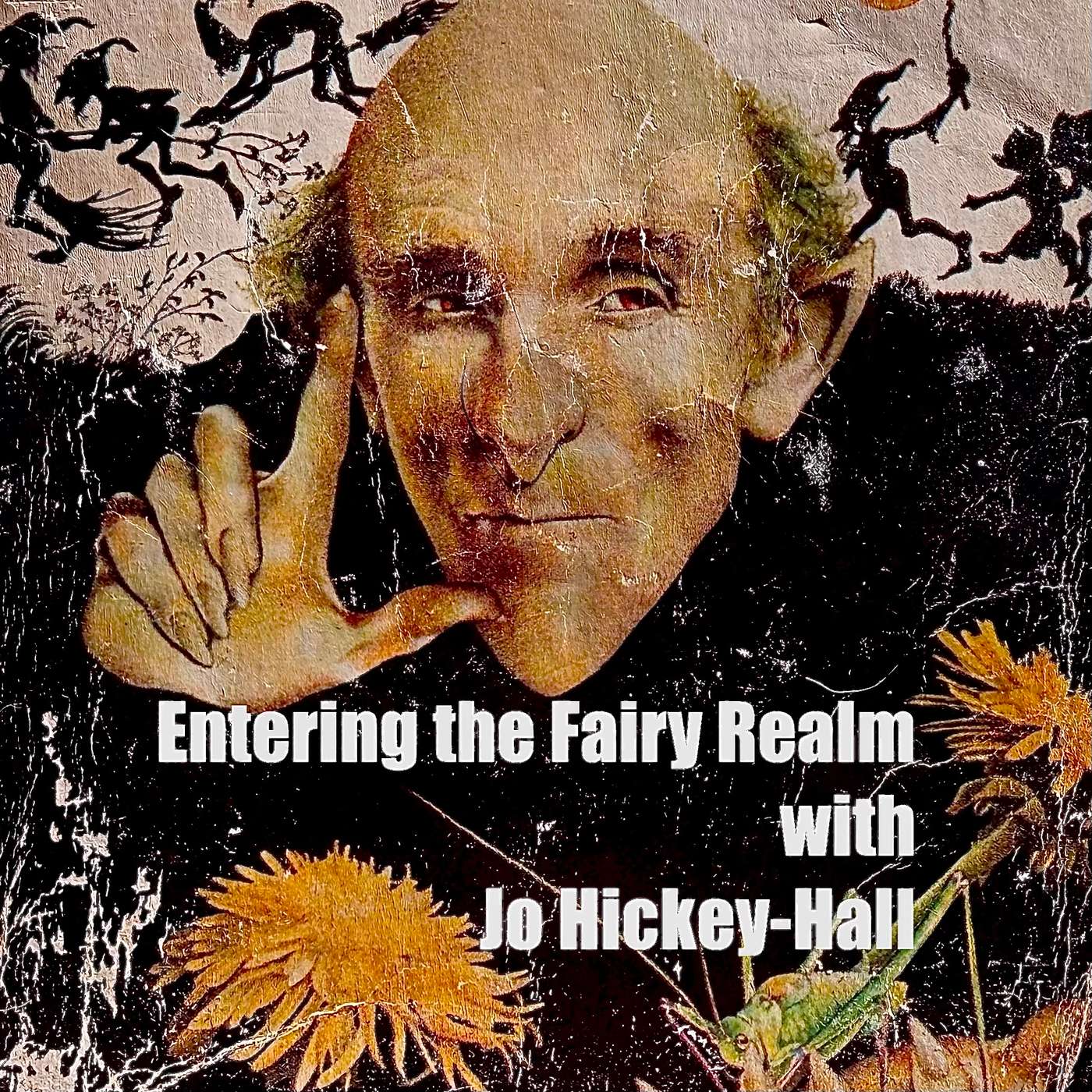
This week, Jo Hickey-Hall joins AP to discuss all things fairy and much more! Jo is a folklore researcher, and has long hosted The Modern Fairy Sightings Podcast- a show where she invites guests to share their experiences with the otherworldly. In conversation, she and AP discuss some of her investigations, her personal encounters, and thoughts about public perceptions about fairies and those who report seeing them. They talk about nature, and the connection of places to the more ethereal entities which inhabit them- and the spiritual or emotional energies which drive such encounters. Jo's years worth of work researching and exploring the fairy realm have also culminated in a book called Modern Fairy Sightings: Personal Encounters in Extraordinary Times, which will release in November of 2026. They discuss the upcoming book, (which sounds like a great Christmas gift for the discerning Fortean in your life!), as well as the rapidly changing and often terrifying mundane world we inhabit- and what that means for the more ethereal planes of reality. Jo's insights and knowledge leave listeners with a lot to think about! If you haven't already, be sure to check out The Modern Fairy Sightings Podcast wherever you find your shows- and keep your eyes peeled for Jo's book when it releases!
AP Strange: Pardon me while I have a strange interlude. But there is nothing else. Life is an obscure oboe bumming a ride on the omnibus of art. Among the misty corridors of pine, and in those corridors I see figures, strange figures. Welcome back my friends to the AP Strange Show. I am your host, AP Strange. This is my show and today's show is brought to you by the Willoughton Garage for tiny autos. If you have a tiny automobile and, your mechanic's hands are much too big to fix it, bring it to Willoughton Garage because they will take care of it and fix it right up for you. Gnome sized automobiles and Fairy sized automobiles of all kinds, they deal with any kind of magical machinery that might be part of these machines. So, one of a kind, Woolaton Garage, check them out. So today on the show, this is a fun one, it's been a long time coming and somebody I've been listening to for a long time and I assume my listeners, least some of my listeners are familiar with her very popular and wonderful podcast, Modern Fairy Sightings. She's a folklorist and folklore researcher and investigator of fairies and has one of the best voices, I think, in podcasting. So welcome to the show, Jo Hickey-Hall. Jo Hickey-Hall: Oh, thank you so much. What a lovely introduction. Oh, that's fantastic with the the bulletin. That's yeah. That's gonna be made into a poster, I think. AP Strange: Right. I'd love to make all of my imaginary sponsors in the posters. Like, I always kinda hoped there'd be like an artist that listens to the show. Hint hint, listeners. Anybody that does artwork really well or graphic design could just make little little graphics of my imaginary sponsors because because it's not something I have time to do, but it would be great. Jo Hickey-Hall: Yeah. I need to see that. AP Strange: Yeah. Well, I love the Woolatin Gnomes case. That's one of my favorite Fairy sightings. I don't know how you feel about that one. But Jo Hickey-Hall: Yeah. Yeah. It's absolutely intriguing case. A bunch of a bunch of us went went down there and did a couple of investigations, actually. That was doctor Neil Rushton and and Kate Ray. And we think we might have found the spot where where it happened. I mean, a lot of research as a few of us had written in Doctor. Simon Young's book about the case, which I recommend people reading if they're interested in the case. Yeah. I think it's kind of through Amazon or something. But it's yeah. It's a strange one, isn't it? I mean AP Strange: Yeah. Jo Hickey-Hall: Just the the visuals, you know, when you think about these for people that maybe don't know the story, shall I give a quick AP Strange: Yeah. Let's give a quick rundown of it. Yeah. Jo Hickey-Hall: Yeah. Quick rundown. So I think it was 1979, and some I'm actually really draw my my brain capacity here. So I think there was five or six kids, but basically, they were playing in Woolaton Park. This is in Nottingham. It was getting dark, and they saw they, you know, came to contact with with a load of of gnomes in brightly colored cars. You know, think of sort of noddy car type situation. And yeah, they were terrified. Many of them ran, but also they found it quite funny too because the gnomes were, as I say, kind of riding around in in these cars and seemed to be up in the branches of the tree. So when we went to the area to research it, we found that where they were because a lot of the children were falling into the actual, you know, marshy areas as how they described what happened. And so we think we found the spot where it would have happened. But the reason we know about it, which is kind of one of the most interesting things about this case and makes it so unusual, is that the kids went into school on the Monday and were talking about it and the head teacher found out about it and he separated them and he interviewed them. And not only that, he recorded those interviews. So we actually do have those interviews of the kids being questioned effectively. And they did come out with seemingly stories that match up. And it's a strange place because I've spoken to other people, one of whom was a woman who did ghost tours there. And she told me loads of stories about things that have happened in the grounds that lots of people have seen. And another guy I spoke to, he also had a weird experience there driving by there in the I think it was also in the seventies. And he watched as a huge orb came bouncing into the road Yeah. And then up over the wall. So, you know, a light as if it were he described it like a a space space hopper. So it's like the size of a space hopper, except it was this this orb of light and then disappeared over the into the park. So this I'm sure I know AP Strange: what a space hopper is. Jo Hickey-Hall: It's, you know, those kind of big rubber sort of round big rubber ball type things with the the horns that you grabbed onto and then you would bounce on the road. AP Strange: Right. Okay. Jo Hickey-Hall: Yeah. Space hop. But do call them something else? AP Strange: I haven't seen one around here in a long time. I feel like that that used to be a more popular thing back in the day. Seems interesting. Yeah. Like a rubber inflated ball that that was a was like almost a harness you could hold on to. I never knew what those were called actually. But Jo Hickey-Hall: Yeah. Yeah. AP Strange: Yeah. Okay. Jo Hickey-Hall: But anyway but but I did I did go there. I mean, I went inside because because it's actually on the site of a a Tudor mansion. Mhmm. And you can go because the the ground geology of Nottingham is sandstone, and you could literally the woman was telling me that you could literally scoop out the sandstone with a spoon. Can you imagine? So a lot of people in Nottingham were digging into their homes, and you can go and visit these places, and you can see the caves underneath people's build you know, their homes and buildings. Excuse me. And so underneath this Tudor mansion in Wollaton Park, you can go down into the tunnels, and there's an Artesian well, which is where the water rises from beneath the land and and, you know, of its own sort of, yeah, energy sort of rises up. And and it's got a real feeling down there. And I went to the well. And as I always do with kind of sacred water, what I would regard as sacred water, I will take a little bit on my fingers and I will sort of bring it to to my my body, like my heart area. And I've then followed the tour down towards the other tunnels underneath this this mansion house. And something followed me down that hall. It was right behind me, and I felt something follow me. Now, you know, it's not often that I would feel that. It lit I I turned around fully expecting somebody to be behind me, there wasn't anyone there. And there there are lots of stories around this place. So it's definitely an interesting spot. And so it as with other fairy encounters, it's often about the place itself. You know, something about where the realms might provide a crossover point perhaps or where we are more able to see into another realm. There's something about the geology that interacts with us and our systems in some way and, AP Strange: you know, Jo Hickey-Hall: you think. So, it's a good it's a good one if people wanna look into it. AP Strange: Right. Yeah, and I mean that makes me wonder because I do think about that as well because people will talk about the spirit of the place itself or you know when they're talking about ghosts they think that there's a ghost of a living person that haunting that area or a particular fairy entity that likes that one area. But I think there's a variety of factors that all have to be in play for the combination has to be just right for somebody to experience it. And if you're the wrong person, you might not see it or if the weather's just off that day, you experience it, but, there's something about the place that's very powerful and also the percipient, but then I think there's other factors involved that must make it either more likely or less likely that you'll have an experience. Do you feel that way too? Jo Hickey-Hall: Most definitely. Yeah. And a big factor there is liminality. And this is a word that's got, we're so used to talking about, you know, liminality in the last sort of four or five years. But effectively, you know, you're looking at thresholds. And those thresholds, for instance, in Wallerton, you have the water under the land and the land itself. And always, find that in a well, in a lot of the Fairy experiences that are reported to me and in ones that you might read somewhere, water is is often a factor. Mhmm. And it because it's it's not quite land. It's not quite water. So marshy land Yeah. Is often a hotspot. You know, you think about, you know, beaches and I've seen something running down a beach. And that was, again, you've got the point between the sea and the land. Mhmm. People have experiences on mountains, so something around the land in the air. AP Strange: Mhmm. Jo Hickey-Hall: So you've got those kind of liminal thresholds to do with the actual environment itself. And then you've got seasonal thresholds. So and, you know, the quarters and cross cross quarters of the year where you would have the equinoxes, the solstices, and around, you know, traditionally as well, you have Bealtaine or Beltaine marking the the beginning of summer. Right. And then, you know, Halloween or or Samhain marking, you know, traditionally, the the end the end of the year. But now it's for us, it's kind of the beginning of of winter. AP Strange: Right. Jo Hickey-Hall: Beginning of the dark months. So and at these points were the hot points of the year for the fairies to be moving because this is where they would traverse the land. So in the floric accounts, you you have a lot of that with, you know, beware going out at these times of year because you could be met along the road by a fairy being, and goodness knows what would happen to you. So you've got those thresholds as well. And then you've got the kind of physical thresholds like doorways Yes. You know, windows. Crossroads. Crossroads, fireplaces. Yeah. Crossroads is a really big one. Right. And then you've got the thresholds of your life. I mean, these are things that I've kind of talked about in my book is that, you know, we have I talk about sort of all the sort of preliminary thresholds really that you have the times in your life where you have maybe just started a new relationship or you're turning from, you know, a child into an adult, you know, those times of sort of puberty and, you know, just getting married or or or or heading towards some other big transition in your life. So these are these tend to be the times if you kind of look into the stories, which is what I do when I'm speaking to people on modern fairy sightings. I will ask, you know, what was happening in your life at the time because often it will there there will be something AP Strange: Right. Jo Hickey-Hall: That was going on for them. AP Strange: Yeah. Yeah. And I mean, I think in these these times of transition and and it can be stressful and it can be scary and it can, you know, you can have trepidation with it. But sometimes it's also exciting. Like, you're looking forward to to something, you know? I think of like rites of passage, like graduating high school or something and going toward college and they have that last summer where your life's gonna be totally different on the other end of that summer, right? So it's stuff like that, so. Jo Hickey-Hall: Yeah, absolutely. AP Strange: Yeah, it's just a cocktail of emotions I think in a lot of these times of your life that I think are very important and I think that's been born out in my experiences sometimes, but this is something you find often with your guests on your show is they report their stories to you and then I feel like that must really help them their life in perspective a little more when they realize, oh yes, actually I did have something going on at that time, right? Jo Hickey-Hall: Yeah, it's like it starts to, I don't know, sometimes it feels like something like that because I find it with healing work as well. I do I do healing and and and often I'll ask the person what what happened at the time when you were diagnosed with this? What was happening in your life? Or what what was happening when you first started getting these symptoms? Somehow it can be an unlocking point. If you talk about when somebody had an encounter and what was going on in their life at the time, they get a depth of meaning about what was going on for them and what, yeah, what what it could possibly point towards for them. Mhmm. And it seems to make sense in a way that's quite difficult to verbalize, but it that's where the unlocking but it's it's a little bit like undoing a knot or something like that. Something shifts Yeah. And an understanding of their own experience and about themselves. And, yeah, it can be quite a sort of cathartic or therapeutic experience in a way. I mean, simply talking about your experience, of course, is in a safe environment can be a huge relief for anybody, particularly if they've never if they've had this thing happen, and then they've never been able to actually just talk about it comfortably with somebody. Mhmm. But but in itself as well, once you kind of start, you know, a little further, it can bring some realizations up. AP Strange: Yeah. Yeah. And I mean, I feel like that applies to a lot of paranormal or weird type stories, but I feel like there's degrees to it where UFOs have gone in and out of popularity for over seventy years. So if you said you saw a UFO, you know, you might be taken seriously by some people, but at least people have a context for it and they have a place to put that as a possibility or it's the same thing with Bigfoot and I think everybody has something that in their life that could have been a ghost or something like that, But, I feel like up until recently, if you said that you were seeing fairies, that would just be way too far. That would be a step into them leading you to the men with white coats to take you away. You know, I'm not sure that's definitely where I am in The United States, I think that that would be, it would be less acceptable, but it's becoming acceptable now and it's great that you provide a safe space because so many people have these stories and I wonder how many of them just kept them secret forever. And I mean yourself, I think your backstory, when you were younger, you wouldn't have believed things until you saw an entity yourself, right? Jo Hickey-Hall: Yeah, exactly. Yeah. Yeah. I thought the notion was a bit silly really. Yeah. Or, you know, a bit ridiculous. Well, why why would you even spend time thinking about that? You know, surely that's not true. And yet, you know, I'd had these other amazing experiences in my life which through which I I knew that this was not the only realm. I mean, you know, from a kid having really deep experiences, out of body experiences, encounters, but I never would have seen that as fairies. I think that that was the thing. I think that we're all it's kinda drummed into us, I suppose. We're sort of socialized with the idea of fairies being these small winged beautiful creatures that might be in your nursery rhyme book or something like that. AP Strange: Or a Disney film. Jo Hickey-Hall: Or a Disney film or a Disney film. Yeah, exactly. And so when I used to go along to these kind of mystery school type gatherings, meetings in in Jersey where I'm from. And we would talk about well, she would teach us, you know, very basic healing, seeing auras, sort of some astrology, energy, medicine work, meditation, all of these things, and having, like, quite profound experiences with meditation. All of that was fine to me aside from when she, in the break, one day mentioned that she'd seen a fairy or fairies in her garden. And I just thought, oh, what's she saying that for? You know, she wouldn't be. I mean, for for me, you know, that was a step too far. So but as you say, it wasn't until I had my own experience. Some I guess it would have been about ten years later. Yeah. About ten years later Mhmm. When when I had my own experience. So and then and then and then you know. And this is the thing. It's it's and it's something and the weird thing is it's not a surprise. When you do see these beings, it's not a sort of shock surprise either. It's it's a me anyway, and this is something that I do ask my guests from time to time. You know, was there a sense of familiarity about it? Because for me, there was. Mhmm. You know? He was he was right there. He was very real. He wasn't translucent or fuzzy around the edges or cartoon like or anything. He was like a little person right there. Larger's life right there. So, you know, then you know, and it's kind of there's no there's not really any going back then. AP Strange: Yeah. Jo Hickey-Hall: And, you know, something that I don't know if you're familiar with the work of Paul Devereaux. He's written loads of great books, some of them up here on my bookshelf. AP Strange: Oh, yeah. Yep. Jo Hickey-Hall: And he it was the same for him. So so Paul has had, you know, this career of writing about, you know, leis AP Strange: Mhmm. Jo Hickey-Hall: And lines and strange anomalous lights and spirit roads. And, you know, for him, he always and he he did the foreword to my book actually, which I'm absolutely, you know, delighted and and feel very honored about. He wrote the foreword, and and and the reason he wrote the foreword is because, you know, all this time, he had just made the assumption that this idea of people seeing fairies was something tied to folklore, and it was, you know, it was just people's sort of wishful thinking if you like, and and that these beliefs somehow came true for these you know, felt true for these people that had a strong link to their, you know, traditional folklore. Until he went over to Ireland, and this was for so his family's Irish too, so so is mine. He went over there to research for what was originally called Fairy oh, goodness. Fairy Fairy something and and spirit roads. Fairy Worlds and Spirit Roads, something like that. And it it ended up think the mention of fairies, a bit too much for the publisher that that went to sort of make the next publication. So they missed out the So they again, you know, they're kind of taboo taboo or this sounds a bit silly. Let's remove that. It just ended up being spirit roads. And as he's researching for that, and they were trying to find the home of a guy that was gonna be able to tell them, you know, some some interesting facts about the local area and folklore and what have you. And so they're sort of trying to figure out where to go in Ireland in this I think it was in Mayo. And they slowed right down to figure out where they might be. And as they did, they came past a little piece of of grass. It was sort of like a triangular piece of grass between a few different roads. So perhaps through, you know, around a grassroots, I guess, actually. And there was this what he described is kind of like a bollard of tight foliage, probably about three, three and a half foot high. And it had eyes. Well, his his his wife saw it at the same time. It turned to look at him as they drove by slowly. And actually turned its its head. And and as I say, Sharla, his wife, saw eyes, and he saw this being, this fairy being. He, you know, he AP Strange: So so it's a being that was made out of plants or was a plant? Jo Hickey-Hall: Or Yeah. AP Strange: Wow. Jo Hickey-Hall: It was it was tight foliage made into a little person with a head and a and a body. AP Strange: Right. Because when you said turned its head, I was like, I guess you could consider it a head. Right? Because we we don't really know. It's all foliage put together. Right? So yeah. Jo Hickey-Hall: No. The shape of it. It was like a collard with a head. Wow. Yeah. And and it's really creepy. And he was so terrified that he just put his foot down and shot out of there, which they sorely regret because, you know, he said, look, I've been I've been researching this most of my life and here's an opportunity. And I just had to get the hell out of there. But the thing is, you've got to trust your own instinct with this. You know? He had that that there's that I don't know. There's some there's something that's sort of like a diabolical nature about that or something. You know, we call it Mysterium Tremendum, where something can happen that just just gets you at your core. Yeah. Yeah. Oh, yeah. Just have to you just, you know you understand it in different ways. Sometimes it can be a really beautiful experience, and and other times it can be a very frightening experience. But for him, he just needed to get out of there. He he wonders if it was his Irish ancestry that, you know, that triggered something in him to get the hell out of there, but he did. AP Strange: Right. Jo Hickey-Hall: And but the thing was they'd both seen it. And and for him, there was just no going back. And now he feels like he has to he needs to spread this word that, look, we've been kidding ourselves. These things are real. Right. And he thinks it's just so shortsighted of of us in sort of modern Western society just to poo poo it and assume that it's sort of some kind of nonsense. AP Strange: Yeah, yeah. But yeah, what you're referring to, think I've started to refer to it as just to be specific, sense of uncanniness. When you recognize the uncanny in something, it can be really destabilizing for your sense of reality And I think this is in part what people kind of refer to as ontological shock in some ways, but it doesn't take that much, doesn't have to be as dramatic as a boulevard of foliage turning its head and watching you go by. It can be something like just a mundane object in your house levitating off the ground a foot or so and if you really think that isn't possible and you've never entertained the idea before and there's something in your mind that just kinda snaps because you're seeing something that shouldn't be, right? So I mean, I feel like the sense of uncanniness is crucial to understanding the fear factor in it. But also with the Irish heritage, I think that was interesting because I've heard that referred to as a type of fairness where you're like kind of conversant with the fey enough to recognize things where like in an almost extra sensory way. And as you say, I guess it's important to follow that intuition. There's a reason we have fear, right? Yeah. Yeah. Jo Hickey-Hall: Yeah. I mean, if people wanna go and read more about that, I'd I'd recommend reading Rudolf Otto's The Idea of of the Holy. And, you know, in that, he talks so it's kind of what he's talking about is that our relationship with this kind of otherworldly or the uncanniness, it it stems from our original the the sort of primordial kind of relationship with religion or the divine nature in in in everything effectively that we would tune into. Perhaps if you think of the best example would be nature itself And our our relationship with that aspect of the divine, which may be terrifying if you think about angels as well. You know, the one of the old stories around angels is that they can be absolutely terrifying with, you know AP Strange: Yeah. Jo Hickey-Hall: Millions of eyes, etcetera. Or that they could be so beautiful that they they change you in a moment. Either way, they're gonna change you in a moment, but it's so he talks about miss Mysterium Tremendous and Mysterium Fascinal, which is the sort of the fascinating awe inspiring experience or as you say, like, the the really terrifying one which knocks you for six. But either way, you come out a different person. You come out differently. And it and you're right. It doesn't have to be like a big wow moment. For us, it can be this being in in nature, particularly if I I think if you're going through something or yeah. I think particularly if you're going through something and you've taken yourself off for a walk somewhere and you've spotted a a lovely tree that just kind of beckons to you in some way and you just feel like I just need to sit beneath this tree and just rest a while and you find yourself kind of leaning up against that tree and and some kind of sense of the presence of that tree. Mhmm. You know? And then maybe as you're thinking, you know, a leaf falls down and just sort of falls in your hand or a feather gently just wafts and sort of lands near your heart or something like that, and and something will happen. Perhaps a bird appears, whatever it is. And in that moment, you feel a sense of something. There's something, and it could be a very slight sense of uncanniness, almost like an answer has arisen or a sense of reaching out like a, you know, reciprocity with you and the tree if you're sort of there sort of, you know, thanking the tree for in that moment or just thinking, oh, this is really wonderful. This is just what I needed today. AP Strange: Yeah. I happens. I think of it in terms of sympathy. Like, when you think about, like, sympathetic vibrations and you find yourself in harmony with the tree temporarily, then you're conversing with it and in sympathy with it and harmonized. It's a lovely thing if you can do it. Jo Hickey-Hall: Yeah, definitely. We always feel better for it, don't we? We don't often make time to do that. But when we when we do, we're glad we did. AP Strange: Yeah. Jo Hickey-Hall: And, you know, even something like that can just it it can change everything for us because in that moment, somehow we feel held by something, whether that is the, you know, divine in nature, whether that's kind of mother earth, however you want to see it, the presence of that tree, the spirit of that tree, whatever your belief might be or something working through that tree, whether, you know, if you believe in God or what, you know, you the the point is that there's this connection, sense of connection. And I think that that can then it can make a big difference in your life because from there, you might just feel better enough to get on with your day and respond to things in a different way, and that, you know, has ripple effects. So and then you have those really crazy, wild experiences, like something literally appears before you and maybe even touches you or speaks to you and well, you know, there's no going back from that. What does that mean What is that about? You know? AP Strange: Right. Now you're setting forth with this new layer to reality and life that you have to contend with and recognize exists that you didn't have before, right? So now you're essentially a new person trying to navigate stuff. Jo Hickey-Hall: Yeah. And I mean, I've I've spoken to people on on the podcast who then it's interesting sometimes when two people see the same thing, and one of them for one of them, it's a turning point, and for the other one, they just wanna forget about it. AP Strange: Mhmm. You know, Oh, I've so had that. I've had I've that had people witness stuff happen around me and then years later, I'll mention it and they have no memory of it because they just, they blocked it out or they'll have kind of a memory of it that they're like, oh yeah, well that was nothing. Know, they just brushed it off, you know. And I'm like, how do you do that though? Like if you see a woman in the road that isn't there, you know, like we drive by and then you stop and we go back and she's not there anymore, it's like, how do you just forget that? I don't really know. Because for me it's just normal, you know, and it's stuff that I've I've lived with all my life. You know, I can say, well, that woman doesn't exist. And he's like, what are you talking about? And we stopped and turned around and then she's not there anymore. He's like, what the hell? You know, but then you ask him about it later, he doesn't remember. You know, he just said, lock that completely out. At the time, it really messed with him, but Jo Hickey-Hall: Yeah. I mean, we I I sort of talk about this, and this is something that Jack Hunter's talked about a lot as well in his books. I highly recommend The Boggle Threshold. Yeah. You know, which is Renee Hayes. And so you know about this that, you know, the fact that we're we're only gonna be open to well, whatever we're open to depends on our, you know, our upbringing, our belief system, our capacity for, you know, for holding whatever it is that happens. Is it too much for us at that time? You know, and all our experiences and things like that. So if you, people like you and I, who have had some kind of familiarity with these other worlds all our lives, well, yeah. You know? Like for me, when I saw the man, of course, yeah, you know, there he is. Yeah. I know this at somewhere I knew it. But for somebody else, that is just, no, that's too much. It's too much. And it and it kind of rejects the that happening as having happened. And so for some people, one woman I spoke to, she'd seen something with with another woman, and and the other woman went on to view it as a demonic experience that what had happened shouldn't have happened and that it was a demon. And yet for this for this other woman, it was a really important part of her life that gave her hope and gave her a fresh perspective on the world. You know, she was a child at the time, and it really changed her life for the better. So we we reject in different ways, don't we? And and part of that can be just, nope, that didn't happen and I do not wanna talk about that again. Other people say, no, I don't wanna talk about that. Don't talk about that. You know? Other people I've spoken to, this one woman who experienced something with, They were kind of young people at the time and and they'd gone for a walk together and effectively she saw a beautiful I think it was a bit of lichen actually just off the path. And so she went to follow it. They they both went to look at it, and then the path disappeared. And everything went silent because they were in a nature reserve, lots of families there. It was, you know, a day at the weekend or a bank holiday or something. There were loads of families about and birds and sounds of people just getting on with their day. That all disappeared. They could not find the path. They ended up being in a clearing, and there was a what she perceived, a blue circle of light around them. There were the two of them were transfixed and couldn't actually move, and she mustered the strength to do something. And she kind of came to and and pulled them, you know, spoke to him, they both got out of there. She took him to the station afterwards. This happened in England. Mhmm. Took him to the station afterwards, and it was only then they realized that there there was some time missing too. I think it was an hour or two Yeah. Which they could explain. And it freaked them out so much that they just didn't talk about it again for about twenty odd years. And it was only in fairly recent times that she said when she saw him, she kind of plucked up the courage to say to him again, look, do you remember what happened that time? And and he he was sort of willing to to say, yeah. Yeah. It was really weird. And Yeah. She was able to say, you know, I saw this blue light would and he he'd said, well, I didn't see the blue light, but, you know, something else happened for me and it was really scary. AP Strange: So, Yeah. Yeah, and then there's this whole time aspect to it that's, you know, you're stepping into another world, becomes another when, you know, like, and and and time doesn't work the same for for these beings, I'm convinced. Yeah. Jo Hickey-Hall: That's it. Yeah. Time exactly. And, you know, and some of the old folklore, people disappear and they come back, and it's they feel like they've been gone for years or have these lives in the other world, and they come back, and it's just been a few minutes or something. Or, you know, they they go into the other world for a short what seems like a short period of time, and they come back and, you know, some some folklore, you know, a century has gone by or years have gone by. Yeah. And so but, yeah, in these experiences as well, which is very interesting, you do get some missing time, you know, that kind of links in with some of the experiences of people with with UFO encounters as well, of course, and alien encounters. Mhmm. But there are other little clues as well. For instance, a lot of people talk about if they encounter a fairy and they're spoken to by that being, their voice is really it's very, very high pitched, very, very fast, and they can't quite hear make out what they're saying. It comes across because it's usually a kind of telepathic message as well, and they they kinda make themselves known. But that speeding up aspect is quite intriguing. And Yeah. You know, could we you know, it it reminds me of I don't know if you've ever heard birdsong slowed down. And that's fascinating. AP Strange: Yeah. It's so strange. It's a it's a strange. Very eerie kind of sounding thing if you slow it down. Yeah. Jo Hickey-Hall: Exactly. And so when you're hearing birds chitter chitter chatter and chirping yeah. So so so, you know, what is it? Well, I I feel like, you know, we're not gonna learn the answers to any of these things, I don't think. Right. But it I think, like, we're starting to at least build some kind of picture, and that's what really interests me. And, you know, every single story that I hear from somebody just adds just a little bit more of the jigsaw puzzle, if you like, you know. Mhmm. And it's just so it's so interesting because it's it's kind of it's unknown territory. And we've been we've been warned away from it. You know? We've been it's it's a to be for a reason. AP Strange: Mhmm. Jo Hickey-Hall: Yeah. Because I AP Strange: mean, it's fair because some of these entities are dangerous, you know, purportedly and in the folklore, sometimes that, you know, there is danger inherent. So it seems like it's wise to at least be cautious, but for the right kind of person, the right attitude that you bring to it, a lot of it has to do with what you bring to it, right? Jo Hickey-Hall: Yeah. Definitely. And, yeah, you're right. You know, in all the folklore, we are warned away. And I think that you're you know, we we do have to be really cautious. But at the same time, even those that have had really terrifying experiences, something has come of it. And this is something that I, you know, sort of go into in the book as well is that, you for all of us, it's those darker times in our lives that make us the people that we are. I'm not saying go out there, it'll all be fine. Try calling or invoking something in because we don't know what we're dealing with. Wouldn't advise that at all. And I I wouldn't at any point, you know, suggest that people that people do that. I think that you, you know, if you're if you're somewhere and something happens, that's one thing. And I feel like perhaps that was something that you were ready to experience. I also think that it's it's really good to, you know, to leave offerings and to, you know, to to honor a place where you feel that it might be sacred and honor it in a in a way that's not harmful to that environment. So better that it's not an object and more maybe something that you've written from your heart that you could speak or a song or just placing your hands on the ground and giving that place your love or tent, you know, festival tending for a place, picking up the rubbish, advocating for it if it's, okay, you know, a threat of development, these sorts of things. Yeah. And within all of that, you might start to sense a relationship forming. And and these are great ways of of of leaning into these worlds. And at the same time, I feel, you know, a lot of the folklore that really warns us away around particularly around sort of morality tales, and that's pretty obvious what people were trying to do with with some of the folklore is to warn people away from certain places that they didn't want people going to. AP Strange: Right. Jo Hickey-Hall: And or going out after dark, you know, especially if they worked for them, for instance, and they wanted them to be somewhere where they were gonna be useful the next morning rather to to that person rather than going out all night and doing what they wanted to do. So there's, you know, there's a lot of sort of power plays at work in a lot of the folklore and it and of course, with the church itself and and the impact that that would have had on people's beliefs and trying to you know, there's a lot there's been a lot of demonization of of these beings. So that that that said, we do need to be cautious. AP Strange: Right. Jo Hickey-Hall: Because we don't we don't know what we're dealing with. I can say that I've had, you know, interesting experiences, which I I cherish, and and one kind of warning experience, which I also cherish. Yeah. And that people will have the whole spectrum. And and some people like me will have a really beautiful experience or experiences. And, you know, they might have had a very terrifying one happen too, but they they tend to say, at least the ones that I've spoken to anyway, have said to me that those were important lessons for them. AP Strange: Right. Yeah. It's not as simple as good and bad or good and evil. As you say, there's a spectrum. And as you said earlier, you're into the You have built in intuition that you should trust. You know, your gut knows if you're safe in that situation. Yeah, yeah, absolutely. Right, absolutely. So, well, this is one thing I kinda wanted to jump into at the beginning, and I'm coming back around to it now, because you were talking about, being, advocating for the land, and for the nature, and, I saw you post recently about a proposed data center in Bristol, but in general with these beings, I wonder how the technology affects their realm, you know. I've often wondered if like the proliferation of WiFi has done something to make it less likely to find fairies for instance. And as far back as the 1970s, know Janet and Colin Board would sometimes write about how power lines going across the country and all the pylons maybe were affecting our ability to perceive things like fairies. So I wonder if you think that because I mean the Woolaton Gnomes is an interesting case because we always think of fairies as being stuck kind of in a certain time period, right? So to be driving a car seems seems strange to us, but that's the technology that's around. So yeah, I don't know what what how you feel about technology and electronics, electronic frequencies and how that might affect the very realm. Jo Hickey-Hall: Yeah, yeah, there been, there are some interesting stories around that, around how electricity, you know, in some of the stories that we included in it's a book called Magical Folk, and it's about fairies from five hundred AD to the present. And and Mark Norman and I, my co researcher, we wrote the chapter for Devon. Mhmm. And in that chapter, there's a story around somebody saying, well, there used to be fairies here, but not since we had electricity. Mhmm. You know? And they're no longer here since electricity. So there are there are a number of accounts where people have straight out said that. And, I mean, I think and this is something I've really gone into in the book. Actually, I've got I've got a theory around this that I'm not I may talk about it soon because this whole AI thing is really shockingly worrying as far as I'm concerned. AP Strange: I'm with you. Yeah. Yeah. And Jo Hickey-Hall: I can't understand how people can't see this, but it's I think it is a threat to our humanity. Mhmm. It really is. It's not only a threat to the environment. You know? And people have said that it's affected so many landscapes. I was reading the other day about how this huge I think this is in America, actually. I can't remember where, though. There's a very beautifully the guy spoke about it really beautifully for for his community of how these deer are now sort of trying to find their way across the land, is now blocked by these absolutely ginormous centers. And they're hungry and they're tired and they are confused by what's happening there. So of course, it's affecting the wildlife. It's affecting the butterflies and the bees. So why wouldn't it affect these otherworldly beings as well? Because you're directly affecting the land itself. But not only that, I think it it's it's so much more damaging for us than people are currently realizing. Now my own personal view on this is something, as I say, I've I've shared in the book that, you know, what we're heading towards. And I think what we're heading towards is is we need to change course. And I think that there has been so much pushback. AP Strange: And you can also see, and there's so many Jo Hickey-Hall: bots out there as well Yeah. Pushing back on people's comments on social media. And a lot of people get taken in by that then as well, which is is another issue in itself. But I think the point about it is, and going back to sort of Mysterium Fascinon, Mysterium Tremendum, there's something really dark and sinister. It's beyond that sense of the divine. This is the opposite. And I tell you another thing, I think. AP Strange: Yeah. It's diabolical for sure. Jo Hickey-Hall: It is diabolical. AP Strange: Is And Jo Hickey-Hall: I feel it's a subversion of what we are actually going through in humanity because I you know, we're going into the age of Aquarius. Astrologically, we are doing that. And we are going through this process of turning into something anew, and it's I feel that it's no surprise that at this time of our transition, we have this kind of subversion coming in of what we are becoming because it's being purpose we're being purposefully directed down a a technological road. Now, of course, some of that is going to be things that will help us. But what is the payoff? And is there a balance that can be sought? Because slapping these, you know, without due process as well, because I I don't know what it's like over there, but over here, they're being termed essential infrastructure. Essential for who and for what? Essential for aligning people's sorry. I'm gonna go on a rant now, but AP Strange: No. It's true. I mean, you have all all the guards. Jo Hickey-Hall: Pocket. I mean, what on earth is going on? And it's I just think that the, you know, the the the the systems of government we have are falling. We can all see that. Anyone with heart for brain can see what's happening here, and the systems are falling. So the the governmental systems we have in place are no longer fit for purpose. They are just no for purpose. And I think it's almost like we really need to just rise up. We really need to rise up, and we need to force this back. Yeah. And however we do that. And, you know, because our humanity is at stake, and I feel, yeah, what we're headed towards, there's a certain point. It's very difficult then to to to wind things back. But the force and the speed with which these are being forced upon all of us all over the world is shocking. And and it really I hope it just serves to wake people up because, you know, we've watched now for years now watching people suffering in other parts of the world due to the disgusting, you know, supposed leaders' behavior in the world and that that just do not care about anything apart from profit. So I don't see it as a surprise. But what I am finding shocking is the speed at which is happening. But the the flip side to that is the speed at which people are waking up. AP Strange: Right. Well, they have to move quickly, I think. Jo Hickey-Hall: Yeah. They have to. AP Strange: Because if there was a conversation about it, most people would be opposed and they know that. They And can force it I think when you said earlier it's a threat to humanity, I think it's a targeted threat in a lot of ways to very specific types of humanities and like, our imagination. Like as a turn of phrase, I like to say, oh, just imagine this happening and when I'm typing that in on any of the meta apps, it's trying to automatically open an AI called Imagine, I guess, that's part of the word. They're co opting words from our language to prompt us to trust a machine to do our thinking for us. Right. And people are falling for it all over the place and I think it's very important that we keep our minds and our spirit because one thing they can't mine is the human soul. I don't think they can. So like the quintessence of who we are and our relation to the world around us, the worlds around us rather because there's layers to it, that can't be created or destroyed I don't think. But that's what we all need to be tapping into and unifying with each other, I believe. Jo Hickey-Hall: Yeah, this is something that I absolutely agree with you and this is something that I've kind of written about and I this theory about you know, what what this stems from, you know, what we wear. And I believe that we are you know, we have the the divine within us and what it means for us to be heading this direction and and and what the cost of that is. And and and I think it's, yeah, I think it's really important that we that we do, as you say, maintain our ability to think and create and learn in ways that you know, from each other and from from our landscapes and from our from our ancestors. And all of that to be removed is basically turning us into computers ourselves. I mean, it's shocking if you see the kinds of things that they've got up their sleeves in terms of being able to experience the world through the technology rather than experience, you know, the world for ourselves. It's we we really need to wake up and do something about it. So, I I hopefully when the book is released, I'd love to talk more about that. AP Strange: Oh, absolutely. Yeah. Because we keep we're I keep moving swiftly past the book itself, but in the time we have left, I'd love for you to just kind of explain the book and tell my listeners a little bit about it and when it's going Is it released now already or is it soon? Because I know you've been writing it for quite a while. Jo Hickey-Hall: Yeah. I have been trying to do it among all sorts of things like parenting and doing all sorts of crazy stuff. AP Strange: Right. Jo Hickey-Hall: But yeah. So I just literally got it. The first copy is this week and it's gonna release in November 10. It's quite big. It's much bigger than I than I kinda. I don't know why I imagined it being smaller. AP Strange: But And it's called Modern Fairy Sightings. Jo Hickey-Hall: Pardon? AP Strange: The title is Modern Fairy Sightings? Jo Hickey-Hall: So yes, the title is Modern Fairy Sightings, Personal Encounters in Extraordinary Times. So I'm talking about these times and I'm talking about why these why we're kind of taking note of these experiences now potentially, because, of course, I don't know. But I do think it's interesting that at this time of great transition we're going through, we're literally living right through it at the moment, and they are they are here. They're coming up in our consciousness, and they are kind of demanding to be to be to be heard or seen. Can you hear that noise in the background or is it okay? AP Strange: I can't. Oh, I could ask you the same thing about the birds here because the birds are very active this whole time. I don't think they're coming through though. No. Not at all. Jo Hickey-Hall: So, you know, it's it's really talking about it's obviously got people's experiences in there. And I've and I've I've picked some experiences that that give us an opportunity to look at the types of experiences that people have. Mhmm. We look at what fairies might be. We look at the whole AI thing as well and my thoughts around that. And we look at, you know, our history, our relationship with with Fairy through through the centuries. But it's really to give space to what is it like to have an experience like this. What was it like for these individual people? What happened to them afterwards? Some of them have shared their own artwork in there as well. The illustration actually is by my husband, Peter, Peter Hall. So, you know, that was really nice to kind of work on the project together. And, yeah, I think it's I have had a few things to say, and I had an opportunity to say them. Yeah. And I think that, you know, I felt like with writing the book that it just had its own agenda of where where it wanted to go, what it wanted to what it wanted to do. And it, I hope, will just allow people to, yeah, maybe just take some space to reflect on these experiences and what the meaning behind them might be because we we we don't have any answers, but we certainly can understand how it was for somebody else to experience this. And I feel like it can have the potential to change us as human beings to know that this is the possibility. And if this is a possibility, then why on earth are we treating our world the way that we do currently? And are these beings helping us at this time? I believe they are. AP Strange: Yeah. Jo Hickey-Hall: In plenty of UFO encounters where we've been warned about getting too focused on technology and losing something, and I feel that's where literally where we are right now at this juncture. So I do talk about that in the book and and and just offer my own thoughts on that. But I I am already thinking of the next book because I there was so much I couldn't in include. Right. But I'm very interested in children's experiences, in particular, having had experiences myself as a kid. So that would be the next book that I'm looking towards is really kind of leaning into all of our childhood experiences and AP Strange: what Yeah. That sounds great. And the current book sounds fantastic. And November 10, you said is the release? Yeah. Worldwide or is that the is there Jo Hickey-Hall: I believe so. AP Strange: Okay. Yeah. Jo Hickey-Hall: Penguin Random House, I believe, in The US. AP Strange: Alright. Jo Hickey-Hall: The distributor. And in The UK, it's Watkins, which is Red Wheel and Weiser now. Pfizer. Which is Red Wheel and Pfizer. I don't know if it's Pfizer or Weiser, but you have them both there just in case. AP Strange: I I believe it's wiser. Yeah. But yeah. Okay. Jo Hickey-Hall: Yeah. So no. It's it's it'd be interesting just be interesting to see if it helps some people, that's kind of what the show is for, really, is to just provide a space for people to come and share their experiences, and then also for for those who want to hear people talking about these encounters in their own words too. So I think it's it will go as in terms of the the show yeah. In terms of the project itself and the the podcast, I've always felt that it would just kind of go as long as it's it's meant to, and I'm always kind of checking in to see what's happening. And I I I have on this spine I don't know if you can see the little AP Strange: The logo. Yeah. The logo Jo Hickey-Hall: of the man who is who is based my husband illustrated this, who's based on the man that I once saw. And I I just feel I was speaking to my Patreon group yesterday because I shared some pictures of the book with them, and I just felt like, you know, he's kind of been potentially driving this all along. I don't know that. But it does make me wonder when I look back to that first experience and the going from thinking that this was just impossible or ridiculous to, okay. Yeah. Of course. AP Strange: Yeah. Of course. Jo Hickey-Hall: They're they're here. You know? AP Strange: He's been like a silent partner this whole time. Jo Hickey-Hall: I feel like yeah. Well, I can tell you he's definitely been cracking the whip because I I mean, my whole entire life has been sort of, yeah, given over to this this podcast and this book for so long now that I really feel like my daemon has been driving me so hard. AP Strange: Mhmm. Jo Hickey-Hall: And and and I guess the book is now complete, and it would just be interesting to see what happens next because I have no idea. I'm not driving any of this. Don't feel. AP Strange: Yeah. Well, hopefully, you're allowed to take a deep breath and just kind of relax. Because you do put a lot of work in and your podcast is fantastic. I can only imagine the book is as well. And that will be available listeners on November 10. Definitely in the meantime if you haven't already, if you're unfamiliar check out the Modern Fairy Sightings podcast because it's a lot of fantastic stories lot of, great you guests on there to tell their stories and I love the way that you help them tell them. The questions you ask are always very pertinent and I think very enlightening. It ends up being an enlightening experience for everyone involved. So thank you for all you do, Jo, and thank you for joining me on the show. Jo Hickey-Hall: Oh, thank you so much and likewise. That's why I've really enjoyed listening to your show too because your question's always really great, and it's always enjoyable. But I feel like there's a wisdom there that, you know, you you are able to just ask the right question at the right time. So so thanks for your work too. And, yeah, thank you for having me on today. I've really enjoyed it. AP Strange: Yeah. This is great. We'll have to do it again sometime. So Definitely. You have you need Jo Hickey-Hall: you need to come so you you're coming on to talk about werewolves and dogmen. AP Strange: Yeah. I'm agreeing right now. So you just let me know now. Jo Hickey-Hall: Exactly. You've said it now, so you're coming on. AP Strange: Okay. It's on record. So