
The 1937 Flood Watch Podcast · Charles Bowen
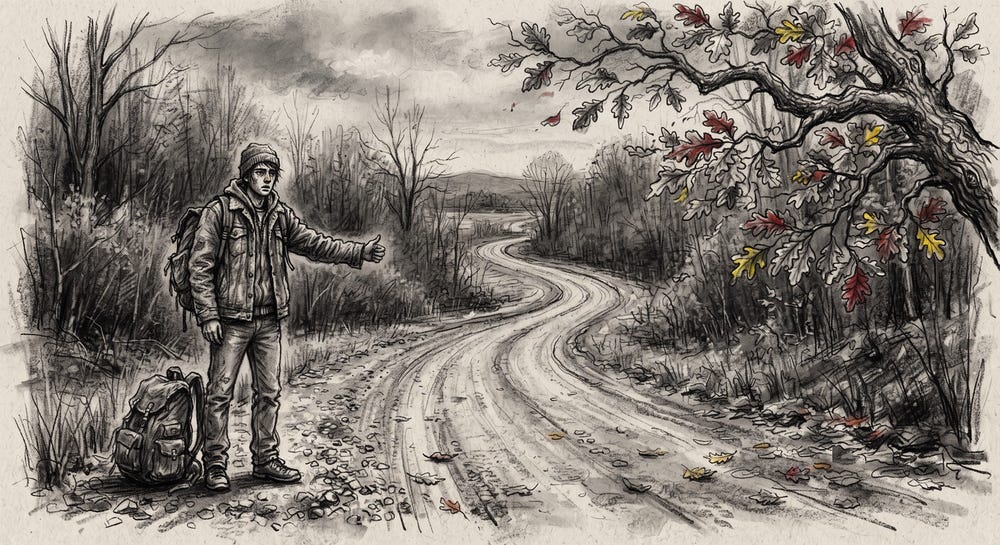
In the autumn of 1963, as students were adjusting to a new school year, a song that hit the charts sparked the imagination of all the aspiring folksingers in our area. Radio stations throughout the Huntington-Ashland-Ironton area 63 years ago this fall seemed to hourly played Bobby Bare’s new song. “500 Miles Away From Home” had a special local interest, because Bobby is famously one of us. We all knew the young singer/songwriter had been born in 1935 in Ironton, Ohio, where he led a hard-scrabble life. His mother died when Bobby was just five years old, and his father, unable to feed and care for the children himself, was forced to split up the family. By the time he was 15, Bobby was working to help make ends meet, first on a farm and later in nearby factories. At the same time, Bare discovered his love of music and built his own guitar out of a coffee can and a stick. “I got some strings off of a screen door and wired it up,” he once told filmmaker Ken Burns. “I’d sit around and flog on that, you know?” In 1953, an 18-year-old Bobby Bare left Ohio, catching a ride to California and playing music all along the way, earning tips to help pay for the gas. Those days of struggle were much on his mind a decade later when he began crafting his version of “500 Miles.” Bare, as we reported here in an earlier article, recalled years later how the song came to him while returning from a gig. “I was driving back from San Diego one night,” Bare told interviewer Gary James. “I was surfin’ the radio and I heard Peter, Paul And Mary singing the old campfire version of ‘500 Miles’ and I thought, ‘Boy, that’s great!’” As soon as he got home to his North Hollywood apartment — down the street from his sometimes drinking buddy, Glen Campbell — “I got Glen’s album and it was an instrumental. There were no lyrics.” Now the story turns to Bare’s friend Charlie Williams, whom Bobby called up. “I said, ‘Hey Charlie, come over and let’s write some lyrics to this.’” “500 Miles” put Bobby Bare firmly on the musical map. His version, recorded for RCA, became a Top 10 hit on the U.S. Billboard Hot 100, as well as a Top 5 hit on both the country and adult contemporary charts. (Incidentally, on that same album, Bobby’s take on “Abilene” would influence The Flood’s take on that tune as well.) About the Song As Autumn 1963 rolled on, “500 Miles Away from Home” had an impact on all those fledgling guitarists who were starting to answer the call to come to folk music. On park benches and in living rooms, at parties and in bars, on school buses and in nascent coffee houses, earnest young singers were sharing those poignant lyrics: Teardrops fell on mama’s note when I read the way she wrote. She said, “We miss you, son. We love you. Come on home.” I didn’t have to pack. I had it all right on my back. Now I’m five hundred miles away from home. Detective Work The more scholarly among those early song-slingers/-hunters wanted to trace the roots of Bare’s source song. Sure, Bobby...
0:00SPEAKER_00Hey there, it's Charlie Bowen with the 1937 Flood.
0:05SPEAKER_00In the autumn of 1963,
0:07SPEAKER_00a new tune hit the charts that sparked the imagination of all
0:11SPEAKER_00of us aspiring young folk singers.
0:14SPEAKER_00It was 63 years ago this month that radio stations throughout our part of
0:19SPEAKER_00the world seem to hourly play Bobby Bear's new song.
0:24SPEAKER_00500 miles away from home had a special meaning here because Bobby was famously one
0:30SPEAKER_00of us, a native son of Ironton, Ohio.
0:34SPEAKER_01Teardrops fell on Mama's note when I read the way she wrote.
0:42SPEAKER_01Said we miss you son, we love you, come back home.
0:50SPEAKER_01Well, I didn't have to pack.
0:55SPEAKER_01Had it all right on my back.
0:59SPEAKER_01And I'm 500 miles away from home.
1:03SPEAKER_01Away from home, away from home.
1:06SPEAKER_01Cold and tired and all alone.