
Supernormalized Podcast · CeeJay Barnaby
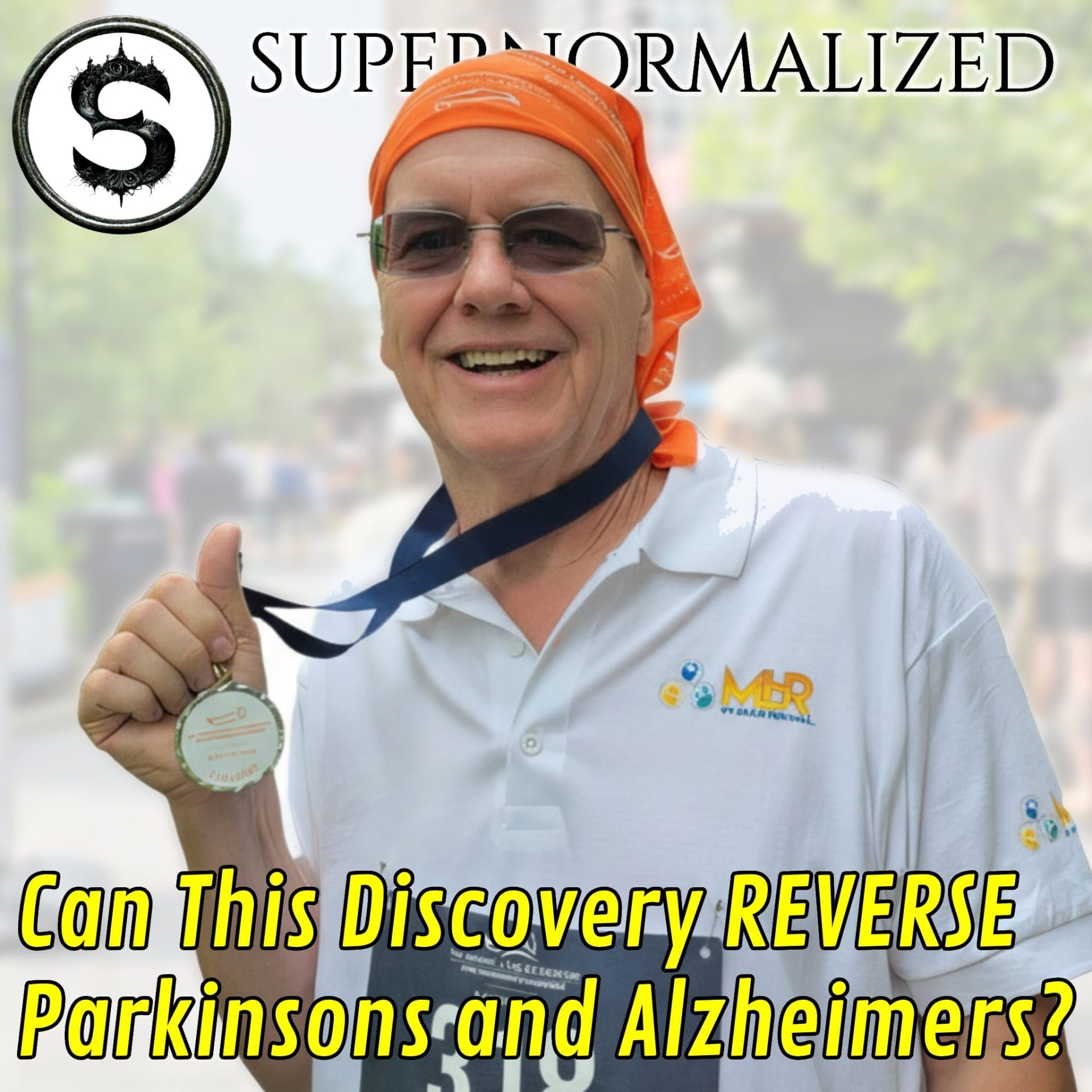
Mark Burnett reversed stage 7 Parkinsons and Alzheimers using a natural seed compound that reactivates the brains glymphatic system. From contaminated Camp Lejeune water to running marathons, his story proves incurable doesnt mean impossible. Full interview on Supernormalized podcast. ParkinsonsRecovery AlzheimersHope BrainHealth Supernormalized podcast Listen:https://supernormalized.com/208/ Watch:https://supernormalized.com/208yt/
0:00Speaker AOn today's episode of Supernormalized, we're talking to Mark Burnett. He came into the world at camp Lejeune in 1958 and carried the legacy of that place for decades. Unexplained nerve pain, balance loss, and eventually clinical diagnosis of Parkinson's and early Alzheimer's disease. Trained as a database programmer, Marcrie treated his symptoms like a stubborn bug to be fixed. He followed a trail from a Japanese university study to a tiny seed that is used in traditional Chinese medicine. He engineered a cold mill process, preserve frag compounds and began a personal trial that changed his life. Suddenly, he was getting fuel. Fools near gone tremors, sharper memory, and measurable improvement on his blood tests. He founded a company called APDI and My Brain Restore to make that process available to others while continuing clinical testing and legal action tied to Camp Lejeune exposure. On this episode, we'll talk with Mark about his medical test, the science behind the scene in the ultra chill milling process, practical directions for caregivers and patients, and the ethics of regulation, and questions around self experimentation and supplements and the legal and community fight tied to environmental toxins. Stay tuned for details on Mark's experience, on how he discovered this, and how he's turned it into a product that actually helps people with their Parkinson's and Alzheimer's. This supplement is changing so many people across the world, and this is a great story. Welcome to Super Normalized Mark Burnett. Mark, it's like you. You must have signed up to, I don't know, a pretty strange sort of life to be able to come into the world and then be forced in a position to find your way back to health. Welcome to the show.
1:46Speaker BThank you so much. I appreciate it. I'm looking forward to it.
1:48Speaker AYeah, I'm looking forward to hearing how this all happened. I mean, you know, your early life was pretty rough, and it wasn't by your own hand or the hand of your parents or anything like that. It was more so just by circumstance. Do you want go into that sort of detail and tell us about that first moment when you realize something serious is happening with your balance of memory and how that all came about?
2:07Speaker BRight, sure. Well, essentially the. I was born in Camp Lejeune, which was a contaminated base, but of course, at that time, during my teens and my even early 30s, I didn't know really what was going on. I knew that I had some neurological issues, but no doctors could really figure it out. I had root canals in all my teeth for no particular reason. No one could figure out why my teeth were hypersensitive. And all these things kept driving me, I guess, in different directions here as to what kind of problem I had. And it really wasn't until I got into my 60s and started noticing more advanced kind of Parkinson's symptoms starting to come on, that I started thinking about that. I knew I had talked to my mother prior to that. Why do I have no brothers and no sisters? And what had happened is, on the base when I was born, my mom was sick in her second and third trimester. And the doctors were like, we're not sure we are going to be able. He's going to be able to be born. And I made it. A lot of babies didn't there. A lot of babies did die. It was really rough, but I made it out. And unfortunately, though, I asked my mom when I was like, 13 years old, you know, you get curious like, why don't I have any brothers or sisters? And she said, well, let me sit down. She's a marine wife. Right. Okay. So, you know, straightforward to the point. Well, here's the deal. You know, I. They. I was so sick on the base with you and everything else. Didn't know why, but they kind of pushed me to get a hysterectomy now, leave that base. And she would have been fine. But no one knew that, and no one was telling anybody that at that time. So that's why I don't have any brothers and sisters. And I became an only child. And I basically, you know, once I understood what was happening and I understood what was happening in Camp Lejeune and this contaminated water, my spirits were, you know, let's fight this. Because I'm sort of an entrepreneur. I always have been. I've run programmers before and work with developers and things like that. So researching and figuring out things, working from a blank screen was something I was very used to doing. I had that heart for it. So that's how I got started.
4:21Speaker AYeah, I'm curious to that contamination is tce. What's that?
4:25Speaker BWell, it's a name I'm not going to pronounce. Try to pronounce that. It's like a. It is essentially a chemical that probably most people have in their garage and they just don't know it. It is in brake cleaner fluid. Okay. It's in carburetor cleaner fluid. It's in wig glue. It's in the correction fluid that you use on paper. It is a chemical normally used to clean metals for the most part, but it's also used in the dry cleaning industry. To clean uniforms. Hence the Marines. And everyone went to dry cleaners. And one of the dry cleaners that wasn't on base but was upstream from base dumped all their TCE that they cleaned the uniforms down the drain and that into the water supply aquifers. And I think there was like 84 wells in camp Lejeune. And they pulled the water out from 1953 on. And I was born in 58, and we were drinking water laced with TCE. So my first drink was a formula because back then, breastfeeding was not popular. And let's keep in mind, Betty Grable was out there. So there was this sort of, oh, the Marines are like, you know, no, no, no, use a bottle. And so that's what happened, you know, I mean, I got bottle fed in the hospital. The hospital is one of the most contaminated hospitals with the water. And my first drink was that TCE water.
5:49Speaker AWow. And that was polluting everybody and causing lots of drama that no one really could pin it to.
5:55Speaker BWell, and then there was huge amount of COVID ups going on. You know, base commanders were keeping it quiet. They had put out some memos like, nothing's wrong with the water. It was only until the US government got involved much later, much, much later, and did a survey of everything that they found a bunch of contamination with TCE chemical and which was that cleaner and benzene was also, which is a form of like acid in the water system, three other chemicals. And so it was horrible. It was just drinking chemicals every day. I mean, you go to the pool. I was a little kid. You go in the kiddie pool, right? I mean, I was like 2 years old. My mom was a big fanatic for going to pools and learning to swim early. And I was in the pool all the time. So, you know, while that was fun, the end result, it wasn't.
6:43Speaker AYeah.
6:44Speaker BAnd then I got hit with, you know, well, okay, I don't want this, you know, Parkinson's thing. How do I deal with it?
6:51Speaker ASo what happened? So your body got severely toxic, and then you started to notice symptoms of Parkinson's and Alzheimer's and early age onset dementia. How was that for you? I mean, that would have been quite disturbing to realized something was going on. You're like, well, where did that come from?
7:09Speaker BWell, besides the root canals, which involved all teeth, eventually, I also, at a very young age, had ed, which erectile dysfunction, which was very unnormal. Even my doctors were like, this is really weird that you would have this at such a young age. And there was no explanation for it. At that time, there was a Viagra or things like that out there. So when there was, I used it. It worked for a little while, but stopped. And that's an early sign of Parkinson's that some people don't realize. After doing research, I realized that was a Parkinson's symptom, the damage of those nerves that create that capability. So, you know, I knew things were wrong, but I just couldn't get any doctors to put, you know, the sort of, you know, check mark of what it was. It wasn't until I started doing my own research and understanding There were a lot of things going on in Camp Lejeune where I was, that I started to put that together as, unfortunately, during COVID I started to bump into things. I started to take corners a little too fast or it's a little too sharp, I should say, and fall down, falling upstairs and downstairs. So either one's fun.
8:13Speaker AOh, God awful. Yeah.
8:15Speaker BAnd you knew something was wrong. But I didn't want to go to the doctor right away because these were horrible situations going on. But I didn't want to get Covid either, and I hadn't yet. So basically it came down to I had to focus on, you know, what's out there. I eventually saw a neurologist and they put me on a medicine from the 1960s called Cardopa L Dopa type drugs, which are just replacements of dopamine. That's all they are. So they're not fixing anything. They're just replacing what's not being made by the brain. And I realized that was not good. And one doctor summed it up because they said, we call this the honeymoon effect. And I said, what is that? You know, I mean, besides what I know what a honeymoon effect might be. And they said, yeah, after about five years, this isn't going to work for you, and it's going to go away and we're going to have to increase the dose. You're going to get into worse problems. You don't beat it. You know, it's unbeatable, it's incurable. I just couldn't deal with that. My brain was telling me, no, no, no, no, no, you got to do more research. You got to figure it out. So that's what really got me on the path. And being a database programmer, being used to those blank screens and building an entire database board. Huge companies with a team of programmers. I saw a tired. I realized that solving any problem from a blank screen was possible. You just had to know where you're going, what your Results need to be at the end. And how do you get there?
9:38Speaker AYeah. So you're driven to actually gather all the data, all the possible data. And then using your skills as a database programmer, you would even say a computer engineer, you would say that you actually dived right into that data and started to notice patterns that actually pointed something out.