
Strategies for Tomorrow's Leaders · Mike LeJeune
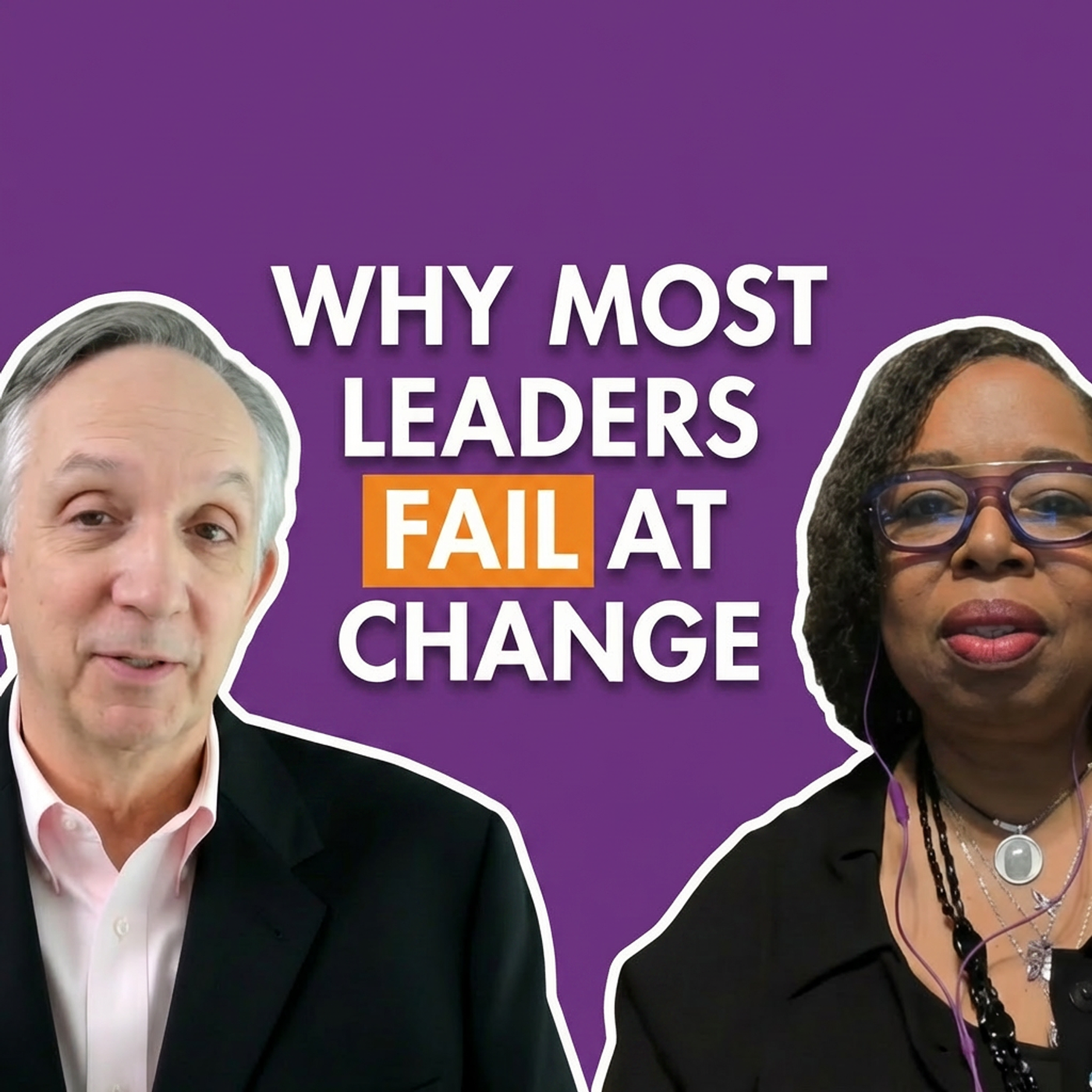
The conversation explores the theme of change management and its impact on individuals and organizations. It delves into the challenges of change, the importance of psychological safety, and the need for effective leadership during change. Naomi Hardy shares her insights on the dynamics of change and the role of leaders in championing change. Takeaways Change is an experience that people go through, and understanding the cycles of change can help reduce feelings of isolation and resistance. Psychological safety is crucial in creating an environment where individuals feel safe to think and speak differently, fostering engagement and productivity during change. Effective change management requires a marriage of process and behaviors, with a focus on understanding the impact of change on individuals and the organization. Chapters 00:00 The Dynamics of Change 07:40 Change Leadership and People Management 19:40 Unique Challenges in Offshore Work Environments 30:53 Psychological Safety and Engagement 38:15 Measuring the Impact of Change Connect with Naomi on LinkedIn: https://www.linkedin.com/in/naomijhardy/ Learn more about Dunamis: https://dunamischange.com/
Mike Lejeune: When I think of the chaotic times that we're in right now, socially, economically, nationally, internationally, there's a word that has to be captured, be focused on. word is change. The way things are today is not like they were yesterday. We just finished watching the moon launch here in the United States. And ⁓ there was a guy, Canadian astronaut by the name of Chris Hadfield. that didn't meet him, but my research showed that it was a picture taken when he was captaining the International Space Station. And there was also a picture of Kitty Hawk for the first flight. In his lifetime, in his lifetime, his grandmother was alive when both of those pictures were taken. You talk about change. Well, guess what? We're in that type of a situation right now because of AI and technology and just social unrest. And that's why I invited Naomi Hardy to join us today. Naomi is somebody that I call a guru, a wise sage, because of her literally decades of experience in helping organizations and helping people develop, develop their effectiveness and their interaction with others. The name of her company is Denimus. And there's a reason for that. It's got a biblical, physical anchoring. And so today we'll get a chance to... be able to hear from her and her perspective on what do we need to be doing as leaders to champion change? Because that's what the people that we work with are relying upon us for. So Naomi, welcome to the show. Naomi J Hardy: Thank you, thank you Mike. Pleasure to be here. Mike Lejeune: Yeah, super. So ⁓ I'm really glad we're doing this. ⁓ This is actually going to be fun. With the subject of change management, I'm kind of curious, what drew you ⁓ into change management in the first place? Naomi J Hardy: ⁓ my. So it spans back to my corporate days. I was with a company and we were a wonderful company, we're a Marine Geology and Geotechnical Engineering company. Well, the goal of the founder was to grow the company and sell it. So we always knew that was the goal. What we didn't know is what went in the process of doing that. So as we began to... merge into other companies, changes started happening. So we went from a one company to being part of nine companies to being part of a nine company roll up, rolling cultures of nine companies into one company to then be part of a five based company to then roll up. So, so much started happening so fast. There was a loss of identity and everything. And I was in human resource management. was a regional HR manager, but I started to see the way that change was affecting us both through productivity, through attitude and through behavior. And it got to the point where there was a need for conversations that weren't taking place. They had the process, this is how we bring the companies together, this is how we roll them up. Then after a certain amount of time, ⁓ they will come into one. All of that was taken care of, but there was nothing in place about the people side of change. So I found myself morphing into that position because people would come into my office to talk and to complain. And we weren't listening to their complaint. Mike Lejeune: ⁓ Yeah, mean, you see. Naomi J Hardy: and something had to be done. like change leadership literally found me. Mike Lejeune: You made an interesting statement in middle of all that now. We talk about this role of this merging and consolidation. You referred to it as the impact it was having was loss of identity. And my first thought was, gosh, the organizations were losing their identity as they were merging together. But then all of a sudden, the thought popped to me was not only was the organization losing their sense of identity, ⁓ the people that Naomi J Hardy: Yes. Mike Lejeune: And the individuals in the companies were also losing their sense of identity. Is that right? Yeah. Yeah. Naomi J Hardy: Absolutely. That was the crust. That was the big aha. ⁓ And productivity started falling. Well, the reason we do all of this is too, the company wants to buy us because of our productivity, because of what people started leaving and productivity fell and attitudes started changing and people who you were able to normally walk up to and Mike Lejeune: Yeah, so talk to him. Naomi J Hardy: say, hey, how's it going? You know, didn't have time for you. There was no time to communicate. Mike Lejeune: Okay. So what I'm hearing you say is that, that because of shifts and changes, ⁓ the clock becomes an enemy because of the fact that it changes, ⁓ the changes causes a compression of time. And what happens is that communication gets affected because the things that we need to be doing in a normal circumstance is nothing normal anymore. our communication breaks down. What I'm really curious to get your perspective on something from Naomi J Hardy: communication breaks down. Mike Lejeune: this whole sense of sort of identity, ⁓ what are mistakes that you've seen leaders make that sort of robs the individual sense of identity as their role in whatever the process that's going through a change? Naomi J Hardy: One of the biggest, my office became a door. ⁓ So much so that I to take my real work home because it changed, my role throughout the day changed into something else. But what I kept hearing was, ⁓ nobody cares. Nobody cares. ⁓ when you begin to that nobody cares, guess what? You begin to diminish ⁓ your level of care. what I kept hearing ⁓ nobody cares. Nobody cares. ⁓ And you begin to think that nobody cares, guess what? You begin to diminish ⁓ your level of care. as well. And it's like a cancer and it starts to spread. And we were, I was noticing that happen and we could not afford to let that happen. We just could not. ⁓ So we began to hold communications meetings and it was hard. It was hard on the executives. It was hard on the leaders ⁓ because there was a deadline. Cause when it comes to change management, there's a process. Mike Lejeune: Hmm. Naomi J Hardy: But the process didn't build in the time for the people management. Mike Lejeune: And the people management part of it. Naomi J Hardy: So when you say, what do leaders need to consider? That there is a need for people management. And that varies from company to company, but how are you going to handle that? For your particular company, how are you going to handle it? not to, but every company doesn't have a Naomi. But if it does, if it does, find a Naomi. know, find, and that's just a placeholder for that person that says, you know what? Mike Lejeune: Mm-hmm. Yeah. Yeah, yeah, very much so. Naomi J Hardy: I am going to do something different. That difference for me moved me into understanding change leadership. So there's change management and there's change leadership. To be effective within a change environment, you have to what I call marry the two. So there's change management and there's change ⁓ leadership. To be effective within a change environment, you have to what I call marry the Mike Lejeune: So let's do this, let's put definitions about both of those so that people can understand the point. So talk about change, in your perspective, what is change management? Naomi J Hardy: Okay. in my perspective, and I would say in corporate's perspective as well, because when we say change management, it means the process, it's the systems, how we're going to go about the project timeline, whether it's implementing a new payroll system, whether it is acquiring a new company, whether it is even going through a mass layoff. ⁓ of that constitutes change, but it is the process and the systems to reach the desired goal. Mike Lejeune: Okay. Okay, so then. Naomi J Hardy: Whereas change leadership, when I refer to change leadership, we're talking about the behaviors, the mindsets that affect the productivity. So. Mike Lejeune: So is that where the people management comes into play? Naomi J Hardy: That's when the people management comes into play. Mike Lejeune: Yeah. what's, what's, ⁓ if, I'm leading change with the, an organization, what considerations do I need to put in place from a, from a people management standpoint? Because I mean, when you think in terms of change, it's like, okay, we've got a new system to put in place. We're going to become more efficient. We can more effective. We're going to better ROI. ⁓ Naomi J Hardy: Well, let me give you a story if you don't mind. May I? Okay. So one of my first change management assignments ⁓ my own, ⁓ it was actually an HR role, but they were going through change and they were bringing on a plastics division. ⁓ ⁓ they could not. Mike Lejeune: Please. I love stories. Naomi J Hardy: implement the system that they needed to implement because there were so many questions and they weren't prepared to handle the questions. And so HR just shut down because HR themselves had not been prepared for the change. Mike Lejeune: Hmm. Naomi J Hardy: They're not, so they were going through change as well as the other people, as the other staff, the coworkers. And so it became a shutdown. So what I ended up doing was actually implementing change leadership there. So in the morning, you're gonna be the one answering employee questions. In the afternoon, you're gonna be the one answering employee questions while we work on this system. Mike Lejeune: Mm-hmm. Naomi J Hardy: we're going to have someone else that works on verifying PTO because that was the biggest concern going into the new system. It's my time, it's my PTO, is everything going to be correct? Those were the questions that were coming in. And that's what I mean by that. There was no one set, the team did not meet. So have the team Mike Lejeune: Mm-hmm. Yeah, Naomi J Hardy: meet. ⁓ Mike Lejeune: yeah, what you're saying is that you have the systems and processes, the technical application of it, but this whole people interaction piece of it gets elevated to an equal status to the effectiveness and the efficiency of the system. It's how is that system, how is that ⁓ going impact the people? ⁓ And because happens is people have a tendency to go through a comfort. ⁓ Naomi J Hardy: Mm-hmm. Mike Lejeune: I found the challenge we have all of us right now, Betty and I are going through a new technology. You know, Betty's my production manager and we're going through a new technology. Matter of we're using today for the first time. And what's wild is that, you know, it's we had the old one and I want to just reach back and almost call you this morning, but now I'm actually going to use the old one. That's, that's comfortable. I'm going to hang on to that. But what happens is by us becoming uncomfortable and us trying to figure out how is it going to impact her? How's it going to impact me? What do we need to be efficient? How's it going to impact you as a guest? Naomi J Hardy: Hahaha! Mike Lejeune: In fact, those that have and just blocked some time out this morning where the most important thing we had to do was to talk about what was taking place and come up with our game plan. What I'm hearing you say is leaders have to really increase their effectiveness in practicing what you and I've talked about before in our other conversations. EQ is seeing the world through the eyes of somebody else. Naomi J Hardy: Absolutely, absolutely. And I must also admit is oftentimes during change management, human resources is left out. And I think as we move further into effectiveness, HR needs to be at the table Mike Lejeune: Mm-hmm. Naomi J Hardy: terms of whether it's relations, whether it ⁓ ⁓ just state of the company. ⁓ ⁓ performing culture taps to kind of see where you are before you implement the change. Someone able to keep a pulse on the temperatures because fear creeps in. And so my motto is embrace the fear to allow yourself to find the good and change. That's my motto, embrace the fear and find the good and change. Well, that's an attitude that needs to be adopted. It's an attitude that needs to be displayed. Mike Lejeune: Mm-hmm. Naomi J Hardy: And what does that look like? Talk about opportunities. There are opportunities when change happens. What are those opportunities? Mike Lejeune: experiments. Yeah, because... And as you're going through change, one of the things you've taught me is that you got to get uncomfortable. You got to get uncomfortable. That's what you told me, Mike. You got to get uncomfortable because if Naomi J Hardy: That's what I mean. Embrace it. Embrace it. ⁓ Mike Lejeune: you're not, but what happens is leaders. I was talking to somebody yesterday, a client, and what I found them doing, they were trying to protect their people from being feeling uncomfortable, from being worried, from seeing the effect from they were trying to protect them of that. as opposed to help them grow through it to try to figure out what are the steps that they need to go through in the form of what do they need to know to create time for them to go and have time to go and learn the new processes and systems. To actually recognize that whenever you launch a new stages, the challenge you run into is that some people don't grasp it quickly. And that's so they hang on to the past or they go, it's uncomfortable. I don't know how to use this is not as good as the other one. No, it's not going to be as good as the other one. It be better the other one. Do you learn how to do it? Naomi J Hardy: Yes, absolutely, absolutely. Mike Lejeune: You you now you've got a you've got a unique window that you work with. And then you know, but the window that you work with is that you've had a chance to ⁓ really study this whole change process. What have you what have you found that leaders and I use the word most leaders ⁓ maybe get wrong whenever they're trying to navigate change? Naomi J Hardy: But yes, yes, and I love it. that they have to hold. Mike Lejeune: Tell me what you mean by that. Naomi J Hardy: that they have to hold back, that they have to walk in silence, that they cannot talk. ⁓ Definitely there are things that should not be shared in their appropriate times to share it. But there are also, there is nothing wrong with bringing your group together and saying, this is where we are. Taking a few questions and if you don't know the answers, say you don't know the answers, but thank them for bringing what's important to the forefront. without allowing that time, you may be addressing something that has nothing to do with the lack of productivity that's going on. And until you hear what is bothering them, and granted, you may not have the time all the time, the CEO didn't have the time all the time to come in, but there were executives. And at every meeting, I had to make sure executives were present. Mike Lejeune: ⁓ Why do they need to be present? Naomi J Hardy: When they are not present, trust goes down. Having that executive presence builds trust. Having that executive presence says, ⁓ this was something important enough that I need to stop what I'm doing and come and be in front of you. Mike Lejeune: Yeah. Yeah. You what you're making me think about right now, Naomi, is that not only that this is important, but you're important enough for me to stop and to be present in the room. And that's really where that trust comes into play, doesn't it? It's huge with that then. So, and especially because I know, unfortunately, I grew up in South Louisiana. It's not unfortunate. I grew up in South Louisiana. I grew up in South Louisiana and unfortunately, Naomi J Hardy: Absolutely. Mike Lejeune: I didn't go through any kind of a management training school. And so I tell people, said, the reason why this is, I get a big forehead right here, that's from hitting my head against the wall a whole lot of times and just flatten it out. And so, but I found over the years that that's how most of us learn about leadership is trial and error, stepping out, trying to do those types of things. And I found leaders have a tendency and you seem to be making this point. When you say, hold back, can't talk, that my value When I walk into situation, my value is to have the answers in my pocket and pull them out and give them to them. All right. And what you and I found from a leader's standpoint is sometimes it's more important what we hear than what we say. Naomi J Hardy: Absolutely. It's more important what we hear than what we say. And it's very important to allow a sense of vulnerability to show. Mike Lejeune: Mm-hmm. Yeah. Naomi J Hardy: Because with change, that's what happens. We feel vulnerable. We feel extremely vulnerable. And when I say we, I mean staff. Mike Lejeune: Mm-hmm. Naomi J Hardy: We vulnerable. ⁓ And if we know that there is a vulnerability ⁓ that is acceptable or maybe normalized, then we can move with within wherever we're going and whatever we're trying to ⁓ One of the things that I think help the staff that I had conversations with was rebuilding of confidence. Reminding us, because I said it's a loss of identity because we identify ourselves with our title, with our job, not our qualities. And so one of the things that helped was that I took time to reconnect you to your values, your worth, what you bring to the table. And to be honest, and how that's transferable. That is not unique to this position or to this job. And what happened was it opened up the door for people to try other things. Because when it comes to change, there are things that come up that maybe no one is qualified to do, or no one has been trained to do. And it's the people that say, I will. I'll give it a Mike Lejeune: Mm-hmm. Naomi J Hardy: try. Mike Lejeune: Mm-hmm. It's not a matter of if. It's a matter of when and what and how it's going to come up. And I love what you're talking about here is that when you're going through change, you have to create a safety blanket, a safety net for people to be willing to step up and take something on, realizing that I don't know the answer. It's one of the reasons why I love my sign I made up here. I'll figure it out. I'll figure it out because it's a reminder to me that Naomi J Hardy: that grow in the process. I figured out. Absolutely. Mike Lejeune: People that ⁓ I interact with, the answer is sitting inside of them someplace. We just got to figure out a way to get it to the table. And the more that they get a voice in the process, the more they embrace it. Now, you have a unique perspective, ⁓ especially here along the Gulf Coast, that from an industry standpoint, you've got a real estate company, got manufacturing companies, you've got banking, financial services company. There's also a unique niche along the Gulf Coast. Naomi J Hardy: Yes. Mike Lejeune: which is referred to as the maritime worker, the worker who works literally offshore. We're not talking about offshoring like in some foreign country. We're talking about literally maritime type of individuals who are working out on rigs and boats and platforms and they're working in an offshore capacity. What makes that arena, for those who aren't familiar with it, what makes that arena unique? Naomi J Hardy: Yes. It's unique because ⁓ we're literally taking our workers and placing them together away from everything else for a length of time. And they are offshore and it is a confined space. And mental well-being or well-being, don't like to call it mental because it's just well-being. Well-being is affected and it's often overlooked. So you're expected to go out on the ship for 14, 28, 60 days, come back and just hit the ground running. Well, from working in the Marine geology and geotechnical engineering space where our guys were offshore, be it on vessels, out in the Gulf, many times, it was the conversations that we had coming back when they came back. The ability to reintegrate the unspoken times where you felt like, I'm just ready to get off this ship. So there's an effect that's going on there that was neglected. And as I've talked to more and more, it's not only that, it's safety. We want to send our guys out there safe and we want them to come back safe. And we want our great OSHA ratings. We want that, but what are we doing for the wellbeing of those workers? Are we making sure that they're okay? Or are we just expecting them to be okay when they come back? Mike Lejeune: Yeah, because is that environment one whenever, because you're talking about my dad worked for Shell Oil, worked offshore, know, seven on seven off, South Louisiana. Remember when dad left, excited when dad would come back and I'd run over to him. I still remember wrapping arms around his leg and he carried me around the house and wrapped around his leg. That was not last year. That was a long time ago. ⁓ But, you know, but he was with Shell for a long time in an offshore capacity and the work. ⁓ Here's my question about the environment when you're talking about team. Naomi J Hardy: Mm-hmm. Hahaha! Mike Lejeune: I wrote the word flow because what happens is it's not like an entire team is picked up and moved off and dropped. And then a new team comes in. You have, you have pieces that are floating in and out where the team is literally getting rebuilt every, every shift, every two weeks, 30 days, what have you. You've got these components where, where the, where people are kind of overlapping, so to speak. Yeah. And so, and so, yeah. So because of that, you know, Naomi J Hardy: Mm-hmm. Yes, yes, you have that. Mike Lejeune: What's the difficulty in managing change in that kind of setting? Naomi J Hardy: Well, the difficulty in managing change is there's no sense of team that's put together. There's no environment that's saying we're cohesive all the way across. We are cohesive from point A to point B. So as I talked to these workers and they were coming off the ship, we began to talk about ways that they could come together, that they could reintegrate What does your mindset need to be as the different, not only different crews come in, but as you come back, as you come back from offshore. Cause while you're offshore, you know, there's a sense of freedom as well. Mike Lejeune: Mm-hmm. Naomi J Hardy: You're out there, it's funny. You're out there's a bunch guys and maybe a few women, but there's a bunch of guys and you're talking and you're joking and you're ⁓ using ship language, so to speak. ⁓ Mike Lejeune: Well put. Naomi J Hardy: ⁓ And you come back and it's like, you have to turn that switch. Well, some people forget to turn the switch for a few days. And so you still have that mindset that you're out in the water. And just understanding that I think one of the things that has helped on this voyage is the reintegration. How do we reintegrate when we come back. ⁓ Mike Lejeune: Yeah. So everything you're saying affects not only what happens ⁓ in our workplace. I was about to say the office, but in this case, it's literally a shipper rig or someplace else, but in the workplace. But change management has, ⁓ it's how do I use what I've learned about change management and how I interact with my family? You know, because our family's filled with change, right? Because we're just dealing with life circumstance situations. And, you I know the stuff that my wife and I deal with today is not stuff we dealt with 10 years ago. Naomi J Hardy: Absolutely. Absolutely. Absolutely. Yes, yes. Mike Lejeune: Just as new life circumstances have come into play. As we get older, different things have to be considered and so we have to be even more intentional in the way that we're communicating as each of us change. Not just our environment, but we're changing as we move through it. I love this thing. I'm kind of curious about what have you found, Naomi, in your studies about the resistance people have to change? What's really behind the resistance? Naomi J Hardy: Yes, yes. We're changing. We're changing. The fear, the fear of letting go of what's known, going back to the identity, going into the unknown, even if you tell them this is what we're gonna do, it's still unknown. So even if you tell me we're gonna walk down these steps, it's still unknown. How steep are the steps? How many steps are there? What are the steps made of? What is the material the steps are made of? Mike Lejeune: What are they afraid of? What are they afraid of? Naomi J Hardy: is still unknown. So what do we do to help that point of unknown? is the, and it's what happens when there is fear and when there is uncertainty. Because fear and uncertainty also brings about anger, which shows up as resistance. So I think that. Mike Lejeune: Mm-hmm. Yeah. So you're telling me is that that that's an emotional response, right? And and but here's what we found is that emotions is not a four letter word. ⁓ Actually, actually, emotion is data. Because what you're saying emotion, there's there's a if I approach somebody's emotional reaction is data as opposed to value and becoming judgmental and I get curious. You know, that's that listening, that's kind of being present. Naomi J Hardy: It's a huge emotional response. Ha ha ha. It is data. Mike Lejeune: ⁓ But here's ⁓ a thought that I had was, when somebody pushes back on change, ⁓ what are they actually, let's come up with some categories for our listeners. What are they trying to protect? When they push back on change, they're, yeah. Naomi J Hardy: when they push back on change, trying, they are trying to protect the stance, the status, and the capacity that they know themselves in. Mike Lejeune: Wow, the stance, the status, and the capacity. Naomi J Hardy: and the capacity that they know themselves. Because change is about letting go to grab hold to us. And it may not be letting go entirely because you can build on it, but that uncertainty, like I know this, the back of my hand. So I don't care that the new system will help me do it in 20 minutes. I'd rather take the hour because I know it's gonna be right. Mike Lejeune: Mm-hmm. Naomi J Hardy: and I know that I know what I'm doing. Mike Lejeune: Especially because of the fact that's the stance. And what happens is from a status standpoint, because I know what I'm doing, I can perform. My ego now comes into play, but it's not just the ego, it's status. And then the other is that I know what my capacity is now. I don't know what my capacity is gonna be. I'm so glad we got to this, because this is really rich. We're trying to work with our leaders on... Naomi J Hardy: Absolutely. Absolutely. this. Mike Lejeune: a change management is an ⁓ initiative. I got to look at the people on the teams and look at what is going to be their stance? How will affect their status and ⁓ the capacity issue? And if I factor that into it, I can look at things through their perspective and figure out the actions, the training, the support, the communication, the affirmation, the safety to address those things. And that should pull that fear cycle down a little bit, wouldn't it? Naomi J Hardy: I believe that that is the key ⁓ to move a company, to move an organization, to move a group of people into psychological safety. And that's what we're talking about. We're talking about psychological safety because when you stand in a place of psychological safety, you soar or you put yourself in a position to soar. You put yourself in a position to learn more. You put yourself in a position to step out. Mike Lejeune: Yeah. Mm-hmm. Naomi J Hardy: And that's what we need during change. We need those people that embrace fear, step out on it, look for the good, find the good, and use it not just for the benefit of the company, but for the benefit of themselves. So for me, I still continue to do a little HR consulting, but because I moved into a change environment, I am about change leadership. That never would have happened. if I hadn't raised my hand and said, we got to do something about this. It never would have happened. So it's its own story. And it's the why. When you can come up and understand the why, when you can allow your staff, when you can allow your executives, I think that's what's really important too, from the CEO standpoint. It's not just the staff, it's the executives. Because the executives needs to walk in it too. I've seen executives that when they're starting to go to change, they're get Mike Lejeune: Mm-hmm. Yeah. Mm-hmm. Naomi J Hardy: they get scared. They're not visible, they're not being seen, and that leads to a lack of trust. Mike Lejeune: Yep. That's the, that's when you start getting disarray that comes into play and it's, I got to hit on something. I've got five things going through my head at once. I just got to pick one of them. But I love this discussion you're having on psychological safety because it's not a clinical term. Psychological safety is not some gestalt feeling kind of things. It's not some new, new age kind of thing that we're trying to get our heads around in today's workplace. need psychological safety. What you just described. I think eloquently is the concept of what psychological safety is. It's the ability for an individual to feel safe thinking in a different manner, speaking in a different manner. Because if I can create that space, now I'm releasing what's going on inside of them as far as their talent and their capabilities, which my number one goal is my responsibility as a leader is to grow and develop the people around me. And if I can't create an atmosphere where they feel and psychological safety, um, because psychological safety is a driver for culture. Naomi J Hardy: Absolutely. Mike Lejeune: Right. It's like my definition of culture. Right. I did a study on this for the last five or six years, because culture becomes such a big buzzword. You know, so I go with, and again, coming from South Louisiana, I to know what did culture mean? Cause I didn't go to Harvard. I did, I did go to Harvard. was nickel state. We just called it Harvard on the value. Uh, but. Naomi J Hardy: You just called it harder than you Mike Lejeune: You know, it's but this whole concept of culture, what I landed on was it's in an organization is how do the people think and how do they act? That that is the culture of the organization. How do we want? How do they think and how they act? And so this whole concept of thinking belief system is that if I don't create psychological safety, then I don't create an environment where people really can can use this this firepower that we're given. Naomi J Hardy: in an organization. That is the coach. Mike Lejeune: ⁓ and to be able to, yeah, okay, so do this, okay? So for those people who are not familiar with that word, you know, I love having you explain this, tell them why your company's name Dunamis. Naomi J Hardy: And that's dunamis. So my name, my company's name is Dunamis Change Solutions because for me, ordinary change will not do. And we need the powerful change. We need a change that is to put in a nutshell bigger than us, dynamic, powerful. And dunamis is a word that means that. Duminis is a word that is created to mean an extremely powerful force. And so dunamis changed solutions is what I was driven to. And it actually was a word given to me while I was in the ⁓ regional HR space by, I'll never forget, by a lady by the name of Marla Hayes. And she said, Naomi, because I always get my words, you know, we're both in that space where we love our words. And Naomi, dunamis, dunamis is the word for you. And we looked it up and it was powerful, like God power, like the ultimate power. And I said, ⁓ okay. So for that year, we operated under a mindset of dunamis. And so when I started my company, it could be nothing else but dunamis. Mike Lejeune: Mm-hmm. Yeah, I love that because of ⁓ what you're making me think about is my word for this year, which was transformation. Because change is ⁓ without pushing toward a goal, higher objective. It's temporary. But whenever you can lock on to something and say, we're moving forward, we're reshaping what we're doing, that's where permanence comes into play. And that's where transformation comes in. And I love the fact that my logo image over here, Dunamis, is that you, you know, I love to see your background. have a lot of times is we share this concept of the butterfly, ⁓ which is starting off with this and ending up with this unbelievable that can sort of new heights. The butterfly can climb much higher than a caterpillar. so the, ⁓ just, Naomi J Hardy: Yes. Absolutely unbelievable. That can sort a new. Mike Lejeune: It's been a blast getting a chance to hear your heart in action, Naomi. And I can tell that you approach this with your clients to really make their life better, not just a system better. Because when you do that, they'll try to make their life better. because especially the latest statistic I just saw from Gallup and Churm was that the engagement survey they do every year has dropped again. Naomi J Hardy: Thank you. Yes, not just the system better. It is dropped. Yes, it has dropped. Mike Lejeune: has dropped again, you know, and it's in that mid tier level, know, that mid tier areas, that you have those that are totally engaged, that mid tier till area, there are more people in that mid tier area who are less engaged now than they were whenever COVID was going on. And that is just, that's why this, this message is so important for leaders to step into this space. And so I'm going to give you the ⁓ closing thoughts on this thing. Have a leader is going to lead them in some type of major change. Naomi J Hardy: Yes. It is. Mike Lejeune: And I'm gonna say this at work or at home, ⁓ what's one thing that they gotta get right? Naomi J Hardy: the change experience. It is an experience. You have to get it right, understanding that change is an experience and people experience change. the change experience. It is an experience. You have to get it right, understanding that change is an experience and people experience change. And so the cycles of change are normal, but not always communicated. And if we can start to communicate those cycles, people do not feel isolated. If I know that, hmm, this is a part of the process of change versus if an employee comes and complains, you just saying, hmm, you'll get over it. No, this is a part of the process. Well, I was expecting that. But guess what? Help them find the good. Guess what? As people start resisting, Mike Lejeune: Mm-hmm. Naomi J Hardy: There's someone over here saying, come on, come on, give it a try. If you just give it a try a little at a time. And if you could tell me what you're experiencing along the way, guess what? I just started engaging that person. I'm telling you that how you experience change matters. And if you could share some nuggets along the way, engagement increases. The goal is to be productive during change. Mike Lejeune: Yeah, it's hard. Mm-hmm. Naomi J Hardy: And so that's what I call, I say I'm your productivity partner during change, but because that is the goal, we have to look at the way we're doing change and see how it's affecting productivity. You have a project management team, you have a systems team, make sure that you have a people team, make sure you have change leadership and change management. So the process and the behaviors are married. That's what I call them. Mike Lejeune: Yeah, I'll go. Naomi J Hardy: that they marry, that they are part of the system. Mike Lejeune: Yeah, which I love this now, maybe what you're telling the audience is that when you're leading change, you have to ensure that you have change meters in place to be able to measure the impact of what's going on, how people are responding, how people are processing as they take steps and they grow. And I think leaders are effective with that and need to be effective with that. Naomi J Hardy: Yes, absolutely, absolutely. my website is www.dunamischange.com. That's a great way. And dunamis is D-U-N-A-M-I-S. Dunamis. Mike Lejeune: Yeah, so if somebody wants to reach out to you, what's the best way to get in contact with you? Yeah, spelled dunamis for those of us. As long as I've known you, I still misspell it every time. So ⁓ Naomi, thank you so much. Reach out to her, look for on LinkedIn, connect up with her. ⁓ She's somebody that is just a wealth of knowledge and loves to give of herself. So thank you so much for sharing so much of you today, Naomi. Naomi J Hardy: Thank you.