
Stephanomics · Bloomberg
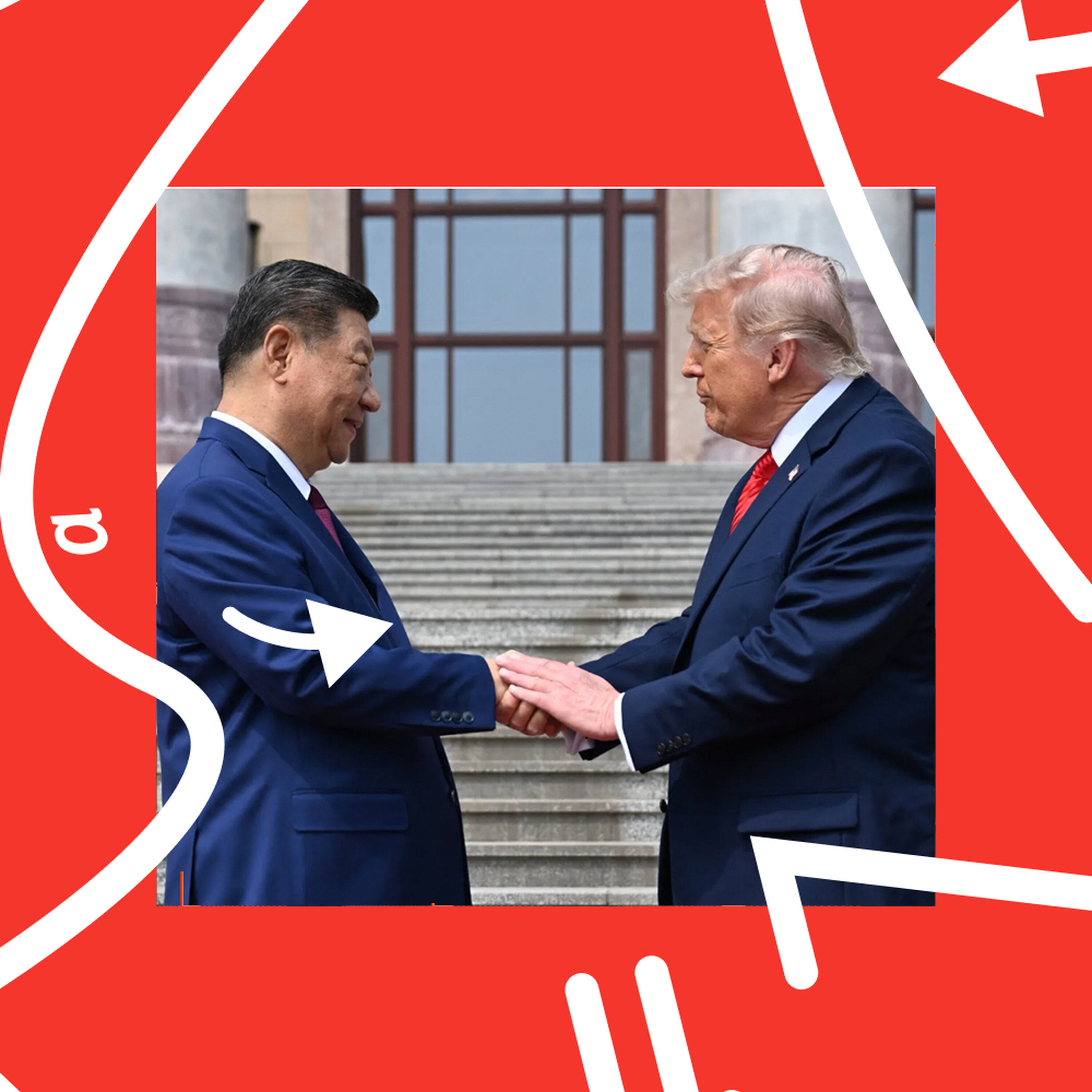
As Chinese President Xi Jinping meets with US President Donald Trump in Washington, this week's episode of Trumponomics asks whether the world’s leading AI powers can move beyond summit pageantry and start managing the dangers created by their technological rivalry. Host Stephanie Flanders speaks with Bloomberg Executive Editor Dan Ten Kate and Geoeconomics analyst Michael Deng about why distrust over chips, model distillation and open-source AI is making meaningful cooperation so difficult—and why rare earths and deeply intertwined supply chains mean neither country can truly decouple from the other.
0:02Speaker 1Bloomberg Audio Studios. Podcasts. Radio. News.
0:08Speaker 2President Xi and I have a good relationship. We're going
0:10Speaker 2to have a lot of different deals here.
0:12Speaker 3We intend, we're not just doing it for our health.
0:14Speaker 1I would honestly say if you considered how dependent we
0:17Speaker 1are in China now compared to five years ago, roughly
0:19Speaker 1around the time of the passage of the CHIPS Act,
0:21Speaker 1we're probably more dependent now because we've improved in one
0:24Speaker 1category and become much more dependent on others. And so
0:27Speaker 1I don't think this relationship or the U.S. could really
0:30Speaker 1bear a true impact deglobalization or sort of this kind
0:34Speaker 1of two technological spheres that's been discussed and so this
0:37Speaker 1relationship will just have to be managed maybe six months
0:40Speaker 1at a time three months at a time which now
0:42Speaker 1seems to be the pattern going forward so.