
Stageworthy · Stageworthy
About This Episode: Ryan McCollom is a Toronto-based theatre content creator behind the popular TikTok and Instagram account Plates and Playbills, and he's on a mission to get more people through the doors of indie and smaller professional theatres across the city. What started as personal documentation of his own growing love of theatre has evolved into a platform dedicated to closing the gap between the big Mirvish productions most people know and the rich, underserved world of indie and community theatre that most audiences don't even know exists. This episode explores: How Ryan went from cooking videos during COVID to becoming one of Toronto's most visible theatre content creators The difference between being a theatre critic and a theatre commentator and why Ryan is careful about that line Why the Stratford Festival was the wake-up call that made Ryan realize theatre needed younger audiences now What indie theatres could be doing on social media to reach new audiences without spending a dime Canadian cultural cringe in the performing arts: why audiences wait for American or British validation before embracing homegrown work And much more! Guest: 🎭 Ryan McCollom Ryan is a Toronto-based content creator dedicated to making theatre more accessible and approachable for new audiences while also encouraging seasoned theatre-goers to explore smaller professional companies and indie productions. While his coverage primarily focuses on the Toronto theatre scene, Ryan also documents his travels and the productions he experiences around the world, sharing an honest perspective as an everyday theatre fan. Connect with Ryan: 📸 Instagram: @platesandplaybills_ 🎥 TikTok: @platesandplaybills_ Subscribe & Follow: 🎧 Listen on Apple Podcasts | Spotify | Podchaser | Amazon Music | iHeart Radio 📺 Watch on YouTube – Like, subscribe & hit the notification bell! Support Stageworthy: If you love the show, consider supporting on Patreon: patreon.com/stageworthy Patrons get early access to episodes, participate in conversations about topics to cover, and more. With three backer levels: $2, $7, and $20. Thank you to my Patrons: Chris, Georgia, Heather J, Tanisha, Aisling, Cassie, Heather, Jeanette, Steve Read transcript
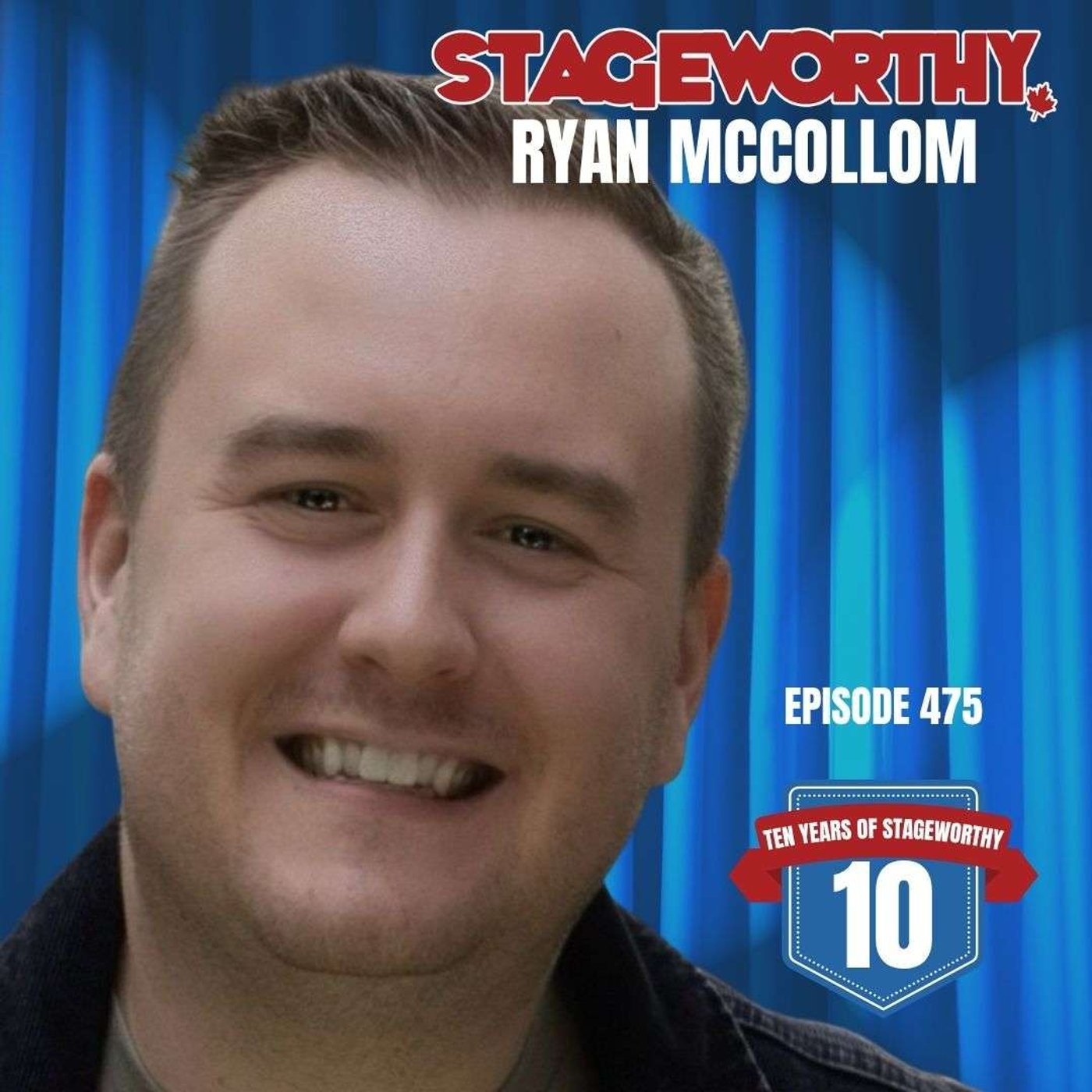
0:00Phil RickabyHello, welcome to Stageworthy. I'm Phil Rickaby, the host and producer of this podcast. Stageworthy is Canada's theatre podcast. And on Stageworthy, I talk to theatre makers of all kinds from actors to directors, to playwrights, stage managers, producers. If they make theatre in Canada, I talk to them. Some of the people I talk to are household names and the rest are people that I really think that you should get to know. If you're watching on YouTube, please do me a favor, hit the like button, leave a comment, so that I know that you were here. And if you're like Stageworthy, make sure that you hit that subscribe button and the bell icon so that whenever I put out a new episode, you get notified that a new episode is available. If you're listening to the audio version, make sure that you're subscribed there, go to your favorite podcast app, search for Stageworthy and hit the follow button. That way, every time I put out an episode, it will download directly to your device. And while you're there, if you're listening on Apple podcasts or Spotify, please make sure that you leave a rating and a review. Your ratings and reviews help new people to find the show. I also have a Patreon. I'll talk a little bit more about that at the end of the show, and you should really stick around to the end of the show so that I can tell you about who my guest is next week, but I'll just say that I do have a Patreon that helps support this channel. If you are so inclined and you want to help me to make Stageworthy, go to patreon.com slash Stageworthy and become a patron. My guest this week is Ryan McCollom. Ryan is a Toronto based theatre content creator and the person behind the TikTok and Instagram reels account plates and pay bills. So this is my conversation with Ryan McCollom right now. Ryan McCollom, thank you so much for joining me. I really appreciate it. Um, you are a theatre content creator. Your, uh, social media account is plates and play bills and you're covering theatre sort of as a fan rather than, you know, a lot of times in, in the end of people in the industry. I don't think we consider your role in the, in the theatre. Um, but tell me about, uh, what it is that you do, uh, with, uh, plates and playbills.
0:05Ryan McCollomYeah, thank you so much, Phil. So, like you said, I very much see myself as a fan of theatre. I think it's funny right away. You saying my role in the theatre, because truly when I started on this journey, I didn't think what I was doing was a role or something that was a part of the industry, but really kind of, it came out of almost a frustration of having friends who were theatre fans, but by theatre fans, they saw the big nervous shows in Toronto and really nothing more. And I'll be completely honest. That was myself a couple of years ago. It's really only been recently that I've continued my journey of getting deeper into the smaller professional theatres in Toronto and the indie theatres. But I absolutely loved every single part of that journey. So I thought, okay, I'm loving this, but I'm getting frustrated sometimes when I go to a show and it's the most amazing indie show, but the house is half full and it's full of people who are just sometimes there because they know the performers. So if there are people who are truly theatre fans, what are they, they're really missing out on all this amazing theatre is happening in Toronto. So truly what I try to do with my platforms is get people who are that level of seeing the large productions in Toronto and beyond more interested in seeing professional theatre on a smaller level or indie theatre or community theatre, but also to get people who haven't seen theatre into theatre, because I think there's that thought one with indie theatre, but just theatre in general that it's not accessible for a variety of reasons, but really encouraging people like, Hey, just go out and see something. I don't care what you see, come and see a show.
0:10Phil RickabyYou say something really interesting about, about, you know, people who largely they see like the big Mervis shows or they see like the, the, the big shows. Um, and I think for people outside of the theatre industry, those are the shows that take up the air in the room, right? That's the, that's what people think of when they, when they think about the shows, they think about the, the big budget musicals and things like that, which can be a gateway to other theatre, but the other theatres don't, they can't advertise the way that the Mervis productions, uh, shows can. Um, I'm curious how you, how you grew to discover the smaller to midsize theatres in the city.
0:15Ryan McCollomHonestly, I think it was a few years ago when I was getting into my late twenties and kind of getting to that point in my life of, Oh, I'm settled in my career. I have adult money that I can spend on what I want to spend now. And I was seeing theatre more often because I thought, Hey, this is something I really enjoy, so let me see more of it. And then I think probably it kind of went in the steps of getting into more and more niche theatre. So I saw an ad for Canadian stage show on the subway, maybe, or honestly, Toronto theatre Reddit is such an amazing place to discover all levels of Toronto theatre. So started seeing like, whether it was a Canadian stage show or Soul Pepper, I can't remember what I saw first, but something like that. And then getting a little more deep and deep down the rabbit hole into seeing smaller companies and then see something at fringe and then seeing independent theatre where it isn't even a theatre company doing it. It's just a group of people who are so passionate about the arts that thought, Hey, we're going to rent a space. We're going to put together this production. So it's something that I feel like there are so many resources in Toronto talking about where to find these shows. Like a lot of independent creators put out resources, even like sites like blog to yo sometimes have theatre listings on them, but there's still, and I spend hours of my weeks going through and trying to make these lists. I do a video every week or every month, rather talking about what's on my radar for shows that are coming up, but there will still be a time when. A show will be two days into its four day run. And I see an ad on Instagram about it, or I see someone posted going to it and I still haven't heard of it. So I think that that's a lot of what is happening in Toronto right now is there's just, like you said, these smaller companies don't have the budget for advertising. So what I try to do with my content is how can I inform at least the small audience that I have about these shows that I know that are coming up to hopefully inspire someone who hasn't heard of it to go to see something. And truly when someone comments on one of my videos and says, Hey, I had no idea that this show is going on, but I went to see it because of you, that makes it completely worth it for me. That's exactly what I am trying to do.
0:20Phil RickabyAbsolutely. And I think it's interesting because, you know, sometimes there, you know, people, you mentioned fringe, you mentioned the Toronto fringe and, and that's a great gateway for people who are starting to produce theatre. Um, but it is production with, with training wheels on. And if you're only experienced and it's training wheels, because during fringe, the audience is actively looking for things to see, whereas outside of fringe, you have to convince them to come. There's like two polar opposites. And sometimes people will like they'll produce a show having only done fringe and not quite realize the difference between the two. Um, and it, it, it is always heartbreaking to see those, those, those audiences where it's like the friends and things like that. It's always difficult. Um, are there, when you're making that monthly list, what kind of things make a show pop out for you?
0:25Ryan McCollomHonestly, for that monthly list, I try to include everything and everything that is going on. So Toronto theatre Reddit is a great resource for me. There's, um, there's someone on there. I forget their username, but they compile this amazing Google docs spreadsheet that has a ton of productions listed on it. There's also stagedoor.com is an amazing resource for Toronto and surrounding area. But I always look, obviously there are hundreds of things going on in the city at any given time. So I try to focus on true theatrical production. So things like, um, like comedy and things like that, or something where it's only just like a one performance type thing, absolutely nothing against any of those, but I'm really trying to focus on a true theatrical production that has a run of like four shows to a couple of weeks, because then I feel like if I talk about that, there's more of a chance of someone getting to see those. But when I kind of go through my list and think about what I'm trying to see myself, I think what gets me to go see a show is one, if there's a creative working on it, whether that's onstage or offstage that I've seen before that I really love their work or just something, there's sometimes a show and just the couple of lines about it that they put on their website or whatever, just really interesting. And you think, wow, this looks cool. I'm going to go see this.
0:30Phil RickabyI had a question for you about, um, how you see yourself in the ecosystem of Toronto theatre. And I know that you mentioned you, you hadn't really considered yourself as part of the ecosystem. Um, because you're a theatre fan and you're specifically not a critic. Um, and what does that distinction mean to you?
0:35Ryan McCollomHonestly, that's been something that, especially these past few months, as I have been creating more content involving my content has been on my mind. I think, you know, I think about New York as an example, because that's a theatre scene that has a larger amount of creators working within it and commenting on, and I feel like there, there's the very distinct difference between a critic and an influencer who is just going to see shows and promoting the shows sometimes, whether they love it or if they just like it. And I always want to stay authentic, but at the same time, I don't really see myself as a critic because I don't know if it's because I feel apprehensive because I don't have qualifications or anything, but I also truly believe that whether you love a show or not is truly subjective. There is no objective. This show is great. This show is not great. And that's something that sometimes, you know, the newspaper critics and some of the larger theatre criticism, I get frustrated with because I'll see a show that I personally enjoyed, but you see a review from a large source saying this was not a good show and here's why. So I never want to discourage someone from seeing a piece of theatre. And I think that that's almost dangerous sometimes, especially for smaller productions in indie theatre to say, you know, this show is not a good show. Don't go see it because just because you didn't like it doesn't mean that someone else won't love it. When I think about shows that I feel strongly for or against, almost always I can find a review that has the exact opposite opinion of me, than me. So when I talk about a show, I consider myself giving commentary on it versus giving criticism on it. And oftentimes when I feel strongly about a show and I do a full video on it and by a full video, I mean, two or three minutes, that's kind of, I go into that short form kind of content, but I'll talk about what I loved about the show and also some things that I didn't love about it, the format that I've kind of come up for myself based on something inspired by other theatre critics that I've seen is I call it talk worthy, tweak worthy, and ticket worthy. So why am I talking about the show? What do I love about it? What are some things I might tweak with it and why I think people should go buy a ticket to it? And I hope that through the way that I'm talking about shows, someone would be able to see and think, okay, you know what, what he said he would tweak. That's not something that would personally bother me, but how he's talking about this show, I absolutely love it or the reverse. Ryan might not love this show for this certain reason, but it's still something that piques my interest and I'm going to go see it.
0:40Phil RickabyIt's interesting because I think that there's that fine line. I mean, listen, I, as somebody who, who covers theatre in Canada and I, I very specifically, I don't do reviews. I've never done reviews and I'm uncomfortable, but that's as somebody who makes theatre. I don't want to cross that line. There are very varying ways of approaching criticism and it, and I would, I know you're reluctant to do it, but saying things that you would tweak, that's almost like a bit of theatre criticism. You know, it's not about, I don't want to do this or I don't, I don't, I think you should, should see this show it and all theatre criticism is your opinion, right, even if you, no matter who you are, and I think, I don't know.
0:45Ryan McCollomI don't know where I'm going with that. I just, I think so. The, I think, like I said, I'm, I'm getting into criticism, but I'm just hesitant to call it criticism. And I think this is not me talking disparagingly about critics. I think there are some amazing theatre critics, especially in the Toronto scene. But there are just sometimes that I see a piece of criticism on theatre that, like I said, it's that definitive. This is not a good show. You should not go see it. Or even the reverse. If someone says this is definitive, the best, definitively the best thing I've ever seen. If someone sees that online or sees that in a paper and then goes and sees that show and they don't love it, then that could be that person saying, okay, I don't trust this critic or even worse, this could be their first piece of theatre and they might be really discouraged and say, you know, I don't know if I'm going to go back and see theatre because of this. So I think with criticism, we always need to be careful with not giving definitive subjective. This is good. This isn't good. But rather find ways to lead an audience to make their own decision on whether they want to see that show or not.
0:50Phil RickabyAbsolutely. I think there is, in some circles, there's almost an attitude of boosterism for theatre in Toronto and around Canada. I know that there are shows that people have raved about and the show didn't, in my opinion, deserve those raves. And I think that when we do that, like you're saying, we're doing an audience a disservice, especially for those first timers, because let's face it. Theatre is the only art form that I could think of where somebody goes to it, doesn't like it and goes, well, I saw a play once and I didn't like it, so I don't like theatre. It's a weird thing that does happen. Yeah. Do you have a relationship with the theatres in the same way that critics do? Do you get invited to shows or is it entirely, as you said earlier, you're taking your adult money and going to see the shows or do the theatres ever invite you to come and see the show?
0:55Ryan McCollomI'm beginning to get invited to shows, which is something that when I first started this process, I thought, oh, that would be cool if one day I could get invited to something and that has begun. So I feel incredibly honored to be invited to shows like this. But there, I think there still is, you know, because of the way I make my content and because of the fact, like I said, I'm not purely a critic. I also do a lot of commentary and just, you know, almost informal type content, informing audiences about going to shows. I think that there are still some of the larger theatres that may not necessarily see me in the same lens that they see critics, but I'm completely okay with that. I'm happy wherever this journey takes me.
1:00Phil RickabyAbsolutely. I think it's interesting the way that theatres may be viewing social media in general. Some of them are using it well and others are not. And for the ones that are not, I don't know if they're prioritizing it. Do you know what I mean? What do you see as far as theatres and social media?
1:05Ryan McCollomYeah, I think, like you said, there are some that get it and some that don't. And I think especially when we think about indie theatres and smaller theatre companies where they don't have the budget to casually throw an ad on the TTC or put up 500 billboards across the city. It's just so important because especially when we're thinking about bringing a younger audience into the theatre, because that is the audience who, if we get people excited now, we will continue seeing theatre for the rest of our lives. That audience is on social media. And if you create something that goes onto social media that doesn't cost you any money, there's a chance that only 10 people see it. And that's okay. But there's also a chance that thousands and thousands of people will see it. And I think it's something that theatres may not necessarily know how to do, which is totally okay. It is something that, while social media isn't new, it's constantly evolving. And how companies are using it, and I think the ease of just being able to pick up your phone and create a piece of marketing material may be scary to some people, but I think it's something that's absolutely essential. And if a theatre company isn't at least trying it, my question is why? What's the worst that can happen?
1:10Phil RickabyI mean, I guess the worst that could happen is they put out something that's kind of cringe. But that, you know, everything you put out the first time is kind of cringe, if you're going to be really honest.