
Sports Medicine Project · Blake Withers
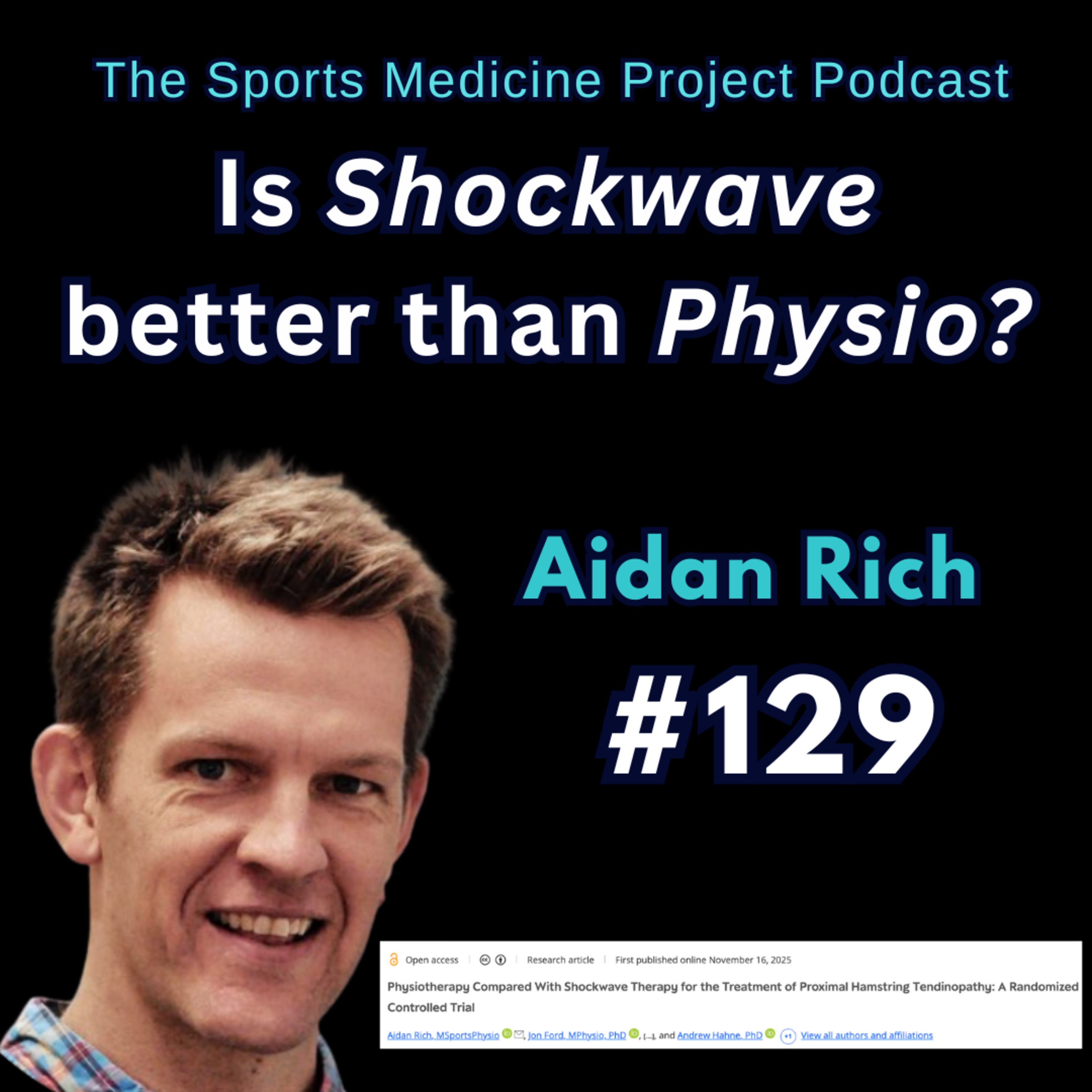
Summary In this conversation, Blake Withers interviews Aidan Rich, a sports and exercise physiotherapist, about his research on proximal hamstring tendinopathy and the recent randomized control trial comparing physiotherapy and shockwave therapy. Aidan shares his journey into the field, the challenges of designing the study, and the importance of education in treatment. They discuss the nuances of exercise rehabilitation, patient experiences, and the surprising results of the trial, which showed no significant difference between the two treatment methods. Aidan emphasizes the need for individualized care and the potential for future research in this area. Paper links: Main RCT: https://journals.sagepub.com/doi/10.1177/03635465251391134 https://pubmed.ncbi.nlm.nih.gov/41037932/ https://pubmed.ncbi.nlm.nih.gov/40469642/ https://www.jsams.org/article/S1440-2440(25)00275-0/pdf Aidan Rich: PhD Candidate | APA Titled Sports and Exercise Physiotherapist | State Manager A dedicated and passionate physiotherapy professional with extensive experience in both academic research and clinical management. Currently pursuing a PhD with the topic of 'Physiotherapy for Proximal Hamstring Tendinopathy,' where he has conducted two randomised trials. In addition to his academic pursuits, he oversee the clinical, financial, and cultural performance of a network of 20 physiotherapy and sports medicine clinics across Victoria. His role involves ensuring the highest standards of patient care, optimising financial performance, and fostering a positive and collaborative work environment. Chapters 00:00 Introduction and Background of Aidan Rich 03:48 The Evolution of Tendinopathy Treatment 08:30 Shockwave Therapy: Insights and Experiences 13:13 Designing the RCT: Methodology and Protocols 18:20 The Exercise Program: Structure and Rationale 23:07 Education in Rehabilitation: Importance and Implementation 28:39 The Benefits of Resistance Training 29:52 Qualitative Insights from RCT Participants 31:36 Surprising Strength Outcomes in Rehabilitation 33:42 Effect Modifiers in Treatment Response 35:20 Clinical Applications of Shockwave Therapy 37:01 Patient Preferences in Treatment Choices 38:00 Individualized Treatment Approaches 39:04 Evaluating Shockwave Therapy Effectiveness 41:22 Challenges in Designing Effective Trials 43:22 Comparative Outcomes in Tendinopathy Treatments 45:43 Acute Responses to Shockwave Therapy 48:36 Key Takeaways for Clinicians 50:59 Future Directions in Research
0:00The main theme was consistent with the main RCT results that
0:03the education provided in the rapport with the physiotherapist
0:07was a big driver of improvement. Though they there were these
0:09unique benefits that were reported by the physiotherapy
0:11group or the rehabilitation group and they were, they
0:14perceived they were stronger, they had functional strength,
0:17you know, running up hills, running fast, that kind of
0:19stuff. And they also perceived they had
0:21increased self efficacy, control over their control over their
0:25destiny or better ability to manage flare ups better, better
0:27resilience. However, as you point out, we
0:30measured strength in the trial and the group started at a
0:34pretty similar level and finished at a pretty pretty
0:36similar level. Now you just would have heard a
0:38part of my conversation with Aiden Rich, who is the lead