
Spiritual Infinity · "Spiritual Infinity: Where stories of spiritual awakening inspire your own transformative journey, hosted by Zenzi Sewaah."
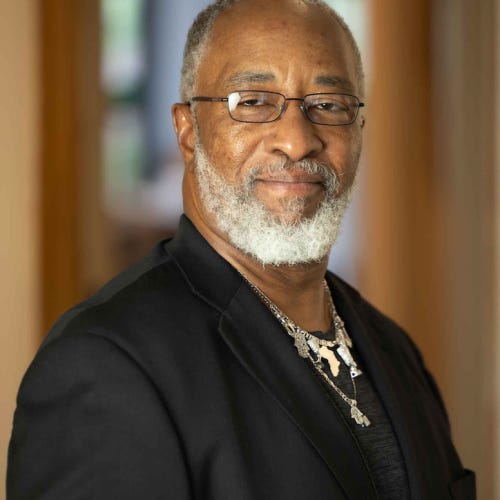
What happens when a man feels he has nowhere left to find peace? In this episode of Spiritual Infinity, I speak with Darius Ross in a candid and at times provocative conversation about men, masculinity, relationships, identity and the emotional pressures that can leave some men feeling increasingly isolated. This conversation forms part of my continuing exploration of male trauma and emotional wellbeing—not because there is one explanation for the pain men experience, but because we need to become more willing to listen to what men themselves are telling us. Darius begins with a challenge to one of the most familiar phrases directed towards men: what a man is “supposed” to be. Strong. Unshakeable. Provider. Protector. Leader. Emotionally controlled. But where, he asks, does the vulnerable human being fit within those expectations? For Darius, men are sensitive. They experience fear, exhaustion, insecurity and emotional pain. They need space for feelings and spirituality. Yet many have learned that admitting vulnerability risks being regarded as weak or somehow less masculine. He speaks particularly from his perspective as a Black man, describing the additional pressures he believes men of colour can encounter through discrimination, financial expectations, cultural history and questions of identity. But one of the most striking parts of our conversation concerns peace. Darius speaks from personal experience about reaching a place where a man can feel that there is no sanctuary anywhere—not in society, not in his relationship and not even in his own home. He describes what it is like when the person to whom you should be able to turn is also someone around whom you feel unable to lower your guard. His words bring us back to something fundamental: behind discussions about masculinity are human beings who need somewhere they can feel emotionally safe. Our conversation therefore moves deeply into relationships. Darius holds strong views about masculinity, femininity and male leadership. Some listeners will agree with him; others may challenge parts of what he says. But that is also why conversations such as this matter. We do not learn by speaking only with people whose experiences and perspectives mirror our own. Throughout our exchange, we continually return to respect. Words have power. We readily recognise the damage caused when women are degraded or insulted, but Darius asks us to consider the emotional impact of repeatedly telling a man that he is weak, useless, inadequate or “not a man.” Those words do not simply disappear once they have been spoken. At the same time, this cannot become a conversation in which responsibility rests entirely with women—or entirely with men. Both people bring themselves into a relationship. Both need to examine how they communicate. Both need boundaries. Both deserve respect. And both must be willing to recognise when a relationship is no longer healthy for them. One of the things I found myself considering...
0:02SPEAKER_00Good afternoon, everyone, and welcome to this session of Spiritual Infinity.
0:07SPEAKER_00And my guest today is Darius Ross.
0:10SPEAKER_00And as you know,
0:11SPEAKER_00we are talking about men's trauma because throughout the world,
0:16SPEAKER_00men's suicide rate is increasing.
0:20SPEAKER_00And it's not one particular thing, I think, but probably is.
0:25SPEAKER_00It starts from childhood, how we bring up our male boys to think, you don't correct.
0:32SPEAKER_00Come on, toughen up.
0:33SPEAKER_00You're a man.
0:34SPEAKER_00You can't do this.
0:36SPEAKER_00No, no, no.
0:36SPEAKER_00They have feelings just like women.
0:39SPEAKER_00We women cry and bawl and we talk to one another.
0:42SPEAKER_00But men feel because they're brought up in this way and they're the macho and
0:46SPEAKER_00the man and they can't talk about their feelings for want of looking like a sissy.