
Speaking of Design · HDR
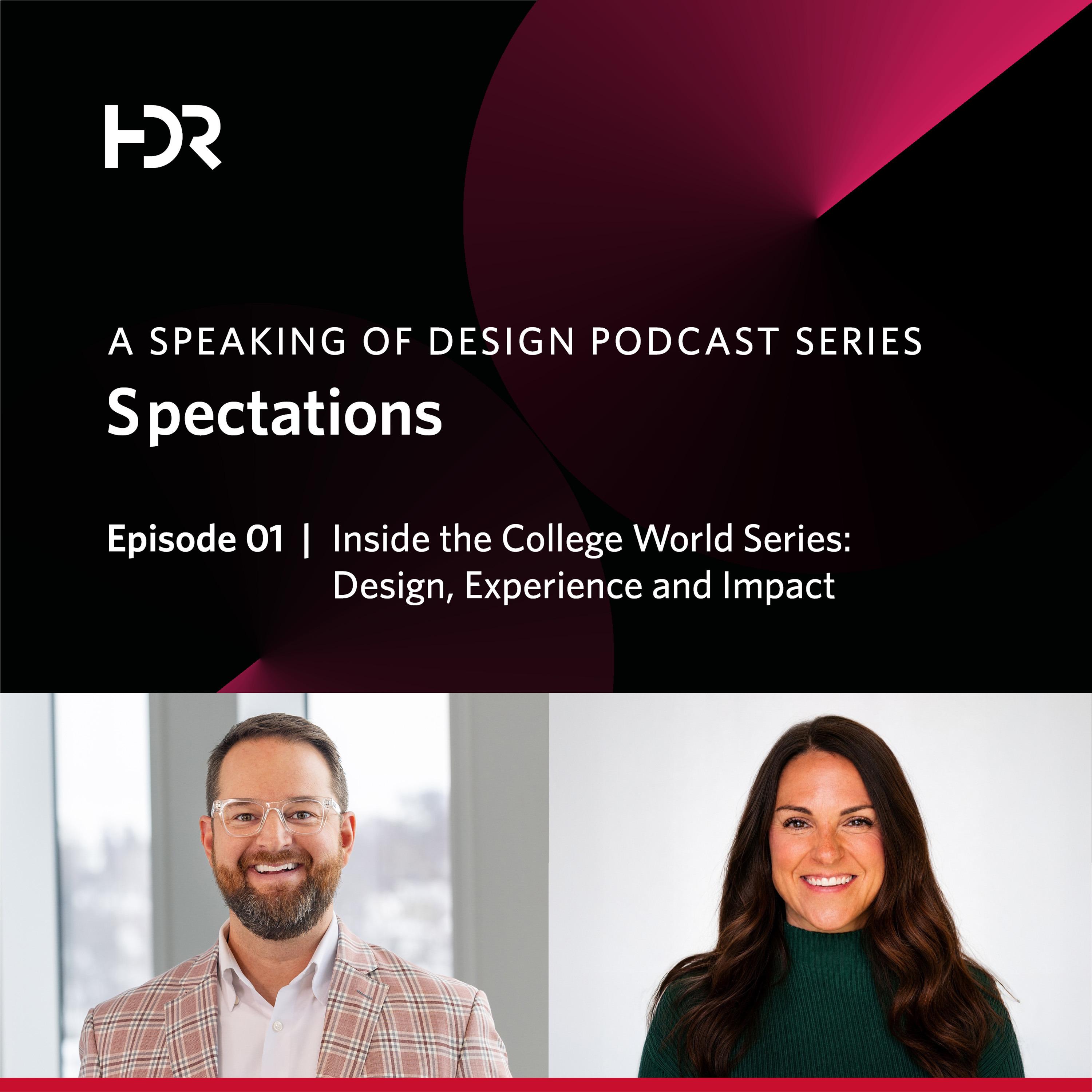
Spectations, part of our Speaking of Design podcast, speaks to the evolving landscape of sports and recreation and the spaces that bring them to life. In Spectations’ inaugural episode, Andrew Elmer, HDR architecture sports and recreation director, sits down with Amy Hornocker, executive director of the College World Series, who shares an inside look at the operations, traditions and community impact behind one of college sports’ biggest events. Their conversation dives into how community partnerships, innovative stadium design and fan engagement are shaping the future of college sports.
Speaker 0: You're listening to Speaking of Design, Speaker 1: bringing you the stories of the engineers and architects who are transforming the world one project at a time. Speaker 2: Hi, everyone. I'm Andrew Elmer, HDR's director of sports and recreation architecture, and this is Spectations, a speaking of design podcast series. Join us as we explore how observing and adapting to new developments can shape the future of sports and recreation. Thanks for tuning in, and let's get started. I am so pumped to be here with Amy Hornucker from the College World Series, the executive director, on this beautiful Friday in Omaha. Thank you for coming to our headquarters and talking about all things sports, baseball, College World Series, Charles Schwab Field. Speaker 3: Yeah. Happy to be here. Thanks for having me. Speaker 2: Absolutely. Well, let me get started with a question that I know everybody's gonna wanna hear is, other than baseball Mhmm. What's your favorite sport? Speaker 3: Oh, that's tough. I do I love football, and I love March Madness. Like, I love college basketball. I don't so much watch the NBA, but I'm a big college sports fan. Speaker 2: Were you, an athlete growing up? Speaker 3: I was like I played three sports in high school, but I was never really good at it. It was just, like, I love the team atmosphere. I loved, like, all my friends were playing. So that's yeah. I had a love for sports. I wasn't an all star, but that's why I kinda continued down this path. Speaker 2: Tell me a little bit more about your sports history, and how did you get to the college world series in your role? Speaker 3: I have a long I have a long relationship with the event. So and I grew up in Iowa, and we played summer baseball there. So and I was a manager with the baseball team. So we were in a tournament in Sioux City and then came down and got tickets, you know, sat on the hillside and waited in line for tickets in the GA at Rosenblatt. So that was my first experience with the college world series. Then I went on to college. Like I said, I wasn't very good at sports, but I went to college, like, undecided. I had an adviser that was like, well, we have the sports management program if you like sports. So went through that program, worked for coach McCarney in the football office, if that dates me back a little bit. That. I would stay. And then my sister happened to be over here in Omaha. My brother-in-law was at Offutt Air Force Base, and so I never forgot about the college world series. So I had a free place to stay, applied for the internship, and I was an intern in 2005, which was the last time Nebraska was in the College World Series. So people are talking a lot about Nebraska right now. They're playing really well, and they're like, what's gonna happen if they're here? And that was like Java Chamberlain. That was a really good team they had. It would change the landscape of the operation, especially because we still had GA then. And so Nebraska fans were lined up. We kinda had to change the system, to accommodate that. So we don't have that anymore, but I do wonder what our, like, ticket resale will look like if the Huskers get in. Oh, wow. So but yeah. So then I spent ten years with the sports commission after I left the internship. And then in 2017, they had a position open back up at an organization, so I kinda came back full circle. Love Speaker 2: that. So what was the thing that you liked the most about that GA experience? Speaker 3: It was just so much fun. There's so many personalities out there. It was like the bead guy, the Twizzler guy. It was and, you know, you could buy a book of 10 for whatever. The prices change throughout the years, but that was it was just a really a big fun atmosphere out there. When COVID happened, obviously, we had to take a look at about that area. We couldn't have people standing in line for multiple hours. Yeah. And those seats actually do have numbers. So we started seeding them, and then we kind of found out the biggest purchaser of those tickets is u tournament teams. They come from all over the country, and they got those tickets as part of their registration. And they didn't really know, so they would show up there and then they'd be waiting in line. So the feedback from when we changed it was actually you know, some people still miss it. Speaker 2: Mhmm. Speaker 3: And we hear about that, but they like to be able to just walk straight in with a ticket now and sit. So and I know people that hear this will probably disagree with me about it. Speaker 2: No. That makes sense. And that's the thing that I love about GA seats is it's a great entry point, like, just from a financial Yeah. Perspective. You know, it's it's a lot of people's first experience with any venue, whether it's a stadium or an arena. And, you know, as a kid, some of my first experiences were going to games with my dad. Speaker 3: Yeah. You Speaker 2: know, it didn't matter, like, if we were a row from at the top row of the stadium or in the parking lot or, you know, right down by the field. Like, it's just magical. Speaker 3: Mhmm. Speaker 2: And I think that seeing the college world series in Omaha for the first time, it reminded me of this nostalgic baseball experience that I had as a youth Yeah. And those, like, core memories that you make. So to me, it's it's a really special event that extends beyond the ballpark. Yeah. Out into the tailgate area and spills out into the downtown and the historic market. I think it's such a great venue. Speaker 3: Yeah. We always say that if even if you don't like baseball, there's something for you to do if you come down. I mean, I have friends. I guess maybe they don't like me that much, but they never even come inside. Yeah. So they're down there tailgating, and there's so many things that continue to pop up around there and then so much more that's temporary during our event. So I know millwork is growing, and then there's some stuff with Noddle that's by the Kiewit facility. So it's, like, endless outside of the games. Speaker 2: Isn't there a minor league soccer stadium in Speaker 3: the first place? Docket too, and they've kind of reached out already a little bit. You know, we have those, if necessary, games in a off day on the end. And so they've already, I think, kind of started to think of ideas of how they could program their facility. We still have visitors here. Speaker 2: Yeah. Speaker 3: So and, you know, they go to the zoo and they go to the Durham, but to have another if they decide that they wanna do, I don't know, a concert or something, That's another opportunity. And, also, just, like, driving in from the airport to have that there. Speaker 2: Yeah. So when I have come here and I brought my son, one of my favorite things is staying downtown and just get in a hotel room, and then we just kinda walk around and explore. What have you heard from people in the community that maybe they've stumbled upon that isn't really a programmed experience? Speaker 3: There are so many things, like, I probably don't even know that happened. I mean, we have you know, besides, like, the Omaha Basement Village, which if you haven't been there, they're part of the Matt restaurant, and it expands towards Charles Schwab. That's where a lot of the the kids go because it's like Oakley and Wilson. And I see bats walking out of there, and I'm like, oh, that was an expensive day for mom. Don't think there's a conversation we don't have about Rocco's who does the jello shot challenge. Speaker 2: Oh, yeah. Speaker 3: Because some people talk about where the real competition is happening because they donate to food banks of all the schools, and it's a charity component, and it's always talked about. So Speaker 2: I love that. Yeah. Yeah. Speaker 3: People even phone in order. So That's amazing. To try and win. Speaker 2: And it benefits the community. Speaker 3: Yeah. So yeah. And it's the schools. It's like LSU has this many jello shots, and then they'll cut a check to, like, a Baton Rouge food bank or something. So yeah. I love that. Yeah. Speaker 2: That's so cool. What I have discovered, this community supports sports, not just one team or institution. Speaker 3: Yeah. Speaker 2: And I think that that is something very unique and special about Omaha. I'm curious what your experience has been with them. Speaker 3: Yeah. I mean, we love a underdog. So anybody that makes it in here I mean, Coastal Carolina is hard to say they're an underdog anymore, but the first time they were here, they were. But, yeah, Omaha will pick a underdog, but then they also love LSU, and they love Arkansas. And so it seems like no matter if LSU makes it in there, there's some purple around. But we on pro sports, I think you wrap your arms around the amateur stuff. Speaker 2: So Yeah. Absolutely. We have been so thrilled to work with Creighton and UNO over the years Yeah. With baseball softball facilities. And we are currently leading the project at Creighton where we're doing the new baseball field and stadium for softball. I know that that was tied in with the College World Series as a practice space and an area just to get more reps for the visiting teams. How do you manage all of the teams that come in? Do they from an operations standpoint, like, does the adobo have everything figured out? Speaker 3: Great question. So our team in Omaha is five people strong. The NCAA has about 25 in various departments that will come in and out for the event, and, obviously, we have the stadium staff. But our office, along with the NCAA, manages most of the operations around the teams. They all charter in private charter in our airport. Shout out to them if anybody's listening because they are amazing, well oiled machine handling these flights and getting these guys offloaded with all their equipment, and I gotta see it all in action because we usually we can have four arriving around the same time as each other and, like, having to coordinate that out of and out out of the FBOs is a lot of work. So and then, yeah, we have a person on our staff that coordinates the team practices. So when we have we have two games a day. So we have four teams, and then we have four that are off, especially at the front end. So, yes, UNO's facility that you put together is it was like a godsend to us. Like, it's it's beautiful. They love it. It's been a game changer. If once they get out here we have a few other fields. They usually don't go anywhere else, and they have access to Baxter as well, some of the hockey weights and stuff with Omaha and being our host. But, yeah, Creighton, we're super excited about that facility. Obviously, it's so close. Right. So once they discover that, I think we'll be good with the two. We keep Bellevue East. Bellevue East is a grass surface, which is super hard to find in this part of the country, and Schwab is grass. So we have some, you know, of the older school coaches that still they wanna be on the same surface that they're gonna play on. We see less and less of that. We see more of just the convenience factor. And I'm totally going off subject, but Mecca keeps two full time groundskeepers. Like, I always wonder Dan is the head. He's been there since the beginning. I always wonder what his yard looks like, like his personal yard. Because, I mean, they have all sorts of equipment, but I've seen the push mower, which I'm like, I'm sure there's, like, a method to the madness. Yeah. Also are the ones that come up with the grass design. They sit back there and they come up with a few ideas, and then they, like, Speaker 2: You may be sitting at home and thinking, how do they do that? Like, how do they get the design out there? Speaker 3: Yeah. They get excited about it. So they did the NCAA trophy one year, and that was pretty well received. So Speaker 2: Have you ever taken BP out there? Speaker 3: We do have staff BP, usually. It's, like, finals game one before the game. Usually, there's a staff BP for everyone that's there. We have had one intern hit a home run. Really? He's a baseball coach now somewhere in the South. Okay. But yeah. Yeah. He had a baseball background, but he was, like, legendary. That's cool. Yeah. So we do have we also do a kids run the bases event usually one night. We let some of the kids do it, and it's really fun. Speaker 2: What about food and beverage at the ballpark? Like, what are some of the favorite Speaker 3: Oh my gosh. Speaker 2: Things that people love? Speaker 3: So Levy Restaurants is our in house catering, and they do a good job. So we have, like, the standard stuff, but every year, they'll come up with some new ideas. We have a media event the Wednesday before the series, and they'll unveil all of their new things that they've come up with, and they're really creative. There was one year where it was, like, a huge tater tot or something. And somewhat sometimes they only have, like, limited numbers of those crazy things, but, yeah, they do a good job. They sell a lot of food, a lot of ice cream, a lot of beverage. Speaker 2: Yeah. And where is it stored? Speaker 3: The one whole bottom of Charles Schwab is the kitchen and catering, and they have a bunch of stuff throughout. And, you know, what's really neat is they have a partnership with Saving Grace Food Pantry. So, like, any of the food that is made that never goes out of the kitchen, they come and pick up, and then they distribute in the community to their partners. Speaker 2: That's great. Yeah. Seriously, these venues are like little cities. Mhmm. And I'm always amazed that how the experience that you have as a fan or even a, you know, an athlete, you don't even realize a quarter of the things that are happening. So you are planning for this event year round. Yeah. It's not just show up a week before. It clearly takes a number of people Speaker 3: Mhmm. Speaker 2: And a really carefully orchestrated plan. Is there been a moment where you've thought this is where our city is shining? Speaker 3: Yeah. And I know I'm biased, but I said this when we had the we had first and second rounds of March Madness. I think it was two years ago. I helped on that local organizing committee, and that's where I really got to see all the stuff that happens when these teams arrive at the airport and how it's managed out there. Basketball is a lot different than baseball as far as, like, the needs that those teams have. But we were one of the only venues that didn't have, like, some transportation problems, didn't have some ingress problems with their arena. And so, like, I just feel like Omaha does such a good job of all the people that work together on this to do such a good job, whether it's CWS or other things. It's just a well oiled machine. Speaker 2: So how key are business partnerships to the Call of the World Series? Speaker 3: Huge. And as we look, our contract's till 2036. And as we look what an extension might look like, it's gonna be more important than ever because bidding sports tourism is so competitive, and there are cities that are willing to write checks for things. So it's gonna be so important that because we've had this so long that we don't take that for granted. Like, we're everybody when the next negotiations come around, everybody's probably gonna have to be involved in the business community to make sure that we can keep Speaker 2: Understood. Yeah. Absolutely. And then it's, to me, such a special thing to be able to experience with clients even if they don't have a team in it. Speaker 3: Yeah. Speaker 2: You know, it just because you don't really know from day to day, like, who's gonna advance. You can't plan for certain schools to be there. No. Right? Maybe there's, like, four or five that are always there. Speaker 3: More and more, it's different every year. Because when you talk about back to operations, last year, we had for the first time in a long time, we had eight teams that were new. Like, they had been here before, but they weren't here the year before. All new eight. So that was challenging because, usually, if you're a repeat, you don't need as much hand holding. But we had some teams that had not been here in a while. Speaker 2: Is there a fan base that's the most memorable? Speaker 3: Yeah. Not to, like, keep giving LSU props, but people they're crazy, and I don't think they would be offended if I said that. Yeah. Yeah. The witch came. They brought their Mike the Tiger, which is like a Mardi Gras float last year, and he is this huge tiger that was just driving around. And they're great. People love them. They're very friendly. One of my favorites is Arkansas. They're just, like, from top to bottom, like, just a class act. I would really love to see coach Van Horn get a championship because he he's just a great dude. But yeah. So there are there's definitely the favorites. The Mississippi schools. Speaker 2: It's just such a great sport. Mhmm. And softball, I need to go down and attend a women's college world series. Speaker 3: Oklahoma City does I haven't got to see it, but I know they do a great job Yeah. That I'd love to see it too, but it's, like, right before we start. So I have never been able to get down there. Speaker 2: Here's a question about the structure of the College World Series. Is it affiliated with the NCAA? Speaker 3: So no. We Okay. We're very unique. So we are a five zero one c three nonprofit that was established in Omaha in 1967. So and it the event's been here since 1950. But Jack Diesing, who's our board chair, his father actually was instrumental in keeping it here. It started in Kalamazoo, Michigan and was in Wichita for a year. They were building Omaha Municipal Stadium, which was in Rosenblatt, to attract minor league baseball, but there are some leaders in town that went down to Wichita and was like, why can't we do this? Yeah. And so they brought it up here. It lost money for, like, twelve years. And then when you talk about the community businesses and all that, they really made it successful, and then it just continued to grow. So our board is large. There's, like, 22 members. But it's unique. Cultural Series Inc has the agreement with the NCAA until 2036. But we don't have a stadium, so then we have a mirror agreement with Mecca, and then there's the other agreement with the city. So it's a very complex agreement that we have, and we are unique. There are other long term NCA sites, but there's not another entity like ours. Speaker 2: I can't imagine it not being in Omaha. It's like we're so central here. Speaker 3: Yeah. Speaker 2: We're the heart of America. Mhmm. Like, even the phrase road to Omaha. Speaker 3: We're working really hard. We don't want it to go anywhere. Speaker 2: Yeah. So with CWS being a five zero one c three Mhmm. How do you give back to the community? Yeah. Speaker 3: That's a great question. And we have a grant program that we provide funding to local baseball and softball programs in the city. So and we actually, through that program, also contributed to UNO's facility, and we will with Creighton's. So it's important that we leave a, like, a legacy here because this community has meant so much to the event. So there's a lot of little league fields around the community that will have signage at some point. They've gotten some sort of grant money, and we work with PACE and the Black Police Officers Association. They run some baseball out of North And South Omaha that we help with some of the stuff that they do. So that's a big one. We're bringing some just like a clinic for kids that may not otherwise have a chance to do that. So those are two things. We have done some reading initiatives in the past, but, yeah, this community means a lot to us, and we wanna try and do some of those things. Speaker 2: Absolutely. And I understand there's also quite a bit of youth baseball and softball action that occurs around the same time as the CWOS. Speaker 3: It's huge. So there's a few tournaments that we know about, but then we sometimes also hear about some that pop up that we don't know about. It's a huge part of this event and I would say a huge part of the economic impact of this event because there are teams that come in from all over the country, and there are some teams that fundraise for a couple years to come here. And one tournament has, like, over 700 kids that come out through sessions, and it's from young to to more select. They eat up every field from Council Bluffs to Lincoln. It's huge. And so part of it is then that these kids, when they're not playing, will get to come to the series. So big piece of what we do because we, last year, had a 147,000,000 economic impact to the community, and they play a pretty big role in that. Speaker 2: That's incredible. Speaker 3: Yeah. Speaker 2: That's amazing. Here's a fun one. We see sporting events globally, drawing celebrities or maybe high profile fans. Right? Yeah. Talk to me about how you handle high profile guests. Speaker 3: Yeah. Speaker 2: And how do you orchestrate that arrival and experience and Yeah. And exit? Speaker 3: It's a lot. And I think as the popularity of this event grows, even since I've been involved every year, the presidential visits was George Bush. He actually to throw out a first pitch, you have to be a former or sitting president. Like, that's I don't know who made the rule, but that's the rule. So he's still the only one that's ever done it. He was the last year of Rosenblatt, and, you know, he's a baseball guy. Okay. So but we do have a lot of governors, lieutenant governors. Our governor loves the College World Series. We had Tennessee had a ton, like, country music. I mean, Eric Church, Morgan Wallen was here, Peyton Manning. So they have a pretty significant fan base of, like, what I would say celebrities. Yeah. And MECA does a really good job. They have internal people that help with parking and moving them because they will come with detail that they have to walk the buildings. Also, our the state patrol gets involved when governor Pelham's here. I think governor DeSantis was here a few years ago with Florida. Two Florida schools are here. You know, he wanted escorted. So, like, they just saw different things that they want. Olivia Dunn, she's a gymnast. She's also Speaker 2: LSU. Speaker 3: Yeah. She's a big timer because her boyfriend played at LSU, and now he pitches for the students. Right. Alright. It was yeah. So she was actually back last year even though he's in the big leagues now. So Speaker 2: That's so just amazing. One of my favorite things about helping clients plan for facilities is when we get into the real nitty gritty of how do you orchestrate somebody's movements through a building. And oftentimes, we'll sit down, and we'll look at the script for that event day Yeah. And or an event of that type, and what are they doing down to the every ten seconds Yeah. Sometimes. Like, it's these events don't just happen. Speaker 3: Right. Right? Right. Speaker 2: We were touring Arrowhead Stadium recently. So we got to see Taylor's Taylor Swift, that is. We got to see her path of movement through the venue and how she gets to the suite Mhmm. And then looked within that suite itself, and it's amazing. Yeah. You know? Like, that venue was not set up for that. No. Yeah. You can only do so much work. Speaker 3: Yeah. Mhmm. Speaker 2: Well, Amy, this has been awesome. Yeah. I have just loved getting to know you Speaker 3: Yeah. See. Speaker 2: And learning about your experiences. And I know that the College World Series is better because of you. Speaker 3: Oh, thank you. Speaker 2: And and what you do, along with all of your peers and coworkers and partners. Thank you for what you do. Speaker 3: Yeah. Thank you. Speaker 0: For more information on our Spectations podcast series, visit hdrinc.com/spectations. There, you'll find our latest episodes and more information on our sports and recreation facility design team and projects. If you like what you heard, be sure to rate us or leave a comment on Apple podcasts, Spotify, or wherever you get your podcasts.