
Soundwalk · Chad Crouch
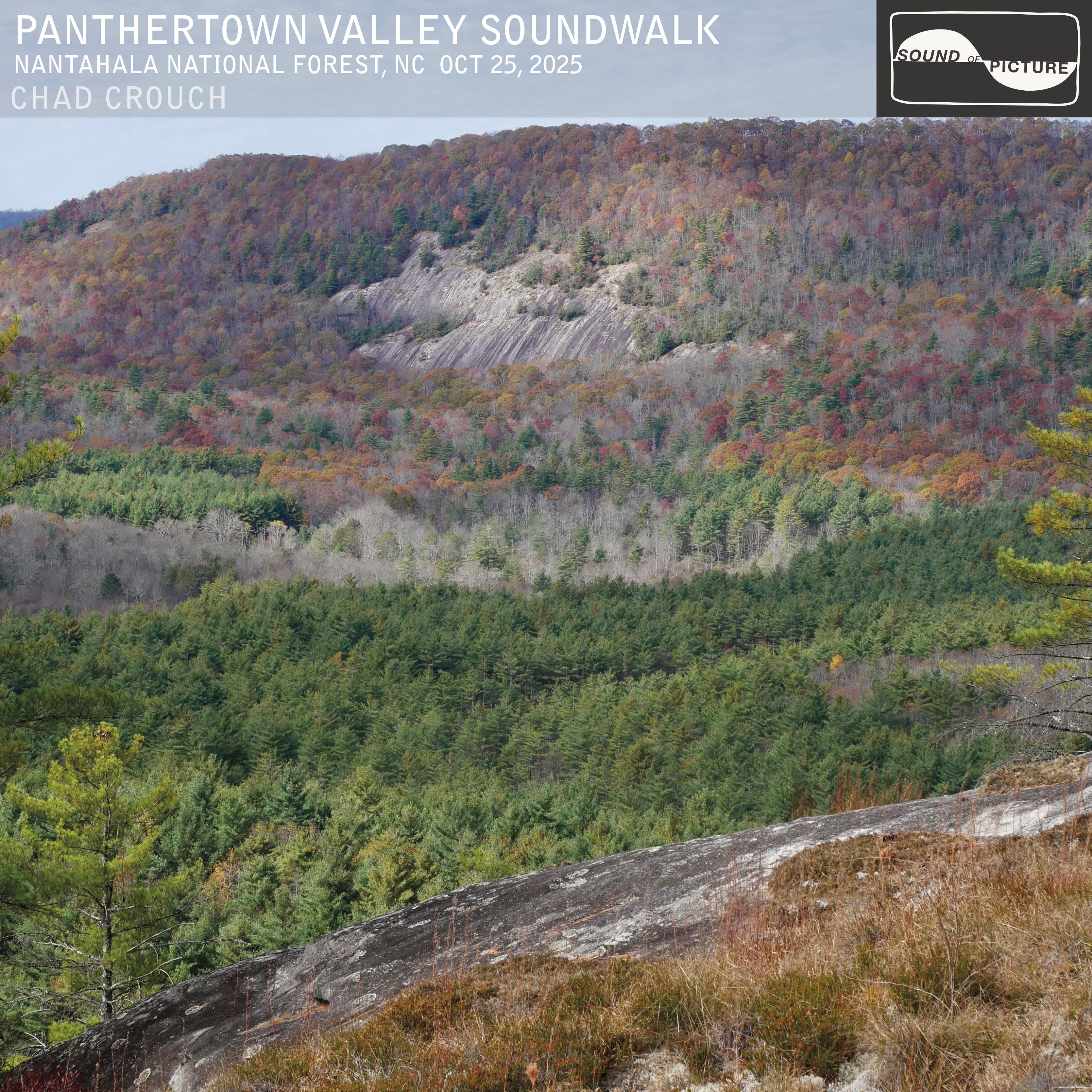
Panthertown Valley is a relatively small 6311-acre wilderness area in Nantahala National Forest in western North Carolina, in the Blue Ridge Mountains. It’s a little bit off the beaten track, but far from obscure, as the old promoter’s trick of slapping the label “Yosemite of the East” seems to have piqued interest over the decades. The Yosemite comparison owes itself to the granite features of the mountains that surround the valley. Proto-Half Domes, I guess. These smooth outcrops are a far cry from El Capitan, but they do possess a distinct character. Unlike the tectonic uplift and glacial scouring that happened in Yosemite, these dome faces were the result of magma cooling deep underground before being exposed by millions of years of weathering. If there is any superlative aspect that can be drawn in the comparison, it is that the formation here is much, much older. The granite underlying Panthertown Valley, the Whiteside granitic pluton, was intruded into the earth’s crust approximately 466 million years ago. The granite forming the cliffs and domes of Yosemite Valley was formed just 105 to 85 million years ago. The popular Panthertown Valley Trail to Mac’s Gap Loop is one of the most memorable hikes I’ve ever taken, topographically speaking. Does anybody else catalog wilderness experiences this way—as perceptions of topography? The overwhelming impression this place gives is one of a basin. When you peer down into the valley and scan the horizon, you see what looks like a rim, almost circular in definition. Of course this is not the way hydrology works. Panthertown Creek does not go down a drain in the middle, but slips out through a fold in the hills. The creek does linger though, there in the center. Indeed, Panthertown Valley features a rare high-elevation mountain bog on its valley floor, a wetland ecosystem fed by groundwater seeping from the surrounding granite. While fall paints the trees in shades of yellow umber, Venetian red, cadmium orange and the grasses in Naples Yellow, I couldn’t help but wonder what colors spring brought to the valley floor, festooned as they are with Rosebay Rhododendron and rare Pinkshell Azalea, an endemic shrub native only to a few high-elevation pockets in western North Carolina. Here in the understory Carolina Chickadees and Golden-crowned Kinglets ranged in foraging flocks while Carolina Wrens buzzed as they hopped along the downed wood. The valley was very quiet, enhancing the perception of being acoustically sheltered in a basin—or “cove” as they say in Appalachia—insulated from the sounds that roads invariably bring. This allowed me to appreciate the manifold cricket sounds: they purred, cooed, buzzed and blinked on and off. It was so nice to hear crickets this way: not in a chorus but distributed across the patchy habitat, in conversation with each other. “Halloo over there,” I imagined them saying. I looked toward fuzzier electric piano voices with this in mind, placing them alongside breathy...
0:00[music]
10:12... ...
10:56SPEAKER_00Thank you.
11:31SPEAKER_00Thank you.
13:08SPEAKER_00Thank you.
17:06SPEAKER_00.
17:06SPEAKER_00.
19:27SPEAKER_00Thank you.
20:17SPEAKER_00Thank you.
21:44SPEAKER_00Thank you.
23:07Thank you.
24:40SPEAKER_00Music playing.
29:28.
29:28.
29:28.