
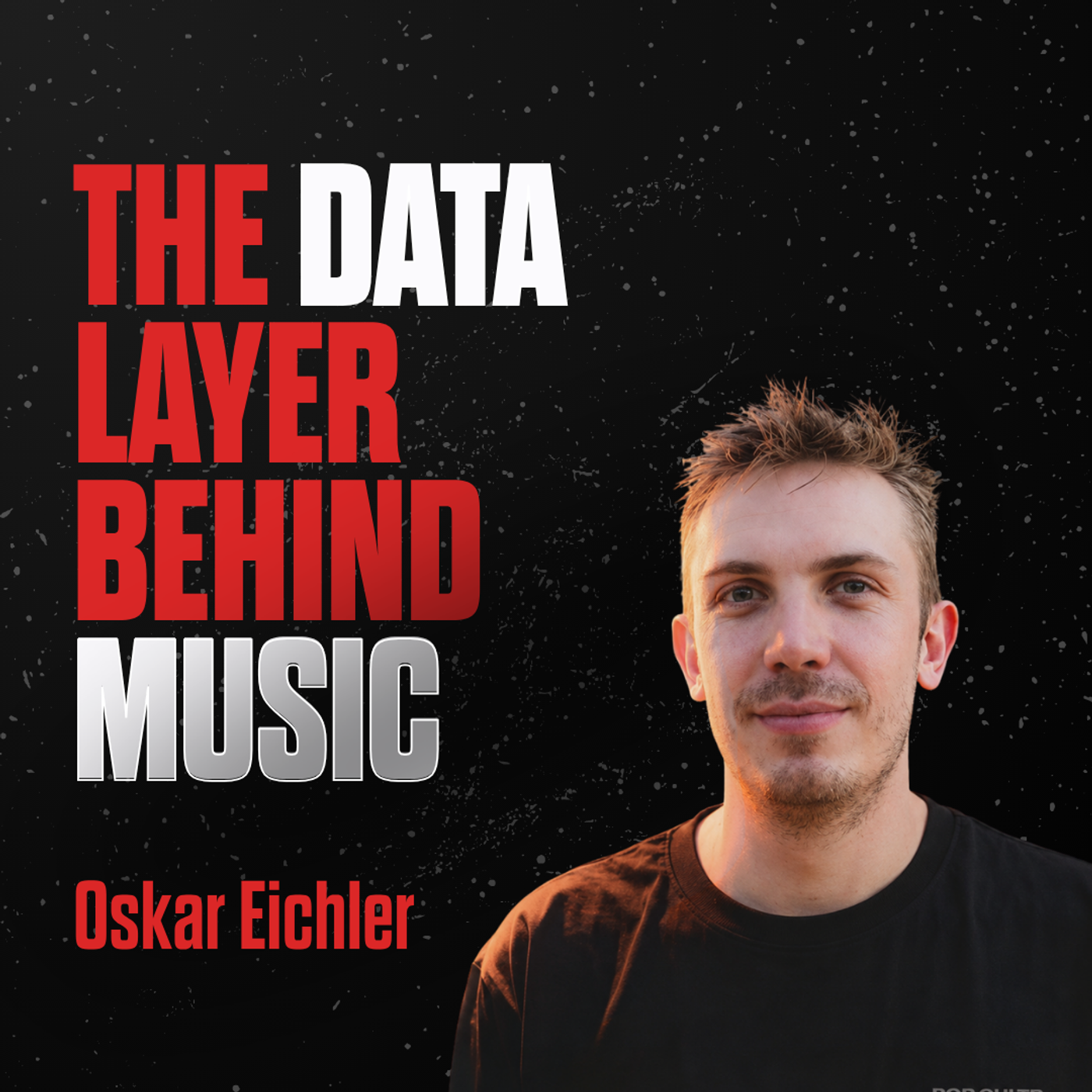
Sound Connections · Amplitude Ventures
Music is becoming increasingly data-driven, but having access to data is only the beginning. In this episode of Sound Connections, Oskar, founder of Songstats, joins Jakob to discuss the business of artist analytics, music technology, and the growing role of AI in how artists and music companies understand their data. Oskar shares his journey from building music-related tools as a young DJ and technologist to developing Songstats into a platform that brings data from streaming, social media, radio, playlists, and other sources together in one place. The conversation explores the challenges of turning music data into something artists can actually use, building a music tech company without outside investors, and developing a business model that combines artists with enterprise customers. Oskar also discusses the shift from dashboards and apps toward AI-powered interfaces, including Songstats' work allowing AI tools to interact directly with its data. The conversation looks at what this could mean for artist decision-making and the wider music ecosystem. Produced by Amplitude Ventures AS. If you want to learn more about Songstats: Website: https://songstats.com/ LinkedIn: https://www.linkedin.com/company/songstats/
speaker-0: It became very clear to me about a year ago when when AI generated music became so powerful and so good that like just creating music is no longer everything that an artist needs to do. It's actually the moments between that music where the music is no longer your product. The music is just advertising basically for you as an artist. And then where do you put a platform? The platform is on social media, right? That's where the eyeballs are at. So actually like Social media is so important now nowadays for any musician. speaker-1: This podcast is produced by Amplitude Ventures, your partner in early stage startups. Today on Sound Connections, we're joined by Oscar, founder of Songstats, to unpack how music data became a business, why AI is changing the artist's playbook, and how a bootstrap team is building the infrastructure behind the creator economy. Hey Oscar and ⁓ welcome to Sound Connections. I I'm looking forward to getting nerdy today. as it's only briefly when we sort of jumped on the call, I've started to really appreciate data and and building businesses as I do. ⁓ data is becoming a thing that I concentrate on more and more. Also because it's, you know, the world of data right now is changing a lot. ⁓ as as everyone probably knows, and the access to data into action with data. speaker-0: Hey, thanks for having me, Jacob. speaker-1: But ⁓ Oscar, today we're gonna talk about your founder journey with Sung stats and and and company and and all the sort of surrounding topics around that. But for the people who don't know you, Oscar, who are you and what do you do? speaker-0: ⁓ yeah, I'm a German musician and technologist, I wanna say, sitting right at the intersection of music and tech. Have always been all my life. I started building websites when I was like 16. I played saxophone and started DJing, producing music. And now I'm a touring DJ actually. And I built a lot of tools quite selfishly because I thought they would be cool. And now a lot of other artists are using them, and we have an amazing team now. And ⁓ so with song stats. We're helping a lot of musicians ⁓ making sense of their data and making their data actionable. ⁓ and now we also launched social stats and radio stats and a bunch of other cool platforms. So yeah, that's me in a nutshell. speaker-1: Anything. ⁓ and you know, ⁓ for any story that sounds really interesting as like CEO of a really cool company and and and touring the world, there's obviously ⁓ a journey ⁓ that's a bit rougher than maybe the current presence. So we'll we'll we'll sort of dive into that journey and and how you ended up here doing exactly that. ⁓ but Oscar, maybe let's maybe let's just set the scene about music and data because I think it's important to to understand that. So just for the audience, can you dissect a bit about what you focus on but in specifically and who you do it for? So we sort of understand the context of this. speaker-0: Yeah, sure. So SongStats in its current form is being used by thousands of musicians. It's ⁓ basically like a little manager in your pocket. It's a mobile app, ⁓ where but also a desktop dashboard where you as a musician, ⁓ you sign up and we collect all of your data across all of the different streaming services and download stores and now also short form video platforms. So imagine all of your Spotify data, your Apple Music data, YouTube, Instagram, TikTok. SoundCloud, everything in one place. ⁓ usually, you know, ⁓ artists are often focused on like one platform and one platform only. But what's actually happening is that often, you know, curators will support you on Apple Music and you don't even know. So what we do with Songs is we bundle all of this so you will see exactly how many streams you have, where you enter the charts, which playlists are supporting you. And now more recently as well, you know, how you're performing on radio. We launched radio stats about like two years ago and they're tracking about 50,000 stations worldwide. And then also, ⁓ now, also most recently, about two months ago, we launched social stats because between each music release, it's also important, more more and more important now for musicians to also track their social media channels. So we do that across Facebook, Instagram, TikTok, and YouTube. And it's actually grown outside of just the music realm because social stats seems like they're interesting not just to music musicians but any type of creator. So from any influencer to any athlete, actor, brand, ⁓ they all can use social stats. So it's it's pretty fun. And yeah, we've been leveraging sort of our backbone and architecture and database and servers to like make this all possible. So that's that's been really nice. Yeah. speaker-1: And so so just sort of let me understand here, what led you to start this company? What was the problem you saw that you thought was important enough for you to actually start working with us? speaker-0: Yeah, that's a great question. So I think the first point there was ⁓ we gotta backtrack to like how Songs That's actually started. It actually started from another website that I got involved in when I was still running another company. ⁓ the previous company that I was running was a music licensing network on YouTube. And I was essentially like finding tracks that, you know, basically this This website was called 1001 Tracklists. And it is a German database engineer about like 12 years ago who founded this website, which essentially just lists all of the tracks that were played in a DJ set. Imagine like ⁓ David Getter playing ⁓ a set at Tomorrowland. Now this website would actually go in and their community and users would actually like find all of the tracks that were played during that set. And my music licensing network actually was was ⁓ taking advantage of this because we were licensing mix tapes and we had to know exactly which songs were in those mixes and who do they belong to, like who's the rights owner, like what's the label behind it? So we were using 1001 track list a lot. And I actually exited this company, my previous licensing, ⁓ YouTube licensing. We can talk about this as well in a second. But what actually happened is that then I reached out to Jan, who was the Who's the original founder of 1001 Trackless? And independently from him, ⁓ two other guys from the States, Evan and Jacob, reached out to him. And we became sort of like the core team members of 1001 Trackless. And when I had more capacity again after the exit of my first company, I really thought, like, okay, how can we make more use of this data? Because this data is inherently super interesting for electronic music artists, for DJs. Because if you have a track that's getting played by a big artist on a big stage. It's essentially like ⁓ free content for you. Like if you get a David Getter, it's it's basically like ad advertising, right? Like if you get David Getter to perform your track there and you have a recording of this, like a video of this, you can use that on your socials. Everyone will be like, wow, what is this track? Everyone will start streaming it, right? It's a it's a huge accomplishment. So we wanted to create sort of like a one thousand one track list for artists, which is like a professional dashboard where then the artists can log in and actually see what's happening with their data. Well, turns out this is cool data, but there wasn't really enough to really make everyone log into this platform every day. Because even with us tracking a lot of DJ sets, you know, there's maybe only even the biggest artists might only get like a a handful of plays and supports every every weekend, you know? So well, we were there thinking then, okay, like actually it's would also be super helpful if you can also see, let's say, for example, which playlist you land on on Spotify. Or for example, who's reposting your tracks on SoundCloud. So we started importing like a few other platforms. it was like four or five at that time. ⁓ there were there was really not many more relevant services ⁓ out there. At the beginning, it was really just like Spotify and Apple Music. And then in electronic, there was like SoundCloud and B port. And then we had our own data. And this is all that we had, but it felt like the packaging is nice. We made it really mobile friendly. We have this like activity feed where you receive push notifications. So it's really like ⁓ you don't have to dive into your data, the data is a bit more proactive with you, you know? It's so we were like, ⁓ this is cool. And it was very electronic music focused. And then it became apparent actually, this is super cool, not just within electronic music, but also outside of electronic. So right at the beginning of COVID is when we launched, ⁓ relaunched basically this platform under the new name Song Stats. We opened it up outside of just electronics. So we had to like decouple it from our previous database, which was based on 1001 track list, which was only electronic music. We basically made it available for any type of music. And now I want to say, like, our users are pretty much 50 50-50 now between like electronic, and then we, of course, have like K-pop and hip-hop and country and reggaeton and everything now, which has also been a new venture for us. But that's how we created song stats. And it's I'm a musician myself, I'm a DJ and touring artist. So a lot of the things, as I said at the beginning, are very selfish. It's like, ⁓ this would be a cool tour. This would be nice to have. Let's just build it. And turns out what What's happen what's helpful to me is also helpful to a lot of other artists. And one great example there's actually Jack, our CTO. He is ⁓ running a band in New York called the Tumblr. And he had his debut album and he really wanted to promote it to playlists. And he was like, Well, we have this huge playlist database. We have over a hundred million playlists. Like, I can probably write myself like a little algorithm to find a playlist that are relevant to me. So he did that and he found like a bunch of playlists that are really like active within his genre, and he found the curators. He contacted them and he promoted his album this way. And then we were like, wait a second, this is really cool. We should create sort of like a marketing tool out of it. And ⁓ we essentially created what we now call playlist recommendations where we look at everyone's profile and we give you recommendations tailored to you based on your music and your growth and who you are and then which genre you're and which tracks you're releasing. And ⁓ now we're having really strong recommendations and we're always, you know, making these tools and then It turns out that they are helpful for everyone. As a great other example now, Jack has a has his own website. And just today he was pinging me. He was like, ⁓ actually like I would really like to embed my stats on my website. So how about we create sort of like a little embed with song stats data? And he just sent me like a first screenshot of it. I was like, ⁓ this is super cool. Let's let's do that. So ⁓ soon every every artist I guess can embed their stats directly on their website, you know. So ⁓ that's how that stuff starts. So speaker-1: It feels like to me when when you talk about it like a very ⁓ lean team with a big passion for music, ⁓ but s but still have sort of co capacity and and knowledge to know to how to build a business. Let's start there. Like how did you know how to build a business? Like you the first company you built and and well co built and sold, you know, that's that's not an easy thing just to do. So how did you get into that world? speaker-0: Yeah, ⁓ a little bit by chance and also by some I think things going wrong, you know, as always. ⁓ so ⁓ backtracking even further, when I was like sixteen years old, I really dambled in like the YouTube space and YouTube was very niche and still upcoming. And I I was like basically doing mixtapes on YouTube. I was like picking my favorite tracks with like two friends, and we were uploading these mixtapes to YouTube, thematic mixes like Sunset Mix or like Best of electronic dance music mix or something like this, right? Always like an hour long, but they got a lot of traction. Like they got a lot of views. People really like to put them on at like house parties and stuff. And that channel reached over 100,000 subscribers within like two years. And it was actually one of the top 100 channels within YouTube Germany. So it was like one of the biggest channels in Germany and period in music actually. And it was like very exciting and we're like wow this is super cool. And then from one day to another Everything got taken down. Literally, we got a notice from YouTube. They got some copyright notifications. I think it was from Universal or one of the major labels. And boom, the entire channel was gone. From literally from today to tomorrow. We're like, wow, this is scary. And ⁓ one of my friends actually stopped. He was like, I don't really want to do this. And again, I don't want to, you know, maybe get like a letter or like a, you know, cease and desist, or like you sometimes you get like a, you know, because in the end of the day. Yeah, we we were uploading music illegally, ⁓ basically, right, for streaming. And ⁓ we're like, Okay, this is still this was still the wild west of YouTube, you know, in a weird way. But I like, Okay, well, clearly people really like these mixes and I didn't want to give up and I was also yeah, you know, like seventeen years old and quite oblivious, I guess. So I was like, Okay, let's keep going, you know. So me and my other friend we continued going and we started a new channel. But this time I actually started to reach out to a bunch of labels because there was a couple of labels that had a lot of, especially the electronic music catalogs under their like roster. There was like Spinning Records, there was Armada, there was a couple of distributors, like Labelworks, who had like a lot of the smaller labels on under their umbrella. And I basically I set up like licensing deals with them. I was like, okay, well, look, there's obviously a market for this. Why don't we just license it? You give us the permission that we can host it. And you know, you obviously get the advertising. So we started posting the track lists. That's how we got also into 1000 more track lists, right? For each of the songs. And you know, we linked to them. And some of these uploads got like tens of millions of views. That new channel grew to over a million subscribers within less than two years. So it was again like basically ⁓ meteoric rise basically within this realm. What is important to note here is that like I never earned a cent from any of it. Like I never earned anything because all the royalties would go directly to the rights owner. So YouTube would copyright claim it and it goes directly to, you know, the labels. And you know, for them it's basically free advertising. For me, I can grow a channel. But I'm sitting there now with a channel of a million subscribers, never made a penny off of it. And also the problem is that like it could get taken down again from one day to another, you know? So that was quite scary. ⁓ and so in a weird turn of events, I essentially when I was like 19 years old, someone from like a distributor in Germany made me an offer to purchase this channel. And probably it was way less than it it was worth, you know. But I got like just over like 20,000 euros for it. ⁓ which for me obviously as a 19 year old was a lot of money. But that is still a YouTube channel with over a million subscribers, you know. So it's a huge reach. And I think they made a great deal there. You know, you can obviously they can promote their distributor catalogue. onto this channel. I don't even know what they are doing with it now or if they sold it again or something like this. But you know, as a nineteen year old there was like a good amount of money that really helped to like start my business basically. So at that time, ⁓ I basically now was sitting there with all of these licensing agreements ⁓ or contacts that I already had sort of gathered. And I was like, okay, well this is kind of actually this could We could make this into sort of like a little business, you know. I could help other channels license their music and not just do it myself. So ⁓ a little bit to my personal life now, outside of business, but ⁓ when I was like 18, I was traveling and with 19, I got like a job offer in China. basically as a professional DJ and as a music producer and like a label manager. ⁓ it was basically because I was sort of already dumbling with creating websites and I was helping a bunch of other DJs with their websites, with their podcasts. And one of them was actually in Shanghai, and he ⁓ offered me to come over and become sort of a resident DJ at this like really nice and prestigious venue. And I went for like a week, it was super awesome. So I went back and I basically I moved to Shanghai for like two years. And ⁓ so I was in China, I was eight, nineteen years old. I was in China, and I basically like had ⁓ Just sold my channel. So now I'm sitting there. And I basically I contacted Google. The good thing is that once you have like a larger channel, back then, I don't know if it's still the case, but you get basically get like a personal partner manager on YouTube. And so I had that contact, and there was someone sitting at Google in Tokyo. And I was like, Well, ⁓ you know, I have all these licensing agreements. I would really like to start ⁓ a content management system. That's what like basically like a network is called on YouTube. And so I was like, okay, this is nice. So they were they were a little bit behind YouTube in Europe and also YouTube in North America. So they really tried to catch up. And multi-channel networks were like a pretty big thing back then for licensing content, especially like gaming content. So I was like, okay, this is nice. Like, how about we do this? So they ⁓ gave me a contract. I had a contract suddenly with Google. I went with this to Hong Kong and I went to HSBC and they gave a 19 year old a bank account that some people in their 50s cannot get, which is kind of nuts. But I guess I had like the proof in the pudding, which was like the Google agreements and stuff like this. So it just happened. I don't know. I just I don't think back, I don't know how a 19-year-old can do this, but I guess I did. So it's kind of fun. ⁓ so I had a company incorporated in Hong Kong. I had a business now set up, and ⁓ I was basically then starting to work with like ⁓ a tech company ⁓ that was also based in Hong Kong to start sort of like managing the multi-channel network, growing the licenses and We essentially grew to over around three hundred channels and at the peak we're making around three hundred million views every month, ⁓ which is ⁓ quite a quite a significant portion, right? And this was helping the channels, it was helping the music industry, you know, monetizing and and advertising. And yeah, then ⁓ long story short, ⁓ this all sort of came to an end during ⁓ a period on YouTube that is now, I think officially ⁓ sort of we called the adpocalypse. ⁓ there was a period of time ⁓ where I think Logan Paul went to like ⁓ some did some bad things in like Japan and some like forests and like there was a lot of like weird weird things happening, but suddenly it was like front page news that, you know, the advertising on YouTube was played in front of videos that are not super, you know, where it shouldn't be played, like terrorism content or like negative contents, which can ultimately be bad for brands. So a lot of brands ⁓ as like a sort of a immunity response, they sort of like pulled out of like the advertising deals. So for us that meant obviously way less ⁓ revenue and income. For us it like it didn't make such a big difference. You know, we were a small business and ⁓ but for actually our rights holders and our licensers, like they were like suddenly like, Wait, what the hell? Last month you paid us like so much money. Where is all this money gone? Right? Like do we still really need this? Is this still worth it? So I was got really worried and spooked out maybe because I had this like early experience when I was like 16 where suddenly the channel just got taken down, right? ⁓ I was like, okay, well, maybe that shouldn't happen again. So I actually I looked for another company, a much bigger multi-channel network, that would be interested in those channels and would be interested in these licensing agreements. And I found one. ⁓ actually there was two or three that were interested in it and I basically exited ⁓ this business. I basically I kept the name actually of the of the company and I kept the domain. But I actually I saw the the licenses and the the agreements and the and the channels, you know, got transferred over. And obviously they had like licensing agreements for like multiple years, so they could figure out, you know, what they wanted to do. And I think it was the right choice. ⁓ a lot of these thing tools are now sort of a little bit redundant because YouTube started doing more of it themselves. ⁓ I also think gaming multi-channel networks are not so no no longer such a big thing. So ⁓ I think the gaming publishers understand themselves now, like the value that YouTube can bring and Twitch can bring and streaming can bring to their games. So yeah, but it was a very interesting venture, you know, that ultimately led me also to work with 1001 trackless and then starting song sets. So ⁓ yeah, having had ⁓ experience, what happened to me when I was like 16 and the channel got taken down from one day to another, you know, got a little bit worried with the licensors pulling out. So I essentially started looking for a a company that would be interested in in purchasing sort of the licensing agreements and the channels. And I found another multi-channel network. There was actually two or three that were really interested in it, especially like the larger ones. I mean we were like a smaller one at this, you know, we only had like 300 channels. Some of them had like tens of thousands of channels. So yeah, I found one and basically sold them ⁓ more or less the assets. ⁓ I kept the the company name and I kept the domain. But I I sold the the the the licensing agreements and also the the channels themselves moved over to the new ⁓ multi channel network. And I think it was the right decision and the right timing. ⁓ YouTube now ⁓ is doing a lot of these things themselves in house and also the the need for multi channel networks in the gaming space are no longer so big. So ⁓ that's where we are. And that's how I got a little bit acquainted to one thousand one tracklist as well. So that's how all of that started. speaker-1: When I listened to your journey, like it seems like this is something you just learned as you went. I guess it's not like formal education and and super plan. It was based on execution capability, I guess. Is that sort of how your career has been the whole time? speaker-0: Yeah, pretty much. Like I was kind of lucky. Like when I was like sixteen years old, I applied for like a program where I could go to university while I'm still in high school. There was like for like fifteen students or so. I didn't think I was gonna get in, but they picked me maybe because I'm like also more of a, you know, creative sort of just do stuff mind. And so I actually I went to the technical university of Munich while I was still in high school. So I was always like quite early with stuff. And ⁓ In the end of the day, I never actually finished these studies. Like when I was 18, I was traveling with my best friend, like after we finished high school. And so I wanted to actually immatriculate again and just continue my studies. But that's when I reached out actually to all these people that I was basically doing for free these like websites and podcasts for. And that's how this guy in China actually like actually just started noticing me for the first time. Like this kid is actually like running a big YouTube channel. He's doing all these websites. Like, why don't I like invite him over? I guess that was like a good value proposition here for me in a way. So ultimately I'm really happy that everything that I did all my life, actually everything that I learned, everything that I spent time on, I basically applied right away. It was very applied sort of like learning, only learning what I actually need. Also in China, I decided very early, like I don't actually want to learn Chinese. ⁓ there was like a very clear decision from the get go where it was like, okay, either I should learn Chinese, ⁓ I'm like 18 years old now, 19 years old Or should not. And my decision was like I'm actually not seeing myself here for like the long term. So then I rather spend my time learning other things. So I learned like music production and I learned more coding. So yeah, everything was very applied, you know, not so yeah. speaker-1: It's it's very interesting and you know, it's not because I'm fishing for things that went wrong or struggles, but like usually in in most final journeys there's also like, you know, there's a big cost to to the momentum. Was that was that there for you or was it like sort of like a a flowing motion? Like w what what was your mental state like? What was the work effort putting into this? Well speaker-0: I work a lot and it it never feels like work, but I I mean I am working probably like at the moment I'm working about eighty hours every week, I wanna say. Like just ⁓ and it's just like part it like it's between the music project and and coding and and running the business and everything. ⁓ but I like to just like do stuff that you know, I feel like I'm wasting time if I don't do something that's like actually beneficial for like what I'm working on. So like instead of solving a puzzle or playing games, I'm just coding, you know. But in the end, like It's actually relaxing my mind. But then the end we have a cool feature. You know, it's it's just like this, right? Now for struggles, I I definitely want to say like ⁓ there was definitely, you know, some some trouble lingering ⁓ across the li licensing agreements. There was always, you know, you have like lawyer letters, you have stuff to deal with, you have to deal with YouTube. It was not like ⁓ just like a piece of cake doing all of it, right? Like ⁓ finding actually the buyer was actually the the the fastest thing of all of it. But I was already sort of like used to working with agreements and and a lot of like corporate lingo from the get go. So in a weird way, I I just started doing it early and it just felt ⁓ and then it feels easy, you know? It's like the same way that now some kids are in front of a camera ⁓ when they're like fifteen years old and for them that comes supernatural, you know? ⁓ others struggle with that all their life. You know, it's like ⁓ I guess when you started if if you just do it and you have a passion with it, it just happens. So that that's sort of I'm really lucky that I found that passion between music and tech, how I described it, super early in life. Like I just did it and it just happened, you know, and it in a way it made it money. So that was also lucky. You know, timing is lucky, you know. Like ⁓ the timing with the multi-channel network and these YouTube channels was super lucky. I also want to say that the timing with launching song stats was really lucky because ⁓ we sort of now got grandfathered into a lot of like agreements with all the the bigger platforms. And if anyone would try to start a business like Songsets today, they will run into a lot of roadblocks because these bigger companies like Spotify and Google and Facebook, they no longer want to give out all of that data, you know, to just someone new. They're actually quite protective over it now. But we were there at the right place at the right time. For example, the launch of Songsets also was right at the beginning of COVID. And first we were like, ⁓ damn, like the world is like ending, like what's gonna happen, you know? But then everyone was suddenly online. And everyone had to release music again. None of these musicians could tour. So then everyone tried to see like what's happening with their music and the one place they could find that was Songstats. So then Songstats actually the timing couldn't have been better actually in a weird way. So it's it's strange that these things happen, right? So speaker-1: Obviously, you know, be d being lucky with timing over and over again also witnesses a bit about some some understanding of what's next. So what what would it what would it particularly say, sort of the success with, you know, what could what do you call it, one thousand and one play this or like what was the ⁓ what was the point where you said, Okay, I need to go into data and music? Like what besides the sentimental part that you musician you see a problem, but like what was the opportunity you saw and when did you see it? speaker-0: Yeah, I we basically saw it moment we started working on like I looked we looked at one thousand one tractors and we're like, okay, this is a cool business. What do we have here that's of value? You know, we basically when we joined, Jan was just running this basically by himself as like a database. And ⁓ we he actually had some like open invoices for like spinning records worth like five thousand euros that he never invoiced for like multiple years and we're like, What the hell? Like you gotta put a little bit of business on top of this, you know. But he wasn't really the right person for that, right? So then actually Evan stepped in and he helped on that side of the business. And Jacob and Fahim, they basically started growing more of a media company on top of it. So we are now much more about music promotion as well, like a discovery channel for music. ⁓ and then one, of course, really interesting aspect was the data. And I'm obviously more of like the I would say like the technical side of it, not so much the social media, more of the technical side. And I was like, well, we can use this data. How do we market this? How do we grow it? ⁓ we found like a hundred users at the beginning. You know, other DJs and they found it super helpful and we're like, okay, this is like there's something here, right? So and then it was just like building. And it's interesting how a company sort of like we built 1000 one track stats that was basically 1001 track this for artists for multiple years. It was like two years setting up the groundwork and there was only like about a hundred users. Funnily enough, what happened was that like at that point I was the one funding everything, right? So we're f fully bootstrapped, no investors. I basically used the money of my previous exit to like fund this, to fund the development. And ⁓ we're like two years deep basically. And obviously the cost is growing, you know, you're more and more in the red. And at that point I was like, damn, like I don't know how long I can keep this up, to be honest. Right. Like at some point we gotta turn it around and at least break even month over month, you know, so I'm not losing more money. So we were actually like There's a big conference in Amsterdam called ADE. It's like Amsterdam Dance Event every year. And we were actually having a couple of meetings with other platforms, with some big artists as well, about potential investment into what we're doing. But we we really felt like actually we can do this ourselves. You know, it's like it's like we don't just want to be in this like rotisserie of like someone else's ⁓ stuff, you know. So we're like, okay, well then what happened was that about a month later, there was a music app being launched by one of the major labels. And it looked freaking awesome. Like they did such a good job marketing it because that's all they do. They like designed it well. It was well put together. The the messaging was clear. We're like, damn, they're gonna eat like all of the Marvel, they're gonna they're gonna eat the whole market now. But instead they didn't get anything because A, their technology in the back end sucked, and B, they were only targeting like the major label artists, which are like, you know, the the Ariana Grandes and Lady Gaggas in the world. And they don't actually need an app to tell them which playlist they are that they're on anymore. You know, they are already in such a realm where that's of of no significance. But what that showed us was actually the missing piece that we were missing was songs sets, which was to make the data really cool, to market it well, to have like a cool UI and like to to do a a real go-to-market plan, you know, because until that point we were just dabbling in the technology basically. So we pulled everything together. And within like four months we basically pulled together song stats with the rebranding, the new name, the dark mode, the cool new UI, well, way better marketing. And a lot of the things I wanted not say steal were stolen, but they were highly inspired, you know, but what what these what this other app did were like, okay, this is what we need to do with Song Stats. And it worked out, you know, it w really put us on the map and ⁓ it made a splash. And we were the only ones targeting artists. There was a couple of other players that were more like the business intelligence, tar targeting big companies or like A and Rs ⁓ and the major labels, but no one was helping artists, individual artists. So we were the ones building this for artists, making it affordable for artists and we artists ourselves. So it came from the right place at the right time, right? So yeah, it's kinda wild how it worked out. So it just happened again, but it it was helpful to me in that moment. speaker-1: That makes sense. So but it's interesting. When I speak with founders of the podcast, you know, one of the recurring themes is building a business model in music on direct to assist is usually quite difficult. So what is your model here? Like what what do you rely on with revenue and how do you actually make this a a company that makes sense? speaker-0: ⁓ Yeah, actually artists are are actually fun to work with if you work with them right. And if you can sort of like put yourself in their shoes, which I can because I'm touring myself. A lot of the things, you know, like I understand what would be helpful. So that that part worked and the value proposition of songs that's very clear. Actually, what we forced the rest of the industry to do is pay much closer attention to artists. Because suddenly we were eating a lot of their cake and actually we were the ones innovating in the space and They are basically for the last five or six years, all the other players are just copying what we're doing because we're the creative ones, we're the ones who are like innovating, and everyone else is stuck in like this like more data science sort of like way. Like data needs to be a graph and data needs to be like this. Like, no, data just needs to be fun and actionable and you need to feel inspired by it and you want to get to the studio again and share it with your friends. You know, that's what data for me is about, right? So that's how we made the data feel. Now We of course now also grew an enterprise side and that actually has been really successful for us because we have all of this data and we can now actually power a lot of other businesses with this data. So we have a lot of booking agencies, distributors, management firms, big record labels who are now actually receiving our data from like an API or like a data deal where basically then they can use this, you know, to discover artists on TikTok or to, you know, build out so so speaker-1: As far as understanding, like most sort of ⁓ dynamics of direct to fan and enterprise models is usually the enterprise models are these bigger contracts that's you know more predictable and and is maybe a little less expensive to acquire in a typical SaaS manner. So is that sort of your primary pillar that makes the company sort of go around or like how does this work for you guys? Yeah, I wanna speaker-0: say that like in direct sales and in direct like work, ⁓ we focus on target larger companies at this point because it's much more worth, you know, setting up an enterprise deal ⁓ where, you know, it takes longer to onboard of course and to to get that deal to work, but it's it's ultimately much more worth the time than going after each artist sort of like individually. On the artist side, you know, We we're having a lot of cool sharing tools. So artists share, you know, their accomplishments on socials. Then actually our logo is on there so other people see it. So there's a lot of like ⁓ you know, sort of like organic growth that we have already on the artist side. And of course we're doing a little bit with advertising and growth hacking. So ⁓ there there's it's much more important to reach like a lot of artists and then seeing the ones that you c you know you can benefit from, you know, an app like Song Stats. But yeah, on the on the direct sales front, we're certainly like more interested in working, you know, with a larger company and seeing how we can like help them and then of course in the end create like a bigger bigger deal there, right? Or a or multi year deal licensing agreement on on data or something like this. ⁓ which is much more interesting, right? And more speaker-1: I mean, yeah. So the the multitude of data you would get from or the insights you would get from working with more and autisting companies all sort of supplementing on you to build a a great product where you can also have worth for your clients. So I guess there's there's many ways that the ⁓ maybe where the revenue is not as big as a part of the motivation for the company, but then the the the impact of assets being on the platform probably also helps ⁓ the other side, I guess. Yeah. Where take the always speaker-0: basically building a little bit like what our customers want and need. Like if artists give us a lot of feedback, but we have to see like what's feasible. ⁓ also on the enterprise side, you know, we get a lot of feedback. So and then we're usually not going out and building like blindly unless we have cool ideas of what like would make sense. And often often clients actually don't or customers don't really know what they want. They just like, ⁓ but if we have a good idea and we can see ⁓ we can do this with the data now ⁓ like as a good example, I was building a tool like literally like yesterday, where, you know, all these platforms, Spotify, Apple Music, they show you who your related artists are. So this is artists that your fans also connect with, right? Which is cool. But now the question is like, hey, actually, what other artists are actually having you as the related artists or referring back to you? And that's not a data that you can get anywhere unless someone has the related artist data on every artist, which we do. So then it's like, okay, cool. Now we can actually on your songs as profile, we can show you exactly all of the artists that are referring back to you that you're related with on those platforms. So that's super interesting and valuable info, maybe to you, because these are fans that are listening to you and to that artist. So that's someone good to collaborate with potentially, right? ⁓ and so ⁓ for me there was like a few hours of like putting this together, putting a nice UI, you know, for someone else this would have taken forever to find out, you know, who's referring. So I first I've I I was curious myself, like who's referring to me and now we're making this available to everyone, right? So these are like these little like cool tweaks ⁓ that you know you can just do and I don't think anyone else would have thought of this, but we thought of it because we have that data laying around, right? So speaker-1: I I think that's that's the the beauty of of ⁓ of data these days and and powerful L L ⁓ models to help code is like okay, if you understand the conceptual layers of what you have and sort of the the general goal you have in data, th there's it's not that far from saying, Okay, these different data points could be connected in a certain way and and give it a certain output. So I think that's that's brilliant for you guys because you've spent six years of building up a business with a bunch of data and now it's so sort of it's so possible for you guys to build new ways of presenting this data and making it useful where like maybe a a startup company would be able to build a conceptual UI for this, but they would never be able to get the access to the data or it would be very expensive to at least get an API to call. speaker-0: Actually, our enterprise API is being used much, much more right now because suddenly there's a lot more people who are developing small tools. And we're happy to give them a test key and give them ⁓ affordable access at like low rates, ⁓ for them to build out, you know, their their tools. We want them to like build cool stuff on top of our API. B and so many more people have cool ideas now, you know. ⁓ indie labels can now suddenly cool create like a cool dashboard for themselves or something where before they were relying on other people, you know, now. You can basically just ask Claud or or Codex or someone to like build this for you and it's it's really powerful, it's really fun. And yeah, they're not gonna get all these licensing agreements or run these millions of jobs and have like servers with n terabytes of terabytes of data, right? That it's but we can provide them what they need. So ⁓ that it's cool that we are we're in a fortunate position here now where it's sort of we're we're powering a lot of that that we're like the foundational layer that a of people can build on now, which is super cool. And of course we build on it ourselves as well. So ⁓ a lot of these things now with AI, I wanna say what took before took a week, you can now do in a day. It really is like this. It's it's nuts how fast you can build now. We're basically ⁓ doing product announcements every week at the moment of like new features that we're doing. And that's not just building them, but that's also creating a whole launch plan and and marketing around it, which is not so easy because you need to also present the features, right? And explaining them and ⁓ you know, supporting them and everything, right? So ⁓ but it works now. speaker-1: So so what do you think is the trajectory ⁓ for your company or this space in t particularly when it comes to to data? Because, you know, th there must be limits to growth in a small niche business to some degree, or do you feel like okay, where you persist in right now is just gonna grow really fast for many, many years? Like what what do you think about your opportunities as a company to grow? speaker-0: Yeah, I think ⁓ we sort of we grew from electronic music to all of music, right? And now what we're doing is actually take the next step, which is ⁓ we essentially spend the last like almost two years building what we call social stats. So we launched that platform two two months ago. And it's essentially like sort of an extension to song stats, but it's its own standalone product and it's essentially collecting social media data on the on the big social media platforms. And it's essentially like the the music's space is just maybe a percentile of the whole creator economy, right? Like there's so many niches. There's like ⁓ sports and there's gaming and there's streaming and then there's influencers and modeling and fashion and whatever. There's so many ⁓ niches and suddenly with social stats we can tap into any of them and all of them, right? ⁓ so we're still early with social stats, right? We just launched it, we're still supporting it, seeing what can we can bring what value we can bring to the table for creators. ⁓ but we included it for free at like the bundle level with song sets. So any song sets user that you know already has radio stats, they can use social stats for free now and they can use that to to make more sense of their social data. And now we're of course like expanding outside of just the music industry, doing more in the creator economy. Like that's the that's the greater plan here, right? ⁓ so that we're still building out. Obviously we have a strong foothold within music and that's sort of like our passion. But you know, even for me as an artist, it'd be it it it is very clear now or or it became very clear to me about a year ago when when AI generated music became so powerful and so good that like just creating music is no longer everything that an artist needs to do. It's actually the moments between that music where the music is no longer your product. The music is just advertising basically for you as an artist. And then where do you put a platform? The platform is on social media, right? That's where the eyeballs are at. So actually like social media is so important now nowadays for any musician, for any label, ⁓ because that's where they tell their story, that's where they show who they are, that's how they c communicate with their community. ⁓ and that's ultimately, you know, where you sell the tickets, where you sell the merchandise. ⁓ so in the end of the day, ⁓ this was a very natural extension to song stats. But now we're again trying that this is sort of this organic next step as well to win some brand new customer circles, you know, that we never were never part of those bubbles, but now we can be, right? But there's still a lot of work to to be done there to make it really, really good and useful and helpful to to every type of creator, right? ⁓ but yeah, we're listening and we're always building, you know, what we feel is the the next cool thing, right? So yeah. speaker-1: So what what is the next cool thing for you when it comes to realization of the business and maybe a liquidity event, maybe you sort of cash out. Is is that what's in the future or is it profitability? Is it sort of running it for a long time? W what what's in your mind about that? speaker-0: Yeah, there's a lot of thoughts here. I think ⁓ the first thing is like ⁓ we're profitable, we're fully bootstrapped. There's no one telling us what we should do, what we shouldn't do, which is amazing. We're in like a great position right now, right? ⁓ the the the question or like the biggest fear here, I guess there's like two big fears. One is AI, you know, like will AI make everything obsolete? You know, will you even need a platform like Songstats? ⁓ you know, actually we're Stepping into the realm of AI, like last week we announced and we launched our MCP server, ⁓ which is super cool for anyone that doesn't know what an MCP server is, is basically now your AI client can interface with the song stats data directly. So you no longer need to use the desktop dashboard or the mobile app. You can just connect song stats with your AI and then you just ask ChatGPT or Claude or Grok or ⁓ Gemini, you just ask like, hey, how does my new release compare to the five releases before then? Or where should I focus my music marketing efforts? Or you just ask it anything and it will pull the d the right data from our database, which is super cool. And then, you know, it it it provides the intelligence layer on top of it. And it can also, of course, cross check that with maybe your Facebook ads or something, you know, and tell you how to market yourself better. It's super cool. So we want to lean into that because of course that is super important. And who knows if a mobile app is still the right interface in the future or a desktop dashboard. But AI certainly is a cool way to interface. And Now we made this available and we're the only ones who made it available for any artist. ⁓ it's just available for free now. As long as you subscribe to your artist proof of her, you have full access to your artist data. And we want that to be the case because that's your data and you should have the intelligence, right? And you should be able to make better decisions. So it's really cool that we launched this. And ⁓ that's one fear factor, of course, is AI. Like, okay, who knows where it's gonna be in five years, you know. That's this like singularity discussion, you know. It's accelerating so quick. Who knows? Like, is everything gonna be, you know, is all that data inside an AI and then like you don't no longer need a big database with all of that. But I I don't think that that will be the case. I think ⁓ as long as we're sort of like powering the backbone, we're like in a pretty stable position. ⁓ and then I don't think we're currently like actively looking for any like liquidation or something like this, you know, like we're we're in a happy spot, you know, we're a lean team, we're all like high functional, you know, trustworthy. friends, ⁓ where we all play Ultimate Frisbee together and we're like, ⁓ we're excited that we're building this together, you know, and where now we can connect sort of it's it's essentially like a cool lifestyle company, I want to call it, right? Where we're a small team and I think with all the companies that we're talking with, they're all a little bit jealous of what we've built because we didn't try to grow out of like proportion, you know? We are not trying to be this like scale up that throws all the money into advertising just for the sake of growing and and showing a a cool ⁓ ⁓ like ⁓ higher whatever revenue even though your your actual profits are down or whatever. You know, that doesn't make sense. We had to be profitable from the very beginning with this company. So everything that we were doing is very like cost effective, right? We're always doing, we're hosting the service ourselves. We're not actually like in the cloud or something or using AWS. We're just literally hosting them ourselves because it's so much more cost effective, right? Takes a bit more time and expertise, but in the end you feel much more accomplished because you can do that, right? ⁓ and so ultimately like we're ⁓ I think a lot of the teams and a lot of like these conferences that I go to, for example, we're meeting other big tech firms and they're telling us what their plan is like for the next year. Then you come back the next year and they basically still tell you the same things. They didn't accomplish any of those things that they wanted and seeking out to do. And we're saying what we're gonna do and two months later it's there, you know, we're we're doing it, we're shipping it, you know? And that's ultimately, you know, we're we're happy to, you know, be be there and speaker-1: Few l speaker-0: Just just do it, you know. It's like it's actually the best feeling to be honest, to just just put the stuff out there, you know. So speaker-1: Yes, so so I think, you know, the the word that's pretty striking is sort of the the lifestyle type company. Yep. Yeah. Because you you have a lifestyle that you appreciate, you know, traveling, playing music, and and it seems like your team also does that. So ⁓ what else to read from that is it's enjoyable and you don't necessarily need to have a clear ending as of right now. And and right now it's something that's just incredibly exciting in a way if you want to ride. speaker-0: Absolutely, yeah. I think I mean, who who's asking for something better than, you know, I'm I'm DJing in the world, I'm building these platforms for my hotel room if I and then, you know, now we're we're having this conversation, I'm in Amsterdam right now, you know, but then next week I'll be in Istanbul, you know. It's like it's it is really cool and I I'm you know, I'm in a position in my life where I really appreciate that, you know. It's ⁓ and I understand that that's not I don't I don't take that for granted, you know, but there's also a lot, a lot of work that goes into it, you know. I I think that's the part that maybe a lot of people don't really see. They just see like ⁓ yeah, like ⁓ he's DJ traveling around or whatever. Even with that, I feel like people don't really see with a lot of DJs, for example, how much work goes in behind the scenes to make it work that they are there on the stage, that they are there with new visuals, new music, everything marketed, filling up a a crowd. You know, it's ⁓ actually it's funny, right? As a DJ, In the end you see that one person up there and you think he's pressing a few buttons. Yeah, that's the end result of like a long journey for him to be up there, you know. It's actually kind of or or her, right? Like it's it's a very cool, ⁓ it's a weird job, right? Like ⁓ and you f feel like it's all just nightlife and drinking or something like this, which I also do sometimes, you know, and enjoy. ⁓ but there's also ⁓ you know, it's ⁓ it's a lifestyle, right? Like I I I don't I wouldn't trade it for a corporate job even if it paid me much more, you know. Like why? Like it doesn't make any sense. So ⁓ yeah. speaker-1: Amazing. Oscar, it's it's incredible to hear and and I'm I'm very, very excited to to follow the data space of music. I I really love that things are getting more organized and more informed that it's not just sort of ⁓ shooting in the dark. I think that's what music has really lacked, you know, many, many years. And that's not just the music, it's also infrastructure. It's also you know, black box, it's it's ⁓ ⁓ is rightful allocation of money. ⁓ there's there's many, many things ⁓ that has been hidden in in the dark of of missing data. ⁓ and I think a lot of companies have tried to solve it the last ten, fifteen years. ⁓ but I I love that AI has been used to sort of really speed that up because it's it's you know, it's hurt the industry. So I appreciate ⁓ your approach. I appreciate your your mission. I I know several founders who are using your services as well ⁓ with API I guess. So so I know there's really interesting things being built on the base that you have built. ⁓ and I and I really love that as well. ⁓ so Asuka, thank you so much for being on. speaker-0: Thanks so much for having me.