
Sound Connections · Amplitude Ventures
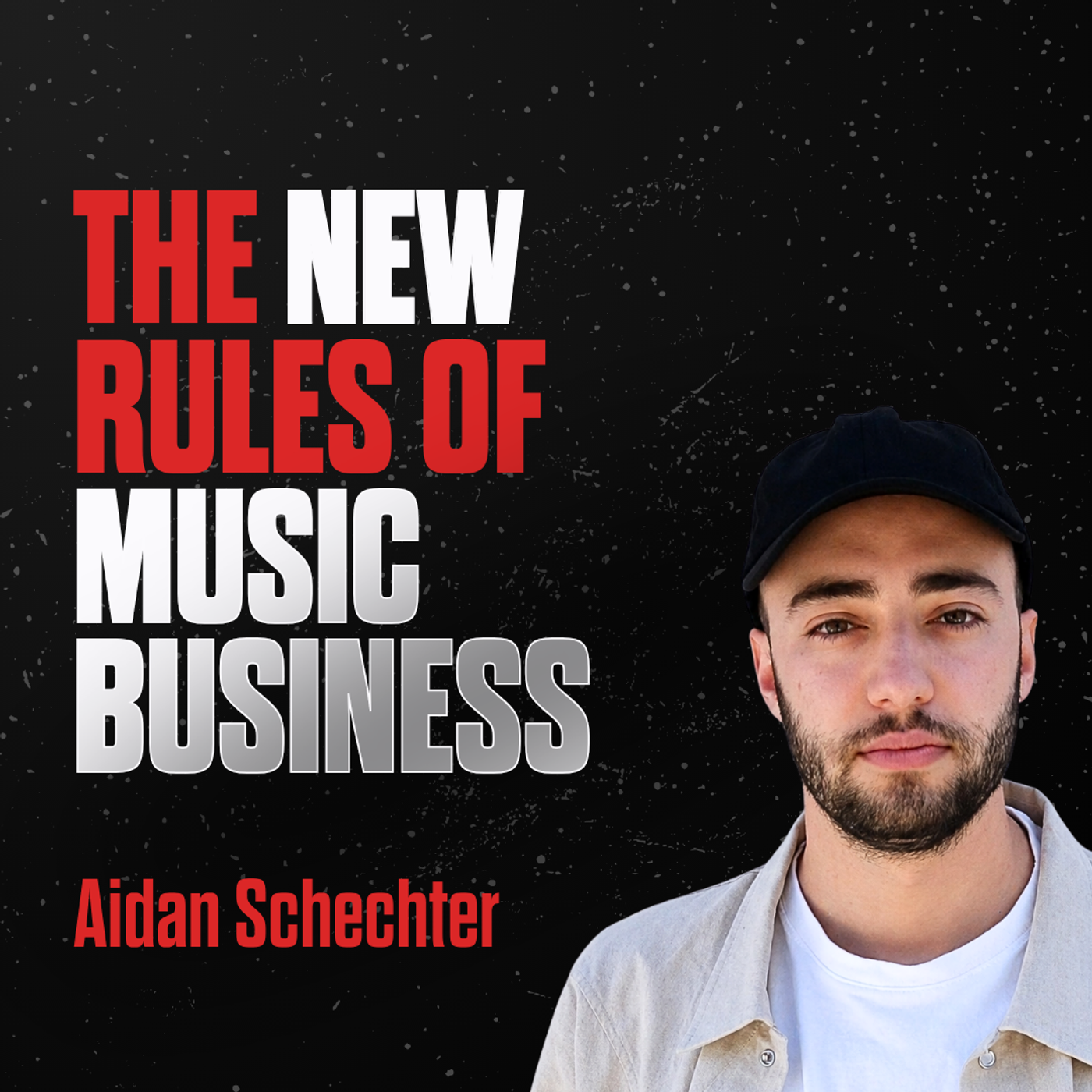
What happens when the future of the music business is built by small, agile companies instead of industry giants? In this episode of Sound Connections, Jakob Wredstrøm sits down with Aidan, CEO of Patchbay and Partner at 1916 Enterprises, to explore how music, technology, investment, and entrepreneurship are reshaping the industry's future. Aidan explains why independent music businesses are becoming more powerful, how AI is accelerating product development, and why the next generation of music companies will rely on collaboration rather than scale. From artist management and publishing to software and venture investing, he shares how small teams can now accomplish what once required entire enterprises. The conversation also explores data infrastructure, the changing economics of music, and why relationships remain the industry's greatest competitive advantage. Rather than replacing people, technology should remove administrative complexity; giving artists, managers, and executives more time to discover talent, build relationships, and create meaningful careers. If you're interested in music technology, AI, entrepreneurship, independent music, or the future of the creative economy, this episode is for you. Produced by Amplitude Ventures AS.
speaker-0: There's so much focus right now on buying music catalog, right? There's a lot of guys in suits, some of who are great people in suits, but ⁓ they're coming into the industry and they're going and buying stuff. And, you know, power to them. I think that's creating like a better market and a better ecosystem and an industry that that that has more capital flowing into it and that breeds more opportunity. But there's like this fundamental like pessimism to that attitude, right? There's like this real focus away and hedging against new music and new artists and new creativity. speaker-1: This podcast is produced by Amplitude Ventures, your partner in early stage startups. Today on Sound Connections, we're joined by Aiden Schechter, partner at 1916 Enterprises and CEO of Patch Bay. We explore why the music industry is becoming more independent than ever, how AI is reshaping the way music businesses operate, and why the future belongs to founders who combine technology with deep industry expertise. Aiden, welcome to the Sound Connections Podcast. So we'll talk about a few things today, Aiden. ⁓ you have a very interesting ⁓ career ⁓ where you've been working in the intersection of music. speaker-0: Thanks much for having me. speaker-1: ⁓ technology ⁓ investment. And we'll cover a lot of those things today with ⁓ your involvement in Catch Bay as CEO, but also nineteen sixteen, ⁓ where you're also a partner. So ⁓ and just to set the scene and for people who don't know you, who are you and what do you do? speaker-0: For sure. ⁓ my name's Aiden. I'm from Los Angeles. ⁓ got started in music, making music and engineering and producing, ⁓ you know, in the studio and and live. and ⁓ pretty quickly found my love for for business through artist management and started working with artists. and ⁓ and then through that found my love of business and ⁓ and building sort of solutions and ⁓ and and services and capabilities around creatives and around music. ⁓ I'm a partner in a business called 1916 Enterprises. We're a holding company focusing around entertainment and particularly in music. and ⁓ across the business over the last five years, ⁓ we invest in, we build and we operate companies, about 20 companies total across the portfolio. ⁓ at the core Managing artists, producers, songwriters, and composers, ⁓ publishing songwriters, ⁓ operating in ⁓ record labels, investing in music businesses, technology businesses and services businesses across music and entertainment. And ⁓ and also I'm building a startup which is which is called Patch Bay and under the umbrella as well, where we're building a set of solutions for music businesses like our own. So sort of living between ⁓ you know, doing the work and building the businesses, ⁓ investing in ⁓ the services and the capabilities we need, and also building the technology to to support that ourselves. speaker-1: So running a running a business is difficult. running many ⁓ is, you know, even more difficult. Could you walk us through the reasoning for doing it this way? speaker-0: Yeah, I think ⁓ you know, when we started building this phase of the business ⁓ about five years ago now, it was about sort of rising to the occasion of a moment that's happening in the world, ⁓ particularly in music, but I think outside of music as well, across entertainment. ⁓ you know, social media and the internet dictate everything and drive everything. And the barrier to entry to be creating or be an artist ⁓ or build a business for that matter has never been lower. ⁓ and ⁓ you know, this is a moment where ⁓ it doesn't really matter what hats you wear in music. You can wear sort of different hats at once because it's all really similar work. ⁓ you know, you know no you no longer need a ⁓ a large enterprise or a building of a bunch of people to go and develop and and build an artist. ⁓ you no longer need ⁓ you know, a whole building of songwriters in an office building like Brew Building or something to be a publishing business. Right. And so, you know, we're able to wear different hats but do the same kind of fundamental work. ⁓ as management, as publishing, as investors, as record labels. It's all with the same people. It's all about the same stuff. ⁓ it's just sort of like, you know, different ⁓ ways of participating ⁓ in in in the value we're creating. ⁓ and so, you know, what we've been sort of building across the across the holding company and especially across the core businesses we're operating is, you know, a group of people who are capable and can work with talent and put out music and promote music and ⁓ facilitate opportunities and that's adaptable to being a manager, a publisher or a record label. And through the relationships that we have through that, ⁓ and also just the things we're seeing we need in our own business, ⁓ we're we're taking from those learnings and we're going and seeking out the the services or the technology we need ourselves. And so the, you know, the investment side in that sense is kind of a natural extension ⁓ of what we do across the music and and entertainment side of the business. ⁓ so in that sense, yeah, it's it's all pretty organic. speaker-1: But but you know, when you started such a such a thing, there there must be a different set of partners with different set of skills and I would assume also some sort of capital to begin with. Like what was what was the creation of this group? How did that initiate? So speaker-0: So ⁓ 1916 Enterprises was founded by my partner Jonathan Gordon. ⁓ he's based out in New York. ⁓ he's ⁓ a longtime manager, publisher, ⁓ in the first phase of 1916 in the 2010s, worked with a a whole bunch of hitmakers, songwriters, and producers. ⁓ and he's also a really active investor across venture capital, real estate, and private equity. ⁓ and so when we set out to build this business, like the the kind of biggest question, and I think we're still answering that question, is how much of our time we're spending sort of As an investor or a or a partner to somebody versus you know focusing on building things that we more fully are operating or or or building ourselves. And so, you know, we're sort of in this middle ground where, you know, for for many of the businesses we're involved in, again, like I mentioned, there's about 20 companies under the umbrella. ⁓ some of those we're involved in in very small ways as investors or advisors or partners. ⁓ you know, each thing has its own team, it has its own leadership, it has its own experts. But what we've created together, kind of combined, is this like really large family. And brain trust of people who are experts at the things that they do, who we can call on, ⁓ you know, whether that's expertise in finance or ⁓ international markets or building technology or music marketing or management or publishing or records or you name it. ⁓ so everything kind of has its own people owning each lane, ⁓ sometimes as the CEO of that business, or sometimes as a person running a division or a new, a new venture we're launching. ⁓ the other thing that we've done is. We have a ton of joint ventures and partnerships with other music businesses. So, you know, say like I was saying about sort of rising to the occasion of the moment happening in music right now, ⁓ we don't see the other independent businesses really as our competitors. We think there's always opportunities to work with people. You know, there's enough to go around when you're making new songs and working with new creatives and new artists and and platforming them. ⁓ and so, you know, rather than you know, just kind of competing with everyone all day. We ⁓ we partner with people. So, you know, we've created a publishing joint venture focused on K-pop with some amazing producers and songwriters and executives in that space. You know, we have a number of other partnerships, whether it's ⁓ built on a specific region or genre or or set of expertise. and ⁓ and so, you know, kind of combined between our portfolio of investments, our partners, our drug venture partners on music deals, our direct team, you know, it's dozens of people that we can call on that are part of that extended family. ⁓ and that's really like, you know, what makes this thing different for us. speaker-1: Hmm. So, you know, the music business is very different from from where you are. There's some territories where music maybe doesn't have as much local ⁓ financial value and there are some places that has a lot more, like Los Angeles has been a, you know, a central hub for that for for as long as music really has been popular. so I would also assume that the way you go about music as a business is very capitalistic. ⁓ especially in LA. So how do you think about opportunities? Do you think about them like profit capitalism first or do you think about like this is exciting expression? Like what's your thought process of speaker-0: I mean on a personal level as a musician, like this is something I think about constantly. And ⁓ I I mean I I love ⁓ many and most of the creators we work with and so many of the records that we put out and spend so much time listening to music that we're a part of, which is like a amazing and fulfilling feeling. ⁓ you know, I think I think what's exciting about right now is versus other times in the world, niche is important, right? Like you know, specific genres, specific fan bases, like there's room for things now. ⁓ it doesn't mean that, you know, some Ethiopian jazz record is gonna be like a hit song, right? But it means that like there's a place and a scene and a world for that. And ⁓ and there are people, especially, you know, young people or digital creators, like building communities or subsects for those things on the internet. So I think now's a time that's sort of rewarding like creativity and uniqueness and passion, ⁓ which is awesome versus other moments in time where I think like You know, ⁓ commercial music became about making a pop song. ⁓ right. I think that time's kind of like come and gone a little bit. I don't know. Maybe you listen through the charts and you hear things that sound like your kind of like traditional ⁓ commercial record, but then there's also a lot of weird stuff. ⁓ so you know, on a on a on a creative level, like that that makes me really fulfilled and really excited. ⁓ I think ⁓ you know, in terms of how we approach it in terms of capital, most of what we're doing across our business is not extractive. Right. There's so much focus right now on buying music catalog. Right. There's a lot of guys in suits, some of who are great people in suits, but ⁓ they're coming into the industry and they're going and buying stuff. And, you know, power to them. I think that's creating like a better market and a better ecosystem and an industry that that that has more capital flowing into it and that breeds more opportunity. But there's like this fundamental like pessimism to that attitude. Right. There's like this real focus away and hedging against new music and new artists and new creativity. We're seeing that across like the major record labels and ⁓ and it doesn't feel good, you know? It's this kind of like vibe shift problem. On the contrast, like we're kind of in a different attitude. We want to work on new stuff, new songs, new clients, new artists, new companies, new technology, because we're looking at the next five to 10 years and a lot of it doesn't exist yet, you know? So that gets us excited, right? It's like predominantly we're working with developing producers, songwriters, artists, founders, companies, and technologies. And ⁓ and we feel like there's room, there's opportunity. ⁓ so yeah, I I I I I think that's kind of the way we look at it. ⁓ and in terms of like investing in capital, that's its own question. I think it's like worth getting into ⁓ as as we get into it. But I think that the ⁓ yeah, the biggest thing is just like ⁓ I had this kind of notion as I was going from being on the management side and working with talent more directly to to you know. sitting the publisher side or the label side, there's there's this sense that maybe it's a bit adversarial. And I've just realized that like the ⁓ taking bets on people, whether that's in music or venture capital or other areas, like that's like that can be an additive thing when it's done right, you know, not an extra thing. So, you know, when we're when we're betting on a a songwriter, when we're developing somebody, when we're, you know, giving them money so they can go and dedicate themselves to building a career, like fundamentally we're we're helping create opportunities that didn't exist before. speaker-1: Hmm. ⁓ that makes sense. ⁓ I think it's natural to also maybe get a bit into patch bay because when when you talk and when I hear sort of what you guys are doing, it also seems like it's a a lot of moving pieces, a lot of moving objects. And that in itself sounds ⁓ like a lot. ⁓ so as far as you know, I can deduct from from this conversation, there was a need to basically be technology and able to have control of all these things, you had an internal need. ⁓ so you ended up starting a company called Patch Bay. ⁓ you know, for aud audio engineers they probably understand that concept, but but ⁓ maybe try to explain the name and and and the reasoning behind starting that company. speaker-0: For sure. Yeah. I mean, a Apache Bay is the place where all the stuff connects. And I think that's the ⁓ that's one of the big missing things in our industry right now. ⁓ everything I just talked about, which is like more artists than ever, more music than ever, more new stuff, and then this pessimism that's happening. Basically, what's happening in the industry as I see it is like the work is being pushed out to the edges. It's the person in the nuclear family of the client, that client being the songwriter, the artist, the producer, it's their manager or their business manager or their lawyer. or their direct indie label team that's spent, you know, that's been really been developing them or taking spending the time on them, ⁓ or their direct publishing AR who signed them, like that nuclear family are the people who carry the responsibility of making things work and doing right on behalf of their client. There is no longer like I I think it's almost a bad thing now in a lot of cases when, you know, an artist who's too too early on walks into some big, you know, video call with 20 people in the room at a record label or steps into a conference room with a bunch of people like, That's not happening anymore in the same way. Obviously there are exceptions to these cases. There are, you know, the big gambles that the major companies take, but the work is being pushed out to the edges to to small to medium sized businesses, to the people who who are going to go and actually like take the time to do the work. And, you know, with that, is it's a real shift, right? Because it used to be that there was a whole team of people that could be the back office, that could facilitate the work, that could ⁓ implement and enforce processes, ⁓ that could pay for software vendor vendors that help get work done. And, you know, regardless of what judgment you want to have about the way that like major music companies operate now, I think there's a lot of like really great, great stuff going on and also a lot of challenges that need to be solved. But ⁓ for the independent business like us, there's nothing. Right. There's spreadsheets, there's airtable, there's notion, like there's hacking together solutions when I mean that we've now I've probably taken 10,000 hours of like real conversations and meetings with music executives, and everyone's solving the same problems. Everyone's dealing with the same workflows. Everyone's invoicing producer fees to the same labels and the same humans at the same labels. All the publishing splits end up in the same format at the same societies. All the contracts are roughly the same templates in the US, like most of the producer deals are all the same format and template. And yet we're all managing this and dealing with these problems as if they're new to us. Like that to me is like a real fundamental problem. So what we've been doing with Patch Bay is building a central, collaborative, comprehensive way to do the work of the frontline music business. And ⁓ and along the way, we've built a wide set of capabilities. We've built a tool or a platform that's that's for managers and pretty holistic because a manager touches for an artist, their releases, their deals, their invoices, their touring. Like there's a lot, you know, under the remit. ⁓ but it's also something that isn't just the tool for the manager. It can be a tool for an indie label to manage new releases, for publishers to manage the copyrights they own, for a legal team to track deals getting done, a business manager to have to have accountability. And so we're really helping solve the kind of like cross company line problem of the collaboration, not just handing an individual tool to somebody. Right. So rather than being like the manager's tool, this becomes a tool that can be used by all members of the team to collaborate with one another. And that's really like what we're going after is a shared standard for getting this work done rather than someone's own template or doc or sheet or something. speaker-1: So your focus is as nineteen sixteen, ⁓ sort of venturing into this, is that primarily to make a business of it yourself or to develop this for y for others so you can sell and build a business? Like what what's what's the balance? speaker-0: It's one and the same. Right. The thing that works for me, when it is exceptional for me, I think it's pretty good. But when it's exceptional for me, which is coming, ⁓ when it automates or augments my workflows in sub such substantial ways that I have peace of mind that the business is being run day in and day out, right? That I know all my clients' songs and deals and invoices and I know what I own or what my client owns, that's doable. That's aspirational, but it's doable. It's not far away. When we accomplish something like that, that's not just good for us, that's good for the industry at large. It's a thing of fundamental value. So we're doing this to build a business, but we're doing it out of necessity. I don't see really a better reason to go and do something. ⁓ you know, I'm not in this to go build the, you know, multi-billion dollar unicorn. And my investors don't think so either. ⁓ but we're backed by ⁓ some amazing music executives and ⁓ and ⁓ some amazing companies and firms across music. And people share a fundamental belief that the thing needs to exist. So ⁓ so that's really the angle we're coming at it from. And ⁓ you know, I think along the way, like ⁓ again, like the the the the benefit of building sort of like vertical software or solving like vertical specific problems is the fact that like when you get into these phone calls, you just realize how much is shared or similar in terms of the like the work people do day in and day out. Ever again, like every release ends up at the same stores in the same shape of files. Right. So regardless of which distributor you're using, fundamentally there's the same checklist of stuff you need to handle. Right. Like again, there's just so much similar work being done by people. So ⁓ in that and for that reason, I think that what we're building is an inevitability. ⁓ that inevitability is a just a place where music business is done. And that kind of thing's been accomplished in other industries. ⁓ you know, there's a there's a company called Procore in the construction space that's handled that kind of comprehensive cross company collaboration. Contractors with subcontractors with other people all working together across the shared information. ⁓ you know, you've obviously got like, you know, sort of networks like Zillow for real estate that also facilitate mortgage or facilitate transactions, right? So I I think that like, you know, by building sort of a tool where people can come together and be a shared place to do the work, like again, we're building something that's inevitability versus spreadsheets or whatever people are using now. speaker-1: Hmm. You you talked about sort of the work moving from the majors to minor companies. ⁓ you know, one thing from that is there's might also be more workload because there's less capacity and specialized capacity to do do things. So do you think that's also what's what's hitting us is that there's actually more work to the small companies with less experience in those fields. Could you explain to me how the dynamic and when did this change? speaker-0: I think it's been changing over the last like ten years. And obviously there've been various waves of independence in the music business historically, you know, over the last few decades. I think the ⁓ you've got like several exponentials and fa variables kind of acting on each other. One of them is obviously the the number that everyone keeps talking about, which is like a hundred thousand plus songs released a day. Right. Even if that's all it is and there are numbers saying it's more and there's numbers saying AI is now a huge percentage of it. There's just ⁓ a lot of music going down the supply chain. Right. And You know, those are problems that the PROs and the DSPs and service providers like, you know, ⁓ music infra or catalog auditing services or other people are going to need to all handle from downstream. ⁓ but then upstream, you've got more artists than ever, more songs being created that don't come out than ever, and more collaborators per song than ever. Right. So it's like all these multi ⁓ multipliers acting on each other. ⁓ and then, like we're talking about, you have the rising class of of independent music companies. And You go ask yourself, like, well, what happens when the majors lay off thousands of people? Those people leave and they start a consultancy that's a small business that's gonna work with other small businesses by definition, or they start a management business and then they do publishing and then they decide to sign a few folks to the records and all like I can't even tell you how many times I've had that conversation. A person comes out of a major music company or a large music company and I get on the phone, start a new company. I'm doing management and I'm gonna be doing A JV on the publishing side, and I'm gonna be starting the Cindy label and signing folks on the on the record side. ⁓ there's nothing brilliant there. That's just what fragmentation looks like, right? People wearing different hats and and being smaller and smaller teams. So we're seeing that we're seeing like a growing number of companies and representatives ⁓ on like directories like roster, ⁓ anecdotally. And I think ⁓ you know, speaking to your question of sort of like when did this happen? my read on is just sort of like. You know, there've been independent companies for a long time. They're they're still amazing large independents. But ⁓ there was this kind of moment, you know, ⁓ maybe eight years ago through four years ago or something, where there were just so many joint ventures being thrown out there by record labels and publishing companies. Right. So like everyone is already recognizing that the manager or like the the executive or often creatives themselves were great executives, great creative executives. Like they should be the ones developing the artist or developing the songwriter. And so we saw all these JVs come about, but there's so many strings attached that come with that. So you go to a major regular major label record deal, ⁓ a JV, sorry, ⁓ as and you're the JV partner. So now you're like an extra person in the room when you're fighting with artist and now you're fighting with a label. You're an intermediary. If things go well, that label then circumvents you and now you're just kind of a profit participant, right? ⁓ if things go well. You ⁓ don't have control over the building, you don't work out of the building or have an office in it in most cases. And usually that major company is taking distribution fees off the top, profit splits off international income. And by the time you see dollar one, the company you're partnering with has seen four, five, ten bucks, you know, whatever it might be. So, you know, that's not that's like kind of fake partnership, ⁓ I think in a lot of cases. ⁓ the the next wave to me. ⁓ same thing by the way happened on the publishing side. And a lot of publishing companies were also handing out overhead funds to these publishers. ⁓ you know, does a manager starting a publishing business need hundreds of thousands of dollars of overhead a year to do the thing they've already been doing, but sign some songwriters to publishing instead of to management? I don't know, you tell me, but I think the publishers started to realize that's not necessarily a great use of capital. Right. So I think the thing that happened is then everyone started being like, wait, well, the J V structure doesn't totally make sense for me. If I could just do a lot of this on my own, majors started to realize why hand people overhead and you know incur all these crazy costs when we should be signing artists directly. Meanwhile, there was also a real focus on like v signing viral records and viral artists and TikTok stuff. ⁓ and I think all of that started to change. And now we are where in a in a really interesting, I think like friendly ecosystem where ⁓ the majors back and develop businesses through their distribution company, through the Orchard or Virgin or ADA. ⁓ you know, ⁓ or through like subsidiaries of that. ⁓ you you now have a lot of other distributors like United Masters is now starting to back labels, or you have a co-brand, the startup, being backed by Warner and then doing distribution deals with labels. ⁓ so it's like this these layers of abstraction are starting to to develop, where now the the label partner instead of being a J V of a major label is acting on their own. They're building their own team, they're solving their own problems, and most importantly, they're choosing their own tools. They're expected to operate like a business. ⁓ and so like that's kind of the larger trend. Same thing on the publishing side. You know, it's ⁓ they're incredible businesses. We're partnered with Cobalt through our on our publishing business at 1960. And then ⁓ they're incredible at empowering ⁓ independent publishing companies ⁓ and being ⁓ being a an administrator for us and also a strategic partner and being able to, you know, help across sync and creative in other areas as well. ⁓ and so, you know, they they give us the freedom to to develop our business and ⁓ and then they're there to be an incredible partner. So, you know, I think that that layer those layers of abstraction now are a really friendly thing, but it's gotten a lot further than joint ventures. It's not just partnership now, it's really independence. ⁓ so, you know, with that said, I think that's that's a kind of end state of fragmentation a little bit. And ⁓ if you're a label at the orchard or something like that and you do a good job, then maybe then you get to the point where you have catalog to sell. And that's when I think the majors are gonna want to participate in a more direct way a lot of the time. Or maybe an artist. starts to show the signs of being a superstar and maybe it makes sense to talk about upstreaming them into that system. But those things are no longer like required. They're not strings attached. Right. It's not like sign to our indie label with the idea that you're gonna upstream to a major record label. It's sign to our indie label. We're gonna hopefully serve and help grow you as an artist. ⁓ so that's the thing that's I think we've been seeing speaker-1: Yeah, I think it's also interesting to see how the sort of the whole creator economy, streamers, YouTubers and and and creators in general like have made small businesses and it's become so visible. Like when I was very active in the independent music environment, which ⁓ now is I was mostly active maybe eight years ago, like everyone's trying to go go to major label. That's definitely not the vibe I'm seeing from artists at all. Yeah. There's there's a real pride in be able to, you know, have you on rights to build your own business with a small group of people. ⁓ so What what I hear you describing is basically also what I hear, you know, nineteen sixteen being the response to to some degree. Like, okay, you recognize there's there's fragmentation, you rec recognize the small businesses that can do well and that's also attractive. And the way that you want to operate is sort of like the the knowledge gap and the experience gap and the partnership gap, the financial gap in between those businesses. So you can actually need them to be more successful than they would be able to do on their own. Is that sort of how you look at yourself then? I think it's speaker-0: great way to put it. We're the guy behind the guy. And and to to music businesses or folks on the technology side s we're showing up as strategic capital. To, you know, to creatives, we're showing up as strategic capital. But sometimes we're showing up as operators, you know, ⁓ operating a business ourselves or operating a client's business as as manager. ⁓ you know, we're we're able to kind of like flex to whatever a situation needs of us. ⁓ and and now that's kind of led to this ecosystem that we have today of w you know, with businesses that talk to each other, which is I think the The most exciting and kind of hardest part. ⁓ and I think like the you bring up a really good point, which is like the role of the creative themselves as an entrepreneur now. ⁓ and that's a really that's a really different thing. It's funny, like in the creator economy, everyone's talking about ⁓ you know, the the you know, Hailey Bieber selling road or something, right? Like these stories of like creator at the helm of a brand. For each of those stories, there are a ton more where the brand was existing in its own right and found a great ambassador. And somebody brought their celebrity as part of growing that business, but they weren't necessarily the founder, the operator, the CEO showing up to the office every day. And I think like we're seeing something similar in music. There are amazing businesses built around marquee creatives. You know, you've got ⁓ you know, prescription with ⁓ with with Dr. Luke or something, right? Like there's so many of these examples like built around creatives, ⁓ these enduring businesses. But then there are also a lot of great examples where ⁓ you know, a business that has a creative and as a highly involved partner in it. ⁓ you know, I think like pulse is an example of that. Or ⁓ you know, I I I think that's really exciting too. I I don't think the that we're in a world where it's just gonna be the creator as the entrepreneur or as the CEO. But I do think that like having creators as part of a music business, as part of the executive kind of function, Or, you know, outside of music business as part of other types of brands and businesses, I think that's gonna be like a really common thing. I don't think that goes anywhere in the future. ⁓ obviously some creatives really wanna be executives and some don't, or they don't want to be as involved. ⁓ so that's been a huge part of what we do. And that's again, like speaking of sort of our publishing joint venture model, that's a big part of it for us, is that you know, we can we can empower creatives to be ⁓ a part of actually building businesses. That is exactly it. Mm-hmm. speaker-1: I guess this is where technology also comes in. Like, you know, in the past it's been virtually impossible to have many hats on. Like you just you don't have the time and capacity and knowledge. And now with technology, especially specific technology, you can you can do much more of that. And and things that are maybe not so important that you know every single edge and corner of, you can you can do tooling. ⁓ do you do you think that major companies in its traditional sense, let's say ten years ago, that has already disappeared, like how they operated and and now they've taken a totally different shape. speaker-0: Think that especially as we've grown and our team's grown, the thing I've realized is just how different it is when you're small and agile versus big. Like it sounds obvious, but like when you are a large enterprise, it is just so much harder to do anything at all. ⁓ especially like innovate, right? Because so much of like, especially what's going on with AI and technology right now is very personal. It's about a person developing new habits or behaviors or understanding that a thing can be valuable to them. and ⁓ and and that's a really exciting moment, but it's a hard one for an industry that never really like, you know, there's still a lot of gaps in vertical specific tools. You know, there's amazing analytics platforms like chartmetric. ⁓ there's amazing file sharing platforms like disco or our our company off top. There's amazing marketing technologies. These things all exist, but there's also a lot of gaps, right? There's no one who's like totally nail the fans. There's no one who's totally nailed like the financial rail rails and the rights rails and the legal rails, some of those things we're doing at patch bay. If you're solving those within an enterprise, it is such a completely different set of solutions and implementation and skill set versus in this new, you know, ⁓ this new era of of small businesses. So I think that like we're now seeing the innovators out innovate and just move faster. and ⁓ and that flexibility I think is really important. ⁓ So yeah, I think like the you the majors are working on a lot of things and there's a lot of incredible projects going on. And I'm talking to so many larger music businesses right now that are building awesome stuff. ⁓ but there's just a lot of building to do. You know, it's a supply chain that's really fragmented and really broken. So ⁓ you know, we see we see a ton of opportunity. And I can definitely kind of share some of those some of the some of the angles we're attacking through some of our startups as well. speaker-1: Hm. Gee, do you think that, you know, you've gone down the route of of building technology? ⁓ but again, past we have example that started three and a half years ago and that was before the whole ⁓ like live coding era started. ⁓ so how did you think about the investment going into building technology at that point? Like must that must have been different. speaker-0: Yeah, I mean, I I wish I could rip it all up and just start again in a world where we can build at the pace we can now. I I can't even tell you how many hours of conversations happened ⁓ early on at Patch Bay when we were when we were architecting everything. ⁓ countless amounts of time of researching and iterating and like learning what was going on across rights and supply chain and a lot of this, just getting up to speed to be able to then make decisions or the architectural decisions themselves. That's the stuff that AI has made almost seamless. It does mean that you brush over the details sometimes. But like if we had Claude or Shachi PT researching or helping make those decisions early on, we would have saved a year or something, massive amounts of money. ⁓ and yet my attitude as I started to see AI impact the development process and sp specifically. was it actually pushed us to to run ⁓ to like go deeper into running uphill on hard problems. We just realized like the easy stuff was gonna be easy. ⁓ and and funny enough, like I just got in the last few days a bunch of emails that people forwarded me of some cold email they got from a new like music management platform. Right. And it looked good on on the surface the email news the email ⁓ that they got says almost the same stuff that we would say with patch pay. Right. And yet none of the features are there. You click into the product And there's not a lot of capability. And it looks pretty good because it's vibe coded and and it does at a high level the things it's supposed to do. I learned that lesson two and a half years ago when I showed up with a thing that looked a lot like the air table that I had used as a prototype originally and realized no one wants to click around and input all the data manually. So on surface it looks great. And I'm like, ⁓ shit, we have a competitor. But ⁓ then we get into it and we're like, well. You know, spending a year building automated enrichment pipelines of everyone's catalog, that matters more than ever. People expect the work to happen automatically. So I I'm very glad that we ran uphill at hard problems for for the first like two and a half years. And ⁓ and now we're in this really exciting phase where we get to take advantage of all this technology, same as everyone else, to solve a lot of the front-end problems and improve and make things visually compelling. ⁓ you know, literally right now in the background, I have Claude Code with Fable, because it's, you know, they re-released it yesterday. Yeah. It's amazing and it's building our onboarding flow. And I was up till so late last night, just burning extra usage credits. And I forced myself to stop so I can hit my new five hour, you know, ⁓ five hour hour limit. ⁓ and I've got it completely rebuilding our onboarding flow because I've seen some beautiful onboarding flows out there and we put in the hard work of figuring out what we need to ask somebody and building all the logic and the data. And now we get to just reskin it, and that's such a perfect task to have AI do for us. So I mean, we we are You know, I don't know if it's a if it's a tangent worth going into today, but the extent to which we're we're able to use technology to build technology right now has been incredibly exciting. And I'm sure you're feeling the same way. ⁓ and that's that's opening up a ton of green pasture. It's also made me and us more ambitious across all of our companies about ⁓ expecting that even more of it is done by technology ⁓ to empower our team than ever. ⁓ speaker-1: I think it's what's really interesting. ⁓ like I I've I've also building been building with AI, I would say the last two and a half years and and I have code running on on several machines, pretty much 24 seven on on because we're ventures studio, so we build a lot of things. I build most of the types just because I have a lot of comprehension of of building businesses. And right now, for example, I'm building I'm building two products together with my team. I usually do all the heavy building and they do ⁓ like all the details. ⁓ And when you get to a specific point of domain knowledge, I I would say I have I have very deep domain knowledge on on two things. One is music business, another one is early stage startups because that's what I've been doing my whole adult life. And when you get to a point where domain expertise is so deep, like AI does not fall. Like for example, if you have if you're building something and you know, Claude has this function where it oftentimes asks you questions like three questions about this thing. And it'd always have like a recommended section. I usually never go with a recommended because no no no no like you're getting it completely wrong. No no that you're skipping, that's actually the whole thing. And that's gets ready. speaker-0: That's the whole purpose of building stuff now. Yeah. Right. Like that's the last thing that we get in a world where software can create everything is that little gap between what it what what the average of all things on the internet thinks is right and then what's actually right. That's the that's the space that we have to go build a patch bay or build anything you're building within the venture studio. That's exciting. You know, it's like you feel like it's being harvested out of your brain in a in a kind of cool way because you own it, right? ⁓ Really fascinated. I feel the exact same way. Like I the thing I'm the most excited about is not our product. It's this, it's the because we're close to the end stage of a lot of what we originally set out to build at patch bank. We've been, you know, rapidly building it. It's a it's a pretty comprehensive suite of products, but it's the stuff sitting in our roadmap in linear that we've thought through and researched and had requested, and the competitor analysis and the the feature scoping. You know, the hours of conversations with Claude going back and forth about some idea and and and getting the scoping done and then putting in a queue of things to build or potentially build in the future. That's like the proprietary IP now. ⁓ it's really interesting. ⁓ Yeah, I mean, do you do you feel ever like the ⁓ like the gap of that domain expertise isn't as big as you're giving yourself credit for? Do you feel like maybe it actually knows more of that domain expertise than you think it does? And maybe you don't have as I don't think so. speaker-1: What do you mean? I don't think so. Like I I think I think, you know It's not because I I believe that I'm I'm the foremost expert, but like I spend so much time nerding into things I I know well. And I feel like it's not even close. It's not even close when you know something really deeply. It's it's not even close. And and yeah, that that's the interesting part because capability of executing something, of course, like I w ⁓ I would never even begin to compare myself to that. But but it knowing what to do, what not to do, what have you overlooked, what have you missing. Like the available data out there, let's say especially music, right? Like it's very limited public data on nuanced edge cases. Like it's it's not public information. So you need to know to know that that actually exists. And that's exactly speaker-0: Exactly our opportunity. Like that's the reason why I'm here and I'm doing a really hard thing, which is building a vertical B2B music industry, vertical software business. Right. Like it's really hard. I've looked at acquiring numerous businesses in this space. We've looked at investing in tons. We have invested in some. We are living it. It is I wouldn't recommend it to anybody in the world. And yet I'm doing it. Because I get asked all the time, why aren't you going and building patch pay for the creator economy? And I say, that's for the guy who's in the creator economy. That's for the the person who who does that work all day. Right. Like that little gap of domain ex expertise, the things that haven't been mapped or explained on the internet, that's our opportunity, you know. and then it's about turning that into something that commercially is meaningful, right? But going beyond being a capable product and actually translating that into a business model and a and a growth model, ⁓ you know, the go to market fit. ⁓ which is its own set of challenges. ⁓ I think you know, related speaker-1: that to being an assist like you you might be able to create the most beautiful music, but commercializing that is also totally different chapter. And speaker-0: I think that's usually where businesses fall apart, right? You know, it's never been about ideas and it's never really been about product. ⁓ you know, and there's the whole ⁓ Virgil Abloh idea of three percent newness, right? Like, you know, stop overthinking it. Like everything is three percent, you know, new and otherwise a derivative of ⁓ of other of ⁓ other things that have done well. ⁓ and I think, you know, that's true. I hate when people are like, ⁓ patch base sounds like a good idea. It's not a good idea, it's obvious idea. It's just a thing that I have to execute on because I decided to execute on it, you know. ⁓ you know, it's it's not about ideas right now. it's about sort of like ingenuity and problem solving, I think. ⁓ I don't know if you're feeling that way too about stuff. speaker-1: No, a hundred percent. It but it's it's it's really difficult to know also what the next step is in technology, right? Because you know, what what we feel like might be making us relevant right now might shift. ⁓ and so so I don't know. And and but the the interesting thing about music in particular and building businesses ⁓ music in particular is that it's it's a it's a industry that, you know, is niche, ⁓ just, you know, objectively speaking. ⁓ and then also a lot of the people who are building stuff right now doesn't necessarily come from a hardcore business background, which means they might be able to build brilliant tools, but they won't be able to execute in business anyway. By the way. speaker-0: There's there's some amazing people building tools adjacent to Patch Bayer in a similar space who are doing it having worked in the back office or royalties department of an independent music company in a leadership position who have an amazing set of expertise there. And just that gap of them doing that and me or us doing this is enough that their product is very different than ours is like even that little bit of like expertise gap, like actually really matters. Like the point of view of stuff matters. There's this, there's this ⁓ essay I've read that I loved ⁓ I forget who did it called ⁓ your your data model is your destiny. and and I thought that that point right now is really interesting. It's ⁓ it was ⁓ Matt Brown. ⁓ and ⁓ you know basically the the idea now he's a partner at Matrix, which is a vertical software VC. And ⁓ you know, that it's it's basically the idea of the domain complexity matters more than ever and that the way that manifests is not just in the product that you're interacting with. It's the way the data is modeled and architected that dictates all that. ⁓ and ⁓ and the brittle points are the things that aren't modeled well in data, like that's the stuff that holds a product back from being exceptional. So ⁓ I love that idea. And and our data model is the thing I'm the most proud of and the thing we spend time on. ⁓ although it's probably gonna be easier for the next person to figure out. and I think off off that point, you brought up a a question about sort of like where does software go? ⁓ you know, there's this ⁓ I I think, you know, there it sort of went like, you know, SaaS to vertical SaaS to second generation vertical SAS, which started to look really smart and sexy and product quality started to matter more, I think. ⁓ versus sort of like first phase vertical SaaS like more enterprise tool, ⁓ you know, implemented top down. It didn't have to look amazing. ⁓ so we, you know, then it was like sort of second second wave of SaaS that was more like product led growth, think like a notion or an air table or something or vertical equivalent. And now obviously it's going into agents like a lot of people are talking about. But I think like the next layer past that is like monetize trust networks where work's getting done. ⁓ like a a neighborhood for an industry. ⁓ you know, like ⁓ shipping containers and supply chains are an area where this is happening. There's a lot of like trust and intercommunication that needs to happen of like tracking inventory and moving across borders. ⁓ and there's a lot of financial implications to that. And so putting everyone on a shared set of rails is a really important thing to do to make sure it all works well. I think we're You know, music's still figuring that out. ⁓ obviously, you know, at a at a kind of like rights holder or CMO level, there are various networks by which the PROs talk to each other and reconcile and figure out information. There's no equivalent right now for the creatives and the managers and the people doing the sessions and putting out the releases and getting the deals done. And ⁓ you know, really the prize of what we're going after is it's gonna sound ambitious, ⁓ you know, houses, which are place to manage your client's business. Right. We've done that and other people are doing that. Agents, assistants inside that house helping you do the work. But those houses being in a neighborhood. And that neighborhood meaning that there's a shared reservoir of data pu coming in and enriching all those houses with with you know data about what's going on. But also the idea that you can go around that trusted neighborhood and if your client writes a song with somebody else and you need to go do business about it, you can knock on that door. Right. And so built with patch bay is a gated neighborhood. It's a place where, you know, we verify the client workspaces of some of the biggest producers, songwriters, and artists in the world. We've done this for ⁓ you know, collaborators who who covered, they worked on about 35% of last year's Billboard Hot 100. Their teams have gone and claimed their workspaces. And then those houses live and those teams have the key. And whether they come back after the trial or not, or whether they saw us years ago just as we were building, They've got a key, the house is sitting there ready for them, and the neighborhood is guarded and and closed off. And ⁓ that I think can be immensely valuable across the supply chain in the future. A trusted place where the work's happening in a world where there's just going to be so much noise and so much fraud, and ⁓ it's gonna be really hard for transactions to happen in a way that makes sense. ⁓ so that's something I've been thinking about a lot that like sort of the paradigm of like a community-powered. ⁓ platform will matter more. Like community will and trust around community or industry will be the moat ⁓ that differentiates one bit of software from another one that does almost the same thing. So your data model is your destiny, but that destiny ultimately is to be a thing accepted by a group of people, kind of trusted for for that industry. ⁓ I don't know if that's something that that you feel like holds up for you or speaker-1: I spent I spent half of my time just with data. And it's but also the the ⁓ you could make it fall into things, reuse it, analyze it, ⁓ get insights. And you know, obviously this has been a thing for a long time and like data science is is nothing new, but but being able to utilize data in in synergies with everything else you need to do is is completely newly accessible, especially for, you know, non-big corporates that doesn't have those. So no, I I totally agree. And I see that way. And I usually like that's what I spent half my time on when I when I spend time on technology, that's just data, interpreting data, crunching through data over and over again to find sort of the missing pieces. ⁓ because it's not obvious. And it it's it's basically like ⁓ going on a treasure hunt, I I guess, because There's so many things you don't see at first glance. There's so many opportunities you don't see at first glance. ⁓ and you know, I I can I can imagine, you know, sentiment analysis ⁓ of of also, you know, audiences to understanding streams, understanding sales, understanding sources of income and and really putting that into your your strategy, putting that into where you also need to invest as a company, all these things are informing you of what the next steps are. So I totally see that. ⁓ yeah. speaker-0: I feel like there's sort of like there are some big chunky problems to solve and like, you know, we ⁓ on the marketing side and sort of like data analytics side, we have a company called Big Effect, ⁓ founded by Mike Begain. ⁓ and I think it would be amazing for you guys to speak at some point. And ⁓ you know, we're investors and partners in the business. And what we're doing is we're processing large amounts of commercial music data ⁓ from you know various data sources. ⁓ across socials and streaming. We're running large scales of machine learning and predictive analytics across those songs. We're looking at apples to apples and oranges to oranges between size of artist and genre and other factors. And we're able to see which songs within a category are able to able to grow or are worth marketing within your within your catalog. ⁓ Mike's background was at Spotify and at Universal ⁓ you know he ran playlists at Spotify and then ⁓ was E VP of strategy, music strategy and tactics at Universal. And You know, I think the biggest insight there was like it's really hard to go from all these disparate things going on to action. ⁓ and so, you know, with big effect, we're doing that at sort of a marketing level. What levers do you need to pull on a song, especially if it's, you know, past its initial release moment and it needs to be nurtured? ⁓ but similarly, that kind of same idea of like going from like various data sources, making sense of it and then determining action, like that's what we're doing with patch bay. So with patch bay, we're able to make sense of MLC data, PRO data, sound exchange data. things that are going on in public world and your contracts themselves, which are the authoritative ⁓ document about the relationship of the rights of people working and transacting together. Take all that and say, all right, well, this contract says that you get this publishing split and this royalty and this credit on Spotify, right? And make sure that those things actually happen. And when you pull it all together and you make sense of it, then you can say, here are the most important actions you can take to push your client's business along. You know, I think we're still very much right now with software. In this phase of going from like data to insights to strategy to actual execution. And the loop is gonna get closed really soon where that execution's actually done by technology. ⁓ a good amount of and then the human's role is to be passionate and be an expert and be savvy. And I think the funny thing about the music business is that's what all the people are doing already. You know, most of the people are signing artists and dealing with relationships and human stuff and emotion and creative marketing and like. That's already where the energy is. This isn't an industry with a lot of people like pushing paper effectively. ⁓ so you know, I I I I know we're kind of going on a tangent on the data side, but I completely agree with you. And I think there's a lot more that can happen. But I think like data and analysis and insights directly tie into the work itself. ⁓ so you know, that's kind of like a a shared model craft. speaker-1: You touched on something really interesting. I haven't really heard formulated that way. Like obviously one of the questions I have, about music is what is the future of music, the music industry when it comes to the disruption of technology? Every single industry will be disrupted. ⁓ you pick your finger on something really interesting, is that the qualities, relationships, emotions, talent scouting, like having this, you know, sense of what's the next new thing, ⁓ is already there and is highly developed. ⁓ and that are skill sets that are, you know, publicly opinion that they're gonna be more and more important when other things become less important. And I think that that actually gives me a sense of hope of the next steps of of music because I have been contemplating like what is going to happen here. And and I think the way you said that, that makes a whole lot of sense. And I haven't thought about it that way. speaker-0: I mean, that's people go and they say all the time, you know, ⁓ the relational industries are gonna be where the jobs are and where the attention is, you know, pr a premium on relationships. But the funny thing about music is it's all about the relationships in the first place. It's all about the creative in the first place. Like obviously there's there's commerce underlying all this, but the people and the skills and the things that people are hired for in our industry are already the same set of like emotional soft skills and stuff and relationships and stuff that like that work. You know, like we are actually lucky to be an industry. ⁓ in terms of the executives, where we have a little less to worry about in that sense. I think the artists have a little bit more to worry about, but also they are going to be rewarded for being talented at playing live, you know, talented at not needing auto-tune, talented at being an amazing player of an instrument. And those kinds of ⁓ kinds of things are shining through in a world where AI can make a song that sounds like a finished song. You know, whether that means that the that the future of the artist career is more live than it is recorded or whatever it is, I mean the humans will of the humans and the executives will go put their attention towards those areas that need those human relational skills. And ⁓ and w so I think we're lucky in that sense to be that kind of industry. I mean, imagine being in the accounting industry right now, right? Where where you are ⁓ the entire, you know, workforce and the job is exist to try to get a bunch of structured stuff that doesn't help you make money into a structured format so you know how much money you made. Nothing about that helps you grow, right? ⁓ so you know, that's our mentality and that's even what we're doing across our own music business, right? Like we're we're hiring for skills. We're hiring for people who ⁓ you know, are great at talking to people and are hungry and good at relationships and ⁓ and care and have creative skills. ⁓ not just people who can like check boxes. ⁓ so it it's a good feeling, honestly, in that sense, because like we're not ⁓ I really am like not worried about sort of like stealing people's jobs or something like that, despite doing work that does jobs. Technically. Right. speaker-1: sense. Yeah. And it's it's been it's been a suit it and it's been a super interesting conversation. And it's very inspiring to sort of unfold your business. I think the way that we talked last 15 minutes for me, that gives me a lot of hope. ⁓ because you know I do a lot of these episodes to talk with lot of people and as anyone I'm I'm frightened and also very ⁓ entertained and very hopeful at the same time with technology. ⁓ But the way that you do it, which is basically sort of consolidating fragmentation, you address what you see in the market and you try to enable that with technologies just very timely and very well thought out. Even though at its surface level, when you hear about it the first time, like, ⁓ wow, that seems like a lot. And how in the world can you have control of that many things? So it's it's really well spotted and it makes a whole lot of sense through this conversation. Aiden, I I hope you guys do really well the next few years. Obviously it's it's a it's a different approach than most music companies and and holding companies. ⁓ but it sounds like that might also be needed in order to to make this new type of company. speaker-0: I really appreciate that. Yeah. And I think again, like it's it's an exciting world ahead. It's an exciting time to to have these sorts of ⁓ broader skills and ⁓ and to be able to sort of like use those skills combined with capital or people or technology to go and like do things that are helpful to people. Like I think that the ⁓ you know, one of the things I'll leave you with is just like I think a lot of there's sometimes a a bit of an air of like self importance across the music business where people ⁓ executives think that like should d they're the ones responsible for making everything happen. There's a lot of luck out there. There's also a lot of talent out there, and there's also a lot of like necessity. Like executives are an important part of this whole thing. ⁓ with that said, I think that ⁓ We're we're heading into a world where the there's just there's more of an ability to like create stuff and let that speak for itself. and ⁓ I don't know. I I for there's a lot of weirdness too. There's a lot of this pessimism. There's a lot of like, you know, music is an asset class or whatever. ⁓ but you know, I'm candidly in a place where like I can't wait to sort of close the loop on a lot of we're what we're building on like a product and capability level. Because it means even for me personally, you know, more time to spend ⁓ not staring into Claude or Codex or whatever and ⁓ more time to be creative. Right. ⁓ I think that's where I think that's where it can go. I think that I know this is like a particularly optimistic ⁓ point of view and I've spent a lot of time like going down the doom rabbit hole of like where AI goes. I who knows about the rest of the world, but ⁓ and who knows about recorded music. There's a lot of a lot of weird stuff going on. But ⁓ Yeah, I don't know. I think we've always had a responsibility to sort of honor the creators and follow the creators into what they're doing, the creatives. and ⁓ yeah, I mean what you know, we have to be grateful for the for the fact that this is a moment where like you don't have to be a full time artist to make money making music. You don't have to ⁓ have a whole enterprise or a label sign you to start to build a career. ⁓ you don't have to be making like the commercially viable thing of the time to have a chance at it. ⁓ And you don't need a bunch of capital to start technology businesses or other businesses around all this. So ⁓ it's definitely a free-for-all. It's definitely a a crazy like market and a crazy moment. But ⁓ yeah, hopefully we can create some sense in it and and and do right by people. Thank you so much. I really appreciate it. It's been a pleasure. speaker-1: Amazing Aiden. Thank you so much for the conversation.