
Sound Connections · Amplitude Ventures
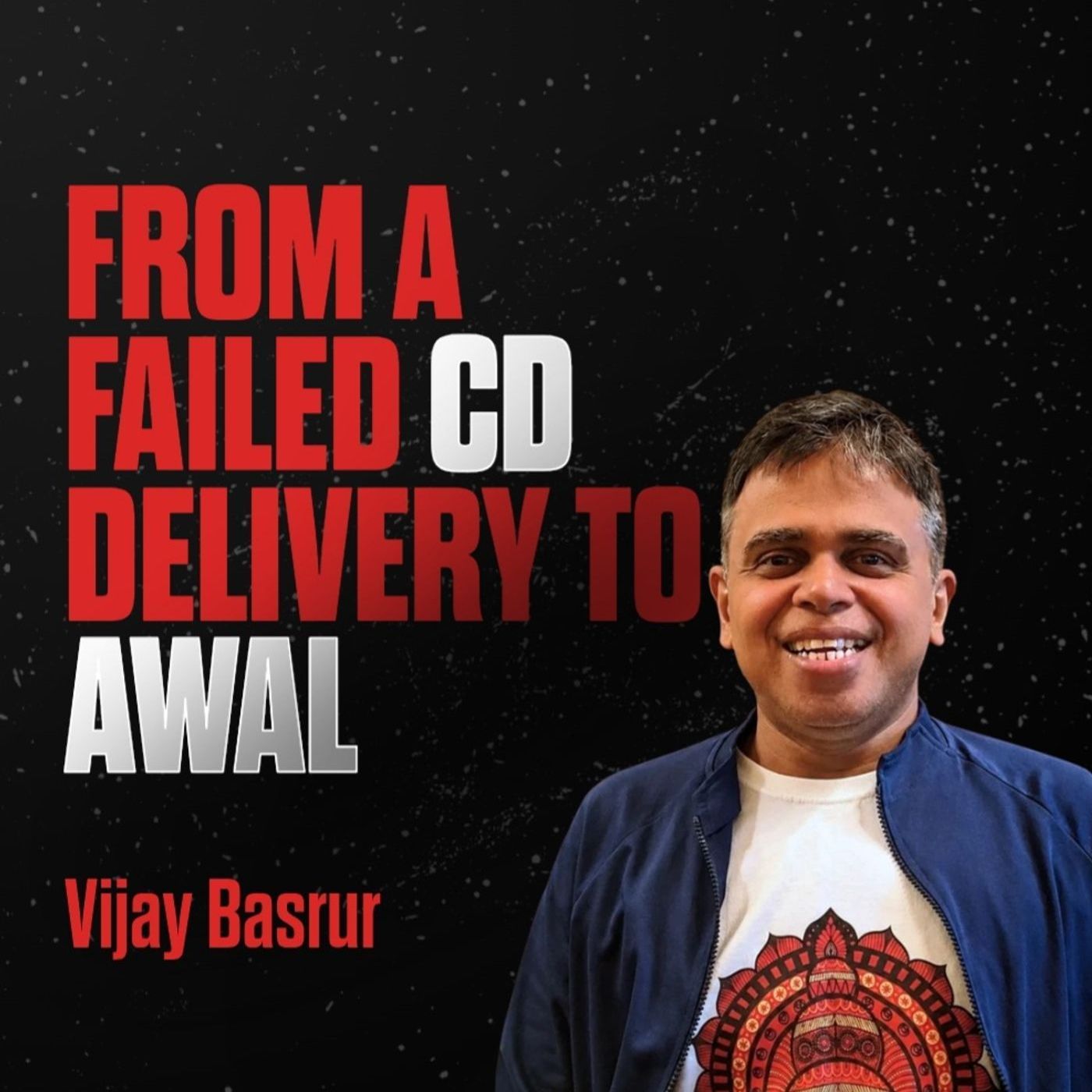
A missed CD delivery exposed a gap in India's music industry. That moment led Vijay to build OKListen, an independent music platform that spent more than a decade growing alongside a market that wasn't yet ready for it before ultimately being acquired by AWAL. In this episode of Sound Connections, Vijay shares what it was like to build a music tech company in one of the world's largest music markets while streaming, independent music, and consumer willingness to pay were still evolving. He reflects on bootstrapping the business, spending five years balancing a corporate career while keeping the company alive, and why patience became a competitive advantage. The conversation explores the realities of building music businesses in emerging markets, from raising capital and competing against global platforms to understanding when market timing matters more than execution. Vijay also discusses India's evolving independent music ecosystem, the economics behind music tech, and why founders often need conviction long before the market validates their ideas. If you're interested in music technology, entrepreneurship, emerging markets, or the business of music, this episode offers a thoughtful look at what it takes to build for the long term. Produced by Amplitude Ventures AS.
speaker-0: If I just look at it from a financial perspective, I think the answer is no. Right. ⁓ I mean, my my estimate is that if I had stuck to a corporate career for 12 years, I think I would have, you know, maybe made a lot more money, really, right? ⁓ but ⁓ would I do it again? I mean, looking back, I I surely will because I think the kind of personal satisfaction it gives you, it's just unmatched in a corporate career, right? So yes, and it's a hard choice, and I think ⁓ i it is definitely not for the faint-hearted. This podcast is produced by Amplitude Ventures, your partner in early stage startups. speaker-1: Today on Sound Connections, BJ Bassra from OKListen joins us to unpack what it takes to build a music tech company in India. We talk about keeping a business alive before the market was ready, the personal cost of entrepreneurship, and the 12-year journey that led to an acquisition by Sony Music Company. DJ, it's so good to have you in the studio. Welcome. ⁓ we've had a small conversation already, ⁓ but I'm really interested to talk about your journey as an entrepreneur in India within music tech. ⁓ you've had a rich career beyond music tech, but you've also done really well in music tech, built okay listen and sold to AWOL in twenty twenty three. ⁓ so I think this conversation today is about being your entrepreneurial journey and also the music industry in India and trying to understand that in depth. speaker-0: Thanks. Thanks, Jacob. speaker-1: ⁓ Obiji, for the people who don't know you, who are you and what do you do? speaker-0: Okay, so yeah, I mean, ⁓ I I I like to kind of call myself as ⁓ you know, somebody who likes tinkering around ⁓ you know, ideas at the intersection of technology and innovation and now music, really. I I've had a fairly large amount of experience, about nearly about 30 years of experience, out of which, you know, a large portion of it was dedicated to okay, listen, nearly about 12, 12 years really. ⁓ before that, worked with several corporates and startups, you know. And that's where sort of I think ⁓ the whole seed of entrepreneurship was growing. But yeah, primarily ⁓ and now of course I'm still doing a little bit more work on music tech in some areas. Or so yeah, largely I think it's it's just the whole the entrepreneurship mindset was more, I think, ⁓ cultivated rather than born with housecape. speaker-1: Hmm. Because you you build a company ⁓ in two thousand twelve, if I remember correctly, ⁓ that turnout well, at the end a distribution company focused on independent musicians in India and got acquired by AWOL. But if you look at your career, that doesn't necessarily naturally lead to the music industry. So could you tell about how you went into this specific field? Yep. speaker-0: ⁓ so, you know, I I I'm a I did my engineering and did my management degree and then joined like a large corporate, right? I think ⁓ working in just one year after my graduation, postgraduation and in getting my management degree, ⁓ I realized that you know working in a large company is gonna be a little kind of, you know, ⁓ difficult to work with, especially at the start of your career. So within the first year I actually ended up ⁓ joining a a a a startup called Basi.com, which was ⁓ in the auction space, which eventually got acquired by eBay. And I think that's when I really enjoyed, started really enjoying, you know, working in the whole startup ecosystem. You know, it was very early on. So, so that's when I kind of, you know, moved a couple of companies and and and a bunch of that, right? ⁓ but the underlying thing, ⁓ music has always been a huge sort of a passion ever since engineering college. You know, as I was growing up. And, you know, we always had music at home. My dad was much a lot into classical Indian classical music. So music was very much a part of the ⁓ from a consumption pattern it was very much there, right? And weirdly enough, ⁓ just seeing my dad ⁓ buy a lot of music. So we used to have spool tapes and stuff like that, right? ⁓ we the day I started working, I actually ⁓ you know, started buying music, right? So ⁓ I still remember ⁓ I paid a fell like nearly about I would say 30% of my salary, monthly salary on just buying my first, you know, CD, which was Hell Fisher by Eagles, right? ⁓ so I always bought music, you know, and and I think that somewhere kind of resonated with me as as I went along them, right? And so ⁓ working in a couple of digital companies, ⁓ digital startups and you know, one of the large corporates, ⁓ I was I was at a mobile gaming company, I was leading the operations for that, and I actually happened to stumble upon. ⁓ a very interesting band called them clones and i wanted to buy them music right and i realized that there was no digital way to do that right and ⁓ i was quite surprised because we were in 2012 you know internet was fairly you know accessible in India but but music was not able to so it to be sold online but and so I reached out to the band and they said you know they will kind of send it by post and stuff like that and I kind of said okay fine I'll I'll send it across and they send the CD ⁓ you know, I was nobody was at home. So I missed the delivery and and the CD went back to Bamboo, right? And then I figured that why doesn't this happen digitally? Right. And I just realized, did some research and figured that ⁓ there was nobody doing like a digital sale of music with, right? And I think ⁓ that was probably the moment at which somehow my you know itch to start my own company and solve a problem that I was trying to solve for myself really came together. And I said, okay, let me just try and, you know, start a company. So I think that's how I started ⁓ OK Listen, ⁓ which was actually when we started, we were more of a paper download store, right? ⁓ which was pretty much the pre-streaming era, you know, it's it's the only people who were doing it was Amazon and Apple iTunes, right? That's when you could buy MP3 files from or AS files from these stores. So we started out as ⁓ you know, as a paper download and then eventually moved to distribution. But that's how I came across my entrepreneurship journey. It's just ⁓ I think the itch I was trying to scratch and it I I I did not do a lot of research. I'll be very honest about the fact that I would not do a lot of research to figure out how big the market was, you know, what could be the money that I could make, nothing of that sort. It was just a ⁓ a thing that I said, okay, this could be interesting to solve for myself. So let me just go and solve it. So that's how it started. speaker-1: We'll get back to the specifics of you founding the journey. ⁓ but one of the things we had in our conversation before the call or before the recording was that the the payment I wouldn't call it the payment willingness of the Indian market, but but the fact that India in general doesn't pay money for music at scale, seems like a problem. Was that less of a problem in the down download area than it is now in streaming? speaker-0: ⁓ well, no, I think it was it was, I would say, still, still around because what was happening is that you know, we we were only working with independent artists, and most of these independent artists had like a relatively smaller base, you know, because independent ⁓ music was just about growing, you know. And in that smaller base of fans, there was maybe a s even more smaller percentage of ⁓ you know fans who were willing to buy music, right? ⁓ so I think that that problem was there. ⁓ the problem has got more acute now because the accessibility to music has just exploded because of streaming, right? ⁓ it was not that situation when it was a paper download, right? So the access was pretty much to, you know, the I would say the top metros, people, you know, who who were exposed to this independent bands and who love the music and then would have the, you know, urge to buy their music. So I think the problem persisted then as well. It's just that it's become even more bigger because there are A lot many consumers today, you know, than they were yeah, I would say. speaker-1: What what's the consumption pattern of small niche independent in India? Because again, from from the outside it seems like, you know, India is a country of scale. But is there still room for for niche audiences? Is is that a thing in India? speaker-0: Yeah, yeah. I I think ⁓ and I think it it's it's growing. And I think I would kind of attribute streaming to kind of accelerate that consumption. It's still it's still maybe in the single digit numbers, ⁓ but but you have to really understand India as a market where, you know, we are a very ⁓ you know film music dominated country, right? A lot of the music discovery ⁓ in India ⁓ was through films, right? So ⁓ other than Indian classical music, which had its own sort of discovery element to it, ⁓ which was mostly, you know, live performances. But ⁓ regular music was very film-driven, right? And I think I feel COVID really kind of changed the needle because what's happened is that ⁓ you know, post-COVID, ⁓ there are a lot more musicians putting out music, really. And also ⁓ the film industry has seen a little bit of ⁓ A little bit of a decline, right? So there are not as many movies coming as earlier. And even the film industry today is experimenting with a lot of new talent, right? And in a lot of cases, it's a lot of independent musicians as well, you know. So therefore, in general, independent musicians are getting a lot more, I would say, exposure today. And so I think the consumption of independent music is definitely on the rise right now, for sure. speaker-1: Hmm. Hmm. Going big back to you starting the company again, you know, the way that I've been able to read your story from my own research is it seems like you jumped full into ⁓ founding okay listen and but not necessarily been able to do that as a full time thing for long term. Like tr try to tell about how you started, how you went about it and how that journey was. speaker-0: Yeah, yeah. So I mean when I look back, it was it's a little scary actually. So I I started, like I said, you know, I just just identified the problem and I just like dived into it. I quit my ⁓ job, ⁓ went and met, went to a couple of music festivals, met a lot of musicians. And firstly, I wanted to check with these musicians, are they willing to kind of, you know, or give them music to be sold? And a lot of them were saying, Hey, there's nobody doing this. So we are more than happy to do that if you are willing to invest in platform, right? So having got the feedback from the musicians, then I went back, you know, partnered with the developer, partnered with the designer, and sort of we went live ⁓ in July ⁓ twenty twelve ⁓ with just about seven bands when right. And I think one of the bands was is a very ⁓ established band called Indian Ocean. ⁓ and we had one or two of one of their alb Babel album really. And ⁓ what happened was that ⁓ we actually paid them at the end of the month. ⁓ they they they had sold like I think about 12 or 15 units or whatever. And we had paid them immediately at the end of the month, we just settled their payment, right? Whatever was due to them. And they were actually quite shocked because they said that they had never seen, you know, money come to them without any follow-up. So they gave us a shout-out on Facebook, and that kind of took off the journey of, you know, more bands happening to work with us today, right? And ⁓ so I think so it it it went it went while well for a while. And I think then I I also bought like a Like a co-founder, a technical co-founder somewhere around 2013. ⁓ that's also at the end of twenty thirteen is when we partnered with the Orchard, ⁓ which helped us, you know, distribute ⁓ the paper download music to Amazon, MP3 stores and Apple stores. Also that partnership was very interesting and it it would eventually be the reason why we actually got acquired later, right? So we did that and it was going fine, but we realized that we were actually hitting a limit in terms of how much we could scale because we would not We were not able to invest in as much technology because we were not making a lot of money. We were just making like around 10 to 15% of ⁓ you know what what the users were paying, and because we were promising a lot more portion to be added to it, right? So at that point, ⁓ we decided that we'll go and raise some capital. So we went out, spoke to a bunch of you know, VCs, a couple of people, because that time I think the the funding space was not as mature as it is today. And ⁓ the common feedback we got was that. This is to niche an area. So it doesn't seem like that you will get scale. ⁓ if if you wanna get funded, then it's best you kind of shift to like a Bollywood or the full music sort of a thing, really broad. And which is not what excited me and my co-founder. So we kind of stayed away from it. And ⁓ eventually we realized that nobody was gonna fund us. And so we said, ⁓ this is gonna get a little because I was staring at the bottom of my bank ballet because it was two years since I had run OK lesson. And ⁓ you know, so we said, okay, ⁓ maybe we just shut it down because you know, let's it's a good shot. We gave it a shot, you know, it's not working. So we spoke to a couple of artists, and a common feedback we got from these artists that whatever, do whatever you can, but keep this alive because this is the best thing that will happen to independent music, you know, ⁓ for a long time. So that feedback really sort of you know resonated and sort of you know felt very good for us. So what we did was ⁓ We then took up day jobs, both me and my ⁓ co-founder. ⁓ he went back to his family business. I started working for corporates, but then I hired a youngster who then kept the ball rolling at the ⁓ you know, ⁓ just keeping the lights on really. And then and that's the model I followed for nearly five years. So from 2014 to 2019, I kind of, you know, did a day job, continued with the with with OK Listen and and I also hired a couple of more people because ⁓ the business was able to sustain. You know, a bunch of employees who were kind of increasing in in revenue. ⁓ and then 2019 is when I came back to it full time because you know I realized that it was time to kind of ⁓ scale it. ⁓ we were getting a lot of traction there. So essentially it was like a five years of a very painful period of you know struggling with a day job and trying to keep okay lesson you know alight. And that I think that's that was probably the most challenging part of the whole journey. speaker-1: That's so interesting. And and usually this doesn't work. Like in order to to have a founder journey and and build a company, it requires full attention for a long time. Yeah. So so what what was it about that model that worked? Why did it succeed in spite of you needing to shift your focus that much or have it that divided? speaker-0: ⁓ personally, I think, you know, it was the right thing for the market at that point in time, you know, because I don't think even if we had thrown capital at the problem, we would have scaled the business. I don't think, you know, the market was even ready. So, I mean, and this is of course just a hindsight mem thing, insight that I have is ⁓ you know, while it just felt right because you know musicians wanted the platform. And I needed to take up a job and we said, okay, we can try and make this work. But that was probably the right thing to do because you know some of these, some of these things just take time. You know, I mean, there's not a lot of revenue, but there is a gap that you're trying to solve. ⁓ and it just you have to be patient enough to you know wait on the sidelines to see a slow, a gradual increase in the market. And that's and at some point you feel, okay, now I think it's time for us to scale. And then you can sort of fire up engines, really, right? But so I think that's the only reason I think it worked because if the market was very large and we had like, you know, played a very kind of ⁓ hibernating sort of a role, we would have been just, you know, like ⁓ being ⁓ you know, just we would have been history with it, right? But I think it just it it just was the right thing that we ended up doing, probably too. speaker-1: Hmm. Could you tell a bit about what you personally went through? Because, you know, ⁓ again, these are my assumptions. When you look at the levels of responsibilities you've had in your corporate life, like these are not small positions. Like you've had significant roles in big corporates and in startups that has what I can imagine been very demanding. So it's not just because you've had like a side job, like you've had actual impactful leadership positions while you were running this. Like how did that look for you, like work wise, stress wise, pressure wise? speaker-0: ⁓ yeah, I I mean, I think i it was it was very stressful, ⁓ both from a professional standpoint and a personal standpoint. ⁓ because till the till say twenty twenty twelve to twenty fourteen, two years, ⁓ I literally was working, you know, fourteen to sixteen hours a day. And I think ⁓ and I have to be super thankful to my wife because she was super supportive. We had a we we our daughter was born in two thousand eight, so she was just about four years old. So she pretty much supported a lot in that phase, really, right? And when I started working in 2014 to 2019, I think that was even more stressful because I was doing a day job, then I had to come back and you know, also then dedicate time. So I think ⁓ it was stressful, no doubt. Right. I mean, ⁓ I think ⁓ in the first formative years, the stress was more about the financial impact on my ⁓ you know, savings. And ⁓ I think in the in the five years that I did a dual thing, it was just the pressure of trying to do, you know, you're really stretched trying to, you know, keep your own gig going and also do a day job, which is very demanding. Because I was, like you said, I was, you know, leading a couple of projects. So it was it was fairly demanding that way, right? So ⁓ it was personally very taxing in the five years that I did a dual thing, and it was, I think, ⁓ professionally in terms of financially, it was very taxing. ⁓ but somewhere I feel, you know, it's and I think this is something that you can only experience once you become a founder, is that when you're really passionate about something, it's it's it's that what keeps you going, right? I mean, i it's a very hard journey, but when you look back, of course, it looks it ⁓ I mean it it it it feels nice. But I think there's that that thing of thing, okay, you are on to something, you're trying to solve something, you know. ⁓ because we used to get really ⁓ excited by, you know, fans saying, ⁓ we loved your website, we loved the music, I discovered this artist. So that kind of gave us a lot of ⁓ you know, ⁓ kick, I would say, right? And I think that that's what kept us going. But yeah, but the pain was real. I mean, I think ⁓ can't take away from the fact that it was quite a difficult time actually. speaker-1: We'll we'll touch upon your upon your journey again. But one of the things that I keep on meeting on this podcast, again, I've done 160 episodes now, and I also have a career in music tech on the side, ⁓ is the value of the journey from a capitalistic perspective. Like, you know, music tech in general i is you know, has limited opportunities when it comes to financial upside of selling a company. ⁓ but then yourself also mentioned that. India, at least at that time, but also also now perhaps still have a fairly under I'll call it immature, maybe that's the wrong word, but like capitalization to the music industry. So did did this journey make sense? Like, you know, this twelve year journey, do you think that financially made sense for you to to have that much stress and effort? speaker-0: I if I just look at it from a financial perspective, I think the answer is no. Right. ⁓ I mean, ⁓ my my estimate is that if I had stuck to a corporate career for twelve years, I think I would have, you know, maybe made a lot more money, really, right? ⁓ but ⁓ would I do it again? I mean, looking back, I I surely will because I think the kind of personal satisfaction it gives you, it's just unmatched in a corporate career, right? So yes, it's a hard choice. And I think ⁓ i it is definitely not for the faint hearted. and I think it's a very difficult step to take. And I you know, I a lot of my colleagues and my friends keep talking about, you know, ideas and that that's brewing inside their brains and stuff like that. But I think it's it's very difficult for somebody to say, Okay, you what, I'm gonna chop this cushy job and this give it a shot. I think that that ⁓ thing is definitely ⁓ the the one that's worth doing. But yeah, but from a financial perspective, ⁓ it's it's ⁓ it was not a good idea. But I think today, if you look at it, the situation is very different. You know, like I would say today, ⁓ becoming an entrepreneur is ⁓ not as hard in terms of a financial thing because you know if you have the right idea, if you there are a lot of people willing to fund you, there is enough maturity in the market that you will be able to see some traction And ⁓ either shut down very quickly if you feel there's no product market fit, or ⁓ at least get some good feedback from market to kind of you know it trade or change your product or whatever and just go ahead. So I think the situation now is far far better compared to I would say like, you know, like twelve years back. speaker-1: Yeah, y you know, I I'm also I'm also fairly technical and and I can also see now just with with what's available of technology, the barrier of of getting capital is maybe less. So you can bootstrap a lot more, you can take higher risk and where the actual effort is mostly your effort, ⁓ and you can do it with a leaner, smaller team. ⁓ so I'm I'm also I'm a total fan of how technology has changed that because the risk is so big when you're an entrepreneur, but But if you can lower the financial risk a tiny bit, I think that can also make it much more attractive, especially in a space with music technology where the return might not be as comparable to to the cost. But you say you still you still believe in it and and maybe more so now than before music technology is still attractive. You were a founding member of Music Tech India. Can you walk me through the reasoning for that? What what is it you believe is attractive enough to to form an association around this? speaker-0: So I think, you know, ⁓ we we actually formed this association primarily to kind of, you know, be like a sounding board, like a guiding board for some of the new entrepreneurs who are coming in essentially, right? Because I think one of the challenges ⁓ about the music business, ⁓ you know, is is anybody who listens to a lot of music feels that they can solve the problems in the music industry, right? And that gives so the barrier to think that you can solve a problem in the music industry is very low because you just you'll say, ⁓ I am like a huge music fan. So we we realized that a lot of lot of people were actually spending time and effort and money ⁓ in trying to solve problems which could be very, very difficult, right? Or there could be some industry ⁓ you know ⁓ situations which They had no control of and were not able to kind of you know change, right? So ⁓ so the idea was to set up like a hey, ⁓ a bunch of people who like you know, been in the entrepreneurial area in the music business for a while, and just people come and pitch ideas and talk about what they're building, and then we just give them feedback. So, you know, it just helps them to kind of you know get a little bit more ⁓ like a reality check on what they're trying to build. And ⁓ then of obviously if there is something interesting, then we can sort of guide them to. people who would be willing to either, you know, give them their first set of be their first set of customers or maybe people who want to invest in in in this area. And I think that's where we are trying to make sure that the it's like an ecosystem that ⁓ you know, is more like a ⁓ more like a friend rather than an institution really. speaker-1: Hm. Yeah, it makes sense. I think the The music industry very much so is is people who pursue entrepreneurial pursuits out of passion for music, out of passion for solving the problems. Where Amplitude Ventures is a venture studio that I lead, we work in many different industries. And we we meet with a lot of different founders that are not for music, ⁓ traditional industries, ⁓ fintech, agriculture, ⁓ whatever it is. And and a lot of these entrepreneurs are very motive. About the opportunity, the financial opportunity of solving a problem. Well, music oftentimes is you're passionate about the content, you're passionate about what music is, and therefore you build businesses to solve that problem rather than for financial return of building a company around that. And even though that's that's beautiful and and I I love that to some degree, that also means that oftentimes you go into it with a bigger naivety than what others might do. You yourself said, you know, you didn't necessarily scope the market. You didn't really see was this realistic because the love for solving the problem was so big and maybe overshadowed what usually lies before that, which is can I make money? and and I think associations helping people navigate that is becoming quite key. I've I've also become very active in music technology in Norway for that very reason. Just because if we want to make this a better place in the future, ⁓ having places of information and experience to be shared is quite essential for making this better, I guess. speaker-0: Right. Yeah. Absolutely. That's right about that. speaker-1: So so what is it you see, we'll come back to your journey in in two seconds, but what is it you see in India right now when it comes to music tech? Like is there a lot of entrepreneurs pursuing this space? Do you believe that a lot of projects that will be successful? What is sort of the status quo right now? speaker-0: I think, you know, I mean, ⁓ so it it is it is improving, I would say. So there are a lot of, but I think a bunch of people are trying to, you know, work on the fan engagement space right now. So from that, you know, perspective, I know that a bunch of people, ⁓ entrepreneurs in India who are trying to figure out, you know, how is how to best engage, let artists engage with fans. You know, ⁓ there are a couple of people who are actually building interesting tools for, you know, like a dog. ⁓ which law station that plugs into your existing sort of power player or whatever. ⁓ so there are, I think, ⁓ there are interesting things happening, but but I think it's probably not ⁓ at the cutting edge of the music and tech as we see it in the West. ⁓ but I think this is it just ⁓ just a curve that we'll have to go through as we churn through some of the ideas that are coming right now, some of the problems that people are solving. To be able to get into larger ⁓ you know, I would say music tech ⁓ opportunity, right? So for example, had Mansour on your podcast earlier. I think Mansour is doing a great job in in with Beethoven, right? And I think ⁓ so those are that's a great example, you know, ⁓ around that. ⁓ there is ⁓ there's MadWorks, which is opening up ⁓ a new distribution platform, which has been doing like which is one of the early, like late entrants into this space, so to speak, right? ⁓ and but on the fan engagement space, there are like a bunch of startups who are doing some stuff. So yeah, I think we are seeing a lot of activity. ⁓ but I feel we are a couple of maybe years away then from you know building really cutting edge ⁓ music tech companies in India. speaker-1: So try to explain to me a tiny bit the for people who don't know India, including myself, I don't know too well, even though I have some exposure, the the relationship between innovation versus execution. Because ⁓ India, the last thirty years when it comes to execution have been world class, right? If you wanted to get something done, go to India. But how what's the what's ⁓ India's relationship with innovation? So you say yourself cutting edge, something new. Is there is there a difference in how that works, culture in in tech? speaker-0: ⁓ I think in you know, I mean, ⁓ I think that statement that I made is not true for in general tech, right? I mean, there's a lot of stuff happening, let's say, in the finance space, in the in like the payment space, you know, in e-commerce, in quick commerce. There's lot of stuff happening which is like, you know, we're launching s ideas and products and services even at scale. In India first, even before it's launched in the West, really, right? Like Quick Commerce is like a huge thing in India right now. I don't think Quick Commerce is even like I'm touching anywhere in the West to the scale at which we are seeing right now. So yeah, in general, tech, I think we are very good at innovation. You know, I think ⁓ India is is really at par in the West in terms of you know being able to kind of you know innovate. ⁓ but I'm my specific thing was around music. I think that seems a little bit of a challenge. ⁓ you know. ⁓ I'm also I think I don't know with Maybe it's the right time, but but the idea is, ⁓ or I don't talk about it, I mean, is that music in general is is is being a little hard to monetize in India. And I think and that is probably the fundamental reason, according to me, that you know, money doesn't flow into a you know, either the in the innovation or the startups of around the music space, because the market is not growing rapidly. You know, it is it's of I would say crawling to a certain extent, you know. And coupled with the fact that over the last couple of years, a lot of local DSP platforms, you know, ⁓ have either shut down or they have just gone to paid only. Right. So, due to which the overall market, I think, has shrunk a little, you know, and which is ⁓ definitely a challenging time for you know people to invest in innovation, really, right? Because when when chips go down, ⁓ people tend to take ⁓ the sentiment is that okay, let's let's hold it out for a while and then kind of come. speaker-1: You know, I I might be wrong about this because I I don't know the sort of macroeconomic perspective of music in India, but one of the things that I at least see from the outside is a lot of these big players, let's say Spotify, they're they're really fighting to take a position in India and have done so for many, many years. And music in general has been commoditized by streaming platforms and so the value, the the associated value to music has definitely decreased the last twenty, twenty-five years. But I know, especially in these sort of markets that are a bit untapped, like India's definitely taken streaming now, but but they there tends to be a push towards making this really affordable and basically subsidizing the entry into a new market where Indian would be one of the. So is it again, this is a question because I don't know, the subsidization of ⁓ stream platforms to become very, very accessible and affordable in India. Has that been a part of making it even less ⁓ possible to monetize music? Or what's the underlying factor as you see it? speaker-0: Yeah, yeah. I mean, I think ⁓ I think the the larger challenge has been that, you know, ⁓ and this is this is this is not only true for music, it's ⁓ true with a lot of, you know, I would say digital offerings in India where you want to be able to reach a certain scale before you start monetizing, you know. And I think ⁓ we've seen that across especially with, you know, everybody calls it the geo effect, which is after twenty sixteen when internet became really cheap in India. Today internet, I think India is probably one of the lowest priced ⁓ you know. countries from terms of internet access, right? ⁓ I think that's when ⁓ digital products or services have really exploded. And I think in general, the the philosophy is that I need a larger, you know, like a larger audience ⁓ to experiment or try the product, ⁓ after which, you know, they might be convinced to pay. Right. So with music specifically, what's happening is that you know the same services available across different, you know, companies, right? So whether it's YouTube music, Amazon music, Spotify, you know, Apple, everybody has the same music, really, right? So I think that's what makes it even challenging ⁓ to be able to have one platform convert into paid user. so I think ⁓ Spotify specifically, you know, ha has done a great job at kind of you know changing the mindset, you know, in terms of being able to, you know, just open up an app and listen to music. And I think over the last couple of years, they have done a very good job in terms of, you know, at least. Shifting the needle in terms of people wanting to pay for subscriptions. Right. ⁓ so I think it's I can completely imagine how difficult it must have been for them. ⁓ but but I think there are signs now that you know there are more people willing to pay. Of course, as a percentage, it's still much lower than any global standards. ⁓ but but that needle is moving, you know. And when you're looking at a very large population, even if the needle moves by a little bit, I think it can make a significant impact. So I feel Yes, ⁓ the the size of the market definitely sort of needs the fact that you need to be able to open up a very subsidized layer of your service for a while and then you can start slowly climbing on. And I think that's where I think all these platforms are now moving towards. And and hopefully in the next maybe I would say four or five years, we will see a far better maturity model in terms of paying for access than what we have. speaker-1: That makes sense. ⁓ back to your founder journey. So as far as I can see in two thousand nineteen, you found it attractive enough to go back and and work full time at OK Listen. Like what what was that decision? Like, how did that look for you? speaker-0: So ⁓ the decision also was, you know, ⁓ was driven by the fact that ⁓ we actually had a term sheet from one of ⁓ in one of the Indian DSPs, you know, ⁓ which eventually did not materialize, honestly. ⁓ but we we got enough of feedback from them to say that ⁓ you know, look, ⁓ why don't you come here full time and just drive this journey? Because we see potential. And ⁓ I think that was probably a The most important feedback for me to say that there was validation from a from an investor, whether it I mean, my point was not that it was an Indian DSP, but any external investor giving you confidence that okay, now this business can scale can do wonders with your confidence levels really, right? So and I think that's I I thought okay, this is great. Now that we have that validation, then just let me just come through. So I think that was a reason I kind of, you know, took that ⁓ shift and just quit my ⁓ you know full time day job and came OK full time. and ⁓ while that termsheet did not work out for us, ⁓ we got lucky because you know COVID hit in 2020 and ⁓ we were very fortunate during the COVID COVID period because there was so much music that was coming out and we had already set kind of you know the the organic base for artists to kind of reach out to us. So we just kind of exploded in COVID. And I think ⁓ In hindsight, again, I don't know whether it was pure luck, ⁓ but I was there to kind of, you know, manage it full time with the whole team. So that kind of really helped. speaker-1: And and were you the CEO of the company the whole time, also while you were working those five years? Yeah. Okay, so it's coming back in and full focus and that must have been a risk, I guess. You've had five years with like stable income and and some reliability going back into being a founder. How did that look for you? speaker-0: Yes, I was. ⁓ well, like I said, I mean, ⁓ it was not as bad because, you know, I had a financial cushion which I had built over the last five years. So it didn't feel that bad. ⁓ but but we were seeing growth. We were, you know, ⁓ revenue was increasing month on month. We had more artists coming in. ⁓ a couple of team members were doing very well in terms of, you know, ⁓ sort of communicating to artists that hey, okay, listen is a great place to come and distribute the music. So I think that The numbers were looking far better than let's say what I was with what it was in 2012 to 2014. ⁓ So it didn't, it didn't feel like much of a risk, honestly. It just felt that this could be the last push or another push that I could give wholeheartedly. And I think somewhere in the back of my mind, honestly, and I think it was probably because we had that turn sheet from the Indian DSP, I felt that, you know. it could be the time that I could really push harder and maybe get an exit. Right. So I mean I'm just thinking at at the back of my mind, maybe that was something I I feel could be a reason where I got a lot more conviction to come back it I get full down. speaker-1: ⁓ a weird question, but I think it's interesting. ⁓ About, you know, maybe we can get an exit. Was that also some sort of trying to justify the cost of the journey? Like, okay, I I need to have a return investment to make this made sense. speaker-0: Yeah, I mean, I I I yeah, I think yes, it is. Also, what I felt is, you know, somewhere I also owed it to the team because, you know, I thankfully I had a very good team. ⁓ and most of them joined ⁓ purely for the passion of music, stuck around ⁓ and continued to kind of ⁓ you know, ⁓ you know, do very well. And ⁓ in fact, one of my team members went and joined Spotify because, you know, he he got a really good role there. He joined Spotify. So the market was opening up. And you know, a couple of them decided to stay back, you know. And I thought key maybe, I mean, while yes, it was also for me that I had to figure out a way to kind of justify the time that I had spent, but it also for the team that I felt that, you know, if we do get a a very small exit or whatever exit, then you know it could be worth a little bit more of their time that they spent there. So I think, yeah, the it was at the back of my mind to ⁓ justify this from a slightly from a financial perspective as well. speaker-1: Hmm. So so for the three years ⁓ you rejoined the company full time and and to you exited, right? That that was a three year period where you before you ended up selling the company, right? Yeah. And and was that a longer journey than expected when you came back and said, okay, maybe we can exit this. speaker-0: That's right. Yeah. ⁓ yeah, I think it was a little little frustrating ⁓ experience because what happened is that ⁓ you know, my team had a complete control over the operations and all of that stuff. So a lot of my time was just spent meeting up with, you know, potential investors, you know, and stuff like that. And and it was frustrating because, you know, it it it the process just took really long. You know, it it kind of kind of dragged along and you know, we could We could have we'd have to wait months to either get to move to the next step or face rejection. So I think it was more frustrating, you know, ⁓ though that a couple of years, ⁓ because I was looking at a problem where I had very little control. Like so weirdly enough, the business was doing very well. You know, I mean, we were growing, but I was focused on, you know, trying to figure out either we got an investment or an exit. And that path. turned out to be a little bit more frustrating. But I was still thankful that I had a good team taking care of the whole business and I could then just focus on this pretty much full time. speaker-1: So s so that's also a quite sort of ⁓ unusual position to be in, right? Because in most founder journeys, ⁓ they're so stock in operations as well that it's really hard to get the time to to look outwards. And you know, that that's also been my final journeys has been a big issue and that's only something I've really figured out the last year of how to get out of operations to actually be able to think bigger to to travel to to talk with donors and investors. ⁓ So was that the majority of your time like you spent on like how do we how do we get this to the next step? Is that what you spent the three years on? ⁓ how what was that journey? speaker-0: Yeah, pretty much actually, you know. ⁓ so I would say I would I was spending maybe like twenty, twenty five percent of the time in operations or business, but seventy percent of the time was spent in talking to people, figuring out how we how we could either get in mo get in money as an investment to make the business bigger and and and take it to the next level, or you know, have conversations with ⁓ people who are interested in, you know, buying us out, you know. And ⁓ yeah, pretty much that was where I was focusing my time. speaker-1: Was the whole journey bootstrapped more or less? Or did you take in capital early on? speaker-0: No, we d ⁓ didn't take any capital. It was pretty much bootstrap. speaker-1: And and you know, obviously that's quite difficult, ⁓ to to do that. Is that you you say yourself that the sort of the market has matured. Do you believe that had something to do with the timing of the market? Or has that changed? speaker-0: Now? ⁓ yeah, absolutely. I think it's just spamming on the market. It has changed now, for sure. ⁓ but I I don't think, you know, ⁓ music tech or the music investment in music businesses is as mature as the in general, say consumer tech or health tech in India. Like, you know, I would say pure tech, consumer tech, health tech, you know, is is a lot of people are getting funded because there are genuinely a lot of people trying to solve very different problems, you know. Whereas in music tech, what happens is that, you know, the focus is relatively very small because there are not as many problems. I mean, the fundamental problem being people paying for music accessory. And that's the largest problem, you know. And ⁓ you can't go and solve that because you can't go and solve that for Spotify. Right. ⁓ but so you solve for other things like, you know, maybe ⁓ look at maybe curating music venues or curating ⁓ curating being b being a curator or you know, helping the You know, ⁓ artists have more live gigs, you know, or or reach out to fans. So there are a lot of areas around there. But but I think the maturity curve is definitely more than what it was, say, five, six years back, but it's not nowhere close to what say consumer tech, health tech sees in India. speaker-1: Hmm. But but founders today in India, in the music and audio tech space, do you see them getting capped? speaker-0: ⁓ it's it's tough, but yeah, some of them do get. And ⁓ in some cases there are artists who are who have done very well for themselves, are putting in money, which is sometimes very hard to need to see, you know, because then that's like a true validation that the artist himself or herself believes in the problem that the entrepreneur is trying to fix. Not many instances, but yeah, that's that's that's it ha there have been one or two cases. ⁓ but ⁓ but largely I think ⁓ it's still not as easy, but It's easier than like say five, six years back, for sure. speaker-1: So you you ended up ⁓ you know, selling the company to AWOL and and ⁓ Sony, which was also owned Orchard and that that I guess that's the whole combination and and AWOL that got sold to to Sony. Like try to explain that journey and how that conversation came about. speaker-0: Yeah. So like I said, you know, I mean, I was trying to figure out, you know, what was going on, everything of, you know, I mean, who could we talk to and stuff like that? And ⁓ I remember early 2021 is when we read that Sony was acquiring AWOL, right? And ⁓ I was like, ⁓ and we always respected AWOL quite a bit because we are big fans of how, you know, the AWOL brand was turning out to be, the kind of artists they were putting out. It was fascinating to see from here, right? And so when we figured this out, I kind of reached out to, you know, ⁓ the people I New at Orchard. And ⁓ weirdly enough, it was the Orchard global team that was actually negotiating the deal, right? ⁓ they were negotiating on behalf of Sony kind of you know close the transaction. So I kind of just sent a feeler that, hey, look, I mean, ⁓ I know this because ⁓ they while they announced the deal, I think they had like a they had a cooling there a period where I think the the anti-competitive commission in the UK had to approve it, or you know. So they had like a, I would say six, eight month period ⁓ till the time I think it was completely like, you know, cleared off by all authorities, really, right? And so I had just sent a feeder that, hey, look, whenever this thing happens, do you think it might be a good idea for them to acquire us and launch in India? Because it'll be very interesting. And so the so the the feedback I got from the Orchard team was that this could be something we might consider. But it's too early for us to kind of you know think about it right now because there are a lot of things, a lot of moving parts. So I said, okay, great. I mean, even if it's on your radar, we'll hang around and we'll maybe come back to you after ⁓ say ⁓ some time. So that's exactly what we're what we did. But of course we were trying out a lot of other conversations as well. And when I reached out after I think about six, seven months when the deal was completely cleared, ⁓ you know, we got a very positive feedback saying, Okay, this this thing definitely looks like we can evaluate it, right? And I would say this was probably. Third quarter of ⁓ 2021. And so ⁓ that's how the conversation started. And then, you know, it took a long while. ⁓ you know, ⁓ Sony being Sony, obviously they had a lot of people who had to be pulled in to kind of have a conversation. And because we were based in India, it made a lot of sense for the Indian entity to acquire us because that would be a little bit more tax friendly. And so there was Sony India that also then came into the picture. So the whole process took a really long time. Like I said, maybe it started out in third quarter of twenty twenty one and eventually we got acquired in like the second quarter of twenty twenty three. And so it was a fairly long, long ⁓ conversation and and period. But but yeah, but I think the Orchard connection definitely helped us. speaker-1: So when such a acquisition talk takes so long, like one and a half years, that maybe also affects, you know, the effort put into raising capital. Like were was that a compromise to the business as well? That okay, we might get acquired so you start acting in that different way. Like what was the what was the how did that change the business while you were maybe getting acquired? speaker-0: No, ⁓ actually thanks for bringing that up really because because it did. I mean, you know, it it's like, you know, sometimes you're very you're feeling very positive because something is gonna happen. ⁓ but so you kind of then get a little bit swayed by that kind of you know wave really ⁓ and your business gets affected. And it did. And and weirdly enough for us, what happened also is that around that time is when, you know, ⁓ Tune Core Became a little bullish in India. ⁓ you know, CD Baby started having operations in India. So we were facing competition as well, you know, and and ⁓ we were seeing that impact on the business. And we were not able to push ⁓ as much because we were not able to invest more money because that was not nobody would give us that because we were having a very ⁓ you know ⁓ advanced conversation with the Sony team. So it was, I mean, it was a very weird time where. At one side there was a lot of positivity, but on the other side, we were seeing business slip away, you know, and some of the metrics were looking down, you know. And but what we did is we relayed that information back. And we said, look, hey, this is the situation here. And, you know, if we don't close it, then we don't want to be sort of, you know, ⁓ measured on what is happening right now because it's a very different, difficult period for us because we're not able to put in money. And thankfully, I think there, I think the Sony team really understood that. They said that's fine. This is the process will take time. And we got an assurance that they're not gonna walk away. And they're saying that's whatever is the shortfall you feel right now, that's okay with us. I mean, it's just a part of any transaction. Or in in some cases it does happen. So I think with after that reassurance, we were a little, you know, like ⁓ but we it took a while for that reassurance to come in. But yeah, it was a very difficult time. And and weirdly, nobody has asked us this question. So it's It's interesting for me to relive that time because it it was a very weird thing. You know, we we had we were a little bit on a celebratory mode, but at the same time we were kind of worried that, you know, we are not ⁓ the numbers are not looking very strong. speaker-1: No, it that sounds extremely conflictful. ⁓ because you know, the the ultimate consequence of of not growing and not staying competitive is is dying, right? So like it might be that the the exit itself would be the one that could kill you, ⁓ which I imagine is it's a very weird place to be in. ⁓ but the acquisition ended up happening. ⁓ do you believe that was a success for your team? speaker-0: ⁓ I I think I think yes. I I would at least I would like to believe ⁓ it it was ⁓ because ⁓ I think ⁓ after having worked for many years as a very frugal company, as a very frugal startup, ⁓ getting getting like an opportunity to work in a very large company like Sony, getting access to you know global resources, ⁓ being in a in a office filled with people who are trying to solve Issues for the for the global ⁓ for the music industry, especially the exposure to our global team and kind of the artists of doing. I think that experience just that it's it was a very different phase, you know, for for the team. And I think all of them sort of prived on it really, right? And ⁓ I I think it was a great ex the exposure was fantastic. I think I couldn't have asked for a better sort of landing for the team. ⁓ in you know, sometimes you might end up going into an acquisition, going into a company which ⁓ may not have the right kind of, you know, ⁓ I would say the levers of the value system really. But I think there we were we were super happy with with the whole A Wall ⁓ exposure. And I think the global team was very, very warm and welcoming to us. And we got great help in, you know, just getting used to the A Wall ecosystem because the business was very different. It was a little different than what we were just used to doing really mass distribution. There it was a very curated place of mo it it was a little different, but it was very interesting. speaker-1: And you ended up having a role after the acquisition in AWOL as well. and was that in order to integrate the company into their way of doing things? speaker-0: Yes, that's right. So I I had a commitment to stay for about a year. ⁓ and I I I stayed for nearly eighteen months. ⁓ but yeah, I think the the idea was, you know, ⁓ let's kind of you know get the whole ⁓ because it was like a very I think it was largely an accounting ⁓ exercise really, because you know, we really had to merge all the accounts ⁓ from a financial perspective very well. ⁓ from a business side also, what would happen is that we actually had to shed out shed off some artists because we had a very long tail of artist thing, right? Which then makes sense for AWOP. So we have to really figure out what was the right way to kind of, you know, ⁓ maybe ask them to migrate and and figure out what was the right process to migrate the artists who want to who want whom we want to keep on AWOW, right? So I think it was very operational you know, hand holding that really required somebody who understood the OKS and reasons very well. So yeah, I think la the large part of my time in the first year was spent in just making sure that, you know, we were kind of making everything in a seen seamless way. speaker-1: Hm. But but your position was ahead of India and and and South Asia. So I can imagine there was there was more to the job than just integrating your ecosystem into theirs. speaker-0: ⁓ yeah, absolutely. I mean, ⁓ this while this was something, but you know, it it ended up being like as a small part, you know, we really had to we really had to launch the brand into India, you know, ⁓ talk to a lot of artists, you know, ⁓ also identifying, you know, I think ⁓ one of the challenges in the licensing model, which is what largely the Evolve model works around, is where you know you are really investing some money in artists or at least asking, you know, budding artists to come and join you, is that you are as responsible for their growth in terms of their earning capability ⁓ as much as the artist themselves is. So you really have to be able to, you know, make the right choices of picking up the artists, you know, make sure that they are also aligned towards ⁓ really make you know hustling in the first couple of years to kind of, you know, increase your fan base, grow your consumption, all that stuff. So it was a very different ⁓ approach towards the artist ⁓ signing. And so that was quite quite new to us. And so all of us were, you know, really we went all across ⁓ the independent sector to kind of, you know, bring in a bunch of artists on the fold. speaker-1: what was your what was your angle in AWOL? Because you and if you look at your career, you come from heavy operator, heavy leader, heavy business, heavy technology. But then AWOL, at least as I understand the brand, is like heavy ANR focused as well, right? It's really about developing the career. And obviously you have operations and business associated to it. But yeah, but again, my association to AWOL like you must have been very, very hands-on also with the music to some degree. Like you were really looking at Does this musically this artist have relevance? But what w how did that look for you? Did you have it was that a big part of your role? speaker-0: not as ⁓ so the way I was so I think, you know, because of ⁓ the age that I am at, I I really felt my team members were far more closer to the musicians, ⁓ you know, in terms of just ⁓ the age group and the kind of music they wiped to, all of that stuff really, right? So largely the core A and R decisions, I think the conversations were ⁓ you know, led by them. And while of course I I I played a role, but ⁓ I would because I I think I'm I'm I'm not very good at ANR specifically. That's not one of my four days. But I think my team was was learning all that very well and the Evolve team really helped us to understand, you know, what's the NR journey, right? But at the end of the day, it's it's the financials that have to make sense. It has to be, you know, made sure that you know it sort of aligns with the the larger vision. So those I think from a from a business standpoint, right? From a strategy standpoint, is where I think I contribute a lot. The core AR process, while I was overseeing it, it was largely led by the team, because I think they were far better off being closer to the artists than I walk, honestly. speaker-1: A a weird question, but this is my own personal sort of curiosity. It might also be relevant for listeners. My business partner, he's from India, ⁓ and we talk a lot about, you know, the differences in cultures and and the way that he describes it, I might be wrong because India is, of course, is a is a very big country. Is that in tr traditionally in India you specialize a lot. Like it's it's sort of like you pick a lane, you really stick to it, and you become really really, really good if you want to have a corporate career. And there's less so jumping between industries and And trying something new, which is which is you we see a lot of entrepreneurs doing. Like, was that a very ⁓ challenging cultural thing for you to be able to have such a rich career before then a founder, then in a music company? How is that shift for you? And and how is that generally in in India? Is that is that a thing? speaker-0: My experience is like a a normal behavior. Like, you know, ⁓ you're right. I think ⁓ largely ⁓ when I see a lot of my friends and stuff like that, it's either let's say somebody who's doing let's say IT will stick to the IT industry for a very long time. You know, somebody who's doing marketing will spend a lot of time in a specific organization and then maybe move to a marketing role in a different organization, right? So yeah, it's a specialty driven thing or it's a industry driven sort of thing, right? That's how the careers move in India. Right. ⁓ so ⁓ but I think that's changing now, honestly, if you ask me, right? Because a lot of the new companies that are being founded today ⁓ don't have very bracketed roles. They can't afford to, you know, hire ⁓ one person like marketing and then three people in this team and one person in say, you know, media buying and another three people under that team. So I think that doesn't work that way, right? So I think ⁓ the new companies that are coming up have far more, I would say, a cross ⁓ like you know inter-department sort of responsibilities. So they are not as specialized. So ⁓ but at the same time they could be very good at but largely they could be specializing in industry, right? So somebody who's doing some crazy work in a quick commerce could end up, you know, mm moving to another quick commerce player for a better job, right? So yeah. So I think it's it's changing a little bit. ⁓ but so for me, ⁓ I think yes, if I think once an entrepreneur What I've realized is that once an entrepreneur, you realize that, you know, when you join a corporate, ⁓ there is a a lethargy in in execution, right? And it's for the right reasons. Because, you know, when you're w working in a large corporation, it has to follow a process, right? But sometimes you just can't ⁓ adapt to it because you feel that, ⁓ you could do these things much faster with that. ⁓ so I think that's the c that's the cultural thing that tends to ⁓ affect entrepreneurs moving back to corporates ⁓ because you've you're used to sort of executing very fast. But when you move to a corporate you feel that you have to really slow down. And I think that's the challenge that you have to either get used to it or then you just like you know bail out, you know, kind of thing. speaker-1: It makes a whole lot of sense. So when I when I look at at least a LinkedIn, ⁓ it's not totally clear for me what you're spending your time on now. So what are you doing these days? speaker-0: So I was ⁓ I was actually consulting with a bunch of folks and ⁓ right now actually ⁓ I'm doing I'm building on an idea ⁓ in the lyrics space actually. So I would say, you know, I'm just trying to do on something because I just feel that ⁓ and this is just conversations around with a lot of Indian content owners and stuff like that where they're struggling with, you know, lyrics as a as a as a piece problem that they're trying to face. So I'm just trying to ⁓ you know, try and see if I can solve a problem for that. I know the other friend of mine, we're just trying to solve something in the health tech space, largely from ⁓ you know, for ⁓ caregivers who are actually taking care of elderly parents and so forth. There's lot of gap in how that process is managed in India. So yeah, I mean, and so I think ⁓ and like you just said, and technology's got so advanced, you know, it's your barrier to experiment, try out a couple of ideas using, say, a clot code or X or whatever, is very, very relatively easy, especially if you come from a product ⁓ you know. Scanpointing, right? And ⁓ you are able to do that much quicker. And then you get quick validation saying, okay, is this will this work? Will this not work? Kind of included, right? So yeah, I mean, I think so that's that's what's keeping me busy. ⁓ I don't know, let's see if when time comes, we'll kind of figure it out to launch it or but the idea is just to now keep gnawing at a problem and see if I can find a ⁓ a solution. It's very similar to my early OK lesson days where you know you spot a problem, you want to fix it, it just gives you a lot of input. lot of satisfaction there's trying to solve a problem. And yeah, if a business emerges, great, nothing like it. speaker-1: Amazing. So basically you're you're on the on entrepreneurial path again. ⁓ and and that's what's scratching. speaker-0: ⁓ Yeah, I think I I just realised that gives me a lot of ⁓ joy, so might as well keep doing that. speaker-1: Vijay, thank you so much for joining the call today and and having a talk with me. ⁓ I I've learned a lot and I think it's really interesting to follow India and and South Asia ⁓ and what's happening in the music industry. Obviously it's it's an enormous market, very, very developed market. ⁓ but in music, there's a lot of things that's not yet manifested itself in in the commercial potential. And I think that the global scene will benefit from that. Like again, globally music. are undervalued and there's a there's a big difference between what the actual human value is of the industry and the what the what the financial value is. And I look forward to markets contributing to that growth enormously. For example, India. So so this can be more attractive. It's a great space to be in, but as you yourself point out, maybe it's it's not comparable to what other industries might provide of of financial upside. But I hope myself that In a few decades that that might change, but it takes time. It takes a lot of time. speaker-0: No, no, yeah, absolutely. I mean I'm hopeful and I'm very positive in general. ⁓ and I think, yeah, very, very interesting times for sure. You know, I think there's a lot of potential in India. Yeah. speaker-1: Thank you so much for the call. ⁓ thank you so much for joining and ⁓ we'll talk soon.