
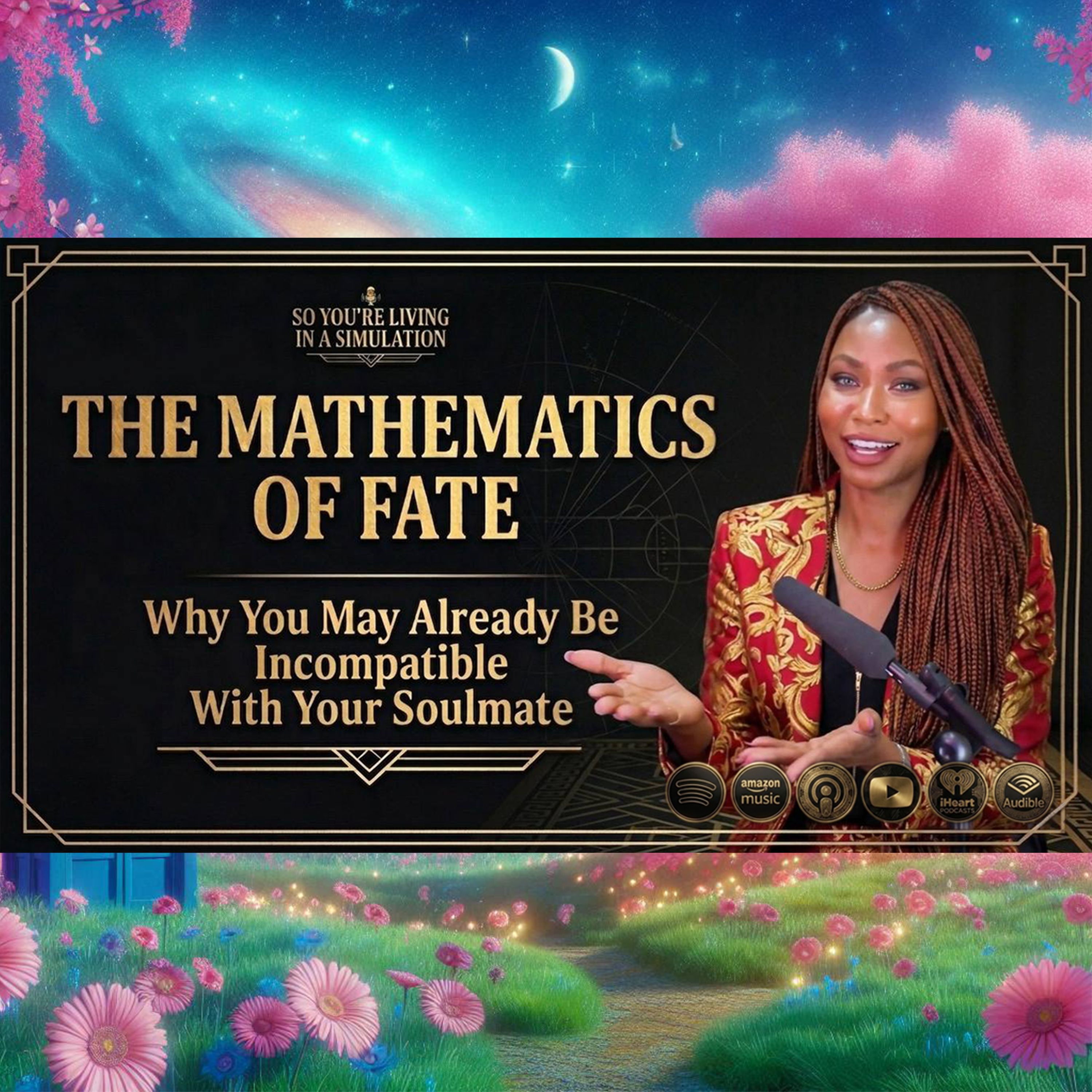
So You’re Living In A Simulation · @Joli.Artist
That opener was from the New York Times Style section framing, and I dropped it when switching registers because the Atlantic tends to lead with thesis rather than scene. But you’re right that it’s the stronger hook, and it translates. Here’s the revision with it restored at the top: On a flight back from London, the podcaster @joli.artist opened the Instagram profile of a man she had just started seeing. What she found, she says, was not a red flag exactly, but a timestamp: the precise moment, three years earlier, when he had become someone she could no longer be with. In her latest episode of So You’re Living in a Simulation, @joli.artist argues that compatibility is not a question of chemistry but of timing, and that the person you were going to love may have stopped being available to you years before you met them. She locates the exact moment a prior relationship rewired the man on her screen: the point at which openness became guardedness, and courtship became strategy. He was, on paper, a match. In practice, the match had expired. The episode builds from there into something more unsettling than a dating postmortem. @joli.artist’s framework is that human behavior is patterned the way an IQ test is patterned, 1, 3, 5, 7, 9, and that waiting for the final term of the sequence to arrive is a failure of intelligence, not a display of fairness. Applied to romance, it reads as discernment. Applied to predators, which is where the episode ultimately lands, it reads as survival. The flirtatious man who reappears at Christmas while partnered is not a puzzle. He is a solved equation, and continuing to engage is the thing that teaches him the equation works. What @joli.artist is describing, underneath the dating anecdotes, is a protective literacy. Pattern recognition as the thing that gets edited out of women when they are told to be open, to not judge, to give people a chance. The closing image is a cracked walking stick she tried to use anyway. The crack, she says, determines the blueprint. The question she leaves with the listener is whether you can read your own fractures clearly enough to stop them from writing your future.What we get into:00:00 Why "the one" is a scarcity myth and the math that proves it02:52 Compatibility has a time stamp, and timing changes everything04:12 What I found scrolling through his Instagram on a 10 hour flight from London09:37 The choices you're making right now are deciding your future compatibility11:51 Reality is math, and your brain was built to read the pattern19:14 How to become a probability walker and stop being surprised by people20:16 My marriage: the relationship was over the moment we met. It just took 11 years to see why26:13 The kids conversation and how a decision made at 15 already ended your relationship27:34 Janus, the double headed god, and the people walking forward with their heads facing back33:06 Human behavior is an IQ test. 1, 3, 5, 7, 9. What comes next?39:58 How to shut down a man who...
0:00Hello all, and welcome to another episode of So.
0:02You're Living in a Simulation. I'm your Hostess, Jolie, AKA
0:05your one black friend. Today we're going to talk about
0:10probability, time, timelines, compatibility, soulmates, and
0:15cause and effect in a way that you probably haven't heard
0:17discussed before. The show somehow has now sort of
0:21turned into 1/2 philosophy half dating escapades for at least
0:24for the short time that I will be dating or I guess for however
0:27long I will be dating. Lots of stories in there.
0:29I'm suddenly thrust into the world of romance again and
0:34nearly being single and you're learning a lot in very short
0:37amounts of time. Me being the over analytical
0:39person that I am, I sort of look for things that I can learn from
0:43my interactions. And one of it is people don't
0:46really actively, consciously think about cause and effect and