
Small Team Big Scale · Ron Schmelzer, Scalebrate
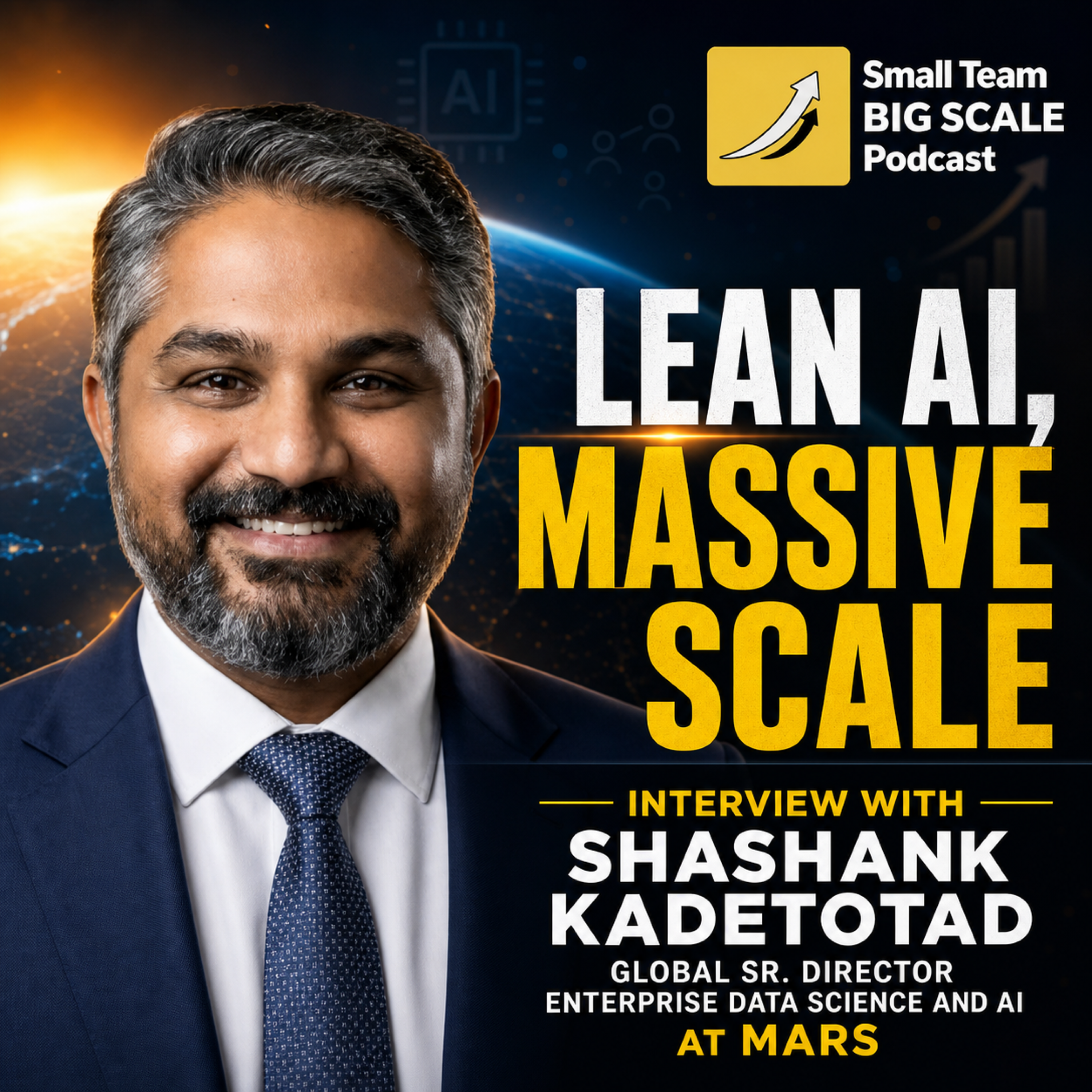
A 12-person data science team driving AI transformation across a $50B+ global conglomerate. Shashank Kadetotad, Global Sr. Director of Enterprise Data Science and AI at Mars, reveals how his lean team accelerates outcomes across hundreds of brands by building composable "accelerator" modules, defining criteria for failure before they start, and staying vendor-agnostic in a rapidly shifting AI landscape. Shashank shares how Mars went from weeks-long deployments to days using standardized forecasting and optimization accelerators, why governance is the biggest enabler of scale rather than a bottleneck, and how the AI Lab they built provides a safe space for experimentation with built-in failure criteria. From pizza-team principles borrowed from Amazon to the discipline of killing pilots early, this episode is packed with practical lessons for any team trying to punch above its weight. What you'll learn: How a 12-person AI team serves an organization of 100,000+ across supply, demand, finance, and HR Why governance is your biggest enabler of scale, not a bottleneck The "accelerator" approach: 15 reusable Lego blocks that cut deployment time from weeks to days How defining failure criteria upfront prevents pilots from dragging on for years Why staying vendor-agnostic and systematizing processes is the key to long-term AI adaptability Links: Shashank Kadetotad on LinkedIn Mars Small Team Big Scale Podcast Supported by: This episode is sponsored by qBotica — helping enterprises move beyond AI pilots and into real execution. Through qubi, its Agentic AI platform, qBotica brings together intelligent agents, automation, enterprise systems, and human oversight to transform complex workflows across healthcare, banking, insurance, real estate, and more. Learn more at qBotica.com → Subscribe to Small Team Big Scale: scalebrate.com/podcast
0:00We have a comparatively smaller team, around
0:0212 in size as of now, compared to, you're right,
0:07more than 100 ,000 person organization. And we
0:12still have to focus on a lot of use cases across
0:16the enterprise from supply to demand to finance,
0:21HR, so on and so forth. So it's been a very interesting
0:24journey building the team as well as deploying
0:27solutions at scale and being able to maintain
0:29it. We expect an exceptional level of ownership
0:32because we are a small team. We don't have plans
0:35like if you're handling or delivering 50 products
0:38today. Tomorrow, if we're going to go up to let's
0:41say 100 products, I'm not going to double the
0:43team size, right? So the idea then starts to
0:46become as we hire, how do we ensure that we're