
Small Team Big Scale · Ron Schmelzer, Scalebrate
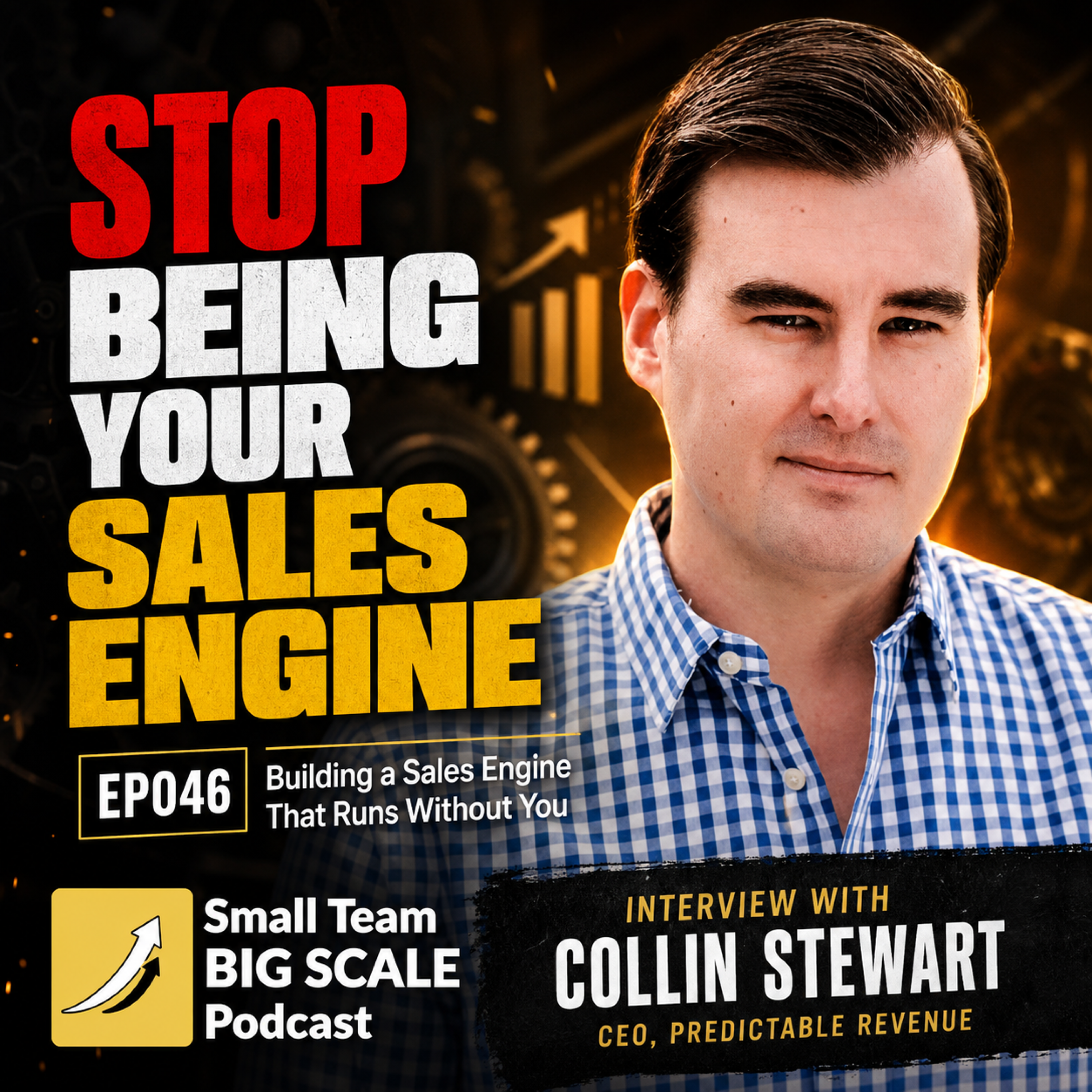
Collin Stewart built Predictable Revenue on Aaron Ross's legendary Salesforce cold calling 2.0 playbook — then pivoted to go-to-market consulting because the outsourcing work didn't align with what founders needed. Now he helps small teams build outbound sales engines that don't depend on the founder, and is launching predictable.ai to codify those plays. He introduces the 10/2 gap framework (importance vs. satisfaction) that reveals whether a problem is worth building a company around, explains the "day in the life" customer development interview, and shares why "closed lost" should never exist in your CRM. What you'll learn: Why customer development should continue past product-market fit — don't stop asking for feedback at $1M ARR The 10/2 gap: find high-importance, low-satisfaction problems worth building around How to turn customer discovery calls into a natural sales pipeline without bait-and-switch Why "closed lost" is a myth — replace it with closed nurture and Follow-Up Fridays The biggest startup killer: premature go-to-market scale before you know your real customers Links: Collin Stewart on LinkedIn Predictable Revenue Founders Edition Newsletter The Terrifying Art of Finding Customers Subscribe to Small Team Big Scale: scalebrate.com/podcast
0:00And what I'm looking for is 10 importance to
0:03satisfaction. If you're like 9 out of 10 satisfaction,
0:07this is not an opportunity that I'm going to
0:09pursue. But if it's the most important thing
0:12and you're deeply unsatisfied with it, well,
0:15that's a gap that is worth creating a company
0:20around. Go into your CRM and delete the status
0:24closed, lost. Because there is no such thing
0:28as closed, lost. There is closed FOAD, which
0:33roughly stands for leave me alone and perish.
0:37And then there's closed nurture, meaning they're
0:41not ready to buy yet and I'm going to stay in
0:43touch with them. The most important thing that
0:45you can focus on is timing your go to market
0:48investments. The number one thing to kill startups