
Small Team Big Scale · Ron Schmelzer, Scalebrate
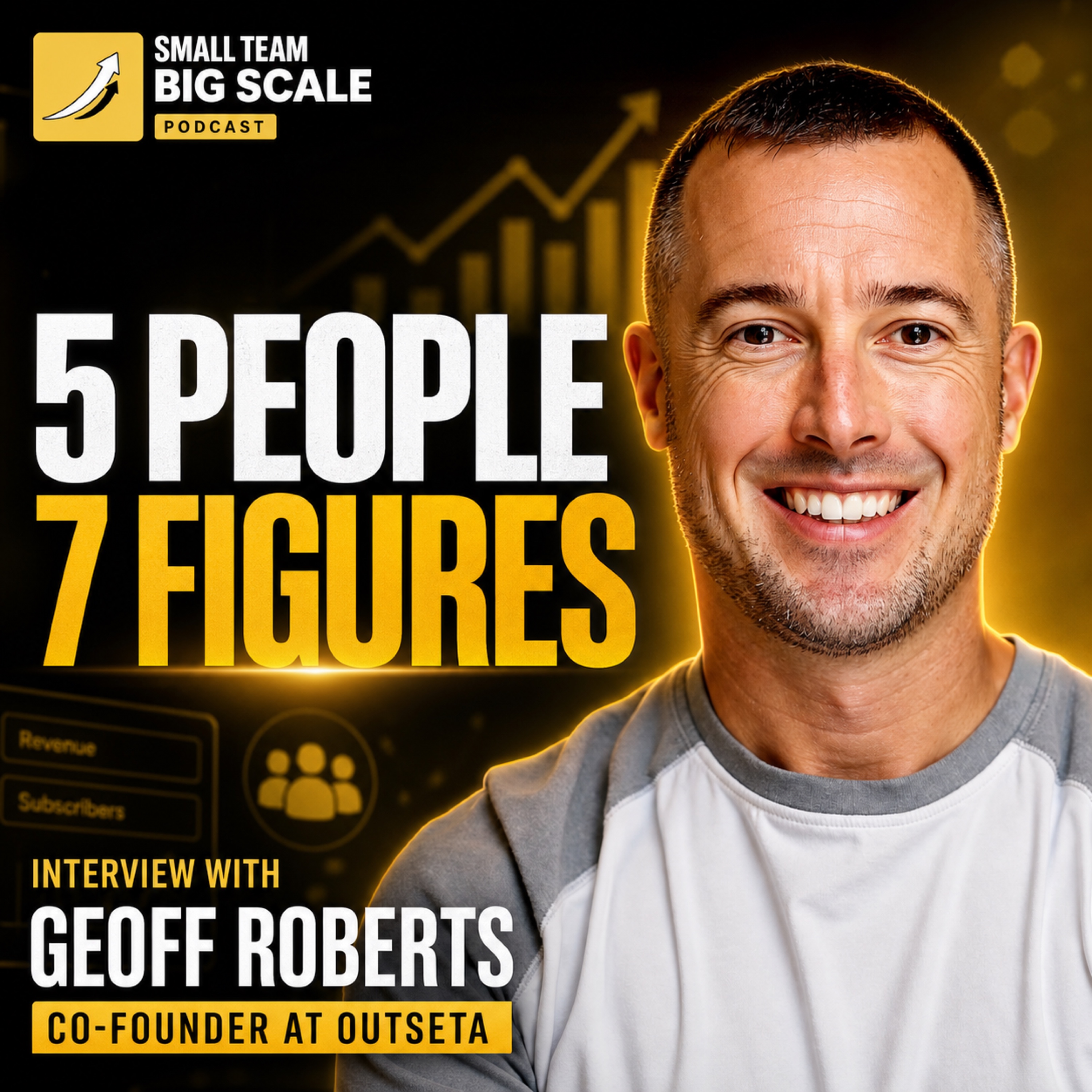
Geoff Roberts, Co-founder of Outseta, has built a profitable seven-figure business serving over 1,000 SaaS companies with a team of just five people working four to five days a week, all without taking a dollar of outside funding. In this episode, he explains how Outseta's unusual equal-compensation model and Growth by Elimination philosophy keep the team small, focused, and profitable over a 15-year horizon. Geoff shares why Outseta deliberately chose bootstrapping over venture capital, how eliminating management layers and traditional sales actually accelerated growth, and how existing customers organically moving through pricing tiers drove 70% year-over-year revenue growth. The conversation covers the organizational structure designed to let five people build an ambitious platform product, the philosophy of "life profitability," and what it means to work on something durable enough to sustain a 15-year commitment. What you'll learn: How a team of 5 people built a profitable 7-figure SaaS platform without venture capital Why Outseta's equal salary and equity model was designed to keep the team small over 15 years How Growth by Elimination — removing investors, management, sales, budgets, and forecasts — actually accelerated revenue growth Why 70% year-over-year growth came from existing customers expanding, not new customer acquisition How Outseta provides "core feature parity" across UI, API, and AI agents What "life profitability" means and why work should enable a better life, not consume it Links: Outseta Growth by Elimination Outseta Equal Compensation Model Payment Structure & Organizational Design Seven-Year Update Nine-Year Update (Equity, Expenses, Growth) SaaS Operating Agreement Geoff Roberts on LinkedIn Outseta on LinkedIn Subscribe to Small Team Big Scale: smallteambigscale.com/podcast
0:00We said, we had a lot more fun when we were 20
0:02than when we were a company of 200. So what do
0:06we need to do to stay small yet still facilitate
0:10building this sort of large and vicious software
0:12company? I hear so much from founders and business
0:16people bemoaning that hiring is so hard and this,
0:20that, and the other thing. And I have a really
0:23strong opinion that it's not. I think the...
0:25The difference is people do not put the effort
0:28into hiring that they put into sales or product
0:31development or these other areas of the business.
0:34It's kind of this thing that is done passively.
0:36And if you want to drive real efficient, you
0:39need to treat hiring as a priority 1A. I think
0:42as it pertains to startups, you need to have