
Signed · ITBroker.com
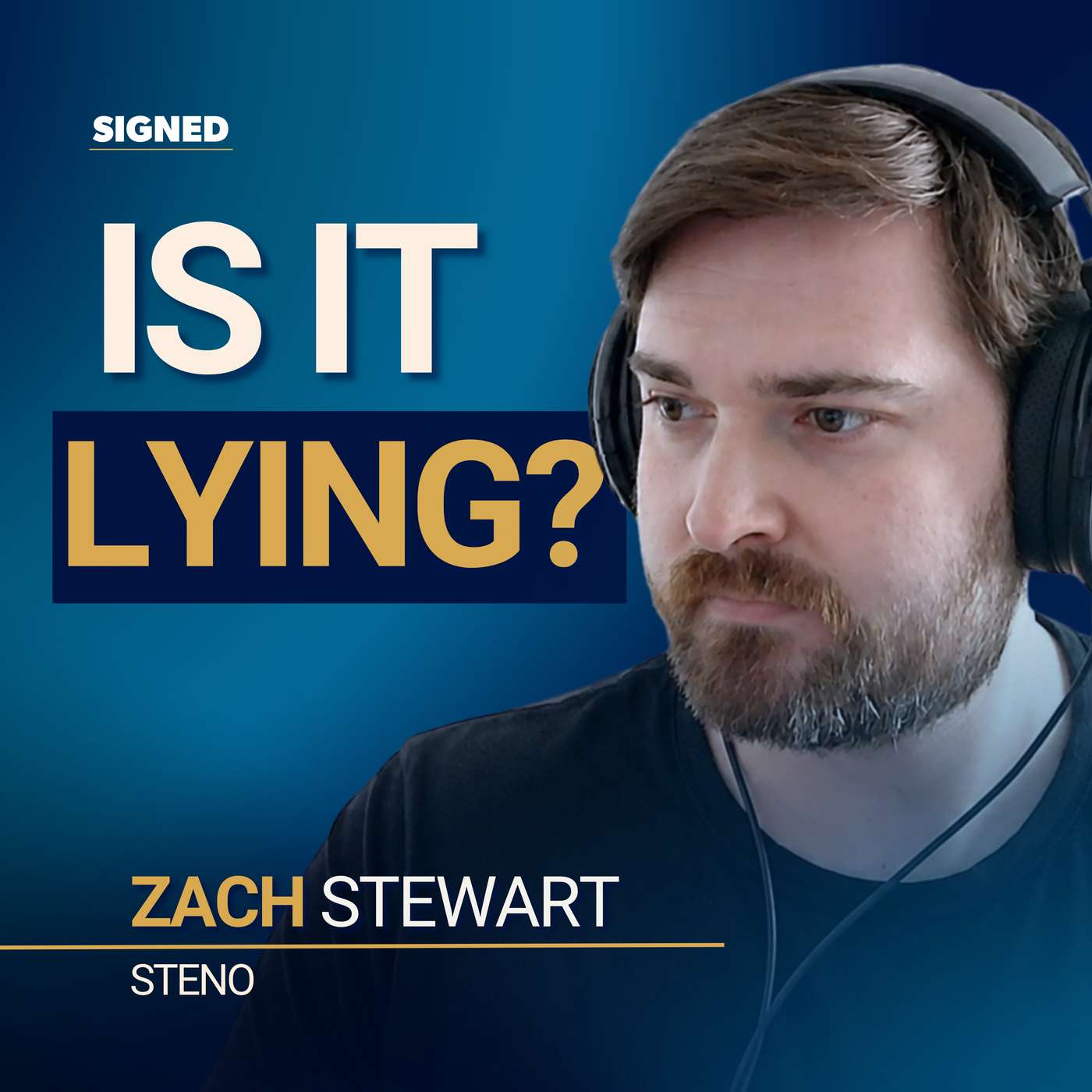
Your security tool says you're protected. So does your BAA, your SOC 2 report, and the maturity score you handed your board. None of that means any of them are telling the truth. Zach Stewart is a hands on CISO who spends his days doing exactly what this show is about: buying technology in a market built for the people selling it, then fighting to get it funded and adopted inside his own company. He's someone ITBroker.com works with directly, which is exactly why he's here. No product to pitch, no reason to give a polished answer. Max and Zach cover where to even start when you're hired into a mature security program, how to sell security to a business that treats it as a tax, where to find budget nobody knew they had, and the technical traps that catch people who should know better. Check before your next audit, your next renewal, or your next incident does it for you. What You'll Learn How do we evaluate a security tool before we buy it? Is a vendor's SOC 2 report enough to trust their security? Does a signed BAA make our vendor HIPAA compliant? How do we avoid paying extra for SSO on our software? Should we build our own SOC or outsource to an MDR provider? How do we know our MDR provider will actually respond to an attack? Should we invest in EDR or a secure web gateway first? Should we start with NIST CSF before getting SOC 2? In this conversation: (00:00) - Cold open: what XDR actually means, and nobody has a straight answer (01:12) - Intro: Zach Stewart, hands on CISO (01:22) - What "hands on" actually means for a CISO day to day (04:10) - Day one priorities when you're hired into a maturing security program (06:19) - Velocity, change management, and where risk actually lives (10:25) - Why you can't just stop patching, even when updates break things (13:51) - What GRC actually means, stripped of the jargon (16:05) - How to quantify risk in terms the business actually understands (20:37) - Running risk as a dashboard, not a one time report (22:39) - Frontier risk: when there's no case law yet and no proof it'll happen (25:31) - Why visibility is the one thing a risk program can't work without (26:46) - Spotting real maturity versus theater in the first 30 days (49:20) - Show me the tool, not the slide deck (01:05:18) - A new vendor says they're secure because of SOC 2. What else to check (01:08:35) - The HIPAA BAA loophole nobody reads closely enough (01:23:29) - SSO can cost more than the product it's attached to (01:33:14) - The real math behind running your own SOC, and where MDR falls short (01:40:07) - Test your backups. Actually test them (02:03:09) - The company running its entire security budget at under a dollar per employee (02:06:30) - Outage risk and breach risk need two different plans (02:22:28) - When a customer contract forces corporate owned devices (02:28:39) - Why a one to ten maturity score means nothing to your board (02:48:24) - Passkeys are useful. Most companies deployed them...
Max Clark (00:00) terms are at this point? Zach Stewart (00:00) I'll be honest with Zach Stewart (00:00) you, I don't think I've ever heard anybody tell me what XDR really means in a way that makes any sense. So we'll start there. Zach Stewart (00:07) I think you have to get the EDR in place first. And Zach Stewart (00:11) If they do all the things, Zach Stewart (00:12) they hit all Zach Stewart (00:13) the layers of Swiss cheese to get through all the holes to get to the endpoint, that's Max Clark (00:16) Yep. Yep. Zach Stewart (00:17) where you want to have the most defense. And I do think as much as there's ways to encode payloads to bypass EDRs and there's reports every year of here's all the things that the EDRs miss, Max Clark (00:28) Welcome back to Signed. I'm Max Clark, CEO of ITbroker.com. My guest today is Zach Stewart, a hands-on CISO who spends his days doing the exact thing the show is about. Buying technology and a market built for the people selling it, then fighting to get it funded and adopted inside his own company. Full transparency, Zach is someone we work with, which is exactly why I wanted him here. He doesn't have product to pitch you and no reason to give me a polished answer. We went long and we went deep. Where you even start, how you sell security to a business that sees it as a tax? Max Clark (00:57) Where to find budget nobody knew they had, and the technical traps to catch even the people who should know better. Let's get into it. Max Clark (01:12) for people that picture CISO as like a risk register and slide decks, what does a hands-on actually mean for you during the week? Zach Stewart (01:22) That's a good question. So I think that if you're just thinking about things in terms of a risk register in a slide deck, I think what you're indexing on is the communication piece of the role, which doesn't go away when you're more hands on. But what being more hands on means is that you're able to link the overall strategic piece of the communications of what's in the risk register, why is it there? What am I presenting to you in this slide deck? What do I want you to understand about where we're at and where we're going? Zach Stewart (01:50) and what the plan is, but being hands-on is also being able to then go to the tech team and explain the nitty-gritty of here's the process of how this is going to work. Being hands-on also gives you the insight in those strategic conversations to be able to say, look, I've implemented this before, I've been hands-on keyboard, I've brought this from inception to planning to implementation to supporting it in the environment. Zach Stewart (02:12) So I can tell you with hopefully a higher level of certainty how this is going to go, right? So there's never any guarantees in anything, especially in IT and security. But one of the things that being hands-on really helps you with is getting you to a place where you have a more confident picture of what it's going to look like and how you're going to get from zero to a hundred percent on a given project and then Zach Stewart (02:33) Taking that communication piece on the strategic side and the hands-on piece is linking it to going back to the people that are actually doing the work, going and reading the change form, going and doing the project plan with them so that you have a really good idea of where things are at, how things are going. And then you can also step in and make sure that they're doing this thing to best practice rather than just what the vendor might tell them is how the implementation is supposed to work, or making sure that you're scaling licenses appropriately or whatever, because you have a more intimate understanding of. Zach Stewart (03:01) What does the tool look like when it's actually implemented and functioning, which gives you a ton of insight on the front end to where then you can kind of do the right things. So the way I would, you know, liken it to building a house. If you built a house before, there's certain things that you might want to do when the studs are up that someone who's never built a house or maybe lived in a house in that way has thought about. They might want to, you know, run Ethernet cable. You might want to change where plumbing is, you might want to do all these things that Zach Stewart (03:28) might not pay off until years down the line in the future, but you've already seen that version of reality. And so being hands-on means you're getting in the beginning of the process and making that happen up front to hopefully set yourself up for success later down the line. Max Clark (03:41) I love the house analogy. Like every one that I've lived in where I haven't opened up every wall before we moved in, which is aka every house, I have regretted down the road. And and I was telling my wife the other night, it was it's like the next one, I'm just assuming we're just opening up every wall and every ceiling because Zach Stewart (03:56) Mm-hmm. Max Clark (03:57) it you just it's it's a really it's a it's a great analogy. It's it it hits hard for me. For someone that's hired, hired into mature security in GRC at a company. Max Clark (04:10) Day one, where should they start? Like what's the first thing that needs to be touched? Zach Stewart (04:14) Mm-hmm. Max Clark (04:14) a and what needs to be ignored? Like, you know, there's two Zach Stewart (04:17) Yeah. Max Clark (04:18) parts of that. Zach Stewart (04:19) Yeah. I think at least from what I've seen in my experience, and I think that I have to qualify this answer a little bit because as much as people love to just say here's the right answer, one of the biggest determining factors is gonna be Zach Stewart (04:31) The size of your organization and then also the velocity of the organization. And those two things don't necessarily have to be the same, right? You might have a really high velocity organization that has a low head count, which means that you're going to be able to do things faster and you're going to be able to communicate those changes potentially quicker because there's just less people and less processes to communicate them to. But as you start to scale, you might have a mid-size organization with high velocity that doesn't look that different as a small organization with high velocity. Zach Stewart (05:00) Or you might have a really large organization with a low velocity, in which case you need to know when you do bigger projects, they're going to take a lot longer. So to tie that back to your question about what you'd be doing from a risk perspective and for for DRC purposes, is you have to think about if you just start building spreadsheets, nobody's gonna look at a spreadsheet, right? In that type of organization. You need to be able to say, hey. Zach Stewart (05:23) We need to get some wins here. So you need to do your own kind of quick and dirty risk analysis without necessarily going through a huge formalization process and communicating that to the organization. You kind of need to come in and say, here's the quick and dirty based on my experience of what I know and the things that I see that are pain points that are low-hanging fruit. And then you need to start putting the wheels in motion to get support to fix those things to show how a risk management program actually provides value. Zach Stewart (05:50) And then you can go back and and continue to build in the background all the scaffolding and all the things that you need from an academic perspective, which are still valuable to have a proper program, but you you need to make sure that you don't try to, you know, go back to building, you know, house analogies. Like you're not gonna build the roof somewhere else and then be like, well, the roof is done, but the rest of the house isn't. Here, look at how cool this roof is. Well, the roof is useless without the house. Max Clark (06:14) Velocity okay, we we made it two questions before I'm going off the rail. Zach Stewart (06:19) It's okay. Max Clark (06:20) velocity is a great word for this. And and and when I hear you say velocity, I really think about like organizational change and change management. And Zach Stewart (06:28) Mm-hmm. Yes. Max Clark (06:30) this is this becomes like this this is a really interesting give and take balancing act, right? Because on the one hand, Max Clark (06:37) Almost everything from a change management standpoint comes from managing risk. And how do you lower change risk for an organization, especially an IT infrastructure or security infrastructure? But then the flip side of that is change management by definition kills velocity and kills project durations and then introduces its own risk with people that have to be in an approval process that aren't necessarily really close to the work that's being done. Zach Stewart (07:01) Mm-hmm. Max Clark (07:02) And and at the very extreme, we see this where you're talking about. Max Clark (07:05) we have critical updates that we need to put, but now we have a change management process that needs to go in before those updates can be approved and then applied. And all of a sudden you turn around, you're like, you know, we're eight weeks behind a CVE release because of our internal how do you how do you manage that velocity when you're talking about Zach Stewart (07:25) Mm-hmm. Max Clark (07:26) change management and risk management for organization versus actually maintaining a pace and iteration and velocity of things starting. Max Clark (07:35) being implemented, being completed, being updated, you know, Zach Stewart (07:37) Mm-hmm. Max Clark (07:38) that sort of thing. Zach Stewart (07:39) Yeah, I think that this this is a highly organizationally dependent question because it's going to depend on how your org chart looks. It's going to depend on what the reporting structures look like. And like we talked about, it's going to depend on the velocity and the size. But as a general rule of thumb, I think the most effective thing you can do up front is don't try to build a process that encompasses everything. Right. So if the scope is slowing you down, reduce the scope. So you might say, Zach Stewart (08:07) Well, here's our and again we're making some assumptions here about where the organization is at maturity-wise, but if you have a a SOC two program or something, or you have a framework that you're aligned to, and you could say, Well, here's our thresholds for patching, for example, because that's a that's one that always trips people up. Well, maybe you make the the decision and and you say, Look, for patching, for and let's say endpoint user endpoints that are not Zach Stewart (08:32) you know, mission critical need to be 24 by seven uptime. You might say, hey, for user endpoints, we're going to use this schedule for patching. We're going to enforce this particular schedule. And we're not going to cut a change management, you know, form for approval every time we're pushing out a Windows update or a Mac OS update. I think that's becoming even more of a pain point. Zach Stewart (08:54) As we see the velocity of updates in the environment due to the ability for AI generated payloads for malicious things and also just the velocity at which you know Microsoft and Apple seem to be putting out and endpoint updates recently and security updates, that kind of conflicts with that slower change management process. But where you want to have that in the beginning of your program, even if it's still maturing, is you want to have that change management process in place for big changes that are going to touch the whole organization or changes that are going to touch a business process. Zach Stewart (09:23) That is where the cash is coming in, right? Is it's where the revenue is. And I think that's back to, you know, you can be hands-on and understand the security stuff academically, like we're talking about, but you also need to learn the business, understand where the money's coming in, and understand your business processes so that you can marry the two things. And that's where you can start to make your risk determinations of how much change management is appropriate versus how much revenue risk may be here. And there's other factors too. But you know that needs to be part of your your thought process there. Zach Stewart (09:53) And you can then right size the velocity of your security and change program. And and IT is a huge foundational piece of this that we haven't really touched on, but that's also super important. You need a strong IT program to facilitate this. Then you can right size that velocity against what the organizational velocity is, right? Because if you have a mishmatch there, no matter how much or how little change you're doing, it's probably going to to be a source of friction, and that's going to reduce the ability of or the Zach Stewart (10:22) motivation of people to want to assist you with that. Max Clark (10:25) I this is really hard to balance and get right. You know, and and you talk about like OS updates, I mean we were talking about before we started, Chrome updates, right? Like the velocity velocity, the frequency of Chrome updates, you know, happening and and part of its functionality and features that are coming out, and the other part of it is is is real significant security considerations. And and the and the flip of that is I've seen Chrome updates Max Clark (10:51) nerf critical business processes for companies in both ways, right? I've seen it one where it's like there's a penning update. So that functionality got cut until the browser was restarted and the update applied. And I've seen the other one in the sense of contact centers, where a Chrome update, you know, they're running a browser-based contact center platform and a Chrome update nerfs the headsets. And so people can't actually function in the contact center. And but then you know Max Clark (11:16) Like the response becomes like, let's not apply updates or let's test updates or let's do this or let's do that. But that's not really the answer either, is it? Zach Stewart (11:25) No, and I think what you're hitting on is that the the browser is becoming the operating system, right? In a lot of these cases. I don't think I'm the Yeah, I'm not I'm not I don't think that that's an earth shattering thing for me to bring Max Clark (11:30) Well, yeah. I think that happened a while ago personally, but yeah. Right. Zach Stewart (11:36) up, but I think what that means is then y you and again, I think to keep bringing it back to first principles, it's like, okay, well then you need to know what your business processes are. And this is where the Zach Stewart (11:48) expertise and I think the value of the strategic part of the job comes in. And this is the difference between a CISO and maybe someone who's a a senior security engineer or maybe even a security architect in some cases is being able to then understand all those business processes to be able to say, hey, this is something that's going to be breaking for us specifically. And for another organization, it might be a very small change that's not an issue. Zach Stewart (12:16) And that's where you're going to need to scope your change management program properly. And you're also going to need to be in contact with the leaders that are in charge of those business processes so that you can try to ensure you're not stepping on those rakes. but I don't think there's a really good answer to that because what we're really getting at is that there's an increasing amount of complexity, and so you're going to need to continue to find ways to. Zach Stewart (12:43) automate on the visibility and the monitoring side, especially I think for this. And then also the the kind of boring answer that I think a lot of people are probably not going to like to hear is you need to continue to make sure you have a strong IT operations function that when these things do pop up, you get notified of them quickly. The help desk to the extent or the service desk to the extent that they can is on it and they can start helping individuals. If there are certain individuals that have a higher you know pain point from this, then they can start solving that problem. Zach Stewart (13:10) And then they escalate it up to your IT engineering and security engineering team so that you can figure out what you know, pull the rollback plan out of that change management form we were just talking about and actually implement it. Yeah. Yeah. Max Clark (13:21) Hopefully you have a rollback plan, right? Max Clark (13:25) outside of the military, IT tech has the second, it has this love affair with with acronyms. Military actually enforces what the acronyms mean Zach Stewart (13:37) Mm-hmm. Max Clark (13:38) versus tech, where we see the acronyms get very spongy. You know, this is a big, big, big rant for me, usually, right, in terms of sales and marketing, people abusing Zach Stewart (13:44) Yeah. Max Clark (13:46) tech acronyms. Now we talk about in in security. Max Clark (13:51) GRC. GRC is probably like the foundational acronym. Zach Stewart (13:54) Mm-hmm. Max Clark (13:55) So, you know, cutting through the noise, what does GRC really mean to you and for an organization now without all the jargon that's been attached to it? Zach Stewart (14:05) Ooh, that's a bit of a loaded question, isn't it? okay. So Max Clark (14:07) One hundred percent. Zach Stewart (14:10) let me start with I'll address the the acronym thing. I agree with you. It's gotten to the point when I I talk to folks, or if you know if I'm talking to someone I haven't talked to before and they start spitting out all the acronyms, or we're talking about a product, be like, I generally follow you, but let's stop talking like this and just show me what your thing does or show me what you're trying to do, because Max Clark (14:31) Mm-hmm. Zach Stewart (14:31) that will just cut through all of that ambiguity. Zach Stewart (14:35) because I think we have tipped the scale too far on the acronyms and it has gotten to a point where they're doing more harm than good in a lot of ways. and that's mostly around how marketing, like you're talking about how marketing Max Clark (14:47) Yeah. Zach Stewart (14:47) has kind of co-opted them and and tried to turn them more into categories rather than an acronym that means a specific thing. so that's the first piece of that. Zach Stewart (14:56) Now, as when it comes to GRC, I still think GRC is has its use, but I think it's it's really graduated. I wouldn't even really call it an acronym. I would say that it that it's it's a category or it's it's a a functional area or it's a team. And and to me, that team consists of IT, it consists of security, it consists of legal, and it consists of your probably your your operating, your head operating person, right? Depending on who that is for your organization. Because what you're really trying to do is you're trying to do risk management. Zach Stewart (15:24) as a concept, but that looks different for every organization. And that kind of ties into a lot of the stuff we're talking about. So I'm not gonna repeat that. But it means doing as much risk management as you can to try and help the organization de-risk to be more, you know, profitable and to continue to grow as an organization. And so I think that is the North Star that everything else feeds into. And there's a lot of nuance around how you do that. Zach Stewart (15:49) But I think that's the North Star of GRC's purpose is to reduce risk, not just technical risk, not just IT risk, not just security risk, not just app risk. It's all of that rolled into one. And the the process of doing that is GRC. Max Clark (16:05) Okay, I'm gonna try not to skip ahead too much, but I think this is important to talk about now. Where Max Clark (16:12) I think part of the the scale of maturity that we talk about in an organization is are we looking at security as tooling and infrastructure, or are you looking at in terms of risk management for an organization? Right. And we talk about GRC really being and your explanation, being more around risk management for the organization and also who owns the risk, right? Like a CISO versus a a security lead. Like what is their understanding of the business and what's their understanding of risk for the business? Max Clark (16:39) The the question that I don't see answered very clearly for people is how do they actually quantify real risk to the business in a way that the business can then understand and and react to? Zach Stewart (16:50) Mm-hmm. Max Clark (16:52) I'll give an example. You know, in in in the IT sphere, we talk about redundancy and we talk about outage impact, right? And you try to quantify the impact of an outage of, if this, if your if your office goes down because you don't have redundant internet connections, right? Like what's the impact of the business? And you're like, well, you can't really do like a soft salary evaluation. And I've seen I've seen companies do this very similarly Zach Stewart (17:15) Mm-hmm. Max Clark (17:15) when they're rolling out security. Max Clark (17:17) Where they where they associate like, what's our risk for lost productivity and for our development team? And what does that mean in terms of our shipping velocity and and and ability to transact? So how how, you know, for the business looking at this, and especially non-technical people that have been through events before, how Zach Stewart (17:33) Mm-hmm. Max Clark (17:33) do you actually quantify risk in a way that that is meaningful to the organization, right? Because brand risk is spongy, brand impact is spongy, goodwill Zach Stewart (17:43) Mm-hmm. Max Clark (17:43) is spongy. Like you you know, like these become Max Clark (17:46) Like if we have an event of this nature, this is the risk associated to the business. But but these become very like non- they're like they're like non-concrete concepts for people that Zach Stewart (17:58) Mm-hmm. Max Clark (17:58) haven't been through this before. Now you talk to somebody who's had ransomware, they're like, they never want to live that life again. Zach Stewart (18:03) Right. Max Clark (18:04) But you know, for the for the uninitiated, how do you how do you how do you get into that conversation in a way that actually Max Clark (18:12) gets people aligned around this is acceptable risk and this is unacceptable risk. Zach Stewart (18:17) Yeah. I I think that's one of the ongoing parts of the job that never ends, right? It's not something you do on Tuesdays. It's not something you do once a month. It's not something you do once a quarter. it's something you have to be constantly doing, right? So you have to insert yourself into conversations about what's going on with the business. You need to be aware of where the the intent of where they're going and what the plan is from a business perspective, so that you can align the IT and security program and goals to those things. And that that is part of the risk management piece of it. Zach Stewart (18:47) And I think the risk management program should drive everything, which I think is a simple and a thing that is kind of hiding a lot under the under the covers. Because I think everyone would agree, yeah, the risk management program should drive anything because everything, because that's what's telling us how much we're standing to lose. And then we can just look at how much we're gaining and and you could do simple math, right? But I think it's a lot more complicated than that just because of the nature of how much. Zach Stewart (19:13) Risk management has permeated everything and how much technology touches every part of your business process. So if you know if you have a remote first org, or even if you just have significant aid cloud presence in any of the cloud providers or you know, you're you're servicing an application running a service, whatever it may be, there's complexity in every single one of those places where you might not necessarily have a perfect textbook risk management approach. I think what you need to do is again, scoping is your friend. Zach Stewart (19:42) You need to look at what you can realistically scope down and look at and find the risk there and not necessarily get overwhelmed by trying to look at the big picture all at once. And so for IT security risk, if you're the IT security expert, that's what you need to lean on for risk management. You need to go find the people that have the most context for that particular area of risk and you need to work with them. And so there's kind of two pieces of this: there's the expert. Zach Stewart (20:08) Who has the context in that particular area to help you determine the risk. And then you have kind of your other piece of your job as the CISO is to help people through understanding the academic approach to risk management. However, you decide to do that. There's a couple different schools of thought. Everybody's seen the the red, yellow, green charts. That's one way of doing it. And that's not a necessarily, I think it gets it gets a lot of bad press lately because you know people want to say it's not good enough, but it's certainly better than nothing. Zach Stewart (20:37) And if you can sit down in a room with the stakeholders for all the different risk areas and you can say here's 50 risks, and maybe that's even too many, here's 20 our top 20 risks, which of these are are red or yellow or green? That's information that you can then use. So you constantly have to be gathering this information, contextualizing it. You know, I joke sometimes you're really just a very skilled technical librarian with a lot of this stuff, and you're just that's Max Clark (21:01) Yeah. Zach Stewart (21:01) what you're doing. You're trying to pull all this stuff together, you're trying to catalog it, you're trying to make sense of it because ultimately. Zach Stewart (21:07) What all this is going to boil down to is you're going to be in a room with a bunch of other people and there's going to be a decision sitting on the table, and you're going to have to decide as a group, is it what which way do we go? Right. There's going to be a decision point. And I see the risk management program and your, you know, kind of role in running it to be, I'm going to try and give you as much information as possible that's useful, not just garbage data, but the useful information that we have so that when that decision point comes and we can't wait to do another. Zach Stewart (21:35) you know, six months worth of information gathering to make a decision that you can present everything you have there. And I think that that's the part of risk management that really takes somebody from I read a book about risk management to I actually do this and have done this in an organization. And that's that critical experience piece to it of a lot of this part of marrying this information, they don't teach you in the textbooks, right? That's not in the CISSP handbook. I will say how to measure everything in risk management is a great resource. Zach Stewart (22:04) I recommend people use that to give you kind of a footing. And the long and short of that, really reductively, is just estimate, just start estimate, start making estimations, put them down on paper, and then track against it. Very similar to KPIs, right? Like you might not have a perfect way to track something, just start tracking it. Start measuring it, start improving your approach and start adjusting. And that ongoing process is where the value is in having a formalized risk management program that's Zach Stewart (22:34) run by someone that understands that, right? Is that you're constantly evolving and improving it over time. Max Clark (22:39) So, how complicated does does this become then when you start talking about like frontier theoretical risk? And what I mean by that is Max Clark (22:49) You know, practitioners watching AI rollouts inside of organizations, you know, there's it's not tested. There's been, you know, there's limited case law. There's examples. I Zach Stewart (22:59) Mm-hmm. Max Clark (22:59) mean, we're starting to see the beginning parts of this. But so there's like frontier risk or theoretical risk where it's like, do we really want to be uploading all of our intellectual property to a third party and what's the potential outcomes for that? And and you know, and people that have been doing this for decades understand like, Max Clark (23:15) You know, here's where like bad things are gonna happen, but they haven't happened yet. So now how do you actually then go and quantify that and be and say we shouldn't be doing this thing, even though it's really hot and sexy and fun right now, because this is going to happen because I just know this is gonna happen because I've seen this this movie before. Zach Stewart (23:32) Mm-hmm. Yep. Max Clark (23:35) But there's no proof of that yet, right? So that becomes this ex next thing of like. Max Clark (23:39) Unless you have a really strong relationship in an organization, you've been there for a really long time and you've already established I mean, we're we're we're way jumping ahead here, but but that's also a difficult place to be, you know, in risk management today. Zach Stewart (23:51) Yeah. So I I mean, I think what I can try to provide on that is just from my specific experience, I think the first thing you need to do is just try, don't try to run into a brick wall, right? If that's not working. So the first Max Clark (24:07) Yeah. Zach Stewart (24:07) thing I recommend, and and that might sound reductive, but I'll explain where I'm going with this. So the first thing I'd recommend is you need to think about your approach. Because if it hasn't happened yet. Zach Stewart (24:19) And that experience isn't there, right? This is like a child touching the stove. Don't touch Max Clark (24:23) my goodness. Zach Stewart (24:24) the stove. The stove is hot. You might make a calculated decision that you want to Max Clark (24:28) Yeah. Zach Stewart (24:29) let them touch the stove. I think maybe that's changed over the years. Maybe we don't think that as much anymore. And so how do you how do you explain to them not to touch the stove? Well, it's it's an education and it's context, right? And so I think your job as the CISO is to show them what's out there. Zach Stewart (24:47) And so I just recently did a presentation along these lines where I talked to the engineering team and I said, look at all the AI risk. Here's examples, cre like like concrete examples of things that have happened. And you know, you can look online and all the security firms will give you as much as many write-ups and white papers as you can read. So I cherry-picked a couple of those examples that were more relevant to the things that we were, you know, looking at doing and and are are doing. Zach Stewart (25:11) And I said, look, this these are the things that we're going to have to worry about. And it's not theoretical because it's already happening. Just because it hasn't happened to us doesn't mean it isn't already happening. And you can use those examples and you can educate. And that's the first step. Because the thing is. Max Clark (25:25) Or or Max Clark (25:27) or we don't know that it's already happened to us because we don't have any way of knowing or not, right? Like Zach Stewart (25:31) Yeah, Zach Stewart (25:31) and I think that's one of the core, the core things we haven't touched on a lot, which is visibility. And I think that that's where being more hands-on, being more technical, or just having stood up from a security engineering perspective for, you know, setting up a seam, understanding what that means, understanding what it means to connect all these data sources, understanding what it means to build alerts into triage tickets in a seam, you really get an appreciation of what your real visibility is. Zach Stewart (25:59) And then as you get on the strategic side and you start seeing the business more holistically, you go, there's a lot of stuff potentially that is not encompassed within that initial seam setup. And that goes back to the thing we were talking about at the beginning about if you've never built a house before. But if you built the house before and you know, hey, down the line, we're gonna want to connect up that data source to a seam or we're gonna wanna set up automated alerting for this thing. And that so that really goes back into one of the fundamental pieces of risk management that isn't quite Zach Stewart (26:28) I think explained in the in the textbook examples very well is if you don't have visibility, if you don't have input to this, your whole process is worthless. It could be the best risk management process anyone's ever seen. It could be groundbreaking. But if the inputs aren't coming in, that is not going to keep moving effectively forward. Max Clark (26:46) For you know, walking into a new environment, you know, my my favorite phrase is like we've got it handled, right? You know, because as soon as I hear that, I usually I'm like, nope, you don't, because anybody who actually is doing anything, they they'll never use that phrase because they understand like like where their holes are, right? And you can just kind of you get there there's a real sense of maturity in in in way people respond to certain things. But for in your work in your in your experience, like how do you actually Max Clark (27:15) figure out real maturity in the first, you know, thirty days. Like what's what's signaling truth versus, you know, theater? Zach Stewart (27:25) I think the more organizations you look at, and again, this is a factor of seeing more environments, which I know isn't always the the best piece of advice because it's hard to do, but the more organizations you see and the more people you interact with, you'll be able to start to separate the framework from the tangible. Right. And so I think another way you could do this without necessarily seeing a ton of environments for people who are looking to continue to to evolve this skill set is read through the frameworks. Know what all the frameworks are. And it you know, it might seem boring and it might seem rude at first. Zach Stewart (27:55) But if you know off the top of your head in an environment, you can walk in and you go, okay, well, are you aligned against SP 800, 171? And it, you know, they might go, yeah, yeah, yeah, yeah, yeah. And then you can look in five minutes and be like, well, the documentation's not there. These five key things, and I know 171 is a lot more complicated than that, but for the sake of discussion, these five Max Clark (28:13) Ha ha ha. Zach Stewart (28:15) things that definitely should have at least been addressed or people are aware of is not potentially there. And then you can know you can start to look at these things and understand where. Zach Stewart (28:23) something might have been put in as a Zach Stewart (28:29) A beginning control that hasn't fully matured yet and is there as a starting point versus something that has actually hit maturity already and then you can start to make prioritization decisions for Max Clark (28:40) What do think people overinvest in early that doesn't actually move the needle in risk? Zach Stewart (28:48) Organizing information. You you start buying a bunch of tools to organize information. So this might sound like it's contradicting the visibility piece, but it's not. I think those are two distinctly different things. Visibility is getting access to the information and getting it into getting a pipeline of it so that you can get up-to-date information, versus organization of information is having it in a nice little neat table or having Zach Stewart (29:15) A tool that organizes all your policies for you. And those things are useful for sure. But if you don't know what your problem points are, if you don't know what your goals are, you can do a lot of that organization of information on your own first. Just do it in a way that makes sense to you. And this goes back to understand the frameworks, understand what you're shooting for. And then you can just organize all that information with the tools that you probably already have as a starting point. because the other thing that I think is a little bit Zach Stewart (29:44) I would caution against is if you are standing up a program or doing some important maturity of a program and you rely on a tool that is there to organize information and presents it to you in one very specific way, that might really limit how you're thinking about your program and how you're running it. When in reality it that it doesn't need to be only that one way, right? There's there's many different approaches and you you might have an approach that you don't realize is more effective for your particular organization because you're kind of Zach Stewart (30:14) running the programming to the tool. Max Clark (30:17) I've seen I've seen very interesting examples of that where of aligning controls against tools and then finding out you can't change a tool or you the tool changes on you and then the control evaporates. So it's a it's a it's an interesting reference point. how you know coming into a new organization, right, it's like Max Clark (30:46) Like what's the first wins people should be looking for to help them build credibility inside the organization? Whether that's just from like I can partner with you or work with you or I know what you're t I'm talking about. You know, because ultimately, right, it's like that you need to have organizational credibility in order to actually do things. So what's like Zach Stewart (31:02) Yeah. Max Clark (31:02) how like what's what are easy quick wins typically, you know, to to get that started? Zach Stewart (31:10) Mm-hmm. I I caution against the use of the word easy. I don't know if there's any easy wins in this particular Max Clark (31:14) Yeah. Zach Stewart (31:16) field. And you know, I'm not complaining. I enjoy it, but I I think that's that's that's a key piece. But what I will say in terms of things that are more effective, are relative to the scale Max Clark (31:25) On a relative scale of easy, right? Zach Stewart (31:27) of effort. Absolutely. So I think the things that are more effective coming in is is first of all, I I would take a step back from even where you started the question and say. Zach Stewart (31:37) you need to be interviewing the companies as much as they're interviewing you, right? As not every organization is going to have the same level of motivation or resources. And and even I would say a lot of organizations are are probably looking for a security person because they want someone to come in and really own this and mature their program. So I'm not saying that there's good versus bad organizations, but you have to make sure that the alignment and the way that you operate matches up with the alignment and the way they operate. Right. Zach Stewart (32:03) And so I think the first thing you need to do is you need to make sure that you're talking to the people that you're going to be working with. Because the answer to your question then to take it a step forward is once you get in there, what are kind of the first things that you should be doing? You just have to talk to everybody. And you have to let them tell you where the problems are. Because if if you know you come in and and they have been looking for someone to own this stuff, they're going to want to give it to you, right? They're not going to hide this stuff from you. If they were looking for someone to own this and they said, Zach Stewart (32:32) They got together collectively and said, gee, we really need someone to come in on all this stuff. They're gonna tell you when you come in the where the where the expertise and the security work you've done previously will help you there is then the tr you're you're mentally triaging and prioritizing in your head and understanding and you know, you have to ask the right questions to get to the bottom of what they're presenting you is going to be their perspective or that like the end point of that that ask or that need. Zach Stewart (32:59) And you need to be able to then use your expertise to back that out and go, is it a process issue? Is it a process issue and a tool issue? Is it a tool issue? And then how do you go from the beginning then and work your way to where they are to actually start helping them? And then you can start looking for the ones where the gap is shorter. Max Clark (33:18) Much of the Max Clark (33:21) I'll shorten it. How much of the first ninety days is technical and how much is political? Zach Stewart (33:26) I th I think it I think that it depends on the organization because if you have an organization where they're in a place that you've been before, I think, or you have an organization that has more ability to do you know, they have more t capital to to deploy quickly and they have a previous need that they've already identified and they need someone to come in and and make it happen. Zach Stewart (33:50) It's all going to depend on what the context is that you're dropped in, but I would say in most cases, you're trying to split the difference. You might get pulled one way or the other, but ideally you're trying to split the difference because as we were talking about before, when we started getting into the details of risk management and then the more theoretical side of it and how you're actually going to take that and put it into implementation, you still do need that visibility piece. And a lot of times that visibility is going to come from some sort of tooling or some sort of automation or some sort of scripting. And so you have to be able to do that in conjunction with. Zach Stewart (34:20) The meeting everybody, understanding what their needs are, and starting to get the business information. But if you're not still building the technical in the backside of it, then you're going to start getting behind on what you might want to do and what you might need to deliver. Because a lot of times your goals as a CISO, they're not going to be just business goals that you can achieve by just talking to people. They're going to require the technical that you can't separate the two. So your ability to Zach Stewart (34:47) balance the fact that you need to be doing both, I think is critical. And your ability to have the awareness of if you're getting too pulled too far in either direction. And that kind of gets more into what's your head count, how are you managing their departments? What's your relationship with the the rest of the technical team? And that kind of feeds into where your balance is. But I think that's something that not only in the first 90 days you need to be looking at, but just consistently through your tenure at any given organization, you need to be thinking about where am I technical versus Zach Stewart (35:18) political and and is that f striking the right balance. Max Clark (35:22) I think a a good segue, we talk about information organization information management. Let's talk about like actual data, right? So every company in has intellectual property, it's valuable. And you get into organizations that have, you know, regulatory requirements on data, right? So without getting into like specifics there, but there are, you know, the regulatory frameworks around data management and customer data can ratchet up significantly. How does Max Clark (35:55) How how does that change the downstream effects of security program for companies? You know, like is this massively easier if you're on like a really intense regulatory framework where people just understand now we have to deal with this stuff differently? Or does it not not as relevant? Zach Stewart (36:11) I'm gonna keep making analogies. So you let me know if these resonate Max Clark (36:13) I love analogies. Zach Stewart (36:14) with you. this and I'm gonna reach a little bit because it's not something I have personal experience with, but let you know, let's assume you're trying to climb a mountain, right? And if that mountain doesn't have any regulatory hurdles, it might be like real dark. You might not be able to see where the hand holds are, you might not know what the hazards are. And so in one side, on the plus side, you can kind of carve your own path through it and you can figure out what's the path of least resistance. Where can we maybe cut a corner, where can we get up. Zach Stewart (36:41) The mountain faster versus with a regulated environment, you might have a mountain where it's a very well-trodden path in some of these places where there are things where you have hand holds, there are paths that have been charted before where you know you have to go. And when you can sit with someone, even a non-technical, you know, other leadership that's non-technical, and say, Well, look at everybody else. They do something similar, they have similar requirements. Look at how they're climbing the mountain, look at the path they're taking. Zach Stewart (37:09) we're gonna have to take a somewhat similar path, right? And then you can also point to, you see those people over there that tried to take the path on the other side and they fell off the mountain. We don't want to be those people. Max Clark (37:19) Let's let's not do that. Zach Stewart (37:20) So so it gives you that motivator, but it it it also kind of limits you in terms of you need to be a lot more you need to be a lot more careful about understanding what those obligations are and factoring those into your risk program to make sure that you're tracking them from Zach Stewart (37:35) a technical perspective and from a business process perspective to make sure you're aligned with those Max Clark (37:41) So another acronym, right? Data security posture management, DSPM, I think really valuable thing for an organization of understanding of what's actually going on, but wasn't really broadly adopted. And now with AI, and AI, I I feel like is going to drive DSPM forward a lot because now it's like what data do we have? Where do we have it? What's what's controlled, what's not controlled? Zach Stewart (38:01) Yep. Yep. Max Clark (38:03) I think is surfacing in that importance a lot. do you do you Max Clark (38:09) Do you feel like DSPM is having is like a a real category rebranding of of other tooling, something that companies are gonna start investing in in like significant Zach Stewart (38:18) Mm-hmm. Max Clark (38:18) ways? Like does this turn into like its own little silo inside of businesses? Zach Stewart (38:25) Yeah, so I I think that like you said, this is moving really quickly. So I I'll provide my perspective now and I I'll expect it probably to to become more nuanced and evolve as we get more experience and more hands-on anecdotal. Zach Stewart (38:38) data and then hopefully eventually we get some hard data on this. But I think one of the hard things is like we were talking about with acronyms before. what does DSPM really mean? Right? It's more of a category than an acronym because we can dig into it on the technical side. And I think that's really where you need to come from when you're evaluating these tools, especially when you're evaluating new tools that aren't, you know, industry best practice to use the played out term or something, right? Max Clark (39:01) Yeah. Zach Stewart (39:02) Like where, you know, you you need to go in and say, what is this tool actually doing? Zach Stewart (39:06) What is the architecture of this tool? And so when we start talking about data across multiple applications, you know, DLP is kind of where I think this evolved from. And there are DLP tools that do that. And then you know some of the DLP tools have started to evolve to be instead of inside of the application or inside of the cloud repository, they want to run the DLP on the endpoint. You know, there are pros and cons to that. I would argue there's more cons than pros. Zach Stewart (39:32) but that's kind of how that started to evolve. And I think you're gonna see a similar challenge that they had in the DLP space with with DSPM is that it doesn't really there's no magic wand way to always have perfectly categorized, perfectly tagged data everywhere you go all of the time. But what we need to as an industry start to get on the same page with and start to build a vocabulary for and start to be able to talk with each other about because this you you can bet this is gonna come up. Zach Stewart (40:00) Not only with risk programs, but then you're also going to have insurance companies asking you about this. You're gonna have vendors and you're gonna have customers. And it's all gonna trickle down just like cloud trickle down, just like everything else kind of moves through that process. And so I think where we're at with DSPM right now is that it's very unclear and early still, and it's hard to measure the ROI, in my opinion, because the technical architecture of the tools is what's most important. But they're moving, they're pivoting around a field that's also moving, right? So Zach Stewart (40:28) They're saying, well, we can integrate with your AI tools. Well, my AI tool has changed 15 times this week in terms of what its capabilities are, right? And that's a whole nother conversation about keeping up with that stuff. But if if it's interfacing with these tools that are constantly changing and constantly evolving, as a security executive is really hard for me to determine what the ROI is because we have too many variables here. And there's not in in terms of what I've seen, kind of a coalescing around, you know, with TLS, for example. Zach Stewart (40:57) Right. Everyone's pretty agreed that TLS in most cases is a great way to encrypt data in transit. If we start talking about DSPM, the architecture of what that should look like, I feel like hasn't really coalesced yet, hasn't really crystallized into something where we could say, here's generally what this kind of thing should look like. Now we are gonna see who can do it the best. And I think once we get to that point, you're gonna start seeing a lot more traction with it. right now I think it's just really difficult to. Zach Stewart (41:25) determine what the ROI is. And so everything kind of under that collapses right now because it's like, well, if I can't determine the ROI and I don't know what the spend is going to be and the tools that this interface is with are constantly changing. How am I going to explain that to the, you know, to the stakeholder? Max Clark (41:40) This this is like one of those things for me where it's like, it's like the easy thing is actually the hard thing. Right. And so so it in in data security, it's like the easy thing is the hard thing is sharing. Who has access to what and why and where? And like how do you you know, when you start looking at like protecting data, how do you get your arms around that aspect of it of just like who has access to it and who's sharing what with who and when and why and and how and Max Clark (42:09) And how do you how do you approach that without like grinding the business to a halt, right? Like how do you you know? Zach Stewart (42:15) Yep. Zach Stewart (42:17) Use the risk management program, right? So use the risk management program we were talking about before. You have to scope it to the work your organization. You have to right size it so that you're not you're not choking the velocity. And once you start to figure those things out, this is where you can also use a similar approach in terms of your identity and access management. and again, highly organization dependent based on industry, based on size, based on what applications you're interacting with. But I think we can say it's a pretty safe bet that biggest Zach Stewart (42:44) return up front if you don't already have it is going to be a mature IDP solution, right? And so there's baby steps that you can start with in terms of starting with, you know, a Microsoft environment or a Google environment using the tools that they provide to you. And then as you continue to mature, there are other more enterprise level and you can do this with Google and Microsoft too, but keep going to the enterprise, right? So there's more enterprise level tooling there. And what the maturity you're looking for is is being able to start to align with zero trust. Zach Stewart (43:13) Right. If you can have a zero trust approach to identity and access, you're still gonna have to solve all these problems of what tools do people have access to? Do they have access to the right data? What's the role mapping? That's all going to be organization dependent. But as a general North Star, if you're moving towards a zero trust approach and you're implementing an IDP to facilitate a lot of those controls, I think that's the the biggest step that you can take towards maturity. And then as you start to operate it. Zach Stewart (43:40) There's so much you can do from the IDP once you have that point of control that there's a ton of maturity over a long time scale of years that you can continue to do after you do that initial implementation. Max Clark (43:54) I'm not trying to I'm not I don't want to frame it this way because I hate this this like us versus them that comes out, right? This isn't like you know, IT and security versus users. People need to do their jobs, right? And like like to parrot like Jurassic Park, users find a way. So you see companies implement security controls where it's like, you can't plug in USB devices. And then it's like, well, then we can't use USB devices, so we're gonna use email. you're gonna limit, you know, attachments and email. we're gonna use Max Clark (44:20) We're gonna use OneDrive or Google Drive and we're gonna share things. we're gonna limit that to external sharing. Okay, we're gonna go use WeTransfer or Dropbox or some other tooling. Max Clark (44:28) you know, that then creates its other its own issue, right? Where now you start saying, how do you scope down, you know, from a risk management standpoint, scope down the the the surface area that you have for things to take place that you have to monitor and watch without being in a a situation of like preventing somebody from being able to do their job and finding a a workaround and like in this whack a mo. And then as organizations get larger, you know, this gets more and more complicated, right? Because like a a Max Clark (44:54) a two hundred person company versus a five hundred versus two thousand versus twenty thousand, like way different Zach Stewart (44:57) Mm-hmm. Max Clark (44:59) just like you know, velocity of activity of of doing this stuff. Zach Stewart (45:05) Yeah, I I think that that's what I was kind of talking about in the beginning, too, with your approach has to change, right? So depending on the size of the organization, depending on the velocity of your organization, depending on how many different, maybe distinct business units or business functions you have, right? Not every company just does one thing. So it really depends. But I think on the whole, the IDP is really the first place to start, right? Is you need to have some central point to manage identity because that goes back to our first principle of visibility. Zach Stewart (45:34) Right. If you don't have the visibility, then you can't manage risk. And so then the whole thing beyond that kind of falls apart. And so a lot of the examples you were giving are methods of transferring data from one place to another. Right. So you can you can kind of say, okay, well, people need to be able to transfer data from one place to another to do their jobs. But what guardrails or what paths do we want them to follow? And how do we architect those paths? And do those paths actually address the Zach Stewart (46:03) primary risks we're concerned about. And so that's where I think you start getting into a conversation where you need to have a little bit of a risk management foothold. You need to have a little bit more maturity there. You need to be a little bit more advanced in your approach to marry the technology of the IDP, or maybe we start talking about SASI, right? If you're trying to come at it from the the network side of things. To marry those technical controls to the business, you need to have that strategic side on the business figured out so that you could say, here's the technical control Zach Stewart (46:31) Here's the risk. It's it's not a silver bullet. It's not going to stop everything, but this is going to reduce this risk to an acceptable level. Right. And so when you start to look at everything in shades of gray versus looking at things as a yes or no situation of is this resolved, is it not? That's when you start to really know, okay, we're doing risk management. Max Clark (46:53) you know, there's this great Hollywood d dramatized like hacker lore of like, you know, the hackers are gonna come and get your data. But Zach Stewart (47:01) Mm-hmm. Mm-hmm. Max Clark (47:03) in reality, you know, primary risk factors for companies is this boring stuff, right? Like it's you know, a laptop got stolen from a car or left at the airport kind of thing. So what what is the actual common Max Clark (47:20) you know, sensitive data exposure leak that takes place that people are just not aware of day to day that that's actually impacting the business. Zach Stewart (47:32) I I think I think the biggest thing and and we kind of alluded to it especially with I think AI is really highlighting this because now you have people that are out in the world vibe coding applications and we've kind of seen through the open source community the the challenges that arise there from the amount of generated code and whether or not that's secure, whether or not it's functional. And and I think that's a really great example we can point to because we don't know what's going on behind closed doors, but we can kind of Zach Stewart (48:01) look at what's happening in the open and make assumptions. That's really changing the environment. I think then people are starting to realize how much is is happening and how fast it's happening. And if you don't have that visibility, this is the prime problem that you run into is you're not seeing these risks that are happening every single day because you're not aware of it. So I think the first way you address that is you need to know your business and know what people are doing. And then you need to start imp implanting those technical controls to get the additional additional visibility. Zach Stewart (48:30) Again, see zero trust, right? That's a great place to to start and and figure out how that works against your organization and how you fit that in. But I think the biggest things that people need to start thinking about is how much are you letting the users do versus how much should they be able to do? And that's really an academic exercise that you can do by yourself. You don't need to, you know, you're not gonna be blocked because someone doesn't have time on their calendar to talk to you about it necessarily. Zach Stewart (48:56) You know, hopefully you can get the business process documentation. You can put your user hat on and you can pretend to be them and go through what they do and say, hmm, okay, well, if I was going to do this in another way or I was going to try to circumvent this process. and that's kind of the getting in the weeds of it a little bit, but that is sometimes what you need to do to understand where the risk is. And that's a way that you can do it without needing some fancy tool, right? You just need Max Clark (49:19) that Zach Stewart (49:20) to do it. Max Clark (49:20) that feels like a really easy win that isn't actually implemented much in practice of actually sit down and do the job that you're trying to protect, right? Like, do you know how they're actually working and interacting with these systems 'cause you've actually done it or or not? And it it it feels like to me at least, a lot of organizations should probably be, you know, this is like the whole thing of like, you know, so and so gets a job for a delivery company as a CEO, but first they have to go deliver packages. Like, do you actually know what the business does or not? And Max Clark (49:49) Talk about let's talk about the sales cycle a little bit. the the how do I put this? The experience level and understanding within the sales organization from a vendor is a very broad animal. Like you can have a rep that's great, you can have a rep that has no idea what they're talking about, you know, you can have an SC attached. That's you it's same. It's like it's a complete crapshoot. So when you when you start engaging as a technical buyer. Max Clark (50:18) You know, some you know, you've you've implemented, you know what your program you're trying to get to, you've got and you've got like who knows what from a rep telling you whatever they're telling you, like how do you actually shift through that in an effective way, both from a capability standpoint, but also from a pricing standpoint? Like is this thing priced appropriately in the market based on the capabilities it has? And th do those capabilities actually give you what you're trying to achieve? Zach Stewart (50:42) Yeah, there's a lot there. So I think the first piece of it I'll talk through is I try to get to someone technical if possible. Right. So politely, of course, but as is you start to talk with sales folks, the first thing I want to see is just show me the tool. I don't want to see your slide deck. I don't want to see your one pager. I don't want to see your industry study. Show me the tool so I can see it. Because once I see the tool, I'm going to start asking questions about how it works. Zach Stewart (51:09) And then hopefully either they can get someone technical on the phone to talk you through it, or I just say, hey, here's all my technical questions, write them down and go find out what the answers are. And to me, that is kind of a barometer for my willingness to work with a vendor is how do they respond to that process, right? Do they give me sufficient answers or are they kind of being squirrent and not wanting to get into the weeds of it? Zach Stewart (51:34) And I think that's a great kind of opening move to see where they're at and see what they're willing to do to work with you because it's probably going to be indicative of how that relationship is going to go long term, generally speaking. And then I think from like a pricing and right sizing perspective, talk to people, right? You need to talk to people that have done it before, talk to people that are using the tools. And this is one of those things it's going to depend on how critical is it, right? Is it something where this looks like a good solution? It technically checks out. Zach Stewart (52:02) You know, can we take a take a chance on it, see how it goes, which is something that you can do sometimes, or sometimes you have to say, I need to have an extremely high level of confidence. This is going to be a fundamental tool to the organization. And I need to do a lot more due diligence. And then you need to talk to people that have implemented it, talk to people in the community and what they're using, and and that is going to be invaluable. And you also need to just do the boring old thing of getting a bunch of quotes from a bunch of different vendors and kind of seeing where the market's at, right? Zach Stewart (52:30) because sometimes you'll get somebody who's wildly more expensive, or sometimes you'll get somebody who's wildly under. And then the next question is why? Max Clark (52:38) This is fun. just show me the tool runs a hundred percent against every sales methodology in the market, right? Zach Stewart (52:44) Mm-hmm. Yep. Max Clark (52:46) Where and I don't care what process the vendor is running, right? You take solution sales like 101 is get the prospect to admit they hit they have a problem and then quantify the problem and then explain Zach Stewart (52:58) Mm-hmm. Max Clark (52:58) how painful the problem is, then show them the solution to the problem after they've sold themselves on how, you know, and like, but that's so disconnected from Max Clark (53:07) buyer perspective, just like what you just said, show me the tool. I want to see the tool. Also, same thing. you know, sales process for for for demos within vendors is always like, what is the one or one or two things that actually matter here in this sales cycle? Only Zach Stewart (53:22) Right. Max Clark (53:23) show that. Don't show the full tool. So that that is a it is there's a really interesting friction point that then comes across from that because as a buyer you want to see the tool and you want to talk about the tool and you want to work through the tool and you want to kind of explore the tool. Zach Stewart (53:32) Mm-hmm. Max Clark (53:37) The sales organization doesn't want to do that. And and not to say that's the fault of the sales organization, because a lot of times they're just doing what they've been taught and instructed and and you know, the edict has come down. How does that not how how do we do this better in this process? Zach Stewart (53:56) Yeah. Well, I don't want to step too far outside of my lane because I'm not a sales guy by trade. Yeah, it's from from the Max Clark (54:00) No, but you're a buyer, so they're gonna wanna know the answer, right? Zach Stewart (54:03) from the buyer perspective, at least for me, I want to see the tool because I know there's a thing that your tool purports to solve. I have a particular version of this challenge that I'm trying to address. So let's not waste time on that part. Right? It's like you and I both know. Like, why are we dancing around? There's no need to dance around it or have me articulate it to you. Zach Stewart (54:26) in this very specific way that, you know, potentially, like you were saying, depending on that salesperson's level of context or experience with their particular vendor and in time at that organization, that conversation typically I've had in the past to have to repeat multiple times. That's not a good use of my time. Right. And so it's like, hey, why are we going to have that conversation at the front end of this when I already know what I'm trying to solve for? Zach Stewart (54:52) I just need you to show me the thing. It's like when you go to buy a car and you're like, I did all the research, I have all the paperwork, I know how much the car should cost. I just need you to facilitate this process, right? So I look at them Max Clark (55:02) Right, right. Zach Stewart (55:03) more as the facilitator. I am the decision maker ultimately. I don't need you to convince me of anything except that your product is worth what you're charging for it. And in order to evaluate that, the first step is I need to see what it how it works, right? I need to see, does it actually solve the version of the problem that I'm having? Zach Stewart (55:21) Because I think that's another generalization that gets sales orgs in trouble is not everybody's version of that problem may be the same. And so you might have a great product that solves that for these other organizations, but maybe it doesn't solve it for the version that I need. And we can cut to the chase real quick and figure that out if you just show me how it works. Max Clark (55:41) It is so Yeah, and the other side of it's just like I get that your marketing engineering blog, you know, because at this point an engineering blog is just really a marketing blog. All right. I get that your marketing engineering blog says that you do this, but do you really do this? Zach Stewart (55:54) Mm-hmm. Max Clark (55:55) And the amount of evaluations I've been a part of where you're like, Max Clark (55:59) Yeah, you're you you purport that you do this thing, but when we actually try to turn this functionality on, you find that you're like trapped in the 80-20 rule and it's like some some sliver of the 20, I actually care about, and it doesn't exist. You're Zach Stewart (56:09) Yeah. Uh-huh. Max Clark (56:11) like, it sounds great on your engineering blog, but like it doesn't actually exist. Max Clark (56:16) Another problem with this process, right, is you you have, you know, some form usually of a SDR BDR going into an AE that goes, you know, that brings along an S E and then you sign the paperwork and then you get, you know, maybe a CSM, you know, and then you've got post sales, you know, post sales and you know, professional services implementation. What's what's something that a vendor is doing in the sales process that Max Clark (56:40) has signaled to you post sales success, right? Like this is gonna be good, this is gonna be a nightmare. this came up in the sales process and it turned out to be a ever-loving disaster, and I wish I could like rewind time and just completely undo this thing. Zach Stewart (56:54) Yeah. Zach Stewart (56:56) I I think that's something that I appreciate is at the end of the day, understand that there's some convention and like you said, they might have a process that they have to follow to some extent. And and I respect that, right? I'm not asking them to completely disavow themselves of everything that they're supposed to be doing. I understand that's unreasonable. I'm not asking for that, but what I'm looking for is for them to be forthcoming. So if I start asking you very direct questions about what's the pricing model, how does this work? Zach Stewart (57:22) I want direct answers to those questions. I don't want to sit through four meetings and then the fifth meeting you tell me the pricing model and it's wildly misaligned with where I need to be. Even if the solution is good, now we've you've created a huge problem for me that we've probably been meeting for a long time to see if this is going to work. And now I have more work to do that I potentially could have been doing earlier to try and see if that's something that I can that I can absorb or that I can digest and explain to. Zach Stewart (57:51) the organization why it needs to be this way. But if you try to wait until the last second to drop that on me, that to me is a huge issue. And that's something where I think if I'm asking you direct questions, give me direct answers. If you don't have the answer right now, that's understandable. Go find out. But I want a direct answer. Don't give me the runaround. Don't say we got to do four more slide decks before you tell me what the answer to that is. Because I'm asking you the question for a reason. And you have to assume that I'm already there in good faith if I'm spending time to to talk with you. Zach Stewart (58:20) So I need you to respect that with me. And if I'm asking you these direct questions, I need direct answers to those questions. Max Clark (58:26) I okay. So that that brings up an interesting point. You know, there's a lot of buyers that come into market that are not I I don't necessarily like not operating in good faith, but they're playing their own set of games, right? You know? Zach Stewart (58:34) Mm-hmm. Mm-hmm. Yeah, sure. Max Clark (58:37) And and y you know, fake competition, RFP processes, you know, what's the buying committee? Do they actually have budget authority? Are they just out fishing? Or is it just like I was bored today, I want to take your your lunch meeting to get a nice, Zach Stewart (58:51) Mm-hmm. Max Clark (58:51) nice meal. you know, so Max Clark (58:56) So at the same time, it's like buyers need to behave differently in order for it to like retrain the vendor. And so how how do you know, what what do buyers need to stop doing that makes this whole thing better as well? Zach Stewart (59:09) I don't know because I've always been s I've been consistent, you know. And Max Clark (59:12) Ha ha ha. Zach Stewart (59:13) so I don't know if I have a great answer for you there, but I I think one of the main things is on the on the other side is have a very clearly defined process and communicate what it's gonna look like from the sales side up front and then Max Clark (59:28) Mm-hmm. Zach Stewart (59:29) just give the buyer time to digest and react to that and see what they're what they're saying. So you know if you're Zach Stewart (59:35) I'm just throwing stuff out there. It's like, hey, there are sales processes these three meetings. We're going to do this in the first call. We're going to do this in the second call. We're this in the third call. We're going to talk about pricing on the second call. Here's what our pricing model is. you know, another big one I think, and I know that there's challenges around this because I've worked in SAS my career of spinning up a demo environment, just letting them play with it. Cause then they're not monopolizing your one-on-one time. Let them go play with the tool and formulate their own questions and see if it's really gonna work for them. Zach Stewart (01:00:02) alongside with that and being direct, I think are the two things you can try to do to elicit a good experience from the buyer side. But as as far as changing the behavior of the buyer pool, I think that's probably one of those scoping things we were talking about earlier where maybe that's not the right place to start just because it's so far out of control of the seller. Max Clark (01:00:22) y y you know, demos and evaluations of tools, right? I mean like I'll take two really I mean, take the primary categories, right? Secure sat, EDR, seg, right? Zach Stewart (01:00:32) Mm-hmm. Mm-hmm. Max Clark (01:00:37) Deploying any one of these tools into an organization. Forget about deploying. Turning up in a demo of any of these tools to then do a bake-off between these tools. I mean, that is that is complication. It's time. It's distraction. Zach Stewart (01:00:48) Mm-hmm. Max Clark (01:00:49) How should somebody actually run an evaluation process when they're evaluating a tool that doesn't just turn into an endless cycle of like, I gave that to Bob and Bob can look at this like four hours over the next four weeks and maybe decide Zach Stewart (01:01:00) I mean. Max Clark (01:01:00) whether or not it's good or not? Especially when you're looking at, in most cases, you have a Max Clark (01:01:06) a deadline. You know, there is a due date of like we have to make this decision by this point because we want to have it implemented by this point. We have to get through the rest Zach Stewart (01:01:11) Yep. Max Clark (01:01:12) of the purchasing process. Zach Stewart (01:01:13) Yep. So what I have found success with with this is if you're going to go through the effort internally to do a bake off and to evaluate, especially something that's as sophisticated as as an EDR. Let's take that for example. You're going to evaluate some of the major EDRs against each other. I I kind of take a little bit of an academic approach here in terms of don't replicate work that's already been done for you. Zach Stewart (01:01:39) Right. There are reports out there. I can't pull them off the top of my head right now, but there are reports out there that you can go look at where they've done the bake offs for you. They've run all the EDRs against each other, they'll tell you the samples that they use, they'll tell you what the efficacy rates are. And so for me, I think those internal evaluations are still valuable for certain tools, but you should be doing it to evaluate the the the interface that you're interfacing with with the tool and things like that if you have the ability. Zach Stewart (01:02:07) To evaluate the core technical part of it through other means, through tests that other people have done, I would take that instead of trying to replicate that yourself, because you don't do EDR testing for a living. They probably have already done a pretty good job of it, assuming it's an independent third-party test. And so you should kind of be using that as a barometer and that as a piece of information and input into your process instead of baking off EDRs where you might want to spend your time instead is, you know, you're going to bake off. Zach Stewart (01:02:36) secure email gateways because there's a lot less information there around the efficacy of those tools and some of them are doing it in very different ways than other ones and that may be a place where you as the owner and buyer of that actually might get a lot of value out of that too because you need to understand how the tools actually work. Whereas EDR Max Clark (01:02:54) This goes. Zach Stewart (01:02:55) is something you could you could lean on those other resources for. Max Clark (01:02:58) I mean, my version of the AD twenty for this becomes what is table stakes for the tool versus what is your actual organization really need and care about within that tool? Like AK, Zach Stewart (01:03:05) Mm-hmm. Yeah. Max Clark (01:03:06) what are you currently running? What are the integrations that you need? It's like it's never about like, does this thing do email filtering? It's you know, your your point. It's like, do we want MX? Do we want API? Do we want journal interaction? Do we want this? Do we want to scan before it hits the mailbox? Scan before, Zach Stewart (01:03:18) Yeah. Yeah. Max Clark (01:03:20) you know, do we even know? Do even care? You know. Zach Stewart (01:03:22) Yeah. Do you have any Zach Stewart (01:03:23) weird forwarding requirements or things you're doing internally with mail routing or, you know, different domains or any of that stuff? Max Clark (01:03:29) yeah, it's it's this this kind of leads into right the other phrase that I love in tech, which is like nobody ever gets fired for buying blank, you know, as like a purchasing decision. Zach Stewart (01:03:39) Mm-hmm. Max Clark (01:03:40) which, you know, I understand the psychology behind it, right? I get it, but like that's not great either. I mean, how does you know, like how does that fail businesses today and how do you protect against that? Zach Stewart (01:03:55) Think I think it's really situational. I think the biggest thing that you you can try to do is just to have a process that you try to use that that is standardized is the wrong word because it's not going to be fully standardized because every tool is different. But just have a general process. Start to talk about what your process is internally and how you're evaluating things, and make sure that you're trying to align that process so you can use it over and over again, because then at the very least, you have this. Zach Stewart (01:04:25) structure that all of the stakeholders in your organization are going to be aware of. And the bigger impact of the bigger footprint that particular solution has, the more people are going to be involved, right? So just having at least a process where everybody knows where to get that information as you're going through it. Where do they put their questions about it as you're going through it? Where's your ROI analysis live? Where does your your, you know, all of the stuff, your RFP document, whatever it is, at least get everybody on the same pages to Zach Stewart (01:04:54) Generally, this is the flow. This is where all this stuff is. This is where you should go to ask questions. And this is where we're gonna where and when we're gonna talk about these things. And then that'll hopefully surface the the edge cases, right, as they come up, because you've kind of at least built this fishing net, so to speak, around it, right? Of hopefully you're gonna catch that stuff. Max Clark (01:05:18) You you've managed both sides of this. So I'm I wanna I wanna talk about it first from like assessment of third party risk, and then we'll talk about like the, you know, you're being assessed kind of side. So from the from the assessment of third party risk, you know, one of my favorite things, I'm gonna try not to lead this too much, is there's a new there's you have a new SaaS vendor, right? And and they show up and they're like, we're secure, we have SOC two. Max Clark (01:05:43) What do you still want to know, or what should people still be checking with that vendor to understand what their actual security program and posture really is? Zach Stewart (01:05:52) Yeah, Zach Stewart (01:05:53) I'm gonna start sounding like a broken record, but you gotta align it against that risk management program that hopefully you've built out. Yeah, I'm gonna give you more. Yeah. Mm-hmm. Max Clark (01:05:56) But but give me some but like give me some specifics, right? Like because it's it's it's more than that. You know, like there's this Max Clark (01:06:02) whole myth like, SOC two is a security framework. And it's like it's not a a security framework. And every B2B vendor in the market is out saying, we're SOC 2 compliant, we're secure. And I've seen a lot of companies go like, we bought this platform because they were secure because they had SOC two. And I'm like, I I know what SOC two is. I know you don't know what SOC two is now as a result of you telling me that you think you're secure because of it. So Max Clark (01:06:23) you know, third party risk is becoming a really big issue for a lot of companies and it's not like, apply it in your risk management framework. It's like what do you actually like like actu like like okay, great. You think like like where do you like what do you actually start specifically? Zach Stewart (01:06:38) Yeah, let me re let me recontextualize my answer a little bit Max Clark (01:06:40) Yeah, please. Zach Stewart (01:06:41) 'cause Zach Stewart (01:06:43) I think it makes more sense to to work from the the top down. So your risk management program should be to a point where it has an understanding of the business. And the level of that might be small, it might be large in terms of level of understanding. But the first thing you have to understand is Zach Stewart (01:07:00) What is critical to this business? And you know, you can look at you do your BIA too as well and figure out what your dependencies are and all that. And what are your critical functions and what are your revenue generating processes? Because ultimately, every single vendor that you evaluate, if you have to ask, how are we evaluating the security and the risk of this vendor, should be what are their impact on those things? Right. And so that's a place where you can start to frame your security vendor assessment. Zach Stewart (01:07:26) And I think that's an approach that a lot of people don't do because they try to do it from the bottom up and they try to do show me your paperwork, which is important. You still have to get the paperwork, but they want to start with show me your paperwork and end with I looked at the paperwork. And that's not the that's not the whole process, in my opinion. Is where you should start is we're bringing this vendor in. What are they doing? What is the product? How does it work? Where what does it touch in the organization? What process is it going to have access to? What level of data is it going to have access to? And and don't get me wrong, these are not simple things to figure out. Zach Stewart (01:07:56) Which is why you have be constantly iterating on your risk program to start being able to have this, you know, talking about the librarian thing, have this information classified and at hand so that you can go up on your librarian shelf and go, here's this business process and all the data classifications for it. Here's this new vendor that's gonna touch it. Who how do these two things go together? and then you use the the the SOC two audit reports and other general security documentation that you get, not as a Zach Stewart (01:08:25) a total panacea of their security posture, but as a starting point for how they're thinking about security and what the potential risk is. Max Clark (01:08:35) It's Max Clark (01:08:38) Let's let's use HIPAA as an example. Zach Stewart (01:08:40) Mm-hmm. Max Clark (01:08:42) When I've and I've seen this so many times now, companies go out and they need to bring on a technology provider. Max Clark (01:08:50) And so their org has been trained, we need a BAA. And when you read through the BAAs, and you want and the, you know, it's like, so the provider's like, yeah, here's our BAA, right? Like here's here's a signed doc, here's our BAA. and then you read through the BAAs, and the BAs are gonna say something, usually it says something like, We are compliant as long as you configure the tool properly. So it's up to you to configure the tool properly to actually be compliant with HIPAA. Max Clark (01:09:19) How is that not just complete like security theater and a head fake for companies that are trying to like manage risk for themselves in you know in in this world? Zach Stewart (01:09:25) Hmm. Zach Stewart (01:09:28) Well, here's how I'll navigate this. So I think the first thing is you need to unders need to understand what these different pieces are, right? Because HIPAA is is a system, right? There's there's a set of laws that govern HIPAA at the top, and that's kind of your starting point. Zach Stewart (01:09:45) And if you're familiar with kind of how NIST works, it's a looks a little bit similar. And like you have these laws, they're going to reference these other documents, and those documents are going to reference some things. And there is a lot of you know area for interpretation in in pieces of that. And that's why in what we talked about earlier with the risk management program is not just a security problem. You need to have your legal organization involved because then to bring it back to the BAA specifically, the BAA is is part of your agreement. It's part of your legal agreement with that with that. Zach Stewart (01:10:15) partner that you're that you're working with. And so you need to have your legal riding along with you. And if there are clauses that are like that, if there are requirements around those technical configurations, you have to decide if that's something you're willing to do, right? And you have to decide if that's the right partner for your organization because ultimately there's a lot of vendors out there that you can use for a lot of these different things in the HIPAA world. And you just have to look at the ones that are going to provide a BAA that works for you. And in terms of Zach Stewart (01:10:43) that particular practice of saying you need to configure these specific controls. I've seen multiple versions of that. You know, some of them are very reasonable and there's certain larger tools out there that have that. And they'll tell you, hey, if you're going to do this with us, you can go into our tool and you can go into the settings and you can, I'm being reductive a little bit, but you can click the HIPAA button and we will just turn all that stuff off. Zach Stewart (01:11:07) Right. So it's less of a gotcha and more of a reasonable thing for both parties to agree to and understand as part of HIPAA because they know that their tool by default for their other ninety percent of the users don't need that and it's going to potentially impact functionality because as we know, security is always a trade-off between, you know, risk Max Clark (01:11:25) Right. Zach Stewart (01:11:26) and functionality. So they're not going to have it do that by default. Zach Stewart (01:11:29) But if you enter in this agreement, they're gonna facilitate helping you to configure that. Where this becomes a problem and it is very real. And I've seen it in places in in in previous things, is if they require you to make all those changes on your own and and uphold those in your or your instance and be responsible for administrating them and making sure they don't change, well then that's something that that's a new responsibility for your IT organization. Zach Stewart (01:11:57) And so as part of navigating the process of onboarding that vendor, you have to build out process with IT to do that. And that's something where if you can't do that or you don't have the resources to do that, that's a risk that you have to surface to the rest of the purchasing team and say, Hey, there's very real work here that this is going to generate to support this. And they have to help you decide if that's, you know, the right way to go or not. But I do think it is kind of a general problem because it's something that Zach Stewart (01:12:26) is very inconsistent and inconsistency is going to create issues for people that aren't aware that that nuance is there. Max Clark (01:12:34) This is this is a real I mean, this is not a theoretical problem. It's Zach Stewart (01:12:38) Correct. Max Clark (01:12:39) I I I see this both from the purchasing side of like, we've executed this BAA and now we're secure. And you're like, in your case, did you go and check the button? Right. Because Zach Stewart (01:12:46) Mm-hmm. Max Clark (01:12:47) you know, there's always this this this like I don't want to say friction, right? But there's like the we're gonna give you all the tools and you can do it yourself to like we're gonna do everything for you but lock you out to where like we're gonna co manage and like who's the real ownership, you know, within that scale. Zach Stewart (01:12:59) Mm-hmm. Max Clark (01:13:00) And in the cases of most of most Max Clark (01:13:02) platforms or most tools, it's like we're gonna you have full access to check the box on and off. And you let's say, let's say it was checked initially, and then you get a year down the road, and then somebody says, I can't do my job because I can't get access to this thing which I need. And I now I and then and then you have somebody inside the IT org that goes, okay, great. I'm just gonna go under the tool and click this button for this person because they're yelling at me. Right. Zach Stewart (01:13:22) Yep. Mm-hmm. Max Clark (01:13:24) And like it's scary because they can influence my employment at this company. Zach Stewart (01:13:28) Mm-hmm. Max Clark (01:13:30) that creates another issue for that organization 'cause now you've just maybe unclicked a button that like you don't have what you think you have anymore, right? And and Zach Stewart (01:13:35) Mm-hmm. Max Clark (01:13:38) how do you keep track of that stuff? Zach Stewart (01:13:41) I don't think there's a great way to keep track of it other than having really good process documentation and make sure that you know, there's a responsibility of the security organization, the IT organization to work together to educate the people that have administrative rights in these systems on what those changes actually mean and what they're potentially have the ability to do, right? You know, with great power comes great responsibility and all that. and so I think that's partly an education and a process documentation problem. Zach Stewart (01:14:11) I think that's a place where people tend to ignore because it's it's not the fun changing things and building things and doing things part of the job. But this is one of the reasons why it's super important because you have to make sure that the fact that th th those settings need to be enabled is a requirement and that people need to be aware of that. Now, unfortunately the tools that I think, you know, generally we're talking about in this space don't adhere to more of the Zach Stewart (01:14:38) infrastructure as code type of thing. I think that's something that could be a really interesting way to get get around this in terms of, well, if it's infrastructure as code, then you could just make those changes and have inline comments saying, this is for HIPAA, do not rem you know, and then your CI CD process could catch that if it ever changed. So that would be a really cool way to address this. But a lot of these tools I I think that we've that we're talking about don't have that particular ability. But so I think it really comes down to educating and making sure you know who has admin and who's making changes. Zach Stewart (01:15:07) And if you do have some way to to monitor config drift, I think that would be a really effective way. So if it's in a cloud platform like a C SPM potentially. Max Clark (01:15:15) Yeah, I Max Clark (01:15:16) mean so like the whole IAC, you know, is great. But when you look at cloud platforms, I mean the CNAP C SPM tools for your cloud platforms Zach Stewart (01:15:20) Mm-hmm. Yeah. Max Clark (01:15:22) are great. But then you go and you start looking at other categories, it's like, Zach Stewart (01:15:25) Mm-hmm. Max Clark (01:15:26) you know, you don't have a CNAP for your UCAS platform. Like it doesn't exist. Like, are you tracking Zach Stewart (01:15:30) Yep. Yep. Max Clark (01:15:32) that? Or, you know, I mean you go through all these other things that are inside the organization, you know, like there is no C you know, I I saw this expressed perfectly with a friend of mine was talking about it. Max Clark (01:15:43) of you know the transition between you know we were talking about three 365 specifically so not to like throw any shade at Microsoft but the when you go from you know the quote unquote business edition of 365 to the enterprise edition of 365 right what do you what you what do you get by by by way of that you get access to all of the check boxes right but now you have to configure all of the checkboxes so where Max Clark (01:16:07) Microsoft was maybe creating a set of defaults and creating guardrails for you on the business versions. They remove all those guardrails from you because now you're a sophisticated enterprise customer who knows what you want. But then how many people actually know what they want and went through all thousand check boxes and said, Yes, no, yes, no, yes, no, you know, right? Zach Stewart (01:16:26) Yeah, and I and I yeah, I don't have a great solution to that problem. And if I did, I'd probably productize it to be honest with you. But Max Clark (01:16:32) my goodness, yeah. Zach Stewart (01:16:33) I do think something that you can do that's maybe a little bit more generalized, or at least that I tried to do in situations where you come up against problems like this, is you you can start to try and again take it back to what's the key risk here and is there a way that we can potentially address some of this or all of this. Zach Stewart (01:16:54) earlier in the pipeline, right? So if there's a particular HIPAA risk in a SAS tool that you're using, do you have a SASE platform where you could hit it on the network layer and maybe make a rule or kind of do something, right? And you start going into those compensating controls because that might be the way that you have to come at it where you know, worst case scenario, one of those settings got changed and and you didn't realize that you should always have where possible some compensating controls further down depending on which we're looking at, yeah, down the stack. Zach Stewart (01:17:23) to try and catch that. Yeah. And right. Max Clark (01:17:23) The industry calls it defense in depth, right? Like Zach Stewart (01:17:27) Yeah. And at the very least, if you can't get a compensating control to block it, maybe you can at least get a compensating control to monitor. So should that happen, you're alerted to it right away, right? Max Clark (01:17:36) When when a vendor you know passes on paper, right? Like all the checkboxes line up, but you know, but you're you you just got like that like gut feeling, like this is just not a good idea. What do you typically what are you typically reacting to in that situation? Like what what's what's triggering the spidey sense for you? Zach Stewart (01:17:57) Yeah. of the things that tend to cause me to look a little dig a little deeper is once you do this for long enough, you'll start to to know and see some of the the SOC two audit firms that people use or maybe the tools that they're using. And so that's definitely something that gives you an idea of a peek out of the cover, so to speak, of like how is that partner viewing the importance of that process. Zach Stewart (01:18:27) So that can potentially, it's not always a smoking gun, but that's something you can you can dig into, or just looking at how well written is their because I'm using SOC 2 because that's typically what you're going to get a lot of the time. How well written is their SOC2 organizational section of what they actually do and how they do it, and how how well thought out and laid out are their network diagrams and their technical material to the extent that it's provided to you. Those are some things that can give you an idea of what their posture is. And then also when I have vendors Zach Stewart (01:18:56) that are less sophisticated, I'll provide another questionnaire that they have to fill out that's typically based off some frameworks to give me a better idea versus the SOC two not always being the most effective piece. It's an important piece, but it's not always the most effective. So I'll give them another questionnaire. And then if I really don't feel good about it, based off of those things and the risks that are potentially there for that vendor or whatever they're doing. Zach Stewart (01:19:24) I'll try to meet with if they'll give me access to someone higher up on the tech side, I'll meet with them and I will just just give them all of the things that I'm indexing on, like, you know, how is this architected? Where are you guys, you know, running this out of? You know, you can get to, you know, under NDA and all that, of course, like the the more root Max Clark (01:19:39) Yeah, yeah yeah. Zach Stewart (01:19:40) of it. And you kind of do have to do like a consultant level security assessment in some of those cases. Max Clark (01:19:47) Thoughts and prayers for all the Delve companies out there and what they've been going through. Okay, so let's flip it, right? a customer sends you a security questionnaire. Zach Stewart (01:19:59) Mm-hmm. Max Clark (01:20:01) you know, again, you know. Max Clark (01:20:05) I don't want to call it like all security theater, but i you know, what what would shortcut this entire process of people were asking you that could eradicate, you know, time and energy and pain on both sides of just like, you know, like here it is, like here's here's here's the secret, right? Zach Stewart (01:20:23) Yeah. I think it's really industry dependent. And I've worked across a couple of different industries now. So I think th they've all had very different versions of this in terms of the, you know, the the the questionnaire back and forth part, very similar. You know, sometimes they'll use portal tools, sometimes they'll they'll give you a questionnaire that's you just fill out and send back. sometimes they'll have a more formalized process where you'll go on and actually talk to with someone. But I think the thing that I think we Zach Stewart (01:20:52) we could do better and that I try to do better in in my organizations is I try to provide as much upfront as possible. I try to provide the actual reports up front, you know, the third party penetration tests depending on the applicability and all these additional documents where assuming and sometimes this doesn't sometimes this happens, sometimes it doesn't, you know, those get to the right people and that's where you have to partner with your sales lord to help facilitate that. Zach Stewart (01:21:14) If you can get that technical documentation in front of the right people and you have a really strong explanation of this is what our product does, this is how it works, that helps a ton. But it, you know, there is a lot of still just questionnaires in the dark, so to speak, where you may just get a questionnaire, you fill it out, it goes back. And that might be the extent of the process. And so you still see that in certain places as well. Zach Stewart (01:21:37) and if that satisfies what the customer's requirements are, then we'll do it. And I just try to provide as much detail and context as makes sense for what they're asking and and do it in the way that, you know, we're still at the point where everybody has their own approach in terms of what questions they want to ask and what format and what documentation they want to review. And you at this point, you just have to be flexible. You just have to give them what they want and you just have to be willing to, you know, take a couple of turns potentially or even just say, hey, let's jump on a call and talk through it. Zach Stewart (01:22:05) And removing ambiguity as you go is the name of the game. Max Clark (01:22:10) pick on sock too for another moment here. what do you think what do you wish that more buyers, and I mean I could say buyers from the technical side of it, but also the non-technical. You know, usually these things start from like some sort of line of business that needs something. what do you what do you wish that more buyers understood about what these questionnaires actually can and cannot catch in terms of security posture and and and real risk for a company. Zach Stewart (01:22:34) Yeah. I think the main thing is just you have to understand if you're providing questionnaires that you've likely pulled that from some sort of standardized framework or best practices. And so we're going to give you the answers as they apply to those questions. But if you have a very specific thing that you're trying to do in your implementation or you have a very specific requirement, you're we're gonna have to, you know, the questionnaire is probably not gonna satisfy that right off the bat, right? It it'll give us Zach Stewart (01:23:04) a corpus to work off of it'll make sure that we're on the same page as far as what the foundation is that we're both looking at. But I think a thing that people need to be aware of is if you have this very specific requirement, the sooner you communicate that, the more we can dig into those specific things and keep things moving forward because the questionnaire is probably not going to immediately answer all of your questions right off the bat if there's something incredibly specific that you're looking. Max Clark (01:23:29) Okay. we've talked about this in the past. SSO tax. Zach Stewart (01:23:37) Mm-hmm. Max Clark (01:23:38) Single sign on, and we you you know, you've come back to identity a few times in this thing. So single sign-on is a really basic security control, right? But most products, platforms, put it behind enterprise tier of licensing, you know, and and so I've seen this a lot of times where people are on like a relatively low cost per seat, you know, eight dollars per user license, and all of a sudden, you know, there's usually two things that trigger e discovery and and SSO, that all of a sudden you're like, you're on the enterprise tier, and you know. Max Clark (01:24:07) That could be a a 3X, 4X, 5X, 10X increase in price all of a sudden for an organization overnight switching that, right? So so this makes me crazy. but I'm I'm I'm curious from your standpoint of this, like. Max Clark (01:24:24) What does this actually really mean in terms of how security is addressed in the market? And is this just vendors taking advantage of companies that actually understand they need to have real security? And so therefore security purchases and influences the buying cycle? Or is this just like as much as people pretend they care about cybersecurity, the vendors are actually making it worse for everybody at the same time? Very passionate about this. Zach Stewart (01:24:47) Yeah, I know. Yeah. Zach Stewart (01:24:48) you know, I I I have strong feelings about this as well, but Max Clark (01:24:51) Mm-hmm. Zach Stewart (01:24:51) I think that the first thing you have to Zach Stewart (01:24:58) Accept, right? Because as much as this is Max Clark (01:24:59) Yeah. Zach Stewart (01:25:00) frustrating, you have to accept that this is the the state of things as they are right now. And so the first thing you can do as the CISO is you have to understand your stack. You have to know what tools you're using. And we were going back, and I think this is another thing to call back from earlier when we're talking about what can you do in your first thirty, sixty, ninety days. Well, one of the things you can absolutely do is just go look at all the things that you're provisioned into in the first week and then start looking at their website. A lot of times, you know, not always, but you can find out if there's Zach Stewart (01:25:28) these kinds of these kinds of ladders in their in Max Clark (01:25:31) Mm-hmm. Zach Stewart (01:25:31) their licensing. And you need to be aware of that because those are risks to the business, right? Because it's going to either turn into a risk in that you don't adopt that control or you have to find an internal alternative to that control, or it's going to be a risk in that it's going to be an ongoing opex increase, right? That you're going to have to eat for that particular tool. Or maybe you're going to consider switching to another tool because of it. Zach Stewart (01:25:54) Which then creates a a risk in in of itself there because then you have to do that whole migration process. And sometimes, you know, that can or cannot be worth it because that's a calculated risk to make that migration decision. So I think that's the first part of it, is just acknowledging that that's the reality. I think philosophically speaking, the vendors know it's a lever and they want to hold on to it because that's something that they can bake into their pricing model. I will say that I don't necessarily appreciate that as a buyer because Zach Stewart (01:26:24) I think we've we can start to at least align on at this point. It's been years now that SSO is a fundamental thing that you should be baking into your application from a security perspective. And it's more about being able to trust your application and trust your approach to security than it is about using that as a lever. But you know, some vendors might disagree with that. But that's that's my that's my two cents on it. Max Clark (01:26:46) In a lot of cases, SSO costs more than the product, like just flat out. And this creates an uncomfortable decision now that that you have from a security practitioner in risk management for a company, right? Because, you know, what are you what are your you have three options now. You go back to the c you know, the organization and the buyer and you can say, We have to spend more money because we need the SSO version of this product. Max Clark (01:27:11) or we can't buy this product or we're gonna implement this product, but we're not gonna have basic security controls inside of this product that we want with the SSO. Like how how do you even approach that decision process? Because those are three very different roads to go down. Zach Stewart (01:27:29) Yeah, I I think the way that I've looked at this with particular tools that have done this in the past is figuring out a couple of key points and having it's a it's a difficult conversation that you're gonna have, right, with the executive team and the way that you I think you kind of present this is Zach Stewart (01:27:46) What is the organizational attachment to the tool, right? And how critic what's the criticality of this tool to the organization? Because that's going to determine the different approaches that you might want to lay out. And and if there's no appetite or very little appetite for moving off the tool, you're going to have to accept the reality of that. And that's going to determine the approach. the second thing I think you need to answer is what is the level of risk that you're deferring by not being able to do at Zach Stewart (01:28:13) So so if that's if that's the case, and are there other compensating controls you can put in place that are sufficient enough to lower the risk to where it's palatable for the organization's risk appetite? And that's kind of a a dependency, right? Is you have to know or you have to be able to get the organization's risk appetite on this so that you know where you're going. and then the last thing is what's the projected spend. Zach Stewart (01:28:38) Outside of SSO look like? And how is that something that you can maybe use as a counter to that vendor to go back to them and say, look, we're, you know, making a big investment in this tool. We're going to continue to invest in it over the course of, you know, this contract, or maybe you're you're starting a new relationship and maybe you can play with, hey, we're gonna commit to a longer contract, but we're gonna commit to this higher license count over time because we're gonna need it, but we need you to Zach Stewart (01:29:04) We need you to knock back the SSO tax because ultimately I think where you're trying to get to in between is, you know, they're trying to use it to protect their revenue. You're trying to further the partnership and they should be hopefully on the same page with you. So if you Max Clark (01:29:16) Yeah. Zach Stewart (01:29:17) can come to the table and and barter, hopefully, you know, that's the approach that I would try to take. But I think it's a difficult problem and some vendors are better about it than others. But fundamentally, I'm agreed with you. I'm still kind of philosophically opposed to it. Max Clark (01:29:32) What I mean, what else is basic security at this point that's that's being dressed up and sold back as enterprise features or premium features with with additional tax on it? Zach Stewart (01:29:39) Mm-hmm. Zach Stewart (01:29:41) I think you're seeing this less, but I think MFA for a while was, and and they've really I think a lot of vendors have given up on that, and that's good. but I think MFA for sure, you don't really see it as much with data encryption anymore, but a lot of that has become transparent because of the the cloud provider's ability to do it much more seamlessly and provide products that that integrate better into applications. So you don't see that as much. But I would say MFA was probably the big one, SSO, and then Zach Stewart (01:30:08) Some tools that really drive me nuts is if they gate access to their RBAC or sophisticated role in permission systems behind some sort of additional licensing. I think that is a very hostile approach to tooling to do that and and basically kind of say, well, you the application does all these things, but you you can't control the permissions. Like to me, that is a fundamental part of you purchasing and operating applications. So Zach Stewart (01:30:38) When they do those kinds of things and in gate R back, that drives me just as nuts as the SSO stuff. Max Clark (01:30:47) I'm I'm gonna I'm gonna I've got a whole bunch of notes, but I'm gonna try to come back to these a little bit. security becomes a game of resources, right? I mean you talk about risk, but then implementing security posture is a game of resources, right? And resources are are dominantly people and and money, you know, and time, right? So like what's the what's the you know, what's the triangle? What's the triangle between the two of those things? Max Clark (01:31:16) What should a company own outright and control versus handing off to a third party to implement and do for them? Like what's where are those lines? Zach Stewart (01:31:29) I think it again, it largely is going to depend on the size of your organization and the sensitivity to risk and the sensitivity to how much security do you need? Are you in a highly regulated environment? So there's some drivers behind this that you need to understand about organization you're sitting in when you approach this problem. but I think generally speaking, what you want to look at in terms of Zach Stewart (01:31:51) Balancing this is what's your headcount roadmap look like? Right. What do you know you're going to be able to support internally versus where do you need to maybe seek external help? Because you know, you're going to be able to leverage a vendor to potentially do that, that they're going to be doing it at scale, and that's going to be way more cost efficient than you building it yourself. So I think the example that a lot of people would point to now is. Zach Stewart (01:32:15) You know, having additional managed services for you know detection and response type capability is a very popular thing to do. I think that's a good example because it allows you to have that enhanced capability or maybe have monitoring outside of the time zones that you have employees, depending on what your organization setup is like. And building a SOC is not is not a simple task for anyone that's tried to do it before, tried to run a SOC team, you know, it's a very specific thing and it takes a very specific set of skills and experience. Zach Stewart (01:32:44) And you know, there's there's books you can read on there that are very well written. I can't remember the name of it off the top of my head, but there's a book about it that's great. that'll take you through the whole thing. But the first thing you're gonna start to realize is the cost outlay, the headcount, and all of that that goes with it, right? So that's somewhere where you may have to make that calculated decision that you might want to bring in a partner to help you do that so that you can focus on a lot of the stuff we were talking about of marrying the strategic to the technical and understanding the business while they handle those sock escalations, you know, over there. Max Clark (01:33:14) The I I saw this for the first time when we were doing like knock services dot com days, right? Where it's Zach Stewart (01:33:19) Mm-hmm. Yep. Max Clark (01:33:20) like it's, you know, on average, it's seven, seven people for one shift, you know, to like have one person in a desk 24 seven, that's seven bodies, right, behind that. And and then you say, okay, well, how many people do you actually need to have in that shift? And I'm I'm including a little bit, you know, for people that are gonna that are gonna math check me on this one, you need some overlap for handoff. Okay. So you have a little overlap for handoff. Max Clark (01:33:43) But then you're like all of sudden I need two or three people, you know, to overlap that shift, it becomes really expensive and really complicated. Now, the flip of this is outsourcing a SOC or outsourcing an MDR has its can have its own pitfalls as well, right? And I've seen people that like you, you know, just say like, I don't need to ever think about this anymore because I've got this outside company doing it for me. Or you're you just Zach Stewart (01:34:06) Mm-hmm. Max Clark (01:34:07) pointed out like escalations coming back inside, right? Zach Stewart (01:34:09) Right. Max Clark (01:34:11) you you have to still be really attentive to this in order for this relationship to work out. Zach Stewart (01:34:16) Yeah, and I just had a conversation with someone about this recently. and it you know, I made the point, you know, it's just because you have a vendor that's monitoring those level one escalations, for example, you're still responsible for configuring the Zach Stewart (01:34:30) the posture profiles and the detection rules and like, you know, depending on what your you know, some of them will do that as well as part of it. But you need to understand what your relationship is with the vendor. And if they're just doing SOC detections, you still need to be responsible over time of ensuring that, you know, the profiles that you're applying to specific machines and groups that are doing it that way are correct and that you're actually having those sophisticated EDR tools configured correctly. So they're actually detecting on, you know, fundamentally doing the security engineering to make sure they're detecting on what you expect them to detect. So Zach Stewart (01:35:00) I think it that to your point, it's incredibly important to understand that relationship. And it and ideally, if you have a strong SOC detection vendor for an is as an example, you should be meeting with them relatively regularly to review where you're at and what they're doing and keep everybody on the same page, you know, as part of the hygiene of that relationship. Max Clark (01:35:17) I Max Clark (01:35:17) yeah, so you know, SOC is the concept, MDR is the actual service, but MDR is managed detection and response. And you know, the amount of times I I walk into an evaluation of a provider and they're like pitching themselves as MDR and like 247 SOC, and you actually start asking like really basic questions of like, how do you actually respond and remediate? And you're like, we just we we don't like and you find out it's like there's that entire thing that doesn't exist, and you're like, Max Clark (01:35:43) How many of your customers don't actually know that there's no remediation or reaction response going on in this service? Zach Stewart (01:35:47) Mm-hmm. Mm-hmm. Max Clark (01:35:49) And and my my approximation of it is probably really like the majority of them probably don't realize they don't actually have any coverage there at two o'clock in the morning on a Saturday, like like d dealing and responding to this stuff. Zach Stewart (01:36:00) Yeah. Yeah. Zach Stewart (01:36:02) Well, and this might just be the old school hacker chaos agent in me a little bit, but you know, I think during your evaluation of these vendors or do you know during your configuration and and setup period, you know, you should be testing that. And I I've worked with vendors before that were very good that that's part of their procedure. They're like, Hey, we're gonna do an ICARS test and we're gonna, you know, put a a benign but malicious detection file out. Zach Stewart (01:36:27) And so we can run through the whole process and we'll sh and you can see exactly what they're going to do. And are they going to touch buttons? Are they not going to touch buttons? Are they going to escalate to the right person? Do they call the right phone number? Do they text the right people? Whatever the case may be. and if you don't know, then that could be a great way to, you know, read your contract. Obviously, don't do anything that you're not supposed to, but that's a great way to test and just know like, is that vendor, what are they gonna do? How are they gonna respond? Right. I mean, that's that's kind of the security mindset, right? Like, we'll test it. Max Clark (01:36:57) How do people actually Max Clark (01:37:01) I d I d I don't I don't know I don't feel like a lot of people really understand or think this through when they go down these roads of like what does response actually mean for them in in in terms of their organization, right? Like Zach Stewart (01:37:11) Mm-hmm. Max Clark (01:37:12) when when an event happen, an incident happens Max Clark (01:37:15) Like what actually happens next and what do they want the outcome to be? And and on the one side it's like, we want to be secure and we don't want to have ransomware and we don't want to have a data leak, we don't have a disclosure, we don't want to have an interruption of our business. But then you're like, okay, so when something actually happens to an endpoint, a device, a user, you know, like like what sh what should people really be thinking through and having that conversation? Cause I mean, ultimately, again, this goes back to a conversation internally. Like, okay. Max Clark (01:37:43) You know, I'm the security person talking with a non-security executive, you're like, okay, well, when, you know, this happens inside of a developer's laptop, or this happens inside of this platform, or, you know, like, how does how do you help the organization actually scope and define this is what's gonna occur next and what your expectations Zach Stewart (01:38:04) Mm-hmm. Max Clark (01:38:05) are in these in these situations? Zach Stewart (01:38:07) Yeah. So I think there's a couple different facets to this. I think the first one is do your review your DR plans, right? Review them on a regular basis. Do your tabletops. That's the first part. Make the organization stakeholders participate in the tabletops. Make them part of the process. I think the second facet to this is department level BIAs have been something that I've used in the past that I've been successful with. It's not something that people are always familiar with, and you might have to do some education around why are we doing this? What's the point? But Zach Stewart (01:38:36) When you see the light bulb and you you you explain it to people and they start to get what you're asking for, what are your critical applications? What happens if this becomes available? What happens if Jim doesn't log on today? Or what happens if somebody is Zach Stewart (01:38:54) unavailable for three weeks and they go on leave. Does that actually prevent you guys from delivering on something, right? And as you start to ask those questions and you see the light bulb goes off goes off and you write all that stuff down in your department level BIAs, you can then use that to drive these types of conversations and get that information. and I think the last piece of this is testing. Zach Stewart (01:39:18) Right. And so you need to have some sort of testing plan for your expectations. And if that's too vague, I think something you can use as a foothold to this is if you have a DR plan, if you do tabletops, the next thing you can look at is to have some playbooks for things that you've identified would be very detrimental to the organization. And then find the way to test that with your partners and actually go through those playbooks of what's going to happen. Zach Stewart (01:39:44) And do a d do a dry run of it and see what becomes unavailable or see what breaks and see what doesn't work. You might not always have the luxury of doing that, but that's part of the technical security engineering part of the job is figuring out, well, can you can you replicate a demo environment to do this? Like how can you, you know, that's a technical problem for you to solve, but ultimately that's gonna be the best way for you to know what's gonna happen is to just try it and and test it and see what happens. Max Clark (01:40:07) Yeah. by the way, segue here. Test your backups. Like full restore. How long does it take? Y you Zach Stewart (01:40:12) Mm-hmm. That that's that is a great fundamental example of what I just said. Yes. Max Clark (01:40:16) know, like how long does it actually take to download off of whatever cloud provider you're using for your backup? I guarantee Zach Stewart (01:40:20) Yep. Yep. Max Clark (01:40:21) it's a lot longer than you think it's gonna take. You know, like Zach Stewart (01:40:23) Yeah. Max Clark (01:40:23) test your backups. Zach Stewart (01:40:24) Yeah. Max Clark (01:40:27) You know, very very c so so theme in the beginning of this conversation w related to risk was velocity. And I wanna talk about Max Clark (01:40:37) you know, drivers of velocity a little bit, right? So here's my setup for this one. Zach Stewart (01:40:41) Mm-hmm. Max Clark (01:40:42) growing companies fundraising, right? You take a round of funding. You have some experience with this. funding is designed to usually increase velocity, right? There's like outright sales like we're just buying you, but then there's like investment, like we're putting money into you because now we're we're pouring fuel on this to try to get you guys going. How does Max Clark (01:41:04) the introduction of a funding round change velocity and change expectations within the org and then what's the trickle down into security within that? Zach Stewart (01:41:13) Yeah. well, typically I think what you're gonna see is you're gonna see an increase in hiring, right? Typically, right? So if you're looking at an investment round that's going to accelerate the business, they're going to, like you're talking about, ex they're gonna accelerate the sales funnel and and get more customers in the door. Well, how do you do that? You grow the sales team. They want to accelerate the speed at which we provide services, whatever the case may be. How do you do that? You hire more people to do operations. And so any way you look at it, the bottom line is you're probably going to experience headcount growth. Zach Stewart (01:41:42) And there's a lot of nuance to that. But generally speaking, I think that's the place that you can start and you can look at how does my security plan for the year or how does my security program support that head count growth while reducing the risk of adding people? And you know, we don't have to get into the weeds of that. But if you use that as your North Star, you could probably write an entire whiteboard of all the things that you could do tactically that would feed up back into that. And so for me, that's always something I'm thinking about. Zach Stewart (01:42:12) during those kinds of processes is how are we aligning against supporting the business as it grows? So you're going have an operational burden there that you need to address to make sure as you grow you're meeting that additional headcount as far as servicing them from an IT perspective, because that's also a risk, keeping the business r running. And then as you start to have more sprawl, because that's inevitably going to happen as headcount growth increases, how are you Zach Stewart (01:42:37) position to kind of manage that. Where's your visibility? What are the technical controls you have in place? What kind of fundamental tools are you putting into the process? Where if a if a risk pops up and surfaces, do you have a way that you can react to it that is able to address the risk without a massive impact to the business or a major change or ripping a tool out and replacing it with something else? Those are all things you can do on the strategic side to start putting yourself in a good position and being able to move through that growth period. Max Clark (01:43:08) you know, we talk about like bad change management, bad risk management processes, but investment in growth and acceleration of growth is like company now go faster, right? Get bigger, go faster, go faster. Zach Stewart (01:43:16) Yeah. Is it? Max Clark (01:43:18) a lot of times security is viewed as the opposite of that, like go slower. Like, are we talking about this? Are we thinking about this? How does this actually impact us? What good what what controls do we need in place? Do we need additional compensating controls? Do we need different platforms, right? How do you keep security from becoming the like, Max Clark (01:43:34) I mean there's two sides of it. How do you keep security from being the thing that slows the growth down on the one side, like the extreme case, and and then the like worse outcome, how do you get how do you keep security from being like, we'll deal with that later, we don't care, we just need to grow as quickly as possible while this is happening. Zach Stewart (01:43:49) Yeah. Zach Stewart (01:43:51) Yeah. I think there's a lot that goes into this. I think the first part of it is what's your perspective as the security leader and how are you looking at the organization? Because if you're looking at the organization and you're trying to figure out how do I determine whether I'm in the way or accelerating, you might be not looking at it in the most effective way possible. So the lens that I try to take with it is am I providing good information to the business that's driving decision making process that's informed by risk management? Right. Zach Stewart (01:44:18) And everything flows down from that point. And so this is where we get back to what is the perspective of security for the industry that you're in and how is that played in? And education is huge, right? You need to educate, you need to talk with the non-technical business leaders about how is security viewed by our customers? How is security viewed in the industry? How is security related to our insurance policies that we may need to have for the area that we operate in? How is it related to the regulatory? Zach Stewart (01:44:47) obligations that we have and how does that and and the more you start to build that story the more that you're going to reduce the friction there. And then the other important thing is again going back to risk appetite. A big part of the risk management program should be being able to get a better understanding of what the risk appetite is for the organization. And if you're a high growth high velocity organization, you're going to have a different risk appetite. And I think Max Clark (01:45:11) Yeah. Yep. Zach Stewart (01:45:11) a lot of people get wrong what a risk appetite is. It's not just Zach Stewart (01:45:15) making riskier decisions. It's which kind of decisions do we allow for more risk or potential risk in and which decisions do we not? And so that's going to come back to what type of organization are you in? What do they care about? And what are the business goals? And if you're in a growth organization, you can't answer those questions. That's the fundamentally the first step that you need to take to to get this to a better place. Max Clark (01:45:41) How does the board conversation change post fundraising? you know, or like, or or it could be pre pre and post-fund, you because like different si at different sizes, right? Like this, Zach Stewart (01:45:50) Mm-hmm. Max Clark (01:45:51) you know, and for clarity, right? Like an A round versus a B round versus a C round have very different profiles typically, right? By the time we're Zach Stewart (01:45:55) Yeah. Max Clark (01:45:57) talking about a company, a C D or E round, right? They're usually like tacking on additional growth before they're going public. But in that, like, you know, let's call it like B C D, you know, kind of tranches. Max Clark (01:46:08) How does the board change its its viewpoint on security as these things are taking place? Zach Stewart (01:46:13) I think it depends on your your leadership team and and what their perspective and experience are. I've worked with leadership teams that, you know, fundamentally kind of angle towards the same direction, but they might have different nuances and how they get there. But ultimately I think what you see as you start to go through those stages as the further along you get, the way that you communicate the value of security is the protection of the revenue that you already have. Because one of the key things to growth is not only bringing in the new business, but it's the retention of the business that you already have. Zach Stewart (01:46:42) Right. And especially as you start to have strategic sales goals potentially around number of customers or specific logos or whatever the case may be, that's something that you're going to be able to align security against and say, look, this is a tool as part of the sales process. This is something that builds trusts and builds brand relationship. And this is also something that protects the revenue we already have. Max Clark (01:47:03) Right. And usually probably you're going to upmarket with your customer base, right? Because you're trying to go after a longer sales cycle enterprise customer. Well, all Zach Stewart (01:47:09) Mm-hmm. Max Clark (01:47:09) of a sudden it's demanding things from you that you probably haven't ever thought of beforehand. funding also brings out, you know, the other fun side of things, which is now you have a public announcement typically of a funding round, which means that you fire off an every trigger from every, you know, sales tool on the planet, going, Call Zach, he's got money to spend. Zach Stewart (01:47:27) Mm-hmm. Max Clark (01:47:28) So how Max Clark (01:47:31) you know, like you know, how do you deal with that where all of a sudden now you've got every every everybody calling you and being like, Hey, I've got this tool, you should buy it from Zach Stewart (01:47:41) Yeah. Max Clark (01:47:42) me, you know? And I've seen some stuff on LinkedIn where I mean, some some people respond to this really poorly and like end up going scorched earth on social media and you're like, look, they're doing their jobs. Like it's annoying, but like, Zach Stewart (01:47:53) Yeah. Max Clark (01:47:54) you know. Zach Stewart (01:47:54) Yeah. I don't I don't ever fault anybody for for doing their thing, right? I everybody's got their own thing and we're all doing it. I think for me, I already have a plan. And that might sound like cliche or or a little bravado, but it's not. It's just just realistic. It's like I already had a plan. I had a plan before this. I have a plan after this. And if your tool fits into what I'm looking for, I'm gonna start, you know, looking at these reach outs and potentially you know, engaging and talking with you about these things that I have. But Zach Stewart (01:48:21) If it doesn't fall into the plan that I already have, unless something comes up, which occasionally it does, sometimes things shift really rapidly. But the thing is, even if you're in a high growth, high velocity organization, that doesn't mean we don't have a plan, right? It just means that we might be a little bit more nimble in terms of what we do. But I already have a plan. And so to the extent that they fit into the roadmap, great, I'll engage with them. But if they don't, it's less of a conversation about, hey, you have money, are you gonna buy this? And more of a conversation of convince me that there's something that I don't realize yet. Zach Stewart (01:48:51) But that's a just to be honest, that's a tough order. Max Clark (01:48:56) boy, yeah. tell me my butt tell me my baby is ugly without telling me my Zach Stewart (01:49:00) Yeah. Max Clark (01:49:01) my baby is ugly, right? You know, like very, very tricky. You know, kind of on the money side, in a lot of places, security gets into a category where it's viewed just as a tax in the business, right? You're not talking about an an ROI gener. I mean, like I hate the term ROI and TCO and tech, but it's Max Clark (01:49:22) Nobody goes out and buys an EDR and goes, it generated revenue for us. Right. Now, there Zach Stewart (01:49:25) Right. Max Clark (01:49:25) are there are examples of that where it's like, we need these tools in order to sign this contract and onboard this customer. And then you're like, we have to go get this tool now to get this revenue. Zach Stewart (01:49:31) Yeah. Mm-hmm. Max Clark (01:49:33) But outside of that, you know, it's it's not an insurance policy. It's not revenue generating. You know, so now you have a perception of a tax on the business. so now you need other advocates and stakeholders have to agree and come along with the spend. Max Clark (01:49:51) Organizationally and internally, who becomes advocates that you can win over and like how what's the best way of going and and going after this? Zach Stewart (01:50:01) Yeah, I think to some extent it depends on the tool. So I think the first thing you can do in the security seat is go, what's the purpose of this tool and who's it going to impact the most? And you start there. Right. And so look at the people who are already able to see that risk, even if it's not exactly the way you're seeing the risk, if at least they're seeing it maybe in a different way, you've got a starting point, right? That's your entry point. And that's where you can go to start talking about, you know, how do we, how do we Zach Stewart (01:50:28) coalesce this a across the whole leadership team and and get people on our side of why we need this because you know it is a building context process. And if you can get to the people who have the context that are already kind of seeing where you're coming from and maybe just need a little bit of a push to get fully there. That's who you want to start with. And then you start to fan out to the rest of the team as you build your case. But I find Zach Stewart (01:50:50) You know, some people might think, okay, well, I'm just gonna get a bunch of other people to say yes or put a thumbs up in Slack or whatever the case is. That that's not what I'm talking about. What I'm talking about is, you know, use them as people you can, and I've done this before and it's it's been really helpful, bounce your pitch off of, right? And at least you can get them if they have a little bit more context, you can say, Well, what is confusing about this, or does this make sense, or where would you push back on this? Because inevitably you're going to have to have that conversation for real. And so to the extent that you can. Zach Stewart (01:51:17) workshop in a little bit with other with other leaders, it'll give you really good insight and the best chance of getting that project across the line. Max Clark (01:51:26) There's some controls, some platforms, some tools, I I have found are very difficult for people to sell internally until they're there. Right. It's like my my favorite examples of this would be like like a swig and ZTNA, right? Very hard internal sell. And then it's there and it's like, this is the best thing that's ever happened to us. Zach Stewart (01:51:49) Mm-hmm. Max Clark (01:51:51) How do you get to the yes when nobody wants it until it's there? Zach Stewart (01:51:56) Pilots. Find your way into a pilot. Find a business need where the tool can really facilitate that. So an example that I would use for this is Sassy. You know, maybe you have an example where you have a partner that needs you to have a specific allow listed IPv4 public address and you need to route that traffic, but you don't have a tool to do that. You know, so there's all these kinds of little things where, especially with more of these tools, I think you would agree are more platform kind of tools where it's not like super clear what the solution is. It's like, well, it's the Swiss Army knife. Zach Stewart (01:52:25) you know, that can do a lot of things. for me, what I've had success with that is is get a pilot, get it in there, show the specific use case that's relevant to your business. That's your foot in the door. Max Clark (01:52:40) You are effectively balancing business needs, IT needs, and security needs in your role. Zach Stewart (01:52:46) Okay. Max Clark (01:52:48) So when the three of those collide, how do you actually make the call? Right. And it's this gets a little messy because you could advocate the security need is the business need or an IT need is a business need, or vice versa, you know, because they don't they don't exist in a vacuum. But but how how do you like Max Clark (01:53:07) Take those three and line them up and say, okay, you know, this is the right thing now, and this is what we're gonna do, just because this is just what we need to do. Zach Stewart (01:53:14) Yeah, I think that this is a a a concept of how you're viewing the organization and how you build it. And so for me, I look at IT as is the fundamental kind of foundation that everything's built on in terms of service of the organization. So you come in and in most cases the business is already businessing, right? And so you can look at how is the business work, what is the functionality of the business, where is the revenue coming in? And then the first thing you do is align IT to support that. Zach Stewart (01:53:41) And you need to make sure that that's functional because your entire change management process is going to ride on top of the back of that operations function. And so once you feel confident doing that, you're gonna learn a lot about the just the general pain points of the organization, not necessarily in security, but just operations. And that's going to start to inform a lot of the stuff we're talking about. Zach Stewart (01:54:00) around risk management and security. And then you can move there onto the security side to start to look at your visibility, start to look at your monitoring, start to enrich and and build process around those things so that it's constantly evaluated on a cycle. You know, we got the old observe orient detect act loop, right? It's good, it's good stuff, right? Max Clark (01:54:18) Cheese, odalops, other military. Zach Stewart (01:54:22) And so you start to build that out, but once you have the fundamental IT operations in place, then you can start to Zach Stewart (01:54:29) Instead of looking at it from the bottom up from the fun IT operations perspective, then you can start to look at it from the top down on the security and risk perspective and start making changes. And so you do kind of have to manage it from both ends, so to speak. And then the business is in the middle. And the business is going to dictate the sliding scale of how you go from one point to another and ultimately balance that you know triangle. Max Clark (01:54:53) When is compliance made me do it? A the best lever and when is it a trap? Zach Stewart (01:55:02) I don't think it's ever the best lever. I think there's a compliance made me do it asterisk. Here's a better version of that explanation, but you never want to lead with compliance made me do it. I think what you want to do is you want to figure out, use that as a framework to say, how does compliance made me do it really manifest? And so if we don't do this, for example, I would I would present it this way if we don't do this, what's the problem going to be? And how is that problem untenable for us? And then we have that conversation that we go, okay. Zach Stewart (01:55:31) So now that we agree that that's an untenable problem, this is what we have to do. Max Clark (01:55:35) That's a really I love that phrasing. Cause it it's really like how do you say no to the business without becoming the no person, right? It's you know, cause that's a challenge in itself. You don't want to be like the bad guy, always saying no, like don't put your hand on the stove, right? Earlier example, but Zach Stewart (01:55:54) Yep. Max Clark (01:55:54) like you kind of have to put your hand on the stove to know that like I'm that's bad, right? So how Zach Stewart (01:55:57) Mm-hmm. Right. Max Clark (01:55:59) you know, like that becomes that becomes a a balancing act, right? Of how do you, you know, like say no. Max Clark (01:56:05) And is this just really another example of like a how do you quantify risk to somebody that hasn't had the experience of pain before on certain things? Max Clark (01:56:14) This show exists because of what we do at ITBroker.com. If you're in middle of a real tech decision right now, new technology, vendor selection, a contract that doesn't feel right, an &A event that just landed on your lap, and so on, we help buyers like you get it right. Independent strategy, sourcing and contract negotiation, no kickbacks, no sales quotas, just someone in your corner. Schedule a call at ITBroker.com. Back to the episode. Max Clark (01:56:38) internal alignment and like I want to say consensus, but but you know, like how do you actually get I'll just say alignment. How do you get like allies and alignment inside, right? And so from a from a risk management standpoint, we talk, you know, risk management is like like the word of the day, right? You know, Mr. Rogers, word of the day, risk management. So shared risk and risk management obviously kind of goes in right into general counsel, right? Because general counsel usually thinks in the terms of risk. But Zach Stewart (01:57:05) Mm-hmm. Yeah. Max Clark (01:57:08) But in addition to the G C who become non obvious allies inside of a company when you get into a risk conversation? Zach Stewart (01:57:18) Yeah, I I think the the general guidance or what's worked for me here is you have to meet people where you're where they're at. You need to understand what's important to them and then you have to bridge the gap, right? Because like you said, unless you're a G C or you're a security person or maybe you're a high level ops person who's seen a big enough system where they have to start to manage risk within their system, otherwise they can't deliver on whatever they're trying to deliver on. You know, those types of people are gonna have a higher Zach Stewart (01:57:43) grasp around the thinking and risk perspective. But for the people who that is not their focus and that's not what they're doing on a day-to-day, the biggest way I've found to find Zach Stewart (01:57:53) alignment with them and get them on the same page about why we do these things is instead of coming to them and decreeing this is what we're gonna do, it's because I said so because risk, you really have to figure out what does their perspective look like. Try to shift yourself into what they care about and what the business cares about by extension through what they're providing and link that to what you're trying to do and say, hey, the reason we're doing this is because we need to mitigate this risk, which if this risk were to happen, because right now it's intangible to them, this is the touching the hot stove example Zach Stewart (01:58:23) example again, right? It's intangible to them. You say if this risk were to happen, this is this is the negative impact of this and this is how it would affect you. And then having that conversation I find a lot of times can open the door. And then that's something as a leader you have to cultivate over time with these people. You have to build up these relationships so that they know when you come to them you're coming from another perspective which they have to do some work, right? So you have to show them why they need to do the work to meet you halfway. Max Clark (01:58:49) Let me give you an example and then we can I want to dig into this more. I I think the easiest example that pops up to me is in manufacturing. We have a lot of experience with manufacturing. So when you when you look at manufacturing, you've got you know, the the first thought always goes to your production line. Like, you know, what are you actually doing to produce a product, you know, through your through your factory, through your through your process. Max Clark (01:59:13) And and so that becomes the idea of of risk instantaneously of what happens if this line gets shut down and and and how does that back us up. But then there becomes what happens when that behind the line, right? Which is product comes off the line, it has to get into inventory, it goes, you know, through whatever process that looks like. Then you have an ordering and and fulfillment process, you know, like, hey, we need to ship stuff out. And where I've seen conversations Max Clark (01:59:42) Get really interesting with with companies is, you know, the focus becomes the manufacturing line, like, we can't produce product if we have a shutdown of this plant. But that's not the biggest point of pain in a lot of cases. The bigger point of pain is we can't ship stuff. Or if we have a delay in our shipping process, then that backs everything up beforehand. And and that that has become the bigger point of like learned, you know, I want to say like learned pain almost of like, we couldn't ship out for a day. And so that Max Clark (02:00:12) like really crushed us. How how do you get into a risk conversation with somebody, especially if you're starting talking about like the obvious isn't the real pain point? Or or Zach Stewart (02:00:24) Mm-hmm. Max Clark (02:00:24) I'm I'm more interested, I think, in the how does this become not a learned experience? Like I I don't want to, you know, being in a situation where you have an outage that then drives pain that then becomes like, we don't want to have that, that that's a horrible place to be in a risk management conversation versus trying to alleviate it in the first place, right? Zach Stewart (02:00:41) Yeah. I mean I think that you're correct in that and that that that there's a lot of a lot more sensitivity around supply chain, right? And whether that's hard good or soft good, whatever you're talking about, supply chain is a really big point of focus right now, and it hasn't been in the past. and so I think that there's a little bit more appetite to have these conversations. But as far as what I found to be effective, I think the first thing is just scenario based learning, right? Scenario based learning. So do tabletops. Zach Stewart (02:01:09) Don't just in in depending on your s situation, if you have more education to do around getting people up to speed on risk within the leadership, you know, you might have to do more than one tabletop a year. You might have to do, you know, micro tabletops where you just walk through a specific scenario with them and say, Hey, we're doing this as part of our risk management program. We're doing business continuity exercise. Here's a scenario. Maybe it's only a couple of paragraphs, walk them through it. And if you get on the line with somebody and that's their part of the business and you start putting out a scenario, even if you've made some assumptions which are wrong. Zach Stewart (02:01:39) they're gonna immediately jump in and correct you and then you're both in this learning phase of exchanging ideas and hopefully that's where you can then make that connection to make your point about maybe the risk that they're not seeing directly in front of them. Max Clark (02:01:51) Getting an an executive team together for an hour to two hours to sit down and do a risk management tabletop exercise is not an easy task. Like how I mean, Zach Stewart (02:01:56) Mm-hmm. Max Clark (02:01:59) where do you how how so it's like it's like that almost becomes the first problem and point of like, can you even get people in a room together, then do the tabletop exercise then so how do you even start this and get get that piece started? Zach Stewart (02:02:12) Well, I think part of it's the culture of the organization. Right. So it's the culture of the organization that has to be motivated to want to do these things with you. and there's only so far that you can bridge a gap, right? You can't go a hundred percent of the way on your own. Zach Stewart (02:02:26) But you have to have that prerequisite there, which is something that as a security executive, you always want to be thinking about is is that is that there for you to branch off of. But then also if you can't get everybody together all at once, or maybe you can only do that once a year, I think the next best thing is you have to have those touch points with those leaders separately and meet with them to get time on their calendar where you can, or you know, deliver some sort of reporting artifact or even Slack message or an email if you have to, just to try and get this stuff in front of them. And it's really exposure. Zach Stewart (02:02:56) It's time and exposure I find is is the the best way to approach this. Max Clark (02:03:02) Okay. Max Clark (02:03:06) I have to be careful. My NDA has long expired on this one, but I still Zach Stewart (02:03:09) Mm. Max Clark (02:03:09) gotta not step on any toes here. I had a conversation with a security leader years ago, and it was a vertically integrated manufacturer, including distribution and retail. Right. So they had everything souped to nuts. More o north of a billion annualized revenue, global footprint, brand you would know. And this and the security leadership, Max Clark (02:03:36) their entire budget for people and tooling was like non n was like nonsensical for the entire organization. Right. Like on a on a on a revenue basis, you know, it wasn't even a pr it was less than a percentage point. excuse me, on a on a revenue basis, it was less than a tenth of a percentage point. And on a, you know, employee headcount basis, you know, I don't even think it was it wasn't I don't even think it was a dollar. Max Clark (02:04:04) Per employee, right, is basically what their entire IT budget, you know, security budget was. And and what was fascinating about listening to the this conversation, really like reflecting on it afterwards, was almost a sense of like resignment. Like, like his view of it was, I need to identify, like I have to I have to find risk, and then I have to identify an ins incident. Max Clark (02:04:26) And and the only thing I can really do here is try to identify an incident and then figure out maybe, you know, can I contain it, you know, or wall it off. Max Clark (02:04:36) This company had peers with massive security incidents that caused significant damage to the business. It's not like they didn't know what was going on in a bigger world outside of them, but they're but you talk about like culture, like there didn't seem to be any appetite culturally to make any shift or or adjust this. And you know, like Max Clark (02:05:00) It's just just like come like table sta like this is just the what it is internally and you just deal with it and you're like y you know, or how do you how do you not get jaded in that situation to the point where like, what I'm I'm doing here doesn't matter and like this isn't a security first culture and you know. Zach Stewart (02:05:13) Yeah. I I Zach Stewart (02:05:13) think there's two pieces to that. There is the piece that we talked about earlier, which is that's something that you need to interview the organization as much as the organization interviews you to see if that appetite is there and how much of it is there. And and that's one piece of it. But I think the other side of it too is, you know, there's always at least some little headway or progress that that you can try and make. And I think that's what keeps your Zach Stewart (02:05:37) your motivation up is just try to you have to keep trying to find an avenue that resonates with them, right? So if presenting the risks in a green, yellow, red, you know, spreadsheet is not working for them, then you need to figure out Zach Stewart (02:05:52) how do they perceive risk? Because as humans we all perceive risk in different ways and we have different focuses in which we perceive risk. So what you might need to do is just just keep talking to them. Just keep talking to them. Talk to them about the business. Talk to them about revenue. Talk find out what they're concerned about. Right? This is why you need to be in the room when they're talking about the business and you need to know what's going on because you need to be speaking the same language that they are. And to me this problem to an extent, and again, caveat there needs to be some motivation from the rest of the team to address things. Zach Stewart (02:06:22) There's going to be some perception of risk, you need to align with how that perception is being delivered to get your information into that conversation. Max Clark (02:06:30) So we you we talk about supply chain for like manufacturing, right? And like a lot of there's a lot of attention on that. But you know, supply chain in ever there's a supply chain in every business. you know, if you're a if you're a tech company, a software company, you know, you're you're producing software, you're producing an application, and you have a supply chain, you have external dependencies, vendors, infrastructure, whatever it is, you still have this supply chain. And Max Clark (02:06:54) You know, lately there's been so much activity on different dependency trees, you know, and and you know, we're seeing all sorts of crazy stuff going on. people are the conversations, I think, picking up a little bit of like how vulnerable the average business really is to a supply chain software. But you know, it's it's also I I don't I don't feel like this this conversation has shifted into really like what is the actual risk and what's the impact of the business. Max Clark (02:07:19) For the business to be able to execute, because it's almost like a learned response again for me. You know, until until you have these out, you until you have a massive outage. The outages are also weird. It's like an event happens, it's really painful, it resolves, and then like 48 to 72 hours after that, everybody's like, it's not gonna happen again. You know, like like how do you manage that Zach Stewart (02:07:39) Mm-hmm. Mm-hmm. Max Clark (02:07:40) like human psychology of just like, it was in the past, we don't have to deal with it now. Zach Stewart (02:07:46) Yeah. I think that that is another thing we're always working towards a culture where that's not their first reactive response, right? And that's that's challenging because people wanna be they wanna handle something, wanna jump on it, and they wanna be done with it, right? And that again, I think that's just human nature. You want to move on to the next thing. But I think part of this is changing the culture to understand that security is this continuous thing or this management is this continuous thing that we're always doing, because we don't know Zach Stewart (02:08:13) What's coming? We can't predict it. We can't say with any certainty whether something is going to happen or or not. Zach Stewart (02:08:19) future generally speaking we try to predict as best we can but we don't have certainty and I think that's an important thing that you have to inject into the culture is we don't have certainty. That's a dangerous thing to think. We need to understand what the probability of things is going to be and how we need to make decisions based on that. So I think that's the first part of it. I think the the second part of that too is just structurally I like to try and draw a a somewhat fine line between is it an outage-based thing? Is this an availability risk or is Zach Stewart (02:08:49) Is Zach Stewart (02:08:49) this a a risk of compromise? Because those are two very different situations with two very different sets of variables and and two very different sets of risks. Potentially there's overlap, but the the amount of Zach Stewart (02:09:04) potential long term pain from both can be very different. And so I think that that's also worth understanding and and being able to communicate the magnitude of a breach versus an an availability outage issue. And one maybe get the other, and that's where I think people get a little confused. But I do think it's important to draw a distinction between the two things. Max Clark (02:09:24) Well tell me more. Go go go go into more detail there. Zach Stewart (02:09:27) So I think on the availability side, right, you wanna try to Zach Stewart (02:09:30) address that with your business continuity and you want you need to similar to risk management, you need to make business continuity an organizational priority, right? And so you have to work with the business leaders, you need to help build the business continuity plans, you need to have playbooks for specific things, you need to work with engineering to understand what their RPO, RTO, and all that good stuff is in terms of delivering the application and the service. And that's kind of one side of it. And then on the other side you have kind of the more classic security engineering and CICD and STLC stuff. Zach Stewart (02:10:00) Around how do we make sure this this application we're delivering is not, you know, is to the best of our ability is not going to be breached. And that I think is something you want to spend even more focus on because that's where the security expertise can have a more dramatic impact. Whereas you can kind of try to lean on the organization a little bit for the other stuff because business continuity is something that they have a lot more control over, whereas you need that security engineering lens a little bit more on the breach prevention side of things. And a lot of those Zach Stewart (02:10:30) functions that feed into fighting that are going to be a higher contribution from security in terms of an expertise perspective. Max Clark (02:10:41) RPO RTO is an interesting conversation for me because when you ask a question like what is your RTO, RPO RTO, you know, the answer is like immediate. We like want one minute, right? And what ends up happening very quickly is you find that it's really, you know, if you ask the question, the response is going to be instant. And then if you equate it to like how much it costs, right, you end up in this thing where like eventually you figure, you know, you the organization decides like, Max Clark (02:11:10) This is an acceptable RTO RPO for us in theory, based on the actual cost that we perceive to have it. And then you have this this this this thing of like until it's actually tested in practice, you don't really know, you know, was that an acceptable RTO RPO? Zach Stewart (02:11:20) Yeah. Mm-hmm. Max Clark (02:11:24) and and I feel like that's very similar, you know, there's like a similar parallel for me in in code quality and you know, you say CI C D pipelines, what this actually looks like and different techniques out there and Max Clark (02:11:38) you know, like container registry scanning. Like what what is your supply chain and modules inside of a thing and what does that look like? And how do you do that automated at scale and and and flag stuff? And, you know, there was this, you know, are you doing static static analysis? Are you doing dynamic analysis? Are you trying to do API based security? Are you, you know, all these other things that come into it that Max Clark (02:12:04) You know, again, becomes it's it is it is interesting because then it's like do we have a culture of trying to actually go through a code base and look for vulnerabilities or do we not? And you know, how do we how do we scale on that? on the allies allies com you know topic here. I'm gonna use the words Trojan horse. It's so like appropriate, I just can't help myself. One of my favorite things I I've I've found Max Clark (02:12:33) Is when you can solve a problem for another side of the business and then at the same time solve a problem for yourself. Right. So like in the world of security, I'll use Treasure Hillers, right? Like HR. HR wants to deploy an HRS platform. HR wants to be able to onboard and offboard themselves instantaneously without interacting with other departments. I mean, you know, like if you have to involve IT in order to go through some event, whether it's hiring, you know. Max Clark (02:13:03) like on on either side, it's not ideal, right? So, you know, what does that lead into? That leads into single sign on, the life cycle life's you know, the life to life device lifecycle management, MDM, you know, those package really nicely on top of an HRS platform and integration where it's like, hey HR, you get what you want, but like we also get what we want, which is SSO, MDM and device lifecycle. So that way we can actually do this stuff at scale in a better way. Max Clark (02:13:35) What did Max Clark (02:13:37) I don't wanna say like what's your reaction to that. I wanna say more along the lines of like, in addition to that, at a live like a very high level, you know, obvious cycle, where else do you see these kind of things serving both both sides? Where it's like business actually wants this and by the way, we get what we want at the same time along the way. Zach Stewart (02:13:56) Yeah, I mean I think that a lot of this comes through Zach Stewart (02:14:01) Security is primarily, you know, what we were talking about before, you know, the observe, orient, detect act, right? And and you can't you can't observe if you have no visibility, right? And so I think from the security lens, the way I start to look at this is you need visibility. That's that's priority number one. Because if you don't have visibility, you don't have information, then you can't orient, you can't figure out what the risks are, you you can't figure out what technical controls are appropriate, how to prioritize all these things. Zach Stewart (02:14:27) So I think way that you you get a lot of that is through what could traditionally be considered IT tooling, you're talking about, right? The the MDM, IDP, all that stuff, but the security lens can kind of ride on top of that. And so that's I think the direction that you enter those conversations from to your point with HR, you talk about the life cycle and you talk about onboarding and offboarding and automation and the MDM and what you're really talking about is building a zero trust security environment. Right. So you're kind of getting your cake and eating it too in that case, which I think is the is the ideal approach. Zach Stewart (02:14:57) Because that goes back to also something we talked about earlier about what's the difference between someone in a in a security executive role who's been hands-on and who's built everything and who hasn't is like, you know, to use the house analogy again, you know where the pipes should go, you know where all the wires Zach Stewart (02:15:11) should go. That comes in here heavily where you know what synergy makes sense there and what things you can offer to people and pitch and actually follow through on so that you can get that organizational trust that you what you're presenting and what your plan is is actually going to make everyone else's lives a little bit easier in the long run and a little bit safer and and you're not just here to stop them from doing things that would make them more productive. Max Clark (02:15:37) So from your experience, I mean, are there other opportunities for you know, other tooling and other infrastructure that solves other department priorities? Zach Stewart (02:15:48) Yeah, I think a big one that I've personally seen that people don't think about is as we have all of more Zach Stewart (02:15:55) hybrid and remote and so I mean some maybe super big organizations you see them moving away from this a little bit, but I think in kind of the general middle there's a lot more hybrid and remote than there used to be. Thinking about what networking tools you have in your stack and how you're managing the the endpoints and how they're networking with each other because there's a lot that you can do there that's highly technical in terms of, you know, are you letting people go to certain sites? Are you letting them not go to certain sites? And you can kind of reinforce your policies, which everyone has probably already agreed on what Zach Stewart (02:16:25) What Zach Stewart (02:16:25) people should and shouldn't do in theory, and you can go, hey, I guarantee you, if we put visibility in place, there's probably some folks that just never either never saw the policy or maybe they're just not following the policy, because sometimes that happens for whatever reason. And you can reinforce that with technical controls, right? And you can say, well, I can use this network tool if you let me implement it, right? Where I can make sure that that policy is being followed by following it up with the technical control. And I think that's where you start to bridge the gap with people. You point to Zach Stewart (02:16:55) what everyone's already agreed should be, and then you say, look, I can have a tool that can do this, and it can also help you do the things you need to do. Max Clark (02:17:02) I I just listening to say that, like the the first obvious one that goes to my mind is security awareness training. Like mandatory top one requirement for every cyber insurance policy, foundational thing. I I you know, love hate security awareness training. Max Clark (02:17:20) You know, is it effective or is it not? But then it's, you know, HR. HR has annual training that everybody has to go through. It's like w why haven't we seen anybody merge an HR training module with a security awareness training module and shove them into one tool and say, Hey, HR, here's your mandatory annual training that we have to go through. And by the way, we also get this other thing as well that we need at the same time. Zach Stewart (02:17:43) Yeah, I don't know. I think security training is a bit of a divisive topic amongst security leaders 'cause I think that you know it's it's hard to say what the what the direct value is, but I will say that, you know, it is important for you're saying for for cybersecur security insurance and it's becoming a big consideration and I think that makes sense and for a lot of regulatory frameworks and and audits, third party audits, it's a requirement. So Zach Stewart (02:18:08) I don't necessarily know why nobody is taking the swing on trying to get that together, but what I can say from my personal experience is anytime I have to interact with a security awareness platform or a general LMS, I'm always just like, this should not be this hard. There should be a better way to do this. So maybe somebody'll figure it out. Max Clark (02:18:26) I I Max Clark (02:18:28) I Max Clark (02:18:31) My problem with SAT is this idea that comes of like, we can't the the problem that we have is because users are doing bad things. And if we give them training with the SAT tool, that then they'll stop doing this bad thing and we won't have this bad thing happen to us. Right. And you're like, that doesn't really exist in today's world, right? Like, you know, the the old idea of like Max Clark (02:19:00) I wanna say like red teaming, but like, you know, are we leaving USB drives in the parking lot and people are plugging them to their computers? Like, why are you allowing people to plug USB drives into your computer in the first place? Like, do we really solve this by teaching people not to plug in USB drives? Or do we just take away the ability for people to plug in USB in the first place? And Zach Stewart (02:19:18) Yeah, and I think that was what I was saying earlier. You're linking that to a a concrete example of you have the policy, but then you also need to have the technical control. You need to have both. But you're also highlighting the challenge there is you might want to say, okay, our policy is that you shouldn't plug in a USB drive into your machine, and then our technical control is we're going to shut off USB. The nuance and the value of the security leader there is to figure out can we just do that? Is that going to be an outsized impact to the Zach Stewart (02:19:48) organization. Does there need to be more nuance in who can do it and who can't do it? Because there there's shades of gray in terms of who needs to be able to do that for business purposes. And that is where the whole ball game is, so to speak, right? The rest of it is table stakes. Max Clark (02:20:05) I'm reading this morning and it's specific to autopilot and in tune for MDM with Microsoft. And the and the point that was being made is there's a default, you know, time delay between you push an instruction and w when a payload gets deployed onto a computer. When I say payload, I that that comes across as like a a an exploit, but you know, like a application update, right? Max Clark (02:20:26) And what we're seeing in supply chain, of course, the first reaction is like, you know, if you have a node module takeover, the best thing that you could have is have a seven day delay or whatever in your in your package management tool. So you don't get the the current stuff, right? But then everybody immediately goes, Well, I want the fastest stuff. And this whole post was about like, here's how you break the in tune configuration to push stuff instantly. And you're like, you're like, this control exists for a good reason, but now, you know, the natural thing is is like, I don't like that. Max Clark (02:20:52) Because I don't get what I perceive as valuable, which is instant response or instant gratification. And so, like, you know, that becomes this like constant push-pull inside the organization as well, which is like veloc velocity, right? Talk about velocity a lot, velocity Zach Stewart (02:21:04) Mm-hmm. Mm-hmm. Max Clark (02:21:06) and speed of things happening. Like, you know, I need those USB drive to work because I know, you know, so it gets really messy. You know, like this stuff gets so messy. Corporate policy. Are you giving somebody a handbook with 500 pages they're never gonna read? Or are you like, Max Clark (02:21:20) exclude the entire thing about USB drives and just say it's not functional on our equipment, right? Zach Stewart (02:21:26) Yeah, and I think that's where, you know, the culture and the alignment come in heavily, right? Is because if you a lot of the stuff that we're talking about, if you only do one part of it, the other part is going to become that much harder, right? It's almost like a a magnetic push pull or a a seesaw that you need to the to balance out. And so I think anytime you push too hard in one direction and you start to feel resistance, that for me and my experience what's been helpful is to think about what what what am I not doing maybe that's that's not supporting this, right? From that Zach Stewart (02:21:56) Other angle. but yeah, it's definitely not easy. It's definitely not easy. And there's a lot that goes into the nuance around that. And it's something that's evolving rapidly, right? I mean, it depending on the organization, what's your mix of on premise tools that maybe need to be supported, or legacy software that needs to be supported, or are you all SAS? Do you have very little? All of these things require completely different approaches from the technical side. Zach Stewart (02:22:24) to address what you're talking about in terms of when things get updated and how they get updated. Max Clark (02:22:28) Okay, Max Clark (02:22:28) so a point on that, right? companies, especially on the smaller side or the faster side, you know, go into a BYOD and and we s and you know it's super fast to onboard a person, a developer, if they just bring their own. They already have a laptop, they already have a device, like okay, you can just start working. I see that shift from BYOD computers and desktops to corporate owned happen faster, but then we have cell phones. And cell phones become this like trailing animal. Max Clark (02:22:56) in every organization of like at what point did we tip over into corporate owned cell phones. And and we can talk about NIST COPE and or not or all these different things, but I'm I'm I'm more interested and curious from your take on this of, you know, the real triggers of like, you know, this idea of like speed and time and ease of use, right? You're like, you have local admin privileges. You can do anything on your device. To then all of a sudden this like changing environment where we're gonna go to now corporate owned and corporate policy and corporate control, which Max Clark (02:23:26) For a lot of people is a drag, you know, like, I can't install anything I want on my computer anymore. but like what becomes those big tip overs of the company? Because again, it's usually reactive to something happening that pushes companies into changing behaviors. Zach Stewart (02:23:41) Yeah, I I think the big thing with this is you need to present really strong cases for these kinds of things, but you also have to be aware of does it make sense for your particular business, right? And so I've been in scenarios where it makes a lot of sense and there's a very clear need because of how the business operates for those phones to be corporate owned phones because of what how people are using them or what data might have to pass through them. And so I think that is a is a case by case thing. But if you don't have a strong case for it, then Zach Stewart (02:24:11) maybe that's not the right angle in terms of taking that risk management approach and maybe there's something else you can do, right? And maybe there's somewhere else you can put those controls. There's one thing I will say is we know we have a lot of different avenues in terms of the modern security stack for where you can intervene or where you can inject visibility and then take action. It might be that you're just Zach Stewart (02:24:31) trying to you know be the hammer where everything is looks like a nail and it might just not be the right place for that. But I will say that if you have a really strong driver for something like that, then you need to build that case and present it to the business in terms of lead with the thing that affects the business the most. And then explain the general security and risk management approach of this is the data classification and this is how the data's flowing and all that stuff that they're gonna, you know, glaze over if you start there. Start with Zach Stewart (02:25:01) business scenario of hey here's why this is a problem for us specifically. Max Clark (02:25:04) I guess what I'm looking for Max Clark (02:25:05) is more like what's a common that I see? okay. Companies moving up stack in terms of their customer, right? And their customer comes to them or they have a a big enterprise that's really on the ball with with supply chain and they say something like, as a requirement for us doing business with you, you have to ensure promise contractually to us. Max Clark (02:25:27) That our data can only be accessed by corporate owned equipment. Right. And so that I've seen that all of a sudden trigger this like response of like, okay, we've got to go corporate owned cell phones, corporate owned devices. You know, that's like the first part of it. But then it becomes, okay, how do we actually now enforce this control against I mean, and the you know, and then we get into a conversation of what controls they want and what techniques then you're like, okay, great, we have the entire the entire ocean available to us in terms of techniques and technology and Zach Stewart (02:25:54) Mm-hmm. Max Clark (02:25:54) And and what are we going to do? And let's talk about what makes the most sense now for you where you currently are in your evolutionary cycle. But you know, that example of that customer going inside of the company and saying, Hey, here's a risk management issue or here's a future state issue that we have to approach, they weren't talking like the same language to each other. Max Clark (02:26:16) And I I do believe that conversation was occurring, but like they never, you know, like people weren't on the same page until all of a sudden it was like this is a hard revenue requirement. And then all of a sudden everything scrambles. And that translation I think about a lot because I don't I don't feel like IT in general and definitely security does a really good job of talking to the business and exp and and like finding like, and it's not like teaching the business how to talk IT, it's more like how does IT talk. Max Clark (02:26:44) finance, you know, or like marketing to other people in ways that they get it. Zach Stewart (02:26:45) Mm-hmm. Yeah. Zach Stewart (02:26:49) I think you just have to you have to be in a position where you can invest the time and you have to build a strong team that can handle the technical and the security op stuff on a day to day basis so that it enables you to be able to spend that time with the business. Zach Stewart (02:27:01) And I maybe that's a cop out answer, but that's honestly the first thing that I went to and I'm sticking with it is I think that's really where you have to go. But I do want to address your point about sometimes those kinds of things just happen, right? Sometimes there's an opportunity in the market that shows up and you know you're not Zach Stewart (02:27:17) The one necessarily staring at the market data day to day, or you might not know about some prospective customer that's this huge thing coming out of nowhere and all of a sudden they want to do a huge amount of business with you. And so you just you have to be good at presenting these things slow and practicing the implementation and working with the business so that when you have that opportunity or that scenario come up where all of a sudden it comes out of nowhere, you're doing the same playbook. Zach Stewart (02:27:47) You just are doing it quicker. And you might have to deprioritize other things. You might have to shift things around. But fundamentally, your approach shouldn't really change that much. You're just accelerating the speed at which it's happening and you're communicating that to the business. You say, Well, okay, look, just as you want to onboard this client quickly, I'm gonna tell you that these things that we're gonna have to do to do it is going to be a a huge lift. We're going to have to do it somewhat quickly. Here's how much it's gonna cost. Here's the consequences and the things we're not gonna be able to do anymore. And then you put that decision back in their lap and say, Zach Stewart (02:28:17) If you want to go forward and and do business with this customer, then you're ign agreeing to this, right? And I'm this is what we're gonna have to do. And they're already thinking about that customer relationship in terms of how much is the cost to acquire that customer and how much are we going to make off that customer. So you're just contributing to that discussion at that point. But you have to have that full picture of what that looks like from start to finish. Max Clark (02:28:39) Well, I mean, do you Max Clark (02:28:39) though? Because let me back up. Let me let me let me come up with this a a slightly different direction. Every I I I hate this so much about the cybersecurity industry. Every framework in terms of qu of of like Max Clark (02:28:56) Explaining like the maturity, the cyber maturity model, cyber defense matrix, you know, explaining what SOAR is, like all these different things. Every single model makes absolutely zero sense to somebody who's not in cybersecurity. Like, it's like if you talk to an executive who has no basis in ex in cybersecurity that actually has like, like, I can make a decision, put a stamp on it, force things to change, and they're like, Max Clark (02:29:22) 10 being the NSA and zero being like a bunch of people in a garage. Like, like, what's where do we need to be? Like, like, like where what's your perception of where we need to be? Right. And if they're like, you know, and they'll like, well, where are we currently at? And you'd be like, we're like at a two, right? And they're like, okay, I think we should be like at a four. You know, like, what what the heck does that mean? Nobody understands. There's like no scaling of these things of what it means. Now Max Clark (02:29:50) There are some frameworks, and we can talk about NIST CSF and you know, like different things, but you know, you use the example of like risk of like, you know, green, yellow, red risks. But at some point, like, isn't there a simpler way of explaining, like, look, look down the road two, three years? We are going to have to be ISO 27001, and this is what that means. And and this is how we start down this path and like steps and Max Clark (02:30:20) And kinda like paint that picture in a better way of like, we're here and this is what coming next and at some point we can accelerate or we can decel or what you know. How do how do how does the security industry do a better job of explaining like the future to people that haven't been through this before? Zach Stewart (02:30:39) Well Zach Stewart (02:30:41) For me, from my perspective, I'll start there and then I promise Max Clark (02:30:43) Yeah. Zach Stewart (02:30:44) I will address it from that perspective too. but from my perspective, I think what you need to do there is, you know, I'm gonna use another analogy. If if you go to the mechanic and you're and you're mechanically inclined, they have to fix something on your car and they're like, your differential is out. They can say your differential is out and you have some concept of, they gotta take the wheels off and and maybe the axles in the way depending where it is. Is it front wheel drive, is it rear wheel drive, where's the differential in the car? is there a transfer case, all these things. Zach Stewart (02:31:11) And so you have all of this understanding. And I I think the the zero to ten anal or you know framework is the same of if someone comes in, they have no idea how a car works, and the mechanic just starts talking to them and in technical, it's never gonna you're never gonna bridge the gap. So that's not the right conversation in my perspective to have with those executives. And I think you need to find the parts that are relevant to them, and it's your job to see the zero to ten at a macro scale, and it's your job to try and plot from A to B, but I don't know if Zach Stewart (02:31:41) that there's necessary value in constantly communicating that to the rest of the executive team. I think what you're communicating to them is the shorter term. Here's the impacts of stuff that you're seeing. Here's the problem that you're having. Your engine's making a weird noise. We're going to spend a bunch of money and time and manpower and then we're going to make the engine stop making a funny noise and that's good because then it's going to keep working. Right. And that's how you explain that to them. Rather than trying to say here's where we are on this macro scale of security sophistication or enterprise maturity because I don't think there's as much value there as people tend to think. Zach Stewart (02:32:11) But as humans, naturally, we want to simplify the problem down into this easy bite-size-to-understand framework. And I think the fact of the matter is, is it's a complex system of systems. And if you try to start there, you can do that reduction. And maybe there's some executives that do just want that number because they they feel they can track progress to some degree. And that's okay too. But I think you need to communicate to them as an understanding as part of that of hey, there's a ton of nuance involved here, and this is just an estimate of where we're at. Max Clark (02:32:38) Yeah. I mean it depends on the pens for sure. Like I s I use that for for decades now. But the you know, the the I guess the point that I'm making, the question I'm asking is at some point there is there is like we we need to understand like what's the what's the journey, what's the finish line, what's the you know, there was no finish line, right? But you know, like like like what's the appropriate scale? You know, with with startups. Max Clark (02:33:04) You know, nowadays, like what's what's seed versus A, you know, like seed rounds have gotten so big it doesn't but you know, but if you look at if you look at the you know milestones for a startup that usually goes funding acquisition IPO, right? Like it's Zach Stewart (02:33:19) Mm-hmm. Max Clark (02:33:20) you know, like what you need seed to A to B to C to D plus into acquisition or or IPO. Zach Stewart (02:33:26) Yeah. To the end of the alphabet these Zach Stewart (02:33:28) days. Yeah. Yeah. Max Clark (02:33:29) Yeah, yeah, yeah. I mean, it of course it depends on your velocity and everything else that's Max Clark (02:33:32) going on. But, you know, at some point there is this basic assumption you could probably end around D, you know, in terms of like, you know, I I can you can you can put D on a line and then say from D to acquisition or IPO, you know, whatever rounds behind that are gonna be more of the same to some degree in terms of what the organization's gonna look like internally. You know, when we look at companies, you know, in that like B to C round size, that company's going through scale up. Max Clark (02:33:57) Like, you know, they have product market fit, they have a process, they have sales, they understand what's going on, and they're taking that investment to 10x in size, right? And that usually involves a significant growth of headcount. So now, you know, you can you can go through, you know, series A, series B, you know, B under 200 headcount. Max Clark (02:34:21) You can kind of figure it out just by giving everybody a laptop and local admin control, but then all of a sudden you say like all this IT stuff has to mature, you know, and then MDM shows up and corporate owned devices show up and like all these things show up. But but you know, so I come from that like thought process more around, okay, everybody understands if we're on this journey of A, B, C, D, E, you know, and maybe it's revenue for a non venture, you know, comp like at these points, like we kind of have to be at Max Clark (02:34:47) at this like, you wanna go public, all of a sudden your S1's gonna ask you all these questions about risk. Y you know, like how do you wanna answer them? You know, probably you have to a have a good answer for them. Zach Stewart (02:34:52) Mm-hmm. Mm-hmm. Yeah. Zach Stewart (02:34:56) Yeah, and I think we're getting at the same thing there. And I think what we're converging on is in terms of how you're communicating the maturity of your IT security program is how is it protecting the value of the organization? Zach Stewart (02:35:11) And and how is it how is it addressing things that threaten the value of the organization? And again, I mean what we're really doing is we're all bringing this back to the risk management program, which d I d I don't disagree is probably the right place for it to go. And that's where all of your reporting needs to be scaffolded by is is how are we doing risk? What's our risk appetite? What's our approach? And the part of your question before for that I didn't answer is how does the cybersecurity industry do this better? Zach Stewart (02:35:37) I don't have a great answer for that because I don't know that they've even figured out a way to do it. I think they just kinda Max Clark (02:35:42) No Zach Stewart (02:35:43) throw stuff at the wall and see what sticks, and as far as I'm concerned, none of it sticks. and that I think that's you know, but Max Clark (02:35:47) It's it's awful. It's absolutely awful. Zach Stewart (02:35:50) and that's the that's the the where the security leader comes in to to translate, right, and to bridge that gap. Because obviously there are value in these tools and they do solve very real problems, but there's that huge translation from what they think the pitch is to Zach Stewart (02:36:07) what the tool actually does to what's the value to your specific organization. And so you're kind of mixing those three things together to find the right the right match. Max Clark (02:36:17) Yeah, I mean this is and this is also big misalignment in terms of how these companies function, right? Because you know, sick s tr traditional companies use outbound cold outbound as a primary sales mechanism. What's the one thing that every security buyer hates is cold in you know, cold inbound and outreach to them. Yeah, and and you're like and so then you're in the situation where where you you look at actual like sales cycles and deal cycles with these things. It's like, event happens, ransomware takes place, let's go out and buy some tooling afterwards. You know, it's like this very reactive thing. And Max Clark (02:36:48) I don't know if there's a solve. I just I think about this a lot. A lot of a lot of what you're you're getting into is there's a lot of there's a lot of this conversation. I I hate this term convergence, but I'm gonna use it here. What was traditionally IT and what was traditionally security are mashing together, right? And a lot of what you're talking about advocates in a way for the combination of the IT and security org, where Max Clark (02:37:16) It's not necessarily a CISO and a CIO, but one hat wears both functions, right? Or one person wears both hats. Zach Stewart (02:37:21) Yeah. Mm-hmm. Max Clark (02:37:25) Where does that make things easier and where does that bite you? Zach Stewart (02:37:31) Yeah, I think there's validity in in both approaches, right? I think there's validity in having those be two different individuals and I think there's validity in in combining them. And I think it's gonna just depend on how is the rest of your organization structured and how does it operate. But I think that the benefit to start there is that you have a holistic view of how all the IT tools integrate with security. And I think what you've seen previously, and again this is just anecdotal, but I I think you can find a lot of evidence of it out there, is security ha Zach Stewart (02:38:01) To then joust with IT over what the tool stack's gonna look like and with a lot of tools now being platform tools, which is a whole nother conversation we can get into in platform platform versus point solution, but with a lot of the tools being platform tools, if IT locks you into one environment Zach Stewart (02:38:21) you know, of of the big players, then your security stack is almost being defined for you. And then so you're taking that agency away from the security professionals to say, well, what's the right security approach here? And so when you have that as one individual who's been on both sides of it and is not just only a security person or only an IT person, 'cause I think that's kind of a bad framework and doesn't really exist i in the first place. Zach Stewart (02:38:45) you can figure out well what's the right balance, right? W there's always going to be trade-offs and what platform gives us the IT operational functionality that we need, but that also gives us the security visibility and the security action ability that we need. And you can try to put those two together. Or you can also make the right budget optimization calls around here's the right place for a platform tool that meets all of our IT and security needs. And here's where actually we need to use this tool for the IT operations piece of it. And then we need to get a different security tool that either talks to it or rides Zach Stewart (02:39:15) on top of it or how you want to look at it because this platform's security tooling does not meet the requirements that we have. And the only way you're going to have that true flexibility is either you have Zach Stewart (02:39:25) those two people that work incredibly well together and are willing to make that compromise, or you have it as that one individual who can then make that call and move forward faster and be able to make sure that everything's staying in sync with each other while also trying to optimize for cost, which we you're just talking about startups and A, B, C, D rounds. And of course the huge part of that is is optimizing cost versus what you're what you're bringing in, right? And continuing to do that aggressive growth. Max Clark (02:39:50) So Max Clark (02:39:50) platform versus point solutions, this is a this is a great segue, and we can talk about tooling here a little bit. every point solution tries to become a platform, and it's just TAM expansion, right? So like take an EDR tool. An EDR tool becomes a SEM-like tool, then becomes a full SIM tool, and then tries to say they're an XDR tool and then wants to do this tool next. You know, and then we've got the undisputed champion of the universe for bundling, Microsoft, right? And platforms with with Max Clark (02:40:18) you know, E5 security now, E7, where they're just like basically we're just gonna s shove everything in and we have one license. And we could talk about whether that's actually efficient from a licensing cost standpoint or not. But you know, finance loves when you have one bill. Like and and also in Zach Stewart (02:40:32) Yeah. Mm-hmm. Max Clark (02:40:33) theory, if you're doing it right, like one one bill means less cost, but but there's some trade-offs. Now I've been on Microsoft since the DOS days because I started with a computer before I was born. But the Max Clark (02:40:49) You know, like the secret is that what Microsoft has done with E5 security and defender and Sentinel, it's a good product. I just have like like like a moral religious objection to using Microsoft to secure Microsoft, right? And that just becomes, you know, experience over the decades with Microsoft, right? Zach Stewart (02:41:07) Yeah. I mean I Zach Stewart (02:41:08) mean, any way you look at it, good product or not, you're putting all your eggs in one basket. Right. And so from a risk management, you know, academic perspective, that's just not a good idea in general, right? That's a risk that you need to then consider. Max Clark (02:41:20) So how Max Clark (02:41:21) how do you so I mean, but so but this goes into the other part of it, which is deployment manageability becomes inf sign I mean, it's not like like having two tools make it twice as hard. It's like three times or four times as hard. And you know, each tool you have more more graph points. And how do you balance that decision process between, hey, we're gonna go on the point solution basis, right? We're gonna have a different s you know, sim data platform data lake, we're gonna have a different EDR, we're gonna have a different this, we're have a different that. But now we've got best and breed for everything. Max Clark (02:41:50) But now we have like make it all work together and operate it versus just saying, Hey, we're gonna put all of our b eggs in one basket and like you know, nobody got fired for buying Microsoft, like whatever. Zach Stewart (02:42:00) Yeah, I think it I think it's a it's a personal risk determination, that you have to make is the as leadership of Zach Stewart (02:42:07) what can your team handle and what can you support? Because I do think that there's a lot of value that is not necessarily immediately perceived when you go to the best of breed of everything and integrate it together. But then as you sit with that stack over time and as you see other people and the pain points that they run into having put all their eggs in one basket or maybe you move to another environment where that decision's already been made and you go, this thing doesn't make sense or this part of their product doesn't actually work. Zach Stewart (02:42:37) very well and then you find out actually you're stuck with it because it's part of this massive investment that has been made. Zach Stewart (02:42:44) That's where you really see and again, Max Clark (02:42:44) Some cost policy, sure. Yeah. Zach Stewart (02:42:46) this is the touching the hot stove from one of the from the experience things of and until you see that it can be really hard to communicate that. But that's part of the nuance I think of being hands on and having done it before is you can go look, we can go with the one player and we can consolidate everything, but when we have a problem with them, we have a lot less leverage. And when we have a problem with them, we can't just go get something else to fix it. So that problem might not go away for a long time, depending on how Zach Stewart (02:43:12) you know, quickly they respond to you. and so there's some very real business implication to that. And I think that's the angle you have to come at it from when you are explaining why you want to do that versus just buying everything from a Microsoft or someone else. Max Clark (02:43:27) Okay. We we you you opened the door to this one. So I'm gonna make you I'm gonna make you not give me no it not it depends answers, but actual like like hard answers here. And this is, you know, we're gonna we're gonna create some we're gonna we're gonna give you some trolls here. brand new fresh environment, you're picking a desktop. Windows, Mac, VDI, Chrome OS, what are you deploying why? Max Clark (02:43:54) Right, yeah, I gotcha. Zach Stewart (02:43:55) How many how many yeah, Zach Stewart (02:43:56) uh-huh. I'm I'm not gonna ask you I'm not gonna make you answer this question, but I for my own sanity I have to at least vocalize it. This is incredibly dependent on what kind of organization this is and what they do, right? But we'll move past that. Max Clark (02:44:11) Mm-hmm. Zach Stewart (02:44:13) Personally, I think that the most effective thing you can do is Windows and Mac, right? I think that the most effective thing you can do in a modern enterprise is give people the flexibility. as long as there's not a Windows-dependent piece of software, obviously, and there's ways to deal with that. But I think that hybrid approach is the most effective. It offers a good amount of flexibility. Well, most of the tooling is now good enough to realistically support both at the same level of enterprise, you know, capacity in terms of controls. And I think that's another way where you as the Zach Stewart (02:44:43) IT and security department partner with the business, right? And you're actually trying to give them some flexibility back and have a little bit of a compromise because the tooling will allow you to do that. And that's part of where you need to understand the differences. You need to be able to understand both operating systems and how they function. And you need to align the rest of the tooling to work with both. Assuming you can do that and having done it from experience, that's a much better place, I think, to be and having that flexibility versus trying to consolidate down onto one thing. Zach Stewart (02:45:13) Especially something like VDI, where talk about putting all your eggs in one basket, right? that's that's a scary one, especially if we've seen cloud cloud compute go out of control in terms of pricing for VDI. So Max Clark (02:45:25) Well, I Max Clark (02:45:25) you know, okay, so let's let's let's let me let me cut off a couple things here. right. No legacy Windows environment or or Windows software. now almost all modern software, as you pointed out, like the cr the the browser is the operating system for most most cases. We're really talking about specifically Chrome being the operating system for most applications, or Electron, JavaScript on the desktop, right? So it's not like outside of like Max Clark (02:45:49) you know, a finance team saying we absolutely have to have X you know, Excel on Windows, which which does happen, but you know, Chrome OS gives you a lot of controls built in, you know, smaller security fra you know, f you know, surface area, you know, cheaper equipment, MDM baked into it, right? Like there's you know, if you're on workspace, like it's pretty nice. Mac, similar thing. You can go to any Apple store on the planet and go buy a laptop. Max Clark (02:46:15) And if you have a if you have a support issue, any any Apple store on the planet, you can go get support, right? now you have to have an organization that is either comfortable with using Mac or not, right? Versus Windows. Zach Stewart (02:46:29) Mm-hmm. Yeah. Max Clark (02:46:31) But but they're they're, you know, this is why this is a be this becomes like the, you know, you're gonna be a team of one for the next however much time, or this is your company that you're starting and you get to make the decision and it's like Zach Stewart (02:46:43) Mm-hmm. Max Clark (02:46:44) it's my decision. You know, Zach Stewart (02:46:45) Mm-hmm. Max Clark (02:46:45) like this is what we're doing. Then what are you picking? Zach Stewart (02:46:49) I'm probably going Mac. And the reason why I would do that is Zach Stewart (02:46:54) mostly rooted in pragmatism. So we're assuming in this example I have the skill set that I have right in terms of how to like set this up. Okay. So Max Clark (02:47:02) Sure. You you've got a decent letter, right? Zach Stewart (02:47:04) yeah, so in that case what I'm doing is I'm going Mac and I'm doing that for a couple of reasons. One, the hardware is a little bit more expensive up front, but you tend to get a longer life cycle out of it than a standard Windows device in in some cases. And two, Apple has, I think, a little bit more of a Zach Stewart (02:47:24) don't break the user experience approach than Microsoft currently does in terms of how they're choosing to roll updates. So I think in terms of a business risk perspective, it's it's not substantially lower, but it's definitely a factor. And then I think maybe something that Apple doesn't necessarily get as much credit for, but is a huge thing, is you can set up your Apple business account and you can order through the Apple business portal and you can have every single one of those devices do zero touch MDM enrollment. And almost every MDM supports it because that's the s the standard that they put out there. And that's a huge win. Zach Stewart (02:47:54) that you don't have to deal with a lot of the you know, you don't have to buy an intro subscription to to, you know, and in tune your Microsoft laptops for five people, right? Max Clark (02:48:03) I don't I don't think I don't think look, I have a lot of beefs with Apple. and I have a lot of beefs with with cell phone carriers and ABM enrollment. Like initial setup, right? I mean and and the ABM setup sucks the first time you go through it. Like I'm I'm just I like listen let's not let we w I won't Zach Stewart (02:48:22) I won't fight you on that. Max Clark (02:48:24) pull punches. It is horrible. But the experience of opening up a device and being like, look, it's just boom. Max Clark (02:48:32) Zero touch configuration from that point forward is so it's just magical. I you know, I I there's th th it's just it just is. Okay. Non controversial topic. Pass keys, yay or nay. Zach Stewart (02:48:45) I've had this conversation a couple times with various people. I think generally Max Clark (02:48:47) Yeah, I would imagine so. Zach Stewart (02:48:49) where I fall on this is I I think it's I think it's useful. I think it's a useful technology. I think it has its place. I think like every other additional factor, every other MFA tool, whether you're talking about TOTP, whether you're talking about hardware-based keys, there's a time and a place for it. And I don't think that it is the kind of panacea that it was originally presented as is you're gonna roll this out and no one's ever gonna use a password again. Max Clark (02:49:14) Well, I I think that's Zach Stewart (02:49:15) That doesn't make sense. Max Clark (02:49:17) my number one complaint with pass keys right now is most implementations are using pass keys as two FA and not actually the you don't have a password anymore to authenticate. Like you go to the website and you get your password management pop pop up if you want to sign it. You know, like it's so the both from a password management side or like a password password manager, password vault, and from a deployment of the pass key in practice. Max Clark (02:49:41) It's like it's like why am I why am I authenticating with a username and password and an email magic link and then you're asking me for my passkey? Like the the whoever implemented that flow, like take them out back and beat them with a stick, you know? Like it's sort of those like what was the plan Zach Stewart (02:49:55) Yeah. Max Clark (02:49:55) here? Zach Stewart (02:49:56) I think there's a lot of issues with implementation 'cause I think a lot of vendors just bolted it on, right? And that's why I think Max Clark (02:50:01) Yeah. Zach Stewart (02:50:01) you see it more effective as an MFA tool than a replacement for password as a primary factor. Zach Stewart (02:50:10) in a lot of places is because of that. It was more of a bolt-on thing. But I do think it is useful as an additional factor. I just don't ever think I bought the the promise of it being a replacement for passwords because there's a chicken and the egg problem there. just like any other password replacement. I mean we want to go go old school with it. You can look at SSH keys, right? We've had those forever. Those haven't replaced passwords. And there are similarities, you know, between how passkeys work and how SSH keys work. I think it's a similar thing of it's it's a really great MFA device. You could use it in places Zach Stewart (02:50:39) of certain a password in certain scenarios where it makes sense, but it's not going to become the thing that gets rid of passwords forever, especially when the implementation kind of obscures what's happening from the user, the end user, in a way where they don't really, I don't think I've seen understand what's happening, right? I think that's one of the other flaws of passkeys is it's not clear to a non-technical user what's actually happening. I think that's a huge challenge in terms of adopting it as a password replacement. Max Clark (02:51:06) I you know, I I I Max Clark (02:51:09) I c I kinda look at this and go back to Max Clark (02:51:13) this idea of like Max Clark (02:51:17) We can't educate our users to defend themselves against professionals that are trying to do nefarious things. Right. Like like this idea of like, we can do SAT and educate people into not being fished is like, let's let's be real. Like the amount of of like really savvy crypto people that have had their wallets stolen from them from successful atta I mean, like it's this isn't like a user education issue. It becomes like, can we create guardrails just that are just generally better? Max Clark (02:51:46) And in the sense of like fishing an account compromise, I you know, I view PASCIS as a really good thing because you know, it d that does solve a lot of problems there. But from from like at the it's like everything in tech, the deployment sucks. I mean, this is like I mean, what's another one? Like antivirus versus antivirus next generation versus EDR versus XDR. It's like y you know, you live this every day. Can you define what the differences are between those four act you know, four terms are at this point? Zach Stewart (02:52:14) I'll be honest with Zach Stewart (02:52:15) you, I don't think I've ever heard anybody tell me what XDR really means in a way that makes any sense. So we'll start there. Max Clark (02:52:22) 'Cause it's a marketing term. Zach Stewart (02:52:24) Mm-hmm. Yep. Max Clark (02:52:28) But this this is like I I do this as a thought exercise with lot of people. It's, you know, is it better to be investing in in EDR or is it better to be investing in secure web gateway, a SWIG and with RBI? Like from a practical deployment standpoint inside of your company and actually protecting things, you know, Max Clark (02:52:47) EDRs give you observability and and reactivity, so I mean that that's a really good thing. But but it's like, well, if you prevent it from happening in the first place, isn't that a better thing? You know, like Zach Stewart (02:53:00) I think generally speaking, in my personal opinion from from what I've seen, I think you have to get the EDR in place first. And why I say that is because at the end of the day, your end user, regardless of what other controls you have in place, like your end user is typically their identity is emanating from that endpoint, right? And so I'm really taking the the zero trust framework here as the guiding principles, but that is where everything is coming from out from. And so Zach Stewart (02:53:30) You need to protect that at all costs. That's like kind of your first layer, right? That you need to have that visibility and you need to have that defense there. Because yes, there's tons of other layers as we start to go out further of what they might be interacting with that you can also secure with those other tools. And you should, and you should have defense in depth. But if you have to say what's the two between the two, what we're doing, I think you have to start with EDR as a core because it's just that last bastion of defense against. If they do all the things, if they hit all Zach Stewart (02:54:00) the layers of Swiss cheese to get through all the holes to get to the endpoint, that's Max Clark (02:54:03) Yep. Yep. Zach Stewart (02:54:04) where you want to have the most defense. And I do think as much as there's ways to encode payloads to bypass EDRs and there's reports every year of here's all the things that the EDRs miss, it's about the lowest common denominator, right? It's about putting the fence up in the front yard. Max Clark (02:54:20) I mean what's popular right now? people there there's been there's been reports of payloads adding nuclear and other other, you know, keywords into their payload to try to get the LLM to trigger safety mech you know, to trigger trigger its safety key, you know, and and not actually inspect the payload because it's like, I can't touch that topic. What what do you what do you think is the most overrated? Actually let's let's let's do let's underrated. What think is the most underrated security category? Max Clark (02:54:50) or you know, tooling technique right now. Zach Stewart (02:54:54) Well, something that surprised me a little bit lately, and and again, this could just be out of sheer coincidence, but I feel like there's not as many folks that are focused on the network piece of it. And I think that that's something that with cloud maybe and this is just me conjecturing a hypothesis here, but like I think cloud has kind of obscured networking for a lot of people. And I think that Max Clark (02:55:15) Yeah. Zach Stewart (02:55:15) there's been a pull away from looking at the network traffic and the network layer is something important. And to me, there's so much you can do there. Zach Stewart (02:55:24) from a security perspective that that's something I think people r should really think about, especially again as we have hybrid organizations, remote organizations, you're talking to all these different cloud platforms potentially of traffic going in between them. And you know, the more complicated your your setup is too, the more you can do with with networking and and that visibility can really show you some things that otherwise you wouldn't have visibility necessarily from the EDR or visibility from a swig of other things that are happening on the network. Zach Stewart (02:55:53) Because now the network, right, isn't just a network, it's networks. Max Clark (02:55:57) As an old network engineer talking about language right now, the actually interesting trend I'm seeing right now is, you know, everything. I mean, everything in tech is just cyclic, right? You know, you go like I, you know, mainframe terminal to like distributed computing, back to centralized computing with cloud and like all this different stuff. Are they in the office? Are they not in the office? But a lot of work that a lot of what we're doing, a lot of work that Max Clark (02:56:23) I see in the future is more about using, you know, network overlays and tooling to actually recreate the private network experience for people, like recreate this idea of a perimeter, you know, whether it's Zach Stewart (02:56:32) Mm-hmm. Mm-hmm. Max Clark (02:56:36) to, you know, cloud computing resources that the company controls, or if it's to, you know, SaaS applications, like, you can have private connectivity to your CRM that doesn't touch the public internet and take the CRM off the public internet and or ERP and and that stuff is really interesting. we Zach Stewart (02:56:52) Yeah, and Zach Stewart (02:56:52) I think that's part of one of the things like the first time I really dug into how is zero trust supposed to work back when like, you know, Google was pioneering it and Max Clark (02:57:01) Yeah. Zach Stewart (02:57:01) I went Zach Stewart (02:57:02) Okay. And I was talking to someone that I know that works at Google, not on that team, but just a general team. And I was like, so how does this work? And they're like, Well, I mean, vaguely this is kind of how it works. And I was like, well, they can do zero trust because they control everything, right? So they control, they have all their own things. But I think that's what we're not necessarily regressing back to a perimeter based model completely, but the perimeter being this important piece of the puzzle in terms of where can you exert influence and where can you route traffic and where can you see traffic and where's Zach Stewart (02:57:32) the boundary between where you have the that that extra layer of control and you're still involved in the loop versus then when does it go out to, you know, the the greater web, so to speak, and then you don't have necessarily nearly as much control over what happens at that point. Max Clark (02:57:46) So perimeter, right? And and you touched on identity. We talked about identity in the pa earlier. A lot of people identity is the is the new perimeter, right? Like it's it's everything's coming back down to identity. In zero trust, everything comes back to identity. And then and then, you know, there's the whole SSO tax, dirty secret, right? So you've got SSO, SAML, Skim, you know, depending on deployments, it works, it doesn't work. But Max Clark (02:58:10) I I think the bearer conversation becomes like coverage, right? This is like the dirty secret of identity and SSO becomes the actual coverage of of it. And, you know, we see reporting of like what percentage actually gets deployed in an organization behind SSO. And I'm I'm not asking for specifics for you, but like how how big is this gap now, you know, for companies of trying to deploy and manage identity. Max Clark (02:58:37) And just not having SSO coverage across the and like and and what do you do about it? You know, like how do you actually look at this from a security standpoint and say, great, we've got, you know, sixty percent coverage from applications from SSO and like what do you do with the other forty percent of that? Zach Stewart (02:58:53) Well, I think if you're in a situation where you can't get full coverage on on SSO, which I think a lot of people probably find themselves in that situation, then I think you have to start looking at compensating controls, which is why I had mentioned, you know, I think networking is somewhere that people need to look at more because if you're controlling the network traffic, you may not have that SSO piece, but there are other things you can do to try and exert zero trust principles over what's happening. I think the other thing though is Zach Stewart (02:59:20) You're seeing in in in the industry now there's there's dedicated roles, right? Everybody is getting I shouldn't say everybody. It's a little bit hyperbole, but there's a lot of IAM roles out there. There's a lot of IAM architect roles out there, you know, Max Clark (02:59:30) Cheese. Yeah. Zach Stewart (02:59:31) right? And so I think what that's doing is it it's showing that there's a need for dedicated roles for this because the amount of time and effort and organization it takes to get all this stuff under control... you know, you might have a hundred, two hundred, five hundred applications depending on how much SaaS is in. Max Clark (02:59:53) People have more applications they have any idea how many applications they have. It's it's wild. Zach Stewart (02:59:57) Yeah. Max Clark (02:59:57) Yeah. Zach Stewart (02:59:57) Yeah. Zach Stewart (02:59:58) I mean and you're and you're seeing companies, smaller companies try to figure that out too and be the application, you know, inventory and discovery and shadow IT and all these things. But I think that all just again feeds into SSO is going to be a core part of zero trust, kinda no matter how you look at it. And so it's more about I think acknowledging that that is one of your probably largest priorities in a lot of cases. And so you need to try and do a lot of the soft stuff, right, that we were talking about earlier in terms of getting buy in and Zach Stewart (03:00:27) in getting people on the same page of why this is important to kind of shepherd them into that world of man, isn't it really cool when everything comes from one single identity and you log in one time and then you click on the icon for the thing you need and everything just magically works. And if Max Clark (03:00:42) By the way, users love Max Clark (03:00:43) that stuff 'cause they don't have to remember anything at that point. This is the thing. It's like here's a security Zach Stewart (03:00:45) And yeah, and and I Max Clark (03:00:46) You know? Yeah. Yeah. Zach Stewart (03:00:47) I've seen it happen and and they do. But it when you're Zach Stewart (03:00:50) on the other side of it and you don't have that yet, you know, that's part of h getting to where you wanna be is having those discussions and showing how good it could be and how seamless you can make it while also saying, Hey, look at behind the curtain, all this extra security we can do and I'm not gonna use any specific examples, but you know, there are things you can probably think about in your organization where if there's some behavior that that is that users are doing that you don't like, then there's probably Zach Stewart (03:01:17) a way to tie in with an IDP to be able to control whether or not they're doing those things, right? And so that's another really powerful thing that I think people generally tend to look at SSO as as a tax, right? And as a a kind of a thing that just makes one click login possible, but it but it's not. It's also a ton of logging, which can make audits easier. And it's also a ton of extra control around Zach Stewart (03:01:41) exhibiting having users that are exhibiting risky tendencies not be able to do things that you wouldn't want them to do. Max Clark (03:01:49) Okay, this is gonna be specific to Google Workspace. I wouldn't call Google Workspace like an IDP in the sense that like what you know, Microsoft's pushing everybody into Entra, and Entra is gonna be more like IDP ish, you know, the traditional sense of the term. but you know, Google Workspace specifically, you get the option of signing signing with Google, like their OAuth flow, which for applications that don't that that push you into an enterprise seat for an IDP, you know, OAuth is usually included for free. but you know, recently we've seen two Max Clark (03:02:18) Two big things with Google auth signing with Google and Google Auth, right? We've seen tokens and credentials being stolen and used to access infrastructure and do like real damage. and there was a theoretical like example that that was you know working as intended that's been proven to be a problem, which is, you know, defunct domains, you know, within you know being purchased and reactivated and used to log into resources, right? So so Max Clark (03:02:46) Google o you know, sign in isn't necessarily like like this isn't s it's like nothing's safe, right? So like if you're looking at this from a from a from a you know, balancing like lesser of two evils, you know, OAuth, you like like shove everybody into Google OAuth and just say, Hey, we're gonna try to manage this, or is it like untenable and you just skip it completely and try to go, you know, something into a root into a quote real IDP? Zach Stewart (03:03:16) I think I think the login with Google buttons have their place and I do think in a lot of senses, like you were saying, typically it's not an extra charge and I do think it's it's better if you are already aligned with Google workspace. I think it's better than managing a whole bunch of applications with usernames and passwords, because at least with the OAuth tokens, you have some control in terms of revocation from the Google admin side, and so you can use that to your advantage and you can also use some of the newer tools that Google's rolled out around Zach Stewart (03:03:43) being able to limit what applications that users can can use that with that, what data they have access to, again becomes a little bit of a management burden. Zach Stewart (03:03:53) especially and I think that's where you start to run into that decision point even more of okay, well now we're doing all this extra management and what we should kind of really be doing is just getting this to an IDP where we can set the applications up ahead of time and do it in that more controlled way. And I do think that's something where Google doesn't provide a strong path for you to make that transition. And then that's where you get into the situation of trying to evaluate what the next tool is going to be to do that better. Max Clark (03:04:20) This this Max Clark (03:04:21) is my I don't wanna be a broken record for like you should have a strong MSP or CSP involved, but like this is one of my examples with it. Platforms default to ease of use, right? The number one thing is is adoption and ease of use. They're optimizing for it. And so if you're if you're listening to this in the future and you haven't done it in in your Google Workspace admin, you can go in and you can change third-party API access for authentication. And it's a button that you check, and that button gives you two options at that point. Max Clark (03:04:50) First option is who can actually use you know, sign in with Google at that point to authenticate. And and what's actually what to Google's credit, what they do is when users try to use it, it'll actually trigger an event to the admin team that then can go and review it and say yes or no. But you can also limit the scope of what they can get out of the Google environment at that point through that OA. But you have to configure it. And if you don't know it's there and you haven't had something happen that makes you go look for it, like you you just don't even know this thing exists, right? And Max Clark (03:05:22) but th this is like also for me, I'm curious what you think about this. you know, you find a l I find a lot of people where it's like, we have Macs and we're running Google Gmail and so we're secure. We don't have to do anything else. We've got it handled, right? Yep, yep. That's the reaction I was looking for. You know, what do you what Zach Stewart (03:05:37) It's interesting perspective. Yep. Max Clark (03:05:40) do you say to that? What do you say to that person? Like, you know, again, you talk about culture and like interviewing the company before you come in, but you know, maybe, maybe you Max Clark (03:05:49) You know, you're at a company and the company hires a new fill in the blank executive that's got, you know, real and control and that's their viewpoint. Like how do you counter that that that conversation? Zach Stewart (03:05:59) Well, I think that a lot of that is gonna come down to your soft skills and ability to interact with that individual and figure out how do you Zach Stewart (03:06:12) How do you get them to consider alternative opinions? Right. And that that's more of a people thing than a security thing, right? I think it's just generally where you have to start. But assuming that works, I think the next piece is you just provide examples, right? And and I there's Max Clark (03:06:25) Yeah. Zach Stewart (03:06:26) no shortage of examples where that is just demonstrably not the case. And I think you try to overwhelm them with evidence in a polite way of, hey, that's that's just not right. And you know, there's there's a version of that maybe that you can show them that. Zach Stewart (03:06:42) that's better and that would counteract the evidence and and help with risk but I think that's somewhere where you just have to acknowledge that someone's on a fundamentally different 180 degree opinion from where you know they that we would like them to be and then you need to figure out how do we swing them to the other side. Max Clark (03:07:02) I'm I'm gonna reference an example here. I'm I'm gonna give enough breadcrumbs so you can find it you know if you want to. But there was a a a very well known piece of infrastructure, you know, company. When I say infrastructure, not like like compute, but like, you know, tooling. And they had a a fairly significant breach that was had had had wide supply chain reaching issues into a lot of other companies. Zach Stewart (03:07:24) Mm-hmm. Yep. Max Clark (03:07:26) First issue with this breach Max Clark (03:07:28) In this story, was they didn't detect it. One of their customers detected the breach and noticed it and then told them an inform. Then so they start the reaction, they go through the they go through the process. And and then they identify it and they resolve, we resolve it, they remediate it, and then they implement new controls and they move on. And then and and to their credit, they post they they posted a, you know, they posted a lot of information on it. Now a lot of it got coded, you know. We're running industry leading antivirus, and you're like, okay. Max Clark (03:07:55) I already know that you don't have anything running if you're calling your your platform antivirus. What was crazy about reading this thing, you know, the other part of it, part of the hack was when people got credentials, they were doing they they were able to steal and hijack sessions and then you know, we're logging in via VPNs in different countries. You know, and you read through this list and you're like, and it reads like a horror story where like every step along the way, you're like, you're like, if you had this or this or this or this or this or this or like any any anything. Max Clark (03:08:24) Anything you would have prevented this entire thing from happening, you know? And and it's Max Clark (03:08:31) It's just so fr I don't want to say frustrating. It's just it's so like deflating, you know. Like if you're if you if you're in this business and you read these things, you're like, you guys had no infrastructure to protect yourself whatsoever, and now you're like on the apology tour of like it wasn't our fault we were breached. And you're like All right, anyways, I wanna I don't have to rant about this too much. I'm not gonna make you say that SOC2 and HIPAA is garbage. but Max Clark (03:08:59) The I I'm curious what your thoughts are in terms of actual frameworks that give value and real security into a company, right? So like, you know, if you were processing credit cards, you had PCI, right? Then you healthcare has HIPAA and we see SOC two becoming the standard for every B2B and manufacturing Zach Stewart (03:09:15) Mm-hmm. Max Clark (03:09:16) and and is is is coalescing around CMMC because Zach Stewart (03:09:20) Mm-hmm. Max Clark (03:09:20) of government influence and supply chain down. I think CMMC will get pushed out to everybody. Max Clark (03:09:26) For a company that is actually interested in deploying a real framework that is going to help them measurably improve their security. And probably also, by the way, the good news about a lot of these things is it becomes foundational for every other framework that you want to do. Like like Zach Stewart (03:09:42) Mm-hmm. Max Clark (03:09:44) what would you tell them to start with? Like what's what's your view? What's what's your position of like start here and focus on this? Zach Stewart (03:09:52) Yeah. well I think there's good news and bad news here, right? Like the good news is the things those things that you mentioned are probably more useful than you might think. And it might not be that you're looking at them in the way that they're more useful, right? And so I think a lot of the things you talked about is how do you get people on your side, how do you get alignment, how do you get a wedge in a lot of these things. Those are great wedges. Those are great wedges 'cause a lot of times they're non negotiable. Zach Stewart (03:10:18) And the business has already basically implicitly agreed that they're going to do those things. And so where you come in is you bridge the gap between what you're trying to propose and the nitty-gritty technical of it and here's how it relates to our organization. And then sometimes you to to add that next layer onto it, you could say also these regulatory compliance frameworks or these security frameworks that we're already obligated to for either cybersecurity insurance, customer obligations, whatever it may be, government regulatory. Zach Stewart (03:10:46) That is all just extra oomph to your argument. And I think that's where those things become important. And I think that they're also relatively good starting points. and they're probably how a lot of security programs get created slash, you know, investment be put into. So I do think those are decent places to start. But I will say from Zach Stewart (03:11:07) a day to day practitioner perspective or if you really want to latch onto it from from the technical side of things, I do think that NIST has a ton of value. I'm not saying it's easy to understand. I'm not saying it's definitely the most organized thing in the world. There's a s there's a structure of organization, but you know, it's it's very you have to look at it one way and this is the only way it makes sense. But I think there's a ton of value there in terms of good practice. And I think NIST CSF is is a is a decent place to start, especially if you if you have nothing, right? So Zach Stewart (03:11:37) in in the event that you also don't have those other compliance obligations already, I do think N NISCSF is a decent place to start. And I think one of the biggest advantages for that is it's relatively straightforward and most people or other security practitioners or customers that you might talk to, like there is a a common ground there that I think is valuable. Whereas ISO twenty seven thousand one can be useful, but it's also not something that people are going to have as much immediacy with outside of certain specific industries. Max Clark (03:12:05) Right. Max Clark (03:12:08) Very I think my my my beef with SOC two is it actually predates SOC two. I mean this goes back to ITAR, you know. Zach Stewart (03:12:19) I think everybody's got beef in sock too though. Max Clark (03:12:21) Where it's like, okay, you have a s you have a standard that you have to adhere to, right? And then it's like, but the interpretation of that standard is so broad that it doesn't actually you know, like like the stamp doesn't end up meaning what people Max Clark (03:12:35) think it means. It's like, a pen, we had a pen test. We're secure, right? Like, what does that actually tell you? It doesn't tell you that you're secure. It just tells you you had a pen test. and I I guess maybe backing up our earlier question, right? It's like, you know, if you're talking to somebody you're like, you know, we need to be SOC two compliant in two years based on our our plan, you know, corporate planning. Well, before we're going to be SOC two and go through the SOC two audit process and and and you know Max Clark (03:13:02) create evidence and be able to controls and validate and do all this other stuff that we have to do. Let's go out and get NIST CSF because almost everything that we're doing here for NIST CSF will apply to this next thing that we're gonna have to Yeah, you don't have to pay an auditor. Yeah, NIST 800, you don't have to do anything. Zach Stewart (03:13:14) Mm-hmm. Yeah. And it's not gonna cost you anything, right? Because it's all there. It's all on the internet. Yeah. Mm-hmm. Max Clark (03:13:21) You just have to go like, do we have MFA deployed everywhere? You know, like yes, like, okay, great check, you know. and actually I've used NIST CFS in a lot with Max Clark (03:13:30) Different CNAP and CSPM tooling where it's like, you can pick your framework, you say, NIST CSF, and it'll just give you the checklist. It's like you've got this, you don't have this, and you start working through it. Zach Stewart (03:13:34) Mm-hmm. Yeah. Mm-hmm. Yeah. Max Clark (03:13:40) I I've got so much other rambling notes here. I'm gonna, I'm just gonna I'm I'm gonna I'm gonna I'm gonna skip a bunch of stuff here because I think we've already we've already beat a lot of this to death. here's here's one which Max Clark (03:14:00) I mean tell me about s tell me about something that genuinely genuinely surprised you. And this this is an intentionally broad question, right? This could be Zach Stewart (03:14:08) Sure. Max Clark (03:14:09) a provider, a tool, a platform, person, a process, dialogue. Like like were you just like had this like wow, that just happened moment. And it could be positive or negative. A lot of lot of interpretation here on this. Zach Stewart (03:14:26) Yeah. I mean I think as someone who Zach Stewart (03:14:30) has seen a couple environments now and has had the privilege of kind of being able to build from the ground up before. One of the things that I think was both the most satisfying and the bulls most surprising goes back to something we were just talking about a little bit ago around SSO and and finally getting an enterprise level IDP in and spending the time and energy 'cause it's not a fast process, even even for a smaller organization. This it's a huge commitment. But once you get to the point where everybody can sign in once and you know they do Zach Stewart (03:15:00) their little MFA and then they get to a dashboard and they can just click on a thing and get into it. I it seems like a small thing, but to get to that point from zero to that level in an organization and have it work and have people just use it. Zach Stewart (03:15:15) I was like, wow. I don't think that y that's not an experience you typically get with security tooling, right? That's not an experience you typically have because either a lot of times the security team's the only one that's looking at it and you're just kind of reporting back the the end state or or the metadata, so to speak. You know, I think email security is a great example of this, right? Like it's really hard. A lot of times a user doesn't really notice what's going on and you're just kind of like we blocked X million emails. Zach Stewart (03:15:41) Right? A versus the IDP is so fundamental, it changes the way people work. And I think for me that was really surprising to be like, this was worth all the effort and like it really does work. And that's not something you really get a lot in security I find. Max Clark (03:15:57) Me that that I I so good. I'll I'll wrap with this. So so so finish this line for me. the difference between knowing the technology and being protected when you buy it is blank. Zach Stewart (03:16:16) The difference between knowing the technology and being protected when you buy it. Max Clark (03:16:21) Let's let's let's you you can we can invert this a l you know, not invert it, you can change it a little bit. The difference between being protected and not being protected is you know. Zach Stewart (03:16:31) Yeah, well I I I like your I like your first point there about understanding and knowing knowing the technology, right? And I so I think that's fundamental, right? I think the way I would phrase it is you need to understand the technology and then when you buy it, you need to follow through on the implementation. I think that's the biggest Max Clark (03:16:49) huh. Zach Stewart (03:16:49) thing, right? And I I'm not saying that's simple. I'm not saying that's straightforward in a lot of cases, but I think that is where Zach Stewart (03:16:58) a lot of times things can fall apart or, you know, if if expectations are misaligned or if it if it's taking too long perceptively from the rest of the organization, whatever the case may be, I think that's the most important part is you're not across the finish line when you sign the invoice, right? And when the invoice gets paid, it's you you what's the implementation plan? When's this thing actually producing value? And and how are you communicating that it's producing value? Max Clark (03:17:24) Zach, I I promised you I wouldn't turn this into a Joe Rogan like that. So so I appreciate it. Thank you very much. This Zach Stewart (03:17:31) Mm-hmm. Absolutely. Max Clark (03:17:32) is fantastic. I can I can, you know, I I could turn turn this into a Joe Rogan thing. We can talk for another three hours if we have the time, but Zach Stewart (03:17:37) Yeah. Absolutely. Max Clark (03:17:39) we'll we'll we'll we'll stop here. Appreciate it. Thank you very much for joining. this is so fantastic. Zach Stewart (03:17:42) Yeah. Zach Stewart (03:17:44) Awesome. Thank you. Max Clark (03:17:46) That's my conversation with Zach Stewart, and we covered a lot of ground. If there's one thing to carry out of it, security is the thing everybody wants and nobody wants to pay for, and the person stuck in the middle is buying against a market and selling to a business that are both stacked against them. Nobody should have to do that alone. More at itbroker.com slash podcast. And if you're in the middle of a real decision and want someone in your corner, book an intro call at itbroker.com and buy tech without regret. I'm Max Clark. See you on the next one.