
Sidedoor · Smithsonian Institution
At the Smithsonian’s National Museum of the American Indian, archivists are working with Native communities to correct the historical record … one photo at a time. In this episode, we go inside the archives, where century-old photographs once labeled “Indian man” or “woman in costume” are being reexamined and renamed so they can be reconnected to living descendants. It’s a painstaking effort that’s also challenging the romanticized imagery popularized by photographers and anthropologists of the late 1800s, early 1900s. Think there might be photos of your ancestors in the Smithsonian Online Virtual Archives? Check here: https://sova.si.edu/ You can read about the Smithsonian's Ethical Returns and Shared Stewardship Policy here: https://ncp.si.edu/SI-ethical-returns To submit a shared stewardship or ethical return inquiry or request, complete this form: https://survey.alchemer.com/s3/7447374/Shared-Stewardship-and-Ethical-Returns-Inquiry-Request-Submission-Form If you have questions about the policy, contact [email protected]. Guests: Emily Moazami, head archivist at the National Museum of the American Indian (NMAI) Archive Center Nathan Sowry, reference archivist at the National Museum of the American Indian (NMAI) Archive Center Rachel Menyuk, processing archivist at the National Museum of the American Indian (NMAI) Archive Center Special thanks to the Harmon Family: Leonard Harmon, Pam Pierce Harmon Johnston, Mike Harmon and Matthew Harmon
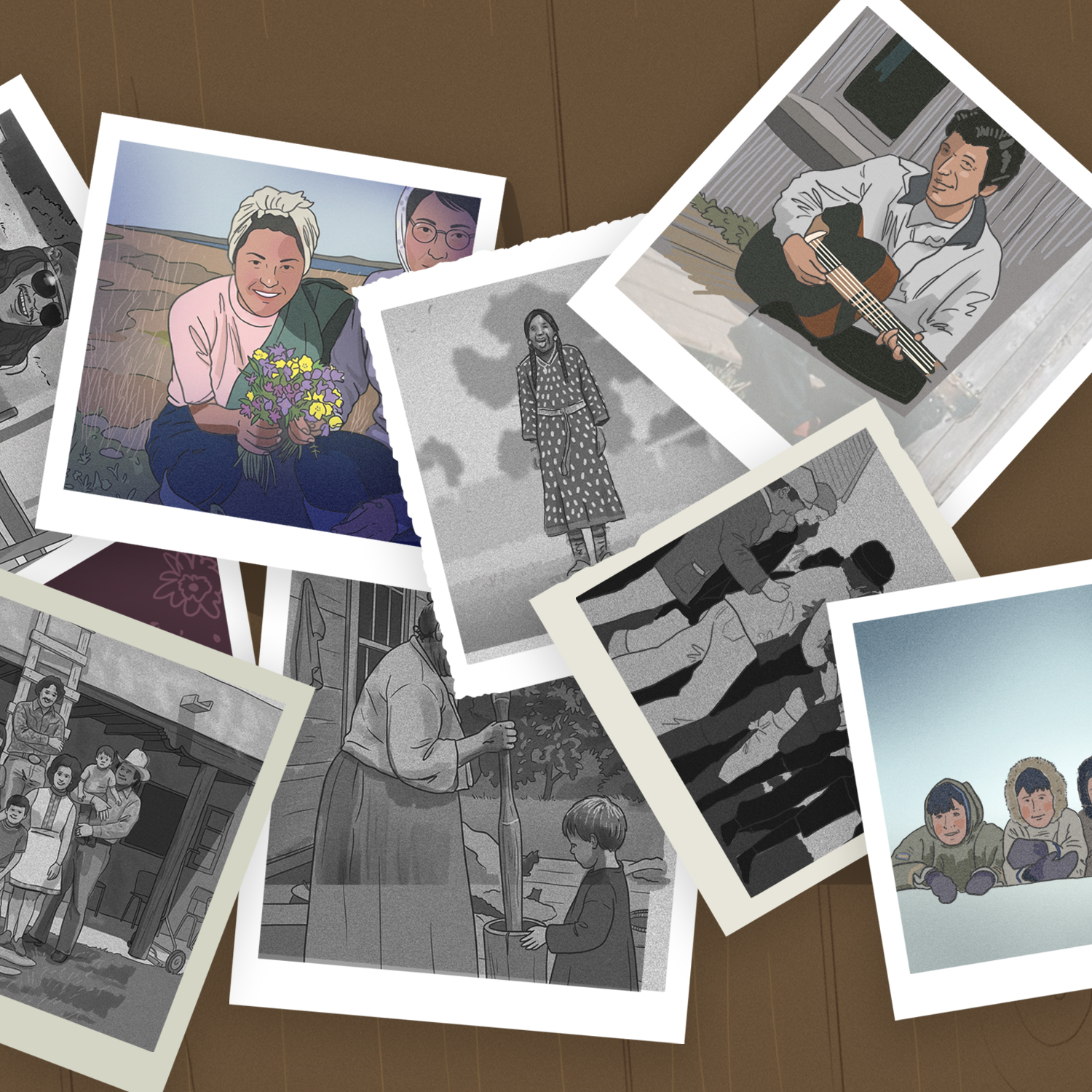
NSidedoor (S12E13) – NMAI Sleuths final web transcript Lizzie Peabody: This is Sidedoor, a podcast from the Smithsonian with support from PRX. I'm Lizzie Peabody. Lizzie: A few years back, Emily Moazami was digging around in the archives of the Smithsonian's National Museum of the American Indian when she found something that took her by surprise. Emily Moazami: I came across this photo, and it just made me laugh out loud. Lizzie: Emily is the head archivist at the museum, so she's seen a lot of photos. But this one really stuck out. Emily Moazami: It's an image of a girl standing outside in a field. It's a black and white image, and she's clearly dressed up for an occasion. And what's amazing about it is that she is grinning while also sticking her tongue out at the camera. And I just love this moment so much, because often you see historic photographs of Native peoples and they're very romanticized. Lizzie: This photo was taken in the early 1900s, and most pictures from that period showed Native people dressed in ceremonial clothes, staring at the camera, expressionless. They were formal—even staged. Not at all like this one. Emily Moazami: This is like a very sweet, candid moment where a girl is acting like a typical girl, and she's just being like, "I don't want my photo taken," Or, "I'm gonna tease you and I'm gonna stick my tongue out at you." Lizzie: Emily was enthralled by this young girl. She wanted to know who is she? So she went to the card catalogue. Emily Moazami: And all it said was "Woman in Costume." And that it was shot circa 1903 to 1910. And depicting the Crow community. Lizzie: How normal is it to have so little information with a photo in the archives? Rachel Menyuk: It is not that unusual, honestly. Lizzie: This is Rachel Menyuk. She's a processing archivist at the Smithsonian's National Museum of the American Indian. And she works closely with Emily. Rachel Menyuk: It might be descriptions like "Indian man." "Indian woman." Or it could just say a first name. Lizzie: Or in this case, no name. Emily and Rachel weren't sure if they'd ever find a name for this young girl. Until a few years later. Rachel was preparing for a new exhibition at the museum featuring photos from the archives. And she wanted to include the picture of the girl sticking her tongue out. But to print it at large scale, she'd need the original negative, so off she went down to cold storage to pull it out. Rachel Menyuk: And when I was pulling it, I looked at the envelope on it, and on that envelope for the original negative, it said "Sarah Grandmother's Knife." Lizzie: The "Woman in Costume" had a name: Sarah Grandmother's Knife. The card also said "Age 10. Wearing an elk-tooth dress and sticking her tongue out playfully. Montana, 1910." Rachel Menyuk: And I had one of those moments where your heart just kind of skips a beat, right? Like, "What?" Lizzie: She slammed the door of cold storage and took off! Rachel Menyuk: I must have run down the hallway. I am sure I was like, "Emily! Emily! Oh my gosh!" Emily Moazami: I think we both started screaming, we were so excited. Lizzie: [laughs] Rachel Menyuk: Because this is a photo we'd been looking at. I mean, like, who is she? Who is she? And there was her name the whole time. Emily Moazami: It's such a wonderful feeling to be able to put a name to a face. And that's just the starting point. Lizzie: So what did that unlock? Emily Moazami: So with the name then we were able to do a lot of genealogical research. So I hopped on Ancestry right away, started typing in the name. Lizzie: Through Ancestry.com, Emily soon found Sarah's father, whose name was simply Grandmother's Knife. Then she pulled out her old school archiving skills and dug into the US Indian census rolls, and before long, she found Sarah's Crow name. Emily Moazami: Which is Looks at the Hawk. Lizzie: Wow! Emily Moazami: So we have her full name, and now we can go back to the community and see if people know her as Looks at the Hawk, or we can find other archival materials that reference her by that name. So it's just the start of the research. Lizzie: There was so much more to learn. But to do that, Emily needed to find a living descendant of Sarah Grandmother's Knife. So she posted the photo on the museum's Facebook page. And then she waited. But this was not the only photo that Emily was trying to find more information about. Oh no, it was just the tip of the iceberg. Lizzie: So this time on Sidedoor, we're piecing together the past—one photo at a time. The Smithsonian's National Museum of the American Indian has more than half a million photos in the archives. And we're diving into that collection to see how archivists are connecting Native communities with photos of their ancestors—many of them photos that they never knew existed. Lizzie: So who was Sarah Grandmother's Knife? And how does sorting through photos of the past reframe the way outsiders see Native communities today? That's coming up after the break. *** [ARCHIVE CLIP, Emily Moazami: Hello! Hi. Welcome. I'm Emily. Very nice to meet you.] Lizzie: Emily is welcoming the Harmon family to the National Museum of the American Indian's Cultural Resources Center, just outside of DC. Lizzie: The Harmons are members of the Nanticoke Indian Tribe, which historically settled the area that is now Delaware and Maryland's Eastern Shore. And they're here because of an Instagram Post. See, Emily shared the picture of Sarah Grandmother's Knife on Facebook, but her team had posted some other photos from the collection of Nanticoke community members taken back in the early 1900s. And then they got a reply. Rachel Menyuk: Leonard Harmon had made a post on Instagram about having seen members of his family in these photos and how exciting it was. Lizzie: So the team reached out and asked if Leonard would be willing to come in and identify some of the relatives he'd recognized in the photos, and maybe even look at some more photos while he's at it. Not only was Leonard like, "Absolutely, I am there," he even brought a photo of his own. [ARCHIVE CLIP, Rachel Menyuk: Now was this in your house then?] [ARCHIVE CLIP, Leonard Harmon: This was in my grandmother's house. So this is of my third great grandfather. So the gentleman that you see in the photos of Lincoln Harmon, Chief Lincoln Harmon?] [ARCHIVE CLIP, Rachel Menyuk: Yeah.] [ARCHIVE CLIP, Leonard Harmon: This is his brother.] [ARCHIVE CLIP, Rachel Menyuk: Wow!] [ARCHIVE CLIP, Leonard Harmon: So they both were chiefs within the community.] Lizzie: Leonard and his family are not the first to come to the Cultural Resources Center to look through archival stuff. In fact, Emily has welcomed a lot of families. Emily Moazami: We always start the visits with a welcome, and introducing ourselves and getting the visitors' names and just kind of starting off in a friendly manner. [ARCHIVE CLIP, Emily Moazami: Welcome everyone. I'm so excited to have you here.] Emily Moazami: And we kind of give them an orientation of the building, because the building is really spectacular and it has a lot of symbolism built into it. [ARCHIVE CLIP, Nathan Sowry: This building, the rotunda was supposed to represent a lot of different Indigenous dwellings to different people.] Lizzie: Nathan Sowry is a referencing archivist at the Smithsonian's National Museum of the American Indian, and he's the third of our archivist trifecta. He joined Rachel and Emily to welcome the visitors from the Nanticoke community. [ARCHIVE CLIP, Nathan Sowry: So some people see the top as more of a teepee structure. Some people see it more as a wigwam.] Lizzie: After a brief tour of the building, everyone gathers into a conference room to look at photos together. People grab a coffee, maybe a donut. And they sit around a big table. Rachel explains the process. Rachel Menyuk: One of the first things that I do is ask what are you interested in looking at? Do people have things that they are the most excited to see? [ARCHIVE CLIP, Rachel Menyuk: I mean, I guess it's a little bit of a consultation, but also just to visit with the photographs. And first is just to hear a little bit more about you all, you know, your background and what you like to get out today. So what kinds of images are you most excited to look at?] Lizzie: And then everyone introduces themselves. [ARCHIVE CLIP, Leonard Harmon: So my name is Leonard Harmon. I'm Nanticoke and Lenape from Indian River Hundred.] Lizzie: There's also Leonard's mom. [ARCHIVE CLIP, Pam Pierce Harmon Johnston: I'm Pam Pierce Harmon Johnston.] Lizzie: Leonard's cousin. [ARCHIVE CLIP, Matthew Harmon: So my name is Matthew Harmon.] Lizzie: And Leonard's uncle. [ARCHIVE CLIP, Mike Harmon: Mike: I'm Mike Harmon, and it's exciting to see my grandmother's picture there.] Lizzie: Rachel has a photo of Mike's grandmother projected onto a large screen in the dark room. Then she clicks her mouse and shows some photos that an anthropologist took of Nanticoke community members back in the early 1900s. [ARCHIVE CLIP, Rachel Menyuk: These are not online. Everything else that you're gonna look at ...] [ARCHIVE CLIP, Leonard Harmon: Oh, I've never seen these.] [ARCHIVE CLIP, Rachel Menyuk: Yeah. The rest of them that you're gonna look at ...] Lizzie: But why does the collection have so many photos taken by anthropologists in the early 1900s? And why is there so little information about the people in the photos? Nathan Sowry: That's a great question, and unfortunately it's—I can't give a nice answer. It's gonna be a darker, more problematic answer. Lizzie: We're okay with those. Nathan Sowry: Okay, good. Lizzie: Nathan says back in the late 1800s, many non-Native people were thinking the same thing. Nathan Sowry: That Native peoples were disappearing, that they were either dying off through disease or they were assimilating to Euro-American culture. Lizzie: There was even a name for this: the "Vanishing Indian." Nathan Sowry: And so anthropologists, in kind of a good and bad way, they wanted to document native cultures before they were gone. Lizzie: So in the late 1800s, people descended on Native communities in droves, documenting everything they could—taking notes, collecting objects, and of course, snapping lots and lots of pictures. Emily Moazami: So there was this abundance of photographers of all skill levels—amateur, professional, anthropologists—going to Native communities to document Native peoples, because they were either in their minds a dying race. Lizzie: But these anthropologists and photographers weren't interested in documenting family lines or specific individuals. Emily Moazami: The photographers often saw the people as archetypical Indians. Nathan Sowry: This pure idea of an individual who best represents this community or that community. Lizzie: Oh. Nathan Sowry: So to those anthropologists and those photographers, it wouldn't make sense to write down somebody's name. Lizzie: Right. The point is that you're not an individual, you're a representative ... Nathan Sowry: Yeah. That's exactly it. Lizzie: ... of an entire culture. An entire kind of people. So a name is almost antithetical to the mission of the photograph. Nathan Sowry: It really is. Yeah. Lizzie: Many of these photos showed a stereotypical or one dimensional view of Native communities, depicting them as people who exist outside of modernity in the wild corners of America. This was not true, of course, but that didn't stop some photographers from getting very famous spreading this idea. People like Edward Curtis. Nathan Sowry: He's like the most infamous, problematic of those photographers decorating Native peoples in certain headdresses and carrying community items that aren't even from their community. Lizzie: Edward Curtis was a photographer and ethnographer who focused on the American West. And yeah, he was literally shoving random things from another tribe into someone's hands and saying "Hold this and stand there. Thank you." See, the point wasn't documentary accuracy, it was selling an illusion. Nathan Sowry: He really romanticized—there's the idea of—again, this was the language of the time—the quote-unquote "noble savage." Lizzie: And you can argue that many photos present a distorted or manicured image of real life. Just look at what people post on social media. But Curtis really stretched those boundaries. Nathan Sowry: The most famous photos are one of two elderly men inside a teepee, and between them is an alarm clock. Lizzie: But Curtis didn't realize there was an alarm clock in the background when he took the photo. So he was like, "Consarn it! I can't have an image of Native man in a teepee with an alarm clock. That's technology!" So he got a little crafty. Nathan Sowry: I jokingly refer to it as, like, the first Photoshop where he goes in and alters it and manipulates the image to meet what he thinks it should represent. So instead of that alarm clock appearing, that alarm clock is, like, brushed out and replaced by a pot. Lizzie: And this wasn't a one-off thing for Curtis. In another photo, you can see an older Native man and woman standing outside. Nathan Sowry: And behind them is a—I forget what kind of Ford automobile but, you know, early 1900s. So a Ford automobile is there, and again Curtis is like, that can't exist. Native peoples exist in this, you know, primordial past, they can't exist now with—you know, that doesn't sell his romanticized image. So he drew a big bush over—like, just colored it in over. And of course it looks pretty hacky anyway, if you take a close look. Lizzie: That's kind of insulting on two levels. It's like, "No one will notice this." But also, I mean, it's doctoring the photo and then it's like, I'm getting a, like, Harold in the purple crayon vibe, almost. Nathan Sowry: Right? Right? Lizzie: Yeah, yeah. We'll put in a bush here. [laughs] Lizzie: So what was the result of all these doctored portraits? Well, between 1907 and 1930 Curtis published a 20-volume set of books that are filled with photos of Native people. These were large coffee table-sized books that were sold around the world. And this had a massive influence on how people everywhere saw Native Americans. It's an image that still persists today. Nathan Sowry: We do have visitors who will come into the museum and say, "Oh, I didn't know native people still existed." Lizzie: Now NMAI is trying to correct this image. It's also working to right the wrongs of salvage anthropology, because many of the photos and objects collected by salvage anthropologists ended up in museums across the globe. Rachel Menyuk: And now a lot of the work is to sort of piece together where these things have ended up so that communities can find them again and bring them home. Lizzie: When the Museum of the American Indian went bankrupt in 1989, Congress passed legislation that transferred that collection of 800,000 objects to the Smithsonian, creating the National Museum of the American Indian. That's how the Smithsonian became home to these objects and photos. Lizzie: And it's not so easy to find the names of people in these photos. You can't just Google Image Search or ask Siri who this person is in a 120-year-old photo. You need to talk to real living people, the keepers of the memories—memories that often exist only in the stories we tell our family. Lizzie: And it starts with a name. [ARCHIVE CLIP, Rachel Menyuk: All right, does anyone know how to say this name?] [ARCHIVE CLIP, Leonard Harmon: Derelicts Amif.] [ARCHIVE CLIP, Rachel Menyuk: Derelicts Amif. [laughs]] [ARCHIVE CLIP, Matthew Harmon: You had that ready.] [ARCHIVE CLIP, Rachel Menyuk: Yeah.] [ARCHIVE CLIP, Matthew Harmon: I actually did a painting about him.] Lizzie: Still to come: What it looks like to set the record straight. And what will we learn about Sarah Grandmother's Knife? *** Lizzie: I'm here at the Smithsonian's National Museum of the American Indian's Cultural Resources Center, listening in as archivists from the museum and members of the Harmon Family identify unnamed Nanticoke people in photos taken in the early 1900s. [ARCHIVE CLIP, Pam Pierce Harmon Johnston: He looks like my great-grandfather Pierce. He looks like Pop Pop Pierce.] [ARCHIVE CLIP, Matthew Harmon: That is one righteous neck beard, too.] [laughter] Lizzie: It is one righteous neck beard, if I do say so myself. And I also have to say that even though there is a problematic past of how these photos got here, today's visit is pretty enjoyable. Nathan Sowry: But I will say 75 percent of these community engagements and photo consultations that I've been a part of have been really, really fun. Emily Moazami: One of the things I love about these types of community visits is when it's a group of people, and then they'll play off each other. Someone will shout out, "I think that's—this is—" this information or that person, and they'll go, "No, no, no." And so it's a dialogue, and it's just fun to be kind of a fly on the wall. [ARCHIVE CLIP, Leonard Harmon: This person's last name is my middle name.] [ARCHIVE CLIP, Rachel Menyuk: Oh! Can you just say it out loud for us?] [ARCHIVE CLIP, Leonard Harmon: Durham.] [ARCHIVE CLIP, Pam Pierce Harmon Johnston: So that's one of the things that we tried to do is to keep the family surnames or names at least connected in the family so they'd never get lost.] [ARCHIVE CLIP, Leonard Harmon: So that's why my name's Leonard Durham Harmon. So my mom made sure that I had all of my names in there.] Lizzie: Matt Harmon explains the long tradition of keeping names in the family. [ARCHIVE CLIP, Matthew Harmon: So we kind of started a tradition to take the first name of the father as middle name. I don't know how long it'll go, but ...] Lizzie: Pam says it was also common to marry within the small Nanticoke community where she grew up, a practice that created a funny situation when her third cousin came up to her and said ... [ARCHIVE CLIP, Pam Pierce Harmon Johnston: "My grandfather said I could date you."] [ARCHIVE CLIP, Nathan Sowry: Wow!] [ARCHIVE CLIP, Pam Pierce Harmon Johnston: I said, "Not today."] [laughter] [ARCHIVE CLIP, Mike Harmon: Telling all the secrets now.] [ARCHIVE CLIP, Matthew Harmon: But it was a manifestation of survival. We couldn't marry outside. I say "we," but I'm speaking, you know, in terms of the times. During this time period you didn't go outside of your community and marry. You couldn't. And number one, you'd probably get in trouble, but number two, you're trying to maintain survival and community aspect.] [ARCHIVE CLIP, Pam Pierce Harmon Johnston: Absolutely.] [ARCHIVE CLIP, Matthew Harmon: And so that was—I mean, third, fourth cousins. And, you know, how that works out. That's how it works out, I guess.] [laughter] Lizzie: Nathan says it's amazing to be able to sit in on these conversations. You show one photo or ask one question ... Nathan Sowry: And right from there—boom! It goes for the next two to three hours. And you just see the younger generation learning from their elders and saying, "Oh, I didn't know that." But also the elders saying, "Oh, I haven't seen that photo ever." Lizzie: It's kind of like sitting in on someone's family reunion. Rachel Menyuk: That's exactly what it is. It's a family reunion. And, you know, my job is to sort of be a fly on the wall a little bit as these things are happening to help guide the conversation, but with a really light touch, sort of step back and just listen. Just listen to the stories that are being told, and then click the mouse and say, "Okay, next photo." [ARCHIVE CLIP, Rachel Menyuk: These are the next two. This one says here in the description, you can see "Mabel Knight, non-Native." So she might have come out from somewhere and ...] [ARCHIVE CLIP, Matthew Harmon: She's got Delaware face paint. [laughs]] [ARCHIVE CLIP, Rachel Menyuk: Yeah.] [ARCHIVE CLIP, Leonard Harmon: She's got big golden in the back of her head[a], too.] [ARCHIVE CLIP, Rachel Menyuk: But then here's something that I am very interested in adding. Right now it just says, "And his wife."] [ARCHIVE CLIP, Nathan Sowry: No name.] [ARCHIVE CLIP, Rachel Menyuk: No name.] [ARCHIVE CLIP, Leonard Harmon: Who was that?] [ARCHIVE CLIP, Rachel Menyuk: Do you know what her name was? This is a big thing for me.] Rachel Menyuk: Women's names, I'm—one of my things as an archivist is that it drives me nuts when things are listed as "Mrs. Joe Schmo," right? Lizzie: Uh-huh. Rachel Menyuk: And that happens a lot. Where ... Lizzie: Like, under their husband's name? Rachel Menyuk: They're listed as their—in their husband's name. Lizzie: Okay. Lizzie: After just a minute of digging through his files, Matthew comes up with a name for the woman in the photo. [ARCHIVE CLIP, Matthew Harmon: Florence A. Drain.] [ARCHIVE CLIP, Pam Pierce Harmon Johnston: She was a Drain?] [ARCHIVE CLIP, Matthew Harmon: Mm-hmm. Florence.] [ARCHIVE CLIP, Rachel Menyuk: Florence A. Drain.] [ARCHIVE CLIP, Mike Harmon: D-R-A-I-N. [ARCHIVE CLIP, Rachel Menyuk: D-R-A-I-N. Excellent.] [ARCHIVE CLIP, Nathan Sowry: Now she's no longer just his wife. She has a name.] [ARCHIVE CLIP, Rachel Menyuk: Amazing!] Lizzie: This is the process in action. Correcting the record, filling in the missing pieces of history. Connecting communities one photo at a time. And the Harmons helped with a lot of identifications. Emily Moazami: I think I was excited and surprised at how much they recognized in the photographs, even though the photographs were pretty old. So it shows that, you know, a lot of information has passed down from generation to generation, which is amazing and that's what we hope for. Lizzie: Rachel says this isn't a one-time thing, though. This is just the beginning. Rachel Menyuk: We know that we have this new collaboration. So it's not just about today, it's about tomorrow and next week, and how we're gonna move forward and continue to do this work together. Lizzie: Emily, Nathan and Rachel say that's the biggest goal: building relationships between the museum and Native communities. It's a relationship that's been strained because of salvage anthropology practices of the past. But trust is slowly being rebuilt, one community at a time. And Matthew Harmon says he's happy to restart that relationship on the right foot. [ARCHIVE CLIP, Matthew Harmon: You hear so many times where Native people, when they go to these places where these items are kept and it incenses them. It makes them—you know, "Oh, that should be home. That's ours, da da da." And maybe because of some things, how they were treated, even in our own state they put our bones—our ancestors' bones out on display. And then our tribal council and chief at the time went and had them close that. But how things were handled in the past are different from how they're handled today. That's been shown today. So if we go back and we talk to our own people and say, "Listen, they're not here to just, you know, make money off of us or, you know, put us out like we're nobody, like we're not here anymore. But they actually treated us with dignity and respect. They actually want to make sure that these things are carried on and passed on, not only for our seven generations, but theirs as well, all of ours collectively."] Emily Moazami: NMAI is not a museum where we're just collecting to show the mass public this is what Indians are about. Like, we don't see ourselves as the experts. We see the communities as the experts of their own cultural heritage. Lizzie: Is the goal to sort of identify the objects in the collections of NMAI and the people in these photographs so that you can then return everything to the Native communities where everything originated? Rachel Menyuk: Yes, and. I'll say yes, and. Because, you know, the archives exist to continue to tell these stories, but it is up to Native community members which stories they want to be told. Nathan Sowry: We want to be the best stewards that we can. And the way we do that is collaborating with Native peoples. It's their culture. We're just the stewards of it. Lizzie: For now. Nathan Sowry: For now. Yeah. Hopefully it'll go back home. Lizzie: The Harmons are happy to have the photos out there for everyone to see as a community resource, provided they're in the right context with the right names. Leonard even offers to contribute his own photo to the collection. [ARCHIVE CLIP, Leonard Harmon: It's the perfect time if you guys wanna scan it, go ahead and do it.] [ARCHIVE CLIP, Rachel Menyuk: Yeah!] [ARCHIVE CLIP, Leonard Harmon: I'm glad you guys got to see this, though.] [ARCHIVE CLIP, Mike Harmon: I knew it was maybe a missing piece of the puzzle.] Lizzie: Speaking of missing pieces of the puzzle, remember Sarah Grandmother's Knife? The photo Emily posted of the girl with her tongue sticking out? Well just the other day, a woman in Montana named Sara Morrison was on Facebook. Sara Morrison: I was just scrolling. Lizzie: When she saw the photo of a 10-year-old Crow girl sticking out her tongue. Sara Morrison: And so I thought, "Oh, that's so cool." And I commented, "This is my great grandmother." And yeah, I thought—I thought that was so neat." Lizzie: Sara had seen this photo when she was younger and knew it well. She'd never met Sarah Grandmother's Knife, but from what she's heard, it's a pretty great depiction of her personality. Sara Morrison: They said she was very funny. She was a very witty, quick-witted person. And it made me laugh to see that, because most photos from those days, they didn't smile. And for her to do that, that just makes me happy. Lizzie: Sarah Grandmother's Knife may not have known it at the time but she was blowing a raspberry at convention. The photographer—an amateur photographer named Fred Meyer—was likely expecting the same stoic expression you often get in these photos. An image that was representative of people who were different. But what she showed was your average 10-year-old girl—defiant, funny and strong-willed. Lizzie: Emily, Nathan and Rachel are working with Sara and her brother right now to learn more about Sarah Grandmother's Knife. To find out who this young girl became, where she lived and traveled, who she married, who her children and grandchildren were. And to connect the past to the present. Because even though Sarah Grandmother's Knife is no longer alive, her descendants are. Lizzie: The idea of The Vanishing Indian was always a lie. And the more we can learn about the people in these photos from the past the more we can connect them to people who are alive today. [ARCHIVE CLIP, Leonard Harmon: Because that shows continuity.] [ARCHIVE CLIP, Matthew Harmon: Right. Right. And that I'm still here, right?] [ARCHIVE CLIP, Pam Pierce Harmon Johnston: We're still here.] [ARCHIVE CLIP, Leonard Harmon: That we're still here, right? This descendant, this bloodline is still here today, right? And then that shows the past, present and what the future could potentially look like.] *** Lizzie: You've been listening to Sidedoor, a podcast from the Smithsonian with support from PRX. To learn more about the exhibition InSight and to see some photos from the archives of the National Museum of the American Indian find us on social media. Our handle is @SidedoorPod. Their handle is @SmithsonianNMAI. Lizzie: Curious if some of your relatives might be in the Smithsonian's Online Virtual Archives? Visit SOVA.si.edu to begin your search. Since this episode covers the topic of human remains and unethically-acquired Native American objects in museums, we wanted to let you know that the Smithsonian has developed a policy for the appropriate care, shared stewardship or ethical return of all of the human remains housed in the collections. In the meantime, the Smithsonian continues to restrict research on all human remains in its care and the acquisition of any additional remains. Lizzie: If you have any requests concerning the return of the remains of Native American individuals, inquiries about possible ethical returns of objects or questions about the policy, we'll include links and email addresses in the show notes for this episode. You can find that on your podcast player or our website, Si.edu/sidedoor. Lizzie: For help with this episode, we want to thank Emily Moazami, Nathan Sowry, Rachel Menyuk, Sai Muddasani, Marielba Alvarez, Sara Morrison, Albert Gros Ventre and the Harmon Family, including Leonard Harmon, Pam Pierce Harmon Johnston, Mike Harmon and Matthew Harmon. Lizzie: Our podcast is produced by James Morrison, and me, Lizzie Peabody. Executive producer is Ann Conanan. Our editorial team is Jess Sadeq and Sharon Bryant. Fact-checking by Nathalie Boyd. Episode artwork is by Dave Leonard, and transcripts are done by Russell Gragg. Extra support comes from PRX. Our show is mixed by Tarek Fouda. Our theme song and episode music are by Breakmaster Cylinder. Lizzie: If you have a pitch for us, send us an email at Sidedoor [at] si [dot] edu. And if you want to sponsor our show, please email sponsorship [at] prx [dot] org. Lizzie: I'm your host, Lizzie Peabody. Thanks for listening. *** [ARCHIVE CLIP, Matthew Harmon: It is literally on our tribal flag. Past, present, future. There's three words, three Nanticoke words on the bottom of the flag. And we always keep that mindset.] [ARCHIVE CLIP, Leonard Harmon: Mm-hmm.] [ARCHIVE CLIP, Matthew Harmon: Our culture is this, so that we—just like he's been saying, that's what we're—it's beaten into our brain. Don't just think of your generation or yourselves.] [ARCHIVE CLIP, Leonard Harmon: Because it's not about me right now, right? It's about what's ahead of me. It's about my daughter, her kids. [ARCHIVE CLIP, Pam Pierce Harmon Johnston: The generations to come.] [ARCHIVE CLIP, Leonard Harmon: Right.] -30- [a]I can't quite make out what he says here.