
Sidedoor · Smithsonian Institution
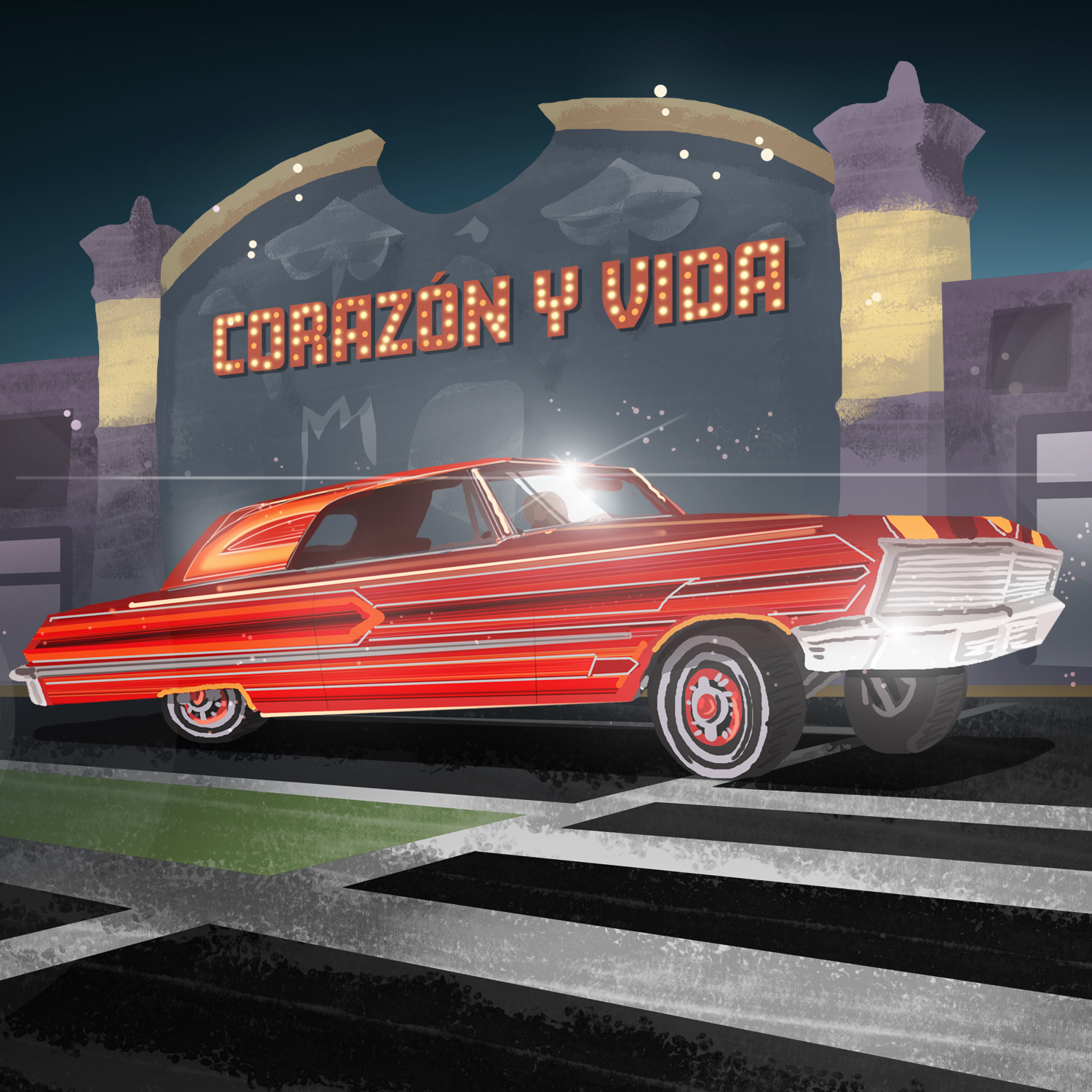
How did a car with chopped suspension and hydraulics become a symbol of pride and self-expression for an entire community? We'll cruise back in time to see how lowriders emerged from the post-WWII car craze and became a powerful symbol of Mexican American pride. It's a long road with a few speed bumps, but lowriders are now more popular than ever (especially in Japan!) So, lean your seat back and see how chrome, paint, and a dose of defiance turned classic cars into rolling works of art that have cruised their way into the Smithsonian's National Museum of American History. Learn more about the Smithsonian's exhibition on Lowriders — Corazón y vida — HERE This project received federal support from the Smithsonian Latino Initiative Pool, administered by the Smithsonian National Museum of the American Latino.
Sidedoor (S12E17) – Lowriders final web transcript Lizzie Peabody: This is Sidedoor, a podcast from the Smithsonian with support from PRX. I'm Lizzie Peabody. Lizzie: In the 1930s, zoot suits were all the rage in Black communities like Harlem, Detroit and Chicago. What's a zoot suit? Steve Velazquez: So a zoot suit is a regular suit made, you know, probably wool, probably cotton. And it has a distinct look. Lizzie: Here to paint the picture for us is Steve Velazquez. He's a curator at the Smithsonian's National Museum of American History. Steve Velazquez: It's kind of big shoulders, a long jacket that's probably a bit longer than the length of your fingers and hands. Denise Sandoval: The pants are baggy, with tapered legs at the end, and also people would wear, like, watch chains, a hat with feathers. Lizzie: Denise Sandoval is a professor of Chicana and Chicano studies at California State University-Northridge. She says the suits were cartoonishly large, exaggerated looking. They got popular in the jazz and swing culture of the time. Like in this song featuring Paul White. [ARCHIVE CLIP: A Zoot Suit for My Sunday Gal] Lizzie: But the popularity of zoot suits soon spread west. By the 1940s, young Mexican-Americans in Los Angeles had really taken to the suit. They liked that it was a symbol of counterculture, a pushback against acceptable fashion. Steve Velazquez: And the youth in California, the youth in Mexican-American communities were drawn to this kind of identity. Lizzie: Denise says it's like punk rockers putting patches on their jackets, shaving their hair into mohawks. Denise Sandoval: So, like, your bodies are resistance, they're the ultimate resistance. And you sort of think back, like even for us, like at that age, like middle school, high school, people start dressing a certain way, right? And the zoot suit is just another example. Lizzie: But not everyone liked zoot suits. In fact, some people downright hated them. Denise Sandoval: The zoot suit as a fashion style shifted in meaning really during World War II, when they began, like, war rationing of materials. Lizzie: During the war, wool and cotton were being used for soldiers' uniforms and other military purposes. Zoot suits were oversized suits that required a lot of fabric, not really in line with rationing. Denise Sandoval: That's when you begin to see in the media, like, you know, zoot suiters were anti-American. They're sort of like flaunting their style in the face of what was happening of, like, war rationing during World War II. Lizzie: And this started to fuel tensions in downtown LA, where zoot suiters danced and let loose on the weekends. Because there was another group of people partying in downtown LA at the time and they took wartime rationing very seriously. Denise Sandoval: So Los Angeles was a major port of entry for the navy sailors who were coming downtown, you know, to have some fun. Lizzie: And they got angry at what they saw as zoot suiters apparently turning their noses up at the war effort. And in late May of 1943, a brawl broke out between Mexican-American zoot suiters and some members of the military. A soldier got beaten up. When word of the fight got back to the military barracks, teams of sailors rushed into the city with clubs and other weapons. They attacked anyone wearing a zoot suit. Denise Sandoval: It became, like, 10 days of where the streets were just sort of taken over by sailors, battles, going into movie theaters, pulling out Zoot Suiters, ripping off their suit and sort of putting it, like, in the street. Lizzie: An eyewitness told a local newspaper at the time ... [ARCHIVE CLIP: Thousands of Angelenos turned out for a mass lynching. Marching through the streets of downtown Los Angeles, a mob of several thousand soldiers, sailors and civilians proceeded to beat up every zoot-suiter they could find. Streetcars were halted while Mexicans and some Filipinos and Negroes were jerked out of their seats, pushed into the streets, and beaten with sadistic frenzy.] Lizzie: When police came to break up the riots, they told the sailors to return to their ships and arrested the zoot suiters. Steve Velazquez: And so there are images of buses of these Mexican-American men who were rounded up. They're all wearing zoot suits. You can see it clearly in the photographs. And it was a race riot essentially. Lizzie: This became known as the Zoot Suit Riots. Afterwards, the LA City Council banned people from wearing zoot suits. A councilman said the zoot suit had become, quote, "a badge of hoodlumism." Denise says the zoot suit was never about hoodlumism. It wasn't even really about the suits. It was about self expression. Denise Sandoval: To say this is who I am. Build community. And that was that first generation that was really trying to express this hybrid identity of what it means to be both Mexican and American. Lizzie: With the zoot suit banned, Mexican Americans needed something else to fill that role of self expression. And they soon found it. But it wasn't something you could wear. It was something you could drive: the lowrider car. Lizzie: This time on Sidedoor, how intricately painted cars with chopped suspension became a symbol for Mexican-American pride. We'll cruise back in time to see why lowriders faced so much resistance, and how attempts to put the brakes on lowriding made these cars more popular than ever. It's an episode that you'll want to blast out of your speakers while cruising low and slow. That's coming up after the break. *** Lizzie: I'm at the Smithsonian's National Museum of American History with Steve Velasquez. We're touring an exhibition he's curating that's all about lowriders. And we're looking at the centerpiece of it, a lowrider called Gypsy Rose. Lizzie: Do you get to see or hear how people react when they come up and see the Gypsy Rose? Steve Velazquez: The gasps, they're audible. You can hear them from any point in the gallery. Lizzie: The car might be the pinkest thing I've ever seen. It's a 1964 Chevy Impala that's definitely riding low to the ground. A mouse would have trouble squeezing underneath it. And besides the pink, the paint job features hundreds of red roses and green vines. Steve Velazquez: Inside it is crushed red velvet. There used to be a TV in there. There are candelabras, little sconces and there's even a bar in the back. Lizzie: It's part car, part discotheque, part work of art. And it's not the only car in the exhibition. Steve shows me another lowrider. Steve Velazquez: So this has almost a hundred layers of paint on it. Lizzie: This car is El Rey. Steve Velazquez: It's red. It is what's called flake. So it kind of gives us this almost like glitter sheen to it. It sparkles in the sunlight and spotlights. Lizzie: This is a 1963 Chevy Impala. The paintjob shimmers, and the detail is unbelievable. I mean, every millimeter of the car is decked out from the trunk to the axle to the engine. Steve Velazquez: The engine it's chromed out. It is a work of art. It is truly kind of more of a sculpture than an engine. There's murals on here, there's engraving. The nuts and bolts are covered as well with engraving. It is truly, truly an amazing car. It's an award-winning car. Lizzie: The name of this exhibition, "Corazon y Vida" is Spanish. And it translates to "Heart and Life." Steve says that's because lowriders are a passion and a way of life. And even if you're not familiar with lowriders, you've likely seen them. They're in hip hop videos. [ARCHIVE CLIP, Eazy-E: cruising down the street in my '64.] [ARCHIVE CLIP, Ice Cube: 'Cause I got me a drop top. And if I hit the switch, I can make the ass drop.] [ARCHIVE CLIP, Snoop Dogg: Still hitting the corners in them lo los, girl. Still taking time to perfect the beat.] Lizzie: Countless films like Cheech and Chong's Next Movie. [ARCHIVE CLIP, Cheech Marin: Hey, that's a nice car, man. Better get it back to the circus before they find out it's gone. [laughs]] Lizzie: And you've almost certainly heard this song by War. [ARCHIVE CLIP: "Low Rider" - War] Lizzie: It's hard to describe a lowrider. It'd be like trying to describe a famous painting. Albert DeAlba Sr.: It's art on wheels. Lizzie: Albert DeAlba Sr. is the owner and builder of El Rey, one of the lowriders in the exhibition. Albert DeAlba Sr.: So many people tell me that when they see my cars, "Man, that's not even a car. It's art on wheels." And I agree with it because it is an art form. We go the extra mile. Lizzie: Albert is a second-generation low rider. Like many low riders today, he got into it through his father. Albert DeAlba Sr.: By the time I came into the Earth, he was already low riding. Lizzie: Lowriding was still fairly new when Albert was growing up. It had hit second or third gear by this point. But if you want to shift into reverse and back up into the start of lowriding, you gotta go back a few decades to the mid 1940s. This was a unique time when people in America had a special relationship with their cars. Lizzie: In the years after World War II, car culture exploded in America. It was part utility, you know, for driving to work from the suburbs. But it was also part symbol. A car was freedom, independence, the American dream. Steve Velazquez: And it's an important, I think, marker for American identity, right? It's almost part of making it in America. You can afford a car for your family, to get to work, to enjoy on the weekends. And so it's a marker of kind of economic prosperity. Lizzie: And more people could afford cars than ever before. See, during the war, carmakers shifted to building tanks and jeeps, but after the war, they started making cars again. Denise Sandoval: With the return to production after World War II, after post 1945, there was, like, a turnover in used cars. Lizzie: And that created a huge market in used cars. At the same time, you had this tidal wave of young men returning from war with extra money just burning a hole in their pockets. Denise Sandoval: I think that sort of opened up opportunity for, like, younger folks to, like, buy their first cars, like, beginning to sort of use these old cars and modify them and chop them. Lizzie: These young veterans also had mechanical training from the war, so they knew how to modify—or chop—the cars they were buying. Pretty soon, they were altering these used cars to make them faster or put a unique spin on them. Denise Sandoval: Changing interiors, paint jobs. Modifications could even be like chopping the front of one car and putting it on another car. Lizzie: Hot rods were big at the time. These are cars with powerful engines built for speed. Many were also lowered for better aerodynamics and handling. And some young Mexican-Americans took this lowering aesthetic and ran with it. Denise Sandoval: How you would achieve a lowered look of a car, you would have to cut the suspension coils in the rear and put lowering blocks on your car to keep it low. Or put sandbags in your car. So it's like literally your car is all the way low all the time, right? Lizzie: With chopped suspension or weights in your trunk, you wouldn't win any races. But these lowriders could cruise around town in style, which is what all the cool kids were doing in the 1950s. Lizzie: People would trick out their car or truck and drive up and down the main boulevard in town. But not everyone liked young people cruising Main Street or turning the Dairy Queen parking lot into a hang out. So in Southern California, where cruising was huge, cities started passing laws to stop these cruising youngsters—particularly lowriders. Steve Velazquez: They come up with a law that says, you know, your car can't be lower than a certain amount of inches. You can't modify the suspension. And so they start to take it and take it and just try to end this cruising. Lizzie: This was the first anti-lowrider law. It went into effect on January 1, 1958, and it prohibited modifications that made a car's body lower than the bottom of its wheel rims. But this didn't stop lowriders. It actually made them what they are today. Lizzie: In 1959, a man named Ron Aguirre had a problem. He had built a space-age looking custom Corvette called X Sonic. It wasn't a lowrider, it was a show car. But it was so low to the ground that it was considered, quote, "The lowest car in Rialto, California." Lizzie: And one police officer made it his mission to write Ron a ticket anytime he saw the X-Sonic. Ron's life was customizing cars and coming up with strange new modifications. So one day, he got an idea. He went to an army surplus store and bought some parts—airplane parts. Denise Sandoval: The portion of the airplane that raises and lowers the wing flaps. Lizzie: Hydraulics. These compressors pump liquid through tubes to move parts of an airplane with the flip of a switch. Ron thought, why can't I put these hydraulics on my car's suspension? So he welded hydraulics onto his Corvette. This way, he could raise it from super low to street legal at the flip of a switch, and wave merrily at that policeman as he drove on by. And when a few Mexican-American lowriders in LA heard about this, they were inspired. Steve Velazquez: These guys took hold of that and figured out that hey, if we can install hydraulics in the car, we could at the flip of a switch become road legal. You know, we could cruise as low off the ground as we want and as the authorities come flip a switch, we can rise up those few inches and become legal and they won't harass us. Lizzie: Lowriders with hydraulics started popping up all across LA—literally. And hydraulics have now become an essential part of the lowrider aesthetic. Albert DeAlba Sr.: Hydraulics is like the epitome of a lowrider. That's what makes it go up and down. Those are the main ingredients of a lowrider. Lizzie: Another main ingredient of a lowrider is the type of car. Really, any car can be—and likely has been—turned into a lowrider. But the epitome of a lowrider is a late '50s, early '60s Chevy. Why Chevrolet? Well, Denise says she asked this same question when she first started doing research into lowrider culture. Denise Sandoval: And then early on, I just realized it was the most stupidest question to ask, because they would look at me like, look at the car. It's like, look at its sculpture. Like, the car is like art. It's like, it's literally screaming to be modified. They're just beautiful. Lizzie: It's true, these Chevys are elegant and stylish with long clean lines. And the most popular of these Chevys is probably the 1964 Impala. Remember the car Gypsy Rose in the exhibit? That's a 1964 Chevy Impala. El Rey? A 1963 Impala. Steve Velazquez: The '60s Impalas are popular because just think about the car. It's a big car, so there's a lot of surface area, there's a lot of clean lines in those models that the low riders love to test and play around with. Lizzie: The early '60s Chevy Impalas really are like big canvasses. And it definitely doesn't hurt that they come in a convertible, perfect for cruising around in that Southern California sun. Lizzie: Still to come, how lowriders became a symbol for Mexican-American pride, and then rolled into a wave of resistance that nearly put lowrider culture in the garage for good. We'll have more on that after the break. *** Lizzie: In the 1960s, the Civil Rights Movement swept the nation. [ARCHIVE CLIP, George Wallace: And I say segregation now, segregation tomorrow and segregation forever.] [ARCHIVE CLIP, Malcolm X: Black people are dissatisfied.] [ARCHIVE CLIP, John F. Kennedy: A great change is at hand.] Lizzie: Denise Sandoval says the fight for equal rights and an end to racial discrimination spread to nearly every minority community in America. Denise Sandoval: I always like to talk to my students about how the Black community, they also chose the word "Black," right? And redefined it in an empowering way. Black is beautiful, right? Because of the history of "Black" being negative. So the Chicano movement, similarly, was about recovering sort of our Mexican history. Lizzie: Denise says during the Civil Rights Movement, Mexican Americans adopted the term "Chicano" as a way to empower themselves. It's a shortened version of the word "Mexicano." Denise Sandoval: Those became the Aztecs in the history book, but they were the Meshicas. So Mexicanos, those are Mexicans., Mexicanos, right? Chicano. Lizzie: The Chicano Movement was a fight for equal rights, better working conditions and more for Mexican Americans. It also pushed Mexican Americans to be proud of their mixed identity—American, Mexican and Indigenous—or Aztec, to be precise. Steve Velasquez says that's why Chicano symbolism is filled with Aztec imagery. Steve Velazquez: The imagery of the warrior, of the Aztec princess, the imagery of myth and mythology from Mexico and beyond. Lizzie: For example, the United Farm Workers labor union, which formed during the Chicano Movement, uses an Aztec eagle as its symbol. And lowriders were gaining popularity in the Mexican-American communities of California during this time, the 1960s. So you started to see the same art that was decorating the community start decorating the cars in that community. Denise Sandoval: When you talk to the low riders in LA, like, they started putting, like, murals on the car, being inspired with the artists that were putting murals in our communities here in LA, right? The Chicano communities and the Black communities as well. And so the idea then is your car can even be another layer of pride, right? Because it's this time period where we're, like, taking back. Like, this is how we see ourselves. Lizzie: Lowriders became rolling murals of Mexican-American pride. They incorporated Aztec imagery like flowers, volcanoes and mythic figures with a twist of the modern. Steve Velazquez: So you'll have the Aztec warrior, for instance, right next to an image of their girlfriend or something. And so they're blending these different cultures together. Lizzie: As the Chicano movement carried on to the 1970s, lowriders began to grow in popularity. And Steve says there's one specific reason for this. Steve Velazquez: The most important part of the story is the creation of Lowrider Magazine. Lizzie: Sonny Madrid, David Nunez and Larry Gonzalez founded Lowrider Magazine in San Jose, California, in 1977. And Steve says it was about more than cars. Steve Velazquez: It was a way of just kind of showcasing Chicano culture, not just—again, not just in California, but across the country. Denise Sandoval: Here's this car magazine having cars, but it's actually like journalism and new stories about what's happening in Albuquerque, what's happening in LA, what's happening in Sacramento. And they would stress education, you know, and they would have all these beautiful images of our community that often, you know, people didn't see in Hollywood movies or on TVs at that time. Steve Velazquez: And so it was—it was kind of like a Chicano newsletter. Lizzie: The magazine organized lowrider car shows to raise money for Latino labor unions like the United Farm Workers. It hosted health initiatives. Lowriders became tools for rallying the community. A bunch of lowriders would show up at a park and start drawing attention. And once you had a crowd, you could start talking to people about issues affecting the community, or you could ask someone to donate to the local school. Denise Sandoval: I think that's one of the things that goes overlooked in lowrider history. There has always been this philanthropic activist motto of lowriding, like food drives, you know, toys for tots or the trunk and treats that are becoming really big about Halloween. Lizzie: Steve says Lowrider Magazine connected Chicano communities around the country, and raised the profile of lowriders—figuratively speaking, of course. And it did it with a slow, cool nod to its early inspiration. Steve Velazquez: The logo of Lowrider Magazine is the image of the hat and the sunglasses, which is coming out of the zoot suit moment. Lizzie: That's right. A Chicano in a zoot suit is the logo for Lowrider Magazine. The 1970s was a highpoint for lowriders: Lowrider Magazine was published, the song "Low Rider" came out. But in the 1980s, the tide began to turn for lowriders. And one of the major hits to lowriding culture came in 1985 when Lowrider Magazine shut down. Albert DeAlba Sr.: When the magazine stopped, lowriding kind of took a pause. Lizzie: Albert DeAlba Sr. again. He says the other thing that happened in the 1980s was lowriders started to get a bad reputation. Albert DeAlba Sr.: The movie industry didn't help us any, because a lot of movies came out showing lowriders doing drive-bys, robberies, this and that and the other, which was not the case. [ARCHIVE CLIP, Boyz N The Hood: Turn off the light. [gunshots]] Lizzie: Movies in the '80s and '90s like Boyz N The Hood, Blood In, Blood Out and Mi Familia showed gang members in LA driving almost exclusively lowriders. Denise Sandoval: All these movies that came out that were a gangster committing a drive-by, like, in a low rider, right? So I think it's like, it also set—like, kind of puts in people's mind, like, in a very subconscious way of, like, oh, a low rider's a gang member, a low rider is a bad person, a low rider has guns, right? Albert DeAlba Sr.: What they show portrayed in the movies is false because who would go, you know, do a drive-by a lowrider that's distinguishable, you know, like, it's gonna stand out like a sore thumb. But the movie world ran with it, you know what I mean? And put a title on us, and growing up I got harassed quite a bit, you know, quite a bit. I got harassed and pulled over just because I'm driving down the street in my lo lo. Lizzie: As the reputation of lowriders declined, cities in California started writing anti-cruising laws. This gave police the power to write someone a ticket for driving down the same road two or more times in a six-hour period. The laws were different from the first anti-lowrider law in 1958, but the result was the same. Steve Velazquez: It really kind of kills the lowriding culture for a bit. And it really kind of impacts how people are perceiving lowrider and Mexican-American culture and identity. Lizzie: And this negative perception of lowriders spread beyond the streets. Steve Velazquez: The bigger car shows were not letting low riders in either. Albert DeAlba Sr.: We would go to, you know, your typical hot rod shows, and they would put on the flyer straight up, "No lowriders." Lizzie: Albert says some gangsters did drive old Chevys with small wheels that looked lowrider-ish, but those weren't actual lowriders. In fact, Denise says lowrider car clubs explicitly banned anyone with a gang affiliation from joining. One founder of a lowrider club told her ... Denise Sandoval: There's lowrider wannabes, and true lowriders. And you would say a true low rider lowrides from the heart, and he sort of represents the best of his pride, culture, you know, family, brotherhood. Lizzie: A stained reputation and anti-cruising laws put the brakes on the lowrider community in California for decades. But just a few years ago something changed. [NEWS CLIP: Governor Gavin Newsom signed a bill repealing cruising bans statewide.] [NEWS CLIP: The new state law will prohibit any city or county throughout the state from making lowrider cruising illegal.] [NEWS CLIP: For the first time in more than 35 years, low riding is legal again.] Lizzie: In 2023, California Governor Gavin Newsom signed a bill into law that gave low riders the green light to hit the streets low and slow once again. Denise says this was the result of lowrider clubs pushing back on these laws for years. Albert says people in power now own lowriders or know someone who does, so they understand what they're really about. Albert DeAlba Sr.: I've had cops roll up on me and be like, giving the motion to hit the switch. [laughs] And we're like, whoa! But it's because a lot of the people that are now grew up around it. Lizzie: Denise says the end of anti-cruising laws is huge, because anyone who owns a lowrider knows that having a beautiful car is fun and all, but the best part of lowriding is hitting the street. Denise Sandoval: You want people to see your car. They talk about the feeling of being in your car, of driving and cruising with their music on, with your family. Albert DeAlba Sr.: That's the main thing to be able to use them and have fun with them. You're just rolling up and down the street, and parking and saying hi to everybody. It's like a big street party. You know what I mean? Showing off the cars. Lizzie: Also in 2023, on the 80th anniversary of the Zoot Suit Riots, the LA City Council formally apologized for its role in the attacks. And it set aside an entire week to honor zoot suit heritage. Lizzie: Lowriders are more popular today than ever before. Denise Sandoval: It's like at a height that I've never seen as long I've been doing this research. Steve Velazquez: There is this kind of renaissance and this moment. There's actually, even now a National Lowrider Day. Lizzie: In just the past few years, they've been in the Super Bowl halftime show and at the Smithsonian. And El Rey—Albert's car—is going to be on a postage stamp soon. Albert DeAlba Sr.: It's unbelievable that, you know, we weren't welcome at shows sometimes and got harassed on the streets, but now we're represented on a US postage stamp. So that's a big achievement for our culture and our community. Lizzie: And this popularity isn't just in the US. Lowriding has become popular around the world—from England to Brazil, Thailand to Germany and beyond. Albert just returned from a lowrider gathering in Japan, where the competition for building the best car is fierce. When he got back to LA, his friends asked if the Japanese could beat them in a lowrider competition. Albert DeAlba Sr.: And my answer to everybody was, I'm just glad there's a lot of water between us and them. Lizzie: Albert says it's amazing to see that even lowriders in Japan still honor the Chicano roots of lowriding. The popularity of lowriders may have grown around the world, but lowrider culture is still deeply rooted and intertwined with Mexican-American culture. And Denise says it's still about more than just cars. Denise Sandoval: It's the passion, the love, the community, the history, the art, everything that sort of goes into this culture. It's so much more than just that car. Lizzie: Steve likes to say ... Steve Velazquez: Lowriding culture is 10 percent car, 90 percent community. Lizzie: Lowriders are a way to build community through a shared artform and then give it your own unique twist—to let Chicano culture shine. It could be with a mural of your father who introduced you to lowriding. Or a fluffy pink interior. Maybe the silhouette of a man in a zoot suit. Lizzie: Denise says lowriders are a proud piece of Chicano heritage, but they're a part of our shared American culture, something all Americans should be proud of. Lowriders represent one of the coolest artforms our country has to offer the world. Denise Sandoval: To me, lowriding is like rock and roll. It's like hip hop, like these are cultural forms that have gone around the world, and people around the world have added to its meaning, have used, like, our American forms to express themselves. And that's, to me, a beautiful thing. *** Lizzie: You've been listening to Sidedoor, a podcast from the Smithsonian with support from PRX. To see El Rey, Gypsy Rose and some of the lowriders in the exhibition "Corazon y Vida," check out our social feed. We're @SidedoorPod. You really have to see these cars! Lizzie: For help with this episode, we want to thank Steven Velasquez, Denise Sandoval, Albert DeAlba Sr. and Valeska Hilbig. Thanks as well to Kate Mishkin for driving all over LA to help us record this episode. No, she was not driving a lowrider. Lizzie: This project received federal support from the Smithsonian Latino Initiative Pool, administered by the Smithsonian's National Museum of the American Latino. Lizzie: Our podcast is produced by James Morrison, and me, Lizzie Peabody. We had extra production help from Ruth Morris. Executive producer is Ann Conanan. Our editorial team is Jess Sadeq and Sharon Bryant. Fact checking by Nathalie Boyd. Episode artwork is by Dave Leonard. Transcripts are done by Russell Gragg. Extra support comes from PRX. Our show is mixed by Tarek Fouda. Our theme song and episode music are by Breakmaster Cylinder. Lizzie: If you have a pitch for us, send us an email at Sidedoor [at] si [dot] edu. If you want to sponsor our show, please email sponsorship [at] prx [dot] org. Lizzie: I'm your host, Lizzie Peabody. Thanks for listening. -30-