
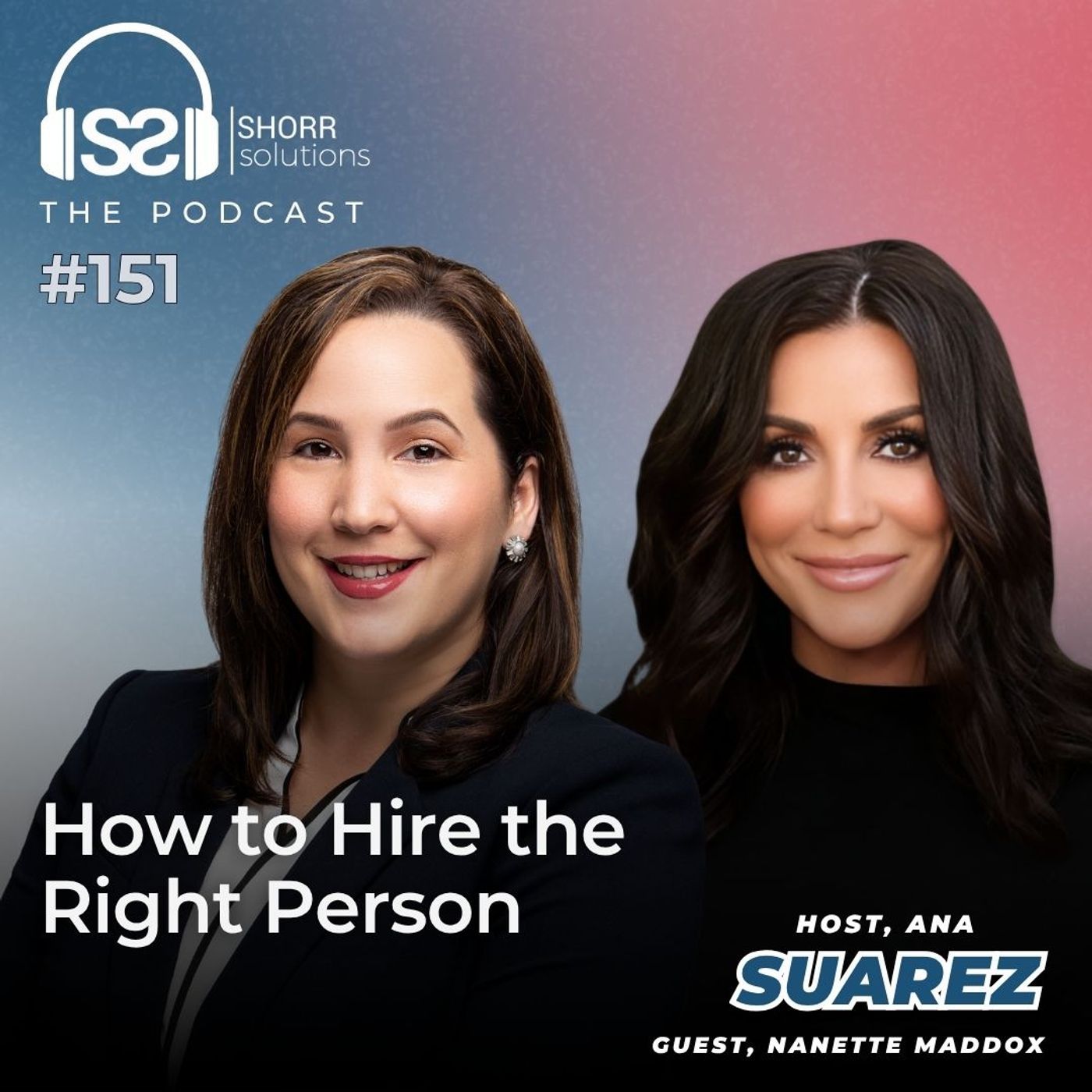
Shorr Solutions: The Podcast · Shorr Solutions
Hiring in an aesthetic practice rarely breaks down because of a lack of candidates. It breaks down because of how those candidates are evaluated. Resumes look strong, interviews feel promising, and decisions get made quickly under pressure. Then performance does not match expectations, and the cycle starts again. In this episode of Shorr Solutions: The Podcast, Ana Suarez and Nanette Maddox break down what actually predicts success in a medical spa or aesthetic practice role. They walk through how to identify behavioral patterns over experience, why coachability matters more than confidence, and how to evaluate emotional intelligence, accountability, and culture fit before making a hiring decision. ▶ Free Consult: Schedule your free 30-min consult with our expert, Jay Shorr, here: https://shorrsolutions.com/free-consult-new/ 👈📲 ▶ Conversion Cascade 2.0 Online Course: Attract, convert and retain loyal patients! 💸🙋♀️ Sign up for our Conversion Cascade online course here: https://shorrsolutions.com/solutions/sales-training-for-aesthetic-practices/ 👩💻 Use promo code PODCAST to save 20% OFF ✅ ▶ Free Workbook: "How to Build & Maintain Your Dream Cosmetic Practice" Download here: https://lp.constantcontactpages.com/su/HGN3fUQ 👈 ▶ Connect with us: Website: https://shorrsolutions.com/ Instagram: https://www.instagram.com/shorrsolutions Facebook: https://www.facebook.com/shorrsolutions LinkedIn: https://www.linkedin.com/company/shorrsolutions
Ana: Welcome to another episode of Short Solutions, the podcast. I am your host, Ana Suarez, and I am the Director of Client Success and Partner at Short Solutions. Today, I have the pleasure of having with me Nanette Maddox. She's our Senior Client Success Manager, and she works with many of our clients with their operations, financials, and also hiring. Nan, welcome to this episode. How are you? Nan: I'm doing great, Anna. Thank you. How are you? Ana: Doing good. I'm excited to have you here with me today because we have a topic. It's more like a hot topic, which is hiring. And in our previous episode, we covered what to do before hiring. So just like setting up expectations, defining the jobs, you know, the descriptions. And so today we want to talk about what to do once the hiring process starts. with that said, Nan, I know that you have worked with many of our clients, ⁓ them with their hiring and also in your past experiences as well. And I wanted to ask you, what are the top things that we be looking for ⁓ when the new employees? Nan: Well, the first thing I want to say is there aren't any magic tricks. We're not going to be pulling anything out of our sleeve that you probably haven't already heard. a lot of this is just going to be a refresher and things that we have experienced. and have interviewed many people And the thing that you need to know besides there aren't any magic tricks is you're not always going to get it right. We want to try to out the right things whenever we're looking for someone to hire. And the first thing we need to look for is patterned not just experience. Experience tells you where they've been, but patterns really tell you who they are. So you want to look for someone that has had a promotion or expanded on responsibility. not just someone that has gone job job, job hopping with one after another. And you want some growth within the roles. So not just ⁓ moving around different roles. You want to see someone that has growth potential because the past behavior is the best predictor of future behavior. You can teach somebody how to do the job, but it's very hard to ⁓ change the of someone. So that would be the first thing. second one would be coachability, overconfidence. ⁓ have interviewed many that would tell me they could essentially walk on water. Those are ⁓ overconfident, found they're not the most coachable. They come in thinking they already know everything and they just don't to listen. So what you want to do is look for someone that has curiosity about the job. and they're willing to say, know. When you ask a question in an interview, if they're constantly trying to give you an answer and you know that they're blowing smoke, you want someone that's going to say, I don't know. You want some examples of what they didn't like and how they handled it. What you don't want, red flags would blaming former employers and we hear that a lot. We hear often than not the reason they left a position was because there was a change in management. So I kind have a hard time with that sometimes while true, new management coming in can cause upheaval in an organization. But you want that's able to adapt to change because always change going on in practices. You don't want someone that already know how to do that or Again, they're over polished with their answers. So you can teach skills, but you can't teach someone how to be humble. third thing, emotional especially in patient facing roles. This is practices win or lose money. You want someone that can read the room. If they're talking you can see a glazed over patient, they need to be able to read the room. understand who they're talking to, and be able to calm that patient under stress. work with clients all the time that say, you know, my patients are anxious. How do I teach our staff to be better calming the patient and talking with the patient? And ⁓ lot of it comes down to having empathy. So you want ⁓ that has empathy. ⁓ A good interview question for that is tell me about a time you dealt with a difficult patient or a client what was hard about that for you. So looking emotional intelligence. Ownership mentality. is where hear a lot of people that don't own up to things that go on with their jobs. You want someone that owns outcomes, not just task. They use They use I instead of they. They're taking ownership. They have specific examples of where they took initiative. They fix problems without being asked. We had a member on our team recently that I said, wow, look at you fixing something that to be fixed without having to be told. And those are things that you to look for ⁓ in employee. What you don't want is someone that says, really wasn't my job or didn't train me or no one told me. We have recent client that told us that his office manager quits at five o'clock and won't even take a phone call or answer a text from him after five. So that is someone that probably don't want. managing your practice they don't take ownership of their responsibilities and their position. The thing and probably one of the most important is culture. You want someone that's going to have shared values. They can a different style or way of doing things but they still have the shared values that you do your office. You want to ask questions about core values. What are their core values? You want to know ⁓ their culture and how they're going to best fit into your organization. They can have respectful disagreements. That's okay. No one ever has to agree with you 100 % of the time. you want something that complements strengths. So culture necessarily about their personality. It's about their and how they behave with other people. So those are my top five tricks of the trade. Ana: Wow! Yes, are great. I mean, you covered a lot of great information there. And you said, we have learned this after doing thousands of interviews, much, right? Because ⁓ this is something all of our clients, ⁓ deal with. They have questions how do I know if I'm hiring the best candidate? How do I know they're telling me the truth? And I really loved, Nan, what you mentioned. about taking ownership. Because many times when we're doing these interviews and we look at their resumes and they have so many things listed in there, but then when you tell them, okay, so give me an example of a project that you completed or how do you lead the team, they don't know exactly the process and that's kind of a giveaway of like, okay, if you were actually doing that project or task, you probably know exactly what you did and the steps that you took. And if they cannot tell you that, then it's kind of like telling us, okay, maybe they had someone who was directing them or who was like doing it with them as well. So it lets you see, have they really done this or are they just making things up? Because we do see a lot of that as well, right? Where they say, ⁓ I've done this and I also ⁓ did that other thing. And it wasn't really true. Nan: Yes. Ana: And with that said, you know, ⁓ we get a lot of resumes a lot these positions like patient care coordinators, medical What would you say are the differences between skills and fit? And what are some things to look for in the resume as well? Nan: Well, the first thing I would say and probably not a good thing to say, but it's people lie. you can't always believe what you see, just like you mentioned with project management or things that they put on there that they did, not necessarily the case. A of times that's what's missing from the resume that's more important than what's on there. But the green flags to look for in a resume is going to be, like I mentioned earlier, clear progression. where they have increased in responsibility and scope in their job. You want to look for specific outcomes, especially when you're hiring a PCC. Did they increase conversions? Did they reduce no shows? What did they do on their previous job that can be carried over to the job that you're hiring for? You want someone that has longevity in a job because see lot of hopping around I actually did an interview yesterday I was interviewing an RN And when I asked what she was looking for the new role, she kept saying, I just want to learn new things. want to learn new things. And she didn't know even what clinic she was interviewing for. couldn't tell me anything from the website. So to me, I picked up on she's just looking for another stepping stone because there had been five previously in two years, So though her resume had some good skills on it, I believe she was very skilled RN. She did not have the cultural fit or the attitude that we wanted. But you want to look for those green flags and a written resume. The yellow flags are going to be the gaps with vague explanations. many roles in a short time frame. I see many resumes that list duty after duty after duty, but they don't say how they did it, what the results were. And then red flags are no metrics, no outcomes, nothing that they accomplished or job ended because of management. Some of the resumes don't match how they speak in the actual interview. So a resume is going to get you interview, but the actual interview confirms the resume or better yet, it exposes it. recent interview I did was for a medical assistant in a spa. on his was all clinical work. But during the course of the interview, he mentioned that he had done, worked with wellness in a wellness clinic. I said, where did you that? And he told me the name and it wasn't on his resume. So I took it upon myself after the interview to call that clinic and ask to speak to the owner and found out that this individual had been fired for theft. So that's why it was left off of the resume, but he slipped up in the interview in his haste to want to convince me that he was a good candidate for the job. Ana: Wow. And that was a perfect example because he, like you said, he completely left it out. Then he brought it up you you had that wisdom of calling the previous place and then what discovery that he had been fired. ⁓ And love that you did that because so many people, when they're going through the hiring and interviewing process, they don't take the time to follow up with references. ⁓ So that's a great thing to keep in mind. Something else that you mentioned Nan, back to the resumes, you know, they look so nice and or maybe not they don't even show what are the you what have they accomplished? You know, what are some of the ⁓ Yeah, guess what with AI we have to keep that in mind that first of all nowadays if you don't have really good resume I'm sorry, but you're being a little bit lazy because with AI can help you to put something Nan: The spelling is horrendous. Ana: together to look very professional. then on the other hand, it's also what you mentioned, Nan, that you said, well, it looks like a wonderful candidate until we are having the conversation with the candidate and they cannot even explain to you what it is that they did. So those are things that you have to take a look at and just consider as you're trying to find, you know, who's the best fit for your position. But again, these are things that our team can even help you with because it just takes time and experience to be able to pick up on these things. The more you do it, right, like anything else, the better you get at it. And so our team, know, Nan has done it a thousand times. our team, Jay, myself, we have that experience and we can definitely help our clients or whoever reaches out and then they need help with that specific process because it's very time consuming and there's so many things, so many elements that goes into the process that it could be overwhelming. And many of the practice managers, the practice owners, they just don't have the time for it. So let's continue the... Nan: Yes. Ana: conversation. And so I wanted to know for interview topics that matter, and people leave them out. So because you know, there's, there's some things that are basic, right, like the gaps in the employment. How well did they put together the resume because that's their first impression. But what are some some other things that are very important that ⁓ most people even think about that we could provide this information to our audience so they can put it in practice right away. Nan: Yes, one of them is the values alignment. I kind of touched on that a little bit ⁓ but a I heard, on different ways to phrase your questions to your children. And instead of asking your child, was school today? You're going to get, it was okay, it was good. Ana: Mm-hmm. Nan: you should ask them, me the best part of your day. And that engages them in conversation. We ask a similar question in a lot of interviews, tell me what a regular work day looks like to you. And instead of asking that, ask them, what does a great work day look like to you? And that's going to tell you what they value in a job and what they look for in a job. And you want to make sure that their values align with what you're looking for. The next one is accountability. a question would be, tell me about a mistake you made work and what happened next ⁓ or how did you handle that mistake? And we do ask question quite a bit and we get that tell us honestly that they made a mistake and how they handled it. And I much rather hear that and know that they're being honest than for them to basically tell me they've never made a mistake. because we know that's not exactly true. The other one is ⁓ stress response. And is something that's hard to find out from a in an interview. And a lot of times you don't find this out until they're actually on the job and they're put under stress. We try to the questions of how would you feel as a director of impressions working at the front desk and you have a patient standing in front of you. ⁓ The phone is ringing, you have another person on hold and the medical technician is standing behind you needing something from your wanting to tell you something to put in a patient's note. Those are very frustrating situations at work. I've had people tell me, yes, I have no problem with that. I can multitask, I can handle it. And they start on the job, they're in my office in a blubbering. mess because they just could not handle the stress. you to ask them what situations ⁓ frustrate most at work. And if it's multiple things happening at one time, you know they're not a good candidate for front desk. So you to make sure you try to assess their stress response as best as possible, although you're not always going to know how they're going to respond. And then a growth Someone that's going to improve on themselves. What skill are they actively trying to improve right now within themselves or look at someone that's helped a practice grow or what are they going to bring to your practice that's going to help it grow? Are they going to add a social media element to your practice that you don't already have? Are they looking to on a different process that they've done in a previous practice that you could use in yours? ⁓ So you want to look for values, accountability, a stress response, and growth mindset. those are some of the basic questions that you can ask during the interviews. Ana: Yeah, those are great. And I feel that ⁓ ⁓ entire process, it's almost like you have to wear different hats. And one of those is almost like a psychologist, ⁓ you're analyzing people. And not only you're analyzing their personality, but also, as you mentioned before, what it is that they have done in the past, what are the trends, how communicate, do they seem to be responsible. There's so many things that going through the hiring process it's not easy at all. Nan: again, we're not always going to get it right. We through this all the time. We hired a medical assistant too long ago that looked great on paper. The interview was great. The references checked out And there was an at that she just didn't want to provide a medical documentation or a note from the doctor for missing work for several days. and had a bad attitude about that. And that's not something that you could ever predict, but clinic ended up having to let her go because of the outburst that she had in the clinic. So even everything looks right, seems right, the right hire isn't always going to be the most impressive candidate that you interview, but it's one that's going to have ⁓ the values and the behavior and the mindset that match the role and the reality of your practice and what you need them to do in your practice. Ana: Correct. And you know, some people, they're great, you know, at doing interviews. Kind of like some people are amazing at taking tests. But then when it comes the time to really show, I can do this, I can handle it, that may not be the case. So ⁓ is hard. It is a difficult process. And again, that's what we do day in and day out. And we have experience, we can definitely help. you know, the teams, our clients, and that's what we do. And the other thing I wanted to, say as well, I know that we sometimes we recommend our clients to have their selected or maybe like top two candidates to come to the practice and just do, you know, it's like a trial. that's something that many times our clients have done and they're like, you know what? I'm so glad that I did this because she seemed perfect. But then once she was there answering the phone calls and ⁓ to to the patients, it wasn't exactly what we expecting. Nan: It's absolutely a great idea to do a working interview. get to see them, how interact other people in practice, how they interact with how they answer a phone. not going to come in with all the skills that you need, but you'll at least be able see how they come to rest. And if they're prepared, if they have prepared with questions, do they have the right questions? ⁓ So ⁓ yes, absolutely. It provides some clarity and it gives you a more confidence whenever you're hiring You to see that they're in alignment. But again, they can put on a show for a few hours. ⁓ then back and be someone different. ⁓ You have Jekyll and you get hide. Ana: And ⁓ another point too that interviews, they both right? Yes, we're trying to find out as the practice administrator or the practice owner, you're trying to find out is this the right person or is this the best possible candidate. But you also have to that engagement from the candidate because it will tell you is this person really thinking about their future? Are they thinking, you know, long term or this is just like one stepping stone that they're just trying to get in, get the experience and leave. So interviews should be going both ways. And that was a great point, because if you don't see the candidate asking any questions or they never took some time to go to your website and just find out a little bit more about the place where supposedly they want to be at, then it makes you think, you know, how, how much do they really want this? And are they thinking long-term or are they just trying to find a job and ⁓ you know, going to be it. And so it takes time to do the hiring, to get them trained. So you want to make sure that you're finding someone that is in for the long-term and you know, they really want to be successful. Nan: A lot of what we run into with people want to eventually be a nurse injector. So they start out as a circulating nurse, they may start out as a pre-op nurse, they may start out as something else within your practice, but you can see and hear Ana: True. Nan: When you ask about where do they see themselves in five years, are their future goals? And tell you they're very interested in aesthetics and would like to do injections. You know that they're trying to get their foot in the door to eventually get to be a nurse injector. So ask those again that you know what they're actually looking for. And that doesn't mean that you shouldn't hire them. You should just understand what goal is. ⁓ And if it aligns with something that you can help accommodate, it can be a great marriage where you're teaching and growing that person and training them ultimately that nurse injector. But if it's not something that you want in your practice, then that may be someone that's not going to have an alignment with moving practice forward. you just want hiring well is leadership. It's not luck, although some luck is involved. You want to take it slow. Don't be in a hurry make that offer. Although sometimes we tend to feel a little rushed because we know it's a great candidate and we want to hire them when we know they're looking for other jobs and we want to snag them before someone else does. But want to be able to take your time with it and listen for behavior, ⁓ not promises that they give. So you're listening at their answers. You're paying attention to what they're saying. and you're listening for patterns that's what's going to tell you what you're getting in long run. And ⁓ the adage of hire slow, fire fast really goes into play here. You want to take your time and not be rushed. Ana: Exactly. Yes, that's totally true. And also remembering to call the references. take the time to call those references. I know it's also time consuming because sometimes they cannot answer the phone right away. But just making sure that you go through that process. You also run the background checks so that you're doing as many things as possible to make sure that that is the right person for your practice. And you know, In the end, that doesn't end up being the case, at least you are at peace with yourself because you know tried your best. You you asked very detailed questions during the interview process. You you followed up with the references. you did the interview where they come in and they do ⁓ little bit of the work interview, right? ⁓ So all of those are tools that you have at your disposal that you can do to help you. Nan: you Ana: with this process. And at the same time, you can always have someone to help you either at practice or consultants like us, we can help you with the process as well. And we'll be more than happy to assist. So with that said, we have done two episodes, one today with what to do, what to look for ⁓ when hiring, but then also one, I think it was episode 149. where we talked about what to do even before the hiring process starts, know, like how to set up the expectations, sure that you have a well-defined job description. you things ready for that new hire, right? So go and listen to that episode once you're done with this one and feel free to like reach out to us and ask us any questions that you may have. ⁓ We're here to help and, you know, just make sure that the process is as smooth as possible. that said, Nan, thank you so much for being here with me today and sharing all of this wisdom. It's a pleasure. Everyone, have wonderful, wonderful day and we'll see you next time on the next episode of Short Solutions, the podcast.