
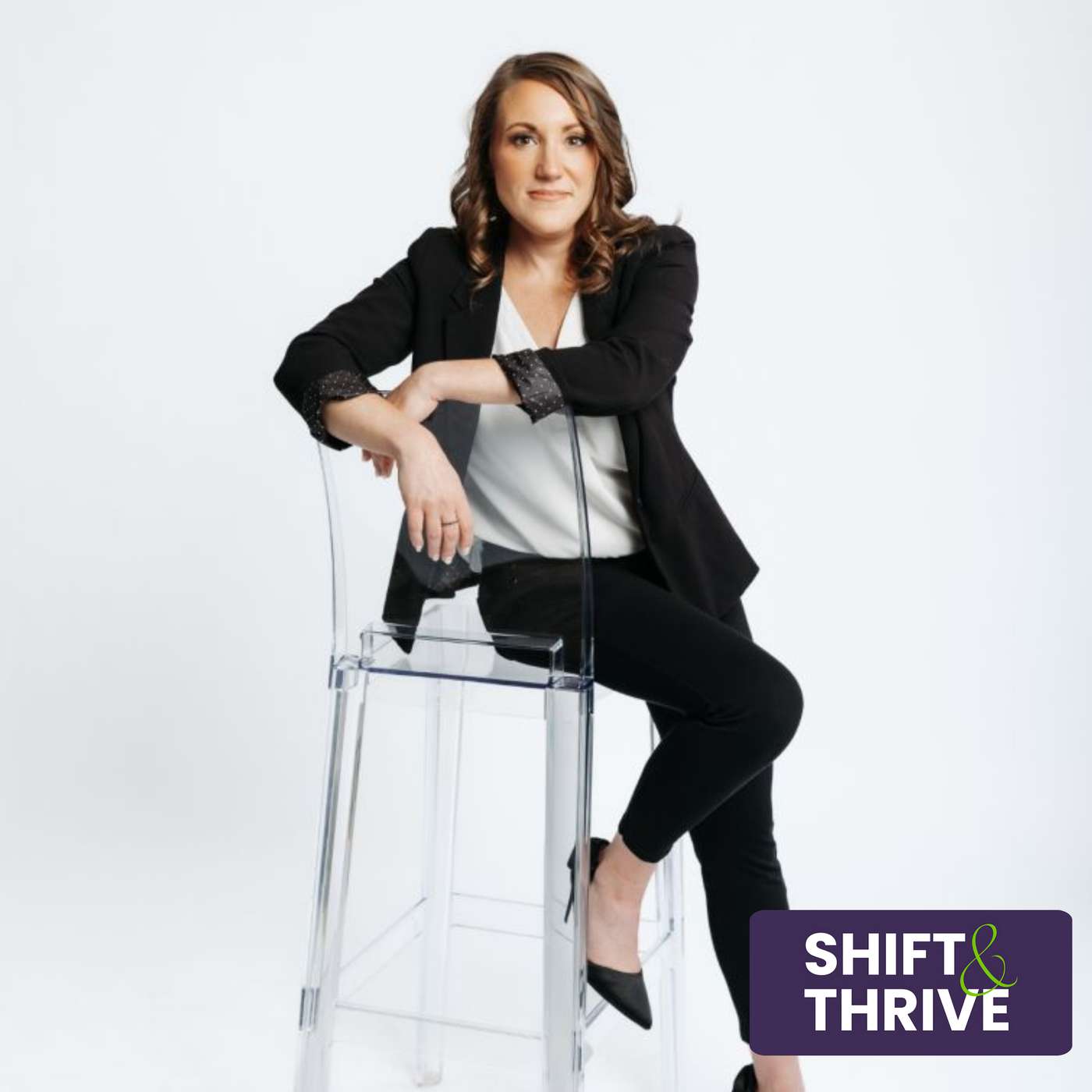
Shift & Thrive: CEO Insights on Driving Change · Natalie Nathanson
What does it take to rebuild trust in an organization where most employees are disengaged? In this episode of Shift & Thrive, host Natalie Nathanson talks with Bree Katulak, President and CFO of RenoSys and host of the Unstoppable You podcast, about leading transformation in manufacturing and industrial businesses. A CPA by training, Bree shares how quarterly town halls, fireside chats, and a constant presence on the plant floor lifted employee engagement by 800 basis points and cut turnover from 65% to 15% at Polygon. She also covers reorganizing engineering into sales after pressure-testing the plan with her YPO forum, leading with curiosity instead of alarm when KPIs dip, walking away from unprofitable customers, and setting priorities across people, go-to-market strategy, and technology in her current role. Takeaways: Earn employee trust by staying visible and following up on every open question within a set timeframe. When someone pushes back on change, take it offline and ask what is driving it before deciding if they are a fit. Test major org changes with a peer group of CEOs and ask them to challenge every angle before you announce. When a KPI dips, ask questions from curiosity before stepping in, because early intervention can create stress across your team. Tie incentive plans to the metrics that drive valuation so employees share in the results they help create. Define which customers are not a fit, since every yes uses capacity you need for better ones. Decide which strategic priorities you are pausing and make that list visible so your team stays focused on what matters now. Quote of the Show: “I may have good ideas, but working together as a group can make them way better, and it'll help get the buy-in, and we'll actually move faster.” - Bree Katulak Links: Bree’s Podcast: https://www.breekatulak.com/ LinkedIn: https://www.linkedin.com/in/bree-katulak-cpa-96b27122/ Website: https://renosys.com/ Ways to Tune In: Spotify: https://open.spotify.com/show/2D1YbT2QhKxIwbREpU7EMb Apple Podcasts: https://podcasts.apple.com/us/podcast/shift-thrive-ceo-insights-on-driving-change/id1740828813 Amazon Music: https://music.amazon.com/podcasts/fa60b654-1955-4055-93df-fdd40c2a5c8f/shift-thrive-ceo-insights-on-driving-change iHeart Radio: https://www.iheart.com/podcast/269-shift-thrive-ceo-insights-166792501 Pandora: https://www.pandora.com/podcast/shift-and-thrive-ceo-insights-on-driving-change/PC:1001086797 YouTube: https://www.youtube.com/channel/UClf9QxGUxZw_Sv8_4bZP34Q This show is sponsored by Magnetude Consulting, bringing you the thinking-Power of a Growth Consultancy and the Getting-It-Done Power of a full-service B2B Marketing Agency. Learn more at: https://www.magnetudeconsulting.com
S&T _ Bree Katulak === Intro: [00:00:00] In today's business world, change is the only constant, and mastering transformation is the ultimate key to success. Welcome to Shift and Thrive. I'm your host, Natalie Nathanson. Each week we'll bring you conversations with CEOs who delve into how they successfully drove critical change in their organization. This show is sponsored by Magnitude Consulting, bringing you the thinking power of a growth consult. And the getting it done, power of a full service B2B marketing agency. Natalie Nathanson: am very excited to speak with today's guest. She is a transformational business leader who has spent her career helping organizations navigate growth, operational change, and cultural transformation. She started her career as a CPA and quickly discovered her passion for complex transactions in M&A, ultimately building stronger businesses, which led her from corporate finance into executive [00:01:00] leadership. She's led major turnarounds in manufacturing and industrial organizations, helping transform operations, strengthen company culture, and build high-performing teams through trust, accountability and disciplined execution. Today, she is leading the next phase of growth at Renesis, while also being the host of the Unstoppable You podcast, where she explores leadership, identity, and what success really means for high achievers. She is the president and CFO of Renesis. Bree Cadilac, welcome to the show Bree Katulak: Thank you so much, Natalie. I'm looking forward to the conversation today. Natalie Nathanson: Thank you. I am as well. And I know you've spent much of your career stepping into organizations and roles at inflection points when significant change was needed. Uh, so I wanted to talk a bit about, uh, your time at Polygon, which I know included, uh, some, you know, cultural transformation in the organization- and, and a bit broader. So I'd love to talk about what that experience taught you about what it takes to kind of lead a [00:02:00] successful transformation, and maybe to start us off and set the stage, talk about what was the dynamic at Polygon and kinda what made it clear that meaningful change was needed. Bree Katulak: Yes. Um, so when I first started at Polygon, it, I started as the CFO, um, and this was my first run in that position. And when I came in, I think, um, there was a lot of opportunity for cultural advancements. They were owned by a family office and still are today, which is really more patient capital, so not the typical PE firm tur- turn and burn kind of mentality. But first and foremost, what we realized when I stepped in was the lack of data that was meaningful to know which levers to pull to really drive the valuation upward. So we really started focusing on what are the most meaningful KPIs that really align with the manufacturing framework of SQPDC, and starting with safety [00:03:00] and quality and going through those. Um, I think the most impactful change that we had on the organization was focusing on that people pillar and really changing the culture. So when I first started, um, we were taking employee engagement surveys, which I think are very important to understand what's meaningful to your employee base, and we were an actively disengaged culture. And, um, that was just something that didn't sit well with me. And I would say having newly stepped into an executive level role, it was a very big learning opportunity for me to learn how to communicate to over 250 people so that they hear you, um, and that everyone hears and takes messages very differently. So that was important. Starting quarterly town halls and producing transparency in what our priorities are as an organization and why we're focusing on these things. And then helping people understand that, yes, provide us the feedback so that we have the [00:04:00] data, but we can't make changes at the flip of a switch. It's going to take time, and we had to earn that trust. And over the course of my four years there, both as CFO and transitioning into president and CEO, we were able to gain that trust and make very meaningful, impactful, uh, changes that the employees benefited from, and I can go through some of those if you'd like to hear it. But by the time I left, we had improved the employee engagement score by 800 basis points, and we were an engaged workforce. Turnover had went from 65% when I had started down to 15%, and we were ver- very proud of those statistics. Um, Another thing that we focused on from an operational standpoint was really looking at the spaghetti diagram of the flow of product through the plant floor. And I think this also helped on culture, but really driving improvements in capacity and decreasing our costs as an organization. So [00:05:00] we had typically been a, a company that the product would be in one portion of the plant floor, then have to move to the front, then have to go back to the middle of the plant, and obviously that's inefficient. So what we did was we went to more of a work cell mentality, rearranged the entire plant floor, and removed two miles worth of walking for an individual being an employee, and the product and wait time. So cellular manufacturing is what we set up, and we went from four employees having to touch a product throughout the process down to one, which obviously allowed for a lot of cost savings and capacity gains in the process Natalie Nathanson: Yeah, yeah. It sounds like a number of changes both kind of the, the softer side, so to speak- as well as, uh, operationally. Uh, I do wanna talk a bit more about kind of that trust-building because I think, you know, any- anytime you're changing the culture, that's obviously very critical. And I know, um, uh, [00:06:00] some- sometimes it can be hard to kind of regain trust, uh, when folks don't have it. So can you talk a little bit about what were some of those things, uh, that Bree Katulak: Absolutely. Absolutely. So I know this may sound simple, um, and almost like how did this actually change anything? but honestly, me going and walking the plant floor multiple times a day, and we were a, a 24/5 operation, so making sure I was present not only at first shift, but that I was coming in regularly, um, to second shift and even third shift. Um, I wanted to meet the employees where they were. So when we did town halls, we only had two buildings in the same town, so it was beneficial from that standpoint that we weren't multi-site all across either the nation or the world. But we, we held town halls at third shift, first shift, and second shift to make sure everyone heard the same message, but in person from the executive leadership team. And we always opened it up for [00:07:00] Q&A, and maybe we didn't have all the answers right then and there, but we committed to following up with them within the week. Um, I wouldn't say that immediately gained all of the trust, but I think as we continued and never gave up on those quarterly town halls, we never missed one, that, that was huge. Then another thing that I implemented was after... a couple weeks after the town hall, we would do fireside chats. So on each shift, I would open up a fireside chat that was limited to 10 employees from both facilities, and they had more intimate time to... with me directly. N- no one else was in the room. Managers were encouraged to not attend these meetings, but I could have separate conversations with them so that they could really ask me whatever they wanted to ask, and I would give them the honest answers. And if I didn't have the answer in the moment, I committed to following up with them. But just continuing down that path. And I mean, [00:08:00] again, trust isn't built overnight. I wish it was. It would be a lot easier. But seeing the consistency over the course of those four years I think is really what ultimately drove that trust Natalie Nathanson: Yeah, Yeah. I, I think that's so important, like the accessibility, the face time, creating that comfortable environment. Um, and I know, you know, not everyone responds to change at the same pace, and some folks might be kinda skeptical. Uh, others might be more resistant and in my experience, like not everyone kinda can, can make the leap or is ultimately kind of the fit in the culture that, that you're trying to build. Um, wondering if there was any kind of friction there, and if there was, I don't know, any need to distinguish between people that just needed more time to kinda trust the change and kinda trust what was taking place versus those who were maybe kind of hindering progress. Bree Katulak: Yeah. I mean, absolutely. Um, there are always... You can't please everyone, and even though you're trying to do the right [00:09:00] thing, it doesn't always land well with everyone. Um, I think it was really good, even some of the naysayers or the people that weren't embracing the change as much as we had hoped, they were-- they trusted us enough that they spoke out in the town halls. And there was one instance where an individual said something that maybe wasn't the most professional, but I think we responded in a way that we didn't punish the individual in a public setting. But we took it offline, had a separate conversation with them, and said, "What's really at the root of your comment and why you're resistant to this change?" And ultimately he, he gave a very open and honest answer and complained, and we were able to get to the root of the problem and then ultimately get him to go in the direction of like, "Okay, I'll, I'll trust you and I'll see how it goes, but please be open to my feedback if the changes aren't going the way you think they are sitting in an office."[00:10:00] And I thought that was good to at least hear him out. Um, and ultimately, he ended up being a fan, and he was a longtime employee and he had seen a lot of different leaders throughout the course of his tenure. So h- he was a little bit more resistant to the trust and to the change. There were some individuals that ultimately opted out. They, they didn't agree with the growth that we were seeking as an organization, um, and they wanted something a little bit more they could come in and just kind of be the status quo and leave, and we were demanding excellence at that time. And that's okay too, because honestly, it needs to be a mutual arrangement and we all need to be on the same page. Natalie Nathanson: Right. And to your point, you can't please everyone, and you need to make sure it's the right fit, uh- on both sides. Bree Katulak: Mm-hmm. Natalie Nathanson: I'd love to talk a bit about your leadership style, and I know you describe yourself as very relationship-driven but also that that shifted for you, uh, over the years. So can you talk a little bit about how your leadership style has evolved as your responsibilities [00:11:00] have grown? Bree Katulak: Absolutely. So I mean, I would say I'm absolutely a servant leader, and I think that has pros and cons, right? Because I've always been the type of person that am- I'm 100% willing to roll up my sleeves and help out or take over if needed, um, because someone is struggling or we're butting up against a deadline. Um, I think that has helped me in certain areas because it's helped me gain trust. Like I w- am- I was willing to go out on the plant floor and do a specific task on the assembly line because I knew we had a big order that we had to get out. That was gaining trust. However, it takes me away from focusing on the business and what is the growth strategy and what are the relationships that are key to building in order to achieve that. So it comes good and bad. Um- I, I am very relational in that I like to make sure I earn the trust, make sure the team understands the vision and how we're going to get there, and that we're a team working towards it together. [00:12:00] But as I've risen through the ranks, I have realized the importance of the data and that you have clean data and metrics that everyone understands how their work ultimately drives the result of those metrics. So I think that's probably been the biggest learning. I think I operated more on anecdotes earlier on in my career, and relationships, and being able to work through others. Um, but then as I evolved and grew in my leadership and in my title as well, going more to, okay, we need to see the trends in the data. We need to validate that the data we're getting is not garbage and it's complete and accurate and reliable every time. And ultimately, that's what's driven everything. And then making sure everyone shares in the riches, right? So having a compensation plan that ties to the metrics that are driving the performance and increase in valuation, I think was also critical, and it also helped build trust because it-- they knew [00:13:00] they were getting some of the reward from all of the hard work they were doing, not just the executive team sitting back at the offices Natalie Nathanson: Yeah. I think those incentives and kind of compensation structures can be so powerful. They can also be very hard to get just right and not create- unintended consequences. Um, I'm curious if you have any, uh, examples or stories that come to mind of kind of the... taking that data-driven approach and kind of what that unlocked for you or somebody on, on your team. Bree Katulak: Yeah. Um, absolutely. I'm, I'm trying to think of the most impactful one, but I think the, the most eye-opening for me throughout my time at Polygon specifically was looking at the sales data and KPIs. So understanding the velocity in which opportunities were moving through the pipeline, what may be causing them to stall, and identifying how to get to a yes or no as [00:14:00] quickly as possible. Because ultimately, we were a highly engineered composite product, so the sales cycle, depending on the product line, could be anywhere from six months to three years, depending on which, which segment of the business it was in. So getting to that yes or no as quickly as possible was our number one concern, and then also the sheer volume. Making sure we had a balance in our pipeline of the short-term, medium-term, and long-term wins was critical, And then, um, really, really focusing on a no is okay. Not every customer is a great customer. We need to make sure it's profitable and driving us in the direction where we ultimately want to go. Natalie Nathanson: Yeah. And I'll come back to a couple of those themes 'cause you just shared, uh, lots of, lots of great things. Uh, I'm curious to ask, like, how you know when a, a KPI is telling you it's time for you to step in personally versus maybe put more focus on something by kinda holding [00:15:00] another leader accountable? And I'll share that, you know, this is something I've been kind of actively working through for myself. I, at the beginning of this year, expanded my leadership team. Uh, you know, my role shifted a bit in, in doing that. Um, so I, I see less, I'm involved in a bit less of kinda some of the things that I've held onto for, for many years. Um, and so it's something I'm constantly kinda asking myself. Um, so- kinda how do you look at kinda w- when to get involved and when to kinda just stay kinda on the side but just monitor? Bree Katulak: I love this question because I'm sure if some of my former teammates hear this, um, they will tell you I have definitely evolved throughout my time over the last five years in this. I would say I always, um... So first of all, let me back up. Polygon had both weekly and monthly metrics that we were monitoring, and we always monitored, um, monitored them on a rolling 12-month basis. And I would always look at the [00:16:00] trends, but- Historically speaking, I would act too quickly, And as soon as I saw a downward tick, I would immediately go to that member of the executive team and say, "What is our plan to make sure that it continues upward next time?" And I think I would get involved a little too early. At over time, and I started seeing the reaction and stress almost that I was causing on the organization, I learned that I needed to trust my team a little bit, ask questions, but coming more from a state of genuine curiosity as opposed to the, the roof is on fire, what are we going to do? So I think that was the biggest learning for me, honestly. Because, um, taking that curious approach and just asking questions and finding out what the team is doing, what hardships are they running into, and then determining, making that decision of, okay, do I need to step in or no, they have it handled, but there are gonna be bumps in the [00:17:00] road, and I as a leader need to understand that Natalie Nathanson: Well, that makes so much sense. And before we move off of kind of the overall theme of transformation, I know something you and I had spoken about, uh, previously was kind of around changes that required, like, real courage to push through And maybe you know, that happens when we're doing things that are maybe a bit unconventional. Um, there was a example you had shared about kind of breaking down a long-standing organizational silo and what that did. Can you talk about kind of what was going on and kind of what gave you the conviction to make that Bree Katulak: Mm-hmm. Two departments, um, were having constant friction in, in the sales process. So it was... again, I said we're a highly engineered composite component both in industrial and medical device, and sales and engineering had typically been under separate executive leadership. And I saw that this was a constant problem, and no matter how much I would essentially [00:18:00] encourage and guide the two departments to have meetings, they just... They weren't getting there on their own. So through a lot of conversations and asking people's opinions in both groups, plus in operations too because it all ultimately flows to them, the decision was made to do a complete company reorganization in which engineering was moved into the sales group. Um, we had a separate R&D department, but really that application engineering design group moved into sales. And I was very nervous at first because sales personalities and engineering personalities can be very different. But ultimately, at the end of the day it provided the clarity and alignment that was needed, and I'm really happy that I didn't let the, the fear of the unknown with personality differences take over and ultimately pursuing what was right. It did take a decent [00:19:00] amount of time just from a communication plan standpoint and making sure everyone bought in before the change was announced, but ultimately it was the right thing for the organization and it caused a decrease in stress and increased optimization on the process flow. So I was excited that we took that step Natalie Nathanson: I'm curious to hear what was going on for you at the point where you were kind of deciding to do this. Like, were you exploring kind of different ideas and this was the one you went forward with? Uh, kinda how quickly did that happen? Talk to me about- kinda what was going on for you. Bree Katulak: I think, um, it... the whole process from the inception of the idea of a reorganization to when I actually pulled the trigger was probably six months. And, um, so I'm in a networking group called Young Presidents Organization, or YPO, and we have forums, and our forum has eight people, and we meet monthly and work through business issues. And I think I got made fun of a lot for this one, but I had those huge [00:20:00] Post-it Notes which a, with a bunch of little Post-it Notes, and I was constantly moving positions around and weighing the pros and cons of what the changes would mean for the organization. And ultimately, I was like, "Enough is enough. I need to get other perspectives from highly respected business leaders," and I, I took my proposed plan and I was like, "Act like you're my board of directors. Challenge me in every angle that you can see, because I wanna make sure this is the right thing to do." And at the end of the day, we worked through probably the 30th org design that I had come up with, but I could defend everything to them, and they were coming at me from leading their own businesses and organizations as well. So I think not being afraid to get input from other highly respected leaders is, is a really good thing, but at the same time, taking everyone's opinion, filtering out what is meaningful to you and based on your experience in the [00:21:00] organization is so critical. But I'm, I'm so grateful for the other high im- impact leaders that I was surrounding myself with. Natalie Nathanson: Yeah, I'll echo that. I mean, I'm a member of Entrepreneurs' Organization- uh, EO, and it's kind of very similarly minded, and there's nothing like having kind of a, a group of folks that, uh, are kind of unbiased in, uh, kind of the, in a way that, like, the leadership team in the organization or investors or whatnot can't be. Um- and I like, uh, you know, your approach of trying to poke holes and make sure you can defend it, and I'm sure that gave you, you know, the confidence to, to bring it in the right way. Bree Katulak: Absolutely. Natalie Nathanson: I, I know hindsight is 20/20, and we always say- "Oh, I would have done this differently kinda knowing what I know now." Um, are there, other things that, uh, you would have approached differently just, again, knowing what you know now? Bree Katulak: Absolutely. Um, I think in, especially when I first joined the [00:22:00] organization, I think I came in, um, not as open-minded as I should have been, and thinking, "Oh, all this needs to change, and I know the right way to make the change," so I just wanted to plow through without getting other people's input and, and opinions. Um, I learned very quickly that that was not gonna be the right way to influence the organization, especially as I wanted to expand my role outside of just accounting and finance, and get more into operations and sales and engineering. So, um, really just kind of eating a little bit of humble pie and realizing I may have good ideas, but working together as a group can make them way better, and it'll help get the buy-in, and we'll actually move faster. So those are some things that I've really taken away along my career and really try to check myself constantly on if I'm doing the right thing and getting the right people in the room to get that [00:23:00] buy-in and to get their opinions on what the best path forward would be. Natalie Nathanson: Hey, this is Natalie, your Shift and Thrive host. After chatting with lots of CEOs, one thing is crystal clear. Leveling up your company means having a killer Go-to-market strategy. That's what my crew at Magnitude Consulting does every day. If you're trying to step up your marketing game, whether it's strategizing, accelerating your pipeline, expanding into new markets, or getting into AI and automation, let's talk. No pitch, no pressure. Just good conversation. Visit shift and thrive podcast.com/natalie to schedule a time. Can't wait to connect. I know that transition from kind of CFO to kind of CEO can be a big one. I'm curious if there are any areas that surprised you, uh, kind of parts of the business that you've had kind of more interest than you expected or kind of bigger learning curve, uh- kind of for better or worse. Bree Katulak: I think I was [00:24:00] surprised at how much I love and wanted to lean into operations. Um, I had never been on a plant floor daily. Um, I had from my auditing days at Ernst & Young from, like, doing inventory counts and stuff like that, but how much I loved the flow of material throughout the plant floor and understanding capacity and how that ultimately helps drive costs down, I think that was, that was the most exciting part for me. I think the highest learning curve was the commercial side, understanding the sales process and what metrics really mattered and how important it is to the business. Because I can say as a CFO all day long, we're gonna double in revenue over the next five to seven years, but unless we have the right sales and marketing plan and pipeline to be able to do it, it's a pipe dream. So I think that was the steepest learning curve, but the area [00:25:00] that I leaned into the most because I realized the importance when you wanna grow your business. Natalie Nathanson: Yeah. Um, and I know you talked a bit earlier, uh, about kind of looking at, you know, the, the margins and profitability of different customers. So I'm presuming that might have had something kind of some involvement as you were kind of diving into the, the commercial and go-to-market side. Uh, what were some of the learnings out of, out of that, uh, part of the work? Bree Katulak: Yeah. Um, I think the sheer volume of customers that we had in the beginning was eye-opening. So again, as, as you're beginning and as you're starting out, and I know I'm not saying anything new, I've heard this in a variety of scaling conferences, you're willing to say yes to everything, right? Uh, because you need to bring revenue in the door, you need to be able to pay your bills, pay your vendors, et cetera. Um, but as you really develop your niche in the market, it's important to understand that not all customers are a good customer. Saying yes to something [00:26:00] is really saying no to something else, and making sure you're optimizing the, the operational side of the business because the number of changeovers that we were going through on the plant floor was becoming incredibly disruptive to operations. So we identified like a... We drew a line in the sa- sand on the customer list and said, "Anything below this volume simply doesn't make sense unless we're able to double the prices." So it's not like we ever fired customers or anything like that, but just identifying what didn't make sense for our operation, especially as we were continuing to grow, and being okay walking away from some deals. So it, it was not an easy thing for everyone to gravitate towards. Um, but at the end of the day, we were able to get there and start to see the uptick from a capacity standpoint and less fire drills or hot jobs out on the plant floor. Natalie Nathanson: Yeah. It is such a hard thing to navigate, but [00:27:00] ultimately it does strengthen organizations, and I think a lot of these discussions around kinda who is our ideal, uh, client, like sometimes that's treated as like where does, where does the sales team have relationships or- a marketing exercise for, for purely for marketing campaigns rather than really like this company-wide resource allocation decision and all the downstream impact, uh, that that has. So, uh, bringing it back to some of the things we were talking about earlier, like I'm sure that required a lot of conviction on your part, uh, being data-driven to help, uh, make that point. Um- and, and then the numbers, uh, you know, patience for the numbers to, to show the benefit of that. Bree Katulak: Right. It did. And I mean, it wasn't that we got that project accomplished in the first try either. That one actually took four separate tries in order to execute on. So persistence, consistency, in message is key, and then ultimately coming down to what we've been trying isn't working. So how are we going to think differently in order [00:28:00] to achieve the goal that we're, we're seeking ultimately? Natalie Nathanson: I wanna bring us, uh, a bit into present day and talk about your, uh, role at Renesis, and I, uh, believe you were brought in at a point where the business is kind of ready for its next stage of growth. So- uh, as you've gotten into the role, can you talk about, you know, what that's been like coming in and how you're thinking about the, any transformations the company needs to go through? Bree Katulak: Absolutely. Um, I think you're right. They, um, had been at a period of stagnant activity. Um, so they'd hit a plateau, which is common at certain levels in an organization. And, um, the owner was like, "You know, we're really at a point where we want to scale the organization." Um, and I was like, "That is a challenge I would love to take on." So any time I come in, um, at first, I, I really do want to learn the organization. I want to learn the people, and the processes and the systems. So I took the first 60 days to really absorb as much as I possibly could throughout the organization.[00:29:00] and the place I like to start at first, and what I, I learned from Polygon, is the people pillar of the business is the most important. If your employees are treated well and fairly, the rest comes, right? The rest will follow. I firmly believe that. So looking at that, doing market analysis on compensation, making sure everyone is being compensated fairly from a total compensation, so not just your base wages, but also incentive plans, benefit packages, et cetera, um, that's first and foremost in my line of sight. And then employee engagement surveys, and really hearing from the employee population what matters most to them to develop a roadmap over the next three to five years on how we can start layering in the things that matter the most to them, knowing that not everything is always possible but that we're focusing on the things that are going to make the biggest impact on the employees. Then, um, [00:30:00] simultaneously I should say, because it's not like I'm doing only one thing at a time, but understanding that go-to-market strategy is critical. understanding that we're not just going to be throwing spaghetti at the wall and seeing what st- sticks, but having a very targeted approach for our ideal markets, our ideal clients, and, um, how we can give them the highest quality product or installation at any given point in time. Those are my first two areas that I absolutely want to focus on. Then next, now what we're starting to plan out is the technology roadmap. And when I say that, I'm talking about our internal tech stack and what we're looking at so that we have the most reliable data we can possibly have, and we can access it with ease. So right now, we have a lot of manual processes, and that's okay, but as we want to grow and scale, we're going to need to be able to have that data at our fingertips all the time without multiple points of data entry. Natalie Nathanson: I think find- [00:31:00] figuring out kind of what has to change kind of first, what can wait is- uh, challenging. You seem very kind of clear in kind of what those priorities are. I'm wondering if there are any areas that you are choosing not to spend your time on, um, and kind of how you hold yourself to that. Bree Katulak: Yes. I think that's a great question because I don't know if it's coming across in my personality or not, but I'm the type of person that I want to do everything right now. So getting the discipline in place, um, to have that level of focus is something I honestly have to think about consciously every single day and week. Um, so we run EOS, and that's how I've really, uh, been able to level set on that standpoint, knowing that our go-to-market strategy, compensation philosophy, and new product development are the highest areas that I wanna focus on. Um, something that I have had to, I know needs attention, but have had [00:32:00] to actively put on pause right now is, um, optimizing our project management function and scheduling flow. So making sure that the crews that we have across the country have a schedule that is optimized for their travel so that we're not having crews zigzag across the country, but working across the country or the region as it's appropriate and their skill set allows. So that's something that I've had to put on hold, but again, in my mind I'm like, "Oh, I need to work on that." But it's like, okay, it's on the parking lot. I can see it on the parking lot on my wall. I know it's okay. It can wait. Natalie Nathanson: Yep. Yeah, I think having that deliberate, uh, place- for it, like you said, you can visually see it. It's not, You're not gonna forget it. The team's not- forgetting it. Uh, but only so many hours in the day and can't spread efforts too thin, right? Bree Katulak: exactly. Exactly. Natalie Nathanson: I wanna hear a little bit more about you, Bri, um, and maybe go a bit further into your [00:33:00] history and, uh, hear a little bit about kinda who, who were you as a child and what from those early years, uh, do you think, like, has shaped, uh, who you became as a, as a leader? Bree Katulak: Yeah, absolutely. I mean, I was always someone that was striving for what's next and what can I achieve, and I'm- I've always been super competitive. So a funny story from college, I, uh, joined an int- or an intramural soccer team, uh, because my roommate asked me to join, and I was actually asked not to come to the second game because I was a little too competitive for an intramural league. So that's a little bit about the true Brie. But, um, I was always very creative, so I created this massive library system in my parents' living room and created like put, little... taped in little cards back when we had to stamp at the library. Um, and I think it's interesting. The reason why I tell that story, is everyone has said throughout my career that I was a, not the stereotypical accountant, and I always gravitated more towards [00:34:00] the large transactions like M&A or debt recapitalization or something along those lines and never really felt fulfilled from the daily grind of accounting. Um, and ultimately, I think that's what led me to more of the president CEO role because I do, I do like that bigger strategy. I like creating, whether it's a new process or whether it's a new go-to-market strategy, but I like also seeing that increase in valuation, knowing that we're doing the best we possibly can for our shareholders or owners. Um, and it's kind of funny that I went into accounting thinking that I didn't like-- I didn't wanna talk to people and I didn't like to write, and now that's where my passion lies. I like getting the message out to our employee group. I obviously started a podcast, and I'm hoping to make an impact on other high-achieving individuals in the workforce. Um, So it's, it's been a journey, but I, I think it's interesting that I [00:35:00] chose a career that really went against the grain of who I was as a child with creativity. Natalie Nathanson: Yeah. It is so interesting, like what we carry forth from like what's- intrinsic to us from childhood and what, uh, what shifts. Like, I can share, like I was painfully shy as a child. so- like my, my family now seeing like the right podcast and running a business and all of these things s- similar to what you were just saying for different reasons, um, is not something they expected. Uh, but I was that child that used to play office and would set up kind of like a- ... a fake business. And, uh, it took a little bit of meandering before I reached that point in my career. My mom said she always knew I, I always knew you'd end up in business and entrepreneurship, uh, but she, uh, somehow wanted me to figure that out on my own. Bree Katulak: Yeah. I love hearing that story. Natalie Nathanson: Brie, I love to end conversations by asking, uh, guests, uh, about advice that they've been given that still shapes them. So is there kind of a top piece or pieces of advice, uh, [00:36:00] that y- you've gotten, whether business or personal, uh, that still impacts you today? Bree Katulak: The one that comes to mind the most is always take the call. Um, I've always been someone that was a natural networker and always wanted to build those relationships, but I know I can get so busy and bogged down in what I'm doing in an organization or with my family that I'm like, "Ugh, I don't, I don't want to take that call. I can't, I can't spend the time to do it." But I think over the course of my career, some of the calls that I initially thought, "Oh, this isn't gonna be worth my time," they were some of the best conversations that have driven either business value or personal value in my growth and development. So I just highly encourage people to be more adventurous with reaching out and taking the call, even if you don't initially see what the outcome or benefit could be Natalie Nathanson: [00:37:00] Yeah. I love that. And as you were sharing that, I kind of, my mind ran through a few of those of my own. So I think that's so true, and especially in today's environment where it's so easy to kind of be moving too fast or kind of be stuck in front of our computer, uh, to remember that, you know, those relationships and conversations, uh, can lead us in unexpected places. Bree Katulak: Yes, absolutely. Natalie Nathanson: Uh, and as we wrap up today's conversation, can you let listeners know, uh, where they can reach you if they wanna get in touch? Bree Katulak: Yes, absolutely. Um, so on LinkedIn, I'm Bree Katulak, and that's K-A-T-U-L-A-K. I would love to connect with you. And then also on, um, Apple Podcasts, Spotify, and YouTube, Unstoppable You comes out every other week on Thursday mornings. So I would love for you to check out some of the episodes and give us a rating if you don't mind. Natalie Nathanson: Wonderful. Thank you. And, uh, I will say the podcast very much, uh, aligns nicely with some of the themes we talk about on this show. so I would encourage our listeners [00:38:00] to, to check it out. Um, thank you so much for this, Bree. I loved the conversation. Bree Katulak: Thank you. I really appreciate you having me on. Natalie Nathanson: Yeah, it was my pleasure. and there's so much that I could pull out of what I love from what we talked about. But I think especially hearing, uh, kind of talking about transformation as both kind of the operational challenge and the human one and, right, putting in better systems and KPIs and all of that, but kind of the people side of leadership and finding that right balance, which, uh, appreciate all the things that you, uh, shared around that. So thank you. Bree Katulak: Absolutely. You're welcome. Natalie Nathanson: Uh, and thank you as well to everybody listening. If today's conversation sparked something for you, and I'm sure that it did, please pass this along to another leader in your network. We know that insights like this fuel fresh thinking and help all of us drive real transformation both in our businesses and in ourselves. So thank you again, Bree, and this has been another wonderful conversation on Shift and Thrive. I'll see you all next time. Outro: [00:39:00] That's a wrap for this week's episode. For show notes and more visit Shift and thrive podcast.com. A special thank you to our sponsor, magnitude Consulting, bringing you the thinking power of a growth consultancy and the getting it done Power of a full service marketing agency to help B2B companies fuel their growth. For more information on magnitude and to get your complimentary transformation readiness assessment, visit magnitude consulting.com/. Get ready. Thank you so much for listening. We'll see you next week.
More Shift & Thrive: CEO Insights on Driving Change episodes →