
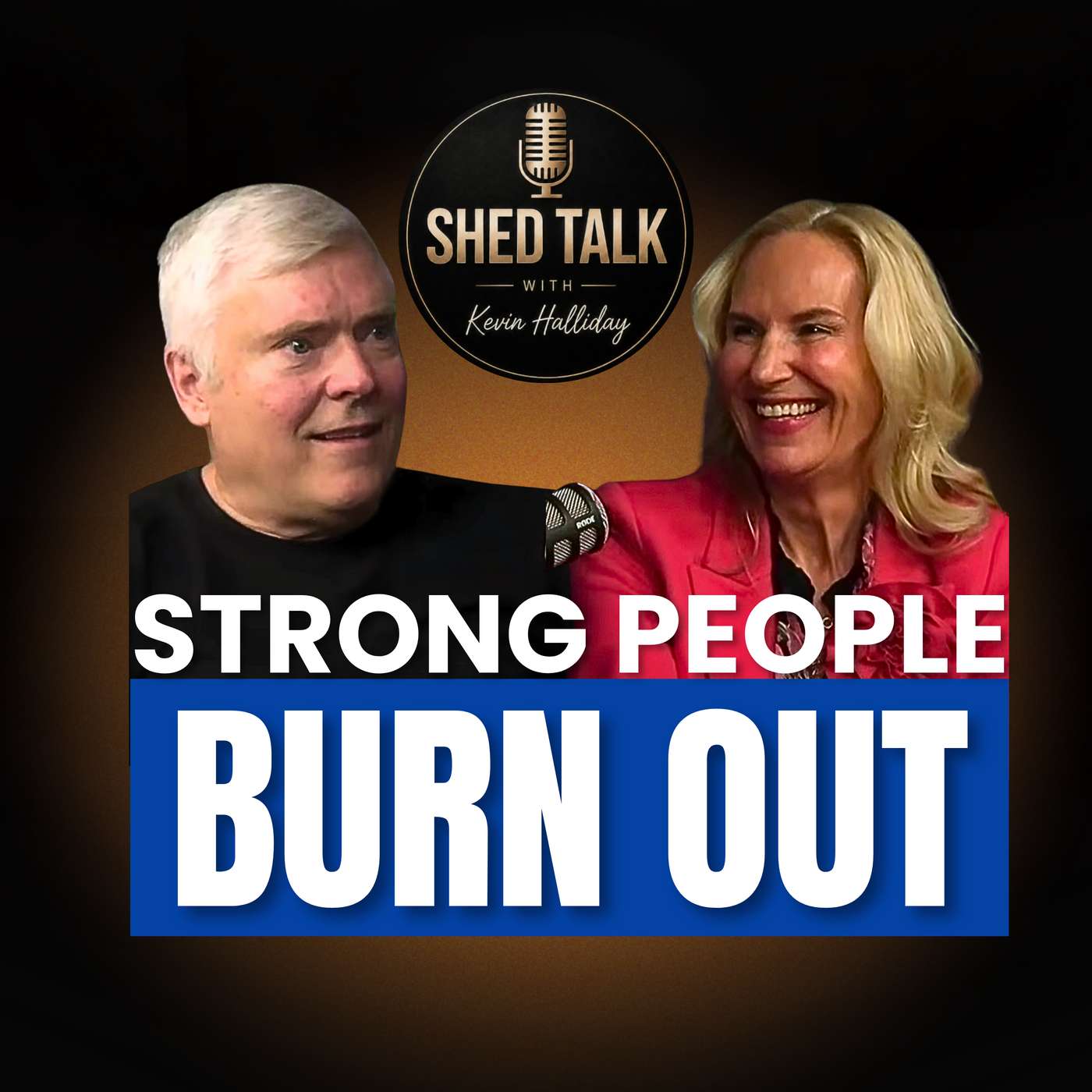
Shed Talk with Kevin Halliday · Kevin Halliday
Corinne Lyall, CEO and owner of Royal LePage Benchmark, joins Kevin for a candid conversation about leadership, panic attacks, grief, market cycles, and hidden burnout. She shares how she moved from selling real estate to leading more than 220 realtors, why high achievers need boundaries, and how purpose and volunteer leadership helped her through difficult seasons. Guest: Corinne Lyall - CEO and owner of Royal LePage Benchmark With over 30 years of experience in the real estate industry, she brings a strategic vision and a deep understanding of Calgary’s dynamic market. Corinne has held prominent leadership roles, including Past President of the Calgary Real Estate Board, Chair of Pillar 9, and President of CREB®’s Charitable Foundation, where she helped create impactful community housing initiatives. In this episode: - Lessons From Three Decades In Real Estate - Supporting More Than 220 Realtors - From Realtor To Broker-Owner - Taking Over During A Downturn - Panic Attacks And Big Decisions - Grief, Trauma, And Moving Through It - Purpose Through Work And Leadership Chapters: 0:00 The Pressure Behind Performance 14:54 Grief, Trauma, And Moving Through It 29:32 Why Real Estate Is Not For Everyone 40:35 Why Benchmark Means Excellence 56:31 Technology, COVID, And Boundaries 1:05:24 Boards, Travel, And What Comes Next Follow the show in your podcast app for more full conversations.
Kevin: What if the person who appears the Kevin: strongest is actually the closest Kevin: to burnout? Kevin: Today's guest understands the Kevin: pressures behind performance. Kevin: Corinne Lyall is the CEO, owner, Kevin: and broker of Royal LePage Kevin: Benchmark, where she leads more Kevin: than 220 realtors. With over Kevin: 30 years of experience, Corinne has Kevin: led people through changing Kevin: markets, economic uncertainty, Kevin: growing customers expectations and Kevin: we all know it exactly what that is Kevin: and the Kevin: constant pressure to produce she is Kevin: a past president of the Calgary Kevin: real estate board a former chair of Kevin: pillar nine and was named Krebs Kevin: Realtor of the Kevin: Year in 2023 but today's Kevin: conversation isn't about houses and Kevin: it isn't about sales numbers it's Kevin: about the people behind those Kevin: numbers how do we lead and Kevin: recognize hidden burnouts? How do Kevin: we support the people who always Kevin: appear strong? Kevin: And how can we have men over 50 Kevin: continuing succeeding without Kevin: losing their health, their Kevin: relationships, or even their sense Kevin: of worth? Corinne Lyle, welcome to Kevin: Shed Talk. Kevin: So what do you think? Guest: I'm very excited to be Guest: I know, Guest: here. Kevin: so am I. And it's interesting Kevin: because we got together and we've Kevin: known each other for, oh my gosh, Kevin: 25, no, No, 15 years and Kevin: celebrating EO together and growing Kevin: up together and everything like Kevin: that. Kevin: So I really appreciate you being on Kevin: EO and or on EO, Guest: On Shed Talk, yeah. Kevin: So it's very exciting. Kevin: So just to jump into this, I have Kevin: to ask you the first question to Kevin: get going is after three decades, Kevin: okay, in the Calgary Real Estate Kevin: Board, okay, and you've been doing Kevin: this for Kevin: a long time, and what do you Kevin: understand about the market today, Kevin: and your people, that you didn't Kevin: know when you first started? Guest: that there's opportunities in every Guest: market you know and one of the Guest: things that i have realized too Guest: about living in this city in this Guest: province is that we're incredibly Guest: resilient we've survived so many Guest: many different markets and when you Guest: talk to other real estate Guest: individuals across the country they Guest: have no idea what it's like to live Guest: in this province and have gone Guest: through the things that we Guest: have gone through it's actually Guest: only recently the provinces like Guest: Ontario and BC have experienced Guest: what we have with all of our in the Guest: past we don't experience them now Guest: but our bus boom Guest: type of cycles they had all the Guest: time that we were kind of doing ups Guest: and downs in the market they're Guest: like and so now they're they're Guest: suffering a little bit and i've Guest: been invited a number of times to Guest: talk to um the agents about trying Guest: to survive different markets but i Guest: mean here we just like it's just Guest: another day and Kevin: it's interesting because it's like Kevin: another day and we, and we always Kevin: say, oh, okay, here it is. And we, Kevin: we talk about down east, the east, Kevin: the west, whatever that is and how Kevin: things are changing. But in the Kevin: real estate side, like, cause you Kevin: have 220 employees or 220 realtors. Kevin: How do you manage that many? Guest: You know, I don't like to say that Kevin: Herding cats. Kevin: call it herding Guest: cats. No? Guest: so much. Guest: And a lot of people in our Guest: industry, too, say, oh, you're Guest: babysitting these many people. Guest: No. Guest: I don't treat them like babies. Guest: They're not. Guest: These are adults. Guest: right? And they're individuals that Guest: are trying to run their own Guest: businesses. And so my job is to try Guest: to support them, right? And also we Guest: so Guest: provide a ton of training. Guest: We do mentorship. We try to make Guest: when Guest: ourselves available for whatever Guest: they need at that point in time in Guest: their career. And so it's Guest: something, I feel more like I'm in Guest: partnership with those people. And Guest: I know Guest: everybody. I know everyone in my Guest: office and I take great stakes in Guest: trying to know them. Kevin: So when you look at real estate Kevin: because you when you first started Kevin: you're obviously in real estate way Kevin: back in the day selling a widget of Kevin: commodity houses and then all of a Kevin: Yep. Kevin: sudden switch that over Kevin: to be a brokerage the mindset must Kevin: change because yes you understand Kevin: how they talk yes you understand Kevin: what they need their wants and Kevin: needs but now you're on the other Kevin: end as the brokerage helping Kevin: helping these guys succeed. Where's Kevin: that transition point there? Guest: Yeah, I love that you asked me this Guest: question because I made a decision. Guest: I love selling real estate. By the Guest: way, I loved it. I thrived in it. Guest: I did it for 12 years full time. Guest: And the reason why I got into the Guest: broker side is because my mom, Guest: unbeknownst to me, was grooming me Guest: to become the next broker owner of Guest: the company. Guest: And so when she said to me, hey, Guest: listen, like I want to retire at Guest: some point and I would like you to Guest: take over. I think that you have Guest: leadership skills. I think that you Guest: would do a really good job of this. Guest: I agreed to do that. And a big part Guest: of that was a mental shift for me Guest: because I was the type of realtor Guest: that would focus so much on my Guest: clients, you know, and I didn't Guest: spend that much time sort of Guest: thinking about what other realtors Guest: were doing, right? Other than, oh, Guest: that person does a great job of Guest: marketing. Guest: I'd love to learn a little bit from Guest: them. But beyond that, my focus Guest: were my clients. And so when I got Guest: into the broker side, I said, what Guest: do I need to do differently here? Guest: Now I have all these realtors that Guest: are looking to me for support and Guest: help. Guest: And there are clients. As owners of Guest: the company, as broker, these are Guest: my clients, or the realtors. So I Guest: took that mental shift and said, Guest: you know what? every single person Guest: I know has value. So I'm going to Guest: switch from looking at my clients Guest: as having those value into looking Guest: at the realtors as my clients as Guest: having value. Guest: And so with every single person Guest: that I know, I look for something Guest: that I can connect with them on, Guest: that I see them as providing value Guest: in some way. So how can I help and Guest: support them and help them grow? Guest: So that was the big mental shift Guest: for me was just moving from you Guest: know members of the public to the Guest: real estate realtors and shifting Guest: that that value perspective so Kevin: So when you're in that transition, Kevin: okay, so you're doing that mindset. Kevin: Mom is grooming you that you didn't Kevin: know she was grooming you. So the Kevin: things you know that you didn't Kevin: know and saying, thanks, Mom, for Kevin: helping me out with this. And then Kevin: she's grooming you. Kevin: And then you're in the real estate Kevin: for X amount of years. Kevin: But that transition going over and Kevin: finding those people, because you Kevin: had to relate, but finding those Kevin: people, where was it really Kevin: difficult what was the the hard Kevin: part from going to real estate to Kevin: brokerage because now they look at Kevin: you different Guest: because Guest: i what was the difficult thing um Guest: because Kevin: it wasn't an easy transition Guest: a good question i i think kevin Guest: you'll understand this it's Guest: actually you you know going from Guest: your little business and how you Guest: operate it to something much larger Guest: and so all of a sudden now I'm the Guest: chief bottle washer right I've got Guest: to do everything and I have to Guest: understand operations I have to Guest: understand the finance part I have Guest: to go through budgets I have Guest: to really understand where the Guest: company is going and how it's going Guest: to grow and at the time that I took Guest: over for my mom I always say my Guest: mom's brilliant because she wanted Guest: to partner with me Guest: in 2007 does everybody remember Guest: 2007 it was a phenomenal like you Guest: know our market was going crazy and Guest: everybody was making money the oil Guest: and gas world was amazing and then Guest: what happened Guest: 2008 happened so in 2007 she Guest: partnered with me we had a Guest: shareholders agreement she sold my Guest: you know her company her 50 of the Guest: company to me for x amount and uh Guest: we're winning all day long Guest: And then 2008 happened in the Guest: market, like, you know, everything, Guest: you know, across North America and Guest: globally, right? Guest: Everybody got impacted by what was Guest: happening. And so at that point, Guest: we're like, oh, my God, like, we Guest: have to restructure the company. Guest: And that was my first year as being Guest: broker and owner. Guest: And so then we had to, we actually Guest: got some outside help and Guest: restructured the company in a way Guest: that we thought would be good. And Guest: I think the realtors really Guest: responded to that well. Guest: And then I had some opportunities Guest: and I was able to buy some Guest: companies along the way that really Guest: helped in obviously building our Guest: company profitability and Guest: operations. Guest: But I mean, I was flying by the Guest: seat of my pants, you know, so I Guest: didn't know what I was doing. Kevin: And it's interesting because here Kevin: you are, 2007 goes into the eight. Kevin: All of a sudden, Kevin: bought the company, X amount of Kevin: dollars. Everything's going. Then Kevin: all of a sudden, bang. And then all Kevin: of a sudden, you're thrown into it Kevin: now as an entrepreneur going in Kevin: there and you're thinking well Kevin: everything's been going good mom's Kevin: been doing really well then all of Kevin: a sudden here I am and what yes the Kevin: market's Kevin: there like that's got to take a Kevin: toll on your mental mentally and Kevin: the companies that you took over Kevin: because when people jump out of Kevin: businesses like so the market goes Kevin: down this is a great time Kevin: to buy so you either expand or you Kevin: die okay grow or you die there's no Kevin: You lose money or you gain it. Kevin: staying stagnant so when you Kevin: start going into these other Kevin: businesses like all entrepreneurs Kevin: it's like all right what's the Kevin: value you where can we go right now Kevin: that the market's going down versus Kevin: it's not a restructure it's a Kevin: growth strategy Guest: because Guest: Yeah, I think it's a good point, Kevin: all of a sudden it's like okay how Guest: yeah. Kevin: are we going to grow during this Kevin: downturn we know someone's going to Kevin: buy a house eventually somehow some Kevin: way that it's going to going to Kevin: change but watching the Kevin: opportunities come into play you Kevin: must have seen a lot of great Kevin: opportunities Kevin: come across your door and then say Kevin: all right how do i take that next Kevin: step because it's got to be scary Kevin: as an entrepreneur Guest: it was so scary i i you like Guest: vulnerability on this show i will Guest: tell you that i went into full i i Guest: didn't realize that um i was Guest: susceptible to panic attacks Guest: but i you know my the first company Guest: that i bought i i remember meeting Guest: with the leaders at royal page Guest: canada to talk to them about it and Guest: um we met at a conference um a Guest: little while before um Guest: I put pen to paper with this broker Guest: and I fully went into a panic Guest: attack that I didn't know what it Guest: was. But I couldn't, if anybody's Guest: had a panic attack, they know you Guest: can't make choices, you Guest: can't make decisions, you're kind Guest: of stuck. And I had no idea what to Guest: do. And it was an interesting Guest: experience to live through. I mean, Guest: it was fine, obviously, and I got Guest: through it, but I didn't know Guest: know how to manage that and so you Guest: know obviously came out the other Guest: end of it and this gentleman and I Guest: you know put together we would meet Guest: at the keg this is what he'd love Guest: to do so we'd meet at Guest: meat the cake Guest: the keg we talk about um me buying Guest: his business over a bottle of red Guest: wine and so we built it all on like Guest: one piece of paper and then took it Guest: to our respective lawyers and just Guest: did it right and um Guest: And I made the agreement based on Guest: something I'd heard on how other Guest: brokerages buy other companies. It Guest: was something I'd heard, and I'm Guest: like, I think I can do this. And so Guest: we built it all over many meetings Guest: oh Guest: at the keg Guest: over bottles of red wine. Kevin: my gosh so you sat there now now Kevin: with panic attack before this just Kevin: before this correct Guest: and having Guest: It was just before we signed pen to Guest: paper. I'd already been meeting Guest: with him. We'd already agreed that Guest: this was going to happen. Kevin: It was Kevin: a Guest: just, yeah. Yeah, so it was, I Guest: wow and Guest: think it was weeks, just a few Guest: weeks before it was going to Guest: happen. Guest: I can't remember exactly, but, Guest: yeah. Kevin: then so you here you are you're Kevin: going through a panic attack Kevin: because i want to dig down a little Guest: No, no, I knew you would. Kevin: bit deeper yeah because the thing Kevin: about it because my listeners and Kevin: guys are listening this and then Kevin: looking at and experience a panic Kevin: attack and say Say, okay, you're, Kevin: oh, my God, I can't do anything. Kevin: And then the first question is, how Kevin: do you get out of that? Like, how Kevin: did you recognize it? Because now Kevin: you're going into a big deal. Kevin: Like, you're looking at how to grow Kevin: and go to the next one. It's like, Kevin: all of a sudden, you went from zero Kevin: to hero, like, overnight. Kevin: So the panic attack was kind of Kevin: like the precursor to blast off. Kevin: yeah Guest: Is there anybody who would Guest: i don't know i guess anybody who's Guest: been through some sort of like Guest: anxiety or panic attack would Guest: understand you're you just feel Guest: like you can't move forward somehow Guest: and it's usually only for a short Guest: period of time and i realized um Guest: you know i'm sure you'll dig into Guest: this later but you know many years Guest: later my first husband died and um Guest: for a year straight Guest: I'd go through many panic attacks Guest: but by then I knew what they were Guest: right and I knew how long it was. Guest: they'd last typically and I and Guest: talking to my mom actually she had Guest: suffered them as well in her Guest: lifetime so obviously she passed on Guest: that lovely gene to me and so Guest: through talking to her about it Guest: as well I learned that if I just Guest: took some deep breaths and centered Guest: myself that it was just you just Guest: had to move through it and so it's Guest: yeah it's for me they take about 20 Guest: minutes other than the Guest: first time I did it because it was Guest: just really something I didn't know Guest: what was going on and so it lasted Guest: much longer and I might have dealt Guest: with it by drinking a mug of vodka Guest: because I didn't Guest: know what to do poor poor decision Kevin: A mug Guest: of vodka. Guest: kevin Kevin: poor decision this Kevin: Mug Guest: was years ago Guest: of, yeah, Kevin: a mug of vodka, Guest: wow, okay. Kevin: Not that there's anything wrong Kevin: with that, hypothetically speaking. Kevin: yeah yeah Kevin: So, okay, so here you are, the Kevin: panic, and I really, what was Kevin: interesting, because I got to hear Kevin: is all of a sudden, that 10, 20 Kevin: seconds of sit up and just breathe Kevin: yourself Kevin: through it relax yourself and Kevin: understand that you're in it was Kevin: that a point that actually changed Kevin: for you like you really practice Kevin: that Guest: did i think that i'm not Guest: so Guest: sure that i had any other panic Guest: attacks so that so this was 2012 i Guest: think when i bought my first Guest: company and that was the first time Guest: i'd had that experience and it Guest: wasn't until after that i kind Guest: of realized what happened and what Guest: you shouldn't do when you're going Guest: through a panic attack which which Guest: is drink a mug of vodka. Perhaps, Guest: you know, maybe go for a walk or do Guest: something that's distracting that's Guest: probably more physical than it is, Guest: you know, by trying to drown it. Guest: you're Guest: And... Kevin: in that whole system of I got to do Kevin: this which is the opposite of it Guest: Yeah, and then I think, you know, I Guest: think the years went by and when my Guest: husband passed in 2016 Guest: was when I noticed them again Guest: because I didn't... that's a lot of Guest: trauma to your body to experience Guest: somebody close to you passing. Guest: And so, you know, even if you don't Guest: want it to happen, things do happen Guest: to you, right? If someone close Guest: passes and it does create some Guest: trauma to your body, Guest: and even if you try to resist it, Guest: it typically does. So the best Guest: thing you can do is move through Guest: it. And for anybody who's lost Guest: someone close to them, it takes Guest: about at least a year of all the Guest: firsts, right? Guest: the first birthday the first Guest: Christmas the first you know all Guest: the all the dates and I would find Guest: myself standing in Ikea which by Guest: the way I can't stand going to Ikea Guest: because there's all these Guest: different ways there's no way out Guest: of that place I feel like I'm Guest: trapped and that's actually a Guest: feeling of how I feel when I'd go Guest: through panic attacks is that I Guest: remember standing in the middle of Guest: Ikea with my mom and I couldn't Guest: move she's like what's happening Guest: and I said I think I'm Guest: having a panic attack I can't Guest: decide which way to go I don't want Guest: to be here and I remember her just Guest: kind of holding me and saying Guest: Corinne just breathe you know Guest: you'll work you'll get through Guest: it and like I said it takes about Guest: 15 -20 minutes and then okay I Guest: think I can get through this I Guest: never want to go to Ikea again I Guest: think the last time I went was with Guest: my my new husband Tom um Guest: and he's made it okay for me to Guest: shop in those places again Kevin: He won't put you in the corner. Guest: that's true unable to know which Guest: direction to go yeah Guest: Wow. Kevin: And then, so going through that one Kevin: year after your husband had died Kevin: and opening that up, like, the Kevin: firsts, Kevin: and then opening up to people, Kevin: like, so other people when we talk Kevin: through the Shed Talk, like, people Kevin: that have lost loved ones to Kevin: understand that it's okay to mourn Kevin: and get through that. Like, how did Kevin: you get through that? Like, what Kevin: was your greatest strength through Kevin: that? Guest: don't laugh i probably told you Guest: this i don't know if you'll Guest: remember but um Guest: so a lot of things happened that Guest: year um and in fact um there was a Guest: a sister company company, Royal Guest: LePage Foothills, who unfortunately Guest: met their demise. Guest: And it was, again, 2015 was a tough Guest: market, right? That was our other, Guest: you know, oil and gas world blew Guest: up, and so did we in the real Guest: estate market. And unfortunately, Guest: there was a number of real estate Guest: companies that Guest: were struggling. And so this one Guest: company, they blew up, and about a Guest: third of those agents came came to Guest: us. And so I remember canceling Guest: our, our Christmas and me staying Guest: home and basically Guest: booking appointments from six in Guest: the morning to 11 o 'clock at night Guest: for like two weeks straight until Guest: we could get those people Guest: onboarded. And, um, you know, Guest: beyond that too, my husband and I Guest: were kind of going through a little Guest: bit of some rough patches as well, Guest: but we, you know, we made it Guest: through that year. And, um, and Guest: then when he passed, it was, yeah, Guest: it was a traumatizing event. Guest: so I stayed at my parents for about Guest: a week and then I went home and Guest: started like reorganizing my whole Guest: house because I can't stay just Guest: passive like I need to just do Guest: things and then I thought Guest: well what am I going to do now I Guest: mean sure I have this company to Guest: run and that's really distracting Guest: and great but I thought you know Guest: what I'm going to ask I'm going to Guest: ask the Googles right let's Guest: ask the internet what someone Guest: should do when their husband dies Guest: and so I did I like did a search in Guest: I probably told you this. Guest: Google and said, what do you do Guest: after your spouse dies? What should Guest: you do? And so it actually Guest: responded to me and it said, you Guest: know what, this will be your next Guest: year of your life will be just Guest: about you. It's probably the only Guest: time in your life that you're Guest: allowed to be a little bit selfish. Guest: And I would suggest making a list Guest: of all the things that you want to Guest: do. And so that's what I I did. And Guest: so I booked a yoga retreat. I took Guest: a writing course. Guest: What else did I do? I went on some Guest: trips, you know, so I had a big Guest: long list of things I wanted to do. Guest: And because that's what Google told Guest: me to do. And I think it really Guest: helps, right? Because it got me to Guest: focus on Guest: this list of things I wanted to Guest: accomplish. So Kevin: it's interesting because here Kevin: you're Googling Guest: not Kevin: AI -ing it. Guest: no ai was not a thing back Guest: All right, here's AI. Kevin: then right this is this Kevin: no, totally not. Guest: is 2016 so yeah Kevin: And then so here you are, you're Kevin: Googling this, and then you're Kevin: going in it. And now you have to Kevin: create action because, you know, Kevin: yeah Kevin: OK, am I going to have am I having Kevin: gonna have am i having the victim Kevin: the the victim statement? Kevin: statement oh for me i just lost my Kevin: Oh, poor me. I just lost my Kevin: husband or okay wait i gotta Kevin: husband. Or, OK, wait, I got to get Kevin: myself through this because I got Kevin: to I got people to lead. I have all Kevin: these people that are that are Kevin: counting on me to be the greatest Kevin: hero possible. Kevin: And I need to be accountable for Kevin: them as entrepreneurs. It's kind of Kevin: like you can't sit back. you have Kevin: to go through it and succeed like Kevin: that transition point where did you Kevin: find that Kevin: courage at that moment to say okay Kevin: and to be selfish okay that i need Kevin: to lead because it's it comes to a Kevin: point where there's dictating and Kevin: yes i Kevin: then there's leading Guest: okay so Guest: agree Kevin: where does that come into play for Kevin: you because you had to make that Kevin: defining moment Guest: what i do fulfills me so much um Guest: that when i went back to work after Guest: a week or so i it brought me joy Guest: right i i felt supported by Guest: all the the people that i worked Guest: with um it gave me focus um and it Guest: also just filled my cup and so Guest: leading to me um and volunteer Guest: leadership i've always been Guest: involved in volunteer leadership Guest: those things really hit me in the Guest: heart and it's something that I get Guest: really excited about so going back Guest: to work I know a lot of people that Guest: might not be what they want to do Guest: or need to do and I Guest: respect that it's what I needed to Guest: do and I needed to go back and be a Guest: leader and show resiliency and Guest: focus on the people because that's Guest: what makes me happy Kevin: It's interesting because you just Kevin: said it, and a lot of people when Kevin: well Kevin: they go out there, Kevin: uh Kevin: and I'm going to talk about older Kevin: guys too, is finding purpose and Kevin: meaning at that particular point, Kevin: but you just made a comment there Kevin: about volunteer leadership and how Kevin: important that was to you as Kevin: all Kevin: important it is to other people. Kevin: Give me some examples about Kevin: volunteer leadership. Well, I'm Guest: my life and and i you know i give a Guest: lot of credit to my mom because i Guest: she really Guest: supported that um when i first got Guest: into real estate she said you Guest: should get involved right don't Guest: just you know sit back and be you Guest: know the armchair kind of Guest: a chair, so Guest: politician person complaining Guest: about what's going on in your Guest: industry get out there and get Guest: involved and get your hands into it Guest: because that's when you can have Guest: influence uh and i mean it goes Guest: back to even when i was in Guest: university um i volunteered i Guest: volunteered for the sheriff king Guest: home for a couple of years that and Guest: And it opens your eyes, I think, to Guest: different people in different Guest: circumstances. Guest: If anybody doesn't know, that's a Guest: YWCA emergency shelter for people Guest: fleeing domestic violence, women Guest: and children. Guest: And, you know, I wanted to make a Guest: difference. And so from there, when Guest: I was paid by a Guest: I got into real estate, I Guest: volunteered for the Cal Real Estate Guest: Board. Guest: I was on their social committee, Guest: Kevin, because that's, you know, I Guest: like to get involved in events. And Guest: so that was fun. and naturally then Guest: they as soon as you're one of these Guest: people that says yes to a lot of Guest: volunteer Guest: leadership is that you get invited Guest: to do more and uh then eventually i Guest: was on the cal real estate board Guest: board of directors and in fact i Guest: was president in 25 2015 as well so Guest: it was a pretty Guest: crazy year um 2015 and then i've Guest: time. Guest: also i think you mentioned in your Guest: in your introduction um i've Guest: I've been in Pillar 9, which is our Guest: one Alberta MLS system. So the Guest: technology for those that are in Guest: the public, that realtor .ca, Guest: you're familiar with that, where Guest: you go on to look for listings. Guest: Pillar 9 is the database behind Guest: realtor .ca. So typically that's Guest: only going to Guest: owned by the real estate boards. Guest: In Alberta, what happened was a Guest: number of real estate boards got Guest: together and said, hey, let's start Guest: a new company. Guest: We'll be shareholders in that Guest: company, and we'll have one MLS Guest: system. So there's one MLS system Guest: across Alberta except for Edmonton, Guest: although we do have some data Guest: sharing with Edmonton. Guest: So it's a technology company, and I Guest: was asked to actually come on that Guest: board when it first started as Guest: chair, and then I was chair twice Guest: Yes. Guest: because they needed that kind of Guest: – but, you know, I love it. I Guest: love being involved, and I love Guest: having a little bit of influence Guest: and turning the dial a little bit, Guest: so. Kevin: And it's interesting when you talk Kevin: about volunteering because here you Kevin: are, CEO, you're the president, and Kevin: then you're volunteering for these Kevin: organizations, Kevin: and a lot of people, they don't Kevin: realize, in organizations that you Kevin: volunteer with, and you could be a Kevin: laborer, you can be anything out Kevin: there, and when you volunteer, you Kevin: don't realize Kevin: they maybe have the volunteer that Kevin: they become, and it's not Kevin: necessarily present of that area, Kevin: but they would be giving advice to Kevin: presidents and CEOs to do this, to Kevin: do the delivery. So you get to do a Kevin: role play reverse Kevin: Because the CEOs, take you as an Kevin: example, the president, may be Kevin: doing menial tasks, but then all of Kevin: a sudden, who's to do menial tasks? Kevin: Here's now the president of it. So Kevin: they get to communicate with CEOs Kevin: and have experience sharing with Kevin: volunteering, because you'll have Kevin: your highs and higher people, lower Kevin: people, and I use that tongue -in Kevin: -cheek, lower people. Kevin: but it's a really building a Kevin: purpose and meaning that you get to Kevin: interact with and connect with Kevin: great leaders. Kevin: And here's another thing that I Kevin: didn't mention this, but as also Kevin: the president of EO. Guest: yes i was president of eo in 2022 i Guest: think yeah you Kevin: And did an absolutely amazing job. Kevin: So everything that you touch, and Kevin: then we talk about, you've touched Kevin: this and you've gone in, out of all Kevin: the volunteer work that you've Kevin: done, okay, and organizations that Kevin: you've been on, i don't know if Kevin: and I'm not going to say which is Kevin: those ones Kevin: the best one, it's like which was Guest: yeah Kevin: the most challenging that you Kevin: really had to think about that like Kevin: oh there's a lot of work to this Guest: and Guest: I don't think I can say that Kevin: work in a good way not as oh i nine Kevin: nine to five Guest: there's one that was most Guest: challenging because each Guest: organization is so different. Guest: The only for -profit organization I Guest: worked for was Pillar 9, Guest: or was on their board. Everything Guest: else has been mostly non -profits. Guest: I've been on a city board. I was on Guest: something called Doors Open YYC, Guest: and it was a little bit grassroots Guest: but we worked with the city of Guest: calgary and so that was a totally Guest: different kind of organization when Guest: you're working with someone well an Guest: entity like the city of calgary Guest: they provided a ton of support for Guest: us but also too you know it's Guest: challenging when you're Guest: dealing with um lots of red tape Guest: and you know politics in general Guest: but you know they were great Guest: grateful Guest: partners and then what else have I Guest: done you know even EO is a very Guest: different structure I would say it Guest: it probably lacks the most Guest: governance of any board Guest: that I've sat on but I get it Guest: because it's it's they're all Guest: volunteers who are entrepreneurs Guest: and they're all trying to operate Guest: their own business day to day and Guest: you know trying to get them all on Guest: the same page and working as one Guest: one Guest: organization is not always easy. Guest: But I would say that was Guest: challenging in a lot of ways Guest: because I was used to working on Guest: boards with lots of governance in Guest: place and then trying to put that Guest: in. Well, you were on my board. And Guest: so trying to bring that into EO was Guest: very hard Guest: because I'm not sure, no offense to Guest: Global, Guest: is that I'm not sure they Guest: understand governance. Not on what Guest: yeah Guest: your typical board would look like. Kevin: and no and i know when you're on Kevin: the board and then you're a Kevin: president and then you'd Kevin: voluntold me to come Guest: come on the board, Guest: for sap Guest: which is, Kevin: which is i love the voluntold Kevin: because someone's going hey you're Kevin: going to be on okay i guess i am Kevin: it, huh? Kevin: okay thank you and not and for me Kevin: watching you okay Kevin: Because you go on to all these Kevin: boards, you're learning all the Kevin: time. Like you would be doing, so Kevin: you're on the board committee, then Kevin: governance, like to learn how to be Kevin: in the governance, how to be on the Kevin: board. So you've already had that Kevin: training behind you. Kevin: Now, here's an interesting Kevin: question. Kevin: You started, you had Foothills came Kevin: in and they were making a change Kevin: because you're getting all their Kevin: realtors over, so they're coming to Guest: Well, about 30 % of them, Kevin: you. Kevin: Yeah, coming over and they're Kevin: making change. Kevin: Now, the markets are shifting, how Kevin: the markets are shifting, but what Kevin: happens is everyone's getting older Kevin: now realtors there's there's some Kevin: ancient realtors that have been Kevin: there a long time some newbie Kevin: Did Guest: you just say ancient? Kevin: realtors yes ancient i date Guest: If anyone is listening to this, Guest: myself okay Guest: This is, you know, an older, more Guest: senior realtor. Do not take offense Guest: to what Kevin just said. Kevin: okay Guest: i Guest: I'll tell Kevin: use myself the old guy like me the Kevin: old boys club and it's interesting Guest: Yes. Kevin: because here and i look at it so at Kevin: 50 here i am 58 years old and then Kevin: what happens is we become wisdom at Kevin: at 58 for some reason here it is Kevin: years old. Kevin: Yes, yes, yes. It's Kevin: hey look at this Guest: like i think i Guest: the gray hair, Kevin. Kevin: totally but what's interesting is Kevin: I told you. Kevin: that now here's guys in real estate Kevin: okay been there a long time and Kevin: then you've created this great team Kevin: where do you recognize the leaders Kevin: in the real estate guys like each Kevin: individual Kevin: and where where do you see their Kevin: down to side like example like um Kevin: burnout Guest: Okay. Kevin: The guy's going out and recognizing Kevin: guys burning out and recognize it Kevin: it. Kevin: because a lot of people don't Kevin: recognize burnout like you talked Kevin: about out here it is anxiety and Kevin: going okay this is a part of it you Kevin: recognized it but real estate's Kevin: tough okay Guest: you're Guest: It's not for everyone. Kevin: only as good as your last year Guest: so Guest: Yeah. Kevin: you sell one year there's there's Kevin: your year your sales are this then Kevin: it's like okay start all over again Kevin: like it's a tough it's a tough gig Kevin: and how many realtors get in Guest: about Guest: Oh, geez, yeah. So if 100 realtors Guest: join today, in three years, there Guest: will be about 15 to 20 left. Kevin: That's amazing. Kevin: it's Guest: Yeah. So it's not for everyone. And Guest: I think a lot of people come into Guest: our industry expecting it, number Guest: one, to be easier than they think Guest: it is. Guest: Everyone thinks that they're going Guest: one thing um Guest: to be more successful than the next Guest: person. Guest: Even though I mentor people and I Guest: say, listen, like you need to give Guest: yourself some grace, give yourself Guest: some time to build a career. Guest: It's not going to happen overnight, Guest: like any entrepreneur. Right. And I Guest: think that that's a big part of it Guest: is that people don't come into our Guest: business treating it like a Guest: business. Guest: You know, so all of a sudden now Guest: you are, you know, Kevin Guest: Incorporated. Right. Right. So how Guest: are you going to it? And especially Guest: if you came from like a corporate Guest: nine to five job, all of a sudden Guest: now you have zero structure. Guest: You have to make your own schedule. Guest: You have to go out there and talk Guest: to as many people as possible about Guest: real estate and try to convert Guest: those people to your clients. Guest: That's not going to happen Guest: overnight. And I try to tell people Guest: wouldn't matter what kind of Guest: business you started. You should Guest: always start with your where your Guest: clients are going to come from. Guest: That should be where you're Guest: thinking. Because if you have no Guest: idea what that looks like, you're Guest: going to have a tough time, right? Guest: I mean, there's certain things Guest: So Guest: that obviously we train the Guest: realtors to think about, but a lot Guest: of them just didn't really expect Guest: what they needed to do. Kevin: it's interesting. You say they Kevin: really have to understand where the Kevin: clients are coming from. all All Kevin: right, let's talk a little bit Kevin: about that one. sure Kevin: What does that mean? Guest: uh so Guest: when we're thinking about a Guest: business like your like spindle Guest: stairs and railings for instance Guest: you know you you i know where your Guest: business is coming from and you Guest: probably when you started you had Guest: to think about that okay well you Guest: know i've got to develop some Guest: builder relationships for instance Guest: right Guest: or am i going to try to go out Guest: there and find renovation work or Guest: where are my clients going going to Guest: come from? And typically, most Guest: businesses have one to three, at Guest: the most, I call them Guest: buckets, but like buckets of Guest: clients that they would potentially Guest: connect with. Guest: And so just like real estate, you Guest: should be thinking about, well, Guest: where is my business going to come Guest: from? Do I have a big network of Guest: people I know? Am I very good at Guest: connecting? So potentially your Guest: sphere of influence, Guest: right so maybe the people you know Guest: but a lot of times in our business Guest: maybe other businesses Guest: your friends want to stand back and Guest: they want to say I want to look and Guest: see how well is this person going Guest: to do yes they want to support you Guest: but they don't want to be the ones Guest: being guinea pigs right they want Guest: to you know find somebody else to Guest: be the guinea pig and so it takes a Guest: while Guest: to earn their their trust and their Guest: business and so then okay so it's Guest: not going to be my sphere of Guest: influence right away. Okay. So Guest: maybe it's going to be, I'm going Guest: to become an expert at open Guest: houses because typically people Guest: that come into open houses, there's Guest: a good chance that there's a reason Guest: why they're there, right? They're Guest: looking for, some are looking for Guest: design ideas, I guess. Guest: And some of them are being nosy Guest: neighbors. We like to call them, Guest: but a lot of times people are Guest: coming because they're genuinely Guest: interested in real estate. At some Guest: point, they either want to buy or Guest: they want to sell or they want to Guest: do both. Guest: Okay, so, you know, that could be a Guest: place that I could get my clients. Guest: Or maybe I'm really good at Guest: networking or volunteer leadership, Guest: right? I built my business on Guest: volunteer leadership, Guest: not because I went and did Guest: volunteer leadership to get Guest: business. It just becomes organic. Guest: And so you've got to think about, Guest: okay, so where is my business going Guest: to come from? And I better be Guest: thinking about that before I even Guest: get started. Kevin: that's interesting it's kind of Kevin: like uh selling without selling so Kevin: setting yourself up say i'm not Kevin: there to ask for the sale i'm there Kevin: to show you who i am so i can Kevin: bring it to you later on and say oh Kevin: here's corinne you know watch Kevin: you're actually in the real estate Kevin: i had no idea you were that and Kevin: then networking properly through Kevin: that part so Kevin: Well, Guest: if you become the expert, right, Guest: Kevin, so if I learn as much about Guest: the real estate market as I can, Guest: even as being new to the business, Guest: people will look to me to get Guest: information, right? Guest: And then organically through Guest: intentional real estate Guest: conversations, people then will Guest: gravitate towards you because you Guest: are the person providing them some Guest: good knowledge and some good Guest: expertise, Guest: and so you start earning their Guest: trust. Guest: right? Like if I want to know about Guest: stairs, I'm going to come talk to Guest: you. If I want to know about how to Guest: create a podcast, I want to come to Guest: you because you've been doing it a Guest: long time. And you know, there's Guest: ways that you can learn about a Guest: business in an industry very Guest: quickly Guest: if you do the right things and, and Guest: put some intention into it. Kevin: interesting because we talk now Kevin: intentions okay and here's our Kevin: three buckets now let's go way back Kevin: now at the beginning because now Kevin: you're in the real estate side okay Kevin: selling real estate now you had to Kevin: look at the broker like the people Kevin: now because now you're Kevin: selling uh real estate people not Kevin: not the actual they're yes they're Kevin: selling the houses but now Now you Kevin: have to look at that bucket of how Guest: do i attract realtors to our Guest: you're getting those. How do you Guest: track them? Guest: business yeah is that what you're Guest: asking Guest: correct Kevin: In a roundabout way, it's like Kevin: you're my integrity keeper to help Kevin: me say it better. But yeah, because Kevin: you had to do a shift, just like Kevin: them. So how did you get those Kevin: people on board? Guest: that's a good question uh i think Guest: that part of it is uh is some Guest: intention for sure um our Our Guest: reputation is very good within the Guest: industry. I challenge anybody that Guest: I talk to, I say, go out there and Guest: ask about myself Guest: or Rollapage Benchmark and what Guest: people think in our industry about Guest: our company. And our realtors know Guest: I have high standards and I think Guest: that they appreciate that and they Guest: respect it. And so through that, Guest: I think that we attract the people Guest: that we want, right? So people that Guest: want to be professionals, that want Guest: to have success, but also Guest: appreciate high standards and doing Guest: things the right way. Guest: And we've also built a very good Guest: infrastructure of support. Guest: And so not only do we provide Guest: training and ongoing mentorship and Guest: coaching, Guest: but our staff are all trained to be Guest: a support system. Guest: And so not all companies, and that Guest: just doesn't go for real estate, Guest: only the Guest: but not all companies, I think, do Guest: a good job of really looking at Guest: their infrastructure infrastructure Guest: and seeing how, from an operational Guest: standpoint, how do we support our Guest: agents? Guest: And I did a good job of that, but Guest: Tom, my husband now, and also my Guest: director of operations, brought a Guest: whole, he joined me a couple of Guest: years ago, and he worked for Frito Guest: -Lay in operations. Guest: And so he took all his learning and Guest: brought it into our company. And I Guest: think he's done an amazing amazing Guest: job of really enriching a lot of Guest: the roles of our support staff to Guest: look at our realtors as Guest: clients and be able to provide them Guest: the support they need to run their Guest: businesses in an efficient way and Guest: to get more business. And that's Guest: our intention all day long. And Guest: those are the kinds of people we Guest: want to attract. Like I'm not, I Guest: don't hire everybody. Guest: There's lots of companies that Guest: will. We want people that are Guest: focused on making this a career, Guest: right? So don't have other full Guest: -time jobs because it's really hard Guest: to put a hundred percent into Guest: something Guest: if you're a hundred percent Guest: somewhere else Kevin: right Guest: and I and I know like I'm not Guest: saying that there aren't people out Guest: there that can figure it out but I Guest: would say most of my Realtors that Guest: have ever started with a full -time Guest: job with the Guest: intention of leaving it because I Guest: will make those exceptions that Guest: focus so hard on it will eventually Guest: just leave their other job right Guest: So while Guest: and make this their Guest: their full -time job Kevin: doing this, what's been the hardest Kevin: doing what exactly I Kevin: challenge Guest: getting Kevin: people on board? Where do you see Kevin: the challenge? Guest: think people Guest: Because they all have Kevin: totally Kevin: different characters. Everybody has Guest: yeah yeah Kevin: their own different personalities. Kevin: but what's the challenge? Kevin: I Guest: I think when people focus on too Guest: much on the costs in our business Guest: uh I think that there's always that Guest: value cost Guest: balance that has to happen and just Guest: like I when I when I sold real Guest: estate I would I would talk to to Guest: my sellers, and I'd say to them, I Guest: said, if we put the commissions Guest: aside, right, because Guest: you can find people that will do it Guest: for less. Absolutely. Guest: Totally get that. But if we put it Guest: aside, what's the other major thing Guest: I didn't have any other means. Guest: that's important in this? Because Guest: after we sign a Guest: contract, guess what? We're in a Guest: relationship. Guest: So what is that relationship going Guest: to look like? Is it transparent? Guest: Are we in a relationship where we Guest: feel comfortable talking to each Guest: other? Guest: So if you put the money part aside Guest: and you feel that you're being Guest: supported and you're being given Guest: the systems and all the things that Guest: you need to be successful, Guest: and this goes for sellers as well, Guest: sellers and buyers, is that if Guest: you're feeling supported and you Guest: feel that your realtor is working Guest: 100 % for you, Guest: not saying that money doesn't Guest: matter but within the scope of Guest: things do you not want your realtor Guest: to work their butts off for you to Guest: get the best price possible with Guest: all the means they have at Guest: their ability because if you start Guest: cutting away at their fees guess Guest: what they have to do they have to Guest: cut away at all the things that are Guest: going to support you with and Guest: that's the same with us if Guest: you start just thinking about well Guest: how can i cut you know the Guest: brokerage fees well then we have to Guest: start thinking about how we're Guest: going to cut all the services we Guest: provide we want to provide you Guest: with as many services as we can to Guest: it. Guest: make you as successful as we can Guest: right that's our goal and Guest: we don't make money unless you make Guest: money that's the way our structure Guest: Right. Guest: works and so am i going to Guest: do my best to try to help you be Guest: successful as you want to be and Guest: everybody's interpretation of Guest: success is different i never try to Guest: tell somebody what their Guest: interpretation of success is Guest: But I think that's the number one. Guest: I don't tell people we're the Guest: lowest cost brokerage out there Guest: because we're not. We're probably Guest: at the highest, right, or one of Guest: the highest. But we feel that we Guest: deliver the value and the services Guest: to really support the agent. Guest: So there are agents that we Guest: struggle with that kind of say, no, Guest: I'm going to go over here because Guest: it's costing me less. Okay, you Guest: know, that's for you for sure, Guest: right? Kevin: And it's interesting because a lot Kevin: of people don't know. So we look at Kevin: this and say, why is it called Kevin: Royal LePage Benchmark? oh Guest: okay oh um so royal we're a Guest: franchise right so we own um we own Guest: our own company but we're Guest: a franchise of royal page because Guest: we chose to join royal page about Guest: 24 years ago 25 years ago and we Guest: felt that um royal page provided Guest: the systems and support that we Guest: needed but also to Guest: to the culture, you know, and I'm Guest: very proud to say it today, is that Guest: Royal LePage is the only major Guest: brand that's wholly Canadian. And Guest: so if you're hiring a Royal LePage Guest: realtor, for instance, Guest: you know that any of the fees that Guest: they pay us or they pay Royal Guest: LePage stay in Canada. Kevin: So no United States. Guest: No. So no offense to some of my Guest: competitors that are owned by U .S. Guest: companies, companies but Guest: unfortunately the some of the fees Guest: that you pay to them um the Guest: realtors that pay Guest: those brokerages a piece of the Guest: fees may not stay in Canada right Guest: they may go to the states and so Guest: it's something that we're really Guest: proud of also too Royal LePage's Guest: mantra is helping you is what we do Guest: that's like so Canadian isn't No Kevin: it yeah Guest: doubt, eh? Kevin: But let's talk about the word Kevin: benchmark. Like, what's the purpose Kevin: of benchmark? Guest: so benchmark is the stamp that Guest: jewelers put on their works of art Guest: right so it's their stamp of Guest: excellence and so when we when we Guest: moved we were a small French we Guest: belong to a small Guest: franchise called Realty World years Guest: ago which we loved it but it was Guest: locked you in. Guest: bought by Guest: Royal LePage and we had to make the Guest: decision do we stay with Royal Guest: LePage or we go somewhere else and Guest: so my mom at the time said this is Guest: our opportunity to change her name Guest: because we're a Realty World tempo Guest: which was not a name she Guest: she chose. She had partnered with a Guest: woman who owned that company, and Guest: that woman passed away in the early Guest: 90s. My mom took over. And so when Guest: we were able to change our name, Guest: this was a name Guest: she really liked. And so we put it Guest: out to our realtors at the time, Guest: here's a couple of names, and then Guest: we had them vote on it. But she Guest: really influenced them to pick the Guest: students. Guest: It's a new benchmark. because we Guest: name Benchmark, Guest: liked the idea that we would be the Guest: standard, right? That we would be Guest: that stamp of of excellence that Guest: everybody should look at and want Guest: to be like right that we would Guest: always have Guest: this um level of excellence i Guest: already mentioned i have high Guest: standards i come by it honestly um Guest: that we would always i don't i tell Guest: my agents all the time i'm like we Guest: don't want to fall below that Guest: bar right we always want to do Guest: better than the rest and that's Guest: what i strive for it's probably the Guest: thing that is one of my deepest Guest: core values is about quality and Guest: excellence Guest: and how do we deliver on that and I Guest: want to deliver on it as a Guest: brokerage as well right that our Guest: company runs with as much Guest: excellence as we can all the time Guest: and we Guest: have and thankfully I mentioned Tom Guest: my director of operations although Guest: he and I have different Guest: personalities and it's good because Guest: we have different skill Guest: skill sets that we bring we both Guest: agree on the fact that we believe Guest: in quality we believe in excellence Guest: and and it's really important to us Kevin: And it definitely shows. Kevin: So, I wanted to go back from when Kevin: you first started in the real Kevin: estate. and it's kind of a question Kevin: i don't know if people think about Kevin: this or not or or it isn't so we Kevin: talk about inflation okay houses Kevin: back in the day Guest: okay Kevin: when you first started was how much Kevin: ballpark Kevin: Oh, Guest: hundred thousand okay Kevin: I'm Guest: trying to think what I bought my Guest: first house for. I bought it for Guest: $144 ,000, and it was an up -down Guest: so Guest: duplex in Renfrew. Guest: And it was a 50 -foot lot, which Guest: people are probably choking on Guest: right now. It was like 50 by 125, I Guest: think, and I bought it for $144 Guest: ,000. Guest: So that was 1997, 97 or 98, Guest: something like that. Kevin: now here's the question so in 1997 Kevin: i was able to buy a property for Kevin: 143 thousand dollars you're the Kevin: real estate person what was the Kevin: commission was it like a seven and Kevin: So 7 % up to 100 ,000, 3 % after Guest: that. Kevin: I'm just going to use that number Kevin: as a vague. Guest: I don't know what it is, but we Guest: Okay, but I do need to clarify Guest: could just... Guest: something because 7 % on the first Guest: 100 ,000 and 3 % on the balance Guest: plus GST is the full commission Guest: that's split between the buyer's Guest: requires both of those. So if Guest: brokerage and the seller's Guest: brokerage. Kevin: Correct. Guest: you're going to use that number, Guest: that's, that's, yeah. Guest: No, perfect. Kevin: So we'll use that number as an Kevin: example because I want to actually Kevin: compare it. So we go back to 1978, Kevin: we go back then. Kevin: 1978. Kevin: Or whatever, whatever that date. So Kevin: we're going to go back to that date Kevin: and then we go to where we are Kevin: today. day that same house is Kevin: probably worth about say let's say Kevin: a million dollars we'll just say Kevin: that Guest: It's not worth that much, but yes, Kevin: ballpark ballpark what would it Guest: okay. Kevin: Walmart, Walmart. Guest: That house probably would be worth Guest: about 800 ,000, yeah. Kevin: 800 ,000 okay so a couple hundred a Guest: Well, sorry. Kevin: little bit a hundred thousand Guest: a bit but Kevin: the question is it's interesting so Kevin: we have inflation that grows that Kevin: goes from zero here milk is this Kevin: this goes up inflation everything Kevin: cost of living goes up and up but Kevin: the interesting part is that here Kevin: we are in real estate seven and Kevin: three back then and we're We're Kevin: still seven and three today. Kevin: Did they make more money back then Kevin: than versus today? Yes, costs are Kevin: going up. Like, we didn't have AI. Kevin: We don't have any of those Kevin: technology, the basis here. Was Kevin: there more real estate people back Kevin: then, okay, as a trade? Kevin: And I'm going to use it as a trade. Kevin: I'm going to say it differently. Kevin: Because the numbers never changed. Kevin: Yes, the value of the house has Kevin: gone up. But as the brokerage, Kevin: talking about your brokerage, the Kevin: value of a brokerage today and the Kevin: value of a brokerage back then, Kevin: you can't even compare the two like Kevin: you guys have had so much more Kevin: value Guest: Yeah, I mean, technology, Guest: I mean, the big thing that's Guest: happened, there's so many Guest: variables. Guest: So people could argue, oh, well, Guest: you guys are making way more money Guest: now because house prices have gone Guest: up. Sure, you could argue that. Guest: But there are many other things Guest: that have happened as well. Guest: Let's talk about the cost of Guest: everything. Guest: Cost of groceries, putting gas in Guest: our car, all the things. So as a Guest: realtor, your cost of living has Guest: also gone up exponentially. Guest: And also what has really changed Guest: from the time I was a realtor to Guest: today is the amount of money Guest: realtors spend on marketing. Guest: So of course, yes, social media Guest: doesn't have to cost you anything. Guest: There's lots of things that don't Guest: have to cost you a lot of money, Guest: but there are a lot of things that Guest: do. Guest: And I mean, if you're a realtor Guest: that is going to be incredibly Guest: professional, you're going to buy, Guest: you know, get professional photos Guest: done, make sure that if we have to, Guest: because our regulator tells us Guest: to, we have to do RMS, which are Guest: the residential measurement Guest: standards. We have to provide Guest: those. So typically, most realtors Guest: are hiring measuring companies to Guest: do floor plans. Guest: So that's another expense. And Guest: then, of course, what's really Guest: attractive for people today are Guest: videos. Guest: And so think about that. We talked Guest: about editing. So, you know, the Guest: cost of getting a video done and Guest: all the editing, there's a cost to Guest: that as well. Guest: Um, so I would say relatively Guest: speaking, um, yes, uh, we can make Guest: a good living, but I would say Guest: the majority of, of agents, um, Guest: like I think across Canada, I think Guest: the average number of deals that an Guest: agent does in a year is like six or Guest: seven. that's it. Guest: Yeah. Yeah. Guest: And so, I mean, that's not, I don't Guest: know how people survive on that Guest: unless you're selling, like you're Guest: selling sunset and know, in that Guest: year, but there's a lot of part Guest: -time realtors and yes, the number Guest: you asked about the Guest: number of agents. So when I Guest: started, there was probably about 3 Guest: ,800, but the population of, of Guest: Calgary too is, um, under a million Guest: people. It was about 700, 800 ,000. Guest: Um, now of course, Guest: yes, we have a lot more agents Guest: probably, um, hovering around 7 Guest: ,000, um, 8 ,000, maybe I haven't Guest: looked at it but uh also the Guest: population has exploded right so um Kevin: But it's interesting the 7 and 3's Kevin: you can't Kevin: never changed. Kevin: like as an example going to Guest: really say that because we can't Guest: nine and two oh Guest: say that there's we're not allowed Guest: yeah Guest: to say it's against Guest: the competition act we can't say Guest: that there are standards of of um Guest: what we charge um Kevin: yeah Kevin: and that's i'm just using that like Kevin: it could be Guest: whatever that number Guest: like yeah Guest: is kind and and i would say there Guest: are realtors that charge less and Guest: there's some realtors that charge Guest: more and it probably depends on Guest: their standard of service right you Guest: know again like i said if Guest: if you're asking a realtor or Guest: realtors delivering on a much lower Guest: cost generally they can't then Guest: unless you're doing so many Guest: provide the same amount of service Guest: it's impossible you'd run yourself Guest: into the ground right unless you're Guest: doing so many transactions that Guest: transactions Guest: somehow it's paying for itself but Guest: and especially Guest: you know that's that's Guest: a very difficult model to keep up Kevin: and that's Kevin: when you talk about like the Kevin: average is six people six houses a Kevin: year like Guest: yeah burn Guest: across Canada like I think in Guest: Alberta and Calgary it's it's Guest: higher for sure Kevin: now we talked about this before Kevin: because we're getting into that Kevin: burnouts like people that are in Kevin: this because it's it's a tough gig Kevin: like you're in it you're in it to Kevin: win it it's like no retreat okay Kevin: you focus on your real estate and Kevin: doing it you've got your three Kevin: buckets that you're Kevin: you've got to be able to find Kevin: especially first starting out Kevin: because you don't know the buckets Kevin: okay because you have to figure Kevin: that out before you start the real Kevin: estate like are you a connector or Kevin: your family in there but the whole Kevin: thing now comes into here you are Kevin: you're in it you're going Kevin: through you got anxiety you get Kevin: this now your guys have been in a Kevin: burnout rate Guest: Yeah, it's, and I would say Guest: especially for our high achievers, Guest: like in anything, right, if, so, Guest: how can I talk about this? Let's Guest: talk about how the market works, Guest: because I think that that will help Guest: understand the burnout rate in our Guest: industry. Guest: So most of our business is done Guest: between, let's say, March and June. Guest: So that's our spring market, right? Guest: And there's another little market. Guest: in september and october as Guest: There's a little market usually in Guest: the fall that runs about mid Guest: -September to mid -November. And Guest: October can be a very busy month. Guest: Sometimes I've seen it even as busy Guest: or busier than April. Guest: But if you think about it, if a Guest: realtor is working, so there's the Guest: lead up time to the spring market. Guest: So, you know, over Christmas and Guest: into that first month of January Guest: and February, the realtors are Guest: doing as much as they can to create Guest: connections and connect with people Guest: to, it's called, Guest: you know, nurturing our potential Guest: clients. and creating a pipeline so Guest: that we know when the spring market Guest: comes around that hopefully a lot Guest: of those people will buy or sell Guest: with us. Guest: And so now, if we think that the Guest: majority of our business occurs Guest: between those months, can you Guest: imagine what a high -achieving Guest: realtor is going to feel like by Guest: the time June or July comes around? Guest: They are tired, right? They've Guest: worked so hard during those months Guest: to try to do as much business as Guest: possible. Guest: probably barely taken a breather, Guest: right? Because they need to answer Guest: all the calls. They need to be Guest: there. Guest: Even now, today, the best part Guest: about technology and the worst part Guest: of technology, Guest: it used to be that I could go on a Guest: vacation when I was selling real Guest: estate, hand it over to one of my Guest: colleagues and say, answer my phone Guest: for me, right? You don't do that Guest: anymore. Guest: Very rarely, a realtor will go away Guest: and their phones are right there. Guest: They can do business right there. Guest: So are they actually taking a break Guest: They actually do business so easily Guest: from the business? Guest: No. I mean, our world has become so Guest: instant and that need to answer the Guest: that in that need to Guest: phone at all costs. Guest: I think the high achievers that Guest: try to do it, Guest: don't take intentional breaks from Guest: people and from their business burn Guest: out, right? Guest: Right. And so by the time the July Guest: comes around, you know, a lot of Guest: them are looking for some reprieve. Guest: Right. And it's tough. And I mean, Guest: I know even just anecdotally, some Guest: of my agents, we talked about, you Guest: know, the way that I went through a Guest: panic. Guest: I remember one of my realtors, he Guest: suffered from, oh, my God, Corinne, Guest: I can't even turn on my computer. Guest: I can't turn on my laptop because Guest: it's just I'm frozen. chosen. Guest: That's, you know, just couldn't do Guest: it anymore. Guest: And so, you know, at that point, Guest: you're going to see Kelp, right? Guest: You know, going to see your doctor Guest: or maybe, I don't know, probably a Guest: lot of realtors have therapists. I Guest: don't know. But, you know, it's one Guest: of these Guest: things. And, you know, again, the Guest: best part about our business, the Guest: worst part are people, right? Like Guest: some people bring you joy and Guest: you're so happy to work with them. Guest: And then some people, Guest: you know they're going through so Guest: much stress that it can bring out Guest: the worst in people and so that Guest: that stressful client you don't Guest: want to take on all their problems Guest: but you do and just like I don't Guest: know how actually therapists do it Guest: you know they go home at the end of Guest: the day and how do they let Guest: like Guest: go of all the things that they've Guest: heard all day long the same with us Guest: I mean I could tell you billions of Guest: stories about clients that have Guest: gone through a lot of trauma um Guest: people maybe not Guest: totally well and um i have had you Guest: know we've had clients that have Guest: died while we were working with Guest: them right there's so many things Guest: that happen when you're dealing Guest: with people and how do you Guest: let go of that especially in our Guest: business which has this reputation Guest: for being 24 7 which by the the way Guest: I'm really happy that the Gen Z and Guest: even our millennials don't treat it Guest: so much like that, Guest: that they actually try to put up Guest: boundaries and say, you know what, Guest: after nine o 'clock at night or 10 Guest: o 'clock at night, I'm not Guest: answering my phone. Right. Guest: Whatever's happening can happen Guest: tomorrow. You know, and I think Guest: it's great. I mean, we used to Guest: write my back in the day when we Guest: used to have, you know, landlines. Guest: My mom, when she was selling real Guest: estate full time, Guest: we'd have clients phoning our house Guest: right because you didn't have cell Guest: phones and so people would phone Guest: our house non -stop it's and it was Guest: this whole thing you'd put your Guest: your home phone number Guest: on business cards and put 24 7 you Guest: know so people calling till like Guest: midnight one in the morning right Guest: so anyway so Kevin: that's interesting because gen z's Kevin: okay and then you're talking about Kevin: this because you came when you're Kevin: coming in then you're you're you're Kevin: on you're on call all the time and Kevin: then all of a sudden they come into Kevin: play that generation comes into Kevin: play and says no no no wait a Kevin: second it's Kevin: nine o 'clock how was that to you Kevin: your organization as a whole going Kevin: whoa I've never seen that before Kevin: because it didn't happen overnight Kevin: it was slowly gradually come in Kevin: because I get from my experience Kevin: from my guys working for me after Kevin: COVID after COVID hit there was no Kevin: more working overtime time there Kevin: was no urgency to get a job done Kevin: and it changed our construction Kevin: industry totally that Kevin: it wasn't that the customer we have Kevin: to work weekends we got to work Kevin: late to get it done COVID stopped Kevin: it and said no it's okay to relax Kevin: it's okay that we're not going to Kevin: work this weekend and getting Kevin: people over time is hard when was Kevin: that change for you did I in my Kevin: industry I Kevin: noticed it right at COVID it was Kevin: like no more overtime no more work Kevin: and if when you're done It's 5 o Kevin: 'clock, you're done at 5. Guest: i would say uh to your point i Guest: think it's been gradual but i think Guest: actually when i saw technology Guest: becoming such a major part of our Guest: business and realtors didn't Guest: need to come into the office every Guest: day um that Guest: was really when i noticed a bit of Guest: a shift and so as a brokerage like Guest: we have to create opportunities for Guest: people to collaborate so you know Guest: we'll have big office events and um Guest: you know we have a actually have a Guest: summit day coming Guest: up on october 6th that will be from Guest: nine till about three o 'clock Guest: we'll have different speakers and Guest: you know we'll get a pretty good Guest: group of people that will come to Guest: that the majority of Guest: our agents should attend and that's Guest: an opportunity for them to see each Guest: other but like that doesn't happen Guest: on a day -to -day basis. And to Guest: your point, I think COVID even Guest: changed our industry, even in Guest: that little bit more, where people Guest: wanted to stay at home, right? They Guest: didn't want to go out and interact, Guest: which is hard. Like in our Guest: business, you do have to go see Guest: people, right? Guest: And I think people, and I'll have Guest: to segue a little bit, but I get Guest: asked a lot about, are you ever Guest: afraid technology is going to Guest: replace your business? Well, it Guest: won't because people crave high Guest: touch. Guest: And I do see actually a little bit Guest: of a shift moving from purely Guest: online and virtual and all those Guest: things to society wanting that high Guest: touch again and in person. Guest: People want to see touch feel Guest: still, right? Guest: But to that point, I did see a Guest: noticeable change for people kind Guest: of, especially the young people, Guest: really coveting Guest: their time with their family and Guest: friends, right? that they make that Guest: a priority, which I think is Guest: awesome, by the way. Guest: I do try to tell all of my new Guest: realtors when we talk about Guest: building schedules, I'm like, this Guest: is how it should work. Guest: You first. Guest: Please block off all your personal Guest: time. Guest: If you need to do workouts in the Guest: morning or whatever time of day, Guest: just block it off. Call it, you Guest: have to see Mr. Gym. Nobody needs Guest: to know. Guest: If you meditate, have that blocked Guest: off in your time. Nobody needs to Guest: know. I don't know. Call it Guest: something else, right? right? Time Guest: with your mind. I don't know. Kevin: and Guest: then, you know, then we talk about Guest: friends and family, right? Make Guest: sure all the birthdays are blocked Guest: off, your anniversary dates with Guest: your Guest: spouse, all those things that are Guest: important. Then we talk about real Guest: estate and making sure we have all Guest: the important dates and like Guest: training dates and all the things Guest: in real estate that don't Guest: change then let's talk about open Guest: houses and let's talk about lead Guest: generation activities and so that's Guest: how your schedule should build and Guest: i appreciate that you know the Guest: younger generation and Guest: really do protect the time with Guest: their with their family yeah Kevin: it's interesting because that still Kevin: still will be two boxes three Kevin: goes into your three boxes the Kevin: three buckets that Kevin: buckets that everybody has to have Kevin: everybody has to have but that's Kevin: but that's become Kevin: becomes one of the non -negotiables Kevin: that starts there becomes becomes Kevin: an unnegotiable now interesting Kevin: question that i have here is that Kevin: you've been in this for Kevin: world for Kevin: a long time three decades and we Kevin: look at ai today and we look at the Kevin: internet okay two key components Kevin: in our in our history and in our Kevin: lives that was a changing point Kevin: which has become the greatest Kevin: of these components, Kevin: changing point between the two they Kevin: all have their goods bads their Kevin: indifference but where did you you Kevin: see in society was the biggest Kevin: shift that one moment that actually Kevin: because of it changed Kevin: everything instantly and now Kevin: example ai is only a thousand days Kevin: old Guest: That's crazy to think that. It Guest: seems like it's been around a long Guest: time. And Kevin: then the internet when it came out Kevin: okay it was like whoa here's this Kevin: thing and everybody's like this is Kevin: going to change you 2020 is going Kevin: to okay the millennium like 2020 Kevin: the world's going to end kind Kevin: be a millennium. which part do you Guest: kind of thing. So Kevin: think has had its biggest impact on Kevin: your industry, Guest: or just Kevin: in general? both your industry, Kevin: okay, internet or AI in the Kevin: industry, and then for you Kevin: personally? Guest: I would say, this is so hard Guest: because there's, I mean, internet Guest: and AI. so the internet made a big Guest: difference in our industry because Guest: all of a sudden now Guest: realtors used to be the gatekeepers Guest: of all information and so we used Guest: to have books that would have all Guest: of our listings in them we were the Guest: owners of those books and it was Guest: only when the when Guest: you know we were working with Guest: somebody we provide them that Guest: information it was an enormous Guest: shift especially for realtors who Guest: had been in the industry a long Guest: time for all of a sudden all that Guest: information being available on the Guest: internet all of a Guest: sudden the public could do their Guest: own research they could find their Guest: own listings they could they could Guest: do even today now you can go on and Guest: try to find evaluations on your own Guest: home I'm not saying that that's the Guest: way you should do Guest: it because you should and so they Guest: they don't take in account a lot of Guest: things But all that information is Guest: now available. I think what AI did Guest: for us in our industry is take that Guest: to the next level, right, where we Guest: can go into AI. Guest: And I think for realtors, there's Guest: been some benefits as well in terms Guest: of being able to build out, let's Guest: say, business plans, to build out Guest: marketing plans for their clients, Guest: to create their own brands, right? Guest: Right. So they can use AI to do a Guest: lot of that. Guest: But, you know, the public now has Guest: even more ability to get Guest: information. And by the way, I Guest: think that's good. Like, don't get Guest: me wrong. Guest: I was one of the proponents of open Guest: source and getting as much Guest: information as you can, because at Guest: the end of the day, you know, that Guest: makes the realtor forced to be more Guest: professional. Guest: Like we have to now be able to Guest: guide our clients through all the Guest: information that they can get. Guest: Sure, you can get information Guest: overload and you're, you know, Guest: getting dumped on with all of this, Guest: but how do you interpret it? Kevin: Yeah, and it's interesting because Kevin: speaking from experience and what Kevin: you're talking about, here I am in Kevin: the construction industry, Kevin: so doing this for 25 years, 30 Kevin: years, but I always go back to the Kevin: real estate because what's Kevin: interesting people phone us and Kevin: they said you know what I need a Kevin: renovation for my house and we're Kevin: going okay what does it look like Kevin: or Kevin: give us some pictures or stuff Kevin: first thing they do is they always Kevin: go back because that house would Kevin: have been sold sometime in the last Kevin: 20 years there's a picture of an Kevin: interior of the staircase so we can Kevin: measure off of that right it's all Kevin: real estate pictures because Kevin: they're all high Kevin: high professional, they're high in Kevin: net value, like they're awesome. Kevin: super helpful Guest: So Kevin: very helpful. And we're in the Kevin: construction industry going, well, Kevin: oh, you don't have to take that Kevin: picture because they're selling Kevin: that house or however that comes Kevin: through. So it's a good lead Kevin: generation for us. So that's where Kevin: AI has come in. And it's obviously Kevin: the internet's changed a bit. We're Kevin: in the construction Kevin: industry. We're backwards. We're 10 Kevin: years behind. So when you look at Kevin: technology, you look where it is Kevin: today, the construction industry is Kevin: um Kevin: way behind. Now, builders may be up Kevin: there, but the people that Kevin: are actually in the industry as a Kevin: whole um that produce it like Kevin: contractors and stuff are at the Kevin: entry level like they haven't Kevin: adapted ai they have some of them Kevin: haven't even gone from pen Kevin: like they're still in pen to paper Kevin: using excel for their sheets and Kevin: oh wow okay Kevin: stuff like that never mind Kevin: that so that growth potential Kevin: especially with realtors are so far Kevin: like plugged in and what you guys Kevin: are doing changes the market like Kevin: it changes the way things are done Kevin: you guys lead it and how Kevin: Yeah, Kevin: how you're leading the next Kevin: revolution in real estate, so to go Kevin: that way. Kevin: Yeah, Guest: I think it'll be interesting in the Guest: future how things like VR come into Guest: play. So, you know, let's say it's Guest: minus 30 out and I want to go look Guest: at some houses. Guest: And again, I'm not saying VR Guest: replaces, you know, the SeaTouch Guest: feel, Guest: But like, you know, maybe I could Guest: do some, you know, walking through Guest: some houses with virtual reality Guest: goggles and like at least, you Guest: know, go through and eliminate Guest: because buying a house is a process Guest: of elimination Guest: is eliminate the houses that just Guest: aren't going to work. And then, you Guest: know, focus in on the one or two Guest: that we might consider. sitter and Guest: so a little less time going out Guest: there and necessarily walking Guest: through homes that maybe Guest: you know you have you're sitting Guest: here in your couch in your Guest: brokerage office or maybe at home Guest: your realtors brought their vr over Guest: you know and you're walking through Guest: those houses with them i Guest: That'll be the next step. Guest: don't know it'd just be kind of Guest: interesting Interesting. Kevin: All right, so now, next step. Kevin: Where do you see yourself in the Kevin: next five years? You personally and Kevin: your organization. I'll go you Kevin: personally first because you're Kevin: always connected. Guest: well one of the things that i did Guest: this year i uh took the icd course Guest: for anybody that doesn't know what Guest: that is um it's the it's to become Guest: a better director right on a board Guest: and i wanted to uh Guest: open up more opportunities for Guest: myself to sit on different kinds of Guest: boards i i love our city and i I Guest: love all the cool things that are Guest: happening here. And I want to get Guest: more involved and more engaged. Guest: So it looks like I'm going to be Guest: going on to an arts board, which is Guest: a complete deviation from what I've Guest: been doing, but I'm very excited Guest: about that. And I can see myself Guest: doing more of that, whether it's Guest: getting involved in a City of Guest: Calgary board Guest: or, like I said, arts or something Guest: where I have a little bit more of Guest: my fingers in, Guest: what's happening in Calgary? What's Guest: happening in this city? Guest: um so that's me personally um i Guest: also anybody that knows me knows i Guest: love to travel so you know spending Guest: a bit more time also doing some Guest: intentional traveling learning Guest: about the world Guest: something i really love to do with Guest: my family my my parents are you Guest: know knock on wood very very Guest: very, very healthy things. Guest: healthy they're well into their mid Guest: 80s and so i want to spend time Guest: All Guest: with them too and make sure i'm Guest: yeah doing some traveling and and Guest: seeing them as much as i can too Guest: all Kevin: right, so last one and then we'll Kevin: just wrap this up because I want to Kevin: know is like for someone to get a Kevin: hold of you wants to get into real Kevin: once Kevin: estate wants to learn more about Kevin: it. Can they reach out to you to Kevin: have a conversation Kevin: to build up and what does that Guest: absolutely Kevin: mean? Kevin: So, please tell us a little bit Kevin: about Guest: about that okay so first of all i Guest: want to say something this business Guest: no offense to construction is the Guest: most fun industry you can can be Guest: involved in as much as I've said, Guest: like the highs and lows, the great Guest: thing about working with Guest: people and, and helping them Guest: fulfill their dreams is like, I Guest: don't think there's anything that Guest: can replace that. And it's a bit Guest: addictive, you know, for people Guest: that really get into it and love Guest: it. Guest: It's, it's amazing. There's no Guest: better business, um, you know, Guest: creating your own structure and Guest: being able to run your own Guest: business. It's, it's so fun. So Guest: yes, if you, if it's something Guest: you're Guest: are interested in please do contact Guest: me i mean you can contact me Guest: through my office look up royal Guest: page benchmark um you can go on my Guest: instagram and find me there corinne Guest: chaos k -a -o -s Guest: i'm not surprising that's my handle Guest: and uh um yeah anyway or you can Guest: email me it's i'm easy to find you Guest: can go to royal page benchmark .ca Guest: um one of the things that you'd ask Guest: me kevin and i Guest: I do want to finish it because I Guest: just talked about me personally, Guest: but through our business, I'm not Guest: going anywhere for the next five Guest: years. You know, we want to keep Guest: evolving and growing Guest: and creating even better Guest: efficiencies and infrastructure for Guest: our realtors. We have an office, we Guest: have offices all, so just for Guest: everybody too, we have two offices Guest: in Calgary. We have an Guest: office in Cochrane, Airdrie, Guest: Strathmore, and Fort McMurray. And Guest: I'm really proud of our Fort Fort Guest: McMurray group, they, and that Guest: market, not to get down the real Guest: estate, um, Guest: rabbit hole, but that market's been Guest: improving and probably the best Guest: year they've had so far is this Guest: year. And I think there's a lot of Guest: attraction there for some of the Guest: things that, um, some of the energy Guest: companies are doing, but also too, Guest: is just, it's, it's become an Guest: affordable place to live. And Guest: there, that community is really Guest: tight too, but we have great Guest: realtors in Fort McMurray Guest: And so, yeah, I'm loving still what Guest: I'm doing. Guest: It's been awesome working with Tom, Guest: my husband, because he really has a Guest: different brain in terms of Guest: operations, and it's rejuvenated Guest: everything for me in this business Guest: too. So there you Kevin: go. Guest: That is awesome. Kevin: you very much for being on shed Kevin: talk listen like share hit that Kevin: button call Corinne I'm telling you Kevin: if you want to learn something do Kevin: something you know when's the last Kevin: time you did something see you here Kevin: on shed talk with Kevin Halliday