
Shadow Warrior by Rajeev Srinivasan · Prof. Rajeev Srinivasan
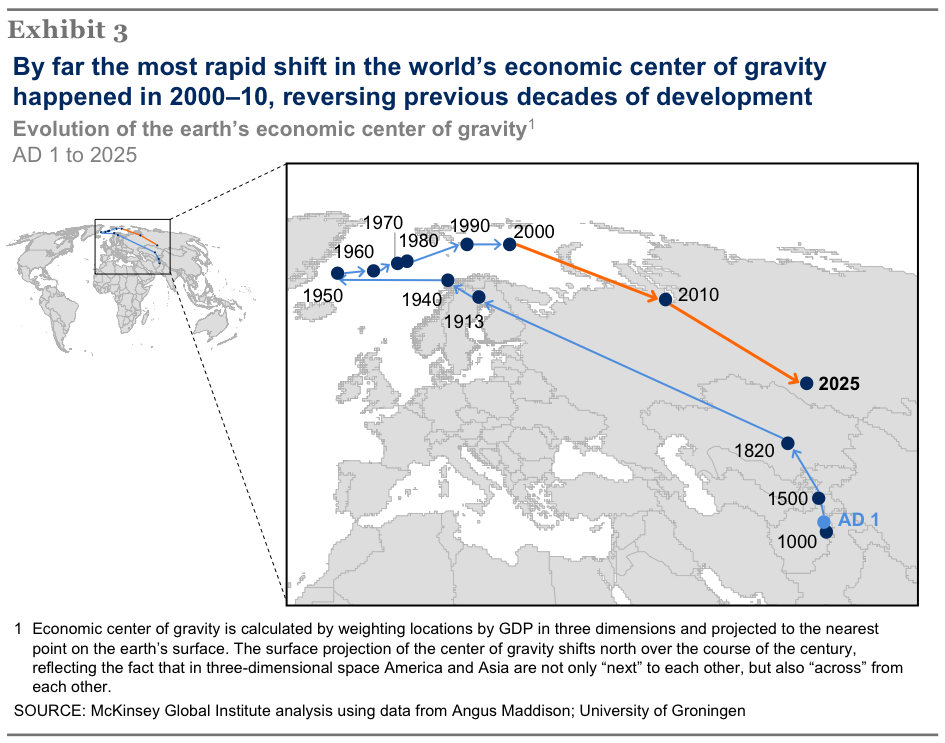
A version of this essay was published by firstpost.com at https://www.firstpost.com/opinion/shadow-warrior-the-need-for-pax-indica-malacca-was-blocked-1001-years-ago-hormuz-is-choked-now-14005673.html In 1025 CE, exactly 1,001 years ago, Emperor Rajendra Chola sent an armada (probably the largest fleet in history before the advent of steam) 4,000 kilometers clear across the Indian Ocean. It was on a mission strangely familiar to us in 2026: open up a critical strait that was being choked by a littoral state. The thalassocratic SriVijaya Empire of Sumatra was closing the strait and imposing tolls, as well as winking at a little piracy. The strait in question then was Malacca. The Chola goal: to reopen Indian trade with Southeast Asia and China. Remarkably, the Cholas were not interested in territorial conquest, only in freedom of navigation. It is ironic that today, it is again a question of free trade, that shibboleth that has been waved about for decades (although that was a euphemism for ‘managed trade that benefits the West’). The difference between then and now? The salient fact is that Rajendra Chola was able to open Malacca with his wooden ships. With all his aircraft carriers and F-35s and missiles, President Trump is unable to open Hormuz. This must mean something, although reasonable people may differ on what that is. My claim is that it means India has the opportunity, in fact the need, to step into the breach. Maritime trade is severely disturbed today, and it is increasingly a disaster for innocent bystanders bereft of oil and gas. And it is increasingly the Indian Ocean that matters: specifically the sea-lanes from Hormuz to Malacca, which handle a significant portion of both oil/gas trade and goods trade globally. Geo-politics and geo-economics, Mahan’s and Spykman’s theories It is a reasonable conjecture that the locus of power has shifted over the centuries: in the 19th century, the Atlantic was supreme; in the 20th century, the Pacific; and in the 21st century, the most important ocean is the Indian Ocean. Asia has returned to center stage. In support of this assertion, see how the economic center of gravity of the world has returned to the vicinity of India, after the European colonial interlude. It is therefore appropriate to ask what it would take for India to regain its former keystone role in the Indian Ocean. Of course geography offers it to the country on a platter. From both Alfred Thayer Mahan’s theory of naval power, and from Nicholas Spykman’s Rimland theory, India could be, or should be, the dominant power in the region: it is almost literally India’s ocean. Mahan’s ideas, updated for today, suggest that a strong navy should protect a large merchant marine fleet, manage trade, and control choke-points. The preferred hardware may have changed from battleships to aircraft carriers and especially nuclear submarines these days, but the basic idea remains: speak softly but carry a big stick with a force-projection...
0:00SPEAKER_00So I want you to picture this.
0:02SPEAKER_00It is exactly 1001 years ago.
0:05SPEAKER_00The year is 1025 CE.
0:07And Emperor Roshendra Chola has just dispatched this like
0:11absolutely massive armada
0:12SPEAKER_00straight across the Indian Ocean.
0:13SPEAKER_01Oh, wow.
0:14We are talking about 4000 kilometers of completely open,
0:18unpredictable water.
0:20SPEAKER_00And this is likely the largest pristine fleet in human history.
0:25SPEAKER_01Right.
0:25SPEAKER_01Which is just a massive logistical undertake.
0:27SPEAKER_00Exactly.
0:28And their mission is to break a blockade at the Malacca Strait
0:32because a rival