
Second Opinion with Rosemarie Beltz · Rosemarie Beltz
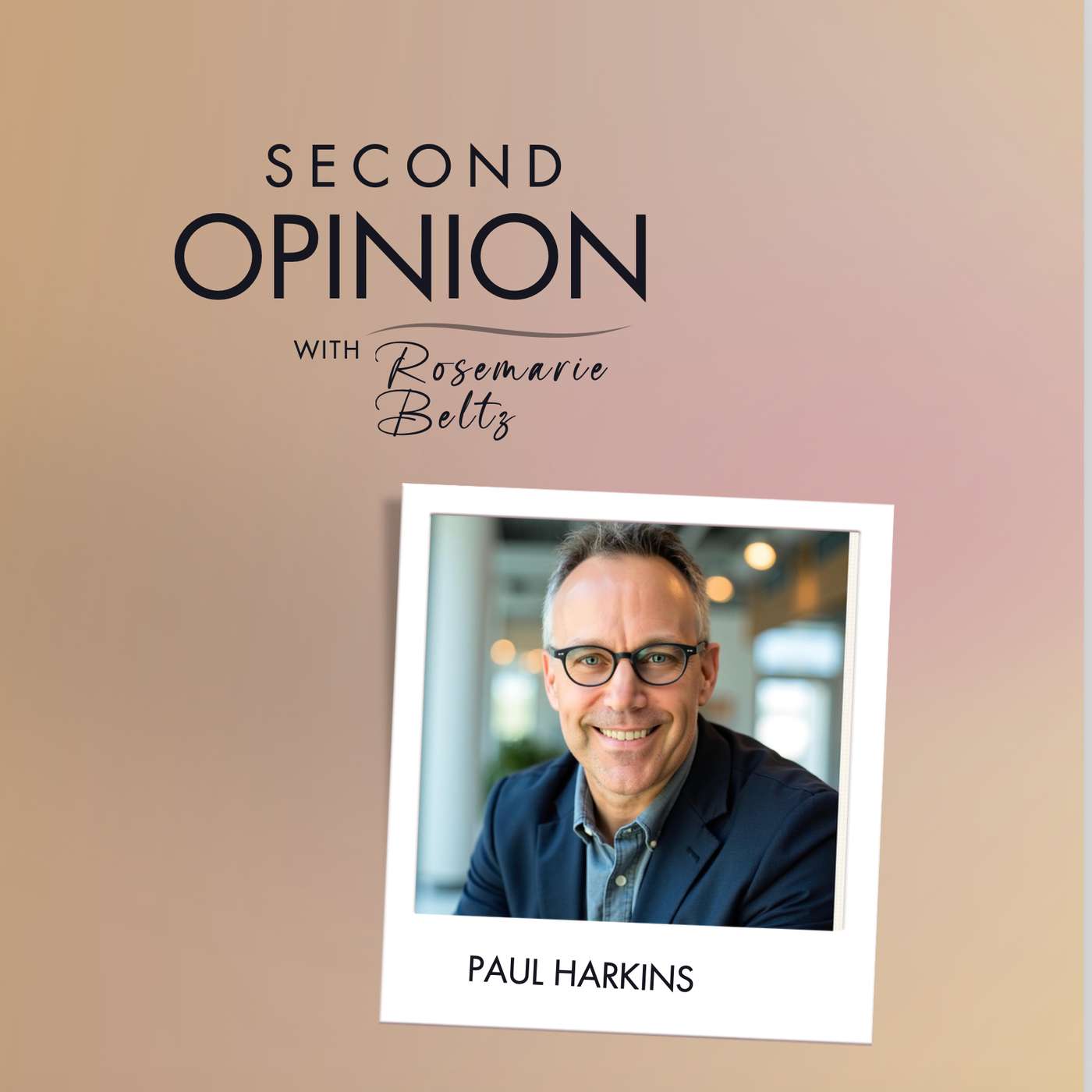
Love. Loss. Dating. And Another Shot at Something Great. We’re older. Wiser. More independent. We know what we want—or at least we think we do. So why can finding a meaningful connection in midlife feel so complicated? And here's a question worth asking: What if chemistry isn't the most important ingredient in a lasting relationship? This week on Second Opinion, Rosemarie Beltz sits down with New York City entrepreneur, inventor, and author Paul Harkins, whose book The Refrigerator Test explores dating after 50, compatibility, and the ordinary moments that reveal who we really are. Paul isn't a dating expert. He's a man who's built businesses, raised a family, experienced divorce and heartbreak, and found himself navigating love and relationships with a very different perspective. And he has some opinions… What if the person who makes your heart race isn't necessarily the person who makes your life better? What if we've become so independent that we've forgotten how to make room for someone else? And what if starting over isn't starting from scratch at all? From first-date chemistry to real-life compatibility This conversation goes well beyond dating apps, first impressions, and romantic expectations. Paul shares why he now values partnership over perfection, what he wishes he'd understood during his marriage, how his childhood shaped the way he connects with others, and why he believes meaningful intimacy takes more than physical attraction. Rosemarie brings her own midlife perspective to the table, challenging assumptions about chemistry, independence, sex, vulnerability, and the sometimes absurd reality of dating in New York City. They even get into the refrigerator. Because eventually, the restaurant closes, the vacation ends, and two people have to figure out whether they actually enjoy an ordinary Tuesday together. What we're getting into Dating after 50: What's genuinely different when you already have an established life? Chemistry versus compatibility: Can connection create attraction instead of the other way around? Love, divorce, and hindsight: What Paul would do differently in his marriage—and what he learned from losing it. Sex and intimacy in midlife: Why slowing down, building trust, and being vulnerable can change the experience. Independence versus partnership: How do two accomplished adults maintain their identities while building something together? Childhood and relationships: How early experiences can influence the way we communicate, react, and connect decades later. Modern dating and mixed signals: Why Paul pays more attention to actions than words. Starting over: The difference between rebuilding your life and believing you have to begin again from zero. The Refrigerator Test: What everyday habits might reveal about compatibility—and what they might not. Second chances: Are we too quick to walk away, too reluctant to change, or simply afraid of getting hurt again? A few moments worth listening for Paul explains...
[email protected] (00:00) Does connecting with someone actually get harder as we get older? I don't know. By this time, we seem to know ourselves better. We know what we want. We know what we do not want, We've built things, all the things, careers, friendships, families, homes, routines, entire lives. So theoretically, shouldn't everything relational be easier? And yet, here we are talking about relationships. And all the things in between. Some days in midlife you feel 25, other days about 105. Welcome to Second Opinion. I'm Rosemarie a healthcare pro and journalist. I happen to be living this alongside with you. Here, we take the signs and the facts seriously, we question the hype, we get granular and personal about what matters as we age, from hormones, longevity, strength, sleep to relationships, money, purpose. The messy middle because midlife is not one-dimensional. No, we want more than just facts these days. We want context, not just answers. We are looking at things from every angle, challenging assumptions, asking what the evidence and real life actually tell us. Real life, real science, the big picture. So let's get into it. Today we're talking about love, loss, connection, and starting over because. By this time and age, we've learned a few things, probably gotten a few things wrong, spectacularly wrong, and sometimes find ourselves deciding what comes next. My guest is Paul Harkins, an entrepreneur and author who found himself back in the dating scene at midlife and started paying attention to the little things people reveal in everyday life. Those observations became a book. I have it right here: the refrigerator test, 32 observations about dating. Compatibility and ordinary moments that reveal everything. Full disclosure, Paul is not a dating expert, and that's exactly why I wanted to have this conversation with him. He's lived a little of life, he's lost, he started over. However, he was curious enough to jot it all down what he noticed along the way and share it with us. Paul, welcome to Second Opinion. Paul Harkins (02:09) Thank you so much. Great to be here. [email protected] (02:11) Great to have you. So how you feeling today? Paul Harkins (02:13) You know what, every day I feel fantastic. It's the only way you can approach a day. [email protected] (02:17) I do believe that. It's intentional, I like to think. Paul Harkins (02:19) it's it's totally intentional. And it starts from the second you wake up. because as you wake, as you know, that creates the day, right? What you're thinking and how you're processing something overnight, it creates the day. So you really have to make a decision to be in a good mood, I think, especially in this day and age. And it is a decision. [email protected] (02:36) A thousand percent some people don't always do the work but we'll we'll get to that some of us have done the work still not perfect but we're doing the work but with that yes Paul Harkins (02:46) It's so true. [email protected] (02:48) okay so you're a business guy by trade Paul Harkins (02:51) Yes. [email protected] (02:51) and then you dove into authorship what piqued your creativity to actually write a book about relationships and compatibility Paul Harkins (03:00) You know, it's it's a great question. I've written a bunch of books. I just haven't published them yet. and when I was writing this book, I was actually in the beginning stages of a breakup. And I was thinking about what it would feel like to be out in the dating world again. And that drew me back to when I was in the dating world because this most recent relationship was it was kind of long. And then I started remembering all the things that I went through in the dating world. So I started to put down on paper as kind of like a journal exercise for me. Which was, you know, how would I feel about being back in the dating world again? Because I knew that's where it was headed. so that was the germination of the refrigerator test is, you know, how how did I look at what I learned about this person in the beginning and what it became to the end? Right. So the micro The micro expressions I call them. And then I translated that into the refrigerator because the refrigerator is really just a metaphor, right? when you look in someone's refrigerator and they have a, I don't know, all sorts of meal prep activity going on in there, right? With stacks of stuff, and you're you're kind of a free spirit, right? You don't plan very well, then you know that tells you there could be a conflict eventually. So you have to identify it and potentially bring it up. So that was really the germination of the book. [email protected] (04:13) Got it. Well, with your experience anecdotally, what are you finding in relation besides the refrigerator, where are we getting things right and what are we getting wrong? I know that's kind of broad stroking, but is there something that stands out in particular? A disconnect? Paul Harkins (04:30) I think the disconnect is is we get caught up early on with how we feel based upon where we are. And in the book I talk about how the how when you go and and meet someone on the first few dates, the restaurant is doing all of the the effort. It's doing all the lift, right? It's great lighting, it's great food, it's it's drinks, but you're not really interacting with this person. And I I I tend to think from a personal perspective that what I did wrong when I met people is that I didn't fully appreciate the fact that how is this person gonna be on an everyday Tuesday, right? They look great on vacation, they look great on you know in a restaurant. or a bar or some activity. But what's the mundane stuff? What does that feel like? Because if you can identify what the mundane stuff feels like early on, it'll give you a very good indication whether or not this person's gonna fit with your life. [email protected] (05:19) Right. It's so interesting when you're say twenty-five and say fifty-five when you're out on a date, some of the things that stand out to you then as opposed to now. Without having the spotlight on you per se, we're not picking apart your dating life per se, but I'm just saying you're Paul Harkins (05:35) Appreciate that. [email protected] (05:36) not under interrogation at all. Just speaking at this point of life, what would you say the younger version of you and this version of you, was there anything else particular that stands out, what you feel like you're looking for in relationships? Paul Harkins (05:51) You know, it's again a great question. I I think now my focus is on on being in a partnership. And the partnership is the most important thing in your life. That doesn't mean you lose yourself. But I always felt as though when I was younger, I I would look at relationships as a, okay, if there's something wrong with a relationship, that means we're a little incompatible. Now I look at relationships where when you when you start meeting people, you have to understand there's going to be disagreements, right? Because I'm also divorced. So I gave up too soon, I think, on my ex-wife because I felt as though it was, you know, we were just not compatible. But all that embedded history, I just didn't give it credit for. So I think as I as I date now, as I'm getting older, and I'll give you the dating story from my last breakup that that is kind of hilarious in my mind. But I as I look at my next relationship, it's more important for me to be with someone who says, okay, we're gonna choose this relationship. It doesn't mean we're diminishing every other part of our life at all, but we're gonna choose this relationship. And when we have an individual choice, we have to think about how it's going to impact the relationship. So if I choose to do this, is it going to make the relationship less structural, right? Is it going to hurt the relationship? and that's a balance that only comes with communication. So I I view that very differently than than when I first got married. [email protected] (07:07) Interesting. I agree with you. about the whole a teammate. You're looking for Paul Harkins (07:11) Yeah. [email protected] (07:12) someone to have your back. Paul Harkins (07:12) Correct. teammates argue all the time, right? [email protected] (07:15) Yes. Paul Harkins (07:16) and and it's not about getting along. It's about, okay, we're gonna we're gonna stay at this until we figure it out, right? Because figuring out means [email protected] (07:23) Yeah. Paul Harkins (07:24) something. [email protected] (07:24) Well, and it's also we all have different positions on teams. one person, defense, offense. you all complement each other. You're not the same, but yeah, you work together and you all have the same goal in sense, the big life picture, I think essentially Paul Harkins (07:38) Exactly. [email protected] (07:39) we all want to be happy, whatever that looks like for you, Paul Harkins (07:42) do you though? Do you think do you think most people want to be happy? or do you think most people confuse wanting to be happy with the notion that they're not? Right? It's a it's a really interesting question if you ask it that way. Because my [email protected] (07:54) Mm. Paul Harkins (07:54) opinion of most people, and this this comes more from business than than personal dating. My opinion of most people is they accept what life is giving them as opposed to having agency to say, hang on, wait a minute. It goes back to the morning question, right? When you wake up, today I'm going to change my life. I'm going to, I'm going to become the person my dog thinks I am. you know, and and that's [email protected] (08:14) Yeah. Paul Harkins (08:14) that I think people miss. I think they accept life way too much, or they accept input. on that life, whether it's from friends or or family or social media, that life should be a certain way. And I think happiness gets confused sometimes with acceptance. [email protected] (08:29) Agree. Agree. I think, well, also, we happen to live, you're a New Yorker, I'm a New Yorker. I think we live in an area where there's so much ambition. So sometimes I feel like I'm not and I'm pretty motivated. Like I'm pretty, I've got a lot going on, you've got a lot going on, but there's always someone else that even has more going on. That that's just the way we roll. however, I know people that they accept that this is just the way it is. I mean, Paul Harkins (08:56) Yeah. [email protected] (08:56) I know people sitting in dead end jobs like that too. Like, but I also think how you do one thing is everything, they're waiting till they turn 65. They're divorced, They'll stick with the person because they're convenient. Yeah, I know what you're saying. I'm far from perfect, but I get frustrated listening to their day. I'm like, well then do something. Paul Harkins (09:16) Well, you don't have to be perfect. You just have to make sure that you put a mirror up against yourself and understand what's not working for you and then actually do something about it. [email protected] (09:23) Yeah, and that takes effort and intention. And like you said, saying one thing and doing something else are completely different. Yeah. Paul Harkins (09:32) Totally. Yeah, I I I judge, and that's the other thing to your point. in in romantic relationships, I judge people solely on what they do, no longer on what they say. [email protected] (09:42) Yes. Paul Harkins (09:43) and that was a real shift, recent shift for me. because it it it it goes to, you know, anyone can say anything, even if they believe they feel that way, but if their actual physical actions are counter to that. Then there's something blocking that, right? There's a difference. And it it it does I I mean, the only way I can explain what I mean by that is my last relationship was a long relationship. I got out of it. I was very much looking forward to dating. And within two and a half weeks, I met someone at a rock climbing gym. And I was like, Well, I guess I'm not dating anymore. So, you know, the the difference for me was very close and stark, where you go from someone who has difficulty showing what they're saying. To someone who doesn't say it, they just do it. so it [email protected] (10:23) Right. Paul Harkins (10:24) it's that's very different for me. I I don't think I ever realized until I saw that new way that the old way was a problem for me, right? Doesn't mean she was doing anything wrong, it's just who who she was. so I think I think listening to actions, if I can say it that way, is [email protected] (10:40) Yeah. Paul Harkins (10:41) very important at our age. [email protected] (10:42) yeah, one of my best friends, I remember when she was getting married. Her husband, he's not one with words. but he but he's will show her, build her a house Like where some people are all show, no, go. Paul Harkins (10:55) Yeah, exactly. And just because someone can't show you, you know, how they feel, and there's two different things, I think. You have one thing which is they can't actually show you because they don't have the requisite skills to do so. Or the other thing is they don't want to, right? That's the way I delineate [email protected] (11:09) Right. Paul Harkins (11:10) it. So if they don't want to is very different than can't. And in my personal experience, it it it I should have been better at creating this safe enough environment where they felt they could show me. So that's the mirror again, right? When you when when something breaks, you have to look at yourself and say, What did I do wrong? so I I think I think it's it really comes down to agency. Dating at this age, being in relationships at this age comes down to agency. What can I do to make this work better, right? If you truly care about someone. But if they don't want to do it, then you doesn't matter what you do, it's not gonna work. [email protected] (11:44) True that. All right, so I'm gonna try to move on here because we can that was a rabbit hole exactly. Paul Harkins (11:47) Yeah, that was a rabbit hole, huh? [email protected] (11:50) I'm gonna pull us out of that, Paul. what matters to you now that your younger self would probably have found incredibly boring? So Paul Harkins (11:59) Peace. [email protected] (11:59) What does that look like? Paul Harkins (12:00) Peace looks like when you're next to someone you're with, your your heart rate is not jumping, your heart rate is slowing. For me. [email protected] (12:07) Right. No drama. Paul Harkins (12:09) No drama. And it it's, I mean, it's funny. I I said this to the person I'm with now. I said, every time I get next to you, physically next to you, my heart rate just goes down precipitously. And I've never experienced that in my life. And it's a really amazing feeling. [email protected] (12:22) Imagine so, especially living here, because when we're out, it's such a busy place, right? We're on alert. And so when you Paul Harkins (12:27) yeah. Cortisol is up all the time. [email protected] (12:29) all the time from 6 a.m., you walk out the door whenever you walk out, you're in protection mode pretty much most of the day. yeah, well, good for you. Congrats on that. it sounds Paul Harkins (12:39) Thank you. [email protected] (12:40) like all your work everything's coming together. Paul Harkins (12:43) Yeah, it's early days though. it's it's not nearly as perfect as I make it sound, trust me. [email protected] (12:47) I'll be cautiously optimistic. that's my phrase. this is more of like a Gen X question too. Cause I think how we were brought up has a lot to do with it. What did love look like in the house that you grew up in? Paul Harkins (13:00) Unsafe. Very unsafe. I grew up in a a a family of six kids, two adults in a two-bedroom house. we grew we were very poor and there was not there was not a lot of love or affection in my house. and it's funny, when I got married to my ex-wife, we have three boys and all three of them are incredibly secure. They understand they can do anything in the world because we showered them with love. So we did the opposite of what I experienced. so it's you know, it's it's the affection that I think I created out of having none. [email protected] (13:30) every generation wants to do better than the next generation. They do the best that they can. And you know Paul Harkins (13:36) Yeah. Well you either you either repeat it or you do the opposite. [email protected] (13:40) Well, thank you for sharing that. Is there Paul Harkins (13:43) You're welcome. [email protected] (13:45) anything that you did not repeat anything in your marriage Paul Harkins (13:50) I I think that's a blanket statement. I'm sure I screwed up a lot, right? but I I actually know what I repeated. I repeated the dynamic with my oldest son when he was young, where it was very demonstrative with him. you know, my ex-wife is very strong. She would course correct me. You know, I I used to describe her as a female lion course correcting her male partner when her partner is abusing the little little cubs. So so she was the regulator on me through that time. [email protected] (14:17) Would things maybe have turned out differently knowing what you know now in your marriage? Paul Harkins (14:21) Absolutely. [email protected] (14:22) Thank you for admitting that. Paul Harkins (14:23) Absolutely. I mean, I I I saw my ex-wife recently, actually we had this, we had this exact conversation. I think space and time gives you a very different perspective. and if you examine yourself with a mirror and then you then say, okay, what should I have done differently? What could I have done differently? it gives you a whole different perspective on on how you operate. that's that's why I think second chances are important. But you both have to be in a space where you understand why the second time will work as opposed to not. [email protected] (14:53) Hmm, knowing the difference. Paul Harkins (14:55) Yeah. [email protected] (14:55) you're at that age where you're really discovering whether you weren't compatible or do we even like each other? either you're empty nesting and everything is great, or your kids are off and you are looking at each other like, now what? Because we've done everything for the kids. You don't even really know each other anymore. Paul Harkins (15:12) Yes, but that's that's the beauty of it, right? That's what I didn't see when I was when I was leaving my ex-wife. What what I would do differently now is I would have relearned who she was. I would have fallen back in love with someone brand new. and I think that's what space and time gives you is that you know you you change when you're not together. And do you want to then rekindle that, but rekindle it, rebuild it, right? Brand new. so I think I think one of the things that I've come across on a lot of different interviews. Podcasts and so on and so forth is people don't realize how much the structure of a relationship impacts them when they don't have it. Right? Because they're in a relationship, they're identifying things that are wrong, and they are focused on things that are wrong as opposed to being focused on what's right. And I think the first thing, this happened to me actually twice now. The first thing that I realize I miss is the structure. Right? It's how I feel being with that person. Does that person make me feel better about me? Does that person make me want to accomplish more? Does that person give me a structure where I can actually be a better person than I can without the structure? And I think we lose sight of that because everything has become so disposable in today's age. [email protected] (16:22) yes, we do live in a world where it's so fast, unfortunately. There's like the next best thing constantly Paul Harkins (16:27) Yeah. [email protected] (16:28) is is coming our way, right? So Paul Harkins (16:30) Exactly. [email protected] (16:31) okay, well with that, to to kind of move off topic this topic a little bit and to segue into something else, I was paging through your book and highlighting some things and the gist of even in business, somebody in business learning how to read the room, in a world that is 24-7 nonstop, our news feeds and some what. How has that helped you in relationships or has it ever made you think you know what somebody's feeling? before they've actually told you. Paul Harkins (16:58) Yeah, so here's here's the dichotomy with that, Rosemarie. I can read a room pretty quickly in a business environment, right? I can understand, you know, who I wanna connect with, who I don't want to connect with. Now translate that into a personal relationship. And I think you know where I'm going with this. The personal relationship is you start to anticipate what you think someone might feel or think. And this actually started when I was a kid because I had a very alcoholic-abusive father. So the moment he walked into the room, my my radar was up. It's like, you know, because it's gonna change in a second, and I've got to be prepared for it. So now fast forward to you know basically middle age, and you look at someone and you see a micro expression on their face, and all of a sudden you start creating what they might be feeling. And you either try and solve something or you try and prevent what you think is going to happen from impacting you. See, that's the downside, that's that's the invisible chain that you have from childhood. so I think it has hurt me more than helped me in my personal relationships. And that's something I'm I'm very much working on now with the person I'm with. We actually have long conversations about this. because one time I she was talking about something, and I said to her, Well, you know, why don't you just let me do this? And she shut me down. She's like, That's not your problem to solve. That's my problem to solve. And I was like, Whoa, no one's ever said that to me before. [email protected] (18:15) That's why you like her. Paul Harkins (18:16) Yeah, that's I was like, wow, that's interesting. but she was right, right? She had the agency to be able to say, hang on, wait a minute. I'm I'm an adult. I'm gonna try and solve this on my own. And if I need help, I'll come to you for it. So that was a wake-up call for me. [email protected] (18:29) Good communication skills, I can see maybe you jump the gun a little bit, which is Paul Harkins (18:34) Totally. [email protected] (18:34) from walking on eggshells, maybe in the presence of certain people. Paul Harkins (18:39) Which is good in the beginning. I find that people people mistake that in the beginning for, my God, he cares so much. And then all of a sudden it becomes too much. And then it's like, I feel like I'm trapped in this. because he wants to solve so many of my problems. So that's the dynamic, right? You have to you have to really ask, Would you like me to help you with that? That's the that's the only question I ask right now around around her. Would you like me to help you with that? No. Or yeah. Right? So I don't assume that she wants me to and then try. [email protected] (19:05) I feel like there's so much confusion on who's doing what anymore. there's a disconnect of the masculine and feminine. Do you see where I'm going with this? Paul Harkins (19:14) But doesn't but yeah, I do, but doesn't that come down to communication again? I mean, everything in life is about communicating. Everything in life is about communicating. And doesn't it simply come down to I'm a fixer, right? I I I fix everything that comes up because as an entrepreneur, that's a really high level skill. It ha you have [email protected] (19:31) Mm-hmm. Paul Harkins (19:31) to have it. However, in a personal relationship, if you become a fixer, then you're not giving the person you care about agency to be able to learn how to fix whatever she might need to fix or he might need to fix. So when it comes to masculinity and the gender roles, I have found that If you communicate things, even the small things, the gender roles present themselves, right? So like I described what was happening with that's not your job to fix that problem, right? That I mean that's a very that's a very different gender role that she presented because she presented, you know, I'm gonna I'm going to take agency of this problem myself. It's not up to you to fix it. So I think it's very confusing because we don't talk about it, you know, and and we don't figure out exactly, hang on, what do you want from this? Right? What does that mean to you? And I think that that question right there is something almost no one says that I've come across. Is asking your partner, what does that mean to you? Right? What does that rule mean to you? What does that mean to you? So I I as you can tell, I think communication is the solution to everything. it is exactly. [email protected] (20:32) But it is and we don't do enough of it. That's the problem. And it can be difficult, but yet difficult communications communication and conversations lead to intimacy. Paul Harkins (20:45) Totally, totally. I mean, what but here's the thing. You have you have difficult conversations, and then you have people who feel they can't have difficult conversations, right? But what what what you don't realize is exactly what you just said. The more difficult conversations you can get through, the more intimate you become, the more connected you become, which goes back to what we talked about earlier, which is I all I want right now is partnership. I want to be able to get through whatever because it's going to make us better, right? I don't want to have to pull something out of my partner. I don't want them to have to, you know, be afraid to talk to me. It's all about partnership and that comes down to communication. Both of us have to be able to say, look, here's what this means to me and how do we solve it? [email protected] (21:27) well it's risky, right? It's it's sometimes risky I don't Well Paul Harkins (21:30) Is it though? I mean, is it risky because you're scared of it? Or is it risky because what you might hear back? But yeah. [email protected] (21:36) I think so. I know so I mean even at fifty something, people have made mistakes, they're scared of making more mistakes, or I'm just going anecdotally too, like your book. I I'm just going with what friends. I'm not an expert. people come to Paul Harkins (21:49) Me neither. [email protected] (21:50) me. I guess because I'm a journalist or I work in health, what do you think? What do you think? like you said, nobody's talking to each other. They talk about each other, but it's everyone's scared to talk, have the difficult conversation. Like they don't want to scare Paul Harkins (22:02) Well, [email protected] (22:02) people away. Paul Harkins (22:03) it seems like most of are talking to their friends, right? [email protected] (22:06) Yes. Paul Harkins (22:07) and then their friends have agency in a relationship, which I think is a huge mistake. I don't know how you feel about that. [email protected] (22:12) Correct. Well, because they're not in the relationship and they're given advice based off of their experience, not Paul Harkins (22:18) Correct. And and that person has to live with the ramifications, right? So you know, think about it this way. that you're in a relationship with someone, you're telling your friends all the bad things, because you're not going to walk over there and go, he's amazing, right? So you're telling them the bad things. So the perception of you is that you're in a relationship that's not serving your needs. So the friends are like, well, get rid of him, you know, go move on somewhere. However, the friends are not sitting at home losing that structure. and realizing, hang on, wait a minute, you know, maybe I didn't have to actually lose the relationship to lose what wasn't working. [email protected] (22:50) Yeah. Good point. Okay. Now I have to look at my notes because I'm way off tangent here. Paul Harkins (22:56) I did I did tell you that would happen. I tend to pull people in very different directions. [email protected] (23:00) I love it. This is definitely not what I expected. So I I welcome that. then I can't read anything because you know, you're at the age where you need five pairs of glasses. So well then maybe we'll go into certainty when certainty disappears. Uncertainty. 'Cause you're as an entrepreneur, but you did mention how relation and business and personal is different. you spent your life building things, right? businesses, relationships, a life, but then there's a starting over because you're excited about something new, and then Paul Harkins (23:32) Yeah. [email protected] (23:33) there's a starting over because something's not working. Can you talk to that maybe to to people in midlife who could be struggling with that a little bit? Does that make sense? Paul Harkins (23:44) It does make sense and I I think it's a good delineation because there are certain people that need to start over and I and I don't like the word starting over because you're never starting over, you're rebuilding, right? You're rebuilding with a baseline of new information that you're taking to the next step. So [email protected] (24:00) Correct. Paul Harkins (24:00) when you're rebuilding basically because you you're excited about the future, that's different than rebuilding because you're in a place where you have to rebuild. But I also think it's the same thing. So when you when you get out of a relationship, if somebody leaves you, you have to rebuild your life outside of that person. Right. So let's say you break up with someone, whether it's a marriage or a relationship, you have to then start rebuilding. Most people sit in the pain of that breakup too long. Right? They don't they don't they don't sit with it and use it as fuel. They sit with it and use it as depletion. So when you when you can use the breakup as fuel, all of a sudden you're saying to yourself, wait a minute, now I have the agency to be able to rebuild anything I want. You can create anything you want, which goes back to being a startup guy, right? Because I'll come up with the weirdest ideas of why isn't this that way? And then next thing I know about two months later, I have a company doing that, right? so it's the same basic premise. And I think I I mean I again, I was when I left my last relationship, it was so broken. just it it was time. not that it couldn't have been repaired, we just didn't have the tools to do it. I was so excited about dating again. I was like, I you know, I get to rebuild my life, I get to go out, I get to meet people. I mean, wow, this is gonna be great. And then of course, bam, I meet someone and I'm like, all right, well, I guess not. [email protected] (25:17) Yeah. Paul Harkins (25:18) but I think rebuilding at any level comes down to using the pain or the disappointment as fuel. [email protected] (25:26) Hmm. that's a really good point. Even if people are in relation and they're trying to make it work, they're at that, critical point, that turning point where it could go either way. It's like what you're gonna focus on. Like you said, are we gonna be focusing on the good stuff that's that was a really good point. Paul Harkins (25:42) Well, you're gonna be in many relationships during your life. The question becomes, are they gonna be with the same person or the same couple of people or many people? Right. Because if you can be in a if you can be in a different relationship with someone that you have faint foundational love and understand what went wrong and how to then not have it go wrong again. That's a beautiful thing. I mean, that actually happened with me and my ex-wife. It didn't end up right, but you know, about eight years into our relationship, it was like, this is not working. We're done. and then we decided to learn everything we needed to learn to make it work again and won another eight, nine years. I just didn't do that for the third time, and that was my mistake. [email protected] (26:18) Well, you learn from it. It sounds like you have a really good Paul Harkins (26:20) Totally. [email protected] (26:20) relationship and you know, you're both where Paul Harkins (26:22) Yeah, no, I I [email protected] (26:23) you should be. But it's nice of you to admit these things. Paul Harkins (26:26) Well, if you can't admit you were wrong, what's the point? [email protected] (26:29) 'Cause that could inspire people who are listening, who could be in a very similar situation and help maybe Paul Harkins (26:34) Yeah. [email protected] (26:34) save a situation. Paul Harkins (26:35) I I agree. I mean, you know, learn from the mistakes, right? because I've made an abundant amount of mistakes in my relationships. But the key is do you want to give it up because it's not what you think is working, or do you want to hold on to it because there's something there that could work? That's I [email protected] (26:52) Yeah. Paul Harkins (26:53) don't think I don't think a lot of people ask themselves that question, honestly. They might talk to their friends about it. And of course, we go back to that. that information coming back is definitely not gonna be something that, you know, is gonna be helpful. but yeah, I I I agree. I think people really have to examine what they're willing to give up and whether or not it's worth it. [email protected] (27:09) I have so much written down here. I'm trying to hit everything and it's just not gonna happen. I actually I have friends that got divorced and then got remarried and it's like you don't even remember when they were divorced. midlife stuff, And now they're back together and it's it's it's how it should be. All is right in the world. Anyway. Paul Harkins (27:24) I I so so so anecdotally, a conversation that I had recently with my ex-wife, she said to me, Do you think that we could ever make a go at it again? And and I said, No, I said, but I often think about how easy it would be if we would have tried only a few years after we got divorced, because I would have spent the rest of my life trying to make you happy. And she said, Me too, because we knew we weren't doing it, but we knew why. So I think after you're out of a very good long-term foundational love relationship, it's it's a beautiful thing to be able to reconnect because you have all that baseline of what went wrong. So you don't have to think about it, right? Now you meet someone new and you have to re-establish all of that baseline because you don't know how they're gonna react to that, how they're gonna react to this. so I I think a lot of people probably would look at that that disconnect, remarry type. Scenario is helpful because you you know what got screwed up. So you're way ahead of the game when it comes to some new relationship. [email protected] (28:26) Yeah. you can never help who you you're fall for, but it is nice when you can meet someone who comes from somewhat of a similar situation than as you, right? Whether you're divorced, you have children or things like that. I don't know, maybe maybe not, Paul Harkins (28:41) Yeah, I I don't know, I think I think l the love cord, the energy between two people and the love cord overrides all of that. [email protected] (28:48) Nah, it's true. Love makes us do all kinds of things. Paul Harkins (28:51) Sure it does. [email protected] (28:52) Yes, that's another podcast. Okay, so achievement. Paul Harkins (28:56) Ha ha ha. [email protected] (28:57) Achievement versus Paul Harkins (28:59) Yeah. [email protected] (28:59) fulfillment. all right, the situation is when you can look successful from the outside and still know that something isn't right on the inside. When did you first recognize that gap between achievement and fulfillment in your own life? Paul Harkins (29:15) Yeah, I was in my mid-30s when imposter syndrome just took over. because the the notion of okay, got married, we're having babies, we have a big, beautiful home. my ex-wife is a professional equestrian, so you know, we had horses. And by the way, horses are the most expensive hobby on the planet. my my favorite line is if we get this horse, we'll make money on it when we sell. You never make money on a horse when you sell it. You never sell it. So so the reality was that I I then looked at my life and I'm like, I have all this stuff because I that's you know, go back to what you were talking about growing up in the era we did, that's what you did. You you you created a family, you created a life, you got bought a house and you know, then I was like, Well wait a minute, what this this has nothing to do with what I want, which is the point where I mentioned earlier where we broke up the first time. because I was just so unfulfilled by my life. And then I went away. you know, spent a few months trying to figure out what I wanted and then came back even stronger. But yeah, I think I think fulfillment. So I think what you're really talking about is can you be independent within a relationship structure? Right? Because independence as a person means that you're fulfilling what you're trying to accomplish as an individual. And I think that is a choice. Right. It doesn't mean it doesn't mean you have to choose it or he or he has to choose it or her. It means you have to make a choice together that I want this structured relationship, but this is what it means to me to be independent within that structured relationship. Because then then you don't have that problem because you're still fulfilled independently of the relationship. But it makes the relationship better. [email protected] (30:49) So I was actually brainstorming about this. So I'm thinking about it's probably jotted down on my notes somewhere. God knows where. But anyway, I was thinking about that. About how independence and we say, well, I love independence because I'm a busy person. So I think it's healthy to have your own thing going on and be happy, and then a person just makes you happier. That's me personally. I'm already happy, Paul Harkins (31:14) I agree. [email protected] (31:16) just want to be happier as a couple. I I find, Paul Harkins (31:18) Yeah, more fulfill. [email protected] (31:20) yeah, for more fulfilled. Do you find people in your experience? They say, I love it when people have their own thing going on, they're independent, until it interferes with their independence or their life. Paul Harkins (31:33) Totally [email protected] (31:33) Do you know I'm getting at this? Paul Harkins (31:35) I do. I think you're circling around something though. I think you're circling around the notion of two people think they want to be independent of the of the partnership, right? And [email protected] (31:42) And they want someone to be independent. Paul Harkins (31:44) they want someone to be independent. However, when that person is independent and then it starts to fracture the partnership in their own mind, right? They don't communicate that. [email protected] (31:53) Yes. Paul Harkins (31:55) partnership being paramount. [email protected] (31:56) Right. Because that's also a very secure attachment type too. Paul Harkins (32:00) yeah, I think independence in a relationship is critical. I didn't think that before. I think, I think you you have a baseline of saying, okay, we are committed to each other. every decision we make is going to put us in a place where we consider the partnership and the impact of that decision on the partnership. But I still want to be independent, right? I still want my own hopes and dreams. I don't want to be defined by the relationship. I want to be defined by what I want to do, what I want to become, and I want the relationship to supercharge that. It goes back to the structure being fuel for that. But again, you [email protected] (32:30) Right. Paul Harkins (32:31) can't get there unless you communicate that's where you want to go. So again, it all goes back to communication. But [email protected] (32:36) Communication, yeah. Paul Harkins (32:38) for me, what I'm learning now is the best relationships are ones where you communicate exactly how you feel and what you want. You have a structure that provides fuel for you to be independent. Because you know there's always [email protected] (32:50) Yeah. Paul Harkins (32:50) someone there that's going to have your back. There's always someone there that's going to support you. So you can go out and actually be a better you when you're independent. [email protected] (32:58) Agree. Paul Harkins (32:59) That was another rabbit hole. [email protected] (33:00) that was a rabbit hole. Can I tell you? I've got like 25 things jotted down over a nine. Number nine. That's how far we've gotten. Paul Harkins (33:07) Ha ha ha [email protected] (33:08) Just Paul Harkins (33:09) I love that for you. [email protected] (33:11) so you know. So I I I don't know how much time you have. Just let me know. You gotta start cutting it off. Paul Harkins (33:16) Hey, I'm I'm a I'm an entrepreneur. I can go all day. [email protected] (33:19) I'm working on that, Paul. I'm working on that part of my life. Okay. So with that independence and whatnot, since we were talking about communication, what genuinely surprised you about dating after 50? what completely caught you off guard? Paul Harkins (33:34) Desperation. A lot of people that you meet are are desperate for a connection and it bleeds, it bleeds out almost immediately. It goes back to sitting in the pain and then using it as fuel. A lot of people that I met when I first got divorced were basically women that were just looking at their prior relationship and being like, I'm I I don't have it anymore. So therefore I'm alone, therefore I'm scared, therefore I want to latch on to someone else. because being single after being in a relationship is not easy. And I think for women, you know, no matter how beautiful you are and how much, you know, attention you get, for women I think it's even more difficult because if you're if you're a woman that's leaving a relationship that provided a great deal of structure for you, and that structure is just ripped out from under you. it makes it a very more challenging landscape. So when you meet someone, you have fun with them and it's like, wow, this is really cool, you get attached pretty quickly. And that's what I mean by desperation. My experience was by date three, they want to talk about living together. [email protected] (34:31) wow. Paul Harkins (34:31) Yeah. Well I have a really nice apartment, so maybe that was it. [email protected] (34:34) Maybe that's it. I actually just said to someone, hey, if you know anyone, I might be open. However, we can stay in our own houses. in the back of your book, it said you live in Brooklyn. Do you still live in Brooklyn? okay. Paul Harkins (34:44) I do. Yeah. [email protected] (34:46) Yeah, next one we'll do face to face. Paul Harkins (34:45) next one would do face to face. [email protected] (34:48) it's interesting that you said desperate I didn't realize that, but I I can see that where it is hard once you're in like a long relationship. Paul Harkins (34:54) Well, I I don't have any [email protected] (34:56) And then Paul Harkins (34:57) experience dating men, so that's why I just give towards women. That's my only you know not that I'm opposed to that or there's anything wrong with it. I just haven't had any experience. [email protected] (35:05) Right, right. 'Cause I always thought that men seem to have to partner up quicker after a breakup than women. Maybe I'm wrong. Paul Harkins (35:14) I don't know. I I mean I I mean, I don't know. I I was I was very much looking forward to not having a partner. but the universe was like, Yeah, that's funny. here you go. so I don't know. I don't know the answer to that. [email protected] (35:24) Maybe you just debunked something that I was thinking all entirely wrong. I felt like after a breakup, yeah, it seemed like women stayed single. Not because they wanted to stay single. I don't know, it just seems like I'm talking in circles here. It just seems like a lot of my Paul Harkins (35:37) Yeah. [email protected] (35:38) guy friends tend to partner up quicker after a relationship than the women. But again, that you could have just made me think about something differently, which is good. Paul Harkins (35:48) I don't I don't know. I I I hear a great deal about the quality of people out there. [email protected] (35:54) Mm-hmm. Paul Harkins (35:55) you know, and again I'm not dating guys, so I only hear about the quality of men out there. [email protected] (35:58) Yeah. Paul Harkins (35:59) and it's it's not a pretty picture. [email protected] (36:01) I'm highly disappointed in humanity right now. That's how I feel. I don't know what's going on. Everything seems to be Paul Harkins (36:08) I I [email protected] (36:08) messy. Paul Harkins (36:09) you see, I'm I'm on the other side of that. I'm I'm so insanely excited about the prospect, even if this person that I'm with right now doesn't work, which I don't think is gonna be the case, but I'm so excited about the notion that you can wake up one day and meet an amazing person that becomes part of your life forever. I mean, just just having that feeling is is freaking amazing. [email protected] (36:29) I'm all about that excitement. I don't know what it is. We're a different breed here though, too, in New York. It's very different here than it is. or it doesn't have to be. You're helping me think differently. I'm extremely positive Paul Harkins (36:42) if you're extremely positive that something's not gonna work, right? It doesn't mean you're negative. You're being really positive about the fact that it won't work. So you have you have exactly right. So we [email protected] (36:49) That's right. There's still a positive spin on it. Always. Paul Harkins (36:53) start believing our own, you know, you know what I mean, right? I don't know if you can curse [email protected] (36:56) Yeah, yeah, yeah. Paul Harkins (36:56) on this, but you start believing it. And and I I don't know, I just I feel like I feel like the world gives you so much to work with on a daily basis. And if you take that and again and you push it out into the universe, it's gonna come flying back at you. I mean, I I I can't expla express enough how my life became something that it should never have become, right? My every sibling I have stayed in that lower middle class, never accomplishing anything because the world hates me, type of mentality. And I don't know what it was about me. that just catapulted me, I think it was my first wife actually, catapulted me into a place where I just started to realize that whatever I wanted to create, I could just do it. And [email protected] (37:38) Well you've built together. Right. Paul Harkins (37:40) No, but she had a different way of she had a different way of thinking. Where it wasn't that anything's possible. It's it was whatever you actually think you can accomplish, you probably will. Right. So [email protected] (37:50) Okay, that is that. Paul Harkins (37:51) and and you probably have this same trait. I have in si my youngest son who's in his third year of law school right now, when he talks to me, he says the same thing almost every time I talk to him. He because we talk about our lives and what's going on. And he says, Dad, you have the most unrealistic expectations of what your life is going to become. He said, even if you get remotely close to them, it's amazing what you've accomplished. And I think you have to live that way. You have to always have those incredibly unrealistic expectations. And it's hard when you just come out of a breakup, but but use the breakup and the pain as fuel, right? Because happiness is the worst form of fuel. Because you get sedentary with happiness. Pain, [email protected] (38:29) Right. Paul Harkins (38:30) pain, you know, thrust, right? Forward. You got to do something with it. [email protected] (38:33) A thousand percent. getting too comfortable in anything, even it's not good. It's good to feel good, but getting too comfortable I I know what you're trying to say. Paul Harkins (38:43) No, I I I know what you're saying, but so on that on that premise, I'm gonna become the interviewer now. So do [email protected] (38:47) Okay. Paul Harkins (38:48) you do you believe that most people who are in structurally good long-term relationships take it take it for granted what they have over time? It becomes a [email protected] (38:55) Yes, yes. Paul Harkins (38:57) constant, right? It doesn't become unique. It becomes, well, he's providing all of this for me, so therefore it should be provided for me. [email protected] (39:04) I know lots of people like that. Absolutely. Yes. Paul Harkins (39:06) Yeah. And that destroys more relationships than than lack of love, lack of respect. because it goes down to the point of do you appreciate what I'm providing for you? [email protected] (39:16) Glad you brought that up because I I said that I I talk about this in anything like appreciating a coworker, appreciating in a relationship. Paul Harkins (39:23) people people don't realize that until they're out of it. And then it's too late. [email protected] (39:26) Exactly. No, I agree with you. Yes, yes. And even work, it's nice to have a good job, but then sometimes, it's a little different, just being a little too comfortable. But maybe it's not. I'm just thinking out loud. Paul Harkins (39:39) No, but you you actually you actually think while you talk and you talk while you think, which is a rare quality. so you know, and then and that's probably why you are so success successful, because you can multitask without losing anything. So, you know, that's that's really that's really good to see. I I I do something very similar. But I think you're hitting something right on the head, which is the notion that Why does it take people to lose something to understand what that something was? Why why why are we wired that way? See, I [email protected] (40:09) Yeah, I don't know Paul Harkins (40:09) I I I don't know, I you might be the same way I am when it comes to that. I am such an overthinker that I look at everything that I have and I'm like, do I really want to lose this? Because you know, again, we are not 25 to 35, whatever 40 years old. We've been through relationships, right? We know what it's like to lose them. So for me personally, I look at every relationship that I'm in and say, I understand what I have here. I value it. I'm gonna make sure I show I value it because I know what it's like not to have it. but until you have done that at least once, you don't have that skill. And I'm not sure why the notion that you don't appreciate what you have is hardwired into a baseline for most people, as opposed to appreciating what you have. Does that make sense? [email protected] (40:52) You said that beautifully. Yes. I don't know the answer. Paul Harkins (40:56) I don't either. [email protected] (40:57) But I do know with life experience that we've been through things, whether it's losing someone you love, A parent or or somebody being sick, where now I'm much more aware, I know I only have this much time with this person. Or but that comes with losing or almost losing, Paul Harkins (41:14) Yeah, well that goes right back to what we were talking about, right? the the notion of you have to understand loss before you can understand what what it means to lose. [email protected] (41:22) Yes. Paul Harkins (41:22) And and that's unfortunate. because I think I think if we could learn that skill early on, it would save a lot. Because I I don't know about you, but I love being I love being in love. I freaking love love. And and it in my humble opinion, that's why love continues to come into my life without almost any effort. it's just you know, you have to come to grips with the fact that unless you foster the notion that you love being in love or you want to be in love. It just doesn't come. It's it's work. It's it's a it's a choice. And now that's [email protected] (41:51) And also Paul Harkins (41:52) a rabbit hole. [email protected] (41:53) that's a rabbit hole. you had me thinking about that. Because I do love all that, It's being brave enough to say those things too, admitting to yourself, I do love love. Paul Harkins (42:01) Well, it's just you and I on the podcast, right? I mean there's nobody else that's [email protected] (42:05) You know, fun fact, I have listeners, in Singapore, all kinds of places, But yes, it's just us and around the globe. Paul Harkins (42:12) Well, so so here's a little thought thought experiment for you. If you can say these type of things in a public domain, it makes it so much less scary to say it to someone you feel might create a risk saying it to. [email protected] (42:25) I dont know about that. I'd much rather talk to the public. Paul Harkins (42:28) There you go. [email protected] (42:28) I will work on that. I am reading your book, I'm in the very beginning, but I will ponder on that. We didn't even get to some of the good stuff yet, like chemistry. has chemistry lied to you? because it Paul Harkins (42:38) chemistry never lied to me because I I don't I don't feel chemistry is paramount. I feel it fades too fast. [email protected] (42:46) Nobody wants to date somebody simply because we're just compatible, right? how much heat do you really need? Like compatibility chemistry. Paul Harkins (42:52) Well so so wait a minute. So separate two different things. Chemistry is is the notion of embedded heat, right? So if you have high chemistry with someone, it's present. You don't have to do anything to create it. [email protected] (43:05) True. Paul Harkins (43:06) So so the absence of chemistry, but the presence of caring makes you want to create the chemistry. [email protected] (43:13) Okay, I'm down with that. I can I can reframe this. Okay. Paul Harkins (43:15) Right. So so if you want to create the chemistry and you want to create the spark and the warmth and the emotional connection, it means that you're going to develop something much deeper than just having the chemistry and exercising it. It goes back to you know appreciating something. so for me, and [email protected] (43:29) That takes time too. Paul Harkins (43:30) time. But for me in a relationship, I value the desire to want to connect with someone. much more than I value chemistry because I know I can create chemistry almost instantly, right? It's it's it's how you act towards that person that creates the chemistry. [email protected] (43:45) you can probably create that with in any situation that you're in too, being an entrepreneur. Same. Paul Harkins (43:49) I c I can, yeah. I I can and I develop that skill. Yeah, of course, right? You develop that skill over time. and I love that skill about me because it it it allows me to get to places that I otherwise couldn't. I don't rely on any embedded chemistry anymore. [email protected] (44:02) this is tricky because also maybe when you're older it's different. I'm gonna try to articulate this. Say when people get married young and then they Paul Harkins (44:10) Yeah. [email protected] (44:11) live life, they have children, right? And you're lifing and you're doing all the things. And then they had you know that wild chemistry when they were younger, and then it changes. But do you think those relationships that the ones with staying power, they did have that chemistry? See what I'm saying? I Paul Harkins (44:28) I do. are you are you conflating chemistry with connectedness? [email protected] (44:31) Maybe I am. But it isn't connectedness chemistry or no. Paul Harkins (44:35) Connectedness creates chemistry. Chemistry does not create connectedness. [email protected] (44:39) connectedness does create chemistry when you're in sync with Paul Harkins (44:42) Yeah. [email protected] (44:42) somebody. Paul Harkins (44:43) Exactly. So when you're in sync with someone, you can create chemistry almost instantly. When you're when you have chemistry with someone, connectedness is very, very challenging to create because it'll never be as strong as the chemistry. If there's only chemistry. [email protected] (44:57) I feel like other people could think that they could mistake maybe lack Paul Harkins (45:00) Totally. [email protected] (45:01) of Paul Harkins (45:01) Yeah. No, chemistry is a it's a real big lie, I think, that, you know, the diamond company sold us. it's it's connectedness is connectedness is what everything goes off of because connectedness creates passion, creates chemistry, creates caring, creates the desire to make someone's life better because you feel connected to this human being. That's that's the partnership term I use. [email protected] (45:22) Yeah. And then they said right chemistry might also be past trauma showing up. Paul Harkins (45:27) There you go. There's that. Hi great. [email protected] (45:29) Yeah, that and that we don't want that. Okay, we don't want to repeat any of that. But no, that's a really nice reframe. The connectedness and even saying what you want. So for people with listening who are wanting relationship to help them even articulate maybe what they're looking for. Connectedness Paul Harkins (45:45) Yeah. [email protected] (45:46) and compatibility. All right. Moving on. All right. Paul Harkins (45:51) Glad we glad we got through that. [email protected] (45:52) Well, we got through that. Okay, I'm sweating over here. Paul Harkins (45:56) Ha ha ha [email protected] (45:57) okay. I'm really good it's funny, it's like certain topics, it's a little old school. it's my Irish Catholic upbringing. That's a whole lot Paul Harkins (46:02) You're you're doing a great job. boy, Irish Catholic. Okay. Here we go. Here we go. [email protected] (46:08) of rabbit hole. And I do have quite an audience in Ireland, by the way. so now you understand. Don't ask, don't tell, growing up in a family very private, you really don't discuss things, right? Paul Harkins (46:20) Yeah. [email protected] (46:21) Even now, and it's you don't realize how much of that stays with you until you are in relationship or try for lack of. Paul Harkins (46:27) Well, my my my next book that I'm publishing is called Invisible Change on that topic, which is all the isms that you adopt as a kid. because I grew up Irish Catholic family too, right? My father was a New York City cop. so all the isms that you adopt as a kid and how they play a role in your later life, positive and negative. [email protected] (46:45) And you don't realize it, even though, like you said, you make a conscious intention to not be a certain it's still in you. Like it's Paul Harkins (46:53) Yeah. [email protected] (46:54) it's it's deep seated in you, it's embedded in you. Yeah. Paul Harkins (46:57) Yeah. [email protected] (46:58) I like to think we have a good work ethic and we're we're honest, you know, we you know, anyway, I digress. Paul Harkins (47:03) And we and we and we can drink. [email protected] (47:05) Yes, yes, we can do that. We can and and we can tell a good story. We're I think we we have a gift of gab and storytelling. Paul Harkins (47:13) Storytelling is in in my humble opinion, the most important quality you can have [email protected] (47:18) Well, and in my journalism background, that's how people connect to facts, on the TV, the news, like they connect through story. It's just the facts of the day told in a narrative. Paul Harkins (47:28) Well, wait a minute now. That's a leap, right? So there's really not much on T V that are facts anymore. [email protected] (47:34) Well, I know we can go down that hole too. This is not a political show. However, Paul Harkins (47:38) No, I don't want to [email protected] (47:40) actually, I'm finding too, when you're dating, the political affiliation in this day and time, things that didn't matter before, Paul Harkins (47:48) Yeah, it's polarizing. [email protected] (47:50) it's so polarizing. it's definitely a topic in today's landscape. Paul Harkins (47:54) Yeah. It it it shouldn't be, but it is. [email protected] (47:57) Yeah. Paul Harkins (47:58) you know, it's I've never come across any issues with that personally, but I do know people who have been left because they, you know, on the third, fourth, fifth date it comes out where their political attributes lie. [email protected] (48:10) Yeah. And and sadly, we're in a time where that is such a divide. Paul Harkins (48:15) Yeah. [email protected] (48:16) I know people that are really upfront and honest. Paul Harkins (48:18) Yeah, it's it comes down to boundaries, right? and I I understand it. I just I don't I don't experience it at all. [email protected] (48:23) Yeah. Okay. All right. What's that? Paul Harkins (48:24) I pick well. I pick well. [email protected] (48:27) Yeah, you pick well, yes. let's see. We've talked about a lot of things, connectedness, careers, let's talk about sex. How is And intimacy. Paul Harkins (48:36) Finally. [email protected] (48:36) Finally, I should have put this at the beginning. we talked about conversation, intimacy, How is it different now? sex and intimacy as opposed Paul Harkins (48:45) It's slower now. [email protected] (48:46) it's stiller. Paul Harkins (48:47) It's slower. [email protected] (48:48) slower. Really? Paul Harkins (48:50) Yeah, because intimacy now is not just an act, it's a process. [email protected] (48:53) Agree. Paul Harkins (48:54) Right. So foreplay becomes cooking together and you know doing other things together. Intimacy is spread out over a period of time, right? Whereas when you're younger, intimacy is an act. Intimacy for me in my life is a process that that takes hours. Right. And it's it's a it's a constant. I'm a very, as you can tell, I'm I'm a very outward type of, you know, relational person, right? I say how I feel, I express how I feel. so for me, it intimacy is is amazing and wonderful, but I'm I'm really good at being able to create an intimate environment that spans over, you know, basically hours or days. And it it it's very different from when I was younger. [email protected] (49:34) Interesting cuz I I I agree like the whole slow thing. Paul Harkins (49:37) That look that look scared me a little bit though, the look you just had on face. [email protected] (49:40) I'm very expressional, Paul. starting. Very animated. Paul Harkins (49:42) I see that. I love it. [email protected] (49:45) anecdotally talking to people. Some people tend to get a little rushed because they think they're clear. So they jump into things. Age is like people are grasping at like a number. there's a tendency to maybe rush things because they're feeling that maybe desperation. Paul Harkins (50:02) yeah, you see, that's where they get it wrong. Slowing down, creating that tension makes the actual act insanely better. It's really just comes down to creating a safe intimate environment as opposed to giving into it early on. And the thing you said about people, you know, they know what they want. Again, I push back on that because, you know, unless you've been in a Bentley, you you don't realize you'd you'd probably like a Bentley more than a Toyota. you know, so my [email protected] (50:29) Yes. Paul Harkins (50:29) point is that you might know what you think you want, but then when you're exposed to something that is very different and and quote unquote better. All of a sudden your baseline changes. and I'll be a little more specific, probably you might have to edit this out. But you know, when you're when you're with someone who had who had experiences of intimacy a certain way, and then when you expose a very different way of being intimate, all of a sudden it's like, well, hang on, I never thought that was possible, right? Because it's it's just something so foreign to what their experience was. So the baseline changes. And I think intimacy and and especially sex is something that as I get older, I'm realizing that is a very different conversation when it comes to intimacy and sex than what I used to have with with myself and my partner. [email protected] (51:16) Yeah, and it also made me think about being open to receive at that level, I think Paul Harkins (51:21) Yeah. [email protected] (51:21) is another conversation. Paul Harkins (51:23) Well, that's also the, you know, the the block. A lot a lot of people have a big block of being intimate because they feel like they're giving up something, they're giving up some control. So, you know, my experience I've seen me I've seen not many women, I wanna sound like that, but I've seen women that can can be intimate and not really expressive. Cause there's [email protected] (51:42) Mm. Paul Harkins (51:42) a block, right? They can do the act, but they can't be expressive. And that starts to go deeper and deeper and deeper. And then when you come across someone who can be insanely expressive and warm and intimate without even caring, you know, what's happening. It's just fun. that's a very different experience. So but I think that takes being patient and creating an intimate environment for them. [email protected] (52:04) Yeah. On both people, right? It's both of us responsibility, Paul Harkins (52:06) Yeah, of course. [email protected] (52:07) like men and women to to do that. All right. Let's see. Paul Harkins (52:11) Yet another rabbit hole. [email protected] (52:12) Yeah. Wait, wait. There's a lot. Okay. I'm gonna try to speed this up. Sorry. Yeah. Paul Harkins (52:17) Did you just say oi vei? [email protected] (52:21) And I'm Catholic. Paul Harkins (52:22) I love that for you. [email protected] (52:23) what feels more intimate to you now than it did when you were younger? Paul Harkins (52:27) Being vulnerable. [email protected] (52:28) Yeah. Paul Harkins (52:29) Being vulnerable with your partner is the i in my opinion, it is the most intimate act someone can do. [email protected] (52:35) And for women in this day and age too, I mean, it's I'm sure for men as well, feeling safe, that that can be a thing too, But then you said if you're not rushing anything, if you're Paul Harkins (52:46) Yeah. [email protected] (52:46) taking your time, hopefully that trust builds where you feel you can be vulnerable. Paul Harkins (52:52) Totally. But it takes time. You know, everyone wants to rush things, right? and I think maybe men are probably worse worse at it than women, but you can't rush a connection. You really can't. Because all of it falls off the all the things you were just talking about, right? Safety and it and and vulnerability all fall off of that. That connection. [email protected] (53:09) people are fixated on the number, like when you're at midlife or focus on, you know, when they get I'm turning fifty or I'm forty-five or I'm fifty-five or I'm sixty, then how much time do we have things take time, Paul Harkins (53:22) Yeah. [email protected] (53:22) but what's too much? Paul Harkins (53:24) I think it comes down to the two people, right? if you're talking about it, it's progressing. But if it's not progressing, then, you know, get out of it. [email protected] (53:30) Yeah, you're right. If it's progressing for sure, if you're at least moving in the right direction. Because I think, Paul Harkins (53:35) For sure. [email protected] (53:36) yeah, I think because we've made mistakes and you don't want to repeat the same mistakes, it's like, do we not stick Paul Harkins (53:42) Yeah but [email protected] (53:42) around long enough the second time, or do we like kind of bolt before you know what I'm saying? Like, do we give up what's that? Paul Harkins (53:48) Communication. Communication. [email protected] (53:51) Communication, right? Because statistically, right, it your chances of s it sticking go down. after say divorce or a long relationship, right? Like the second Paul Harkins (54:02) Yeah. [email protected] (54:03) time. So I'm just wondering, it sounds like you give things more time where some people will be more apt to not give but like you said, it's communication. Paul Harkins (54:11) It's communication. I you know, I've I've I stayed in a seven seven year relationship that I should have gotten out of much sooner. so I do give things time to to grow and I don't regret it. I just realized that it was a mistake. but I think the reality is it really does come down to two people communicating because if you can't communicate effectively, then you shouldn't be in a relationship. [email protected] (54:32) Yeah. I just thought of something. Did you look in her refrigerator? Paul Harkins (54:37) No, I didn't. I didn't. but I but I do realize now the micro expressions when we first met and how they manifested themselves in into massive problems years later. [email protected] (54:48) Really? Paul Harkins (54:49) Yeah, absolutely. So I'll give you a great example. So if someone has a hard time complimenting you, right, without being asked to compliment you. And you you know we do that. It's like, well, you know what do you think of my new shirt? Right? You're asking for a compliment. But if someone out of the blue can simply compliment you, that eventually is going to turn into not only not complimenting you, but not expressing how they feel about in their actions. [email protected] (55:09) Right. No, that's really important. I was actually in a situation I thought it was interesting where the person could say, that dress is really pretty. They would never say, You look pretty. Paul Harkins (55:21) So it would it would never come out as you look beautiful in that dress? What's the what's the point? Yeah, clearly. [email protected] (55:24) No. It was well we're not together anymore for a reason. But I'm just saying But that was something that I noticed, like in the relationship. Right thing I'm isn't it Paul Harkins (55:32) You look you look really good in that headset. [email protected] (55:35) hot? It's the most awkward thing, but it's better to hear, Paul Harkins (55:40) you know, that's like saying, I'm I'm gonna apologize to you, right? And saying I'm sorry you feel that way. That's not an apology, right? So it's again, it it comes down to someone's actions overriding what they say. Because I'm sure [email protected] (55:53) Yeah. Paul Harkins (55:54) that I'm sure if you look back on that, I would assume it's a guy, you look back on that guy who says, that's a beautiful dress, his actions probably were pointing in a very different direction while he was even saying that. [email protected] (56:03) Yes. Cause I feel like if I experienced it, I feel like other women, 'cause these are just tendencies, like you said, not being able to compliment. it piggybacked off that. But I'm with you. Like if Paul Harkins (56:14) Sure. [email protected] (56:14) you can't compliment or make somebody feel good, it's yeah, that's a red flag. Paul Harkins (56:19) If someone can't do a couple of things for me, it's it's it's actually it's not a red flag anymore. It's just never gonna happen. If they can't [email protected] (56:24) Is yeah. Paul Harkins (56:25) apologize and they know they're wrong, that's a big problem. If they can't if they can't demonstrate how they say they feel, that's a big problem, right? It doesn't happen to [email protected] (56:35) Yeah, that's a big problem in a relationship, in a work relationship, in a friendship. Paul Harkins (56:40) Totally. [email protected] (56:40) that is character flaw. Paul Harkins (56:43) Yeah, I agree with you. And and you know, certain people don't have the the skills to do it, right? They want to do it, but they don't have the skills to do it. So in that regard, you have to be patient with them, right? You have to bring them along. But at some point you have to say, okay, nothing's changing, and I'm being patient. So what's the point? that's something I learned very recently is that instead of pointing out that something is deficient, you have to be patient and communicate that it needs to improve. And how can I help you make it improve? As opposed to saying, Why don't you do this more? Right? Because that doesn't solve anything. So that's that goes back to my communication. [email protected] (57:14) Yeah. But do do you think with those tendencies that it is a learned behavior or is that something that can be corrected Paul Harkins (57:24) I think the human the human condition is very flexible. I don't think anyone can't evolve. And you know, you use the word corrected, I use the word evolve. I think we [email protected] (57:32) Okay. Paul Harkins (57:33) all have to evolve, but it starts with putting a mirror on us and saying, okay, what is it I want to evolve? Right? What what attributes of me do I feel aren't serving me well? And what you have to identify the problem before you can actually do anything about it, right? So recent breakup, I put a mirror on me. I said, what do what do I want to evolve? And my evolve evolvement, if that's a word, was I want to be able to create a safer space for the person I'm with next, right? So they can feel they can do anything they want because I didn't do that well enough. I also want to be much more patient with the person because I didn't do that well enough. So I took a long, you know, well, not really that long. I actually went on a spiritual retreat, which was fun, right? With a shaman for two days. So we sat in this heated hut, didn't eat anything, and drank ayahuasca and just got sick for two days, which is always fun. but you know, I came out of that with a very good understanding of of a lot of the things that I I didn't like about myself in life, some personal, some professional. And then I did a, you know, okay, now for I'm just gonna work on this, right? I'm gonna become better spiritually, mentally, physically. And then I did that. But unless you unless you make a decision to do that, nothing changes. So you just carry the same issues into the next relationship. [email protected] (58:43) I couldn't agree more. again, it comes down to doing the work. Some evolved or staying the same Paul Harkins (58:48) I'm committed personally that my next real relationship is going to be my last. [email protected] (58:52) Really? I was actually thinking about that. like you said, it comes down to a choice. it's a decision, Paul Harkins (58:56) Totally. [email protected] (58:57) because I don't have it in me to keep doing this again. Paul Harkins (59:01) No, I I I want to get married again. I was asked very recently if I wanted to have any more children, which was something that I always said no to, but I'm not so sure I feel the same way anymore. [email protected] (59:11) was gonna share my refrigerator story, but this is a beautiful segue after I was reading your Paul Harkins (59:16) Okay. [email protected] (59:16) book, are you dating someone younger than you? I feel like it's a dangerous territory, not dangerous, but it's like a heated topic. either women dating younger men, women of a certain age having something to say about men dating younger women. Paul Harkins (59:32) Mm-hmm. [email protected] (59:34) Okay, I'm sorry. I know. Paul Harkins (59:34) Just spit it out. No matter how weird you think it's gonna sound, go for it. [email protected] (59:37) when a man in his fifties says he wants a woman that's youthful, what does that actually mean? Paul Harkins (59:43) Yeah, so I don't know, because I've never said that. yeah, I I came into this relationship very unexpectedly. I as I said, I met her on a rock wall. So I don't know that I mean I think but what do they want? Vibrancy, they want youth, they want, you know, the ability to control them. I don't know. there's there's a whole l litany [email protected] (1:00:01) You wanna feel yeah. Paul Harkins (1:00:03) of things, right? But I've I've met women in the past, my my ex-wife is six years older than me. So, you know, it's it's something that I don't look at the age, I look at the maturity. [email protected] (1:00:13) It's all relative. Paul Harkins (1:00:14) It's all right. Well, you know, I've met young women like now who are insanely mature, and I've met older women who are insanely immature. So [email protected] (1:00:22) Same. Paul Harkins (1:00:23) yeah, so I think it it just comes down to maturity and and connectedness, right? for me anyway. [email protected] (1:00:29) Yeah. Well I feel like again, living in New York City, it's not the average population. it's different here. Like it or not. Paul Harkins (1:00:36) Especially for especially for older men, it's a candy store. [email protected] (1:00:39) god yeah. Paul Harkins (1:00:39) I'm blown away because, you know, now that I'm now that I'm not in a long term serious relationship, it's not that I'm dating other women while I'm seeing this woman, but I'm out by myself a lot more, right? Because we're, you know, we don't live together. I used to live with my ex. So so I I see an insane amount of women who much more bold than they were when I was last single. [email protected] (1:01:01) Right. Paul Harkins (1:01:01) Towards me. [email protected] (1:01:02) bolder towards you of the same Paul Harkins (1:01:04) Yeah. [email protected] (1:01:04) age or just younger, or it's all relative? Is it all different ages? Paul Harkins (1:01:07) No younger women who just just will randomly come up to me and just start chatting. I had never really [email protected] (1:01:12) so funny you. Paul Harkins (1:01:13) experienced that before. [email protected] (1:01:14) It's interesting because I work with somebody, he's married, he's very open that he's married. But he'll say People don't even care. It's even more attractive. like, Paul Harkins (1:01:22) Yeah, they don't I start it's funny you say that because I was I was having this chat with with my girlfriend about you know what I experienced. She's like, Well you I'm sure you have a wedding ring around, just put it on, go out with that. So I was like, that's a great idea. So I I went out with a wedding ring and it it it actually got worse. Yeah. [email protected] (1:01:38) Why do you think I said I lost faith in humanity? It's a full circle Paul Harkins (1:01:41) Ha ha ha. [email protected] (1:01:44) moment, but I'm just saying, I'm just mind boggled about human behavior. it is New York. It's Paul Harkins (1:01:48) I mean, it's New York. I I I s I've spent I spent a little bit of time in London recently. it's very different over there. it's you know, it's much more balanced. Yeah, I don't know. I mean people do funny things. think I think we all come from a base of our experience, right? [email protected] (1:02:03) Right. Paul Harkins (1:02:03) we all come from a base of our memories, which are of course liars, because when you remember something, you're not remembering what occurred, you're remembering the last time you remembered it. so so that drives what we do and how we interact with people more than anything else. [email protected] (1:02:15) Yeah. Plus it is a very ambitious place. So everybody is coming here for a reason. they're here for some sort of experience. It's a very transient place. But usually if you're in New York, wanna be in New York, it's definitely a certain type of personality. Yeah. Paul Harkins (1:02:30) Agree. [email protected] (1:02:31) So well we agree on that. We agree on a lot of things. but just Paul Harkins (1:02:35) We do. [email protected] (1:02:35) people listening, what it's like. 'Cause it's kind of fun that you're actually in New York and I'm in New York, so we can have this conversation. It's not sex in the city. Sorry folks. at all. Paul Harkins (1:02:44) But it is, you know, it is New York City is a very interesting little petri dish. I think there's most people that I meet in New York City are are pretty amazing people. [email protected] (1:02:52) Yeah. Paul Harkins (1:02:53) and I and I think I I go out every day expecting to meet pretty amazing people. So it's funny, you meet pretty amazing people. I don't go out with the the notion that I'm gonna meet, you know, just just not nice people or shitty people. I'm a firm believer in, you know, you attract how you feel and what you put out in the universe comes flying right back to you. [email protected] (1:03:13) being conscious of seeing those things all the time for sure. Paul Harkins (1:03:16) Yeah. It's like when you're looking to buy a red car, right? Every car you're on the road is red. It's the same thing. [email protected] (1:03:21) Yeah. you have a memory or experience, but you decide how you're gonna clock that. is good or this is like if you always look at the bad, then it's just gonna be bad things. it's it's how people decide to file things away. Paul Harkins (1:03:36) Yeah. how you ingest information and what you do with that is really important in relationships. [email protected] (1:03:40) We're gonna talk a little bit about the refrigerator test. what has a woman taught you about yourself that you really didn't enjoy hearing, but ultimately knew was true. Paul Harkins (1:03:51) That I'm too rigid when I make a decision. [email protected] (1:03:53) Are you rigid? Paul Harkins (1:03:55) I am when I make a decision it's it's pretty final. [email protected] (1:03:57) I see what you're saying. Once you're there, that's it. Paul Harkins (1:03:57) Yeah. It's really it's really hard to get me off of it. And and most of the time that served me well, especially as an entrepreneur. But in relationships, when you make a decision and it's final and it's hard to get me off of it, it could actually be detrimental to the relationship. Yeah, so in some regard I'm trying to adjust that a little bit and in other regards, you know, I've I have all sorts of new boundaries on relationships for me. And I'm not giving up my boundaries no matter what, certain some of them anyway. So it's a balance. Yeah. [email protected] (1:04:25) There's a balance, rigid and boundary. you've built companies, then in your fifties, you apparently thought, I'm gonna publicly write about my dating life. I'm curious, like how 'cause why not? Paul Harkins (1:04:34) 'Cause why not? [email protected] (1:04:36) You're an ideas person, but you can also execute as an entrepreneur. Paul Harkins (1:04:40) Yes. [email protected] (1:04:40) That's the key is execution. Cause you can have ideas, but no execution. That's exactly Paul Harkins (1:04:44) That's just a dreamer. Yeah. [email protected] (1:04:47) how long did it actually take to write the book? Paul Harkins (1:04:49) a little over three months. Yeah. [email protected] (1:04:51) that's inspiring. Paul Harkins (1:04:52) Yeah, it was quick. It was quick because I I again I I journal, so I had all the notes. Then I just had to put together cohesively. but yeah, it it was it was spawned out of the notion that if I'm gonna be in the single world again, you know, what am I going to be facing? Because I had a very clear understanding of what being singles like my ex girlfriend I don't think did. But I had a very, you know, realistic expectation of what I was facing. it happened to be completely opposite of my experience, but I thought I had a realistic expectation. So I wanted to jot all this stuff down. [email protected] (1:05:22) Well they say you have to get clear. write down what you want, your non negotiables, things that are important to you, your value system, Paul Harkins (1:05:29) Yeah, but I think, you know, the the book is more about the fun experiences I had in the dating world when I first got divorced, mainly, right? my my my migration from one relationship to another was was a very different process. it was more of a process of understanding that hang on, wait a minute. Every relationship doesn't have to be this difficult. [email protected] (1:05:51) Yes. Paul Harkins (1:05:51) you know, it it it doesn't have to take, you know, an enormous amount of my personal energy to keep it together. so that was that was really enlightening for me. I I I think I lost sight of that for being in a relationship for so long. [email protected] (1:06:03) Nice. Well thank you for that. That was helpful. in spirit of the podcast, second opinion, what is the best dating advice you've ever received and the worst dating advice you've ever received? Paul Harkins (1:06:14) So the worst dating advice I have ever received is from a guy that I used to know when I lived in London. He said that if you want to be really happy, you should date a crazy woman. 'Cause they're the best in bed. Right? And the [email protected] (1:06:24) What the heck? Paul Harkins (1:06:27) and the best dating advice I got actually was very recent, which is if you don't know what you want, see if you can just be friends and see what happens. [email protected] (1:06:36) I think that's an underrated concept. Friendship is huge. And I think that's why a lot Paul Harkins (1:06:41) I agree. It is. And [email protected] (1:06:44) of people meet at work. Paul Harkins (1:06:45) yeah, of course. And I think that's, you know, for me, I never approached any relationship by saying, this this happened because I was not emotionally available. I was still very much in love with my ex-girlfriend. and I expressed that to her and she's like, Well, let's just be friends first and see what happens. So That's what we did. And I'm glad I did. [email protected] (1:07:04) get to know each other a little bit. Paul Harkins (1:07:05) Yeah, understand who two people are, right? Take it slow. I think that's the key, is is learning how to be a friend with someone. Because then falling in love with them, I would imagine is easier. I mean, she said it was easier. I'm I'm not there yet, but once you become friends, it becomes easier to fall in love with somebody, I think. [email protected] (1:07:22) it goes back to people don't want to take the time, right? They're rushing into things Paul Harkins (1:07:25) Yeah. [email protected] (1:07:26) or they're they don't let things the process of the relationship naturally. Paul Harkins (1:07:29) Well, that's because they don't appreciate the they don't appreciate the process, right? know, every day if you're appreciating, you know, anything about that relationship, it doesn't mean you need to get somewhere. Just appreciate the process. It's it's it's the journey. You have to love the journey. Otherwise, you're so solution-oriented. It's you you lose everything in between. [email protected] (1:07:48) it's so true and who you are in that journey. we don't realize that until we're older. How that's where all the good stuff is, actually. in that process. Paul Harkins (1:07:55) Yeah, it is. But I I I I would say this. The journey with someone else has to be your specific journey. You can't confuse what other information is coming in, right? What other people are saying or whether or not you want to meet meet this guy or be with this guy or whatever it is. The journey has to be your journey. You have to really enjoy it yourself. [email protected] (1:08:15) do you think it's harder to fall in love at this age or harder to let yourself? Paul Harkins (1:08:19) neither. Neither. I I think I when I when I identify someone I want to be in love with, it's very easy to be in love with them. and I, you know, I've been I've had my heart, you know, stepped on with a Louis Baton 33 millimeter heel, right? But it it it does not prevent me from falling madly in love again. Not not even close. It actually it actually creates an environment where it's it's something that I desire more. But I have to get better at it to get where I want to go. So that's how I view it. [email protected] (1:08:48) Nice. All right. a quick rapid fire. Paul Harkins (1:08:51) Sure. [email protected] (1:08:52) I'm gonna give you some of these conventional dating wisdom. people in relationship love to give single people advice. right. Paul Harkins (1:09:01) And and and single people love to get people in relationships advice. [email protected] (1:09:06) Okay, touche. I agree with that. also feel none of it. Paul Harkins (1:09:08) And it's usually not very helpful at all. [email protected] (1:09:11) everyone always has something to say. So okay, first one. So you can Keep it, revise it, throw it out completely. You'll find someone when you stop looking. Paul Harkins (1:09:20) tend to believe that, but I think it's more you'll find someone when you're not looking, not when you stop looking. [email protected] (1:09:25) Okay, there's a little reframe with that. Never settle. Paul Harkins (1:09:28) Never settle but be flexible. [email protected] (1:09:30) When you know, you know. Opposites attract. Paul Harkins (1:09:32) I don't believe [email protected] (1:09:32) Don't go to bed angry. Paul Harkins (1:09:34) Don't wake up angry. [email protected] (1:09:35) Hm. There's plenty of fish in the sea. Paul Harkins (1:09:37) I totally believe that. [email protected] (1:09:38) Especially here. Paul Harkins (1:09:39) Exactly. [email protected] (1:09:40) Yes. You have to love yourself before somebody else can love you. Paul Harkins (1:09:44) that I don't agree with, but you have to love yourself before f someone else can stay in love with you. [email protected] (1:09:49) Okay. And then age is just a number. Paul Harkins (1:09:52) Totally true. [email protected] (1:09:53) Is there anything that stood out that you want to expand on? Paul Harkins (1:09:55) No, I don't think so. you know, those are those are standard dating isms. I I think what I would add to that is you have to listen to yourself and no one else. [email protected] (1:10:04) No one else. Well, I'll tell you, after reading your book, I was thinking in particular this one person in my life who right away wanted to make me dinner and all these things. I knew we weren't a match, but We we still had a nice time. Well, I I knew right away and he kept persisting, and we're not a match. Look at that. But I was so impressed. Because he had a full refrigerator. whipped up appetizers, all the things, like always had everything. And then I was like, I don't think I'm the only person he's making dinner for. Paul Harkins (1:10:35) Yeah. [email protected] (1:10:36) I knew we weren't a match, but it was just funny. Paul Harkins (1:10:38) sounds like a conveyor boat. [email protected] (1:10:40) And I proved myself correct. my gut instinct was correct. All right, so before we go, how can people find you, learn more about you, find your book, Paul Harkins (1:10:50) PaulHarkins.com. and on Instagram by Paul Harkins [email protected] (1:10:54) We went way over time. So thank you so much Paul Harkins (1:10:57) I loved it. [email protected] (1:10:58) this is this is so fun. final question. What's in your fridge? I feel like we're inclined to know this now. Paul Harkins (1:11:04) Yeah, so my refrigerator is mainly all sorts of supplies because I've been I've been cooking at home a lot lately or being cooked for at home a lot lately. so we have a lot of food supplies, whereas it used to be just leftovers. [email protected] (1:11:19) cooking is so fun when you're in relationship. Paul Harkins (1:11:22) I do too. It's it's the ultimate aphrodisiac. [email protected] (1:11:25) I I could not agree more. going food shopping, having all your food, making leftovers from that food. Paul Harkins (1:11:31) I I'm not sure if you got to that part of the book, but I do talk about the grocery store in there, so you'll enjoy that. [email protected] (1:11:36) I saw the one part where it's a Trader Joe's I haven't gotten to that, but I paged through it. I'm still just at the very beginning. Paul Harkins (1:11:42) Yeah, it's it's so so accurate. You'll enjoy it. [email protected] (1:11:46) I'll have to read the book. And so will everybody listening to to find out. this was so much fun. Paul Harkins (1:11:51) I agree. I loved it. Next next [email protected] (1:11:53) Yeah, me too. Paul Harkins (1:11:54) time we do it face to face. [email protected] (1:11:55) Yeah, we'll do a face to face. And I know you have your second book that you're in the process of creating. Paul Harkins (1:12:00) Yeah. But when it comes to things that are important to me, I always make time and space. [email protected] (1:12:06) I think most of us are like that. When when we're busy people find the time. Paul Harkins (1:12:09) Yeah, I agree. [email protected] (1:12:11) we multitask. But I feel like a lot of women need to hear that. Because there's a lot of people waiting around for things. I feel like men when they want something, just personally, they go f they find the time. Paul Harkins (1:12:23) I think most I mean, I know I do, but I think most men do, right? W what what was it was a sex in a city episode where they were saying he's just not that into you. If he wants to, he will. [email protected] (1:12:33) Yes. Hear that, ladies? All right. With that, I'm gonna wrap it up. We started talking about relationships. We ended someplace bigger, love lost connection, and maybe another shot at something great. Because at this age, we're not starting from scratch. we're starting with experience. So keep building a life you love, stay curious, have some fun, make room for a little adventure. And if somebody wonderful comes along, maybe leave them a shelf in your fridge. You'll find Paul, the refrigerator test, and everything we talked about waiting for you in the show notes. If this conversation made you laugh, think, or inspect your own refrigerator, share it. Leave us a comment and follow us on Second Opinion for all the things coming next. From New York, I'm Rosemarie This is Second Opinion. Until next time.