
Schoolhouse Rocked: The Homeschool Revolution · Biblical Family Network, Schoolhouse Rocked: The Homeschool Revolution
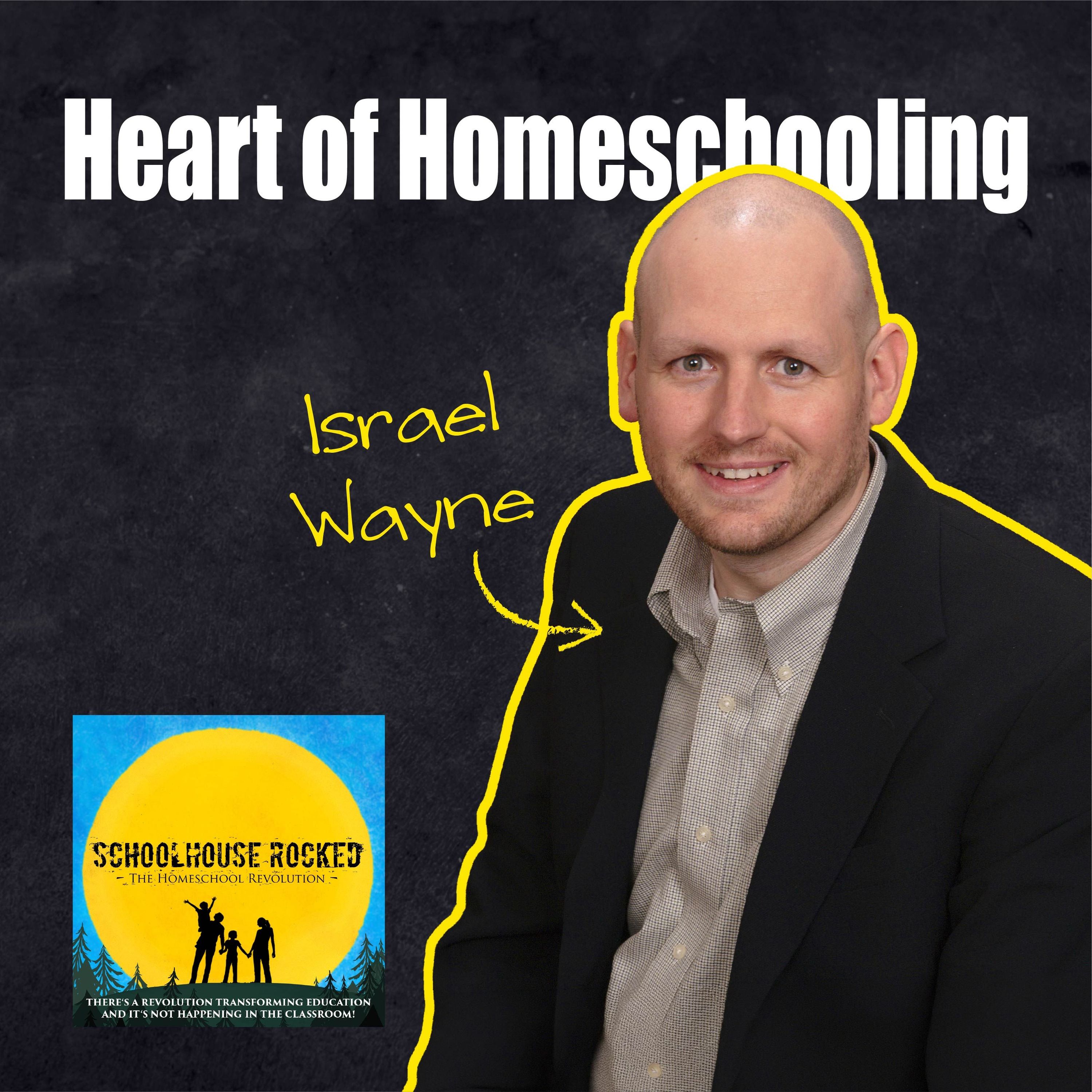
Are you concerned about the future of homeschooling? Join Kristi Clover and Israel Wayne on the Schoolhouse Rocked Podcast for an honest conversation about how homeschooling is evolving and explore the challenges and opportunities facing Christian homeschoolers today. Discover biblical wisdom and practical solutions for keeping your homeschool rooted in faith amidst a rapidly changing landscape and eroding freedoms. What You’ll Learn: The biblical foundation for Christian home education The spiritual roots of the homeschool movement How motivations for homeschooling have changed over the decades Current threats to homeschool freedom and how to safeguard against them Dangers of government involvement and loss of parental control Why defining “homeschooling” matters now more than ever Recommended Resources: Find all of the resources mentioned in this episode in the show notes here. Sponsors: BJU Press Homeschool is dedicated to providing homeschool families with academically strong curriculum rooted in a biblical worldview. They offer a complete curriculum from preschool through 12th grade, available in both traditional textbooks and video courses. By teaching through the lens of Christ’s power, they help students view the world through the transformative story of God’s creation CTCMath specializes in providing online video tutorials that take a multi-sensory approach to learning. Creative graphics and animation, synchronized with the friendly voice of internationally acclaimed teacher, Pat Murray, make learning math easy and effective. Start your free trial today. Holman Homeschool Guide - Develop your family’s academic and biblical education with trustworthy resources from the Holman Homeschool Guide! Excite kids to study God’s Word through fun and engaging kids Bibles, study tools, and companion products that bring the Bible to life. Equip teens to go deeper in Scripture to apply it to their lives and find resources to encourage parents’ faith. The Schoolhouse Rocked Podcast is a member of the Biblical Family Network.
speaker-0: The homeschooling movement was a move of God. This was more than just academic choice. This was really a fulfillment of what the scripture spoke about in the very last passage of the Old Testament, where God said that He would turn the hearts of fathers to children and the hearts of children to fathers. And so it is really God's heart for family unity. And unfortunately, by sending our children away from us, they have really given their hearts. To forces and influences that are not their parents. speaker-1: And welcome back to the Schoolhouse Rock Podcast. I'm Christy Clover, and I am excited to be your host again this week. Today we're talking about the state of the homeschooling movement, where we've been, how homeschooling has changed, and where we may be heading next. And I'm having this conversation with Israel Wayne, who brings such a unique perspective because he grew up in one of the early pioneering homeschool families and has spent decades as an author, speaker, and advocate in the homeschooling world. So, homeschooling has grown tremendously, especially in the years since COVID. And more and more families are homeschooling, and there's more resources available, praise the Lord. But it's also changed the entire landscape of home education. And it looks very different than it did decades ago. But with all that kind of growth comes an important question: Have we lost sight of the heart behind the movement? So that's what we're going to be digging into today. And I think this is going to be such an important conversation for both new and seasoned homeschool families. But first, I want to tell you about our sponsor for today's episode. If math time feels like a daily battle in your home, you're not alone. CTC Math helps take the frustration out of learning and builds real understanding step by step. Each lesson is short, clear, and easy to follow. So kids actually grasp the concept before they practice it. From kindergarten through calculus, CTC Math supports every stage of the learning process. Lisa from Texas shares CTC Math turned our hardest subject into the one my son feels confident about. It's made a world of difference in our homeschool. Start your free trial today at ctcmath.com and see the difference understanding can make. All right, my schoolhouse rock friends, I'm so glad to welcome back Israel Wayne to the show. So welcome. Israel. I'm just so happy to have you here. It was great getting to see you at Chia of California at one of the more recent ⁓ you know homeschool events that we were both at at the same time. And man, you kind of came off of that and you wrote, I guess it's not just because of Chia, but you came off a bunch of your speaking things. And you wrote a really great Facebook post all about kind of the state of speaker-0: Thank you, Christy. speaker-1: homeschooling from your perspective and that really caught our attention and we wanted to bring you on to talk about it. So what led you to write that Facebook post about the state of homeschooling? speaker-0: Well, I think a lot of things have changed in the homeschooling movement, especially since COVID. We've had a revolution that's happened in terms of ⁓ parents choosing to exit the government school system for lots of different alternative forms of education. ⁓ but I I think there's some fundamental differences between the homeschooling movement of today and what it was when my family started. Now, my family started actually before. The beginning of the modern day homeschooling movement. ⁓ my mother started homeschooling my older sister and myself in 1978. And the modern-day homeschool movement started in 1983. So we were about five years out ahead of that. And if you look at the studies that have been done on homeschooling in the late 1970s, people estimate that in the United States there were possibly a few thousand families. ⁓ that seems really high to me, honestly. ⁓ because of the fact that it was so decentralized, like there was no coherence to it. No one knew anyone else who was doing it. These were just families ⁓ very independent of each other. ⁓ and I think that would probably include some families who were celebrities, who had hired tutors, and you know, it'd just be ⁓ a lot of things that were not what what we would consider today to be traditional homeschooling. ⁓ but the the unschooling movement started about nineteen seventy-seven. That was kind of a secular ⁓ movement of people who had come out of the hippie movement mostly. ⁓ and it just were anti-establishment, anti-government. They're like, you can't tell me how to raise my child. And so you had some of those families that were beginning with John Holt and the growing without schooling movement and all that. But the modern Christian homeschool movement began about 1983. ⁓ nineteen eighty-eight, my mother started publishing a national magazine on homeschooling. So I grew up not just being homeschooled, but kind of being on the national leadership side of homeschooling and knowing a lot of the ⁓ pioneers and influencers, the authors and conference speakers of the nineteen eighties and nineties and and so on. And her magazine actually kind of provided a platform for a lot of the voices that became well known and established in the nineties, two thousands, two thousand tens and so on. So ⁓ I actually started working for her publication in nineteen ninety-three. I came on as marketing director and spent the next 20 years ⁓ working for a national homeschool publication. And my day job was interfacing with curriculum publishers. ⁓ and and also I was a conference speaker and author. I'd written my first book on homeschooling in 2000. And so ⁓ I've spent my whole adult life really interfacing on a lot of different levels with the homeschool community as a publisher, as a speaker, author, vendor. ⁓ I've worked in state leadership. I'm ⁓ current board member and vice president for the Michigan State Homeschool Association. So I've had a lot of different capacities in which I've watched this whole thing emerge and grow and develop from a handful of families in the late 1970s to Today, the latest statistics that we have from the National Home Education Research Institute puts ⁓ the number of homeschool students at about 3.4 million. And so it's really grown to something ⁓ very substantive, but there are some sizable differences, I think, in the motivations of why people are homeschooling, what they're looking for. And then there's kind of an industry that's grown up around all of this, which isn't intrinsically wrong or bad. ⁓ but it it definitely is presenting some new challenges that I think ⁓ we need to make sure that we're considering ⁓ because anytime you add something and gain something you also lose things. And some of the things that I fear that we're losing are things that are too valuable for us to lose. speaker-1: No, absolutely. And it's it's always amazing to me because we started kind of getting into the homeschool world around 2006. And so, you know, I've got two decades under my belt. And yet, you know, here this is this is just that's just nothing compared to, you know, what you really grew up with. And I do want to kind of like you mentioned so many parts to what you just said. I know one thing in the Facebook post, which we will link to in the show notes. So I do encourage everybody to go and read that. ⁓ to kind of even give some context here. But you do mention the, you mentioned the industry and you compared the homeschool industry and kind of what it's becoming to kind of what we saw and see in the, you know, worship industry. So in the music Christian music industry. ⁓ but before we even kind of dig into that, I do want to just ask, you know, what do you feel like were some of the like what are some of the changes in motivation that you've seen? So Like from when y you know, your family when you were a child started homeschooling, even your personal decision to homeschool your family, you know, and the motivations there, what do you see now? What's what's that shift? speaker-0: Well, when you think about what got people initially involved in home education, even back in the early days, it often was some of the same things that people are getting involved with homeschooling for today. ⁓ you know, that they had a bad experience in the public school, they had a child who was being bullied, they had a special needs student who needed one-on-one individualized attention. There were a lot of reasons why people initially first opted out. of the government school model into home education. But the the homeschool movement, if I can use that term, some people don't like that term, but it really was a movement. I kind of used some similar in that Facebook post, similar comparisons to like the Jesus movement of the early 1970s. The 1970s was this organic awakening, which really ⁓ wasn't led by any kind of corporation or any industries. It was it was a move of God. The Jesus movement was a move of God and and it started on the West Coast in California ⁓ and then spread across the United States. And the homeschooling movement was a move of God as well. And so people who got into that movement began to understand that this was more than just academic choice, that this was really a fulfillment of what the scriptures spoke about In the very last passage of the Old Testament in Malachi 4 6, where God said that He would turn the hearts of fathers to children and the hearts of children to fathers. And God gave this stern warning at the end of the Old Testament where he says, If this doesn't happen, then I will strike the earth with a curse. And so it is really God's heart for family unity, for parents and children to have ⁓ their hearts be knit together. And unfortunately, by sending our children away from us to be raised by the government, they have really given their hearts to forces and influences that are not their parents. And you know, that started back ⁓ with Horace Mann in eighteen fifty-two when he f first started the compulsory attendance ⁓ public school laws ⁓ in Massachusetts that then spread all across the United States. ⁓ and really the government schools had this monopoly, this lockdown ⁓ on education for many years in the United States. ⁓ it wasn't until nineteen seventy-two. So by nineteen hundred, every state had compulsory attendance laws. By nineteen seventy-two, the Amish ⁓ won a Supreme Court case where they were able to opt out and start their own parochial schools. ⁓ the Christian school movement really started in the nineteen seventies, and ⁓ then the home school movement The next decade in the early 1980s. But but there was such a monopoly that the government school system had that as these families began to come out from under that, they began to realize that, ⁓ this is really much more than just teaching academics at home. This is really about us being able to pass on our faith and values to our children and to be able to ⁓ teach them about Christ and to teach them about. The Bible and the things that had been banned from the public school system, the prayer and Bible reading and those things had been cut out of the compulsory attendance government school system. So these families didn't really understand initially the ride that they were on. ⁓ it was just individual families making what they thought were the right choice for their children. but it became very clear, very apparent, that this was something that God was doing and Soon it was tens of thousands and then hundreds of thousands, and then soon into millions of families who began home educating in the same way that it was these indiv individual hippies in the Jesus movement who had this crisis of belief and then came to faith in Christ. And you know, individuals here and there ⁓ quickly added up to ⁓ the tsunami, ⁓ the spiritual awakening that began to sweep the nation. And and I think what happened in the Jesus movement was that it became very institutionalized. ⁓ what became, you know, the early cr Jesus music ⁓ soon became the Christian music industry. ⁓ and as ⁓ secular companies got involved and began to buy out these record companies that were started really just for evangelism and and to share music about Jesus, ⁓ they began to see dollar signs and huge companies. ⁓ began to buy up these Christian music labels and and things changed ⁓ because the power brokers who were in charge of it really began to ⁓ to to create ⁓ a a a culture that necessitated compromise ⁓ in most cases and and if you didn't go along with the and conform to the new industry standards if you will ⁓ you just didn't have a place anymore. And so what ended up happening was a lot of the original Jesus music artists, what they're doing today, fifty years later, is they've gone back to doing the same thing that they were doing in the early nineteen seventies. They're playing in small churches and playing in coffee shops and doing free music concerts and still just singing and talking about Jesus. And so I I feel like in some ways the same thing's happened in the homeschooling movement where ⁓ post-COVID, you know, we had this boom where many new families got involved, but ⁓ the demographics have shifted to where you know the Washington Post did a survey and said that prior to COVID, ⁓ approximately ⁓ two-thirds of all homeschoolers were doing so for religious reasons. And now, post-COVID, it's only one-third that are doing so for religious reasons. So we've really had a shift in terms of Hate to use these terms, but the power dynamic, if you will, the people who kind of control the homeschooling movement, it's really not the Christian homeschool community anymore. We're the minority. We're one third, not two-thirds, in a very short period of time. And and very large ⁓ organizations, investors, ⁓ secular publishers, ⁓ you know, business entrepreneurs, ⁓ public school teachers and ⁓ leaders. Are starting to see, hey, there's a big market here. There's a lot of money to be made. And they're beginning to infuse ⁓ this industry with a lot of capital and marketing. And I just see the focus is changing. The focus is really moving away from this being about parents discipling their children to this being this huge educational smorgasbord that's all about educational choice. And so when I when I step back and look at this from a a ⁓ kingdom of God perspective, and I ask myself, like, ⁓ you know, you think about those passages like Matthew 6, 33, seek first the kingdom of God and his righteousness, and then all these other things will be added unto you. I believe that's why homeschooling has had such great academic and social success. ⁓ why we've had studies that show that homeschoolers are More socially well-rounded than public schoolers and do better academically and all that. It's it's because we've aligned ourselves with seeking first the kingdom of God, and these other things have been the fruit ⁓ of obedience. And what I see now is that we're seeking after the fruit, right? We're seeking after the good results, but we're laying aside what I think is the most important thing, which is What what is Jesus doing? And what is Jesus about? And what Jesus has always been about is about his kingdom. That that is that's his priority, right? He's not he's not excited about educational choice. That's not what Jesus is really invested in. What Jesus is invested in is is discipleship. And so as we shift off of his goal and his mission and his vision, and we start moving into Just an alternative educational empire, I'm going to suggest that that we're losing some things very substantially. And I think the the primary thing that we risk losing is the Holy Spirit. And we really risk losing the blessing of God, which has been on the homeschooling movement for 40 plus years. And can we afford to do that in the name of academic choice? And this is what I just feel like even so many of the Christian homeschoolers don't really recognize. ⁓ when I look at the Facebook groups and I listen to the people who are talking about home education and i even so many of the ⁓ the vendors and just the whole homeschool community, it feels like there's just way less talk about and emphasis on Jesus and so much more on creating this kind of academic smorgasbord of of all the different varieties of of you know, hybridization, I guess, of educational choice. That things like learning pods and hybrid organizations and you know, these neighborhood schools and and university model schools and so many of these things that aren't even really legally homeschooling, but a lot of them are talking about public school partnerships and so on. And they're springing up because a lot of people see the money that can be made, but they don't want to pay for and have to jump through the hoops of creating and structuring what they're doing as a private school under like the private school code. So what they're doing is to stay deregulated. They're calling it homeschooling. And there's, you know, just a lot of things that I think we need to be concerned with that. One of which is we can very easily lose our freedoms as people are labeling things that they're doing as homeschooling that are completely outside of the state statutes and how homeschooling is defined in states. ⁓ so so just in this clamor to try to ⁓ make as much money and capitalize on this homeschool boom, if you will, ⁓ we're we're not only at risk of losing the spiritual roots of our movement, ⁓ but also I think inviting a lot of government oversight and intrusion by creating whole categories of learning that that really don't fall under homeschooling at all. And ⁓ you know, well that could be a whole nother podcast for the future. Yes. ⁓ but I'm not I'm not saying I don't I don't think that those things should be allowed to exist. ⁓ you know, a neighborhood pod, for example, with ten students. ⁓ but it really needs to be its own category ⁓ within the the law. And in most cases there is no category currently that allows for such a thing. ⁓ and so, you know, in Michigan, for example, where I live, in order to homeschool, our state statute says that it has to be a parent or legal guardian in the home teaching under an education ⁓ organized educational program. And so when you have a a mom who's charging tuition for ten students who are not her children and they're meeting, you know, seven hours a day in her home five days a week, and parents are paying tuition to drop their children off in her home, what is that? That that's not even homeschooling. That's something that doesn't have a provision under the law in many states. And yet that's what people are doing. And they're saying, ⁓ we're homeschooling our children through a learning pod. Well, that's a private school that's just not regulated and not incorporated. And it's going to create lots of issues within homeschooling. So there's a lot on the table. ⁓ and that post was just kind of me trying to throw something out there and say, Hey guys, we gotta circle the wagons a little bit. Just remember that ⁓ that that God started this homeschooling movement for a reason. And I think we're just kind of really losing sight of it as we're chasing after just this plethora of educational choice options. speaker-1: No, it's I 100% agree with you. It's even again in the two decades that we've been in the homeschool, you know, world, that there has been a tremendous change. I mean, from when I first went to Chia in 2006 to when we were just there. In fact, I'm pretty sure you were speaking there that year, because I've known your face throughout the all these years. And to this year, I mean, just looking at how it's impacted. You know, private Christian homeschool organizations ⁓ from a curriculum level. Like we have all these other cre new curriculum choices, but we're starting to lose this battle because there is so much government getting involved because there is a big dollar sign that they're all chasing. So it like you said, Michigan's different than here in California. But in California, it's really interesting because you'll talk to parents who will say, I homeschool my child, but they go to sch they go to a classroom. four days a week, but they have one day of home study. And so therefore the parent calls it homeschooling. So I I spend a lot of time in in California biting my tongue. So I'm like trying to be careful. Not not say I guess I don't want to offend people. Yeah at the same time I'm like, can we just call it charter schooling or, you know, ⁓ you know, you they've got a home day. Like it's not homeschooling. So it's difficult. speaker-0: And legally difficult. speaker-1: Yes. ⁓ no. I mean like we are losing some of our rights. Yeah. speaker-0: When when legislators find out, and they are finding out ⁓ that it's kind of the wild west and that people are just doing all sorts of things for which there's zero legal legal provision, ⁓ then they come in and say, Okay, now we need to really tighten down and create new regulations. But what do they say? Over the wild west? No. They say we need to regulate homeschooling. Homeschooling. And that's what they come after is trying to add new regulations to homeschooling. And some of us who are from that more traditional ⁓ homeschooling model of like we're parents who teach our children at home. Right. We're saying if you want to go do your own thing, that's fine. You go lobby for that and create a new legislative category for that. Yeah. ⁓ but but don't invite regulation over what we're doing that we've always been doing, ⁓ because we're doing fine over here. Right. Yeah. And ⁓ And especially as you really start having this influx of of funding from all different sorts of directions, whether it's just you know, corporate big business or whether it's actual government funding, which there's a lot of that coming in, ⁓ homeschoolers need to be very mindful that, you know, whoever's paying for the education controls it. And if you if you as a parent want to have control over what your children are learning, it needs to be private education. It needs to be privately funded. ⁓ so that you're not beholden to somebody who's holding the strings. speaker-1: Mm, so good. Okay, this is really amazing. I want to keep talking. And we will, but we're gonna take a quick break and we will be right back to talk more about this. Strengthen your family's academic and biblical education with trustworthy resources from the Holman Homeschool Guide. Encourage kids to study God's word through fun and engaging kids' Bibles, study tools, and companion products that bring the Bible to life. Equip teens to go deeper in scripture and apply it to their lives, and find resources that encourage your faith as well. Shop the Holman Homeschool Guide for your family today. Visit Schoolhouse Rocked.com slash Holman. That's Schoolhouserokt.com slash Holman, or click the link in the show notes. It's a beautiful day to homeschool, and BEAU Press Homeschool is here to help you make every day of learning purposeful and joy-filled. With BEJU Press Homeschool, your child can build a solid, faith-filled foundation for the road ahead, growing in wisdom, character, and confidence. Their curriculum is built on a strong biblical worldview and designed to help your child think critically, love learning, and see God's hand in every subject. Each lesson encourages active multi-sensory learning that reaches your child's unique learning style. And whether you prefer online or parent-led teaching, BJU Press Homeschool Hub, made for homeschoolers by homeschoolers, gives you the flexibility and support to fit your family's lifestyle. It's designed to equip, encourage, and guide you every step of the way. Each day has purpose, and that's what makes it a beautiful day to homeschool. Visit BJU Presshomeschool.com to get started today. That's BJUPresshomeschool.com. We're back with Israel Wayne. And before the break, we were really looking back at like the early homeschool movement and what it looked like and kind of what motivated some of those pioneering families. But Israel, I really want to bring us up to the present now. And we've been talking a little bit about just this you know, the money, the money grab. I'm just gonna say it straight, the money grab that's out there. Cause and even as you and I were talking during the break in California. We have this big movement of charter schools, which are a public school organization. Like charter schools fall under the public schools. So like the parents are supposed to be doing public, you know, doing using the curriculum that they are given by the public schools and what has been approved by this, you know, California government to be taught in schools. However, because all the charter schools get paid for people who are signed up with them, they're offering money, like so many states do, to have kids come and be a part of their school. And what they're doing to the Christian community specifically is that they're really trying to, they they kind of blur the line as to like you were just saying about, you know. They're they're making it difficult because they're gonna find out. It's a definitely some Wild West stuff happening here in California. Go figure. But, you know, they're blurring the line and they're telling these Christian families, you can do your homeschooling. So they're calling it homeschooling. You know, come be a part of our thing. We'll, you know, you can do our school, you can do other schools, there's enrichment programs. But a lot of these families are trying to teach Christian curriculum. in their public school, and that's not allowed by California legislation. And so that's one of my big hangups is that they're they're putting me at risk. They're putting our homeschooling at risk. And if we go to the heart of homeschooling, which really is discipling our children, then, you know, that's that's the most important thing. And so I don't want my rights taken away because that is the beautiful thing is in all 50 states, we have the right to homeschool our children. We have the right to educate our children. So kind of To move forward from that, ⁓ what are you seeing as being probably one of the bigger risks ⁓ that we're facing right now? And that from, you know, where the roots were back, you know, so many eons ago when your family first started in 1978, I love that. To fast forward now, ⁓ what do you see as being in the biggest risk that we're we need to be aware of? speaker-0: Well, those laws that protect homeschooling in all fifty states didn't just happen. There were long court battles. I mean, Michigan, there was a family called the DeYoung family. That one family was in court for nine years, the whole time at risk of having their children forcibly taken away from them by the state, them doing jail time, them having their parental rights terminated and their children put into foster care. And potentially not seeing their children again. That was the kind of stakes that they were up against simply because they wanted to teach their children at home and give their children a Christian education. And so groups like Homeschool Legal Defense Association and Christian state home homeschool organizations all across the US fought long hard legal battles to give parents the right to be able to teach their children their own faith and values. The homeschoolers who are new to this don't know the history. They don't know the stories. My own family was in court multiple times over home education. And so to them, it's just easy come, easy go. And like I say, it's just another platter on an educational smorgasbord. But for us, it wasn't that. I mean, for us, it was an absolute conviction. It was a call of God that this is something that we we had to do because we had to give our children ⁓ a biblical education ⁓ that That we didn't believe that any education was religiously neutral, that it's either going to be taught from a humanistic framework or from a biblical framework. And we had to be intentional in order to give a biblical education to our children. And these newer homeschoolers, and I'm not trying to ⁓ be down on them because you don't know what you don't know. But those of us who are veteran homeschoolers, we need to pass on ⁓ the the biblical philosophy of education. speaker-1: Right. ⁓ absolutely. speaker-0: ⁓ and I don't see that happening so much now. I see us talking about options and choices and curriculum and, you know, tutors and online tutors and this, you know, this program and that, you know, co-op group and whatever. But what I don't really hear people doing is passing on a biblical philosophy of education. And these newer families, just because of the background from which they come from, they're actually very desirous of co-parenting with the government. They they actually want more government oversight. They want government control over home education. ⁓ we had a Facebook group here in Michigan where one of the leaders of the homeschool Facebook group, one of the administrators, one of the leaders, right, ⁓ said when we had legislation introduced, ⁓ I don't care if a bill passes that says we have to have once a month child protective service home visits. I have nothing to hide. I would be fine with that. In fact, I would welcome. I'd feel more comfortable because then that way I would know that I'm not doing anything wrong and then I'm not doing anything that I shouldn't be. Right? That's the kind of mentality and mindset that so many of these families have, of this sense in which the government is in control and they should be in control. And we as parents don't know anything and we don't know what we're doing. And you know, we really need the government to tell us how to do this and what to do and to oversee. what we're doing and help us with our curriculum choice and and ⁓ by the way we want all the government money as well. And so they just don't have a problem with that. And if you even if you tell them, well, by taking government money, you're also inviting government oversight. They don't have a problem with that. They think that the government oversight sounds like a wonderful thing. Because they'll say, well, I I could use more accountability. And so this is where I just feel like there's such a disconnect between, you know, those And and here again we could probably use a different metaphor, right? In that pay Facebook post, I was talking about the the Jesus movement and the homeschool movement, how there's some similarities to that, how it kind of became big business and all that. But you look at the American Revolution and the fact that people died and shed blood for liberty, and now we have people clamoring for Marxism and socialism. Right? And our founding fathers speaker-1: My goodness, right? speaker-0: Absolutely. And and our and we have politicians who are, you know, outspoken socialists and Marxists who are getting elected into office. And the founding fathers of our country, if they were here to speak up, they would be saying, Have you lost your mind? This is exactly the kind of thing that we were fighting to try to push back against. And so it's it's similar. And I just think this is what tends to happen with things that start off. really good and that sometimes you know our genuine move of God or a spiritual awakening is that eventually things become kind of institutionalized and then we just lose the whole focus, we lose the heart of it, we lose the mission. And once that happens, it just gets co-opted and it really can become something actually detrimental in the long run. And so my concern is that as we you know push Jesus aside in this homeschool movement for all of the the side things, you know, the homeschool sports and the homeschool prom and the homeschool, you know, basically replicating everything that the government school does, ⁓ and we lose Jesus, I think what's gonna end up happening is we're just gonna end up seeing that we've lost what makes homeschooling special and that we're gonna end up having all the same results that we tried to get away from. i in leaving the government schools. We're just bringing all that here and we're gonna end up replicating the system. speaker-1: ⁓ I know. It is, it's fascinating. Cause I I think that, I mean, I understand from a parent standpoint, I don't want to do anything that's going to hurt my children. I want my children to have a wonderful education. And there are days when I, you know, I'm like, ⁓ my goodness, like, am I, am I doing the right thing? But that was, I think, more the early days of our homeschooling when I truly was fearful. Like what, you know, because you're listening to all the voices, you know, am I equipped? I didn't go to school for this. and I think. I think that we have both a fear-based mentality, like I'm afraid that I'm not going to give my kids a proper education. But then we also have the fact that people are forgetting that we have this wonderful, this wonderful source to tap into, and that is the Holy Spirit. And it's frustrating to me to think that we cannot, I think as parents, we forget what our calling is biblically. To teach and impress our children about what the Lord is. It comes down to worldview, like you and I have talked about, and you talk about all the time. And I think it's really important for kids for parents to understand that what they're gonna get in the public school is a secular worldview, an anti-God, you know, worldview. And how confusing is that for our kids? Like, I want you to go spend hours here versus coming home with me. But you know, within the homeschool community, how can parents Because I mean, goodness, Deuteronomy 6 is like, you know, all we ever hear about in the homeschool movement. Right. Yeah. Right. It is like the motto for all homeschooling. But I think one part that people forget the most, and that's the first part of that, is that we as parents are to impress it upon our own hearts and then pass it on to our kids. So with that, how can we as families Slow down enough to really make sure that we are coming at this homeschooling from like again, Christian families. How can we be coming to homeschooling with the proper heart and motivation ⁓ to make sure that we are not getting lost in all of the offers? Because now there is a lot more curriculum out there, but there's a whole lot of a lot out there. And it gets very confusing. Cause when I first started, like people were confused, like What can I do? And now there's so much they're like, ⁓ they get stuck. So yes, what can we do? speaker-0: Well, I want to recommend a couple of books that I've written that I think will really help parents in terms of the educational philosophy. So the one is answers for homeschooling, ⁓ the top twenty-five questions critics ask. And the other is Education, Does God Have an Opinion? ⁓ subtitle is A Biblical Apologetic for Christian Education and Homeschooling. And these two books I think really will help the parent to calibrate their own thinking. So that they truly ⁓ have a biblical philosophy of education, because you can't pass on to your children what you don't have. Right. Right. And I think what we're passing on to our children in most cases is an experience of having been home educated. What we're not passing on is a biblical theology of education. And I know so many homeschooled graduates that when I ask them, Will you homeschool your own children? They go, ⁓ I don't really know. And when I ask them why they hesitate, they usually go back to something in their experience. And and that really is their entire framework for how they think about education in the next generation is well, they draw from their experience. Did they like it or did they not like it? And to me, that's not the metric. ⁓ the metric for us as Christians shouldn't be what culture is doing, what everybody around us is doing, or even our experience. It should be driven by our theology. What has God said? What has God told us about how we're supposed to educate children? And I think for most people, they just assume God is silent on the issue. He hasn't really spoken. He doesn't really have an opinion on it. He doesn't care how we teach our children. It's just all up to us. It's different strokes for different folks. And they haven't really looked into it enough to learn that scripture is replete and full of God's instruction on who should do the teaching, how they should teach, what they should teach, where and when they should teach. ⁓ God has given very explicit instructions. And so I would encourage people to check those books out. They can get those at our website. So my ministry is family renewal.org. ⁓ and I would encourage you to get grab those books either from me or from my publisher, which is masterbooks.com. ⁓ and the one reason I say that is just that ⁓ I I had this conversation this last weekend. ⁓ but if you buy from Amazon, ⁓ as authors, we we literally make pennies. Pennies. You know, so if you buy like a $12 book on Amazon, I make like 65 cents on that. And Amazon just keeps almost all the profits, and that's why they own the world. And so I do encourage people, as easy as it is, I would encourage you to buy from a Christian publisher or buy from the authors directly. Because that actually helps Christian families and Christian publishers to be able to continue to do what they do, ⁓ rather than like I'll just put it this way, Amazon's gonna be okay. Yeah, they're gonna be fine. ⁓ but anyway, I I highly recommend that you ⁓ you check those resources sources out. But then also, I think for those homeschool leaders, ⁓ influencers, speakers, writers. speaker-1: They wouldn't be fine. That's right. speaker-0: co-op and support group leaders, whatever, whatever ⁓ level of influence, even if it's just that you're the the more veteran family in your church or your neighborhood that homeschools and people look up to you and they ask you questions. I think we have to be mindful and stop and ask ourselves, are we continuing to tell people that this is really ultimately about seeking first the kingdom of God and his righteousness? This is ultimately really about our children having a right relationship with Christ. And the academics are important. And I'm not a guy who's like, ⁓ we don't need to do academics and academics are unimportant. We just need to to love Jesus. Academics are important. And it's one of the ways that we do love Jesus. We love Jesus with all of our mind, right? Yes. And so ⁓ we want to do academics with excellence. but we we just don't want to get the cart in front of the horse. ⁓ we have to keep the main things the main things, and the main thing is. ⁓ that we love God with all of our heart, mind, soul, and strength. And we we love our neighbor as ourself, and that we're teaching our children to do that. And that these academic things, which are important for life, are means to that end ⁓ of teaching us how to know the God who created all these subjects and how to be equipped to love and serve our neighbors through the things that we're studying. So whether it's math skills or science skills or whatever, if we're gonna be ⁓ airplane Pilots or mechanics or engineers or architects or, you know, whatever it is, that we use those academic skills not just to love and serve ourselves, but to love and serve other people for the glory of Christ, and that we keep those things primary. So I think it's important for us who maybe know the biblical philosophy to make sure that we're passing that on. And not just assuming that the next generation is getting it somehow by osmosis, because I'm gonna say they're not. I don't think they are. And I think it's because people have stopped talking about it. speaker-1: No, absolutely. And it's it's funny how like I always start almost ever at some point in every workshop I do at a homeschool convention, I always tell people, I'm like, your homework is to write down why you are homeschooling. You always start with your why, but I feel like people overcomplicate it. Like, you know, we can get into all these things, but if it comes down to I want my kids to know the Lord, I want them to love the Lord with their heart, soul, mind, and strength. speaker-0: Why? speaker-1: And I do want them to have a love of learning that will last them a lifetime because we are called to use the gifts and talents that God has given us for his glory. We are here for his glory. And so when you start framing things like that, I mean, we can put our kids in any kind of an educational system and hope that we are giving them a Christian worldview at home. But if we're not even at home in our in our homeschooling, giving them a foundation. ⁓ and understanding where that's coming from, because we can get lost in it. Because I again, like when I first started homeschooling, I just wanted my school to look like the public school because I was so afraid of you know failing my children. What if this doesn't work? What if I have to put them back? What if we fall behind? All of those things. Now it is really powerful. And I would encourage our listeners like, just hang in there because at a certain point you start realizing. Like your why becomes even stronger. Like I at least for me personally, like I would choose nothing else than homeschooling because I don't care what the school down the street is doing. Like I am I am educating my children in the Lord and I want them to have a firm foundation. If they I mean, like granted, I want them to be well educated, like you were saying, but if nothing else, if they just have a love of the Lord, then man, I have done my job as a parent. But I do want them also to to have a good education. speaker-0: And that's part of the promise, I think, of Matthew six thirty-three. These other things will be added unto you. Yes. Right? But we don't seek the other things first. We seek Christ first, ⁓ his kingdom, his righteousness, and we'll get the other things. And we have. We have 40 years of history and research, peer-reviewed, academic studies that say that this is the most effective way to educate your child on every level with every metric. So we don't have to sacrifice academics or, you know, good social skills or any of these things that parents are concerned about, ⁓ we get the other things, but they're the fruit that comes from having the right root. Right. My concern is that we're cutting ourselves off from the root and we're hoping that we're going to get the same fruit and we won't. ⁓ when we're tapped into the root of the government system, it's going to bring the same fruit that the government system always brings. And I don't want that fruit. I've seen that fruit and that's why we fled from the system because we didn't like the fruit. And ⁓ I just see that people don't seem to see that that that's what's gonna happen when they're tapping into that source. speaker-1: So true. Well, we need to probably wrap up here, but I want to kind of end because that was incredible. So I probably should end there. But I have one more question that kind of ties all of this in. And that is, how can we as Christian families, ⁓ like with all that's happening in the homeschool movement, how can we be on the lookout? Like I know we can use the discernment of the Holy Spirit, but are there any things that as we are picking curriculum, as we are starting our homeschool year, I mean, this is gonna be coming out in sometime in September. So what can we be looking for? Like those red flags in our home and in our home education choices that we need to be aware of. speaker-0: Well, I think one thing is that whatever we fund grows and whatever we defund shrinks. And so I see so many Christian homeschoolers not spending their money with Christian publishers who produce materials from a biblical worldview. Instead, they're buying curriculum from false religions. They're buying them from large secular textbook publishers. ⁓ they're supporting people who do not encourage and support our beliefs and our values and our convictions. ⁓ they're funding movements that are contrary to the kingdom of God and his righteousness. So I would say we want to keep as much of our dollars as we can within our own ideological and philosophical neighborhood. And so the people who are putting out great resources that support our our American republic, you know, our constitutional values, but then also our Christian faith that are producing great. resources that really help our children to think in terms of, you know, free market enterprise and but but also, you know, our Christian theology, ⁓ we want to support both. And so ⁓ those are things that I think are vital and important for us and to make sure that we're ⁓ continuing to to purchase, ⁓ especially in places that do the most good. And one of the best places for people to go and buy homeschool curriculum is actually from your state homeschooling convention. Because when you do that, the money that you spend at the state homeschool convention to the vendors goes back into the state organization. And these Christian state homeschool organizations spend all the rest of the year defending your homeschool freedom. And so so many of these ⁓ new homeschoolers don't even realize ⁓ the fact that state homeschool organizations even exist. Let alone know who they are and what they do. So one of the places that you can go to find out where there are homeschooling conferences in your state would be homeschoolfreedom.com. And homeschoolfreedom.com will link to these state organizations that defend your homeschool freedoms year round. And so when you're buying the curriculum at your state homeschool conference, that goes not only to support these vendors. Who are supporting your homeschool values, but it also funds the state organization to work with your state legislature and make sure that you have ⁓ homeschool freedoms protected year round. So it's really the best bang for your buck because you're basically defending your own homeschool freedoms in your state while you're getting great homeschool curriculum, usually at the best price of the year, too, because the because most of the curriculum vendors have the best price of the year at the annual state homeschool convention. So Go to homeschofreedom.com, find out where your state organization is, get plugged into them, get on their, follow their Facebook page, ⁓ get on their email list, get legislative alerts, make sure that you are tied into and plugged into your Christian State Homeschool Association, because that's one of the best ways that you can help not only to protect your homeschool freedom, ⁓ but to help homeschooling grow in your state. speaker-1: That's so great. Great, ⁓ great resource too. Because I think that's one thing that got me into speaking at homeschool conventions is that I wrote a blog post about homeschool conventions and Chia actually reached out to me. They're like, hey, we want you to come and help our families. I like, okay. ⁓ but thank you so much for coming on and talking about this. I think it's really important for families to slow down because we can get into okay, I'm doing this, I'm doing this, to slow down and really think about the heart. behind why we're homeschooling and the intentionality that we need to have as families to be supporting homeschooling movement in general and going in the right direction and not allowing the current of this of our current state of this world to get too swept into something that really at the heart of it is all about loving and serving God. But before we go, please share with us. I know you've mentioned it earlier, but I want you to say it again. Where can our listeners connect with you and get some of your resources like the books she already mentioned? speaker-0: We'd love to have them visit our website, familyrenewal.org, familyrenewal.org. ⁓ if anybody's interested in having me speak at their homeschool association or event, ⁓ that's my name, israelwain.com. ⁓ there's a speaking website there. And then all the social media platforms, just look up Israel Wayne, or family renewal. And then ⁓ my wife and I actually have a podcast on Christian parenting. And it is called Raising Them Up. It's actually the title of ⁓ my Christian parenting book, Raising Them Up. And ⁓ you can find that anywhere that you listen to podcasts or at raisingthemup.org. And ⁓ we would love to have you ⁓ listen to that once a week, 30 minutes. And it's ⁓ all on Christian parenting. ⁓ so we would love to have you ⁓ tune into that. But ⁓ again, ⁓ if you sign up to on our email list at family renewal.org, we can also let you know whenever we're speaking in your area. So make sure you do that as well. speaker-1: Awesome. Well, thank you so much, Israel, for being here today. I really appreciate your time. speaker-0: ⁓ thank you. I love this podcast. Appreciate what you all do. ⁓ speaker-1: Absolutely. Well, my friends, you can find all of the things that Israel just mentioned on his website, his books, and resources. We will have everything linked. So if you are driving folded laundry or doing something and you can't just write that down, head over to the show notes at schoolhouserocked.com and you can find everything you want. Now, if you and I have not already connected, I want to encourage you. To head over, find all of my homeschool resources and encouragement in courses at ChristyClover.com forward slash homeschooling. And if your homeschool could use a little reset, I created my free three-day homeschool reset just for you. It's simple, super encouraging, and designed to help you take a deep breath, clear the clutter, and get back on track. So head over to ChristyClover.com. Forward slash reset to sign up today. It's simple, encouraging, and free. So it's a no-brainer. So head on over to ChristyClover.com forward slash reset. And before you go, if this podcast is a blessing to you and your family, please consider supporting the Schoolhouse Rocked Ministry by doing a few things. Share this podcast with a friend who needs this encouragement. Leave a rating, review, like, or comment wherever you're listening or watching this podcast. And remember, you can find all things Schoolhouse Rocked at schoolhouserocked.com. There you can stream the movie, Schoolhouse Rock, the Homeschool Revolution, for free. Download your homeschool survival kit, make a donation to support the ministry, or subscribe to the newsletter. But I hope that this was an encouragement for you this week. And be sure to stay tuned for another episode with Israel. But until then, have a fabulous week, my friends. Take care. You're listening to the Biblical Family Network. Hey, I'm Miki. And I'm Will. And we're the co-host of the Culture Proof Podcast. We want to invite you to join us every week as we discuss what's happening in the world and then filter those happenings through a decidedly biblical lens. There are many questions, especially when we see what's happening in our culture today, but the answers are found within the word of God. So that's where we want to look. Amen. When we resist those cultural trends that rival the truth, we remain culture. speaker-0: It was amazing the difference in perspective that 30 years brought. And the reason was because there was some fruit. And the wisdom of the educational choice was proven right by the children. There was a harvest that they could look at and say, Hmm, this seems to bear good fruit. I do believe that homeschoolers miss out on things, but I'm actually really happy about most of the things that they're missing out on. I think that we all have this concern on one level of you know, will I be able to give my child everything? ⁓ quick answer to that is no, right? So it's really about prioritizing. The great thing that home education does is it gives you the opportunity to prioritize the most important things.
More Schoolhouse Rocked: The Homeschool Revolution episodes →