
Schoolhouse Rocked: The Homeschool Revolution · Biblical Family Network, Schoolhouse Rocked: The Homeschool Revolution
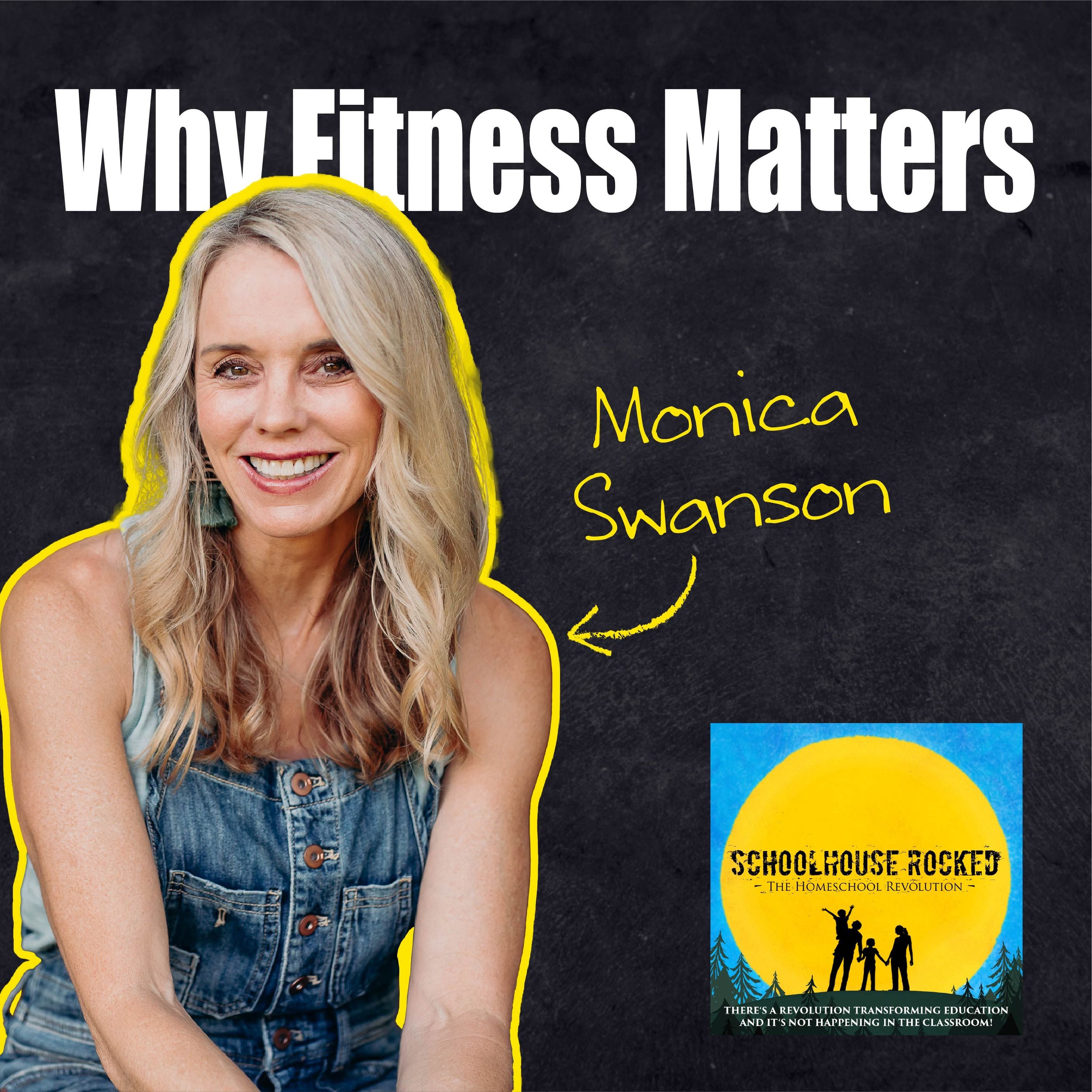
Yvette Hampton welcomes back Monica Swanson to discuss the crucial yet often overlooked subjects of Health and Physical Education (PE) in homeschooling. Monica shares valuable insights, drawing from her background in sports medicine, physical therapy, and experience as a PE teacher. Learn why these subjects are vital for your child's development and how to seamlessly integrate them into your daily homeschooling routine. Discover practical tips, biblical perspectives, and the importance of staying active from kindergarten through high school. Learn how to get your kids moving, the types of exercises that are best, and how to make health and wellness a priority in your homeschool curriculum. Recommended Resources: Find links to all of the resources mentioned in this episode in the show notes here. Get our new ebook, The Importance of Outdoor Play: A Guide to Homeschooling in the Great Outdoors, here. Sponsors: BJU Press Homeschool is dedicated to providing homeschool families with academically strong curriculum rooted in a biblical worldview. They offer a complete curriculum from preschool through 12th grade, available in both traditional textbooks and video courses. By teaching through the lens of Christ’s power, they help students view the world through the transformative story of God’s creation CTCMath specializes in providing online video tutorials that take a multi-sensory approach to learning. Creative graphics and animation, synchronized with the friendly voice of internationally acclaimed teacher, Pat Murray, make learning math easy and effective. Start your free trial today. Holman Homeschool Guide - Develop your family’s academic and biblical education with trustworthy resources from the Holman Homeschool Guide! Excite kids to study God’s Word through fun and engaging kids Bibles, study tools, and companion products that bring the Bible to life. Equip teens to go deeper in Scripture to apply it to their lives and find resources to encourage parents’ faith. The Schoolhouse Rocked Podcast is a member of the Biblical Family Network.
speaker-0: Ultimately we're all gonna die and and this is a fallen world, so our bodies are gonna fall apart. But you know, doing what you can and I think it is our responsibility as parents to teach our kids some of the basics. I think in general, health is just an easy area to take for granted. Like, okay, we're doing math, we're getting our English in, you know, we're we're covering ⁓ and then there's health. Okay, and we just wanna check it off real quickly, but I'm like, no, this is actually huge because what our kids learn about health will impact them personally for the rest of their life. speaker-1: Hey everyone, this is Yvette Hampton. Welcome back to the Schoolhouse Rock Podcast. In celebration of the release of our new ebook, The Importance of Outdoor Play: A Guide to Homeschooling in the Great Outdoors, we're bringing you another one of our all-time favorite episodes that inspired it. In our seventh season, Monica Swanson joined me during our homeschooling every subject series to explore why incorporating health and PE into our homeschool routine is so vital. how it aligns with a biblical perspective, and practical ways to make it a fun and integral part of our children's lives. We discuss the importance of healthy lifestyles, covering everything from diet and exercise and healthy eating to mental and emotional health. So visit the Schoolhouse Rock store now to download your free copy of the importance of outdoor play. Then sit back and enjoy this conversation with Monica Swanson. But before we jump in, I want to tell you about our sponsor, CTC Math. If math feels like a daily battle in your home, you're not alone. CTC Math helps take the frustration out of learning and builds real understanding step by step. Each lesson is short, clear, and easy to follow, so kids actually grasp the concept before they practice it. From kindergarten through calculus, CTC Math supports every stage of learning at your child's pace. Normally I'd read you a testimonial from a satisfied customer here, but instead I'll just tell you this. CTC Math was a game changer for our homeschool. It helped us have success in a subject that terrified me. Discover why families around the world, including ours, trust CTC Math. Start your free trial today at ctcmath.com. CTC Math, Math Made Easy. One of the subjects that I think is kind of the like forgotten subject oftentimes is health and PE, physical education. And it's a topic that is important that I think we need to focus on. And I think so many times as homeschool parents, that gets kind of pushed to the back burner. And we focus on all the other things, but we forget about this one that is very, very important. And so I was thinking through this series and praying through it. And I thought, you know, who could come on and talk about this? And Monica Swanson, who many of you of course are familiar with, she came to mind because the last time she was on, she was talking about her new book called Becoming Homeschoolers. And we'll link to that episode. If you missed that one, it was fantastic. But I think in that episode, you talked a little bit about your passion for health and wellness and all the things that come with that. ⁓ I know you're the wife of a physician. And so that's a really important, and all of your kids are are athletes. And so this is just a passion of yours. And I thought, you know, you would be a perfect person to come back on and talk through these things. And so I am super excited to have Monica back with me this week. How how are you? How how is your family in Hawaii? speaker-0: We are well and it's so great to be with you again. I always love chatting with you. And yeah, we're great. I've got a surfer son in Indonesia right now surfing. I've got a son with a golf tournament this weekend. So yeah, we're keeping up on all the health and PE in school and beyond. speaker-1: Yes. So cool. You know, it's funny thinking of PE because typically in a regular traditional school, PE, physical education, of course, would be one of those classes that you take, you know, daily. And I remember in I went to public school one year in my whole schooling journey. It was in seventh grade and it was awful. It was the worst year of my whole schooling life. I hated it so much. But I remember going into the locker room and we'd have to change into our PE uniforms and the locker room smelled like Aquanet hairspray. Because this would have been nineteen eighty seven or eighty-eight. So it was when big hair was the thing. And ⁓ all the girls would spray their hair and their bangs up and stuff. And so the whole locker room smelled like Aqua Net. It was disgust. Still to this day when I smell Aquanette, I immediately go back to the locker room. It was so gross. ⁓ and then when I went to High school, I went to a small private school. There were only 11 in my graduating class and 75 in the entire high school. ⁓ And we didn't have a gym or anything. So we didn't have any way to do PE. And so we did PE days. And I remember my friends who were in traditional school were like, that's so cool. Cause we would go skiing for a day. We'd go snow skiing, or we would take a weekend trip and go water skiing, or we would go bowling or skating. And we had to have so many PE hours. Yeah. And so that was we we just had to do, I think it was like five PE days out of the year or something like that to fulfill our PE. I love it. It was so much, so much better than having to change in a locker room and go out and run laps around the field. Totally. ⁓ man. But it was, it was a fun memory. It is a fun memory. ⁓ and homeschooling is very much the same when it comes to PE. And so we're going to talk about PE today, but we're also going to talk about health. ⁓ because that is they they go hand in hand. Of course, exercise and health are, you know, ⁓ speaker-0: Wow. speaker-1: kind of one and the same, but different. There are different ways that we deal with both of those things. ⁓ so really quickly before we get into the conversation, kind of g give your background on why you're so passionate about this topic. speaker-0: Right. Well, yeah, it's kind of funny when I think about it. It's it's really academically my background. I studied sports medicine in college. I went on to ⁓ physical therapy school to get my master's degree. However, when I met and married my husband, he was about to start medical school. So I ended up getting teacher credentials and I specialized in health and PE. So I don't know if you even knew that part of the stuff. But I spent our first few years of marriage ⁓ teaching. speaker-1: Did not know that. speaker-0: in well, you know, student teaching in all ages and then teaching in a high school, substitute teaching a lot in health and PE. So it's my actual background, but also I just have always loved sports. I grew up in a family that loved sports. And ⁓ my husband grew up, he w played all different sports, but he became a professional soccer player when also when we were first married, just before medical school. So he's done a lot of things. And it's just always been kind of our lifestyle. We moved to Hawaii for my husband's residency and we just raised kids very outdoors a lot. And my husband works in a hospital setting. So he sees a lot of end of life situations and really sees consequences of lifestyle choices people make. So we've really focused on especially my husband. I mean, oftentimes it's the mom, but my husband just sees food as fuel. And, you know, my parents have always joked, some people eat to live, other people live to eat. And and my husband's like, I you know, he definitely eats to live. Like he eats what's good for him. And I'm like, ⁓ I'm a little bit more like I give the kids some treats, that's okay. But yeah, he's very much sees food as fuel for our bodies. So with his influence, it's kind of kept me on track and it's just been a big priority in our lives. So that's kind of the background. speaker-1: Yeah. I wish I could say that I was super disciplined and always ate healthy foods and I can't because my husband's gonna be editing this podcast and if I said that he would be like liar liar, pants on fire. So what you're saying is my bowl of of ⁓ rice krispies this morning was probably not the most nutritious thing. speaker-0: relative, right. We can always find somebody doing worse and we can always find someone doing better. speaker-1: Totally. I mean, you the mom who ate Lucky Charms this morning, I didn't have that, but I probably had that about three weeks ago. ⁓ man. ⁓ it's funny, he's always on me. He's like, You need to be eating eggs and protein and things that are good for you and I'm like, ⁓ I I'm one of those people who I eat to live. Like I have often said, I wish there was just a stinking food pill that I could take three times a day and not ever have to think about food. speaker-0: It's so true. Well that's that's unusual. Most of us women think about food a lot more. speaker-1: So that's me. I dread it actually. But that's okay. Right. Anyway. ⁓ so let's talk about the importance of incorporating health and PE into our homeschool because again, you know, that it's kind of that forgotten subject that a lot of people don't think about. And we really do need to be thinking about this. So talk about the importance of teaching our kids right from this perspective. And let's talk about it from a biblical perspective. speaker-0: Absolutely everything we want to be aligned with the word of God. Well, I'll say just being real honest, raising my so I have four sons. Three have graduated from high school and now I've a freshman still coming up. And I'd say my first three sons, we did PE in that they were very active, but they were very active in specific Areas that they loved. So we we have a skate bowl on our property, actually. So a lot of skateboarding, they were surfers. My third son is a professional surfer. So we did our things. But I will confess, and this is a good heads up to the younger or the moms with kids still at home, we probably neglected to touch on some of the things that I remember growing up in public school. So in public school PE, we would do our volleyball unit, our basketball unit. Well, I realized once my older boys We're grown up and one of my sons said something about doing beach volleyball while in college. And it just hit me like, ⁓ my goodness, I don't think I ever taught my sons how to play volleyball. And he's probably making a total fool of himself with no idea how to play. And they're like, ⁓ you homeschooler. So I was like, shoot, I have to do better with my youngest son because it is easy to say, well, as long as we're doing something. So Making sure we cover the bases, I think, is helpful. And that's where perhaps a curriculum or doing something that's a little more official than what I did with them could be helpful. So you're kind of checking those boxes and saying, have we taught them enough so that they are, you know, prepared to go out and maybe face some of those surroundings. Yeah, being well rounded. So I think that's super important. ⁓ in general, we just kids should be active. I mean, there is There is guidelines put out by the Amer American Pediatric Association, American Medical Association, all the places that will say kids are supposed to get like one hour of fitness in every day from the time they are young. When they're real young, that can be in the form of play. So just running around. Usually they're gonna get that one hour in. But then as they get older, it's really easy for us to forget and to not require it. And I don't think probably the average kid is getting in an hour of exercise unless they're on a competitive sports team or something. So I think that really requires us to be intentional and to maybe track it and require it and to introduce them to different opportunities or options for how they might get that in. But it's really healthy for them. I mean, it's important for their bodies as they grow up. And then it's also ⁓ fulfilling that requirement for what they're supposed to do as homeschoolers. speaker-1: Yeah. Let's take a break. We'll be right back. Strengthen your family's academic and biblical education with trustworthy resources from the Holman Homeschool Guide. Encourage kids to study God's Word through fun and engaging kids' Bibles, study tools, and companion products that bring the Bible to life. Equip teens to go deeper in Scripture and apply it to their lives, and find resources that encourage your faith as well. Shop the Holman Homeschool Guide for your family today. Visit schoolhouserocked.com slash Holman. That's schoolhouserocked.com slash Holman or click the link in the show notes. We are back with Monica. ⁓ so you were talking before the break about, you know, teaching our kids to to exercise and making that part of our day. Talk about what that can look like. And I know this might sound like a really obvious question, but I'm telling you it's not. For the mom, for the mom who's very athletic or very outdoorsy, very active, it's natural for her. For the mom who's not, it's not natural for her. Right. So maybe talk more to the mom who it's just not natural for her to get her kids moving. Yeah. What are some ways that she can start with getting her kids active? And let's talk about it from like, you know, kindergarten. I mean, seems like the little kids, they just kind of run and play all the time naturally anyway, but all the way through the high school years. Right. speaker-0: But I also think it's good to note that younger and younger kids are having ⁓ diseases that used to be associated with middle age. So there are plenty of I mean, o obesity is a problem in America in our early childhood. Kids are getting type two diabetes and heart disease at a younger and younger age. So Even when they're little, sometimes we need to be intentional. And if you're looking at your kid going, well, genetically, they might have a tendency to carry extra weight, all the more reason to make sure they're active. And I I think it's important to note, I realize there are people listening who live where much of the year it is cold or rainy or snowy and you're like, I'm stuck inside. So this is an important question. I'm gonna say, look at your calendar, just like all the other classes. And do your best to fit in some form of PE as if it were any other class. And that might be really hard to do and it may not feel very natural, but there are so many options. I think sports teams are great, even the little league, the little soccer teams, all the things. It takes a little effort for mom or dad to get them out, but it is so good for them. It helps them develop character, social skills, all the rest. ⁓ if you're stuck at home, there are exercise videos that kids can do. ⁓ little indoor trampolines are wonderful for getting the wiggles out. It makes them do better in school, sleep better, behave better. So sometimes it takes some creativity, but there are things you can do. And if you put it on your calendar, I think you'll look at it more like a class. speaker-1: Yeah, I agree. That's a great idea. I know one of the things that Garrett and I have ⁓ taken notice of in the past several years, maybe the past like 20 years, is it seems that oftentimes if our kids are on sports teams, it can completely take over the family and the family's schedule. And so there's that other side of it too, where, you know, like right now, my youngest is playing volleyball. And she loves it. We love it. ⁓ but it's a lot of time. And for us right now, it works out perfectly because she's our only one that we're homeschooling. My older daughter is working full time and and I have the time. But if you've got more than one child and they're going different directions, playing different sports and doing different things, that can it can eat up your family time to where your family's then being pulled in different directions all the time. So how do you navigate that? Because that's difficult. speaker-0: It it really is. And I think this is gonna be case by case. You need to look at your family situation and say what's reasonable? Like we we d how much does your child love this sport? Or is it more mom and dad who are pushing for it? And then I think look at how many kids do you have? What else is going on? Is this gonna derail you and the other priorities you have, or can it be done in a way that's reasonable and helpful? So I I think a lot of prayer can go into that, just being just like anything else, being discerning, asking God to lead you. And then choosing, you know, maybe we can be find a team that's a little less involved. Some of the teams are just crazy. Like they're expensive. You have to travel. You miss church on Sundays. It's like, wait, maybe there's another option. So having the conversations, being prayerful, I think God'll lead you. speaker-1: Be be Eric Liddell. I love the story of Eric Liddell and his refusal to run on Sundays and to train on Sundays. And the Lord blessed him greatly for it. I mean, it's if you guys haven't read the story of Eric Liddell, it's fantastic because you put the Lord first. And yes. And that's one of the things we've seen is, you know, you'll drive by the soccer fields on a Sunday morning and there's tons of people out and they're I'm like, but but church. Right. Go to church. And then play soccer on another day, you know, but that's what the a lot of the leagues are requiring now and so that's speaker-0: They're and and I might just speak into that briefly because I do have a lot of people reach out to me with that question because it's a tricky one. And and my advice typically is I mean, if if my children wanted to do a sport and every game was on Sunday, I would probably say no to that. Yeah. But I again I have a professional surfer and most of the time, thankfully, his com surf competitions were on Saturday, but occasionally they were on Sunday. And that was where our family had to say, okay. We are working towards a career in this for us. Our our faith is every day, all day. Right. There are midweek services. There are Bible studies. If we miss occasionally, we were personally okay with that. Yeah. ⁓ not everyone is. So that's gonna have to be an individual decision. Yeah. But again, depending on your goals, depending on where you're headed, how much so there's a lot to consider there, but let it be something you bring before the Lord. speaker-1: Sure, sure. It's definitely a question of priority. Where are your priorities? You know, what what is the most important thing to you? ⁓ and and like you said, your family is super intentional about you know, spending time with the Lord and growing in your walk with the Lord and and passing that on to your kids. ⁓ and so you know, and and you never know. I mean, what the Lord can do with those careers that God puts in their path, you know, and and how he can use them in that way. So yes. So talk about what types of exercise are recommended. Cause I know not all exercise is created equal. ⁓ Yeah, talk about that. speaker-0: That's a really good point. So I've done some research on this topic and again, I just love to talk about it. So I have found that the US physical activity guidelines and pretty much across the board, all the experts in this field recommend. Well, I'll I'll start with some of just the guidelines if this is interesting to anyone. That children ages three to five are active throughout the day. So that means anytime you can get them outside and let them climb and run and play. you should let them. Then it's children six through seventeen who should get at least 60 minutes a day of moderate to vigorous exercise. And that really means that moderate to vigorous, that means they're huffing and puffing. So that that doesn't mean some of the things that you might call exercise that are still good. I mean, even stretching, stretching's good, but we want to get those kids moving their body in a way that strengthens their heart. Now, ⁓ There are three different types of exercise that are recommended kids include in their weekly schedule, and that is aerobic exercise, muscle strengthening, and bone strengthening. ⁓ wow. And I think that's really interesting. Aerobic exercise should be the greatest focus in the growing up years. Just get kids again, huffing and puffing, moving their body, strengthening their heart, and that walking, running, cycling, any kinds of sports where kids are running around. Muscle strengthening. should be part of kids' regular weekly exercise as well. They say at least three times a week they should do something that includes muscle strengthening. And you that can be as simple as doing some push-ups, some sit-ups. ⁓ if you have bands that you can use indoors, it doesn't mean you need expensive equipment. ⁓ when kids are young, kind of pre-adolescence, lifting weights isn't recommended because that just is a little too much on their developing bodies. But they can do some of those simple things. Climb rope, ⁓ you know Things that are working their muscles that aren't actually like weightlifting. But then bone strengthening, interesting, really can overlap with the other two. The things that strengthen our bones are things where there's some pounding involved. That's why for aging people, it's really important that you walk or do something where you're actually hitting the ground rather than say just cycling. Because our bones get strong through that. I believe this is going back to my school days, but it's called the pizioelectric effect. And it's where you when you walk or hit the ground, your bones are actually strengthening and growing. So kids need that too. So there is overlap. If they're already running around, they're also strengthening their bones. But being sure to include that aerobic exercise as many days a week as possible. And then strengthening exercises should be the main focus. speaker-1: Wow, so interesting and so good. And I know you'd mentioned, you know, videos. I there are the wonderful world of YouTube. I wouldn't just sit YouTube in front of your kid and say, here, go find some exercise videos. But there are some really good ones. As a matter of fact, as I was researching for this episode, I just Googled, I think, you know, like PE and homeschooling. Yep. And I found several blogs that had links to different ⁓ YouTube videos and websites that have Just exer fun exercises that kids can do inside the house. Now, of course, we want them outside as much as possible. Right. Getting that vitamin D and sunshine because that's good for them and the fresh air. But like you said, especially in the winter months when it's freezing cold outside, you know, we don't want them to slip on the ice. Yep. ⁓ but it there are ways that even inside they can get get their hearts moving, get their bones moving. This was really funny years ago. ⁓ this is probably five or six years ago. We were at a friend's house in Franklin, Tennessee. And it it was some sweet friends of ours. We actually filmed part of the movie at their house. And her grandmother was visiting. I think she was from Iowa, but I could be wrong. She was from another state though. And her grandmother was 86 years old, I believe. Grandma Vivian, she was the most amazing lady. And we we were outside one day and she was walking around outside on their property and she was picking up sticks. And she was so funny. She stopped and she looks at me one day and she goes, You know, I don't need sticks. She goes, but I'm picking up sticks because if I don't keep my body moving, it's gonna stop. Right. I love that. And she was, I mean, she could climb stairs. She was so active. And she was, you know, old and and she had arthritis and she, you know, had some old people pains. But I just thought that was the greatest thing I had ever heard an older person say. Right. It's true. speaker-0: That's right. Yes, if you don't use it you lose it. speaker-1: Exactly. And so even with our kids, you know, they need to be using their bodies and we do too. And that means that, ⁓ as moms, we should probably be alongside of our kids exercising as well. speaker-0: It does. They learn more by ⁓ what we model than anything we tell them. And I and just to give a quick word here, b my first book I wrote five years ago or released five years ago, Boy Mom, I have a whole section in there about the importance of raising kids to be healthy. But I I do give kind of a big sister tough love here where I say, Really, our kids only know what we teach them when they're young. And r it's so important that we give them this foundation of health because truly the things that are beginning to happen in their body. or in their teeth, you know, all the things that we should be doing with our kids. By the time they're grown and, you know, leave our homes, they've already got a foundation. And so not to put a heavy weight or burden on parents, but I think it is our responsibility to do our best to give them that foundation and to teach them what is healthy so that then they can make their own choices when they're grown. But if you send them off into the world with a really, you know, unhealthy foundation, it's it's really a bummer. For them to have to live with that. So do your best with what you've got. We'll never get it perfect, but at least try speaker-1: ⁓ Yeah, absolutely. And I think kind of, you know, like reading, we talk a lot about reading and the importance of reading because you're experiencing something together with your kids. I think exercise and being active is the same in that, you know, when we when I take a walk with my one of my girls or you just do something together, you're building memories with your kids. And there's something about being outdoors, something about being side by side, walking together or, you know, doing whatever that it just opens up the opportunity for. conversation because they're not on their phones. You're not on your phone. There's no there are no distractions. You're just together doing something that's that's helpful, meaningful, healthy for you. And so that's I think a great way to build relationships with our kids as well. It's a beautiful day to homeschool and BJU Press Homeschool is here to help you make every day of learning purposeful and joy filled. With BJU Press Homeschool, your child can build a solid, faith-filled foundation for the road ahead. speaker-0: I agree. speaker-1: Growing in wisdom, character, and confidence. Their curriculum is built on a strong biblical worldview and designed to help your child think critically, love learning, and see God's hand in every subject. Each lesson encourages active multi-sensory learning that reaches your child's unique learning style. And whether you prefer online or parent-led teaching, BJU Press Homeschool Hub, made for homeschoolers by homeschoolers. gives you the flexibility and support to fit your family's lifestyle. It's designed to equip, encourage, and guide you every step of the way. Each day has purpose, and that's what makes it a beautiful day to homeschool. Visit BJUPresshomeschool.com to get started today. That's bjupresshomeschool.com. You have a new course. It's called a well-rounded homeschooler, which be when I invited you, I said this ⁓ on Monday, when I invited you to be part of this, I did not know that you even had this new course. And I was like, ⁓ it's perfect for this. And as a matter of fact, I was as I was researching for this podcast episode, one of the things that I came ⁓ in contact with ⁓ that I came across was from Not Consumed, ⁓ Kim Sorgis Jones. She has a fairly new curriculum called Thrive. Health and physic physical education for homeschoolers. And it's fantastic. It's it's a book. It's a curriculum. Yeah. ⁓ and it's such a good curriculum. It it goes through all the different things about how we are fearfully and wonderfully made and you know, teaching our kids that they're a gift from God. And then she goes into talking about how to use your muscles and make your muscles and your body strong. And it it's not an anatomy course, but ⁓ she talks about the skeletal system and the bones and how to have healthy bones and a healthy cardiovascular system. ⁓ the importance of exercise and strength training and calisthenics and cardio and then a healthy diet and food groups, like all this stuff having to do with health, ⁓ including sleep. You know, of course, eating well ⁓ is part of that. ⁓ she talks about sleep. And so these are a lot of the things that you also talk about. And I'll put a link ⁓ to that Thrive curriculum in the show notes. ⁓ but in your course as well, I know you talk about a healthy lifestyle and break that into mental, emotional, physical, ⁓ diet, sleep, exercise, all of these things combined are what create a healthy lifestyle for our kids. And so let's walk through that because for those ⁓ you know, who don't yet have the course or don't yet have Kim's curriculum, I want to just provide some really helpful information to those. So maybe let's start with ⁓ Maybe the mental part of living a healthy lifestyle. speaker-0: Right. And just to clarify for anyone listening, I was able to check out Kim's ⁓ course as well thrive and it it's excellent. From what I can see, I would highly recommend. And that would be a qu actual class for kids that you would put your kids in and count that as a health or PE credit. My well-rounded homeschooler course is for parents and it's really to equip you to make sure you're not missing anything. You know, most of us, especially the newer homeschoolers are like, Well, I want to do this, but what if I forget something? Or how do I know that I'm giving my kids enough in this area or that? So it's kind of almost like a way for you to just double check, make sure you're not missing anything, and have a lot of fun going through all of these five building blocks which are in the course, one of which is a healthy lifestyle. Yeah. But the emotional health, I think in general, health is kind of what you already mentioned, just an easy area to take for granted. Like, okay, we're doing math, we're getting our English in, you know, we're we're covering ⁓ and then there's health. Okay. And we just want to check it off real quickly. But I'm like, no, this is actually huge because the the what our kids learn about health will impact them personally for the rest of their life. So it can be a really fun part of your school day. And it just takes a little intentionality. Make sure you're either using a curriculum or at least you know enough to pass that on to them, point them in the right direction. And emotional health is something that people are talking about more and more. We know that. They say that there's a mental health crisis in America among teenagers, depression, anxiety, kids are not sleeping enough. And we're gonna blame that on screens primarily for good reason. But emotional health is super important. And I think as homeschool families, we can give our kids such a great foundation in their emotional health. And I think a lot of that is just being aware and knowing some of the basics. You don't have to be an expert, but just be tuned in and aware of it. And so, yeah, I don't know how. How do you want to walk through this? speaker-1: Yeah, you well, I will say really quickly, we we've done two episodes in the past. We did one on ⁓ emotional health and walk walking through, well, I shouldn't say emotional health. We did one on depression for moms and moms dealing with depression with Rachel Carmen. And it was fantastic. It was such a good episode because a lot of moms today deal with depression. And and I think I could be totally off base on this, but I think one of the reasons that kids and humans in general, moms, dads, anybody. deals with depression, it seems more than maybe in the past is partly because of our lifestyle. It's because we're not eating right, we're not exercising, we're not getting sunshine, we're not living life the way that life was lived in past times. Right. ⁓ so maybe park on that for just a little bit and talk about how how our right what we're doing as far as exercise is affecting our health, our our ⁓ mental health. speaker-0: Absolutely, yes. So everything is tied together. We, we know that. And I think in a good moment, most of us can can kind of zoom out and go, what's going on here? And when you look at, you know, kids with screens in their room and they're up half the night playing video games or on social media, hopefully people listening know you really need to keep screens out of the bedrooms. But ⁓ if kids aren't getting enough exercise, that's gonna affect their sleep. Not enough sleep is gonna affect their moods and their emotions. ⁓ kids who have a Junky diet. There's so much out there now in our world that's just really feeding kids unhealthy foods. It's not going to fuel them. And so it's it's really when you do all the other things that contribute to a healthy lifestyle, emotional health becomes much less of an issue. It's so much easier to be happy and fulfilled and well adjusted when you're getting some. good fresh air and exercise, when you're eating good foods, when you're socially connected, when you're reading the word every day. Like you do all the other things, emotional health typically falls into place. Now there are times, absolutely, where there's gonna be a unique struggle and a time to get help and a time to figure out what's going on here. Is there something more? But most of the time emotional health will be the byproduct of a healthy lifestyle. speaker-1: Yeah, agreed. ⁓ and and again, ⁓ man, it's something we have to be so intentional about because it's so easy to grab the bag of talkies or potato chips and you know, use that as our snack instead of cutting up an apple and absolutely with peanut butter, you know, just it it seems like the healthier lifestyle is often harder than the just grab and go lifestyle. speaker-0: It it absolutely is, but it it's so worth it. And I think we whatever habit you're in, you're gonna repeat. So sometimes it just means forging new habits, really being intentional about some new patterns, and then that becomes your new normal and it pays off. speaker-1: I want to talk specifically about how we can really foster emotional health in our kids and in our families, including us as adults. speaker-0: Absolutely. I love this topic. And I'm just kind of drawing from some of the guidelines I share in my well-rounded homeschooler course. And of course, I start with prayer. I mean, we need to be praying for our kids and with our kids. Prayer is our first line of defense. So we want to cover our kids in prayer and ⁓ ask God too to just show us if there's any area where something's off because He really will be faithful to do that. And then with that reading, praying, and speaking scripture, I think. Our kids will grow up learning how powerful the Word of God is when we model that and when we bring it in throughout their days. Scripture applies to every area of life. So, so take advantage of that. Use that. It's so powerful and effective. But then in addition to that, I think it's really helpful to give our kids an emotional vocabulary. ⁓ I've I've talked to mental health experts who say that in today's culture, interestingly, everything is extreme for kids. ⁓ Kids rarely will say, I'm feeling down. They say, I'm depressed. Apparently, kids don't talk and you know, a therapist has told me kids don't like talk about running away or those things that we used to threaten our kids, our parents with our now kids will say, I want to kill myself. So there's this extreme tendency, kids have to just, everything is a 10. So for us to be able to teach our kids, hey, listen, there's a scale, one to ten. speaker-1: Right. speaker-0: Like you might be frustrated. It doesn't mean you have to throw things or get all out aggressive and angry. Let's talk about what it means to have a feeling, to acknowledge that feeling as normal, and then to do something about it. ⁓ I give an emotion chart where kids, when they're real little, might be able to point and say, Well, that's me. I'm I'm I might be feeling a little sad. I might be feeling a little frustrated, but helping them to understand that is part of our human experience. Yeah. And it doesn't always have to be a 10 on that scale. We can do something about it. And then modeling and teaching emotional regulation. Hey, moms, how about us? I know when my boys were little, I struggled with my own temper and I was modeling some bad responses to my own emotions. I would get angry and yell, are we modeling good emotional regulation? And maybe that's an area some of us need to work on, ⁓ get some prayer for, find some help in, because our kids are always gonna. be more likely to be like us than just do what we say. ⁓ In addition to that, I love to geek out on brain science. I love that the Bible and brain science go hand in hand. And just teaching kids, I was just having a conversation with my 14 year old yesterday about how we do have these neural pathways in our brain and whatever we think or speak over and over becomes so automatic. And if you say things like, you know, I'm I'm I'm dumb or I'm bad at this Or my life is awful. You say that over and over. It becomes this neural pathway. So sometimes what we need to do is simply script a new a new message to ourselves, speak it out loud, align it with truth. And over time, you do that enough, you're gonna form new neural pathways. Kids need to understand this that they have power in their thoughts, power in their words. Speak truth. Stop yourself from saying those negative things because they do create powerful pathways. And then things just like teaching our kids gratitude, the power of gratitude. You can't be anxious and grateful at the same time. So the more you're grateful, the less anxiety you're gonna deal with. ⁓ teaching kids to serve others, my goodness, it puts things in perspective. When you're making a meal or doing something to help somebody who has a serious problem in their life, it really helps you have perspective on your usually smaller problems. So all these things, they're things we know, but sometimes we just need reminders that hey, today, what can we do for a neighbor? What can we do? Can we write a letter to grand and grandpa? Can we do something nice for somebody in need? And I think all those little daily acts add up over time. speaker-1: Yeah, for sure. ⁓ you know, I have ⁓ Abby who co-hosts the podcast with me sometimes. ⁓ I remember going to her house and she has on her refrigerator a bunch of post-it notes and they have different scriptures and encouraging sayings and quotes and stuff. And I was like, that is the coolest thing. And yeah, just having things like that in your house that will just bring encouragement, you know, obviously spending time in God's word each day alone and with our kids. ⁓ but just you're just kind of surrounding yourself with truth. Yes, so important. Absolutely. The other thing I've realized with my girls, especially, is how important their friendships are to their emotional health. And I think we've all been through this. You know, anyone who's lived more than five years has had a friend who is just toxic in one way or another. Yeah. And then we've had other friends who are not, who are just encouraging. And not that our friends are always going to be perfect and meet every need, but it's so important for our kids to have Good, godly friendships. And with my girls, you know, I'm I I'm trying to teach them this is what it looks like to be a godly friend. Absolutely. And when they've been hurt by their friends, it's always an opportunity to say, This is how to not be a good friend. You know, don't do what they've done because you see how hurtful it is. And so surrounding themselves with other Christian kids, and that's sometimes really hard to do. It depends on where you live too. You know, some of us. Have lots of opportunities to surround ourselves with Christians. And some people live in very small communities where they're very isolated. And it's really hard to find strong Christian friendships. And so I have a friend right now who her daughter is, she's been part of the ⁓ National Bible Bee for many years. And she's made some really good friends that are completely across the country. I mean, she lives in California and her sure good friends, some of her closest friends, live on the East Coast. And so for her graduation gift, her parents flew her to West Virginia to be able to spend a week with one of these ⁓ friends that she made. And it's so sweet that because of technology today, yeah. If you don't have someone in your local area who's a really good, encouraging friend, you can make friends in other ways. Yes. Gotta be careful with that. Yeah. But right. ⁓ but yeah, it's just so important to get rid of those toxic friendships. Mm-hmm. And Bring those encouraging friendships into your life 'cause emotionally they can destroy you. speaker-0: You you become like the company you keep. Absolutely. speaker-1: Mm-hmm. Yes, absolutely. That's true. Bad company corrupts good morals. Yes. Walk with the wise and be wise, but a canyon of fools suffers harms. I that suffers harm. I say that to my girls quite often. speaker-0: I do too. And like one of my friends said years ago, show me your friends and I'll show you your future. So that's a simple way to say it. It it is so true. And I think that in this area of teaching health, I mean, I know there's curriculums out there that cover health and they're gonna cover all of these things and and a lot of just more the academic side of health. But I think it's important for us as parents to be tuned into like we've already covered, the importance of sleep. how diet affects your health, how exercise affects your health. And then give your kids kind of that big picture view. And I love when they're young to cast a vision, to show them people who are young adults. Like look at what a healthy lifestyle looks like. That's what we're aiming for. Now let's break that down and walk step by step how we can live a healthy lifestyle to get us where we want to be as adults. speaker-2: I'm Josh. And I'm Jen. And we'd like to invite you to listen to the Gospel Shape Family Podcast. Each episode brings biblical wisdom and practical conversations on parenting, marriage, family, and we discuss how to disciple the next generation with a biblical worldview. Whether you're raising children, shepherding a church, or longing to build a legacy of faith in your home, this podcast is for you. Join us as we explore how to shape hearts, homes, and churches around the gospel, one conversation at a time. speaker-1: I want to talk specifically on the topics of diet and sleep. And I think sleep for homeschool kids is one of the greatest benefits we have of homeschooling our kids because when they need to sleep, we can allow them to sleep. That's right. I've said this many times on the podcast. It is not unusual for our family to be still doing, you know, our our schoolwork, ⁓ our academics in the evening. And sometimes that is because I have a 14-year-old who she needs sleep. Yeah. And she learns so much better if she's not, you know, dragging and trying to keep her eyes open. Like I think of ⁓ remember the old Tom and Jerry cartoons? ⁓ yeah. And remember Tom ⁓ what or was it Jerry? Yeah, Jerry was a mouse. So Tom would like put toothpicks in his eyes and they were all bloodshot. Sometimes I feel like that myself. And sometimes I feel like Lacey's like that. And I'm just like, wake up. speaker-0: Well, you know what Lacey would love something I learned when researching for my book, Becoming Homeschoolers. Do you want to hear a fun fact that I learned? Maybe you know this, but I didn't know it before. That, okay, so we all know melatonin, right? It's the chemical in our brain that is released at night. Some people take melatonin supplements to help you sleep well. melatonin is naturally released in all of us. That's how part of what helps us sleep well. Well, in the teenage years, there is a shift of when melatonin is released. Teenagers melatonin is released later and later into the early morning hours. So oftentimes when kids, teenagers have trouble falling asleep and parents, you know, get on their case, you need to go to bed earlier, they truly can't fall asleep early. And yet by the time traditionally schooled kids are having to get up and hurry to school, that melatonin is finally really heavy. So when our kids wanna sleep in a little bit, and I'm I'm I mean, we're we're pretty scheduled in our home. I don't let my kids sleep till noon. But six o'clock in the morning, if his body is in that deep sleep, I don't want to wake him. I want to give him the sleep he needs to grow and be healthy. And so melatonin shifts during those teenage years. And that is part of the reason why homeschoolers do get an average of ninety minutes more sleep per night than traditionally schooled kids. And I think that's a huge benefit to homeschooling. speaker-1: Yes. ⁓ I agree completely. ⁓ they they need it. They need it for their growing bodies and their their mental health. Yes. Yes. You know, we often get depressed if we're tired. Absolutely. We just can't think straight. ⁓ as adults or kids. And so that's a hard place to be. And then we're expecting them to do the things that we want them to do and to behave and to be self controlled and all the things and they're like But I'm so tired. Yes. I can't think of this. So so talk a little bit more about sleep 'cause I know you've done some other research and you've written a lot of on the subject of the importance of sleep. Yes. speaker-0: Yes. So I just have a little section in my well-rounded homeschooler course that I know you mentioned in the last two episodes, but I do have just ⁓ as far as the experts' recommendation, kids who are six to twelve year years old should get nine to twelve hours of sleep. And 13 to 18 year olds should get at least eight to ten. Now sometimes I think they need more. I mean, my twenty year old who is a professional surfer, he he wears actually there are, you know, tracking devices, different people, Apple watches and different things. He wears a whoop. And ⁓ so he s very much studies how much recovery, they call it, he gets compared to how much activity. So the more active your kids are, the more sleep they need. and most kids, most middle schoolers and high schoolers are not getting as much sleep as their bodies need. So make sure your kids get nine to twelve hours. If they're young, teenage years, at least eight to ten. And I'd say if they're active, perhaps even more. And you know, some of the ways we can do that, just like with adults, they need that bedtime routine. They're not going to be able to go from being on a device or watching, you know, a movie or something to sleep really quick. We need that hour of putting away all the screens, getting off all the all the devices, slowing down, maybe ⁓ taking a bath or a hot shower, reading a book. That's a great way to fall asleep. ⁓ you know, turning down the lights, having a good environment, maybe some white noise can be helpful. But thinking about what that routine is so that everyone can slow down and help their bodies fall asleep better. And then I'm a big, big believer in the blackout curtains. So in the early morning sun doesn't come in and wake you up before you're ready. So all those things can be really helpful. speaker-1: For sure. I I talked about ⁓ Thrive. ⁓ this is ⁓ Kim Sorges' yeah ⁓ new newish curriculum for health and physical education. And it's amazing. She has inset her she and her team have done an incredible job putting this curriculum together. And and that coupled with your course, the well-rounded homeschooler course, I think would go perfectly hand in hand for teaching mom ⁓ how to have a well-rounded family. but then also this this ⁓ curriculum to help us. Teach our kids how to do that. And it's I was reading through it and one of the verses that she has in there is Psalm three five and it says, I lay down and sleep, I woke again, for the Lord sustained me. There we go. speaker-0: love that. I do. I love that. I actually have written down on my desk Psalm 127, verse 2, that says the second part, for he gives to his beloved sleep. I remind myself of that often because at my age, I don't know about you, but I'll tend to wake up in the night with all the thoughts and I'm like, He gives his beloved sleep. Just rest in the Lord. speaker-1: I do too. I was just talking to a friend of mine about that the other day. And we're gonna talk a little bit later in this episode about moms. Yeah. but I'll just throw this in real quick. I was talking with my friend the other day and I said, I don't know what it is. I keep waking up in the middle of I mean, I'll wake up at like three, four, or five in the morning and I'm just wide awake and I cannot sleep. And the only thing I can do, I cannot go back to sleep usually. So I'll get up and read my Bible. And it's not that God's word is boring, but sometimes I feel like the Lord's just like just come up and spend some time with me and then you can go back to sleep. I love it. And almost always I'll get up. Spend some time with the Lord, pray, and then I can lay back down and go back to sleep for a couple of hours. Yeah. I'm always like, should I stay up and run? It's like the laundry. Right. But I usually go back to sleep because I need it. Yes. let's talk about diet. ⁓ because diet, of course, is one of those things that ⁓ man, it's it's just an important part. Everybody knows it, but for some reason in today's speaker-0: I know and then I'll pay for it later. speaker-1: world, it's so hard to have a healthy diet. speaker-0: It is. It's it's so much easier, cheaper, more convenient to have an unhealthy diet. But as I mentioned, I believe it was Monday's episode that my husband being a hospital physician, he's just he is the catalyst in my family behind our healthy diet because he just sees the results. He's like, You do not want to end up where some of these people are. And so do what you can. None of us, I mean, ultimately we're all gonna die. And and this is a fallen world, so our bodies aren't gonna fall apart. But you know, doing what you can. And I think it is our responsibility as parents to teach our kids some of the basics of what makes a healthy diet because we are the ones giving them that foundation, and the things that happen in their body as children will go with them. This is the only body they get on this earth. So I do feel a real strong conviction that parents have that responsibility to give their kids as much of a healthy foundation as possible. We can't all afford organic everything or all the specialty foods, but we can think through the things we're giving our kids. So a and I think they they tap into it when you explain. Like, I remember telling my young kids, you know, it's like a car needs gasoline. You know, what if you put orange juice in a car's engine and they'd be like, Ha, if that wouldn't work. I'm like, well our bodies need certain things to function well. We need protein, we need fruits and vegetables. We need good grains. We need lots of water. And so I think when they start to understand, well, let's let's watch a video. What does sugar do to your cells? Let's watch a video. Let's learn about what happens when you have too much salt or fat or anything else and really giving them that little bit of education as they grow up, oftentimes they really that clicks and they start to want to take care of themselves. And then you start to point out how remember when you had those pancakes with all that sugary syrup and how an hour later you are falling asleep at your desk. Well, look how much better you feel when you have some fresh fruit and yogurt and you know. So you can kind of help them make those connections. It can be really powerful and it's not that hard to do. speaker-1: Yeah. You know, you hear the saying all the time that when you're on an airplane, they always say you've got to put your oxygen mask on first before you put your kids' oxygen mask. Every time I fly, you know, they bring it down and they show you how to put the oxygen mask on. And I know that that's important. And it's used as an analogy in so many different things. And I think it's a really smart analogy. Mm-hmm. And I think that in this situation it is it is true. It stands to be true as well because as moms, we have to take care of ourselves. Mm-hmm. But homeschool moms are so stinking busy. Yeah, constantly being pulled in a million different directions. And so I feel like our lives are always ⁓ like like we're the ones who always again get kind of put on the back burner, you know, whether it's sleeping or exercise or eating right. ⁓ I know for myself I just I want to grab something quick. Yeah. Because I've got things to do. I have homeschooling and I have laundry and I have dishes and I have, you know, preparing food, all like all the things. Yeah. And It's just really hard, I think, for most of us. And I also know that there are many, many homeschool moms who they feel worn out physically. They feel worn out emotionally. Yeah. They feel worn out spiritually. Yeah. Because they're giving everything to everyone else and they're just not taking care of themselves. And then there are lots of homeschool moms who are feeling very insecure about their weight or about their health or about all of the things that come with not living a really healthy lifestyle. Right. So Can you bring some encouragement to us as moms as we're caring for our families and giving them everything that we have? You bet. How we can help take care of ourselves in the process of doing that. speaker-0: Yes, absolutely. And this is something I'm so passionate about. I was telling you before we recorded that as much as I love parenting and family and and homeschool topics, I have, you know, this side passion of women's wellness. And it's just been part of my journey and and I'm so convinced ⁓ even before the break, what you mentioned of kids and and helping our kids have better diets, I think once we're convinced of something, we're willing to make a change. It's like once we realize That this actually like we need to know enough about something to go, ⁓ my goodness, it actually matters. And here's the word to any moms listening, this really, really matters. You matter. Your kids, your husband, your family, your community need you to be healthy. And so it it needs to become a priority if it's not right now and it is not selfish. I think our culture has given it kind of a a in my opinion, they've Shown this picture of what it means self-care. And self-care is like girls' nights out and you know, going to the spa, taking the girls' trip. I'm like, no, no, no, no. That stuff's not gonna build you up and make you healthier. What do we need? Well, we need time with God. We need some physical exercise. Yes, our bodies actually need it. We need a healthy diet ourselves. We need community. We need to get out and have time with other ⁓ Jesus-loving friends. We need Time with our husbands. So what does that look like? Well, it looks like getting out your calendar and saying, I am making this a priority. And now that I have grown sons, they will look back and say, I loved seeing you and dad go out on date nights. I felt so secure seeing you prioritize your marriage. Now, some moms struggle with that. They're like, ⁓ no, I don't want to, I can't afford a babysitter. I don't want to get out and trust someone else. No, you and your husband need those date nights. So I think that if you really believe This is the best thing for your kids, you're gonna be more likely to do it. So for me, I've just kind of made exercise like brushing my teeth. It's it's not an option. I do it. I don't do it every day, but at least three times a week, I do something active that, ⁓ my goodness, releases endorphins. I feel so much better, but I make that a priority. And if my kids are have something else going on, I find a way to get creative and make it work. Early mornings, late nights, I don't know. But It is a non-negotiable. So I think that when we really believe it matters, we will make it a priority and and you really need to and your life will change. You'll be so much happier and more fulfilled when you're taking care of yourself. speaker-1: Yeah. I love that you even talk about ⁓ the importance of date nights because just mentally, ⁓ that is so important. You know, I love date nights with my husband. That's we have always been very intentional about that since we had, you know, since our girls were really little. ⁓ and and it's hard sometimes. And this is where you sometimes have to get creative if you can't afford a babysitter. Yeah. Maybe when your other homeschool mom friends, you you swap date nights with them. Do something, but make it a priority to spend time with your husband. ⁓ that's when we're able to really talk. through life and just spend time with one another. Yes. And y you know, just keep that flame kindled in our relationship because, you know, you you hear about those couples who they're just so involved with their kids that their kids grow up and move out of the house and then the mom and dad are like, Yeah, exactly. Who are you again? And it's really hard to build that ⁓ that it is far into the marriage. You know, you need to speaker-0: And again, you have to think of it as being important for your kids. This is part of their upbringing is seeing what a healthy marriage looks like. So you really need to prioritize it. speaker-1: Absolutely. And you also talk about when you're spending time taking care of yourself, it doesn't have to be every single day. You said, you know, sometimes three times a week. Yeah. Sometimes I think, well, if I can't do it every day, then it's you know, to do it at all. Yep. No. And in reality, it's okay if we just do it a little bit at a time. speaker-0: Exactly. Yes. I think that's that's part of what we wanna model is what does it look like to be balanced and not to go extreme into things that say this is just a priority, but I'm gonna be reasonable. speaker-1: Yes, absolutely. Well, this has been such a fun conversation, Monica. ⁓ you guys check out her course. It's called A Well Rounded Homeschooler. And in this course she talks about it five pillars, foundation of faith, motivation to learn, healthy socialization, which I love that topic because you know, people still, ⁓ good golly, you know, ⁓ homeschoolers are so weird and unsocialized. No, they're not. Right. ⁓ but healthy socialization, discovering passions and interests, and then The last pillar is healthy lifestyle. ⁓ and then you have a kind of a bonus in there for the moms as well. speaker-0: Right. Though being a well-rounded homeschool mom, hello. Yeah, we need that. So that's that's one of my favorite parts of the course. speaker-1: I love that. And then we'll put a link, we'll put a link to that. And we'll also put a link to ⁓ Thrive. It's called Thrive Health and Physical Education for Homeschoolers. And this is by ⁓ the Not Consumed Ministry. I know many of you are familiar with Not Consumed. ⁓ it's headed up by Kim Sorges Jones, and she's amazing. Their their resources are incredible. And so this I've never seen a curriculum like this before. It's talking about health and physical education for homeschoolers. from a biblical perspective. And so I love that they've put this together. It's a fantastic course. And so you can just do this, you know, you don't have to do it all in one year. You can do this, take it little by little, or just focus on whatever things you need to focus on, whether it's exercise or healthy eating or sleep or whatever it is that you need. But it's fantastic. So we'll put a link to that in the show notes as well. ⁓ Monica, tell our audience where they can find out more about you and all of your resources. speaker-0: You bet. My home base is my website, monicaswanson.com. If you're on Instagram, I'm at MonicaSwanson underscore. And yeah, I've got links to everything over there and I've got the Monica Swanson podcast. So yes, love to meet all of you. speaker-1: Yep, awesome. We will put all those links in the show notes to make it easy for you guys. Monica, thank you so much for encouraging us this week and being with us. ⁓ it is always such a joy to talk to you. speaker-0: I have loved all of it. Thank you so much. speaker-1: Yes, so fun. I hope you enjoyed my conversation with Monica. If this podcast is a blessing to you, please share it with a friend who could use the encouragement. And leave a rating, review, like, or comment wherever you're watching or listening. Be sure to visit schoolhouserocked.com for your free copy of The Importance of Outdoor Play, a guide to homeschooling in the great outdoors. You can also stream the movie Schoolhouse Rock to the Homeschool Revolution for free, subscribe to our newsletter, or make a donation to support the ministry. And we'd love to hear from you. Reach out to us with guest or topic requests at podcast at schoolhouserocked.com and let us know how we can be praying for your family. Stay tuned to hear what's coming up next week on the Schoolhouse Rocked Podcast, and be sure to join us then for more homeschooling encouragement. Are you looking for practical parenting help that's rooted in God's word? Would you love to see your children obey out of a genuine love for the Lord rather than a fear of punishment? Do you sometimes feel like your children have trained you more than you've trained them? Hi, I'm Ginger Hubbard, host of the Parenting with Ginger Hubbard Podcast. Each week, we encourage parents to move beyond outward behavior, address the issues of the heart, and point their children to the transformational power of Christ. If you're looking for clear biblical wisdom and practical guidance to help you navigate the everyday challenges of parenting, subscribe to Parenting with Ginger Hubbard wherever you listen to podcasts. speaker-2: Thank you. You know how powerful stories are to shape our imaginations and our loves and our affections and we want our kids to have these properly ordered affections. I don't want to lie to them about the world. I don't want to lie to them but lie to them about what they're gonna face. So I would rather have robust stories that help that are not safe, that are dangerous, that create kids who are dangerous to the darkness, that create kids who are sort of aware and are armed. I don't want to say nothing's never gonna hurt you, pat your head, everything's gonna be safe. If you just do the right things, nothing bad will happen. I think that's a lie. And I don't want to lie to any kids. And I want to help equip them for the the good fight ahead.
More Schoolhouse Rocked: The Homeschool Revolution episodes →