
Schoolhouse Rocked: The Homeschool Revolution · Biblical Family Network, Schoolhouse Rocked: The Homeschool Revolution
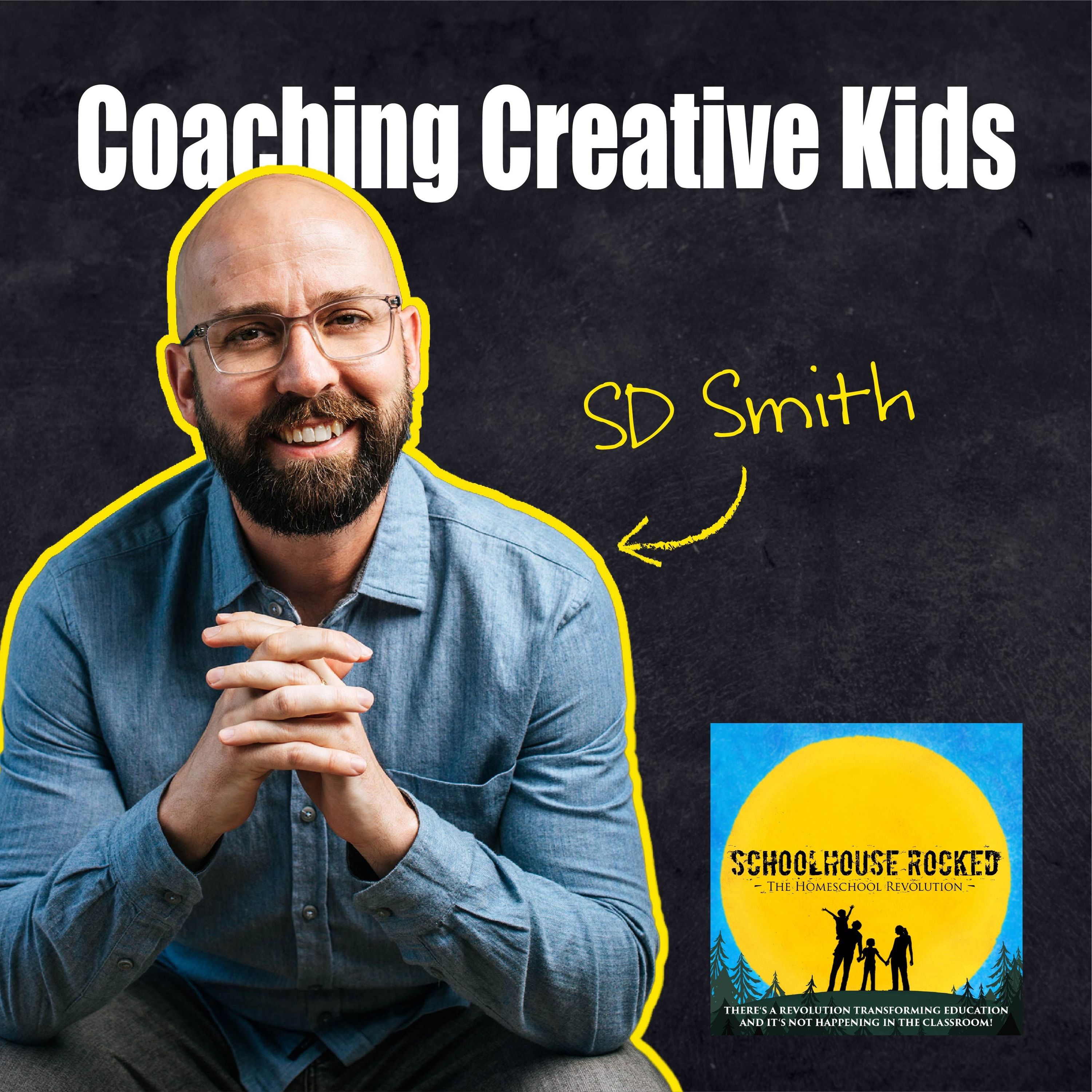
Cindy West sits down with S.D. Smith, beloved author of The Green Ember Series, to discuss coaching creative kids. If you've ever wondered how to nurture your child's God-given imagination while maintaining strong family values, this episode is for you! Perfect for Christian homeschool moms looking to support and guide their uniquely gifted children. What You'll Learn: The essential role parents play as “coaches” in their children’s lives How to recognize and cultivate creativity in every child Effective ways to balance discipline and encouragement for creative kids Strategies for helping kids overcome fear of failure Building Christ-centered habits in creative homeschoolers Recommended Resources: Find all of the resources recommended in this episode, plus free resources from Schoolhouse Rocked, in the show notes here. Sponsors: BJU Press Homeschool is dedicated to providing homeschool families with academically strong curriculum rooted in a biblical worldview. They offer a complete curriculum from preschool through 12th grade, available in both traditional textbooks and video courses. By teaching through the lens of Christ’s power, they help students view the world through the transformative story of God’s creation CTCMath specializes in providing online video tutorials that take a multi-sensory approach to learning. Creative graphics and animation, synchronized with the friendly voice of internationally acclaimed teacher, Pat Murray, make learning math easy and effective. Start your free trial today. Holman Homeschool Guide - Develop your family’s academic and biblical education with trustworthy resources from the Holman Homeschool Guide! Excite kids to study God’s Word through fun and engaging kids Bibles, study tools, and companion products that bring the Bible to life. Equip teens to go deeper in Scripture to apply it to their lives and find resources to encourage parents’ faith. The Schoolhouse Rocked Podcast is a member of the Biblical Family Network.
speaker-0: At the heart of Christian vocation is love and service. So when I write a book, it is successful when it is loving and serves the audience. If you allow a creative person to just be undisciplined, you're not doing them any favors. If they're going to be successful at all in whatever creative endeavor they're involved with, they're going need scads of discipline. speaker-1: Hey everyone, welcome back to the Schoolhouse Rock Podcast. I am your host, Cindy West, and I'm so excited to be back for another conversation with one of my family's personal favorite authors, S. D. Smith. His Green Ember series is truly top-notch. It's just fantastic living literature in every way. And my adult kids are a little bit jealous that I get to be in this conversation today, but they can get a podcast themselves and interview him if they want to. ⁓ but today it's my turn. And I just want to tell you if your family hasn't read the series, the Green Ember series yet, I highly recommend you start soon. All right, before we jump into our conversation with Sam today about coaching creative kids, I want to share just a little something from one of our amazing sponsors of the Schoolhouse Rocked podcast. It's a beautiful day to homeschool, and BJU Press Homeschool is here to help you make. Every day of learning purposeful and joy-filled. With BJU Press Homeschool, your child can build a solid, faith-filled foundation for the road ahead, growing in wisdom, character, and confidence. Their curriculum is built on a strong biblical worldview and designed to help your child think critically, love learning, and see God's hand in every subject. Each lesson encourages active multi-sensory learning that reaches your child's unique learning style. And whether you prefer online or parent-led teaching, BJU Press Homeschool Hub, made for homeschoolers by homeschoolers, gives you the flexibility and support that fit your family's lifestyle. It's designed to equip, encourage, and guide you every step of the way. Though the road won't always be perfect, each day has purpose. And that's what makes it a beautiful day to homeschool. Visit BJU PressHomeschool.com. That's BJU Press.com. Homeschool.com. All right, Sam, it is so good to be back for what I know will be another very rich conversation. speaker-0: It's wonderful to be with you once again. I'm excited to be back. speaker-1: All right, today we're kind of switching gears. If you guys didn't listen to last week's episode about how an author thinks about writing books that are fantastically encouraging to kids, I think you might be surprised at how that worked out in our conversation. It was so, so good. So be sure to go back and check that out if you haven't listened. But today we're pivoting and we're gonna talk about coaching creative. kids. And Sam, what I think we need to do is maybe define two things as we begin to talk about this. First, what is a coach? And second, who are creative kids? speaker-0: Well, I am a coach. I I coach soccer and I that's an important sort of part of my life. And I I think there's a lot of applicable sort of stuff. I I grew up around sports playing and I love coaching. I think parents are definitely coaches. They're a lot more than that. But I think about parents as being sort of the first line, the front line of coaches. So yeah, I think ⁓ everybody who's listening to this who's involved with kids' lives, I think, are coaches in some way. speaker-1: Okay, awesome. Then who are creative kids? speaker-0: I I love this. And we talked a little bit about it last week ⁓ or last episode. And it was, I just, I think it's we are wrong when we think about just sort of artsy kids as being creative. I think that's fine. It's a fine term. I personally don't like the term creative as in like this person is a creative. ⁓ I don't love the way that that is a use of language and it also feels a little bit snobbish to me. But I get it. I get it. You're trying to figure out a way to sort of identify certain kinds of people. and I get that. ⁓ but people who are sort of in creative vocations, I think that makes sense. But all kids are creative. They all we all are given a creative capacity, an imaginative capacity. And I think it's goes along with sort of our intellects as a really important thing. We talked about Lewis describing reason or intellect as an organ of truth and imagination as this organ of meaning. And I think that both our capacities are given to us by God. So I think these kids, I think. The thing that I'm interested in is that kids who are a little bit like me who like to write or or draw or create music or films or that kind of stuff, we we sort of know that there's a kind of kids who are drawn more to that kind of a thing naturally. And my heart is just to like to love them. Like how do we love them? And and I know that parents who are listening or watching, like that's what they want to do. They want to love these kids and serve them. And sometimes they might be like a more of like a traditional sort of like concrete thinker or whatever. And they might think, I don't know what to do. Like for me, it was just like, you know, study real hard and and I could do this. And I it was very simple to me and clear. But this kid has like these different needs, these different sort of ⁓ you know, they they they're really thinking or they're staring off and I don't know what to do with it. They're very shy and they're very introverted. I don't know what to do. I have a heart for those kinds of kids. I was one of those kids. I meet them all the time on book tours and that kind of thing. So I love those kids and I I would love to be helpful if I can. ⁓ for parents who are just like have a have a desire to to love and serve those kids. speaker-1: Okay, so do you consider yourself a coach to those kids? speaker-0: I mean, kind of. ⁓ when I first started doing this, I was really committed to I'm not doing that. I am going to do this vocation. I just seen a lot of people who, you know, you write one book and then you think I'm an expert on writing. So now I'll do courses because that's actually the places where you can make money. And so I kind of had a bad feeling about that kind of thing. And I'm like, I'm not doing that. I'm not gonna be a person again. I you know, I'll just model this as much as I can and I'll do the work, but I'm not gonna be a a teacher. I'm not gonna like But then something happened to me and that is I met, you know, a hundred thousand kids on tours and so thousands of them asked me, Hey, do you have any advice for me? I'm trying to I wanna write, I wanna tell stories and and you know, I love these kids and so it's like, ⁓ I've got a I've got so I do I have developed, I feel like a a ⁓ a love for not a love for them, I had a love for them already, but just like a a heart for them. And that's been part of my vocation for a while now is just thinking about them. I I did make a course for kids ⁓ or for for young writers called The Green Rider. And I've done a podcast with my friend Brett Harris that people can check out if they're kind of looking for that kind of thing. ⁓ but yeah, I I so I do have a heart for these kids and I do want to I I I my disposition is to think about the parents as sort of like front line of coaching and like how can I encourage them and how what do I think is like important for them when they're thinking about loving and serving and ⁓ training, ⁓ equipping these these these precious kids made in God's image. Like how do we how do we love them? So I think about like I'd like to be an advisor to them as a coach, but I I definitely see myself as a coach too. speaker-1: Okay, awesome. And I I want to go more into how you could help parents see themselves as coaches and then what that practically looks like. But I want to make sure that no one missed what he just said because he rolled right over it. He actually does have something called the green writer that you might want to check out if you have some kids interested in just writing. Is that what we're doing there, Sam? speaker-0: It's aimed at writers, but I think of it as and I've heard from a lot of people that it's really broadly applicable applicable to a lot of people who are involved in s like creative endeavors. ⁓ I think it has a lot but it's it's aimed particularly at writers and would have some stuff that would be sort of particularly aimed at them. speaker-1: Okay, all right, I love it. ⁓ so let's then dig back in because you said your one, your heart, of course, is for children in a coach, ⁓ coaching sphere, but you can't possibly do that for them. And you also mentioned that you really love the idea of helping parents see themselves as coaches. So how does that change maybe how a parent is viewing themselves? How do they begin viewing themselves as a coach in this scenario? speaker-0: Hmm. I don't know. I mean, I think that they're just doing it. I mean, I would guess people that listen to something like this would be that would be their orientation. They're people who are intentional. They're they're front foot. They're not ⁓ waiting. They they met they're probably which is a big thing we tell our kids on the soccer field is make mistakes of action. ⁓ don't ⁓ wait and like let the game happen to you, you know, go happen to the game. And if you're gonna make a mistake, make a mistake of action. Like do something wrong because you're doing it, not because you're just being passive. And I think that's the kind of listeners or viewers that you guys have, I think, is your is is people who are just intentional and they care and they love these kids. And so I think that's what they're doing. ⁓ and I don't know if they need to think about themselves. I think it might it might be helpful. For me it's helpful a little bit to not think I don't think about myself as My calling from God with my kids is not an eternal fatherhood, as in like I'm always going to be like changing diapers and always going to be doing those little little things, like or feeding them. Like that changes. They start going to the bathroom on their own, they start eat feeding themselves, and then eventually they're they they move they they move on to another make create new households. So I don't think of it as like I have this permanent position, like the position of God. I have this sort of In in the end, ⁓ my view is that you know, we're we're ⁓ these are like my brothers and sisters in Christ that are grow we're they're growing up and I've got this job for a while, for a lifetime in many ways, but it's pretty intense for a while that I'm in their lives, and so I want to help them with like with discipline, with love, with encouragement, with coaching. And so I've got this sort of role. There's authority in it. I get that. I'm not trying to minimize that, but it's just I think that the orientation isn't that I'm the judge of the universe and I'm trying to like make sure that I use the law properly to like punish and condemn or to reward, there's like correction, as in like, ⁓ we're going off the track here, could let's get back on the track. And you know, how I do that for a three-year-old is different than a 30-year-old. And I've got adult kids and teenagers right now. It's just that the roles have changed. The love is still the same, but the roles the the my calling is developed. And so, but it's always involved coaching. And I think it maybe it always will. I hope it always will to some degree. ⁓ but again, I love coaches because coaches, they don't always have to be, you don't have to be. Th those parents who are like, I don't know what to do with my creative kid. Like, you don't have to know everything about, like, you don't have to have been the best soccer player in the world in order to be a really good coach. A lot of the coaches weren't great players. Some of them didn't play at all. And so you don't it's a different skill set, and you don't have to be ⁓ an experiential expert in everything ⁓ in order to sort of be a good coach. There are like sort of broad principles. And I I I I believe that like any of any parent out there can be can love ⁓ and coach their creative kids better and better as as as they grow. speaker-1: Yeah. And you know, from a mom's perspective, homeschooling moms often are the ones doling out the education portion of homeschooling. And I think that especially when they're younger, we think of ourselves more as teachers. We must dole this out. We must work on the discipline, et cetera. But as my kids started growing in stature and wisdom and understanding and all of those things, I definitely Found myself, I probably didn't call myself a coach, but as we're having this conversation right now, I can see that it was easier and easier as each day turned into the next that I took on more of a coaching role. And I'm so thankful that I made that transition when I did, because you're right, there is something so positive and affirming and really putting some of the responsibility on our children to rise to the occasion. ⁓ that that we are there to help them rise to the occasion, but then they get to actually take ownership of whatever that thing is, whether it's character or creativity or academic or whatever. ⁓ and I think it creates kids who believe in themselves and run a little further than they might run on their own. speaker-0: I'd love hearing from you on that because I feel like you're so much more qualified than me. And I'd love like I am such a big fan of homeschooling moms. I just think like they're the heroic, like under appreciated segment of the population. They don't get a lot of praise. And I think that that they you guys are just the heroines of the world and so brave, so bold and I I just love hearing you say that 'cause I think that's ⁓ I don't know. I have some ⁓ I have such respect for ⁓ homeschooling moms, they're just the the best. speaker-1: Thank you. It's not always easy. We encourage moms, particularly around here, that not every day will be easy, but perseverance is our our character quality to definitely refine. Before we keep on with this is an amazing conversation too. Let's take a quick break to hear from one of our awesome sponsors. speaker-2: Looking for a math program that actually works? When math becomes a daily battle, it can wear everyone down. That's why so many homeschool families turn to CTC Math, a program that makes learning clear, achievable, and even enjoyable. With short video tutorials, practice questions, and easy progress tracking, kids learn at their own pace and parents can see exactly how they're growing. Lisa from Texas says CTC Math turned our hardest subject into the one my son feels confident about. It's made a world of difference in our homeschool. Discover why families around the world trust CTC Math. Start your free trial today at ctcmath.com. CTC Math, Math Made Easy. Strengthen your family's academic and biblical education with trustworthy resources from the Holman Homeschool Guide. Encourage kids to study God's Word through fun and engaging kids' Bibles, study tools, and companion products that bring the Bible to life. Equip teens to go deeper in Scripture and apply it to their lives, and find resources that encourage your faith as well. Shop the Holman Homeschool Guide for your family today. Visit Schoolhouserock.com/slash Holman. That's schoolhouse rocked dot com slash Holman or click the link in the show notes. speaker-1: So Sam, I want to ask you a question about how we might as parents notice or maybe not even notice, maybe build into the more creative side of a kiddo. speaker-0: I I get what you're saying, sort of like identifying is part of knowing about their journey and caring about them. And I I you you correct me if I'm wrong. I I sort of think that you you kind of can tell with a lot of these kids. And I I feel like where where a lot of parents are is just sort of like, now I don't know what to do. Like I can see that they're they're a little different in this way. And I'm just trying to figure out what to do. I don't know about the The challenge of noticing I mean, they're going to I think a lot of a lot of there you know, the ⁓ kids sort of defy ⁓ definition in a lot of ways. But I think it's it is generally common for a lot of these creative kids to be introverted, ⁓ to have deep feelings, to be very sensitive, ⁓ not always in bad ways, but sensitive to ⁓ Nature, to animals, to other people, ⁓ easy maybe easily hurt, a little bit fearful, a little bit on the on the negative side, sort of like tempted to sort of navel gaze or to kind of like be become ⁓ sort of collapsed in on an inner life. And that might look confusing to someone who's an extrovert or who's like a type A personality, whatever the terms we use. If you've got a a man who's just like a go-getter and a killer, and like I I go take, you know, take care of things, ⁓ don't not very emotionally. complex or something. And I just I'm a I'm a I'm a go-getter. And then you have a son who is kind of likes poetry or sits and thinks and likes to draw and and and ⁓ it maybe doesn't feel as seem as productive or something. That that's that's a clash right there. And and ⁓ it's a challenge like waiting to happen. And there's collisions that happen. And that's sort of like that's a subject of a lot a lot of storytelling is these sort of like longing for like fathers and sons to understand each other and that kind of a thing. But I just think in the body of Christ, we should be the most well-equipped people to sort of understand and appreciate diversity or difference. ⁓ that's what we have. That's what Paul's vision of the church is really, ⁓ I think super helpful in this kind of a thing, just saying, like, we're not all, you know, you're not all an eye. The I can't say to the hand, I don't need you. There are more public members and there are private and there are people, you do you have there's a mouth, there's speaking, there's ⁓ there's like everybody's not doing the same thing, and that's okay. is sort of the Christian view of the world as in like we're different people and and it's actually beautiful. And it you have the the principle in in art of of ⁓ unity and diversity. There's all these things are true about all of us. And then there's these things that are unique about all of us. And so I think no nobody should be more aware of that than Christians. So we have these different giftings and it's kind of like well what do we do with those and that that's a lot of my heart is like to understand and to help parents to be able to coach these kids to to ⁓ to recognize some of the the challenges ⁓ of being introverted, for instance. Like if if that is just enabled or coddled, if that is a kind of a thing where maybe if you're not a coach, you're just kind of someone who's around, you just say, ⁓ that's fine. You just do whatever you want to do. Like that's not what a good coach does. A good coach would say, well, will is not a critic, but they can criticize. You know, they're not a coddler, but they can comfort. That's like a what a coach can do. So there's these postures and gestures. You have a posture of love and acceptance. You might have a gesture of Hey, you gotta, I'm gonna require this of you. Like you have to, you have to ⁓ a church on Sunday, you have to say hello to somebody. You know, you have to go into the store and buy a loaf of bread by yourself because I know it's hard for you, but we're gonna get you can do this. And I'm gonna, you know, that might be something to like help a a person who's struggling with that kind of thing slowly. Well, you know, sometimes people need a lot more time and sometimes people need less less, but You know, a coach is gonna s gonna challenge us and invite us and be active in our in our lives. And that that doesn't mean, you know, I think for for a lot of us as parents, like, ⁓ that kid is so different than me. That means condemnation. That means I gotta, ⁓ that or or you might have the others ⁓ side and just say, Well, they are an artist, they're just this thing that's so so they can do whatever they want. ⁓ they they're really rude to people, that's okay. That's what artists are like. ⁓ I'm sorry, they were really rude and they stole that from you or they hit you or they they that thing. You're such a creative kid, just so creative. Like that doesn't help a person like that, especially as Christians. So all this stuff has to be submitted to me for for me as a as under the Lordship of Jesus Christ. And in this we have to think about ourselves in these this diverse body as having different gifts. But what are those gifts for? They're to serve other people, they're to love other people. So we have to like incentivize and invite. ⁓ these creative kids and all our kids to think about others and to not just think about self-indulgent, like I will spend all day writing and just ⁓ not contribute and I won't take out the trash because I'm just so creative. I can't really do no that's actually not a gift to a creative kid to to coddle them and to to entrench them in like maybe sinful habits. It's better to challenge them and invite them, even if you have to do it tenderly or slowly or work at it. To say, hey, you you're part of this. You're a part of this family. And actually that that's one of the things is like discipline. If you if you allow a creative person to just be undisciplined, you're not doing them any favors. It might feel like it in the moment, like, ⁓ it's great. ⁓ they they can go spend their time, whatever. If they're going to be successful at all in whatever creative endeavor they're involved with, they're going to need scads of discipline. so ⁓ I I there's a lot of I I think things like that that are just opportunities for us to sort of like see each other and love each other and to and to coach these kids up and and to give them gifts that'll be go beyond just like making them be able to function in your household, which is really important to begin with. How do they function in the household of God? Like how do they focus in I mean, how do they ⁓ how do they ⁓ develop in the church and like in the culture? Like These are really important things. So I think there's a lot of gifts we can give these creative kids that we sometimes ⁓ overlook. speaker-1: You know, this is kind of a pervasive thought in some homeschool spheres. And that is when we have kids that are gifted or creative or talented or however you're gonna phrase it, you spoke to it and I was gonna ask you about it, but you already said just because somebody leans one way or another doesn't mean that we don't all get in the game. Because if we're thinking through the lens of a coach, the teammates all have to work together and they all have different skills to do that. But I do believe that there is a pervasive message out there that, ⁓ you know, Johnny is just, he's, he's like this, and and we just can't expect this from him. We can expect that from him, but we're just not going to worry about the discipline side of things or whatever. And I think your point is so incredibly important that. This is about being on the team, the Christian team with God too, because we are training our kids to not only be in whatever the game is that they are taking part in here on this planet, but we are training them to be part of the kingdom of God. And so there are certain things that we don't let them get away with. Just because they might lean one way or another in creativity and and you know, I just I don't pick up my stuff because I'm creative. I don't wanna have to pick up my stuff. Well, that's not really being a good team member. No. speaker-0: Yeah. Yeah. I'm totally with you. I agree with you 100%. I just feel like it's and and I think the thing is we think that that kind of indulgence is going to be like a gift to them, maybe because we don't understand like the creative sphere. We feel like if we're really that completely different sort of personality type or whatever, really different giftings, then we just might look at that as so strange and we like have a fear, like a love for them and like, ⁓ I don't want to like damage them. Will it damage them if I require discipline of them? And I would just say like, no, no, it doesn't. It's good. It's a gift. And you can put it, you can be tender and love and surround it in hugs and affection and and be a team, you know, try to try to be an encouraging coach, whatever. But you you're not doing anybody any favors by saying you don't have to have discipline, you don't have to have good habits. It's just it's not it's not good for the for the child. speaker-1: And you know, even in more of the academic sphere, one thing that I always say is we can think about doing math differently, but we're going to do math. Excellent. You know, I mean it's the same principle, just with different words to it. Yes. ⁓ okay, so let's switch this for just a second. And kids who are creative, I have one. He really didn't like to fail. And yeah, a lot of times we think about perfectionism or whatever, leaning more into the academic side of things. But it still can be a real fear for our, you know, what we're titling here, creative kids. Yeah. can you speak to that? speaker-0: Definitely. I mean, that is that is such a that I think that's a h a a big marker of kids who are creative. It's it's so terrifying to make something and then share it with other people when you're a particularly a sensitive kind of a person in a in a lot of different ways. That sensitivity is such a gift because it it allows you to sort of feel and empathize. This is what allows you to tell good stories because you can sort of see, you can imagine, you can look at a person and you can imagine more than just, ⁓ they didn't function the way I wanted them to function to complete this task, and therefore they are good or bad or whatever. You know, we evaluate them in this way. And a s and a really highly sensitive person might be able to think about their story and have compassion for them and and imagine what's like, what would it be like for them to change or grow or whatever. You know, we have these the these sensitivity you notice. You know, the the big mountain and the little bumblebee and and and then this is sort of an artistic disposition. ⁓ and so I think thinking about like making something and then ⁓ failing at that or people being able to judge that is can feel like, ⁓ you're just attacking because I made this poem, but the poem is really me. So when you say Well, the scans doesn't really scan very well. It's ⁓ you know, this isn't you're you miss you know, you miss this whole kind of thing altogether. That feels like, ⁓ you're attacking my very soul. So you have this sensitivity and and and a fear of failure is just such a I mean, that is but I think again, we think, ⁓ so I'll never tell them anything's wrong. I'll never criticize their art or I'll never set them up to receive criticism in any way. Those are two distinct things 'cause where it's coming from does matter to some degree and with different kids. But if you and I think that that's I that's a challenge. But again, I just think you we we are not doing them any favors to allow that to pers to persist because the very first thing if they have any success at all in it is the very first thing they're going to experience, if they write a book for instance, that there are Amazon reviews. And it's gonna they're gonna get them. I've gotten ⁓ so many negative reviews, so much feedback about that that's been bad. And it's it can be very hard. It's a lot less hard for me now than it used to be. But I remember what that felt like ⁓ as a as a young writer, a young artist. And it's so it is terrifying. And I think here's I'll tell a story about this. This I think will will be helpful. When I was 16 years old, I lived in South Africa, I was a missionary kid, I got my first guitar and I played music and I wanted to learn guitar. Just because I wanted to write songs. I wanted to be like Rich Mullins or Keith Green, Michael Card. These were kind of my heroes, along with like Bob Dylan or Johnny Cash or Neil Young, these kind guys. I wanted to be a songwriter. So I wrote songs. And I was a shy kid. And I that was how I would have taught talked about myself is I'm shy. And I would play guitar in my room and I would play and I would write songs. And sometimes we would have like a guest or something over at the house, and we would start talking, and mom My mom would say, Hey, why don't you play one of your songs for you know for these people who are over? And I was like, ⁓ I don't want to do that. No, I don't want to do that. And she'd say, ⁓ come on, come on, come on. And I would maybe, maybe eventually come out and play and sing myself, sing so and I'd say, What what? What? What are you I'm just singing so softly. And the story I was telling myself is that I'm shy and humble, that I don't want to put myself forward, and I'm really shy. And I'm a shy guy, but I'm really humble and I don't really want to be like the guy and I want to show off. That was such a lie. ⁓ the truth is I was proud and afraid. And and I think that's defines a lot of ⁓ people like me who have these sort of sort of creative gifts. I have been so much less proud when I've showed up, when I've gotten on the stage, when I've spoken loudly, when I've spoken clearly. When I've when I've gotten my head up enough to see the other people and think they might want to hear a song. How can I love them? How can I give them a gift? And that's this sort of fundamental orientation of a Christian who's in the arts is not thinking about the whole thing rests on me as in like whether I achieve the great glory or whether I fail at that, that's the great, that's the great success or the great failure. That's not doesn't matter as much as what about the audience? What about the people? What about the people listening? Like, what can you give them? And it doesn't have to be reduced to simple, sort of like again, like this utilitarian kind of a thing of like, what do they want? ⁓ I'll do exactly what they want. It's not that simple, but at the heart of Christian vocation is love and service. So when I write a book, it is successful when it is loving and serves the audience. And whether or not I become the award-winning or the greatest selling book, that's like, I'm not saying that's the end of that's like horrible to think about that at all. I don't think that I want to be successful, I want to sell books, but I want deeply in my vocation, I want to love and serve them. So my failure as at a moment when I'm 12 years old or 15 years old, either at writing and performing a song or writing a book or creating a piece of art or something that a failure right there might be the biggest gift in the world for my audience. Because you learn from failure and you grow from failure. Just like in sports, you learn from losses, you learn who you are, you change because of failure, because of not doing something right, for making mistakes of action. So it's such a gift to fail. It's such a gift to fail. And every artist, every ⁓ athlete that that those young athletes or those young artists admire, they have heapfuls of failures. And and they recognize those as gifts. So I think. helping the kid by telegraming their whole vocation in those terms is so helpful. It's such a gift. I kind of wish I'd had that a little bit earlier, like that perspective of like this is a gift. It's not just about, you know, you can know true things, but being inspired by the story of people who failed and failed and failed again is profound. And so I I understand how much it hurts, but that hurt is part of the journey too. Yeah. And actually it's it equips you, equips us. I mean, even Paul talks again about sort of like what pain does, what trials do for us. And basically, storytellers, creative people should know that better than anyone else because that's what we do to our characters all the time. So we put them through a terrible, horrible situation. So they grow and they change and they overcome. So it's there is a context, I think, to give these kids. ⁓ but I'm not saying that it's easy. So it it's patience and it's gentleness, I think. It's not just. hitting them hard with it. It's gentleness. But like you said, we're doing the math. Like we're doing this. And how do we want to do this? Let's do this in the best way for you, but we're doing it is is a is a huge gift to young creative kids. speaker-1: Yeah, it's coaching. I I mean, I just love this analogy. It's coaching. You guys see yourself as a coach. This is fantastic. You know, I was thinking of ⁓ another practical example. I have one son who was really good at basketball. And sometimes he would go cold. And his coaches and sometimes his parents would say, You will never make a basket if you're too afraid to shoot again. Yeah. You know? I mean, it's the same thing. ⁓ I this has been so good. Sam, thank you so, so much for taking the time to have these conversations. ⁓ they've been incredible. And I know they're going to be such a blessing to everyone who has listened. Would you please take just a moment to tell everyone where they can find you and what they need to know? ⁓ send them to if you have any new things coming out. We we want to know it all. speaker-0: Well, that's really kind. I mean, thank you so much. I mean, w we have you know, this year we've we've put out two new Green Ember books as we finished this little trilogy called The Lost Tales, and that's kind of the new thing there. That's the thir twelfth, actually, four thirteenth and fourteenth Green Ember books. So if you love the Green Ember, then a lot of people don't know about the other books in the series that there's a lot more, and these new books have ⁓ more Heather and Pickett, ⁓ people's favorite characters and And Helmer and some so I I think that's an exciting kind of a thing. I'd love for people to give that a try. Our little store, ⁓ at at SDsmith.com slash store is just a place where for I think it's a cool place if you wanna try like you know, go if you're looking for gifts ⁓ for for kids and for f or kids that you love and families that you love. And we have a lot of cool things there that are like new shirts and plushies and ⁓ a lot of cool little greener like baseball card kind of things and and of course books. ⁓ we we love to share those and we love for people to give our little family store a a try 'cause we're we're just like we're in the trenches with you as ⁓ parents who love your kids and ⁓ love the kids in your lives and we just wanna we wanna serve you and ⁓ be on your side. speaker-1: Love that. You guys will find links to his store and the Green Ember series. You'll find all of that in the Schoolhouse Rocked show notes. So I am Mrs. Cindy West. I call myself Mrs. Cindy sometimes because that's what my No Sweat Nature Study students call me. I hope that you will check me out either in No Sweat Nature Study. We have a podcast by the same name, or at Ourjourneywestward.com. That's my website that I have had for 20 years where I have written about creative homeschooling ideas. I am also Our Journey Westward across all social media platforms. I know this podcast has been a blessing to you. So if it has, I am gonna ask that you will please consider doing a few things to support the Schoolhouse Rocked Ministry. First, would you share this podcast with a friend? I know you can think of at least one friend who needs this particular conversation's encouragement today. We would really appreciate that. And then if you could leave a rating or a review, like or comment wherever you are listening or watching this podcast, that would be amazing. And then you guys can find all things Schoolhouse Rocked at our website, schoolhouserocked.com. And there you can stream the movie Schoolhouse Rocked, the Homeschool Revolution, for completely free. Plus, you can download your homeschool survival kit or make a donation to support the ministry or even subscribe to our newsletter. We would love to hear from you. Would you please reach out and tell us what guest you would like to have come on the podcast or what topic you would love to have discussed? Or if you have a prayer request, we would love to hear that too so we can pray for you. Thanks for being here today. And Sam, thank you again for being here. We'll see all of you guys again next week. You're listening to Local Family Network. speaker-0: the build I'm Josh. And I'm J I'd like to invite you to listen. speaker-1: And we to the Gospel Shape Family podcast. speaker-0: Each episode brings biblical wisdom and practical conversations on parenting, marriage, family, and we discuss how to disciple the next generation with a biblical worldview. Whether you're raising children, shepherding a church, or longing to build a legacy of faith in your home, this podcast is for you. Join us as we explore how to shape arts, poems, and churches around the gospel. One conversation at a time. speaker-1: This is a big job that we're doing. It's really not just about math. I do take it seriously. I feel like when I look at my kids, I have poured myself into this assignment since the beginning. There was a huge vibe shift when they gave me my first baby in the hospital. And I went from a pretty selfish person that really only thought about myself most of the time to Whoa, like this is another person that I've been charged to take care of. And so I think that just as as Christians, we should take what we've been tasked with seriously. For the little soul that we will be sending out into the world much too quickly, as you know, we want them to be well prepared for it. I take that as a huge responsibility.
More Schoolhouse Rocked: The Homeschool Revolution episodes →