
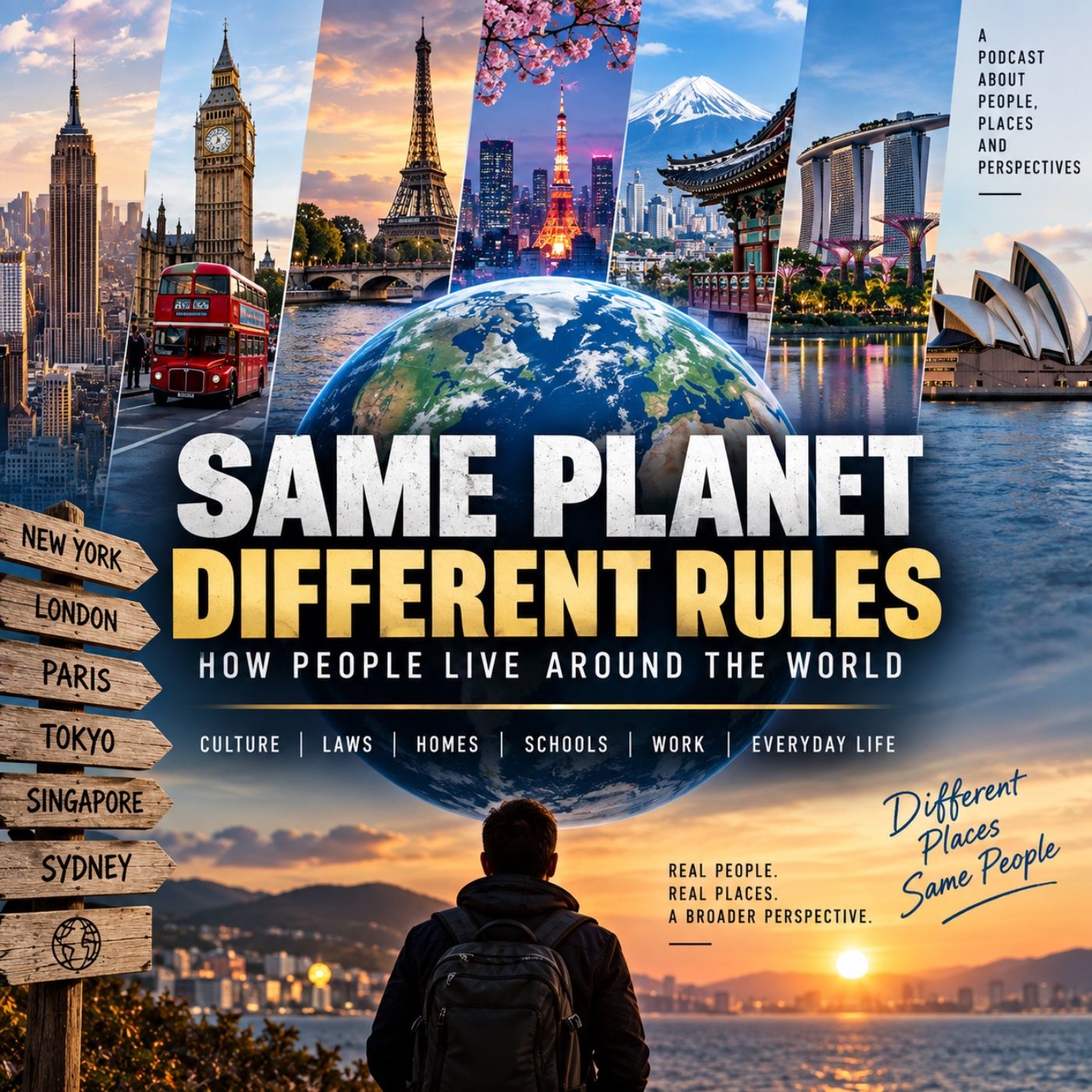
Same Planet, Different Rules · Circle Of Insight Productions
Something as ordinary as chewing gum, crossing the street, or feeding a pigeon can be perfectly acceptable in one country and result in a fine in another. In this episode of Same Planet, Different Rules, we explore surprising differences in everyday laws across the United States, Singapore, Japan, Germany, and other countries. Discover how history, culture, public safety, and social expectations shape the rules people follow, often without questioning them.
0:02Speaker 1So some things are perfectly legal in the U.S., but
0:05Speaker 1they're not legal in other countries and vice versa. So
0:08Speaker 1you wake up tomorrow morning walking outside your hotel and
0:11Speaker 1doing something you've done a hundred times at home. Perhaps
0:13Speaker 1you cross the street before the pedestrian signal changes. Maybe
0:16Speaker 1you feed a few pigeons in a public square. Or
0:19Speaker 1you purchase something from a convenience store that you've always
0:22Speaker 1considered harmless. Depending on where you travel, you might have
0:25Speaker 1just broken the law. Let's look at Singapore, a country
0:29Speaker 1famous for its cleanliness and strict public regulations. You've probably
0:32Speaker 1already heard that chewing gum is illegal, but the actual
0:35Speaker 1law is more interesting. Singapore heavily restricts the importation and
0:40Speaker 1commercial sale of chewing gum, with exceptions for certain approved
0:43Speaker 1health-related products. Simply, chewing gum isn't generally a crime. The
0:47Speaker 1restrictions were introduced partly because discarded gum created expensive maintenance problems,