
Sacred Rituals, Wellness & Devotion by Dharmikvibes · Dharmikvibes: Exploring sacred traditions, pujas, wellness and pilgrimages.
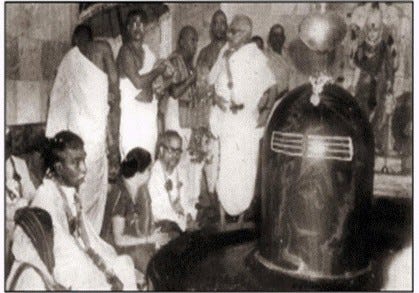
Why May 11, 2026 is one of the most significant dates in our civilisational calendar - and what it means for every yatri and every Bharatvasi Har Har Mahadev. There are temples you visit. And then there is Somnath - which visits you. Which keeps returning, lifetime after lifetime, in the collective memory of a civilisation that simply refuses to forget. This week, a quiet but seismic milestone is being marked on the Saurashtra coast. May 11, 2026 carries the weight of two timelines folding into each other: * 1000 years since the first recorded invasion of Somnath in January 1026 * 75 years since the temple was ceremonially reopened on May 11, 1951 by India’s first President, Dr. Rajendra Prasad To commemorate both, Prime Minister Narendra Modi - who also serves as Chairman of the Somnath Trust - is visiting the temple on May 11. The year-long observance is being called the Somnath Swabhiman Parv - the festival of self-respect, of dignity, of swabhiman that no invader was ever able to break. If you have been waiting for a sign to plan that long-pending Jyotirlinga Yatra, this is it. Why Somnath Stands First Among the Twelve Jyotirlingas Somnath is not just a Jyotirlinga. It is the first - the Aadi Jyotirlinga. The Dwadasha Jyotirlinga Stotram, recited by devotees across India for centuries, opens with Somnath. Not by accident. The Shiva Purana places its origin at the feet of Chandra, the Moon God, who worshipped Lord Shiva at this very shore at Prabhas Patan to be relieved of a curse - and was granted the radiance we still see in the night sky. The site is sacred to three streams of devotion at once: * Shaivism - as the foremost Jyotirlinga of Lord Shiva * Vaishnavism - through the deep association with Lord Krishna, whose mortal lila is believed to have ended near Bhalka Tirth, just a short walk from Somnath * Shakta tradition - through the worship of the Devi who completes the trinity of presence here This triple sanctity is rare. It is why the temple has been called Prabhas Tirth - the place of luminance - long before the word “pilgrimage” entered modern vocabulary. A Thousand Years of Destruction. A Thousand Years of Rebuilding. Here is the part of Somnath’s story that should be taught in every Indian school, but isn’t told nearly enough. In January 1026, the temple faced its first recorded attack. From the 11th to the 18th century, Somnath was destroyed and looted again and again. And every single time - every single time - it was rebuilt. Consider the people who refused to let it disappear: * King Kumarapala restored the temple in the 12th century * The King of Junagarh rebuilt it in the 13th century * Veer Hamirji Gohil, a regional warrior, gave his life in 1299 A.D. defending Somnath during Zafar Khan’s invasion - remembered today through local tradition rather than official chronicles, because rajadharma does not always wait for historians to arrive * Lokmata Ahilyabai Holkar, the great Maratha queen of Indore, consecrated a new...
0:00SPEAKER_00I want you to just imagine a single building,
0:04SPEAKER_00but a building that has been completely pulverized,
0:06SPEAKER_00looted,
0:07SPEAKER_00razed to the absolute ground,
0:09SPEAKER_00only to be painstakingly rebuilt by the local people.
0:12SPEAKER_01Right.
0:13SPEAKER_00And now imagine that exact same cycle happening again and again.
0:16SPEAKER_00I mean, for a thousand unbroken years.
0:19Today we're taking a deep dive into what might honestly be the
0:22most stubbornly
0:23SPEAKER_00resilient piece of architecture on the planet.
0:26SPEAKER_01We are definitely looking at a masterclass in endurance today.
0:29SPEAKER_01We're talking about the Samnath Temple in Gujarat,
0:32SPEAKER_01India,
0:32SPEAKER_01and we are unpacking this incredibly evocative piece of reporting from a
More Sacred Rituals, Wellness & Devotion by Dharmikvibes episodes →