
S A U N A I E · S A U N A I E
The conversation delves into the challenges of fatherhood and the impact of intergenerational trauma on parenting. It explores the cycle of fatherhood, the importance of grieving and acknowledgment, knowing triggers, repairing, deliberate fatherhood, seeking support, and practical steps to breaking the cycle. Takeaways Intergenerational trauma impacts fatherhood Breaking the cycle requires deliberate effort and support Chapters 00:00 Breaking the Cycle 01:35 Intergenerational Trauma 04:28 The Cycle in Fatherhood 08:45 Grieving and Acknowledgment 09:43 Knowing Triggers and Repairing 11:13 Deliberate Fatherhood 12:33 Support and Breaking the Cycle 13:02 Practical Steps to Breaking the Cycle 15:46 The Work of Breaking the Cycle
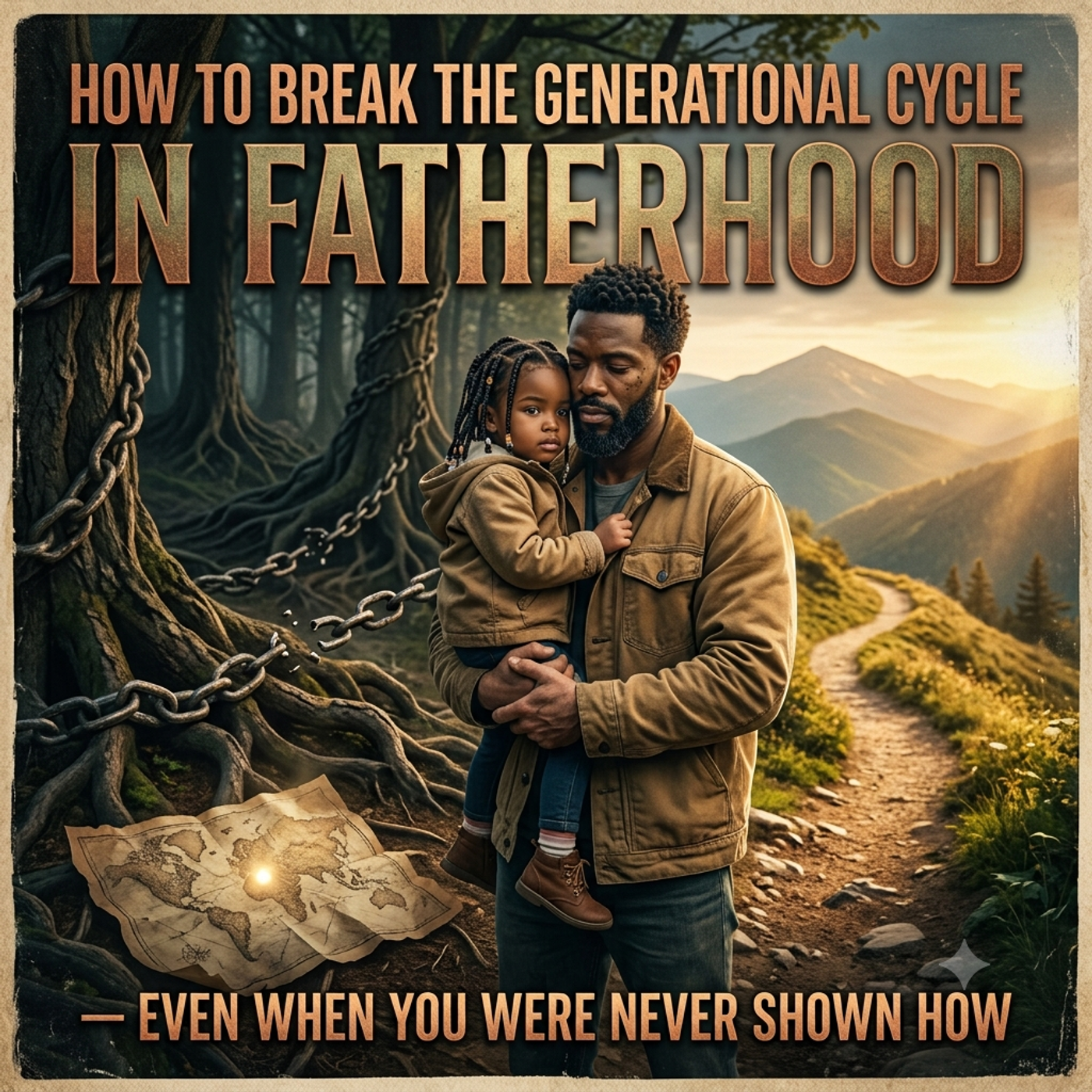
X O: I want start with a question I think a lot of fathers carry privately but rarely say out loud. How do you give your children something you never received? How do you model emotional presence when emotional presence was not modeled for you? How do you create safety when your own home did not always feel safe? How do you talk to your children about feelings when feelings weren't something the man around you named out loud? How do you father well when you weren't fathered the way you need it? That question doesn't have a simple answer, but it has a real one. And today we're going to go there. Honestly, with the research behind us and without pretending any of this is easy, because here's what I know to be true. The fact that you're asking that question at all, the fact that you're conscious of the gap between what you receive and what you want to give already puts you in a different category. Than the men who came before you. Awareness is the first break in the cycle. This is Sana I E. I'm XO. Let's talk about breaking the cycle. Gentlemen, before we talk about breaking the cycle, though, I want to explain how it works. Because I think when men understand the mechanism, they stop blaming themselves for inheriting it and start focusing their energy on interrupting it. Intergenerational trauma. The transmission of trauma patterns from one generation to the next travels through two primary channels. The first is behavioral. Children learn how to parent by watching how they were parented. I'm flashing back my head of like, yeah, that's how I that's how I parent. Now from parenting not from parenting books, not from intentions, from the lived experience of being in a household. How conflict was handled. How emotions were expressed or suppressed, how discipline worked, how love was shown or withheld, what safety felt like, all of that becomes the template a cherry a cherry a child carries into their own parenting, often without ever consciously choosing it. The second one is biological. The one and this one surprised researchers and is still being steady to this day. But the evidence is consistent. Trauma can be transmitted through epigenetic mechanisms that alter gene expression. Meaning the chronic stress, fear, and adversity experienced by one generation can literally change how genes are expressed in the next, influencing vulnerability to anxiety, depression, and stress responses before a child is even born. Ain't that something? Man. And the research man research published in the Journal of Mental Health and Social Behavior in 2025, specifically on fatherhood in intergenerational, psychological, and relational context, found that a father's own history of a diverse childhood experiences, aka's, is one of the strongest predicators of parenting patterns in the next generation. When fathers have unaddressed ACEs, children are measurably more likely to experience similar adversities, not because fathers want to cause harm, but because unhealed wounds express themselves in the only language the body knows, the patterns it has practiced. In a twenty twenty six study examining how fathers seek to break into general intergenerational transmission of ACEs found something important. The fathers who successively disrupted the cycle of weren't the ones with the least trauma. They were the ones who had done the most deliberate work of confronting what they were carrying. Awareness plus intention. Not a perfect childhood, not a perfect therapeutic history was a primary differentiator between fathers who repeated the cycle and fathers who broke it. You don't have to have had a good pops, good father to have to be one. You have to be willing to look honestly at what you received and make deliberate choices about what you pass on. So let me name what the cycle specifically looks like in fatherhood because I think the patterns are more recognizable than we usually admit, right? It looks like defaulting to discipline when connection is what the moment actually requires. The child acts out, pushes back, behaves in a way that triggers something, and the automatic response is correction. Enforcement control. Not because the child doesn't need boundaries. They do, we all know that. But because discipline is a language most of us inherited, right? Whether it's the switch, gonna be with an extension cord, you're gonna be with a belt, whatever it may be. That's what we feel like, okay, that's what we have to do to discipline our kids. But sometimes it calls for connection and redirection instead of discipline. Connection first was really model. So when a child needs to feel understood before they can receive correction, and the father only knows correction. The relationship loses ground even when the behavior gets managed. It may look like emotional shutdown during your child's emotional expression. Your child cries, gets upset, is afraid, is overwhelmed, and something in you goes quiet. You're uncomfortable, wanting to fix it fast. Or shut it down. That discomfort is not indifference. It's your own unprocessed relationship with those emotions. Men who were told not to cry, not to be sensitive, that feelings were a weakness. Those men flinch internally when their children express the feelings they were never allowed to have. And the flinch, however brief, is felt. Man, it's deep, huh? I know you're like, man, we unpacking a lot right now. We're only six minutes in. But a study that was done in March twenty twenty six, a clinical analysis on unhealed fathers and generational trauma in black families found that unhealed trauma in fathers rarely disappears. Instead, it gets recycled through families, manifesting in parenting patterns that emphasize discipline and control, leaving little room for emotional. vulnerability or healing. The fathers in this pattern are not villains, they're men carrying wounds that were never given the space to heal. And recognizing the pattern is a first step to interrupting it. It may look like repeating the silence. The silence around higher topics, mental health, feeling, sexuality, struggle, fear that existed in your childhood home becomes the silence in your own home. Not because you chose it, but because silence was what you knew. And your children, like you did, learn to interpret that silence as these things are not safe to bring to my father. Ain't that something? I bet you like replaying your head, like, man, I remember my childhood going through this or not being able to express myself to my father, to my pastor, whatever it may be, because that's not something we did in our household. And sometimes it looks like love expressed only through provision and protection, never through words, physical affection, or the kind of verbal affirmation that children need to hear from their followers specifically. The men who would do anything for their children. And have never said I love you or I'm proud of you in a direct way. We all know the love is real. The child isn't always sure of it though. So here is what the research and the real experience of fathers who have who have done this work says breaking the cycle actually requires. This isn't a list of tips. This is a genuine understanding of what the process demands. It requires grieving what you didn't receive. I'll say that again for the people in the back because I don't think y'all heard me. It requires grieving what you didn't receive. This is the most skip step that men do. And skipping it is what causes the cycle to persist. Before you can fully give your children what they didn't have, you have to acknowledge what it costs you not to have it. That is a grief process. Not a dramatic one necessarily, but a real one. The acknowledgement that the father you needed wasn't there or wasn't equipped or wasn't present in the wrong ways. That grief isn't about blame. It's about honesty. And honesty is what makes the next step possible. It requires knowing your triggers. Every father has them. The specific behaviors, tones, and moments with your children. That activates something old, the defiance that pulls up something from your own childhood, the neediness that makes you want to withdraw, the fear that expresses itself in anger. Knowing your triggers, don't eliminate them. But it creates the pause we talked about in the conflict episode, the space between stimulus and response where a different choice becomes possible. It requires repairing what you when you get it wrong. And you will get it wrong, trust me. Breaking the cycle isn't isn't about perfect fathering from this moment forward. It's about a direction, a sustained and perfect movement towards something better than what you received. When you lose your temper, when you go quiet, when you should have been present, when you default to the old pattern, repair. Go back to your child and say, That wasn't how I wanted to handle that. I'm sorry. Here's what I'm working on. That repair isn't weakness, it is modeling something your children may never have seen from you. Accountability, growth, the ability to get something wrong and address it honestly. Put the pride aside when it comes to your kids. I feel like you don't want to admit you're wrong or show you're wrong or show you're vulnerable to your kids because you want them to see you as Superman. But sometimes you gotta be Clark Kent. And a 2026 science direct qualitative study on fathers actively working to break intergenerational transmission of ACES film three consistent themes across participants. The first one is deliberate reflection on their own childhood experiences. Number two, a conscious decision, a specific named moment to father differently. And the third, Active effort to develop parenting skills that were never taught. The fathers who broke the cycle weren't naturally better men, they were more deliberate ones. Deliberateness is a choice available to every father in this audience right now. And it requires getting support. We said this in the healing episode. We are saying it again here, specifically in the fatherhood context. Breaking a generational cycle isn't a solo project. It's exactly the kind of work that benefits from a therapist, a fatherhood program, a mentor who has done it before, a community of men working on the same thing. The research on fathers who successfully break cycles consistently shows they didn't do it alone. They found the support that matched their context and they used it. So we're talking about the cycle. Let's talk about breaking that cycle because that's what it really comes down to. And this is what it looks like in practice. Starting this week with what you already have. Move number one write the letter you never got. Not to send, to understand. Write the letter from the father you needed. What would you he have said? What would he have seen in you that the father you had missed? What would feeling genuinely known by him? have felt like. This exercise is not nostalgia. It is a way of getting specific about what was missing, which tells you specifically what to build for your children. Move number two, identify one pattern you want to stop with you. Not all of them. I know we can start writing a list. What do this, do this, do that. No. Just start with one. The specific behavior or response that you recognize as something you inherited and don't want to pass on. Name it, write it down, tell someone. The act of naming it out loud is an to another person, your partner, a trusted friend, a therapist, is one of the most powerful psycho interrupting moves available. When what is named can be watched. What is watched can be changed. Move number three. Say the things your father didn't say. If I love you wasn't the language of your home, start saying it. If pride was expressed through actions that but never words, find the words. If your child's achievements were acknowledged but their personhood, who they are, not what they do was never named, start naming it. These Feel uncomfortable at first, that discomfort is the old programming resisting. Move through it anyway. Your children need to hear it from you, specifically in your voice without conditions. Move number four. Learn what you weren't taught. Following well is a skill, one of the most one that most men in our community were never formally taught because men who would have taught them didn't have it given to them. You have access now to books, podcasts, therapists, fatherhood programs, communities of fathers doing this work delivery. The knowledge exists. Seek it intentionally. Not because you're failing, because you're taking the role seriously enough to want to grow in it. Move number five. Let your children see you breaking the cycle in real time. When you catch yourself default defaulting to old patterns and Choose differently. And if you're doing the work, your children will eventually witness the moment and name it. I almost responded the way I used to. I am trying to do something different. That transparency received by your children teaches them something worth more than any lesson you could formally deliver. That growth is possible, that patterns can't be interrupted, that the man in front of them is committed to becoming someone better for them. That being said, let me close this out. I gotta land this plane, fellas. Breaking the cycle is one of the most significant things a man can do, not just for his children, though the impact on them is documented and profound, but for himself, for the generations that come after, for the broader community that produces children shaped by fathers who choose to do the hard work instead of passing the wound forward. You didn't have to you didn't choose the father you had. You didn't choose what you received or didn't receive. That is the truth, and it deserves to be held honestly. But you are choosing right now what comes next. You're choosing whether this conversation changes something and how you move, whether awareness you have built across this quarter about yourself, about relationships, about what fatherhood actually requires gets put into practice in the most important laboratory available to you. Your own home. With your own children in the ordinary merit ordinary moments of this week. The cycle doesn't break in a dramatic moment, it breaks in 10,000 small decisions. Every time you stay when you want to withdraw, every time you repair when you get it wrong, every time you say the thing your father never said, every time you choose curiosity over control, every time you show your child that the man who loves them is also. growing. That is the work. It's the most important work. Next week, we close out theme two with the conversation about what strong black fatherhood actually looks like in 2026. And that one is going to be worth everything we build up to this point. This is Sana I E. I'm XO. I'll see y'all next week.