
Problem Solved: The IISE Podcast · Institute of Industrial and Systems Engineers
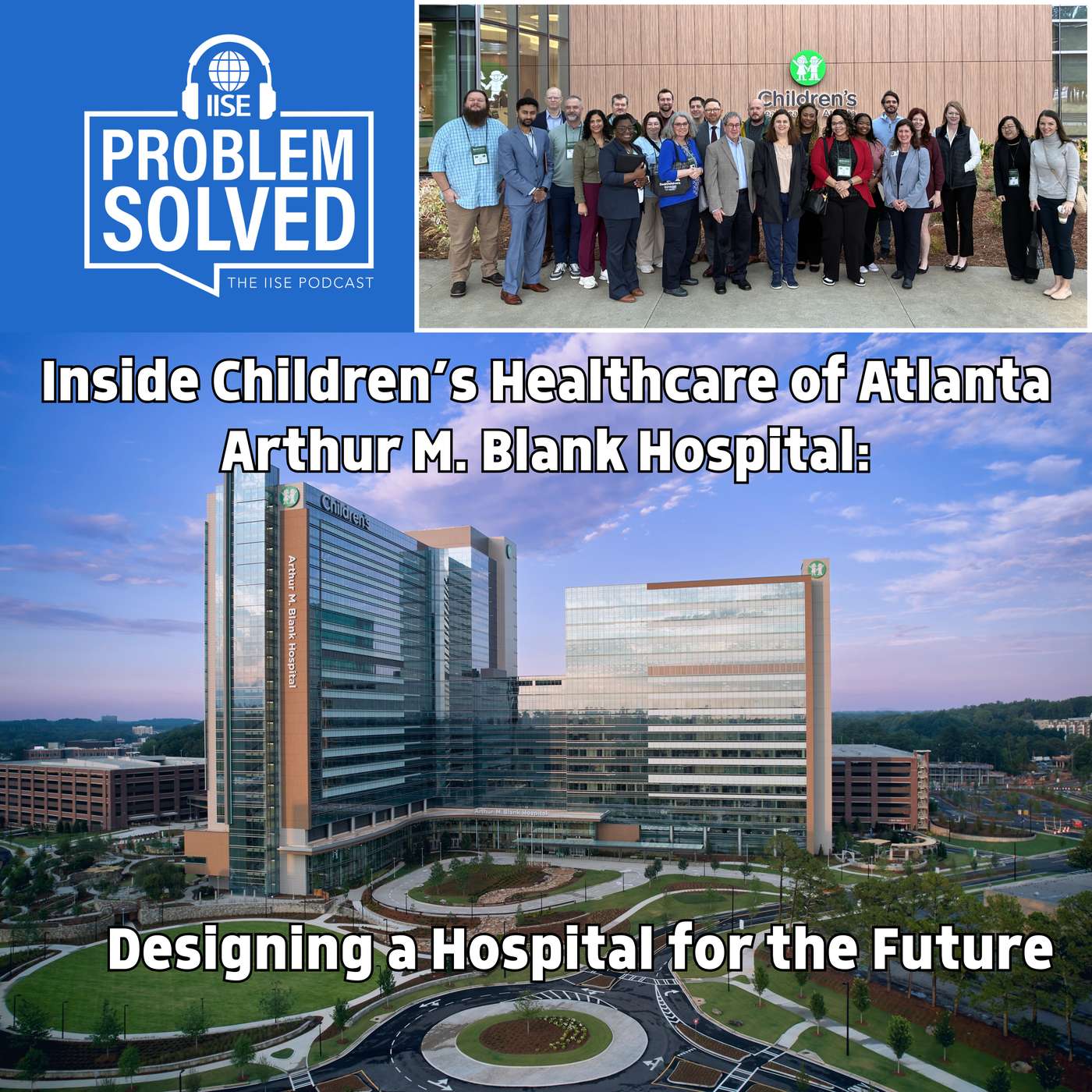
Coming soon: How do you design a hospital that feels warm, human, and even joyful while balancing the complex systems that keep it running? In this episode of Problem Solved, we take you inside one of the most advanced pediatric hospitals in the country, Children's Healthcare of Atlanta Arthur M. Blank Hospital. From simulation labs that test systems, to technology that connects families in critical moments, to robots that deliver supplies, this facility is redefining what healthcare can look like. Walk through the hospital with our group and sit in on conversations with leaders Michelle Tillis (CNIO & VP, IS&T) and Jason Skelley (Director Information Systems Business Partnership) as we explore how teams are balancing standardization and customization, and how new opportunities for improvement are emerging. Thank you to the entire team at Children's and to our guides Kristen Bowman, Felicia Reynders, and Megan Difiore. Learn more about the HSPI Conference sponsored by Society for Health Systems Learn more about The Institute of Industrial and Systems Engineers (IISE) Problem Solved on LinkedIn Problem Solved on YouTube Problem Solved on Instagram Problem Solved on TikTok Problem Solved Executive Producer: Elizabeth Grimes Interested in contributing to the podcast or sponsoring an episode? Email [email protected]
Elizabeth: Here's the problem. How do you design a hospital with innovations that will grow with the future, but with all the benefits and best medical technology available? And how do you do so without breaking the systems that keep it all running? Jason: Standardize where we can and customize where we must. Elizabeth: We got the chance to step inside Arthur M. Blank Hospital Children's Healthcare of Atlanta. Guide: So they can just come down and be a kid and not have to worry about being in the hospital. Megan: Our bread and butter really is looking at process improvement. Jason: We have 90 robots total, three different types. Michelle: A patient, they were going to take them off life support and the parent was unable to be there. So we were able to use the technology to connect the parent child to say goodbye to his child before they were removed from life support. To me that's my why and what really made an impact. Elizabeth: Join us on this episode of Problem Solved.