
Political Junkie Podcast · Claire Potter and Neil J. Young
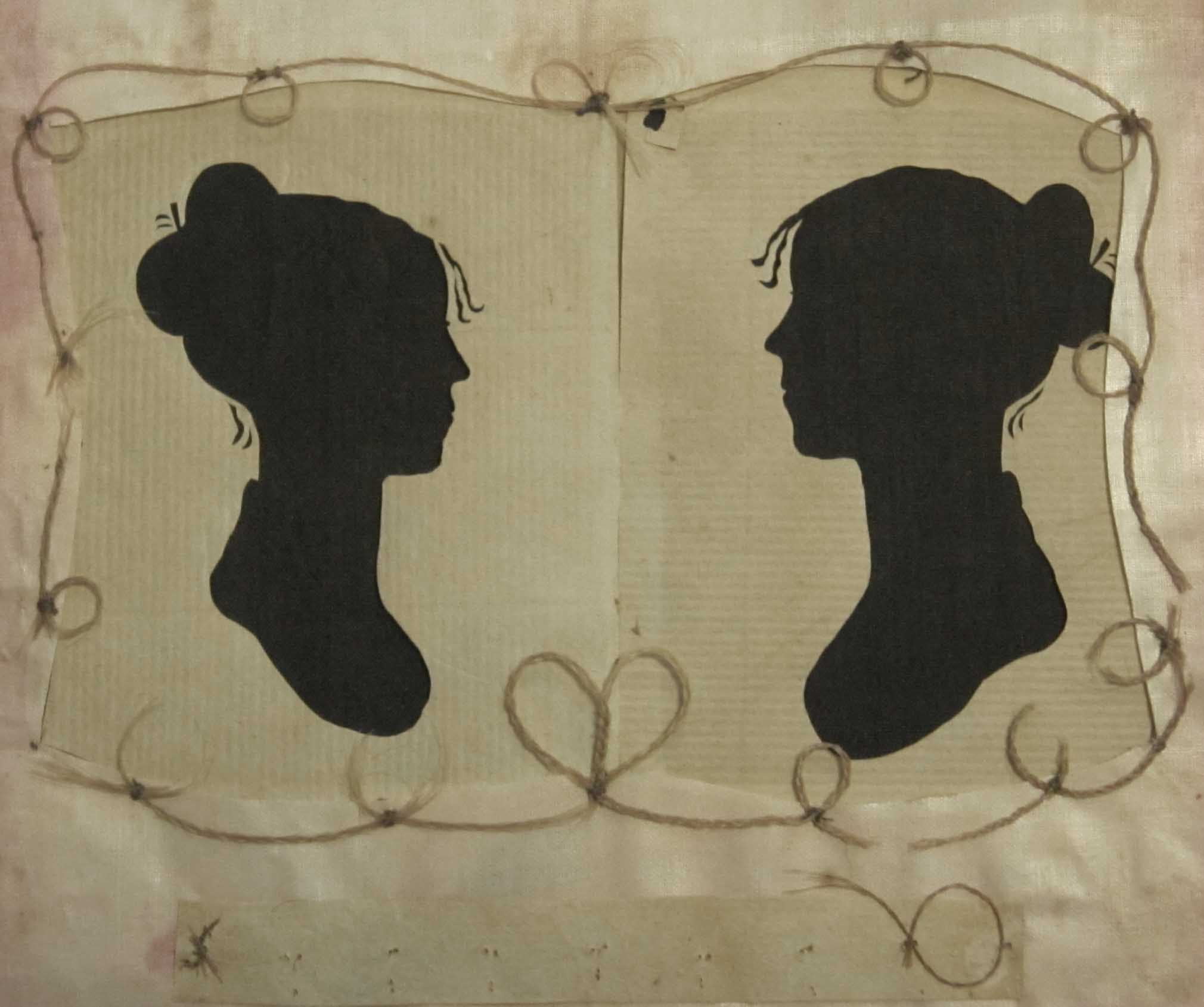
Our opening segment is from “Drawing on the Archive: Tillie Walden’s Charity & Sylvia,” a short video featuring cartoonist Tillie Walden explaining the experience of creating a graphic novel from the Sylvia Drake and Charity Bryant archive at the Henry Sheldon Museum of Vermont History in Middlebury, VT. This week’s theme song is “Steal My Heart Away, written by Van Morrison, sung by Morrison and Willie Nelson, and licensed from LickD. These silhouettes are the only existing images of Charity Bryant and Sylvia Drake; the border is created from the two women’s hair, braided into one thread. Image courtesy of the Henry Sheldon Museum/Wikimedia Commons At the beginning of July, I stumbled across an open letter that Rachel Hope Cleves, a professor of history at the University of Victoria in British Columbia, Canada, had posted to Facebook. Cleves is the author of four books, three of which fall in what some call the history of sexuality, but many of us call queer history because such work is not strictly about sex, or how people understood sex itself, but about how intimate relations are refracted in, and shape, the larger realms of culture and politics. In this letter, Cleves recounted what she believes are the troubling similarities between her path-breaking book, Charity and Sylvia: A Same-Sex Marriage in Early America (Oxford University Press, 2014) and a new graphic history by cartoonist Tillie Walden. It’s also called Charity and Sylvia (Drawn and Quarterly, 2026) but without the subtitle. Both books tell the story of Charity Bryant and Sylvia Drake, a Vermont couple who lived openly, and were acknowledged in their community, as married at a time when that was not legally possible. Cleves, along with other scholars like Jen Manion and Elizabeth Reis, refute the notion that categories like gay, lesbian and trans are modern inventions; or that early Anglo-American society was uniformly repressive, either of non-heteronormative identities or queer people fashioning new identities that allowed them to be respectable. Histories like these have long been a source of pride and comfort to LGBTQ+ people: after all, being grounded in a proud past was a companion task to the forms of civil rights activism that liberated queers, women and people of color. It’s no wonder that, at a time when these hard-won rights are under threat, Walden would create an accessible version of Charity and Sylvia’s story. So, she dug back into archives and artifacts that Cleves had studied a decade earlier, and wrote her own version. But Cleves believes that the similarities between the two books—the use of silhouettes in Walden’s cover, the title itself, the structure of the book—too closely resemble her own work. While I cannot link to Cleves’s social media post, here is the text of the letter, in which she contests Walden’s work as an act of uncovering. She protests insufficient acknowledgment of her own extensive research, work that went well beyond the original archive...
0:00SPEAKER_03And so I don't know if the silhouette artist realized he was in the home of lesbians
0:03SPEAKER_03because these lesbians,
0:05SPEAKER_03Sylvia and Charity,
0:06SPEAKER_03then put their portraits next to one another, looking at one another.
0:11SPEAKER_03And then we don't know who did it.
0:12SPEAKER_03We suspect Charity, because she was a more advanced seamstress, cut some of their hair.
0:19SPEAKER_03And you can see it's two different colors of hair.
0:21SPEAKER_03So it's the both of them and braided it around the silhouette.
0:26SPEAKER_03In the shape of a heart.
0:28SPEAKER_03And then they hung this in their house.
0:31SPEAKER_03Just to say to their community, you know, by the way, we're two women and we're in love.
0:39We believe.
0:45SPEAKER_03I can hear the sound of violins.
0:51SPEAKER_03I can hear the piper play.
0:57SPEAKER_03Every time the song begins