
Philosopheasy Podcast · Philosopheasy
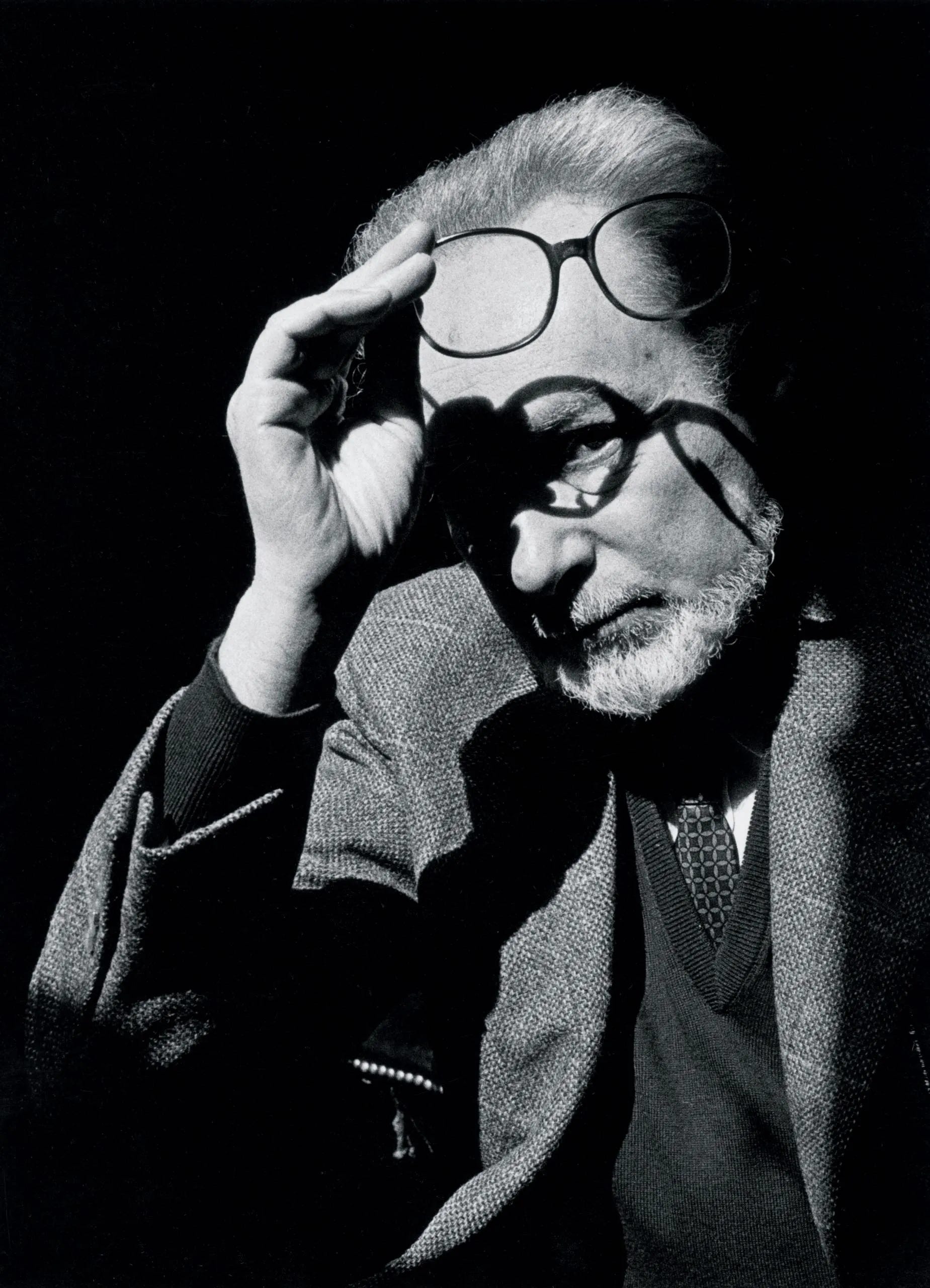
You tell someone what happened. You watch their face perform something polite. Then you watch them change the subject, gently, the way you’d steer a car around something dead in the road. This has a name in one very specific history, and no name at all in most others. A woman describes years of pain doctors couldn’t find on a scan and gets handed a pamphlet about stress. A man comes back from somewhere and starts a sentence at dinner that trails off because he’s already read the room. Someone reports what happened at work and watches HR’s face do the thing where concern and calculation happen simultaneously. The listener does not doubt your story because it sounds false. They doubt it because believing it would cost them the shape of their world. Primo Levi understood this mechanism from the inside, before he had language for it, in a place designed to strip language away entirely. In Auschwitz, he and other prisoners shared a recurring dream. Not of escape. Not of food, though there were plenty of those too. A dream of arriving home, sitting down with a sister or a friend, and beginning to tell them what happened. And watching them get up. Leave the room. Talk about something else. Not out of cruelty. Out of something closer to reflex, a door closing on its own before anyone decided to close it. The dream terrified the prisoners more than the daily brutality did, because it suggested something worse than dying there: surviving, and still not being received. That fear is not a historical artifact. It’s structural. It happens every day, in smaller rooms, to people who have seen nothing close to a camp and still recognise the exact shape of that dream. There’s a mechanism underneath disbelief that has nothing to do with the credibility of the person speaking, and everything to do with what the listener would have to give up in order to hear them. A Chemist Who Kept Precise Notes Levi didn’t set out to become a witness. He trained as a chemist in Turin, finished his degree in 1941 under laws that already classified him as racially unfit to hold one, and joined a small, badly armed partisan group in the mountains in 1943. He was captured within months. By January 1944 he was in Auschwitz-Monowitz, the labour camp attached to the IG Farben synthetic rubber plant, and it was his training as a chemist, oddly, that kept him alive long enough to need indoor work in the last brutal winter of the war. He was liberated in January 1945 by Soviet troops, and it took him almost a year to get home, a slow, chaotic journey across a collapsed continent that he later wrote about separately, in a book called The Truce. But the first book, the one he wrote almost immediately, obsessively, in the months right after returning, became If This Is a Man. He described the writing itself as something closer to compulsion than craft. Not therapy. Not even communication, exactly, in the early drafts. A need on the level of hunger, to get the facts down with total precision...
0:00SPEAKER_00There's a specific moment that happens after you tell someone something true
0:04SPEAKER_00and hard,
0:05SPEAKER_00and they nod and they say the right words,
0:07SPEAKER_00and you can feel immediately, physically, that none of it landed.
0:13SPEAKER_00Not because they're cruel,
0:15SPEAKER_00because what you handed them was too heavy for the container they had ready.
0:19SPEAKER_00So they set it down gently,
0:21SPEAKER_00somewhere polite,
0:22SPEAKER_00and the conversation moves on,
0:24SPEAKER_00and you're left holding the part that didn't fit, that gap.
0:28SPEAKER_00The space between what happened to you and what another person is able to receive.
0:33SPEAKER_00Primo Levi spent the rest of his life inside that gap,
0:37SPEAKER_00and he wrote about it more precisely than almost anyone
0:40SPEAKER_00who has tried Levi survived Auschwitz.
0:44SPEAKER_00He came home to Turin in 1945,