
Open Wounds · Candice K
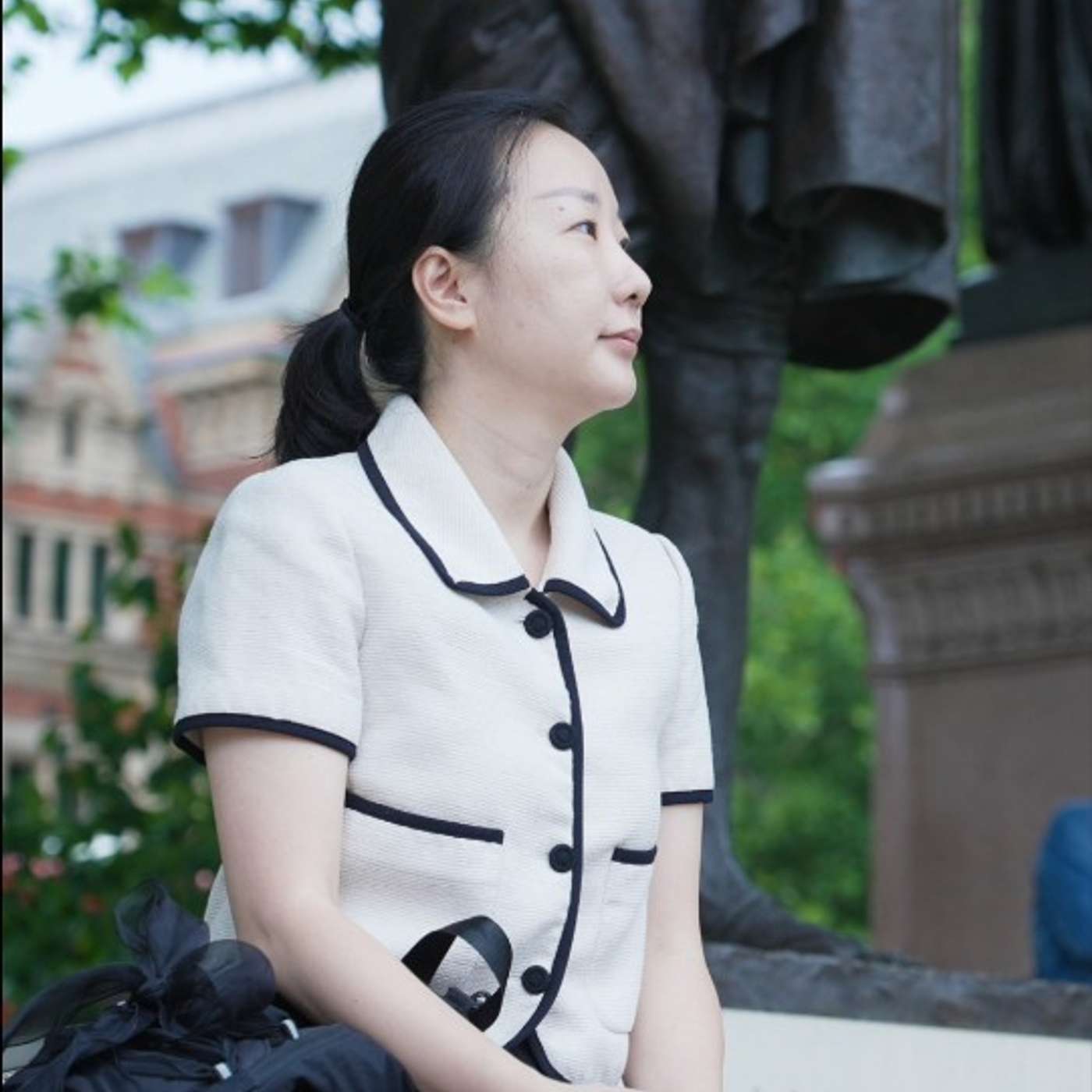
In this episode of the Open Wounds podcast, host Candice interviews Korean journalist Ji Hye Jeong about the 4B movement in South Korea, which challenges traditional gender roles and societal expectations for women. Ji Hye shares her personal journey into feminism, the impact of the internet on women's movements, and the cultural pressures women face in South Korea. The conversation explores the significance of economic independence, the backlash against women's autonomy, and the future of reproductive technology. Ji Hye also discusses her documentary project that aims to document the experiences of women involved in the movement and the societal implications of their choices. Donate and Watch Documentary Film Here: https://no-birthgeneration.imweb.me/article Learn About Atlantic Fellows for Social and Economic Equality here: https://www.atlanticfellows.org/bio/jihye-jeong Follow the Production Company Here: https://www.instagram.com/poljjak_film/# Follow Ji Hye's work on IG here: https://www.instagram.com/jeongzeze/?igsh=ZG5oMW90Z294bWty#
Candice (00:00) Hello and welcome to Open Wounds podcast. I'm your host, Candice. This podcast is about healing the wounds that you can't see and leading a revolution against oppressive systems that keep them open. We're going to talk about really practical tools for managing complex PTSD, as well as dive into relevant current day topics that make healing a daily practice. You can follow us at ig at open wounds podcast or watch on YouTube at Open Wounds Podcast. Please rate, review, like, subscribe, all the things and enjoy this week's episode. Candice (00:38) Hello and welcome to this week's episode of Open Wounds podcast. This week I have with me a guest, her name's Ji-Hye. She is a Korean journalist. She has been studying the 4B movement and reporting on it for quite some time. And she also has some personal experience with this topic. I'm super excited about this topic. I've been trying to have this episode released for a while because I really am passionate about this. And I find it fascinating how huge this movement has become. so welcome to the podcast, JiHye Can you share with us a little bit about how you became invested in this concept? JiHye Jeong (01:23) Hello, thank you for having me. And okay, I'll start answering your question. So I first encountered feminism after I became a journalist. So maybe it can be quite late, but it was around 2018 and 2019. And after a few years later than that, in the early 2020s, That was the time I encountered, I learned the 4B movement. But thinking of it, even before then, I had always felt a strong resistance to the social pressure based on women. You know, the assumption that they should naturally live as wives and mothers and women, like naturally women love men and something like that. And I never once imagined myself wanting to have children. But at that time though, it was kind of hard to talk about this openly or to find women who felt the same. I think many women were probably isolated like me, believing they were strange or thinking that way. But from the 2016's feminist reboot in Korea, Candice (02:30) ⁓ and JiHye Jeong (02:50) and up until around 2019. That was the important time frame in this kind of movement. At that time, women began gathering online, debating feminist issues and developing kind of new language. And it was then that discussions emerged about rejecting identities defined only by relationship with men and rejecting traditional gender roles. Candice (02:56) Mmm. JiHye Jeong (03:19) So the 4B marriage, childbirth, romance, and sex with men. So that was the, yes, So that was the, yeah, four things that do not four things. And that was the birth of the 4B movement. And today, many women can imagine it as a new option. previously, the only life path for women was being a wife. Candice (03:24) So that's what the four B's stand for, marriage, childbirth, sex, and romance. Mmm. JiHye Jeong (03:49) and mother, 4B has introduced the revolutionary possibility of other choices from a women's rights perspective. So that's the important part. And it also created a space for women to meet others who share these thoughts, like affirm each other's existence. ⁓ I was not the only one and find support. So that women who don't Candice (04:11) Mmm. JiHye Jeong (04:16) perform conventional femininity are no longer isolated and instead gain courage. That's the most striking part about this movement. And as a journalist with over a decade of experience in a major South Korean daily, I have witnessed how women's perspectives on demographic issues are routinely marginalized or silenced. So in response, I think in response more Candice (04:21) Hmm. JiHye Jeong (04:46) Korean women than ever are forging ways of living beyond patriarchal confines. that's kind of, know, patriarchy refuses to imagine, let alone accept. And as South Korea now records the lowest birthrate in the world, that kind of indifference has given way to hostility against these women. Candice (05:11) Mmm. JiHye Jeong (05:13) and the backlash has become increasingly overt. And that makes Korean women more frustrated. The state government reacting like that, yeah. So that's kind of the basic story. Candice (05:24) Right, it's reinforcing. Yeah. So it sounds like the 4B movement was able to grow at a massive rate in part because the internet allowed people to connect in privacy. You weren't having to have this conversation in front of your parents or your neighbor or someone, right? But it also was stemming from feeling unheard and feeling like. tired of conforming. know, you know, these movements, feminist movements have happened in different phases around the world. But what was unique about the 4B movement was the total refusal to engage. Like, I would consider myself a feminist, but I am married and I have children. So that really hardcore line of we are refusing to get married, we are refusing to have children, which creates a very direct economic impact. and a cultural impact, which I can see why it would generate a lot of fear in people like, my gosh, there's no babies. What's going to happen? And I've heard it even from the US. Some people here have said, look at South Korea. my God. That's their whole country is going to collapse because they don't have any children. And so I have heard at least in the last two months. in the US different news stories talking about low birthrate, low birthrate, they seemed the economists and the sociologists seemed to be freaking out and getting really panicked and worried about this. So I love to look at you guys as a role model for how the women were able to take. control when it felt like they didn't have any control. It's like if you don't have political control, you don't have economic control, you don't have a voice in the media, what area can you control? And you guys found a way. Do you feel like the movement thought about this long term and said, is what we want to do? Was this a goal? JiHye Jeong (07:35) Well, I'm not really sure, but thinking of the extreme environment that Korean women are facing, in a way it was a way to survive and there's no really room to think about it in a long term, guess, at first. But now... Candice (07:59) Okay. JiHye Jeong (08:03) ⁓ younger women are seeing this as a political movement clearly. And I think they are also quite different from like senior generation of women. So... Candice (08:12) Yeah. Right. JiHye Jeong (08:25) Yeah. Candice (08:26) Yeah, mean, first, it seems like South Korean women have been able to hold jobs that they were able to have economic freedom. They can make their own money. They can control their own money. So because I know in the US, women didn't have a lot of economic rights, such as like their own bank account or owning property or having credit cards until the 1970s, which kind of coincided with the. Roe v. Wade abortion movement. So as we were getting rights to body autonomy, we were also getting rights to financial autonomy. So I think that's a key is these women are able to make their own money. So number one, you don't need a man to pay your bills, right? And to buy a house or to pay your rent for you. ⁓ But then the second step of saying, I don't feel safe in my society, therefore I don't trust men. So can you talk a little bit about why it was that tact of we as a society feel unsafe? We feel like we're being, I heard that was like people were being video recorded without their consent and it was being put online. I've heard that there was cameras being hidden in bathrooms. So can you talk a little bit about like the culture that created women's JiHye Jeong (09:32) you Candice (09:43) safety being violated to where they were angry enough to take these action steps. JiHye Jeong (09:51) So that's a really long story, but you know, in a society where misogyny is so pervasive, it is kind of hard to make the state acknowledge the existence of misogyny. So that is really hard part that so women try to make them act and react to this kind of severe Candice (10:08) Mm. JiHye Jeong (10:22) environment about men's violence against women. But you know, in 2016, when Gangnam ⁓ station murder of young women happened, the state police and even media never acknowledged that this is misogyny crime. So that's where women got really furious about. this society got really sick and tired of it and it is not right. That's how they got really realized we need to do something more. We can't really trust this system, this society. They are all kind of together, you know. Candice (11:06) Okay, to keep us safe. So safety in numbers for the women sticking together with other women. Yeah. So I know culturally, it's not ironic, but most of us as Westerners view Asia as so progressive and the cutting edge of technology and you guys academically outpace us by millions. And so ⁓ I don't think most people think of Asia as being inherently misogynistic that JiHye Jeong (11:17) Yeah. Candice (11:42) You know, I don't think that's what comes to mind when people think of South Korea specifically. So I was shocked to hear that they were facing the same things a lot of women face here in America, which is high numbers of domestic violence or high numbers of rape that aren't being prosecuted or. JiHye Jeong (11:50) we're fixing. Candice (11:59) human trafficking or there's things happening right where you feel like you should be able to go to your government or the state and help them ask them for help and protection and then you guys are not feeling that so when the decision starts coming up like, okay, we're just not gonna get married, I would assume there's a lot of pushback from like people's parents or their grandparents or their neighbors or their aunts or uncles. So how have women been able to navigate? are people just not talking to their parents? Like how do you navigate it when even your own parents are being like, no, you should get married. Why don't I have grandkids? You're not, you know, all these pressures. JiHye Jeong (12:43) try to ⁓ keep distance from them, try not to directly talk about the topic, I guess. But some younger feminists don't want to... so they all have their own strategy to tackle this problem. And I think in online, through online community and SNS, they could find, at least they can find some space they feel safe, even though it's not really big or... Candice (13:25) Hmm JiHye Jeong (13:32) recognized or respected from the society. They try to make their own community and try to build kind of network each other so that they wouldn't feel too isolated or lonely. Candice (13:47) Mmm. That makes sense. JiHye Jeong (13:49) And then they try to make their own way to get really independent, like financially and also mentally. So those kind of things is the strategy. Candice (14:05) Yeah, that makes ⁓ a good point because, you know, a lot of people use relationships, marriage, children for companionship so that they have someone to share their experiences with. So I could see that there is a great sacrifice in what these women are choosing to not get married. not have children. So finding that community and that support I can see especially if you don't have a husband, you don't have children and your parents are it's a strained relationship with relatives because of your choosing to you know. keep yourself safe, that you would need that support from those other women to be able to feel like you have someone to talk to or you can spend holidays with or you just can go do fun things with them instead of relying so much on men or other people for that. ⁓ And that kind of brings me into one of the other questions was like, I know in many societies the elderly expect their children's spouse or their children to take care of them as they age. And also you need nurses and doctors and people who come to the house to help take care of elderly people. when they're getting up in age and they can't take care of themselves anymore. So have you all seen from the elderly generation, like kind of a lashing back at like, what are we gonna do? Who's gonna take care of us when we get old? There's not gonna be enough nurses. Have you seen that retaliation? JiHye Jeong (15:51) Yeah, that's the core argument ⁓ from the society that the society wouldn't be able to sustain without babies coming out. I think that's also male-dominated perspective, and it is far removed from women's interest. And I don't see why women should bear responsibility for this imbalance. So it's just simply another version of patriarchal demand. And in that religion. Candice (16:28) Yes. Yeah. JiHye Jeong (16:38) takes a huge part, guess, like in US and South Korea, know, the even evangelical traditions. Yeah. Yeah. Candice (16:41) Hmm. Yes, I knew there was a lot of Christians in South Korea, but I didn't know if they were as strong politically as they have here. JiHye Jeong (16:55) They are so conservative. Yeah, they are so conservative and ⁓ they are the main part who support this kind of idea. they reinforce reproduction as a way to grow congregations. And that makes it inherently patriarchal. So they are the main people who refuse to educate Candice (17:12) ⁓ Yes. JiHye Jeong (17:25) kids ⁓ about feminism or any kind of, you know, those kind of education. And because they think feminism is only about lesbian, like because women hate men means you are you lesbian is something like that. Something stupid argument like that. So I yeah. Candice (17:40) ⁓ yes. Okay. Yeah. Yes, that makes sense. I mean, I didn't realize the parallels were so similar between what you guys were experiencing there. I think it's ironic. because that was the generation I grew up in, the evangelicals and the Christians, Baptists, Pentecostals, you know, all those Mormons, Jehovah Witnesses, Catholics. It is telling the families have lots and lots of babies so the church will grow. But what I think is hilarious is as people my age have grown up, we're like, fuck the church. JiHye Jeong (18:06) you Candice (18:25) fuck this system, we are not going to do this anymore. And it doesn't matter if you had six of us out of your six children, four of them won't talk to you and don't go to church anymore and don't believe in what you taught them as children. Right. And we're seeing this massive uprising in the U.S. of people leaving organized religions, lots of people leaving. Mormonism and Christianity and there's a whole deconstruction, exvangelical movement we could get into, but I really want to focus on, I think that it's funny that this is their own thing coming back to haunt them. Like you didn't treat us right, you've put us down and you've pigeonholed us that we only have one purpose and now it's coming back to bite you because we're not here to serve you in your old age, you know? JiHye Jeong (19:00) Exactly. Yeah. Candice (19:16) So with the new, I did want to talk about this because there was some thing, meme thing that was going around. It's not true, but there was ⁓ rumors that a company in China had created a robot that could bring a fetus from insemination all the way to birth, which is not accurate, but they are talking about the technology to where in the future, JiHye Jeong (19:32) you Candice (19:42) babies could be grown in like a laboratory or something, right? A robot nanny. So when we talk about the fact that this movement has made such huge impact on your population to where elementary schools are having to be shut down and there's no kindergartners, there's no first graders to enter the classrooms, which I'm assuming impacts teachers and principals and all these other, there's... other jobs that are now in affected daycare centers. What will, you know, what do you see happening if they develop that technology to bring babies in without women? JiHye Jeong (20:29) Well, for a long time, actually, feminists expected artificial wombs would revolutionize women's status. But before that technology became real, I think the 4B movement offered an even more revolutionary concept. if artificial wombs become possible, some women who want children may choose that. instead of 4B. But this doesn't erase the social pressure of motherhood and or the penalties imposed on women after childbirth. So women who have experienced the liberation of 4B are unlikely to turn back, I guess, because artificial wombs only address the link between pregnancy and the body, while 4B challenges the risks of intimate relationship with Candice (20:57) ⁓ Okay. Yes. JiHye Jeong (21:26) men in general and the social structures behind them. So in that sense, 4B is deeper. So the impact of artificial wombs on the 4B movement would probably be limited. Candice (21:39) That's smart. And I noticed a lot of responses in the comments of people saying, so you can grow a baby, who's going to change its diaper? Who's going to give it its bottle? Who's going to put it to bed and potty train it? That's all labor that's put on women traditionally. And it's unpaid and it's unacknowledged labor. And so my friend and I were just talking about that the other day because she was considering going back to work. And I said, you know. You go back to work and you're working full time, your husband's working full time. If your kid gets sick, who has to sacrifice the career? Who's gonna call out and come home with the baby? It's gonna be the woman. Nine times out of 10, the mother is expected to sacrifice her career and her economic momentum because of the children, right? So it's not just... It's not just something that can so easily be replaced by a robot or an artificial womb, like you're saying, because we have to think about 18 years this child has to be reared into adulthood. We've seen in the US like a lot of mirroring. It's not necessarily people identifying with the 4B movement, but we are seeing women marrying less. We're seeing women not having children. We're seeing women happily single for well into their older years. And like you said, this isn't just about being a lesbian. This is just about autonomy and being able to control what happens to them and not being beholden to a man. and they're having better health outcomes, they're safer, their mental wellbeing is better. So there's so many benefits to this 4B movement that we're seeing when we're choosing not to go down this path of traditional gender norms and traditional patriarchal roles. And so I wanted to talk about a little bit about... what we saw happening politically now with Roe v. overturned and women here becoming afraid. It sounds like you guys had, you didn't have such like a political catalyst where there was a political person that changed offices and took away your rights, but it was more like societal, like people not feeling safe in the presence of men So can you talk a little bit about how ⁓ the women are are regaining that safety through this movement. JiHye Jeong (24:15) Mm. At least they can feel safe from, you know, I'm not gonna be attacked by men in relationship. And also I don't need to worry about, you know, spy cam and things like that, the violence, the men's violence from them. And also I have more more possibilities and options in my life because I'm free from the obligations as a mother and wife. So I met, when I met women who practice 4B, all of them say they are so happy and finally they found ⁓ inner peace and then they try to look more assertively about their career path and maybe I can just study abroad and something like that. But if you are tied to ⁓ family and your role as a wife and mother, that's kind of hard to proceed. Candice (25:46) Right, yeah, very true. So with this population collapse that you guys are experiencing, so you said the movement started around 2016, but it didn't really pick up speed until the early 2000s. So that means we're 25 years into this movement, yeah. Is that about how long it's been happening then? JiHye Jeong (26:13) because there was no public record or document. so it is kind of hard to actually count how many women are participating or how long it's really been around. And what's more interesting is that it is really rarely spoken in Korea rather than... being discussed outside of Korea. So, you are living in South Korea, it is kind of harder to... recognize this kind of movement is existed, existing. So that kind of ironic is here. But yeah, Candice (27:07) Do you go ahead so you're saying Do you feel like it's people's fear of having like if you and I were to go to a coffee shop in South Korea and have this conversation, is it fear that the people in the coffee shop would react angry to you and then you would become unsafe? Or is it more ⁓ subtle than that, that people are just going to like, you know, talk about you behind your back and then it's a conspiracy that everybody at the office is saying things about you, right? JiHye Jeong (27:43) It's... I think it's subtle. It's subtle. They wouldn't really like stand up to you, but... ⁓ Candice (27:47) Okay. JiHye Jeong (27:54) there is clear perception that... mainstream society would look ⁓ strange and really like an alien. And also women who practice this kind of movement is seen inferior, you you are not able to get a decent man. It's your... So a lot of, actually a lot of alpha girls or women who get a decent jobs themselves fall... Candice (28:24) Okay. it's like a judgment on you, of your character. ⁓ JiHye Jeong (28:51) in this trap, I guess, because they don't want to look fail. ⁓ I can, I made this huge achievement in my career and I can also achieve men as well. So they try to negotiate a lot, I guess. So that kind of thing also is kind of backlash. Candice (28:54) Mm. So it sounds like in the community, it's not like you, it's kind of taboo still to talk about this with your coworkers. Cause I know when I did work traditionally in an office, the coworkers were mostly female, but they would say, ⁓ are you married? Do you have any children? Well, why aren't you married? Why don't you have children? So. ⁓ At this point, people aren't coming out and saying, well, I'm a feminist and I don't want a man. They're more just saying like, ⁓ I just haven't found anybody. Is that what's happening? It's kind of happening underneath the surface and people aren't being like in your face about it then. JiHye Jeong (29:58) Exactly. Yeah. Candice (29:59) Wow, I think that's even more impressive that you guys have been able to achieve what you have achieved without having these in your face public conversations like we're seeing right now with these protests that are happening around the world. People are burning down buildings and they're in the streets and like what's happening in Nepal and other places as we usually see like a very vocal, loud, you know, pushback against something. But you guys have been able to do this in this really under the surface, quiet, like secret way almost. And yet you've still had so many people participating, which I think is glaring to the outside person how big of a problem it is. That if this many women are willing to change their life. JiHye Jeong (30:42) Thank you. Candice (30:53) and to sacrifice what they, you cause I think some people do want to have babies, but they are like, is it worth it? Cause I have to be the one to change the diapers and I have to be the one to nurse them. And so they may like children or enjoy being around them, but they're like, it's not worth it. So the fact that you guys have been able to create this movement without it being super public and super in your face and not like, you know, advertised, it's very, very impressive to me. think ⁓ I'm very, I'm very surprised. Candice (31:29) Okay, so the fact that you all were able to accomplish all this without, you know, it being super publicized and super, you know, communally talked about and protest or things like that is very impressive. And I know you're doing a documentary now about this topic. Do you want to talk a little bit about your documentary and your work that you're doing on this? JiHye Jeong (31:55) Yeah, so I'm currently making a documentary about Korean women's 4b the movement and the motivation at first was. The fact that I can't really make this kind of film in my company, which is Korean mainstream media, newspaper. So I tried to ways to make this happen with outside Korea's ⁓ foundation or something like that. And I found... an organization that could fund this project. So that's how I started this filming project. it's so it's first attempt by Korean journalists to spotlight such radical voices from women in a supportive way, know, not in a criticizing way. And also it's the first in-depth media portrayal. of the no-bust generation. We put this new word, no-bust generation. And so it is a commitment to public record and a personal, also a personal engagement with feminist praxis. So this film aims to capture the shifting landscape of next generation feminism while offering an in-depth explanation of the links between patriarchy, feminism backlash, and low fertility issue because the population, the demographic crisis is everyone's interest nowadays in other countries as well. So we thought that it can be a good way to be approachable about this documentary. I interviewed, basically I interviewed seven to eight women, Korean women who practice or support for the movement and try to document their motivations, struggles and strategies. By doing that, it challenges the structural gender inequalities underpinning South Korea's demographic crisis. And like you mentioned earlier, how subtle it is the state is doing this. to Korean women and you know by the point that we really see through the whole system. it is kind of irreversible to go back because, you know, now Korean women know how vicious that this regime, this state can be to make women reproduce. So that kind of deep-rooted ⁓ analyzed will be also in the film as well. And we're trying to, ⁓ this project is partly funded by the Atlantic Institute, the foundation, and it is a part of my fellowship program called Atlantic Fellows for Social. I'm trying to see the full name. Atlantic Fellows for Social and Economic Equity based at London School of Economics and Political Science in UK. And then we're trying to open crowdfunding in the next month, early November for the post-production. It will be about 90 minutes long proper film. So if you can... Candice (36:08) So we will definitely link where people can donate if they want to, to ⁓ the post-production costs and your fundraising for that. And also we'll link the Atlantic School, ⁓ however all that is, I'll get the information, the Atlantic School and I'll put it in the link so people can look it up. So when do you hope that the movie will be ready for audiences to watch? JiHye Jeong (36:35) The plan is releasing it within this year, probably in late November or December. Candice (36:44) soon. That's very soon. Yeah, I'm very excited. So will it be will it be like screened at film festivals? Or will it be on a streaming platform? Or how will people be able to watch it if they wanted to go see it? JiHye Jeong (37:01) Yeah, we were actually quite worried about the safety of the interviewees as well, including myself. Probably we wouldn't release it in public. We will try some film festivals or conferences. So the screening event will be held in a more closed way. Candice (37:33) in like an academic setting or something. Yeah. JiHye Jeong (37:35) But if you follow my Instagram and stuff, will be updated if there's any ⁓ kind of event will happen. Candice (37:46) Nice. Yeah. And we'll link your Instagram to in the show notes if people want to go and follow and learn more about this, because I do think now that I'm having this conversation with you, it makes sense to why it was so hard for me to find people online who were saying, because here in America, everybody's like, Look at me, I'm a leader. And so ⁓ because we are taking some of our liberties for granted, I feel like and that fact that We are able to say things and not feel like a backlash from our community. So I understand now why it's not as easy for you all to be very public and online and showing your face and talking about because you're putting your safety at risk if you're identifying, you know, so publicly with these things. So I am so grateful for your willingness to come on and talk with me because I know that ⁓ I don't want you to feel like this was putting you at risk. I understand I have seen the documentaries before where they like blur people's faces out or put them in shadow because they are concerned for the participant's safety. So I completely acknowledge that this is risky for them to come on and share their experience and that they are still pushed back. that we need to be conscientious of for the people sharing their stories. But I'm so grateful that you took the time to come talk with me and share about this movement, because I think this is just the beginning. I think you guys have really blazed a trail for things to be happening globally. And I think. we will be looking to you all as the foundation for what's going to happen globally. And you're right, it isn't just in South Korea, we are seeing population decline globally on a massive scale. And lots of people are trying to figure out, well, maybe if we give them free this or if we give them free childcare, when ⁓ they're not looking at the root of the problem, like you said, which is the misogyny and the patriarchy and the violence against women the inordinate amount of labor, free labor that women provide to create this economy. So I so appreciate you. I'm so grateful that you took the time that we were able to get this meeting. And ⁓ thank you so much for coming on. Is there anything else you want to share before we wrap up? JiHye Jeong (40:22) Yeah, actually, I'm also grateful as well for this kind of opportunity because doing interview in English is actually feels safer than interviewing with Korean media about this kind of topic. And also, you know, a lot of Korean women feel safer and grateful about women from other countries also support 4B the movement and try ⁓ to find more information and more, you know, they try to want to, they try, they have a lot of interest in this movement. That means a lot actually. That kind of bond is something that we can't really find inside Korea. So that kind of thing is really important. And thanks to this digital media era. We can really do this. That's so grateful. Candice (41:25) Yeah, and I feel funny being like, I'm so excited about this movement, even though I'm married and I have children, because I'm like, man, if I would have known these things, would my, when I was in my young teen years or 20s, would my life be different? I'm not saying I don't love my children. But I think so many people just only see one path in front of them. And now because of this movement and because of the... the political state we're seeing globally where women are not respected and women are not valued as equals and not given the same treatment as men and we are feeling unsafe. ⁓ I think that it's wonderful that girls know that this is an option. You do not just have to do what your mom did or your grandma did. You can forge a new path and that you can have a supportive community of other women to be by your side so you don't feel alone. when you're taking this new role on and creating your own life the way you want to. I think that's phenomenal. So thank you so much for coming on and thank you everyone for listening to this week's episode and we will see you again soon. JiHye Jeong (42:42) ⁓ Thank