
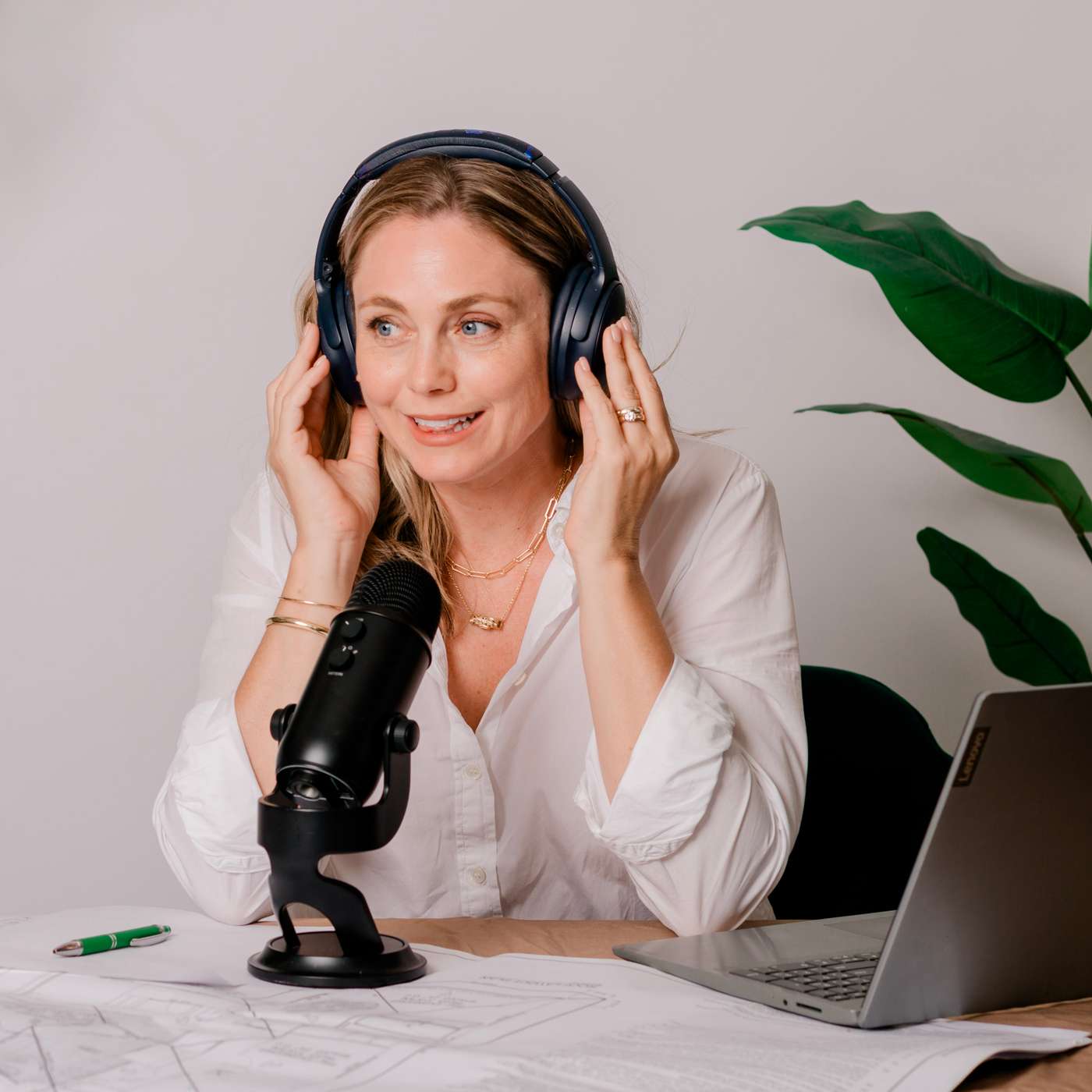
Open Wounds · Candice K
In this episode, Candice introduces Season Three of her podcast, reflecting on the importance of authenticity and vulnerability in her discussions. She expresses her desire to tackle various political and social issues, emphasizing the need for honest conversations that resonate with listeners. Candice invites experts and advocates to join her in exploring topics such as trauma and money, trans rights, the land back movement, and the anti-war movement. She encourages community engagement and action, urging listeners to hold their government accountable and make a difference in their communities. Get in touch: [email protected] Chapters 00:00 Introduction to Season Three 02:40 Authenticity and Vulnerability in Podcasting 05:53 Exploring Political and Social Issues 08:30 Engaging with Experts and Advocates 11:42 Call to Action and Community Engagement
Candice (00:01) Hello and welcome to this week's episode of open wounds podcast. I'm going to kick this one off as a solo episode. It probably won't be super long. Just kind of reframing and introducing what I'm shooting for in season three. I know we technically have already entered season three because I have released a couple episodes now this fall with guests that I actually had interviewed back last last at the end of the summer, but you know how summer is. So season three, I've really been reflecting a lot about the podcast and authenticity and what it means to me to use my voice for a force of change. I've been teetering ever since I started this podcast of like, do I continue? Am I actually making an impact? Does what I have to say resonate with people or am I Am I making a difference basically? Should I continue to invest my time and energy in this podcast? And am I helping people? And what I've spoken to my friends and I've listened to mentors and other business entrepreneurs and people like that. And they're all saying, when you try to reach the most wide audience. So for example, when you try to be completely neutral, and unoffensive and reach the most people possible, you generally kind of fall flat and you're not really resonating with anybody because you're not really saying anything about who you are. It's kind of like that, you know, when people, can tell they're branding themselves to be like inoffensive to anyone, right? And so what a lot of people have found is that when you're doing that, you're not really showing who you are and people aren't really. truly connecting to you and your message and they're not really identifying with you and connecting with you on a level that makes them bought into your concepts, right? So if I'm thinking about how I feel inside and what things are important to me and I'm passionate about and I feel super strongly about and they get me kind of fired up and angry or, you know, intense, ⁓ Yes, we have talked about some of those things on the podcast, but I've tempered myself to a strong degree. And I've been doing that for decades now just because that's how you're raised in evangelicalism and Christianity and in America as a woman is to just keep things to yourself and nobody wants a loud obnoxious woman around. Right. So this this season of the podcast, I'm going to be pushing the envelope. with that concept. And I probably will lose some listeners because what I'm going to start talking about is probably going to be, you know, controversial or political. A lot of people are like, don't talk about religion. Don't talk about politics. But we're living in a society in the fall of capitalism in America. Everything is political. You literally cannot exist as a human without your behaviors. being political, our existence as humans impacts the environment, it impacts our fellow neighbors and our community members, it impacts how the government functions. There's so many things we do just existing that we cannot avoid not being political. ⁓ So I'm just gonna kind of go for it. This season, I wanna dig into some topics that I'm really motivated and passionate about. And I'm hoping that because I'm being more vulnerable and I'm being more honest and I'm being more, you know, taking more risks, that it's actually gonna land with people who feel the same way and feel like they're not hearing their voice being represented in the media or they're not hearing their voice represented by the people around them or whatever. ⁓ So with that being said, you know, this season of the podcast, season three, I wanna talk about topics and I really would like if you know of somebody who's an expert on this topic or you know of somebody who's passionate and well educated in this topic and they're an advocate or they work somewhere where their job is connected to this, please send them my way. I have been seeking and reaching out to certain people and I've had some good luck. I'm gonna have some really awesome guests coming up in the next few weeks. that are talking about things that I'm really interested, curious, passionate about. But there's still more people I've reached out to and I haven't had luck with and that I'd like to interview on these topics. So trauma and money. I think money is something that's still, you know, we see a lot of pushback, like we hate the billionaires, eat the rich, whatever. But we also aren't talking about how when we're raised in toxic, abusive, environments where our parents were maybe controlling our money or maybe we were in poverty and we learned to hate people who had money. It actually doesn't help us to be broke if we look at it from that way. So I want to talk about how trauma interplays with money and finances and really dig into how we can kind of free ourselves and have a better relationship with money. I want to talk about what's happening in Palestine and the genocide we're seeing unfold in front of our eyes. in real time because yes, these wars have existed around the world for as long as humans have existed, but they have not been broadcasted in our face via telephones and the social media like we're seeing right now. And the fact that the U.S. government is extremely complicit in this, I want to talk about that and what we can do as individuals to hold our own, especially those who are U.S. citizens, to hold our government accountable. for the behaviors that we keep seeing play out over and over again globally. I wanna talk about the anti-war movement and the veterans who have left the military and are starting to hold the government accountable. There's a group called Vets About Face. I'd really like to have somebody on from Vets About Face to talk about why the military not only is damaging to the global environment and other countries, but we're damaging our own citizens and the people who serve in the military. and how we're causing complex PTSD in them and we're causing trauma and they have a hard time reintegrating when they're done with their combat. And so I really would like to have somebody on to talk about that. Homeschool reform, if anybody knows me, they know I believe strongly in homeschool reform. I believe that homeschooling is currently just a shield for abusive controlling parents to indoctrinate their children. And I wanna talk about what we can do. to see homeschool reform play out in our states, in the United States, and if it's global too, because I do know homeschool exists in other countries. I want to talk about socialism and communism and what it means, why we don't actually see democracy acted out in our country. We aren't a true democracy. And what does that mean for us as citizens? And how can we take action and how can we implement things that we agree with and hold our representatives accountable? to actually represent us as the constituents. I wanna talk about trans rights and what we're seeing this pushback right now with the current administration and not just the current administration, the states and the evangelical far right movement of like putting a lot of the blame on trans people when we don't see them, you know. as actually statistically a part of the problem. When we talk about pedophilia, when we talk about child sexual abuse, human trafficking, it's not trans people committing these horrendous acts. So I wanna talk about that and why it is that they're being scapegoated and how we can help those in environments that are trans and how we can help them feel safe. I wanna talk about... Indigenous rights and the land back movement actually purchased a shirt from called it's called native empowerment There's a couple companies that make gear and stuff, but ⁓ I really want to talk about what it means to give Indigenous people their land back. We committed genocide and we stole all their land and I say we because my family is German and came over in the 1700s and they're British and My family owned slaves back in Kentucky long time ago, generations ago. So I want to talk about what that actually means when we talk about the land back movement. How could that actually play out in society? And how can we give native people the rights to their water and their sovereignty? Because we see this push-pull of our government overriding their rights to their own land and to protect the resources that are on their land. I want to talk about how my child was seeing a therapist and he ended up getting arrested for being a pedophile. And I'm pretty sure he's in prison now. But I want to talk about how these things, like we see these people who are supposed to be safe and supposed to be trusted and they're using and abusing their power to control and manipulate vulnerable children. So those are the things I'm going to get into this season on the podcast. So hopefully. You'll stay tuned and you'll stay listening. I also want to say the statistics of tracking this podcast are very difficult. Even when I'm in my back and looking at the analytics of how many people downloaded, how many people subscribe, it'll tell me that I have two subscribers, but then I'll know personally that at least four to six people are subscribed. So I do want to make sure that like People are listening, people are subscribing, people are liking. If you have enjoyed this podcast, if you could please leave a review. I know that also helps if you're listening on Spotify or Apple or iHeartRadio or wherever you're listening to this. If you can leave a review or YouTube because it's now on YouTube, that would be really helpful. ⁓ You can always email us at openwoundspodcast at gmail.com. That's another way to reach out if you have. someone that you know would be a really good guest or some topic that you think would be a really good fit for the podcast to discuss. And yeah, if you can share the podcast, if you can subscribe, can say, downloads are another weird thing. It cares if you download it, not if you listen. I could have millions of people listening, but my statistics on the back end are asking, are just showing how many people have downloaded the episode. So. If you could download the episodes, that would be super helpful too in showing that there is an interest in the podcast because I do want this to be impactful. I do want it to make a difference. That's why I'm doing it. I, you know, I see what's happening with these talking heads like Candace Owen and unfortunately the Charlie Kirk incident we just saw yesterday play out and Joe Rogan where these people have large platforms of people listening to them and they talk about really controversial things, albeit probably on the far end of the spectrum from what I want to talk about, but they have people listening and they have people subscribing, they have people downloading. And I know statistically from when there's research done and people asked like, what are your views about abortion or what are views about funding the public school system or the military? Those people that are listening to those podcasts are the minority. The majority of people that exist in the US as citizens or residents or whoever is being polled in these things don't agree with Charlie Kirk. They don't always agree with Candace Owens. They don't agree with everything Joe Rogan says. So I know that there is an audience of people out there who are in alignment with what I'm talking about and want to hear more about it. I do feel sometimes that just talking about it isn't enough. So I really want to have people on who can teach us how do we get a hold of our representatives? How do we take actual action in our communities? Is it protesting? Is it writing letters? Is it voting with our dollar? it... ⁓ There's something I was looking into called tax resistance, I think, where you refuse to pay all or a portion of your taxes as an act of defiance for what our government's doing with our tax dollars. So that's something I wanna talk about as well. How can we actually make a difference with our behaviors and with our words and with our support for our community? Because I see things happening around me every day that break my heart and I don't know how to make a difference sometimes. And so I want us to all educate each other. I want us to all lift each other up and support each other because I think a revolution is coming. I think the fall of democracy is happening in real time around us and I want us to get through this, you know? ⁓ So please rate, review, like, subscribe, share, all the things and ⁓ I will look forward to seeing you guys this season, season three of the Open Wounds podcast and I hope you stay along for the ride. Thanks so much for listening so far and See you next week.