
Open Wounds · Candice K
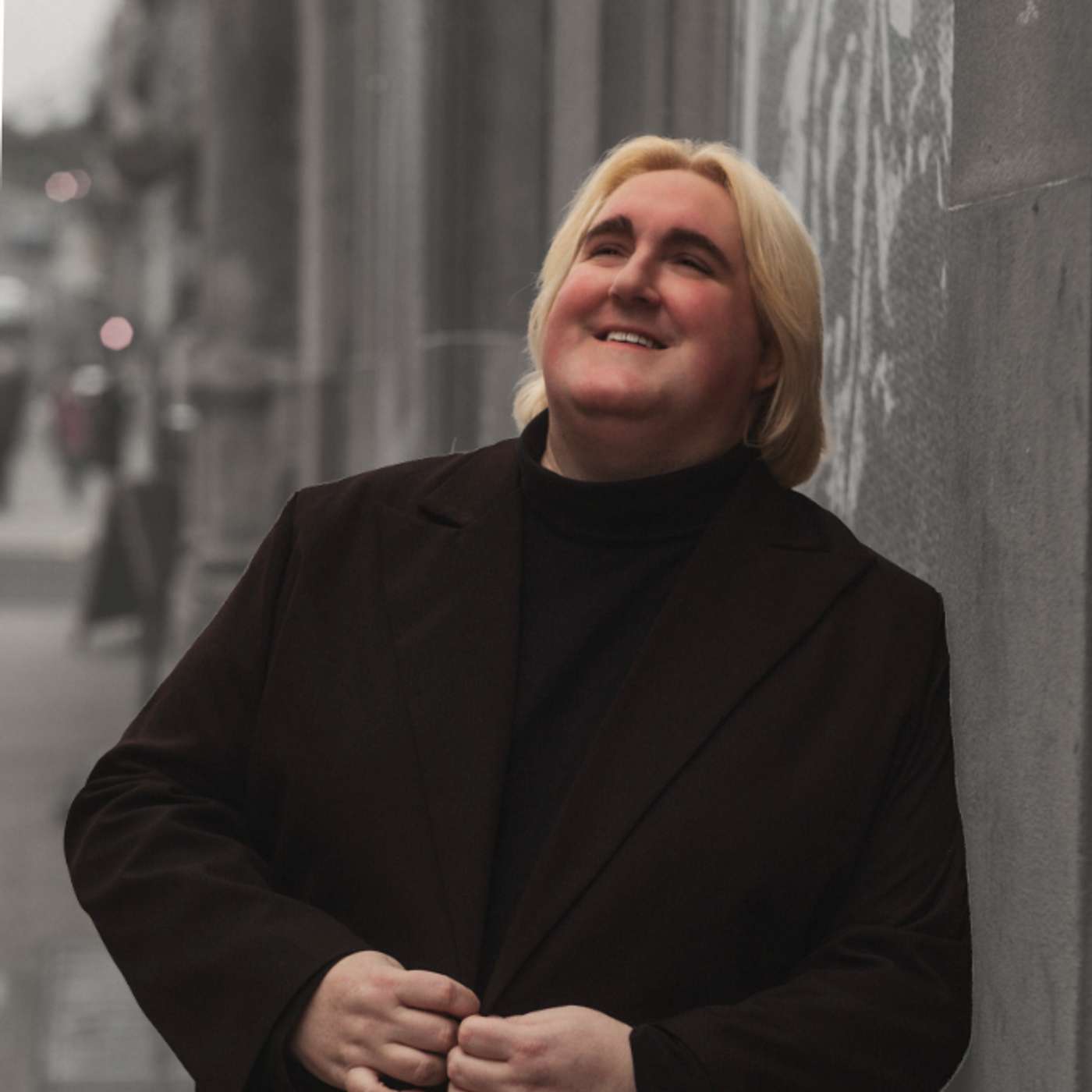
In this episode, Kestrel Gaian shares their journey as a queer author, the impact of laws on LGBTQ+ communities in the UK, and the importance of visibility, community, and resilience in the face of adversity. Chapters 00:00 Introduction and guest background 01:05 How personal experience informs storytelling 02:23 Growing up under anti-LGBTQ+ laws in the UK 04:07 The impact of section 28 and legal silencing 06:41 The repeal of laws and ongoing regression 09:41 Personal growth and increased visibility 12:15 The effects of societal pushback and safety concerns 15:44 The importance of pride as protest and celebration 20:00 The role of community and solidarity 29:31 The power of storytelling and representation 41:33 Building community and finding support 47:43 Upcoming book releases and projects Learn more about Kestral here: https://kestr.al/ Purchase Kestral's books here:https://kestr.al/books
Kestral (00:00) Hi and welcome to this week's episode of Open Wounds Podcast. I have a guest with me today, Kestrel Guyan. They are an author, they are a poet, they've done a lot of social work and social justice work, and I'm really excited to have them on today. So welcome, Kestrel. Kestral (00:19) Thanks so much for having me. It's great to be here. Kestral (00:22) Thanks. So ⁓ I know you've written about five books, is that right? Kestral (00:28) Yes. ⁓ yeah, five the the six is coming out next year, so ⁓ five at the moment. ⁓ two of those are fiction, two of those are poetry and and one is non fiction. Kestral (00:42) Nice. So I was looking at them and I I often wonder, especially when I am reading fiction authors, it does seem that even though the story is in theory fabricated, they tend to weave a lot of personal experience in there as like the building blocks. So how has your own lived experience informed how you write both the fiction and the nonfiction? Kestral (01:10) I mean i I couldn't have written anything anywhere near as as rich if I hadn't had a rich set of experiences in my life, I guess. I love writing character driven stories. I I j love creating characters and working with those characters and getting to know them ⁓ as much as ⁓ kind of directing them, I suppose. It's a great joy, I think, to try and create a fictional character who is human, who seems human, who seems real. you know, I've read and and seen things where characters have felt very one-dimensional, very kind of shallow in depth. And that just doesn't reflect the human experience. I mean we are we are weird and messy and strange creatures and I love creating characters that are equally weird and and messy and strange. ⁓ Growing up as a a queer person in a an unfriendly time was an interesting experience that I think shaped a lot of how my characters interact with the world. A lot of my characters are LGBTQ and they navigate the world in a way that is very similar to how I have navigated it at different points in my life. So ⁓ if I write a A book and there's a character who's 20 years old, for example. They're not necessarily going through what I went through when I was 20, but they might be going through something that I went through at another point in my life. And it's it's really nice in a way as an author to be able to process my own lived experience through the lens of a character. Or or, as is more often the way, take things that I have processed and kind of integrate them with a character almost as a as a kind of badge of honor, as a point of pride, and say, hey, look at the work I did here. I I got through this, I processed this, and now I can help this other character live that and show that in a really healthy way to ⁓ to the people who read my books. the last thing I want to do is kind of drama dump through a character, but hopefully it helps people feel seen as well. Kestral (03:24) Ha ha Yes. Yes. I completely agree. I I've read some books recently that were very traumatic focused in nature, but it felt like the author didn't really know what they were talking about. And so when I was reading it, I was like, they wouldn't have done that. Like, because I've been in that experience before, I know how I would not have responded in that way, right? So I think your own lived experience. number one creates an authenticity, right? And the second part would be that the connection with the reader is gonna be so much more valuable and strong in my opinion because you can share something that you went through in a way that resonates with them. And they're like, yes, I went through this as well. And I know you talked a little bit before we started about there were some laws in the UK when you were growing up. That we're very anti-trans or anti-gay, which we're now seeing in the US kind of this rollback pushback to, you know, we're regressing, so to speak. And so if you want to share how that impacted you growing up and how that's informed how you share your story. Kestral (04:48) Well, I mean, it's sad to say that many of the laws that were in place when I was younger that were repealed and now coming back, as you say, we're kind of rolling back. We've got a real regression in our sensibilities, I think, as a as a society. And that's not just limited to the US. That's that's happening here too, and and in so many other countries across Europe and around the rest of the world. When I grew up There was a law in place called it was it was known as section twenty-eight. ⁓ and what it was was essentially the twenty-eighth section of a particular act that passed a whole bunch of other draconian laws, but this act essentially it said that you couldn't mention or propose or suggest or acknowledge homosexuality or other kind of associated identities. But this was a local government act. So what it meant was that schools couldn't do that, doctors couldn't do that, libraries couldn't do that. So the effect it had when it when it became law in 1988 was that literature was removed from libraries and stories that had previously been available were taken away. There were whole lists of banned books that were suddenly not available to people when they were a week previously. You couldn't go and ask your doctor for advice if you had been in a same sex relationship because they legally weren't even allowed to talk to you about it. Teachers would lose their jobs and get fired if they even acknowledged that same sex relationships could be a thing or that varying gender identities were a reality. The impact that had was it was a completely silencing effect. It was it was completely chilling because Suddenly you had a generation of people growing up that didn't have the language, they didn't have the words, and they didn't know that there were other people like them. So I grew up feeling completely alone. I had no idea that there was a whole community out there of LGBTQ plus people. I didn't know that there were was such a thing called Pride. I didn't know there were Pride marches. I grew up in a small town. It's not like it was visible to me that there was a Pride March in London once a year. And so I just didn't know. I didn't know that what I was feeling was okay. I didn't know that there were other people that could feel the same way I did. And that that makes you feel very alone, very isolated. That also makes you very vulnerable and very easy to target. And that's ⁓ a a thing that happened to so many people of that generation. Of just feeling like they had no one to talk to, no one to turn to. And it it made them very, very easy targets. And that's a real shame. That law wasn't repealed until two thousand and three in the UK. And we're already seeing only twenty-three years later, a regression back to the proposition of similar laws all over again. And just today, in fact, a new law was passed that said that ⁓ transgender people are not allowed to be ⁓ seen in ⁓ hospital wards for their gender. They have to be put into a ward based on their sex assigned at birth. And so you could have a trans woman who is in in physical and hormonal sense every bit a woman who is then being forced to share a a hospital ward with men. And that's again putting people in really vulnerable positions and situations at a time where Kestral (08:31) Okay. Kestral (08:37) they might not even be in in, you know, full physical and mental ability themselves. Kestral (08:44) Yeah, you bring up a good point because we've seen statistically, at least in the States, that trans women are at the highest risk of sexual assault and rape. And I would assume the UK would have similar statistics. It's funny, the more I learn about other countries, the more I'm like, ⁓ I thought they were better than us. But a lot of times it's unfortunate that these long-held prejudices transit translate across countries, like you said, and we're seeing this huge pushback from these right leaning parties in all all over the world right now. And like you talked book bans, we're seeing that in certain states in the United States, ⁓ where they're removing these or preventing teachers, like you talked about from talking about these things or prosecuting doctors who want to provide care to trans individuals. ⁓ Kestral (09:22) Mm-hmm. Kestral (09:39) So yeah, it's really sad how I feel like all the progress that the older generations worked so hard for is now being torn down brick by brick. And like you said, the creating the environment for more abuse and more victimization because you're creating a a thing of shame to where people feel like, I can't talk about this, I can't be myself, I can't Kestral (09:48) Mm-hmm. Kestral (10:06) share what's happening to me with other people because I'm not allowed to talk about it. So can you talk a little bit more about how you progressed as and how you were impacted by the law changing in two thousand three? Kestral (10:20) So I had already finished education by the time the law changed in two thousand and three. So the biggest part of that, the lack of visibility and kind of your education system and and the kind of medical system at the time, ⁓ I had moved on from that and was I was at university and suddenly there was a whole new world available to me of information and things and and people. But ⁓ it it was just a it felt like an opening up of things. ⁓ and I think it was things were slower to change in schools. it it took a long time for because the law was repealed, but there was no new guidance that came in to say, hey, it's okay to talk about these things now. So people were still erring on the side of caution. And it was a long time before schools got a little better with that kind of thing. But the wider kind of community, I think, was Relieved there had been so much campaigning against this law. It was it was a real celebration when it got repealed. But also just it opened up the world to so many of us. It gave us access to things we hadn't had access to before. ⁓ literature, fiction, non-fiction, the ability to have an open conversation with a doctor about sexual health, about ⁓ mental health, about being in same sex relationships to to suddenly realize that we were able to think about gender in different ways and that you know trans identities were a thing and you didn't have to be one thing or another thing and and and there was a whole kind of spectrum of gender and all of that opened up that knowledge, that information, those communities were a bit less scared, could be a bit more open. Obviously it took time though, and none of these repeals take none of these repeals are instant. Everything takes time to to kind of warm up again. It's so easy to cool things down with a law and it's so hard to warm them back up again. and I think that's why it's the last sort of twenty five years, I suppose, have felt like s a slow march of progress. And then suddenly it's like someone turned on an ice machine again and all of the walls that we're feeling that we could hold on to have become slippery and we're sliding back downwards. We were crawling up as it was, and now we're kind of sliding back down into this into this pit almost. Kestral (13:00) Yeah. Yeah. I think part of what you're describing is ties into identity expression as well, because if you feel like who you are is illegal or wrong or shameful or taboo, the ability to self express just the way you want to dress, you know change your name, whatever it is that you want to do to really connect with who you feel you are inside, becomes, you know, illegal, so to speak. And so how did you see that in yourself as you were like, okay, things are starting to warm up and now you're like as you're seeing the pushback and you're walking out through your life, you know, this is something that you're having direct contact with on a daily basis. Kestral (13:56) I think the the big difference now is is visibility and I think v visibility is is absolutely huge. Having media out there, having books, having T V shows and films that show people in a positive light is hugely important. And ⁓ you know, in nineteen eighty eight when the the section twenty eight law passed, it was much easier to control to control the media than it is now. I th I think I'll caveat that by saying I think now it's controlled in a very different way. But you could hide stuff easier then than you can now. Whereas now all you need to do is log onto a social media website and you can see trans people, you can see non-binary people, you can learn the words, you can use the internet, you can use Wikipedia to to look stuff up. I mean, it's a it's a completely different world in that regard. I think the difficulty now is the vilification that has come with that visibility. So for a long time we didn't have the visibility and a lot of LGBTQ plus people would grow up feeling alone, isolated, and like there was no one else like them in the world, and they didn't have the language to describe who they were and how they were feeling. Now people have the language and people can absolutely see the pushback and the hate and the vilification of other people like them, and they're scared, and that keeps them quiet. So I think there's a huge difference between the silencing effect of the law when I was younger, and I didn't have the la I was silent about it because I didn't have the language, I didn't understand, I didn't know that there were other people like me. Whereas now it's fear. It's you see that people like you are being treated so badly. And so you take a different route to walk somewhere. You dress a little bit more neutral or a little bit more. expected because you don't want to be questioned or hassled in the street. and this is is something that I've had a lot of of experience with over the last few years. I've ⁓ found myself toning down, much to my own dismay, my outfits, my look, my hair, just because it helps me to be able to control the reaction I get when I'm Kestral (16:08) Mm-hmm. Kestral (16:20) Out in the world, and the world became a much scarier place than it had been. And as we get into this kind of heated bathroom debate in the UK at the moment, and the single-sex spaces versus spaces for everyone, and and ⁓ who should be allowed to pee where, which is just such an odd concept when you think about the entire history of the planet Earth and and humanity. Like why why are we dictating where people can go to the bathroom? but as a non-binary person in particular, that's difficult because where do I go? And I have to make myself look more like one gender or the other to to please people that aren't even me, to be able to know I can safely use a bathroom when I'm out and about. And that's that's huge because that's not a lack of visibility. That's not a lack of ⁓ of knowledge like it was when I was younger, that's ⁓ that's having to deal with other people now. Kestral (17:23) Yeah. The safety aspect is something I think that ⁓ we see increasing for people who are transgender or non-binary LGBTQ plus. ⁓ because I see as these administrations and these political parties and these things come through people who normally might have just kept their mouth shut and been upset or uncomfortable about something now feel emboldened to be confrontational, be or be aggressive or yell things at people as they're you know, trying to live their lives as a non-binary person or a trans person. ⁓ and so I think that's the other part of the equation is the safe the, you know, inability to find safety in public spaces or even being discriminated against for housing or jobs or things like that. You see people who like like you said, a decade ago might have thought those things inside, but they wouldn't say it as your coworker or they wouldn't say it as your your neighbor or your grocer. And now we're seeing them feel like, ⁓ I can say it because there's all these politicians that are feeding into the rhetoric, right? Kestral (18:36) Okay. Yeah. Yeah, it's it's become a bit of an echo chamber, but not ⁓ but it's an i it's a leaky echo chamber that keeps growing. These people are kind of feeding their own weird ideas and and kind of prejudices about the world and then spewing them out in every direction. And I think it takes over and controls the narrative and it makes it I mean In the UK, 1% of the population is transgender. One percent. and yet we have maybe dominated 75% of the, you know, political rhetoric in the last six months, maybe fifty percent, with the other fifty percent being incredibly huge and scary increase in racism. And you just think why is so much energy being expended on the minority groups here? Kestral (19:22) Yeah. Yeah. Kestral (19:37) Because really it's the majority groups that are the ones causing the issues. But I suppose, ⁓ you know, there's a lot to be said for the political idea of of keeping people focused on invented enemies that aren't really enemies and then they can get away with doing the things they want to get away with doing. ⁓ and I'm not a political scientist, so I can't speak with any degree of certainty on that, but it certainly feels a lot like ⁓ Kestral (19:41) Yeah, yeah. Yeah. Kestral (20:08) Like non-white people and LGBTQ people are very much being treated as scapegoats at the moment. And they were treated as a scapegoat back in the 80s when laws like section 28 were passed, they were treated as a scapegoat back in the 60s when other laws were passed. This is not new. And it's terrifying that it's not new because if this was just some blip, Then we could be, all right, well, what what changed? What's the the thing that set this off? But this is a a really old story using minorities as a as a kind of ⁓ post to kind of distract people with. And what's troubling about that to me is that, you know, we thought, we genuinely thought we were getting past this, we had progress, we were moving on, the early two thousands were like. The future's looking bright. We've finally passed all of that. And you know, the 2020s have just shown us that we are exactly as we have always been as a society. I think the thing that has changed is how global a society we are, how visible a society we are, and how it's no longer the case that you know, the privileged few are the ones that have visibility. Now everyone has a platform. Kestral (21:15) Yeah. Kestral (21:33) And so it's become about how you manipulate people into saying what you want them to say instead. And that I think is worse because before you at least had, you know, the you could assume that your neighbor wouldn't actively hate you even if there was some weird stuff in the headlines. Now people are being whipped up into a frenzy and all bets are off. We you you know, you've got no idea who who is suddenly gonna come out against you with a whole bunch of you know, essentially fascist ideology, ⁓ when you thought you were safe with them before. I've I've had to to stop talking to entire branches of my family. I've got ⁓ cousins, you know, children of my of my aunts and uncles who have have been radicalized by this kind of right wing propaganda and suddenly decided, who had never had an issue with me before, suddenly decided that I was a problem. And that hurts and that's hard. But you know, I I had to essentially stop talking to them for my own safety and mental health. But you know, to lose to lose people to that kind of rabid ideology is is heartbreaking. Kestral (22:32) Yeah. Yeah. Very alienated. Yeah. I think you bring up two concepts. The first is I know that a lot of trans people, gay people, nonbinary people, it's you know, the coming out part, the expressing yourself to your family can be very traumatic and a lot of times people lose their support system. ⁓ and especially like you were saying before the section twenty-eight, then how do you find a new support system? Because you're not allowed to talk about it. Like so luckily now, like you're saying, we have Reddit, we have, you know, all these chat rooms that you can go into Discord, you can find these spaces online where you can connect with other people who are experiencing something similar to you and create some, you know, some support, some friendships, some some sort of bonding there. Kestral (23:36) See something similar to you and create some, you know, some support some friendships, so like sort of bonding there. Kestral (23:44) But I do think that's inherent in most people who have gone through, you know, expressing themselves in a way that their family didn't expect them to and being rejected and being cast out. Kestral (24:00) Yeah, I I agree. I think the the rejection that you feel when someone that you thought you could rely on, someone that you thought was on your side or in your corner turns out to not be someone that you can rely on at all. It's you know, I said heartbreaking, and I think that's you know, that kind of allays the the the hugeness of the situation. Yes, it's I mean it's hugely emotional, but also just creates this incredible physical upheaval as well, where your your entire life has has just potentially gone and you you the place you thought was home is no longer home and you're no longer welcome in the places that you felt welcome. And you have to start your life all over again and without having been taught any of the skills for how to do that, particularly if you're a young person who has, you know, come out to their family and and they have essentially cast you out, you know, you're you're you're completely unprepared for that situation. I mean, people in their 30s and 40s are unprepared for that situation in a way, but, you know, have a bit more sort of experience of living in the world, I guess. But if you're 15 or 16 and suddenly you find yourself Without a safe place to be or to go, you know, not only is that huge and world shattering, but again it it leaves you in a position of vulnerability. And that's the, I think the most one of the most tragic consequences of all of these laws, this kind of lurch to the right, is that there is a vulnerability that just wasn't there before. That that we had a kind of a layer of safety, I suppose. But Kestral (25:36) Mm. Yeah. Kestral (25:56) It is making more and more people more and more vulnerable. And that's a that's really scary for my community, for my friends, for people like me. Kestral (26:04) Yeah. I think the other thing that ⁓ you touched on where these people are being whipped into a frenzy or radicalized because their their echo chamber is being reinforced. And I've I read something recently about how many of these hate speech comments we're seeing online are actually not by real people, they're from bots. And so it makes me wonder what is the greater political agenda here. Why are they distracting us, like you said, by focusing on people who are immigrants or focusing on trans people or focusing on, you know, abortion or all these other things that are really not big issues for most people daily life? Like if my neighbor is trans, it doesn't really impact my daily life. But the fact that all my taxes are being spent on murdering people overseas impacts my daily life, right? So I I like to reframe that because I think sometimes what we're hearing online may not even be from a human. It may be a manufactured thing that's just trying to conflate this this frenzy of division and hatred between people. Kestral (27:22) Well there's still there's still someone somewhere who has instructed these bots to do that. And I think ul ultimately ultimately, you know, we I I think because I'm not part of the one percent, I can't possibly speculate on what the one percent are doing, but at the same time Kestral (27:27) Yes. And why? Kestral (27:40) It seems fairly obvious to me that keeping people divided, keeping the masses fighting with each other is a really great way to distract them from what you're doing at the top. ⁓ so, you know, you can be a corrupt billionaire, you can make money off of the backs of, you know, war and slavery and and and hatred. ⁓ and really get away with it. You can you can get away with doing almost Kestral (27:52) Absolutely. Kestral (28:09) anything if you're a billionaire and that's it that's what the that's what the current people in charge of the world have shown us is that you've got the money or the influence or both and you can pretty much do what you like and the best way to get away with that the the the way to get away with murder I guess is to distract everyone by making them fight amongst themselves. Kestral (28:36) Yeah, absolutely. And I think like you're saying, creating safety and community is so essential and necessary in these times where we're seeing the pushback and we're seeing our family members being, you know, listening to this toxic rhetoric and so we're losing our communities is how are we able to create something different, right? Like I always Yes, it's terrible. Yes, the billionaires and the politicians are all, you know, in the PDF files or whatever. Like they're all doing these illicit things that we don't approve of and we don't want them to do. And we can spend a lot of time and energy and focus being mad, but at the end of the day, we need to create something new. We need to create community within ourselves. And how can we, like how can I support my trans community members or my non-binary neighbors or my, you know, coworkers or whoever that's dealing with the pushback and how can I support them. So I think, you know, your books are are a great starting point for people to learn how to navigate like what is my place? How do I connect with people? How do I build community? You know. Kestral (29:53) Yeah, yeah. Well and ⁓ one of the things that I love writing about, and certainly in in my most recent book series, I've kind of tried to foster this as well, is is find your find your people, find your chosen family and you know, hold them close. They they are your family. You know, take the people in your life that matter and mean something to you and hold on to them and build a community around them and and you know, link up with others like that because You're absolutely right. I mean, the the way we fight back against this, the only the only way to to fight against division is is to come together, is to unite. ⁓ there's an old saying, when the miners were striking in the UK back in the seventies and eighties, ⁓ and unions were trying to be busted, ⁓ united we stand and divided we fall. And that's That is absolutely true today, as true as it ever was, because we support each other and that helps us to stay standing. But also we support each other because there's strength in numbers, because there is strength in people coming together and showing. That there is still community, that there is still light, that there is still a safe place to be. That visibility is really important to people who are struggling, who are who feel invisible, who feel unseen, who don't feel like they have anyone else. It's so important to have that visibility and to see what what people are doing. I'm reminded of a ⁓ a story about Harvey Milk, who obviously was ⁓ was San Francisco politician and very, very open about his ⁓ homosexuality and about queer rights at a time where it was not popular to be. And I I remember hearing that he would often get phone calls, or his campaign office would often get phone calls just from ⁓ queer teenagers in in tiny rural towns just to say, I saw you on the TV, and I just want to say thank you for showing me that there is a movement out there, that there are more people like me. I feel like I can endure what I have to endure now until I'm at a point where I can leave. It it g I think it gives people that hope that things can be better, that they can find community, they can find people. And that's really, really important. And that's that kind of visibility of of community is something that we can do through. the media and through social media and things like that, but also something we can do in storytelling. And I think that's why showing that queer people are not alone, that they can come together, that they have shared experiences, that they can find love, find community in a in a really healthy and meaningful way is really important in TV shows and films and in books. And and I try to have that kind of representation in all of the stories that I write and things I create. Kestral (33:16) Yeah. I think that's so important too for the people who aren't trans, non-binary, you know, cisgender, whatever you wanna label them, because I know I was raised very religious, very evangelical, very anti everything. Everything was a sin. And so as I grew and was able to get outside of that bubble of that echo chamber like you said and hear about the stories of nonbinary, non tran or trans people, gay people, hear about what they've gone through, what they've experienced, I was able to see myself in them and be like, they're they're not these crazy people because I do think the religious right and these, you know, these alt right groups say that that they're so depraved and they're so this and they're Kestral (33:56) Okay. Thank you. Kestral (34:08) They'll tell you all these horrible things and demonize these people. And then once you get to hear their stories and read the books or see them in a movie or something like that, you can realize they're not these monsters that they've been painted out to be. And you can have compassion and empathy. Like one of the huge turning points for me was this ⁓ documentary on the Exodus movement, which was. Kestral (34:22) I think it would be actually which was an organization except we're not here. Kestral (34:34) a Christian organization that was basically conversion therapy. ⁓ and I watched it and how damaging this rhetoric is to where everywhere you go, you're told you're wrong, you're sinful, you're bad. And so me being able to see these things, these stories and consume them, I was like, wow, my whole perspective has been shifted because they're just like me. They're just like everybody else. And Kestral (34:44) Yes, right. And so maybe being able to see these things before you understand them. I could like I can't you know respect that's what she's got to free buttons that's like everybody else did take some way back that it's not too late and rapid or whatever. Yeah, absolutely. I I mean I'm Kestral (35:04) it takes away that that filter that you've been programmed with, right? Kestral (35:14) I'm quite boring. I'm quite normal. And that in itself is radical when you're fighting against this kind of rhetoric that we're all kind of depraved and weird and and strange. And and I think, you know, sh being able to be who you are and showing that and just showing that alongside everything else you are is really important. And yeah, I talk a lot about Kestral (35:17) Okay. Kestral (35:43) you know, my identity and and queer life and that kind of thing. But, you know, that's a s that's a small part of who I am as a human being. And, you know, I've got a cat and I like to bake and, you know, we all of these just normal things in our lives that we have to talk about as well and showcase and say, well, you know what? ⁓ our community is full of people who are just like you, who are just like everyone else. they the only difference is they just happen to be gay or a lesbian or Or trans or bisexual or non-binary or or ace or or any of the the you know incredible ⁓ people who are part of our community. And that same thing has to happen across different communities as well. ⁓ I'm also you know reminded of a campaign back in the in the 80s and 90s in the UK called Lesbians and Gays Support the Minors. And this was an incredible, ⁓ it was turned into a film called Pride, but An incredible moment where ⁓ lesbian and gay campaigners started raising money for and supporting striking minors, many of whom were, you know, small town prejudiced people, had never met a a gay person before, but it was realizing that they were all facing similar oppression and they were part of they were all part of a minority group that were trying to be crushed by the same people and having that solidarity and reaching our Kestral (36:55) Yeah. Kestral (37:11) hands out and saying, you know, there are so many things about us that are the same, that helps to create that kind of solidarity and that that strength in that. Being able to say, you know, I'm I am all of these things and part of who I am as is queer. Part of that is that I'm queer. And that's, you know, that's really powerful and important to do. Kestral (37:33) Yeah, yeah. I think that's so important too because there's so much of what I hear is like, you're shoving your lifestyle in our face and blah blah blah blah blah but really it's only because they've like it's that if you take a beach ball and you push it under the water, it's like when so much of your identity has been like suppressed, suppressed, suppress, suppressed and then one day a year you wanna be able to express who you are and celebrate it and have a Of other people around you. It's not about shoving it in the straight people's face. It's about being with your community, celebrating who you are, and losing the shame, which I think is such a big component of this. Is like these people are trying to shame you and you feel the shame and you need to let go of the shame to be able to be who you are. And so I see pride as like an antithesis to the shame that so many people have lived through. And it's not about like, Look at me, I'm super gay. It's about I'm not ashamed anymore. Like I can love myself, which makes me really emotional because I think that's something everybody has experienced. And we we have been taught not to talk about loving ourselves or talk about loving, you know, every part of us, the ugly, the the beautiful, the the messy, right? Kestral (38:34) Speak. Everybody has experience and maybe. Screen to like the Absolutely. I I think it's also worth remembering that pride, by its very necessity in nature, has always had an element of protest as part of it as well. Because when you come together and feel seen and feel like you are part of something, you also feel that strength, that solidarity, that ability as a community to do what as an individual you can't, which is why You know, pride has always been linked to protest at the ⁓ at its very core. And pride, the the reason often we have marches and then we have celebrations after the marches is that those marches are are a show of strength as well as a show of solidarity. They are often, you know, people will march with banners, people will march to to make a point and to show the establishment that we are ⁓ What's the what's the phrase, we're here and we're queer, and they just have to get used to it. ⁓ and that is really important because it's and and this is why I think, you know, pride as a protest and pride as as an antidote to shame are really one in the same thing because that solidarity, that strength, that power, that's showing that actually you cannot intimidate us. We are together, we are proud of who we are. Kestral (39:58) Yeah. Yeah. ⁓ Kestral (40:23) And we are you are not gonna make us feel that shame. You are not gonna make us feel ashamed. And we are going to keep pushing for change and pushing for better rights and pushing for for rights across kind of intersectional communities because that's all really important. Kestral (40:44) Yeah. I think a lot of people don't realize that, you know, like you said, pride is a protest. Is that how much of what the LGBTQ plus community has done benefits other subgroups because they're they're creating legislation or pushing for laws to protect people and it doesn't just protect gay people, a lot of times it protects women or it protects minorities. Because once you realize, ⁓ these people are being targeted unfairly, they're being discriminated against, it kind of like pushes the door open for so many other oppressed groups to be identified. Kestral (41:26) And and it you know, we all we all pull ourselves forward together. You know, that that's ⁓ a hugely important thing to remember and it is a really excellent point. We only have ⁓ gay marriage in the UK because of the minors' unions and the minors' unions supported gay marriage because the lesbians and gays that support the minors supported them. I it's an incredible chain in events where the The miners' unions were very powerful in the Labour government movement. A Labour government came into power in 1997, and the unions essentially forced the issue onto the table and said, you know, you can't ignore the issue of gay marriage. And when it came time for all of the unions to show their support for what they think the government should vote for, overwhelmingly they supported gay marriage because the community had supported them as well. And we see that time and again in other places and other spaces where one minority group wins, every minority group wins. When rights are gained for some, rights are gained for so many more at the same time. The inverse is also true and when when rights are taken away for for one, they're taken away for a large group of people as well. And We will see that increasingly as we are in this kind of period of rollback. And it's important that we stand together and remind ourselves that things have been better, things will be better. We seem to be in this odd sort of cycle of of things getting better and things getting worse and things getting better. But every time things seem to move forward a little bit. And so we have to keep pushing and and keep supporting each other and keep having this solidarity with each other because it's that's the only way we'll we'll continue to make advances, even if right now things feel, you know, rightfully really hopeless some days, we still push together for each other, all of us in this struggle. Kestral (43:43) Yeah. I think that's a good point. Is not losing hope and finding your community who can cheer you up when you are feeling down and finding people in your support that, you know, we all have bad days and we all feel overwhelmed by the news and we all feel like things are going in a the direction we don't want it to go in. And so I think that's so important that we have people that we can lean on and can be there for us. And so, ⁓ as we're, you know, starting to wrap up this talk, how, you know, what are some things you suggest for people to find community where they are? And how did you find your community? And how did you build your support network? Kestral (44:28) I mean, first off, I I would say it's absolutely okay to have an off day. ⁓ there is nothing more radical than self care. ⁓ because you cannot y y it's an old saying, but you can't pour from it from an empty jug. You know, we the only way we keep the momentum going and we keep the fight going and we keep supporting each other is by, you know, self care is by, you know, hydrating and making sure that we take rest days and the You know, we find things in life that we enjoy and do them and and prioritize your own personal safety. There is no point in making yourself unsafe ⁓ for others. We all need to push to make ourselves safe together and self-care is is the key to that. Absolutely. Nobody ⁓ nobody expects anyone to to kind of martyr themselves for a cause, I suppose. We need to all be pushing together and taking care of each other. Sometimes that that might just mean cooking dinner for your friends or, you know, texting someone and saying, hey, I'm not okay right now. And it can be so hard to find people you can do that with as well. And it's never been harder and never been easier all at the same time to do that. Because I think we have so many things we can do, you know, from our homes, from our beds, from our places of safety. To reach out to people online. It's also never been harder to trust anything online as well. Whether whether someone is real, whether they're being honest, whether whether what you're seeing is is accurate or you're all just some AI hallucination, it's never been harder to to discern fact from fiction and to feel really safe and trustworthy in the the people that you're talking to. But those communities do exist. It can be hard to find them, but it Kestral (46:01) Hm, yes, that's true. Real. Kestral (46:23) A community starts with two people. It just starts with two people checking in on each other. So I think the number one thing you can do for yourself and for your community is just check in with the people that you already know. Like if you've got contacts in your phone and you don't know where they stand on the things that are important to you, find out. You know, make sure that your phone book is full of people that you know you can count on, that you know are your friends and allies, and check in with them. And Maybe they don't all check in with you as often as you check in with them, but get that habit started. People around you will start checking in with you more. You'll all start checking in with each other more. I think community grows when people care about other people. And the only way we show that we care is by small acts of kindness and communication. And there's nothing more radical than checking in with a friend, asking how they're doing, encouraging them to take care of themselves as well as taking care of yourself. That's that's how a revolution starts. That's how communities grow. ⁓ and that is how we all process this kind of collective shared trauma and grief that we're experiencing right now. 'cause that's overwhelming to think about doing on our own. Kestral (47:31) Yeah. Yeah. Kestral (47:52) But none of us are on our own, none of us. Sometimes we just have to make that first that first text, that first email, that first communication. Kestral (48:03) Yeah. Yeah. I think you bring up a good point, my cause my twenty-three year old is non-binary and he has found a huge community online and I'm like, Great, when are you gonna meet these people in person? Like, when can I drive do you need me to drive you over there? Do you want them to come to our house? I really think it's like you said, there's this polarity that it's easier than ever before to find people, but it's also harder than ever before. to maintain the community, right? Because we are so online and we're so in our phones and, you know, wrapped up in social media and stuff. And so I'm always encouraging like, hey, take your online friends and bring them into, you know, the local pizza parlor or meet them at the park or something. ⁓ because I think that one to one time in real, you know, face to face is so helpful because so much of Kestral (48:57) real you know face to face is some people technology like you said this is if they type this chat GPT or text me like there's something to have your question. Kestral (49:01) the technology, like you said, are we sure this is really real? Did they type this? Did Chat GBT auto text me? Like there's so many things we have to question. I think if we can get them offline and into personal, you know, into our homes or into our communities is the best way for us to feel that safety and feel that trust, you know? Kestral (49:17) It's just the best way to get that safety and Yeah, I I've for years I've loved meeting people online and then and then meeting them in person. I so many of the people that I keep in touch with online are people that I have met, even if I only meet them once every two or three years that I have met face to face. I think there's something, you know, incredibly powerful about that. I mean, at the same time I do have some great friends that I have only ever known. Kestral (49:29) Yeah. Kestral (49:46) online and that that is also great. But I think it's about having a mix and about finding what works for you. And I think, you know, particularly yeah, I have some friends that I know online that I have never met in person, but they they have, you know, accessibility needs and things like that that mean that's not as easy. And that's great. And I'm so glad I have those relationships. I'm also glad I've got people I can go and hang out with at the coffee shop too. Kestral (50:10) Yeah. Yeah. I th and I think there's like a a point you mentioned some people it's a mobility issue. It's a location issue if they live in a area that's remote or something, which is the beautiful part of the online community now that we have. Like you said, everybody has the chance to be visible and have voice. And ⁓ I think that's really great for for people to connect and find each other and find their community. Like you said, back when people were phone calling Harvey Milk, now they can just send a DM to somebody and you know, it's it's so instantaneous. So Would you like to promote your books or share with us what you have coming up or what's coming out for you soon? Kestral (50:53) I'd love to, thank you. So the next book coming out is called The Girl from Nowhere, and it's the second book in a series. So I started ⁓ started this ⁓ queer kind of mystery sci-fi series last year with the first book in the series that came out, the The Boy from Elsewhere. The Girl from Nowhere is the second book in that series. Comes out February twenty twenty seven. it features ⁓ non-binary characters, trans characters, ⁓ bisexual representation in there as well. But none of that is the core story. That's it's just you queer people living their lives, accidentally stumbling across world-changing events and deciding whether they want to save the world or not. And they are, you know, kind of real and and sarcastic and and great as characters. I really like the characters in this series. ⁓ So that'll be out in February. ⁓ The Boy From Elsewhere is already out. I have ⁓ poetry and nonfiction as well. ⁓ all of that you can check out on my website, which is ⁓ K E S T R dotal. So it's just my name as a website, which is quite handy. and they're available worldwide, ⁓ kind of print and an ebook and audiobooks. So yeah, I hope ⁓ I hope you find something in there that resonates. And ⁓ yeah, I appreciate the Kestral (52:19) Yeah, and I will link ⁓ your website and everything down in the show notes for everybody listening and on YouTube you can click on it. ⁓ yes, I'm glad you mentioned audiobook 'cause I love audiobooks. I listen to them while I'm in the car or I'm doing dishes or whatever and so and I love it when Kestral (52:34) Me too. Kestral (52:36) The authors are reading their own work because it gives something really magical to the the stories. So I'll definitely be able to check your books out now. So ⁓ thank you so much for coming on and sharing your story. I really appreciate it and your openness and your vulnerability talking about, you know, these difficult topics. But I think it's important that we keep talking about them and keep having these discussions and dialogues because that's where we see connection and movement and improvement in you know the situations we're facing. Kestral (53:07) I I couldn't agree more, I think. You know, the the more we talk about this, the more we bring people together and the more we have these conversations, the ⁓ the more strength and solidarity we can create with each other. ⁓ so thank you so much for having me on and and letting me talk about sort of my life and queer identity and things. Kestral (53:25) Yeah, well thank you, Kestrel. Thank you everyone for listening, and we'll see you again next time.