
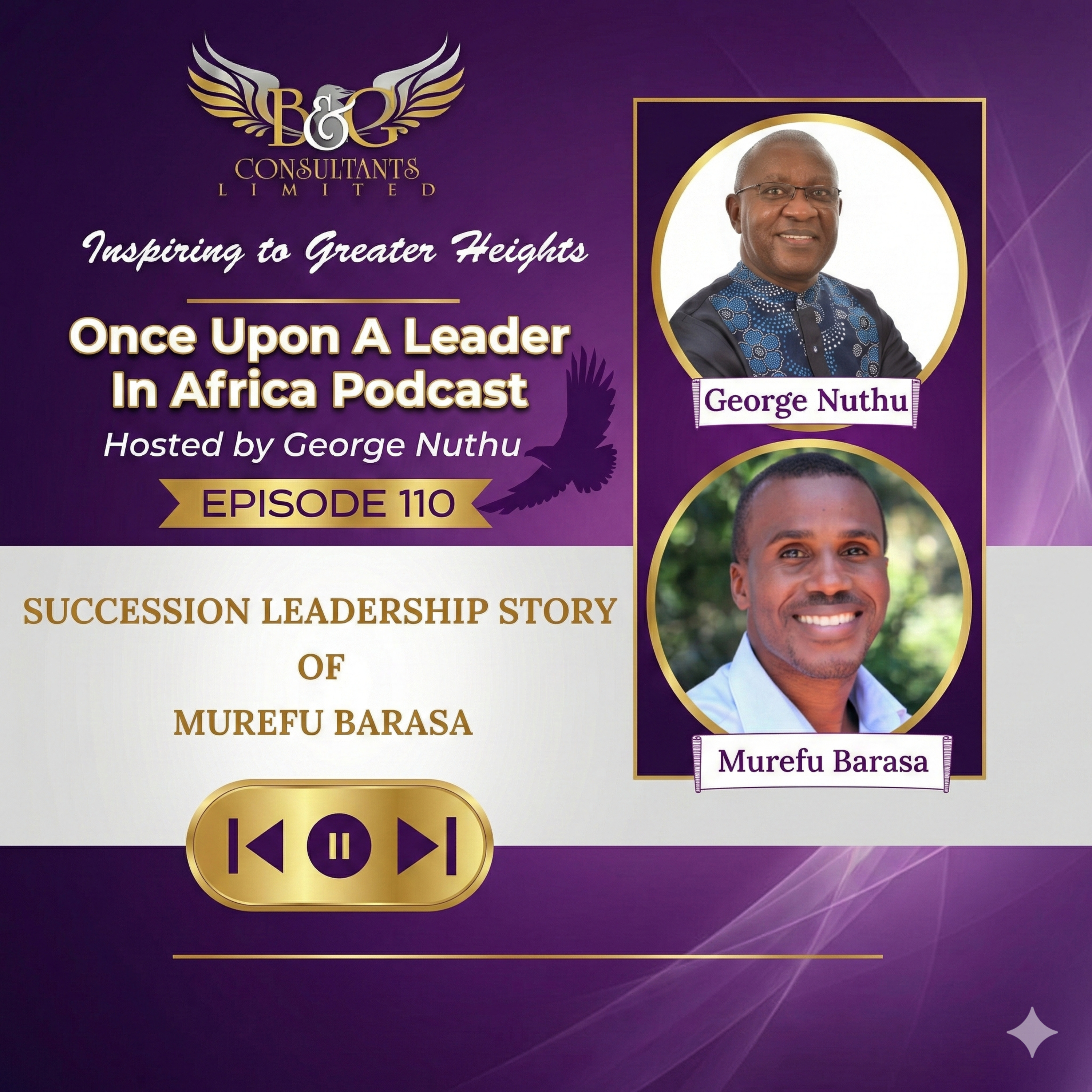
Once Upon A Leader In Africa · George Nuthu
What do you do when the business you’ve poured your heart into starts slipping—and you’re forced to confront the hardest leadership question of all: Do I keep going, or is it time to let go? And what if letting go becomes the most courageous decision you can make? This episode is a grounded, honest, and deeply human conversation about leading through hard seasons, navigating entrepreneurial uncertainty, and finding the courage to release control. It’s not a highlight reel. It’s a real exploration of what it feels like when growth stalls, pressure intensifies, and the path forward becomes unclear. If you’re an entrepreneur, founder, or senior leader who has ever felt tired, unsure, or quietly overwhelmed, this conversation will meet you with empathy and clarity. You’ll gain practical ways to think through tough decisions, a renewed understanding of what strong leadership looks like in crisis, and reassurance that you’re not alone in the questions you’re carrying. Expect insight, reflection, and a steady voice reminding you that difficult seasons don’t have to define the end of your story. George Nuthu is joined once again by Murefu Barasa, Founder and Executive Chair of EED Advisory, a Pan-African consulting firm he launched in 2013. With experience across development, policy, and strategy—including work with the World Bank and the African Development Bank—Murefu brings both depth and vulnerability to this conversation. When he first appeared on the podcast in 2021, he shared a raw account of navigating one of the toughest chapters of his entrepreneurial journey. Four years later, he returns with perspective—having led a turnaround, expanded EED’s footprint across Africa, and intentionally transitioned out of the Managing Partner role to focus on governance, long-term vision, and the next horizon. Murefu revisits the early days of EED, when growth was rapid, confidence was high, and the team felt unstoppable. Then came the shock: revenues dropped, uncertainty crept in, and the business entered what many founders quietly fear—the “valley of death.” Rather than offering neat conclusions, he sits with the truth of that season. He speaks candidly about confusion, loneliness, and the emotional weight of watching something you’ve built begin to falter. He challenges the simplistic “never quit” mantra and offers a more grounded alternative: the wisdom to discern when to persevere and how to evaluate when it might be time to step back. One pivotal moment came from a seasoned entrepreneur who asked him a single clarifying question: “Are you still signing business?” That question became a lifeline—a practical way to assess whether the organization still had momentum and potential. The conversation then widens into leadership. Murefu describes his role during the crisis as becoming the “chief of assurance”—not pretending everything was fine, but staying steady, communicating openly, and giving his team confidence through presence and honesty....
0:11Welcome to the Once Upon a Leader in Africa podcast with
0:14George Noodle. We invite you to listen to
0:17influences and opinion shapers narrating their experiences from
0:22their leadership roles in Africa, from the world of
0:24business, community development, government, corporate, social
0:29enterprise, among others. We will glean from the good, bad
0:33and ugly side of their leadership journey and be
0:36inspired to overcome adversity, to pursue success against all
0:41odds, to be a great leader, and many other lessons.
0:46Welcome to the broadcast, and here's George Nuthu.
0:59Hello Murafu, how are you? Hello George, I'm doing very
1:02well. Thanks for having me.
1:04Welcome back man. You are the 1st guest I'm
1:06calling back after quite some time.
1:08You know you appeared on our 6th episode.