
Office 365 Distilled · Steve & Marijn
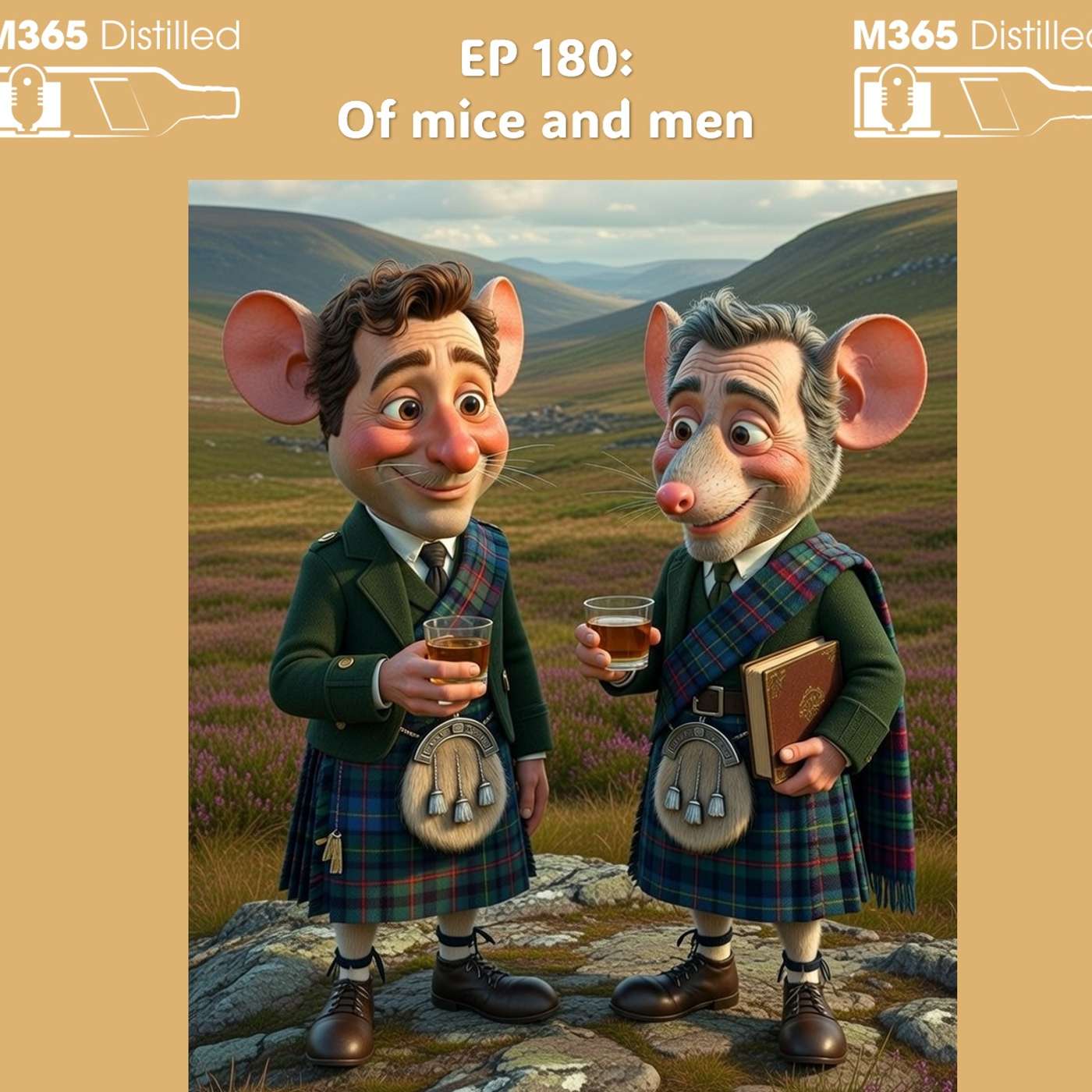
In this episode of Microsoft 365 Distilled, the boys celebrate Burns Night in true Scottish fashion: with tartan‑level enthusiasm and a whisky that would make even the Bard raise an approving eyebrow. They go hunting for insights in places no one has ever thought to look. The mission? To see whether the timeless wisdom of Burns, actual old-school poetry can shed new light on the ever evolving universe of Microsoft 365. And to everyone’s surprise (including their own), it absolutely does. Expect hilarious interpretations, dramatic readings, suspicious Scottish accents, and philosophical detours that somehow make perfect sense. Along the way, they uncover governance lessons hiding between the verses, collaboration metaphors tucked into the stanzas, and even a few productivity tips disguised as 18th-century poetic flair. It’s part whisky tasting, part literary adventure, part tech nerd‑fest—and 100% Distilled chaos in the best possible way. So pour yourself a dram, warm up your best “Auld Lang Syne,” and join the boys as they celebrate tradition, toast the future, and prove once again that wisdom, like whisky, only gets better with age.
Speaker 1: Hey. Hey. Ladies and gentlemen, Office365 Distilled bring you direct from Antwerp, the poet extraordinaire Malagoff cocktail. Speaker 2: Sorry. I can't. Speaker 1: Look. Kevin told us we did a really good introduction last time, and you've just blown it. Speaker 2: Alright. Alright. Right. Get it together. Speaker 1: Welcome to Burns Nights, guys. Welcome to Burns Nights. Speaker 2: Yes. Awesome. So we wanted to start off this podcast with a a bit of poetry. Let's upclass ourselves. Speaker 1: They've worked that out by now. Speaker 2: Oh, yeah. Speaker 1: Yes. I guess. Alright. Alright. Alright. So here we Alright. Go 123. 1 for the money. 2. Oh, no. Speaker 2: No. No. It's a different different poetry. It's hip hip poetry. Speaker 1: Hip hop poetry. Alright. Let's go. We Speaker 2: slick it cowren timorous beastie. Oh, what a panic in thy breastie. Thou need not start away, say hasty. We're breaking brattle. I won't belate to wring and chase thee with murdering battle. Speaker 1: I'm truly sorry man's dominion has broken nature's social union and justifies that ill opinion which makes thee startle at me, thy poor earthborn companion and fellow mortal. There's about 16 freaking verses. Speaker 2: Oh, yeah. Yeah. Yeah. Let's not do all of them. No. No. No. Speaker 1: The wee bit he believes in stibble has cost thee money a weary nibble. Now thou's turned out for thou a trouble, but house or hayde to throw the writer's sleety dribble and crannock culled. Speaker 2: Of course. Speaker 1: But Mousy, thou art to know thy lane. Improving foresight may be vain. The best laid schemes of mice and men, going aft aglay and leave us naught but grief and pain for promised joy. Speaker 2: Alright. To a mouse by Robert Burns. Speaker 1: To a mouse by Robert Burns on Burns Night. Speaker 2: Yes. Speaker 1: So today is Burns Night. Moraine will not fail. He will publish this on the January 25. Yes. And we're gonna celebrate Robert Burns, Scotland's national poet. Speaker 2: Exactly. Yes. And what do people do? They start a fire and they drink whiskey. We skip the fire part. We'll just have a whiskey. Speaker 1: I did think our cool it would be if we'd actually had some haggis. Okay. So the traditional food for Burns Night, haggis, neeps and tatties. Do you know what that is? Speaker 2: Potatoes and turnips? Parsnips. Parsnips, yeah. Parsnips. Speaker 1: Yeah. So, yes, that would have been cool. Yeah. And I think this is a gravy, but I don't know for certain. Probably. Yeah. So that basically means we're gonna drink a Scottish whiskey later. Speaker 2: Exactly. Yes. About a mouse. About a mouse. Yes. Definitely. Yes. And I already had that, and I... It's it's it's amazing. It's really, really, really good. Speaker 1: It's an independent bottler. Yep. But we've had a few of these before. Speaker 2: Yes. And this is just a special release they made, and it's just right up my alley. Speaker 1: Everything is a special release they make. They don't have a normal stock. Speaker 2: Well, they kind of do, but Really? Name one. Well, this one, the the normal version of this one that we're gonna drink later, that's that's their regular Oh, is it? Yeah. Yeah. Oh, okay. Don't match now. Yeah. Yeah. Well, let's let's talk about that later. Speaker 1: Okay. That's fine. Good. Alright. So what we thought we'd do because we're obviously in a very intelligent Mood. Yeah. Funny mood. Is, actually, we're copying my other podcast here, Fusion Talk, aren't we? Speaker 2: Are we? Speaker 1: We did tattoos and m three sixty five. Speaker 2: You did. Yeah. Speaker 1: And we're gonna do poetry and SharePoint and Teams. Yes. Speaker 2: Will reflect on Robert Burns' poetry and see how that influences project management, user adoption, technology rollouts. Speaker 1: Just showing that the man from 1786 was way ahead of his time. Speaker 2: Or that we haven't evolved that much. No. I mean I mean... Okay. Speaker 1: We're still whiskey drinking think we're... Exactly. Speaker 2: I mean, it's it's two hundred and fifty years more or less after that. I mean, it's... Basically, we're still... I know. Speaker 1: I had to do the maths then because I thought you were wrong, but you're not. You're right. Alright. So I will start off with trying to do this poem. The problem is that it's in old Gaelic Scottish. Speaker 2: Yeah. Old Gaelic Scottish. Yes. Speaker 1: Okay. So this one's about Speaker 2: That's why I'm letting you do this. Speaker 1: I don't mind. I've had a whiskey already. I don't care anymore. Yeah. So this is Adoption and Change by Robert Burns. Okay. Alright. And the quote is, what some purr the giftig ears. Obviously, yes. Alright. From '17... This is to the lady Louise. Speaker 2: That's what I would say to Louise as well. Speaker 1: Yeah. What some power the gilftigi is? Speaker 2: Yes, no, I wouldn't dare to say that to Louise to be honest. That's Louise. Last time I said something to Louise and she told me off so I'm not saying that to her. No. Speaker 1: Alright. Well, actually, I think she'd quite appreciate this. I'm sure Louise doesn't ever listen to our podcast so that's fine. No. But if she does... So effectively the translation is this. I'm gonna do the literal translation first because I think I can can translate. What power the gift is given us? That's his direct translation for the line. Speaker 2: Nice. That's Copilot. AI. No. Speaker 1: Yeah. Maybe. Maybe. But but no. No. That's actually what I just translated that directly. Mhmm. So the paraphrasing is to see ourselves as other Caesars. Okay. To see ourselves as other people see us, which is really cool when we think about adoption, change management, user experience, that kind of stuff. Yeah. We assume that everybody else thinks like we do. Speaker 2: Yes. And when we assume we make Yeah, an ass of you and exactly. Speaker 1: Which we can do without thinking about assuming anything. Speaker 2: Oh, yeah. We were very fluent at that. More fluent than in old Gaelic Scottish, yes. Speaker 1: But it is true, isn't it? So, I mean, okay, in my organisation at the moment, we are struggling with a number of things. Speaker 2: Of course you let me go, of course you're struggling. Speaker 1: Dear, yeah, we need to talk as well. There's something I do need to talk to you about, but that's okay. We won't do it on live online. Where was I gonna go with this? Oh, yes. I was going to say that I don't mind drinking a whiskey before we do a podcast, but I think that if I'm still drinking the whiskey when we start the podcast, it needs a little bit of a gap. Speaker 2: Okay, gotcha. Speaker 1: Yeah. So, I was talking about, the fact that we kind of roll things out at the organization that I work at and then they don't do anything, they don't respond. Simple things. We rolled Windows 11 out. All they needed to do was, hey look, click on the update button and then just go and get a coffee and come back an hour later and you'll go from ten to eleven. Yeah. And we get down to the last 30 and we're now having to phone them and include their managers and say, he needs to bloody do this. Yeah. We rolled out Cloudflare, alright, a new Internet proxy server. Mhmm. All they needed to do was when this little window pops up, say okay and log in with their username and password. And we're down to the last 10 people. We cannot get the The Speaker 2: same people? Sorry? The same people as... Speaker 1: I don't know. Actually, is a very good question. I didn't line them up. There was a few months in between the two. But it's actually true. We assume that they would do what we do. Speaker 2: That Speaker 1: they If somebody says you need to do this... Speaker 2: Tell them to do. Speaker 1: No. That's... That is one of those subtle differences. I mean... Ask them to do. Speaker 2: Ask them to do. Yes. Just fucking do it. Exactly. Speaker 1: No. No. But seriously, if we had an upgrade on the laptop, we go, okay. I'll do the upgrade. It's a convenient time, but I'll do the upgrade. Speaker 2: Yeah. It's true. Because, this morning on my phone, it says, oh, you got an update. So I was like, oh, cool. I'll do that right now. And then it says, yeah. But you're not Wi Fi connected. So are you okay with 250 megabytes over your five g line? I'll do it tonight. Speaker 1: You cheapskate. Speaker 2: Yeah. So... Okay. But, yeah. But then then also, I mean, I I must be getting old, I guess, because I I had this for a few years now that every time, like, when when a new package arrives for me Speaker 1: A new software package or No. Speaker 2: No. Like a like a like a physical Yeah. Yeah. Parcel arrives at my doorstep, I can easily put it on the table and not look at it. And then after a few hours or maybe a few days, like, oh, let's open that up and see what it is. So, yeah, sometimes new shit doesn't trigger me that much, but that was not the thing that we need to talk about. Speaker 1: No. No. No. It is part of what we assume other people will do. Like, if you got a new bottle of wine, a bottle of whiskey rather, you're not gonna stare at it for long before you take the lid off and smell it and maybe even take a nip out of the Speaker 2: top of the bottle. Yes. Exactly. Yeah. Just because. Yeah. Yes. But also, I mean, we always assume a lot of things. Like, for example, I overheard someone talk today that, this organization build a new Internet, and nobody's using it. Yeah. Because the organization thought, oh, we need a new Internet. And then, apparently, it doesn't fill some kind of void or it doesn't cater to the needs of the people, so nobody's coming. Speaker 1: That's a really key statement you just made. Speaker 2: Mhmm. Which one? Speaker 1: The needs of the people. Yeah. It's true. But I... We'll come back to that maybe a little later. But for certain, we assume that people understand what we understand. So we assume they understand the importance of upgrading, the importance of updating, the importance of using SharePoint to collaborate with or to store your content with or teams to collaborate with, whatever. We assume they get it. Mhmm. Yeah. We're just so unique and special that not everybody can be like us. Is that the way IT think? Speaker 2: Well, that's how people think about IT people. But Speaker 1: Maybe there's a bit of truth in there. Speaker 2: Maybe. Maybe. It's it's, yeah, it's weird people. But I get that. I mean, when I'm sitting to... When I'm doing meetings with proper IT people, I always get that feeling as well like, oh, you're very strange people. Because I I always say like, oh, I'm a PM in in the IT world, but I talked with people more than I talked with computers. So that's kind of my, how do you call that? Like, my my excuse. Like, oh, no. I work in IT, but I I really am people focused. I'm I'm not one of those weird IT people. Speaker 1: I'm... I work in IT, Speaker 2: but I'm not an asshole. Yeah. I don't know. I can't fix your printer and I talk to people. Actually talk to people. Speaker 1: Our dad was saying the same thing today. He says the amount of times that my family phone up and say, hey my printer won't print, my laptop can't connect, you know, I've just bought a network box, what do you want me to do about it? You know? Speaker 2: Exactly, yeah, yeah it's true. Speaker 1: But I guess it's an assumption we make going back to the whole Robbie Burns thing is that we want to see people as ourselves but they can't be. That's the reality of the situation. Speaker 2: Because we want this so you must want this as well because you're also a person so we want this thingamajig, this button there. And because we want it, I assume that you want that as well. Speaker 1: Yes. You must because I do. Speaker 2: I click on that button five times a day, so you must click on that button at least five times a day. That must be so valuable to you, that little button. Speaker 1: We're done on buttons? Maybe. So when we talk about adoption and putting ourselves in the position of the kind of end user Mhmm. Then we stand a better chance of understanding what they need and what they're after. Speaker 2: Yes. And Speaker 1: that's the key point that Robbie Burns was saying. Speaker 2: 250 years ago. Speaker 1: 250 years ago. The smart... Okay. Smart cookie. Yeah. He died very young, know. 35 or something. 36 or something. Speaker 2: Yeah. Okay. Speaker 1: Too much whiskey. Yeah. Speaker 2: You missed the club of 27. Yeah. Okay. But, no, I I wanted to Speaker 1: say something. Yeah. Then beat you again so Speaker 2: old. No. We were talking about, filling a need or something needs to have a purpose. Speaker 1: Understanding the need. Speaker 2: Yes. Not filling a need. Yes. Maybe. That's another podcast. But, I I don't know where I picked that up. I've been listening to way too many podcasts for the last few days and weeks, where somebody said, this is the age of information. Information is abundant right now. So we've got so much information around, and we didn't have that two hundred years ago, for example. Speaker 1: I'm gonna disagree with you, but carry on. No. No. No. I like it. We'll come back to my disagreement. Speaker 2: So two hundred years ago, the only people that had access to a lot of information were like clerics and wizards. Monks. Yeah. Like like people that were specializing in knowledge. Speaker 1: And we Speaker 2: have all the knowledge in the world right here on our fingertips in our little device. And so we have that information abundance. So in order to make something worthwhile for people, it doesn't just need to have that information. It just needs to fill that gap or or cater to that specific need that a person has. It has to be, how do you say that? No. It's not valuable to a person, but it has to be useful for someone Speaker 1: to I get that. If we want somebody to use SharePoint and we want them to start using SharePoint to store their files for collaboration for their department, we need to work out where the value is for them. But that's still... Robert Burns is still right. We need to understand what they are giving, what we are giving them, and what they're getting from it. So I'm not entirely certain about the knowledge thing. Speaker 2: This bit was about it was about Intranets, and it's about an Internet doesn't only have to contain all the information about the organization. It doesn't just need to have all the procedures and whatnots, but it needs to give you that information in a very easy way. And all the questions that I have should be... I should have an easy way of asking them and finding out the answer. I shouldn't be browsing through all the information, but it needs to. Speaker 1: How much whiskey have you to drink? Speaker 2: Just that bit. Speaker 1: That wee dram. Yes. I get it. And I think part of it is making sure that the message you give the person is what they need to hear. As we will, if we understand them, can tell them what they need to hear. That's what Robert Burns is saying. He says, if to see ourselves as others see us. So, hey, you should do this because this is what it will give you. But if they don't see that in us, or if they don't see that in themselves, then we've not got the value that we need Speaker 2: Yeah. Speaker 1: For them to adopt things. Mhmm. Speaker 2: True. Is that also why you haven't, mounted the cameras yet? Speaker 1: Correct. Speaker 2: That we're not visible on YouTube anymore. Speaker 1: Correct. And I think that that basically you're so ugly that you'll just drive people away rather than drive people into it. Speaker 2: Yes. I have face for podcasts. Speaker 1: I have been incredibly busy since when did we talk about it? July last year. Speaker 2: Yeah. Something like that. Speaker 1: Yeah. It's, well the part of the problem is that the camera, the video projector's gone so I'm depressed in this room. So now I need to, yeah fuck it, thank you. Just for pointing out that I failed. But anytime you want to come around and do it. Yeah. Speaker 2: Yeah. Yeah. I I know. Speaker 1: That's alright. So what... Why it fits? So what Robert Burns is saying here is that this is peak adoption thinking. Is the key adoption statement. So Burns is literally saying, if only we could see ourselves the way that others experience us. So if people understand why this is important and why we think it's important, then they would adopt it easily. And because they don't see the experience of ourselves, it's why they resist new tools. Why IT thinks something is simple and other people don't. And why adoption fails because there's no empathy. If we don't see them as we see ourselves, there's no empathy and it's actually true. Level of empathy. So yeah, so adoption isn't about the tools, it's about seeing the experience through your users eyes. It's really the fucking deep actually. Wow. So it's... So we would go... Like like at the moment, Matthijs... Hey. God bless Matthijs. How are doing? We've been rolling out new printing software. Okay? Around... So every day... Speaker 2: Printers? Oh Speaker 1: my god. He's been rolling around the floor It's my favorite. Through APL printing. I know. I I wish I didn't know what to deal with Speaker 2: cloud printing. I... Well, to be honest, I gave away my printer six years ago, and I've never printed anything since. Speaker 1: I use mine as a scanner mostly. Mhmm. But anyway, but that's irrelevant. Yeah. The point is that what I was trying to get to was that he's been doing the tour of everybody to say, hey, you need to print and use this new software. Mhmm. But he's been showing them how to do it. Click, click, click. Alright? And then success for him is now you know how to print. Speaker 2: Yeah. Speaker 1: Okay. But that's something tactical and practical. Speaker 2: Mhmm. Speaker 1: If we want people to start using OneDrive and synchronizing their regular files down to their laptop, they have to feel and understand why. And the message we need to give those people is why this is good for you, why this is important to the way we work. Because you might need these files when you're not online. Yeah. Now that is an empathic message. That is, that you feel... You will feel better when you want that information and you're not in line. You won't feel frustrated. And that's what our man, mister Burns, born in 1786 or when he quote this, I want some power, that gift he gives us. Speaker 2: Exactly. Speaker 1: The power, the gift of power of adoption and change. To see ourselves as others see us. Speaker 2: Yeah. That makes me think about this company that I went to last week. It was a little company of audiologists. Yep. About 15 people. And how they were working was, somebody... So they all had a OneDrive, and somebody made a shared folder with everyone, and everyone put all their files in that. And so I came in and I said, that's really not the best way to do this. But then they were all like, yeah. But it works. And we know where our files are, and it's so easy, and it's just there. And now I need to explain why in IT terms, that's not very useful. Speaker 1: No. And and if you say to them, hey. You want me to search them anymore? Or you want me to search them as easily? Copilot won't pick them up to give you some information because they'll go, don't Speaker 2: care. Exactly. Speaker 1: Yeah. Don't care. Speaker 2: But then when I said, look. We can have all the same stuff if we just move it somewhere else. If we move to a SharePoint or Teams, we can have the same user experience. You will still find all the same bits and bobs, but it will be safer and it will be better and number of things. Speaker 1: I wonder whether it's just, hey. I'm not interested. As long as I can get to the files, don't care about anything else. So I wonder whether it's a kind of, hey look, you know, we don't care about IT, we're making widgets and that allows me to make widgets better. Or whether it's a stubbornness, you know, John had this idea and I support John because he had the idea of doing this and so hey it works. And so that's the empathy in there and that they're supporting the person that gave them the idea of what they're doing. Yeah. Speaker 2: If only those people could see us like we Speaker 1: see or Speaker 2: experience ourselves. Yes. Mhmm. Speaker 1: So do a Spock thing. You know, you sort of meld the minds, and then they'll go, now I get it. Speaker 2: Oh, that's actually the whole thing about the Pluribus series on Apple. It's the big mind meld. Oh, Robert Burns predicted this two hundred and fifty years ago. Okay. Cool. Alright. It's the Borg. It's the Star Trek Borg. Speaker 1: Oh. So there we go. Robert's first lesson is get people to see you the way that you see yourself. Alright, the next Robert Burns line from this one's actually a little bit later. Nope, it's a one year earlier. I had to go and have a look at the number. It was 1785 instead of 1786. Speaker 2: Oh, we're so good at this. We're so professional. Speaker 1: But this was really special because this one is to a mouse. Alright. And the best laid schemes of Mice and Men. Yeah. We've heard this before, of course. Speaker 2: Yes. You... Speaker 1: It's a proverb, isn't it? Best laid plans of mice and men. Speaker 2: Yeah. But what does that mean? I mean, I I know this because there's a movie called Of Mice and Man. Speaker 1: Yes. There is under the book. Speaker 2: And it... Probably a book as well. But what does that mean for someone who's not UK English? Speaker 1: So, the universal truth of collaboration is what they're saying. Speaker 2: No. No. No. No. No. No. Just just the proverb... The the saying like of mice and men, what does that mean? Is that Oh, it's for everyone. Speaker 1: For everybody. Speaker 2: Yeah. Okay. Speaker 1: That's basically what I think he's saying. The best less schemes of mice and men. Okay. But effectively what he's saying is it doesn't matter how well you plan it, how well you plan something, reality will intervene. Okay. So how many times do you try and plan a night out and find it goes wrong? Actually, night outs I'm good at. But how often do you plan a project timeline? Like, I'm gonna get rid of Citrix in a year and then the reality of it, once you start digging down, the reality intervenes and it's a two year project simply because you don't see the complexity and you get involved in it. Yeah. So that's what it's actually saying here. Speaker 2: Or in the morning where you say, today I wanna tackle this problem and then you open up your email inbox and there's 25 other fires that you need to put out before you can actually start on working on that thing. Speaker 1: That's true. Speaker 2: Yeah. That happens. Speaker 1: And I honestly think that if you talk about any kind of adoption and change exercise, really is we think, look if we just email these 200 people, very simple, there's seven steps guys, here you go. Open up your start button, click this icon, put in your username and password, press go. That's all we need you to do. Yeah. So the plans of Mice and Men. You're a mouse, you should be able to do this. Speaker 2: Okay. Speaker 1: But the reality is they'll go, no, need to check my email. Oh, no, I'm not gonna do this IT talk. Speaker 2: I'll do that later. Yeah. Speaker 1: Yeah, yeah, can do that anytime I want. Yeah. And then you piss them off by chasing them up two days later. I can see that you're still not registered your software. You're watching me. Fuck you. Do it myself. Not gonna do it at all. I'm a human being. I'm naturally stubborn. Speaker 2: That's beautiful. I'm a human being. I'm naturally stubborn. Okay. I I know that that's definitely true for about 50% of the population. Speaker 1: It's the 50% that hasn't done anything they're supposed to do. Speaker 2: Oh, no. I was just thinking about the non penis wielding part of the women. I'm talking about women. Jesus Christ. Speaker 1: Man. I did work it out. Okay. The look on my face was I'm going, where's he going with this? And I was also trying to work out why you were swinging around at your knee levels. I'm fairly sure it's not that big. Speaker 2: Oh, well. Speaker 1: So and just to clarify, that's why Speaker 2: we don't cameras on there. That's why we don't have cameras. Yeah. Oh, man. Yeah. Think I think YouTube would definitely demonetize us very quickly. Maybe we should just put this on OnlyFans or something. Speaker 1: OnlyFans. One way of judging your audience, suppose. Speaker 2: Yeah, well to be honest, I actually... Because OnlyFans is for creators and getting money for the stuff that you create. So my first idea was to put my Just just get all that thought out. Speaker 1: Are you telling me that there are other things on OnlyFans than ladies in skimpy underwear or no underwear at all? Speaker 2: I have no idea, but that was the original intent. Speaker 1: Okay. Speaker 2: So I was thinking of maybe putting all my, courses, all my training courses Speaker 1: Alright. On OnlyFans. Speaker 2: On OnlyFans. And I thought that was a brilliant idea until I thought about, okay. So people will need to go to their manager and say, I've got this invoice for OnlyFans, because I wanna I wanna do an online training. So that's probably not the best business decision ever. So yeah. Yeah, I guess believe that there's other stuff than... Speaker 1: There are lots of other tools to do your courseware. Speaker 2: Oh yeah, that is one. I'm not Speaker 1: trying to work out when the first time you told me you were gonna do that. Speaker 2: Oh, years ago, years ago. Speaker 1: Yes. And now you're just swinging your dick on a podcast. Yeah. You know, trying to say Speaker 2: Audio only podcast. Speaker 1: Audio only podcast, yeah it's a good job really. Guys trust me you didn't want to see that. Kevin is sitting there now going, Don't go, that would be funny, that would be funny. Yeah. That would be funny. So, yeah, pantomimester men, things never going as well as they want. How do you get around that? Speaker 2: Well, is it... I was thinking about that. Is is it like do a good pre study or just have good project management, calculate for where things that are gonna happen, or is it just something that comes with experience? Speaker 1: Every audience is different. Speaker 2: Every project and... Yeah. It's it's all... Speaker 1: I mean, you have... The customer you used to have in Amsterdam Mhmm. They were quite good at doing stuff like this, if I remember rightly. The small number of people, all kind of smart scientist types. Speaker 2: Yeah. Speaker 1: So anything they needed to do from an instruction from an IT perspective, were they good at it or did they Speaker 2: still ignore Actually, they were. Speaker 1: I think they told me in the past they were. Speaker 2: And they they were following orders, or or, hints very Hints. Very well. Yeah. Yeah. But it's it's typical Dutch people. They need to know why. Yeah. Yeah. That's very important for them. They need to know why they need to do something. Speaker 1: So do we. So the very first burns payers is like you. He said, why do I need to do that? I don't need to upgrade this. So, you know, why don't Speaker 2: you Definitely click on that not like that. I mean, my phone is like, you got a new update. I'll go, oh, cool. Install it. Speaker 1: But that's because it's safe inside there. If you had an email with a link on that said click this for my family Yeah. You click it? There you go, you see. Yeah. So I don't think that you would do that. I think we just kind of know. But so the question still comes back is how do you persuade people that it's a trustworthy something and it will add them value and give it to them in terms of where they're at. We've just been through this whole thing about it because we're rolling out sensitivity labels, we're rolling out about three other changes that are important to the end users. I wish I could remember what they all were, but you know, I'm not at work now so I can officially kind of shut it off. Speaker 2: Bark it. Speaker 1: But I know we're gonna have trouble. Speaker 2: Yeah. I know we are. Speaker 1: Because I mean, just because of our experience. Speaker 2: It's gonna happen. Speaker 1: Yeah. And I'm not entirely certain got the answer. Was a really quite good meeting with HR. They said, look, if there's something you want them to do, you need an action banner that you can use every single time so they know something needs to be done. Speaker 2: Oh that's a cool idea. Speaker 1: So and then, like today we were talking about the printer stuff, what we've realised is that we don't have the two calls to action. So So people are doing the first one because it's at the top of the page, they don't get down to the second one. We'll put a link in at the top that said, hey, there are two things to get printing. One, you need to sign into the software using this button and do this. Two, and we'll put a link in then to that part of the page. Yeah. And two is you now need to follow the instructions for registering your card on the system so that you can then print by, you know, secure print. So we realized that that second button wasn't up. Continued improvement is a great thing, but... Speaker 2: Yeah. Okay. Speaker 1: So so there you go. There we go, mister Burns. Cool. Second one's a lot easier I think than the first ones, but so there we go, the first one, I'm not going to repeat it in the original, but to see ourselves as other seers mean that basically if we think something's important, other people would as well. And so as you say, I think we need to understand why. And the second one is that it doesn't actually matter how well we plan it, reality will get in the way. Yes. Speaker 2: Yeah, I love that. Speaker 1: So mister Burns on SharePoint information and management. Okay. Hit me. I do have a year. I don't have a year, so I can't embarrass myself here. Facts are shields that win a ding. Speaker 2: Love I love Speaker 1: a good a ding. Speaker 2: Yeah. I love a good win a ding. Speaker 1: Yeah. Facts are stubborn things. Speaker 2: Mhmm. Speaker 1: Perfect for SharePoint record management. What Burns is saying is that facts don't disappear just because we ignore them. They're gonna be there and they're gonna keep biting your ass. Speaker 2: That's co pilot security in a nutshell. Speaker 1: That's what our co pilot said here actually. Said, Holly said SharePoint governance conversation ever. This is basically every SharePoint conversation ever. Yeah. And if you think about it, there's some facts like documents will actually live longer than people expect. Speaker 2: Yes. Yes. It's it's very true. Yeah. And and not only the documents, but all the versions. Nine out of 10. Unless you turn on that version Speaker 1: control Clearing up Speaker 2: thing. Speaker 1: Depending on how many you create. Speaker 2: Nobody does. Speaker 1: No. But then again, nobody ever used to turn on minor versioning either. Speaker 2: No. It's it's not being Speaker 1: set as default. Speaker 2: I also read this article that people would rather buy more storage than actually clean up what they have. That was that was also... That was a good that was a good article. I wish I could remember who wrote it, but, yeah, people would rather buy more storage than clean up what they have. Speaker 1: Yes. It's the lazy man's route, isn't it? Yeah. You know? Speaker 2: Just throw money to the problem and then Speaker 1: We do that though, Speaker 2: don't we? Gonna be done. Speaker 1: How much whiskey do you have in your cupboard? Speaker 2: Last time I counted 73 bottles. Speaker 1: There you go. So you could drink that before you buy another bottle? That would be the logical thing to do? Speaker 2: No. If if they were all the same bottles, yes. But they're all different. So I just want something else every once in a while. Speaker 1: Yeah. Yeah. Maybe that's true. But going back to our change in adoption thing, I mean, doesn't matter when you sit there and go, hey, look, if we don't secure our network, we could go to prison and be fined 20 percent of our income. Speaker 2: Mhmm. Speaker 1: And they go, yeah, okay. Speaker 2: If we get caught. Speaker 1: If we get caught. It's again, those facts, they're stubborn things, but Speaker 2: they Speaker 1: don't necessarily drive you to change or drive you to do something differently. Speaker 2: Yeah. Sure. Speaker 1: Yeah. Your documents will just mount up inside this document library if you don't use metadata to try and filter them. Speaker 2: Yeah. But Copilot's gonna fix all that. Speaker 1: Is it really? Speaker 2: No. I I don't know. But I mean, Copilot's gonna just plow through all that information and only get me the relevant stuff. Speaker 1: Oh, so if you've got some old documents in there. Speaker 2: Yeah, I know. Yeah. Speaker 1: Yeah. Did I... See? Facts are stubborn things. Speaker 2: Facts are stubborn things. Absolutely. Speaker 1: Even though you know this, I'm not gonna do anything about it. Speaker 2: Yeah. That reminds me. I I made a little oopsie. I I have a customer, and they have about a library with about 3,000 procedures. And we were busy creating review dates for these procedures so that we can keep these things relevant. So I made a beautiful button. When they click it, it publishes their, documents, approves it, and also adds a review date, and they can choose one one year, two two years, three years. Speaker 1: Nice. Did you build that workflow? Speaker 2: I built that workflow, and it almost worked from the first time. Speaker 1: Excellent. Speaker 2: Yes. So I was very, very happy with Power Automate for the first time in my life. Speaker 1: But then, Speaker 2: we were looking at it and then we were saying, oh, that's very cool for all new documents. But what about these 3,000 documents that were already here? How can we give them a review date? So I said, no worries. I will build a second workflow that will be a, I will I will click it to start it, and we'll just go over all the documents. It's gonna grab the modified... Last modified date. It's gonna add three years to that. It's gonna put that in a review date. Awesome. So I ran it, and then I... Because it will only do, like, 50 documents. So I did it again, and I did it again, and I did it again. And then I looked it up, like, does it really have to be, like, 50 documents at a time? No. You can do it until five thousand. So I said, oh, cool. I can do the whole lot. So I just did the whole lot. And then two days later, I get a phone call from this lady, at the customer, and she was like, I've got 900 something documents that were all all have the same Speaker 1: Review date. Speaker 2: Review date. So something went wrong into your workflow. So they now all have this review date on the January 16, 2029. So I was like, okay. Yeah. That was not supposed to happen. So there's a little flaw in this, but how am I now going to fix this? Because it's 900 something documents. Because in my mind, I need to go into the document version history, jump back to a previous version to see what modified date that is, and then add that into the review date and then just approve the document again. I don't want to do that manually for 900 something documents. Do I want to write a PowerShell that does that? Speaker 1: Questions in life are Speaker 2: amazing, I'm aren't not that smart. And then suddenly, like, all good thoughts come when you take a shower. I was thinking about what if I, just grab the documents that were modified after that moment, put them away in another library, and then just restore the full library with the restore function just like you have in OneDrive. Restore that up to that day until all those 900 something documents are back in the original place, rerun my workflow so that every document now has the good review date, and then just add all the files back. Speaker 1: That was clever. Speaker 2: I don't know yet. Oh, you've done it? We'll see. But that that was my oopsie. That was my my first oopsie of the year. I gave 900 something documents a wrong review day. Speaker 1: And this document library is not active yet. Speaker 2: It is fully active. It's being used by 7,000 people. Speaker 1: And you're now gonna take their top versions? Speaker 2: I'm gonna reset the whole library, like how it was, on the January 15. Speaker 1: What happens if somebody on the January 16 made a change to a document? Speaker 2: Well, I'm gonna move those documents that that... So I'm gonna create a view, just show me all the Why Speaker 1: did you just delete the column? Speaker 2: Because I can, but but, I mean, I... The review date needs to be three years after the last modified date. Speaker 1: So if that document was still be the same? Speaker 2: No. Because the document is now changed because it's got a review date on the metadata. So it's changed to the last modified date is today because today it was changed because I added the review date. Speaker 1: Oh, yeah. Yeah. Did... More importantly, did you work out why your dates were all the same? Speaker 2: No. But I was thinking because I ran that freaking fucker so many times, probably said, oh, now my last modified date is now. And then I ran it again, so it said, okay, so now I need to add three more years to that thing. Speaker 1: It wasn't the same company that sells estate agents, estates is it, and officers? Speaker 2: No. No. Speaker 1: Come back to that later. No. No. Alright. Cool. Cool. Cool. Alright. So you did Speaker 2: a follow-up. I did an oopsie. Yes. We're three weeks in and I already effed up. Speaker 1: Yes. So, I think Burns actually has a poem for you. Speaker 2: Oh, ye timidus fuck up. Yes, exactly. What a shy thing you've done. Speaker 1: So a man's a man for that. Uh-huh, A man's a man's for that, is there for honest poverty apparently. Burns believed knowledge and worth weren't tied to title or status. Correct. Just because you have a status or a title... I'm an MVP Speaker 2: and I... Fuck off. Yes. I'm so proud of this. Yes. Speaker 1: Oh, God. Let's just have we've had enough of Burns. As much as it's fun and it's Burns tonight, we'll have a whiskey. I think it's time for Speaker 2: a Let's. Yes. Yes. And we started off the podcast with the, poem To a Mouse. Speaker 1: To a Mouse. Speaker 2: And, the poem To a Mouse starts off, with him talking to the Timurus Besti, and that's the mouse. And Timurus Besti is the, Highland whiskey from Douglas Lang. Yes. So we like Douglas Lang. We had a tasting, with them, some time ago. Was that Douglas Lang or was that the Speaker 1: other Lang? Which Lang was it? Speaker 2: Oh, it was a Lang. Speaker 1: The Lang. Speaker 2: No. No. It was it was that one. And how they work is they've got regional whiskey. So they've got Lowlands, and that's the Epicurean. Speaker 1: Whiskey from Yeah. But that's the... Speaker 2: It's called the Epicurean. Speaker 1: Ones. Yes. Speaker 2: And then the Highlands one, that's the Timur's Beast. So it's a blend from Glengoyne, Dalmore Speaker 1: Bleritol. Speaker 2: Bleritol. But a number of these things. Yes. And the default timorous beastie is nice. It's sweet. It's it's brilliant. Speaker 1: It's You've it before? Speaker 2: We had it before. Yes. Absolutely. We had it at the tasting. Alright. I didn't realize that. Yeah. That... That's fine. But they also bring out every now and again a different version of that. Speaker 1: So they barrels in their store, and they go, hey. We can do something special with this. Speaker 2: So for example, they... And I I just saw that when I was looking this one up. They also have a 40 year old timorous beastie. Speaker 1: Did they really? Speaker 2: And this one, because this is not the 40 year old, this one is called the phantom smoke. Speaker 1: And This is from a crocodile cask. Speaker 2: It's... Yes. It's heavily charred crocodile cask. So why don't you explain what a crocodile cask is while I pour some whiskey? Speaker 1: Yeah. So I I saw the box when Marijn came in. He was busy on a call, so I was kind of reading it. And the crocodile cask is... You know what crocodile skin is? You've all sat there and touched a crocodile, but you know, it's kind of shaped with dints and razors. And if you char cask or you char wood enough, the wood will split. And that's basically what they're saying is this is such a heavily charred cask, you know, five or six rather than a three or a four that it actually looks like and feels like crocodile skin. Nice. But it means that there's lots and lots of cracks in it for the whisky to ease themselves into rather than a single charred smooth surface. Speaker 2: Yeah. And, also, this one is also peated. So it's peated. It's got a lot of smoky character. It's typical Highland sweetness. Yes. Yes. There's a peated, highland whiskey in it, and I was trying to figure out which one was Speaker 1: many pitted Highland whiskeys. I mean No. I know. Speaker 2: I know. I know. This is also a, limited edition, only 3,000 bottles. Price is fairly decent. I got this at around €70, I think. Speaker 1: That's not too bad. Speaker 2: 45% alcohol. So it's not full cask string, but it's definitely not 40 or 48. Speaker 1: Yes. You're right. Peeled... Peated Irish malt with the classic liquid. Yes. Speaker 2: So it keeps that sugary sweet Highland whiskey, but it combines that with a lot of power and a lot of smoke. A lot of power. Speaker 1: This A lot of smoke. Speaker 2: Just brilliant. Speaker 1: This is brand new. I've not tasted it at Speaker 2: all. Mhmm. So I'm very... Speaker 1: Oh, it's got a very interesting nose though. Speaker 2: It is. Vinegar. What? Speaker 1: I kind of get like pickled oniony kind of vinegar. Only in essence, not a a strong, just sitting there in the background that kind of bite. Okay. Speaker 2: So this is coming from get that Speaker 1: little mellow Okay. Oak. Okay. So this Speaker 2: is coming from bourbon casks. So no other types of casks were harmed. Speaker 1: So it's a bourbon cask, but heavily charred? Speaker 2: Yeah. And then combined with Speaker 1: That makes sense. Beet it. But, no, I don't get the whiskey... The vinegar anymore. Maybe it was Speaker 2: just Good. That didn't sound Speaker 1: It's quite nice. It's it's quite an earthy smoke on the nose. Mhmm. Not like a charred campfire kind of smoke. No. Just No. No. No. No. It's it's Speaker 2: That is Speaker 1: not on Speaker 2: the nose. Speaker 1: Smoke. That's what it is. Speaker 2: It's it's not that smoky on the nose. No. But I'm trying to think what is it. Speaker 1: Oh, well, I'm gonna taste it. Speaker 2: Yeah. Go for it. Speaker 1: Fucking hell fire. This is Speaker 2: awesome. This is awesome. Right? I know. This is so delicious. Speaker 1: Oh man, that is so good. I'm still going. Speaker 2: Yeah. I mean, that smokiness comes out, all that. But still that that that sweet character that you definitely get in Speaker 1: a highland. Sweet smoke. Yeah. Speaker 2: And it's it's def... It's not Islay like Speaker 1: Oily as hell. It's... Yeah. Speaker 2: I think that's because of it's also the the 54% of alcohol. Think that definitely has. Speaker 1: It doesn't have that bite that you would expect. I was expecting to add water to it. But Speaker 2: I didn't do that yet. Adding a bit of water in it. But I do like this whisky. I think this What it Speaker 1: reminds me of, it's a fun smoked whisky. Yes. And it is a bit like Speaker 2: an Speaker 1: animation cartoon. You sit there and it's kind of colors of orange and reds and maybe I'm just going nuts here, but when when I drink it, it's kind of that fun smoky drink to have. It's not this is not a fireside peated whiskey. No. No. This is a barbecue peated whiskey. This is... This... I tell you what this would really, really go with. You know, when you barbecue pineapple as a dessert. Yeah. So you kind of just sit there and and rub some spirit over it and, and then char it so it is covered on the outside. Yeah. Then, yeah. No. This I can one imagine would be good with something like that. I'm gonna buy Speaker 2: a bottle of this. When when you say barbecue, I think about, not Laphroaig, but the other one. L'oeuvre? The other one. Speaker 1: Oh, there's a lot of ones I could go Speaker 2: through. The other one that's next to it. Speaker 1: Leukewollen. So you got Leukewollen. Speaker 2: No. Frog and Speaker 1: the I never forgot. Speaker 2: Oh, well. Anyway, the ug dal the ug dal. That's that's Speaker 1: that's Your favorite one. Speaker 2: To me is is barbecue. But as you said, like, pineapple. Yes. Toasted fruit. Yeah. This this would be brilliant with that. Yes. Because this this doesn't taste like a barbecue. Speaker 1: So No. It doesn't. Mhmm. Speaker 2: But I really, really, really like this drum. Yeah. Speaker 1: Reminds me of teeling the black smoke. Speaker 2: Oh, yeah. Yeah. Yeah. The, black pits. Yeah. Black pits. Speaker 1: Yeah. Sorry. Mhmm. Black smoke is the barbecue restaurant at the... Just down the road, actually, at the brewery. Speaker 2: Oh, that's that's my... That's how I like my dinner. So how I how I make my dinner. Speaker 1: That was amazing. I'm definitely gonna put that on my buying list. Speaker 2: Yeah. Speaker 1: That is so cool. Yeah. Well, was an interesting night. Speaker 2: It was, yes. Speaker 1: Burns night. Are you doing anything Burns night? That's why everyone's listening to this podcast on Burns night. Are you actually doing anything? And whether we should? Speaker 2: Maybe we should, yeah. Speaker 1: There's bound to be a Burns Night something happening in Antwerp. It's not far away. Oh no, I'm not here. No. It's this weekend, isn't it? Speaker 2: It is... Don't know. It's '25 today. Speaker 1: It's the twentieth today. First, second, third, fourth, fifth. Sunday night, isn't it? Speaker 2: Could be. Sunday, Monday. No. Think I think it's Sunday. Yes. Because Tuesday is the twenty sixth. Speaker 1: Twentieth. Yeah. Wednesday is the twenty first. Thursday is the twenty second. Friday is the twenty third. Saturday is twenty fourth. I will be back. Okay. Twenty fifth. Mhmm. Your mission, if you wish to accept it. Speaker 2: It's to find a Burns. Speaker 1: Find a Burns night on Sunday night for us to go and eat haggis, neeps, and and drink some fucking whiskey with people that appreciate it. Speaker 2: I've got my daughter this weekend. That's why I'm not coming to Bremen with you. Speaker 1: She's Your daughter could Vegetarian. Go with your mother. But Do you like meats and potatoes? Yeah. Exactly. Yeah. I wonder whether the hell this is anyways. Actually, you know, I'm I'm really intrigued now. Speaker 2: Nips and Tots. Are you gonna look it up? Okay. Let's wrap up the podcast first and then. Okay. Alright. Speaker 1: Hey, Holly. Speaker 3: Hey there again. Owen, happy to have you pop in for a chat. Let me know what's next on your mind. Speaker 1: Right. I need to know whether there's a Burns Night celebration in Antwerp happening this weekend. Do a deep dive. She's thinking about it. Speaker 2: Alright. Speaker 1: Are we going to be happy or disappointed? Speaker 2: The Speaker 1: anticipation is amazing. Speaker 2: All the people listening. Speaker 1: Searching, searching. So how come you pissed yourself laughing at the beginning of this podcast? Speaker 2: Oh, how did you introduce me? Speaker 1: Oh, yes. Speaker 2: Can't even Speaker 1: With Jay's Bond like, ladies and gentlemen. Speaker 2: Too... It was too funny. Speaker 1: Okay. That's fine. Alright. Look. She's not gonna come back because I told her to do a deep dive, so she's kind of thinking and searching. Alright. But that's good. If we can do that Sunday night, I think that'd be good. I mean, I'm coming back from Bremen, but if I know of doing that Sunday night, then we'll go and have a Speaker 2: Look it up. Speaker 1: Yeah. That'd be cool. Alright. Neat. Well, this was good, actually. Yeah. I quite like this. Speaker 2: Nice. Nice. Speaker 1: I like this. Mister Burns. Speaker 2: Yeah. Speaker 1: So you need to publish this Sunday morning then. Speaker 2: It's fine. Speaker 1: I don't think we need to do a few social posts to let people know that we're doing a a Burns night special. Speaker 2: Yeah. Yeah. Yeah. Yeah. Speaker 1: Do we have a a weird title? Burning SharePoint reviews. Speaker 2: Mice and Men. Speaker 1: The Mice and Men. Speaker 2: Episode 180 of Mice and Men. Speaker 3: So we confirmed Burns Night event in Antwerp just yet for this weekend in 2026, but there have been places in the city that celebrated in the past, so it's worth keeping an eye out or giving a couple of venues a quick ring. And if you're up for a little travel, there is a Burns Night event from a club in Belgium on January 30. So keep an ear to the ground, and you might find a wee bit of scotch bonjour. Speaker 1: Oh, well. So there is some, but not happening. Speaker 2: Yeah. Okay. Cool. Speaker 1: But actually, the restaurant that they're saying has done one in the past is San Pedro, which is that amazing Italian place. There's an amazing Speaker 2: Italian Of course they do a Scottish Speaker 1: I have no idea. Location. That's that's what she's pointing at. Speaker 2: But anyway. Some spaghetti and some Speaker 1: Spaghetti and a whiskey. Speaker 2: Exactly. Okay. Speaker 1: Alright. Cool. Alright. Listen. Enough. Enough. We've rattled away. This was fun. Thank you very much. The whiskey was amazing. Mhmm. It really is. Is is Vescue gonna be in Bremen this weekend? Know? I don't Otherwise, give me a sample and I'll take it with But I Speaker 2: promise you Speaker 1: I won't drink it. Yeah. Sure. Speaker 2: Casper is gonna be there. Speaker 1: Yes, Speaker 2: Casper. So that's brilliant. We got a little gift for him. Speaker 1: Yeah. But he will have got it by the time he hears this. Speaker 2: Yeah. I hope so. Unless somebody drank it along the way. Maybe. They were stuck in traffic. Speaker 1: But, Speaker 2: yeah, that was good. Alright. That's it. Speaker 1: Till next time. Speaker 2: That's the bot. Ciao. Speaker 1: Bye for now.