
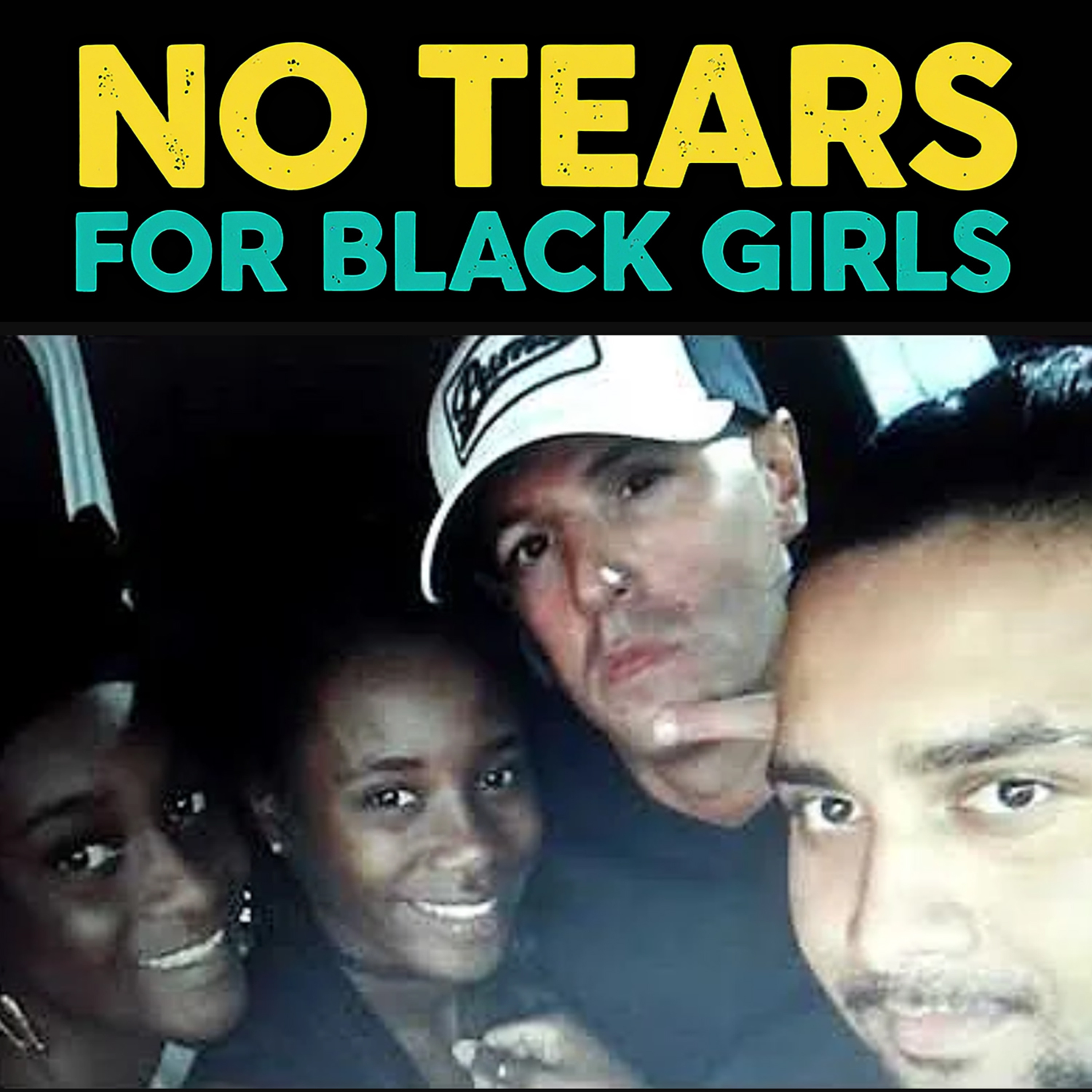
No Tears For Black Girls · John Reedburg Media
In 1996 a South Carolina court convicted a man of promoting the prostitution of a child and sent him home with a suspended sentence. Over the next twenty-three years he filed flyers, built a DJ reputation, and accessed hundreds of Black girls and women across Florence County while law enforcement closed case after case, marked reports unfounded, and watched evidence walk in and out of their offices without making a single arrest that stuck. In 2011 a thirteen year old girl sat in a hospital and told a deputy she was afraid she had been exposed to HIV by a thirty-four year old man who paid her for sex. The case was marked unfounded. In 2018 a family member put a phone with evidence directly into a deputy's hands. The case was administratively closed. That same year six SD cards were found in a sock in his bedroom drawer while two underage girls were inside his home. He was charged with marijuana possession. He went home. His name was Jason Roger Pope. On his own Facebook page he wrote that he had six hundred and ninety-three bodies. All Black females. This is Black true crime. This is a Black women story. This is what institutional indifference looks like when it has twenty-three years to run. No Tears For Black Girls is the podcast that refuses to let these cases become footnotes. This episode is not comfortable. But it is necessary. SHOW NOTES Episode: He Posted 693 Bodies on Facebook. Florence County Closed the Case Six Times. This week on No Tears For Black Girls, host Samantha Paul covers the documented case of Jason Roger Pope, a Florence, South Carolina DJ and promoter who used social media, party flyers, and local social capital to access and exploit hundreds of Black girls and women over nearly three decades while law enforcement repeatedly had evidence in hand and failed to act. This episode covers the full timeline from Pope's first conviction in 1996 through his 2023 guilty plea on thirteen charges including five counts of sex trafficking of a minor. It examines the documented failures of the Florence County Sheriff's Office, the public health silence that followed his arrest, and the gap between the thirteen charges he was convicted on and the six hundred and ninety-three encounters he publicly claimed. It also examines why no hate crime charge and no HIV criminalization charge was ever filed despite evidence supporting both. This is Black true crime told through the lens of institutional accountability. This is a Black women story that national media covered in a paragraph while the Black press and community advocates kept it alive for years. No Tears For Black Girls exists because these stories deserve more than a paragraph. Content warning: This episode contains detailed discussion of sexual abuse of minors, human trafficking, deliberate HIV exposure, and systemic law enforcement failure. Stream the music:Search No Tears For Black Girls Soundtrack wherever you stream music to find Flowers For The Living, the latest EP performed...
0:00Imagine this. You are 16 years old and you are
0:03standing in front of a mirror getting ready for a party.
0:06Not just any party, a real one, with a DJ, with lights, with
0:11older people who make everything feel bigger than your regular
0:14life. Your friend texted you the
0:16flyer. It looked professional.
0:19It looked legitimate. The man throwing it has a
0:21reputation around Florence, SC. Everybody knows DJ Kid.
0:26You have seen his name on social media since you were 13.
0:29He promotes events. He pays girls to hand out
0:32Flyers. He comments on posts.
0:35He slides into DMS with opportunities that sound like
0:38they could actually be something.
0:40Your Mama does not know you are going.
0:43You told her you were staying at your friend's house.