
National Police Association Podcast · NationalPolice.org
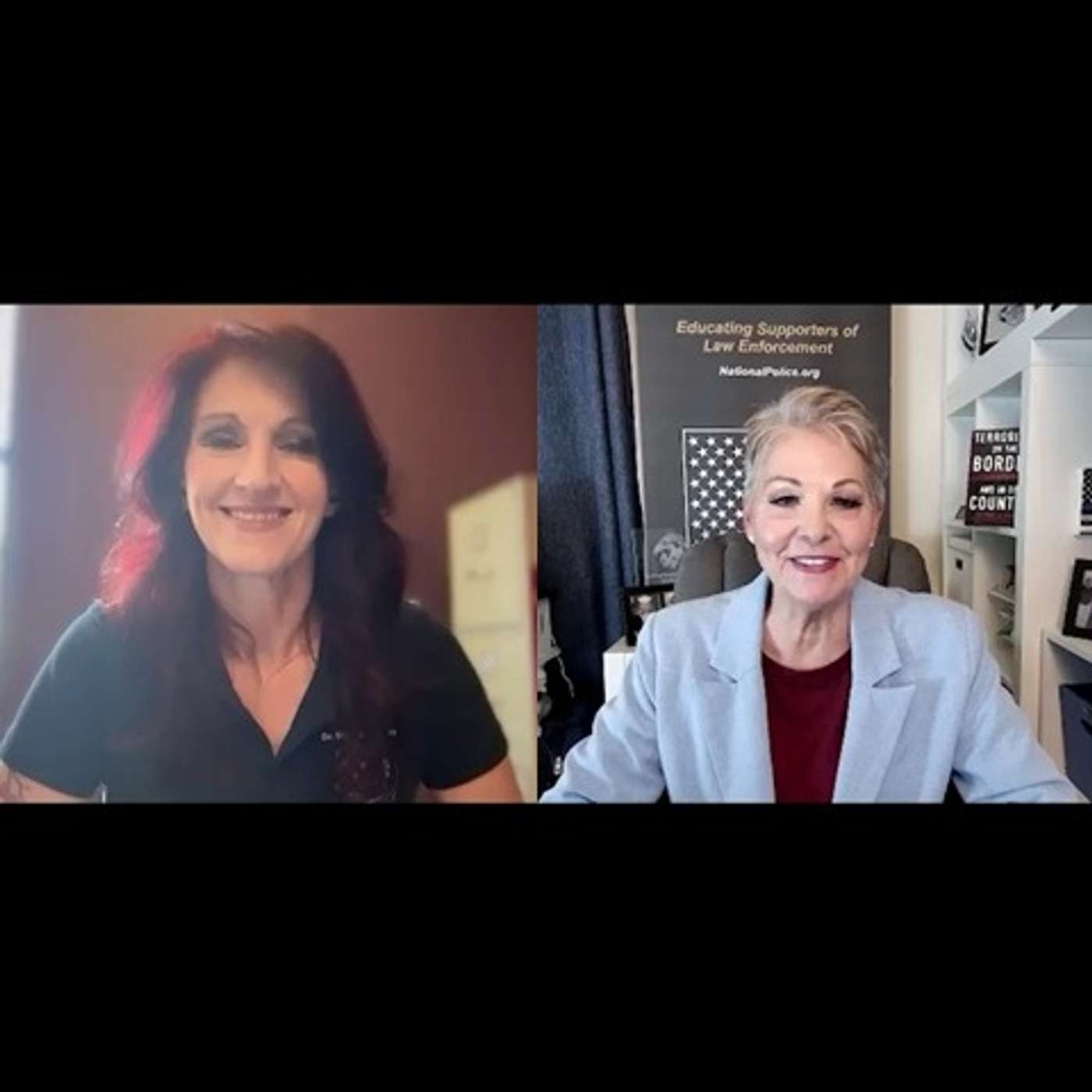
What happens when the people who answer everyone else’s call for help need support themselves? On this episode of the National Police Association Podcast, Sgt. Betsy Brantner Smith welcomes Dr. Stephanie Conn, a former police officer who now helps first responders navigate the emotional demands of their profession. As the daughter and wife of police officers, Conn brings both professional expertise and personal experience to a conversation about resilience, trusted relationships, and building effective peer support programs. Conn explains how losing two coworkers in the line of duty and witnessing the difficulty of connecting officers with counselors who understood their work helped inspire her transition into psychology. She describes why effective care requires more than experience treating trauma: clinicians must understand police culture, accommodate shift work, and reduce practical barriers to getting help. The conversation also highlights dispatchers, corrections personnel, and other employees whose exposure to disturbing events can be overlooked. Conn discusses developing support strategies for personnel who must manage stress while remaining at their consoles or assigned posts. In this episode: Peer support before a crisis: How trained, trusted coworkers can recognize changes, start difficult conversations, and help colleagues connect with additional support. The cumulative toll of police work: Why relationship problems, organizational frustrations, moral injury, and repeated exposure to suffering deserve attention alongside critical incidents. Finding the good: Conn’s approach to countering cynicism through community support, thoughtful media habits, humor, and small acts of kindness among coworkers. Building an effective peer support team: Selecting and training members, addressing ethical challenges, preventing burnout, and maintaining a program’s effectiveness. Reasons for optimism: Why greater openness about counseling and wellness gives Conn hope for the future of law enforcement. Conn also discusses her books, Increasing Resilience in Police and Emergency Personnel and Building Effective Peer Support Teams. Her peer support book includes reproducible forms, templates, and resources to help agencies establish and sustain their programs. Her message is practical: support should begin before someone reaches a breaking point, and caring for first responders strengthens their ability to serve their communities. Connect and learn more: https://firstresponderpsychology.com https://www.amazon.com/Building-Effective-Peer-Support-Teams-ebook/dp/B0GPX5599P https://www.linkedin.com/in/dr-stephanie-conn
Betsy Smith: Hi, this is Sergeant Betsy Brantner Smith at the National Police Association, and this is the National Police Association Podcast. You know, we talk a lot about police officer wellness at the National Police Association, in the media, and of course, with our guests here on the MPA report. And so I thought that this was another excellent professional that you needed to hear from when it comes to police officer wellness, resiliency, and especially one of the things near and dear to my heart, and that's peer support. So Doctor. Stephanie Khan, welcome to the show to talk about all this stuff. Stephanie Conn, PhD: Thank you. I'm excited to be here. I love talking about this stuff. Betsy Smith: Yeah. It is. It's it's... Because back in the day, we didn't really talk about this stuff at all. You know? And it was, you know, again, back in, you know, my day in the covered wagon days, you know, we went to the police academy and they told us, don't take it home, don't talk about it, you know, all that stuff. So speaking of that, first and foremost, I have to ask you, because you were... Before you had all these letters and numbers and all that associated with your name, you were a police dispatcher like me, then you became a cop. Why'd you become a cop? Stephanie Conn, PhD: Well, my dad was an officer for almost forty years. And so Betsy Smith: I grew up, I was Stephanie Conn, PhD: the first bedroom down the hallway, and so I got to overhear a lot and just had a, you know, as much as I was, you know, the typical teenage gal that doesn't like being a cop's daughter in a small town, I also had great respect for what they did. I thought it was fascinating. I thought it was noble. And yeah, it just seemed like something I would be good at and that I would enjoy. So I did. I jumped in at 23. Betsy Smith: So, let me ask you this because you were a dispatcher for quite a while too. How was that transition from dispatch, you know, on this side of the screen and the microphone and the telephone and all that to being in that patrol car. What was that like? Stephanie Conn, PhD: Well, it wasn't that odd to me because honestly, I had done enough ride alongs, and I had actually gone out with my dad. And I tell people, you know, wish my dad were here to still here in this world to hear me talk about this, but he would take me sometimes to meet with his, UCs, and so I kind of got used to being in a police car, well before I became a police officer, so it was kind of odd to actually be stuck in the dispatch center initially because I was kind of used to being out and about. But I actually quite loved it, and I think it gave me a great appreciation for those stuck behind the console because I knew they were trying to make sense of things that they were hearing bits and pieces of, and they were trying to kind of figure out the geography of stuff and the locations of things. And so I think, it just kind of gave me, going into patrol gave me, like, just a great experience to have done both of them. Betsy Smith: And we don't give our dispatchers, our telecommunicators, nearly enough props, credit, all that. They get a week a year, right? National Telecommunications Week. Stephanie Conn, PhD: But Betsy Smith: when, you know, when we talk about mental health, we talk about wellness in the law enforcement community, dispatchers are... In fact, I wrote several articles about the forgotten first responders, our dispatchers. Talk about that for a minute. Stephanie Conn, PhD: Yeah. And it's one of those things that when I was doing a critical incident stress debriefing with a colleague of mine and I was down at this... You know, police and dispatch was there, and the dispatchers heard the police officers talking about the post critical incident protocol and how well it helped them to do certain things, and they were so glad to have had that because they got that information. And the dispatchers pulled myself and my other clinician that was there with me aside and said, What's the dispatcher version of that? And we're like, What? And I said, What's... Like, we heard them bragging about what a great protocol that they had that you guys gave them. What is there for us? And I was like, Oh, man, I'm kind of actually embarrassed that I didn't think to give them a protocol as well. And so since then, I've developed a protocol, and I've delivered that course several times to dispatch centers, and I'll be speaking about it at APCO, the NENA APCO conference here in October, and I've done that a few times before, where I'm like, okay, when you're stuck at the console, and it might be that for the dispatcher call taker, it could be that for the records clerk that has to look at horrible things or review ugly reports or body cam footage or those kinds of things. It could be for the detective has to sit at the detective desk and can't get up and move and go about and do things. So it could be for a number of people, but this was actually really targeted towards the dispatchers. Some of the nervous system regulation setting and resetting they could do when they were stuck where they were. And I just love that course. Betsy Smith: Absolutely, because you are, you know, as a patrol officer, we can at least, you know, we can get up, we can get out, we can walk around, we can do all kinds of things. Dispatchers, they really are, they are trapped, and and especially during critical incidents, they can't go anywhere. They can't even go to the bathroom. They can barely take a sip of water. Stephanie Conn, PhD: Right. Right. Right. And the same thing again for... This was geared towards them, but even, like, in corrections, if you're at control, like, you can't get up and go walk. You've gotta be there to be able to control the doors and access and that kind of stuff. And so something might be going on and you can see it going on through the monitors, but you need to be able to stay where you need to stay put, right? And so how do you manage your nervous system? How do you manage your distress that you have while you're sitting there, right, at the same time? Betsy Smith: So let's get into this. So you decided, you left law enforcement, but you didn't really leave law enforcement, and you decided to get your PhD. That's not an easy feat. What motivated you to do that? Stephanie Conn, PhD: Yeah, that was a very carefully considered choice. I was a peer team member whenever I was an officer, and I had a couple of coworkers killed in the line of duty about a year apart from each other, and we had a police psychologist during the first one. We had a city psychologist during the second one. I had a hard time getting people to take a referral to the city psychologist or had a hard time finding anyone that had specialized in first responders, that anyone would take a referral to. And so I said, you know what? Why don't I just do some counseling courses while I'm still doing my police gig and try to do both at the same time? And then I ended up deciding, okay, I'm gonna have to step out if I'm really gonna take this seriously and finish this counseling program. But I'm gonna go back to policing because I never wanted to leave. I'm gonna go back to it, but I am gonna have to step out for a little while. I'll stay in good shape. You know, I'll keep my nose clean. I'll pass the physical and the psychological, all the things, and I'll go back. And then when I got finished my PhD, like, and said, hey, look, I was a cop. I was a dispatcher, wife and daughter of cops. Happy to support you all. It was all she wrote. Like, people are just like, oh, wait. Like, I can curse around you or wait. I can talk without having to explain a thousand things to you. Yes. Just come as you are. Talk about what's going on. Don't censor plain language, just I'm going to talk to you in the same way that you would likely hear someone else talking to you without all Betsy Smith: I the side cannot stress that enough, that one of the things, and we've seen this over the decades as we have started to talk about this, is very often police officers, really all first responders, when go to counseling very often, they end up counseling the counselor. And that's what makes you and your position, your writings, we're going talk about that, so very valuable to the law enforcement profession. Because if you just Google, I need counseling services, boom, you Google that and you go to whoever comes up first on the page, and you're a police officer who is dealing with some extraordinary stuff, which we all are, And I experienced this myself decades ago. You walk in and you literally end up comforting the counselor because you're telling them things that they really didn't even know happened out there in the real world, right? Stephanie Conn, PhD: Oh, it's that. And even if they somehow have some kind of clue, about those kinds of things, they've educated themselves in certain ways about those things, you still don't wanna be doing the work of saying, okay, well, does it mean to do this procedure? Why wouldn't you... You you don't wanna be feeling like when you go to something like that, that you're having to work. So even if they have the chops to handle the trauma stuff that you come to the session with, just the cultural norms, the language, shift work, you know, all those other kinds of things, because I tell people that the competency of a clinician is multifaceted. It could be it's trauma and all the things, because it's more than trauma. It's, you know, moral injury. It's a lot of other things, right? It's the, cultural norms, and then it's also the procedural things, like, are you only open nine to four, on these days, and you don't take insurance because you don't like taking insurance and that's difficult for you, and you don't like EAP benefits because they don't pay well. Do you make people play phone tag with you and that means they have to forego sleep to try to play phone tag with you during the day while they're trying to set up an appointment? So it's all these other kinds of things like, where I try to lower the barrier and make it as easy as possible. You can go to online scheduler at 3AM and schedule with me, right? I'm gonna see you at 07:00 at night on Mondays. We actually have someone that will see you on Saturdays, right, if that's, you know, or, you know, we have people starting, we have appointments starting at seven a. M. For people that are on night shift that want to do something before they go to bed, right? So we have, you know, there's other pieces there, and we take all the insurance and EAPs because, and I advocate that people do, because we don't want someone saying, well, okay, so they're trauma based cool, the culturally competent cool, but I can't afford to pay out of pocket and then get back what I get back from my insurance because the clinician doesn't want to bother with insurance. And I've had clinicians say, well, I don't want to bother with insurance. And I'm like, so you pass on that bother to the officers. And them deciding, hey, I'm going to pay for that or I'm not, it's just one more reason to not go, and I don't want them to have a reason to not go. Betsy Smith: Right, because it's tough to get law enforcement officers into counseling. There's just no doubt about it. We're not the most... Well, like you said, we have weird schedules and all that stuff, but we're also not the most trusting people. We don't necessarily all want to really confront our trauma, our injuries, things like that. And that's why, and I want to switch to peer support. That's why peer support is so very important. Can you first and foremost explain what peer support is to our non law enforcement officers in the audience. Stephanie Conn, PhD: Yeah. You know, and sometimes people think of peer support as critical incident stress management because the two are related concepts. The critical incident stress management has decades of history where the critical incident occurred, a group of specialized individuals that are trained and selected by the department to respond to those kinds of things, respond during those things and provide psychological support and maybe a referral and those kinds of things and help people put things together after a critical incident has kind of shattered their world. Peer support, distinct from that, is it's the guys and the gals, again, hopefully chosen by the department or the employees of the department and specially trained, are the ones that are gonna be to their left and to their right and say, hey. I've noticed you've not been yourself lately, or that call seemed particularly difficult. Do you wanna talk about it? Or, you know, you... You've been, calling off sick recently. How are things going? What's going on with you? Right? So peer support is really that, relationship that you have with others where you would notice something is different about a person, and you would get involved earlier, and they would actually trust you to get involved earlier because you have a relationship with them, a relationship where trust is built, and they also trust that you will maintain whatever they say to you in confidence, and that you're not asking for any other reason other than to support them. And so, that's my notion of peer support as I used it and as I trained people to be. Betsy Smith: And it has become really invaluable when we're talking about police officer mental health. I mean, it's something you did as a police officer, I did as a police officer. And again, I always have to remind folks to go back to when I was a police officer and we just started to really talk about the mental health stuff, peer support was informal, there was no training and you kind of just all went and had coffee or went and had a beer, which was not always the best idea, and talked about what you had just seen or what you were dealing with. Because more than just critical incidents, I know that I talk to police officers. They're like, yeah, I went to 10 homicides in six months, and none of that bothered me. But while that was going on, my wife and I were having a lot of problems. One of my kids was very, very sick, you know, things like that. Very often, it's not the trauma, quote unquote, or the critical It's incident at what's happening around them, right? Stephanie Conn, PhD: Yes. Yeah. The thing is, is it might not be those 10 traumas individually, but it can be what kind of world do we live in because not anyone in particular is bothering me. But am I the grim reaper here? What kind of society do we live in? Or then that moral injury that comes because you're just like, hey, but no one's prosecuting anyone, or why am I feeling grilled over this versus that, or the organizational betrayal, that occurs, or again, the relationship stuff or the health stuff. And so, yes, we have really kind of slanted towards post traumatic stress disorder or post traumatic stress injury when the reality of it is, as Doctor. Ellen Kirschman talked about, it's oftentimes that death by 1,000 cuts. And the cuts could be, from operational stuff, the calls that you go to, the organizational stuff, the promotional exam that felt rigged from go, or the discipline that didn't seem right or consistent or that kind of stuff. It could be the relationship, that you're starting to be estranged from. These all are just little cuts, to a person's well-being. Betsy Smith: Well, and now, you know, really for the last twelve years, but especially for the last six, police officers are dealing with, you know, being... We're the evil villain. You know, we used to be the hero. And and now very often police officers are seen as the the bad guy in any number of situations. With the 20 fourseven news cycle, you know, it's not just cable news anymore and newspapers and all that, it's social media, it's independent, you know, there's independent and citizen journalists, and, you know, a lot of times the media, whatever media, gets it wrong and the police officer is the one to suffer from that, especially if an officer does, you know, have to utilize deadly force or they get into a fight that's on video, all that. How do you deal with with all of that kind of injury, if you will? Stephanie Conn, PhD: Yeah, and I mean, that is moral injury, and I've said, you know, there's this, and, you know, it might start off as moral distress, and then it becomes over time this injury where you start to hate people, and you start... To put it bluntly, all people, like globally, which is a problem, right? So I tell people, okay, you know, that's an option. But in reality, we actually have to hunt for the good. We have to look for the good because if we wanna look for the bad, we can find it anywhere we want to. We can find it in social media. We can find it in regular media. But we actually have to look for the good, which means we might have to curate our feed. It's not about us being oblivious or blind to things that are upsetting or are difficult, but rather making sure we have a balanced view of things because the work and sometimes the media would have us slanted in favor of all that is negative, all the citizens that don't like you, all the citizen groups that are ill informed on whatever they're ill informed on, and yet there is a dual reality. Then there are people that do support you. Even during the and I'm going speak very carefully because this is recorded, but I've worked with several agencies during 2020, and there were people, you know, that just kind of felt really just the heaviness of all that, like, oh my gosh, does no one care about us or why does everybody abuse us so much? And I remember walking into a room and I saw like a really, really long percentage sign, like a decimal point zero something two, four, whatever the numbers were. It was clearly pulled up to the front of the room when I was about to do a, talk with a group of people involved in all this stuff, and I said, What's with the percentage there? And they said, That's the number of people out there divided by the population to illustrate that there are a loud, vocal, group of people that are gonna say horrible things about you, but there is a silent majority of people that either don't have any feelings about you because they're just trying to live their lives or actually support you. And then I saw some of the thank you cards, and some of the kids had drawn some cards and sent them, and I said, these new or old? And they're like, no. These are these are the ones that were sent. I said, okay. So there are people. So this is what we have to pay attention to because, again, we can... Media and other people will draw us to the negative. The job will draw you to the negative, but we have to make a concerted effort. I think our wellness rests upon it to look for the positive. And if you can't find the positive, you've got to actually be the positive, and I told them that. If you can't find it out there, you better create it on your shift for your shift mates because they need you to do that, and that means all of you do that. So someone's going to be trying to make somebody else laugh or bringing someone a coffee or doing something else for someone else because if we can't see it, we need to we need to be it, basically. Betsy Smith: It can be very tiny gestures too, and and that's that's... This is literally why the National Police Association exists because, you know, we saw that need years and and years and years ago, and and we do polling and of course every time we do polling we find out that the vast majority of people in the country support law enforcement, they want more law enforcement, they don't want their police officers to be defunded, they don't think we're murderers and thugs and this and that, and it's just so extraordinary because like you said, police officers in the thick of it think, oh geez, you know, everybody hates me. And yet in reality, you said it so well, most people are just out there trying to get on with their lives, and they're grateful when we show up, and we do lose sight of that. And lastly, I was just talking very recently to a recently retired police officer of my generation. We both started in the '80s. And he said one of the things he intentionally does now in retirement is he doesn't watch cop shows. Doesn't... This is a guy that worked homicide in a major city for over a decade. Watches comedies. My husband and I do the same thing. We watch a lot of Hallmark movies because I don't need to... I saw a lot of stuff in twenty nine years. Yep. I don't need to see it on my TV. I wanna know... I wanna look at what other people see, and it's, you know, happy, fun movies, things like that. Don't we have some self responsibility to do that? Stephanie Conn, PhD: Absolutely. I mean, we're gonna watch police shows, let it be Super Trooper or, you know, me, myself, and Irene or something. Betsy Smith: I know there's nothing better than laughter, right? Funny cop stuff and funny cop and things like that, but I do think we, in law firms, we tend to get eaten up with all this stuff too and now we get eaten up with social media don't we with with what you know people are are putting out erroneous things on on social media I have to sometimes step away because there's all these tactical experts that really know nothing about the law enforcement profession. We're too connected to the world sometimes. It's a good thing and it's a bad thing. So you started... So you're doing all this amazing work, but you're also a prolific writer. Talk about that. Stephanie Conn, PhD: Yes. I apparently have a sickness. I like to write, and I like to write a lot. And so I wrote a resilience book in 2018 called Increasing Resilience in Police and Emergency Personnel. And then I don't know if you heard about it, a lot of stuff happened in 2020 thereafter. Almost, yeah. Just a smidge. And so I said, you know what? I think I need to do an update. And not only did stuff happen, but there have been a lot of break breakthroughs in the neuroscience of of wellness and resilience and brain health and nervous system recalibration and all these other kinds of fancy, things that it was incredibly important to me to update it and to expand it. And so I was like, you know, there's things that I didn't know about that existed in 2018, as is the case with everyone, and I wanted to add some things that I had learned through my work with first responders and through some of the research that I had encountered since then. Wanted some of the new stuff as it related to how we better care for ourselves, whether improving sleep or managing, you know, traumas and stress and these kinds of things. And I wanted to address the new reality of how some of those events shaped our first responders. And so I expanded on it in 2025. And so that just came out last October... Or excuse me, September 2025. And then I wrote up because peer support was incredibly important to me and close to what I do most days. In fact, I'm doing something, a lot of peer stuff today. And so I wrote a peer support book. And so that's building effective peer support teams because I have tons of agencies asking, well, how do we build a peer team? What's the foundational training? How do we choose our members? How do we maintain that effectiveness? Because we can sometimes bring people on that are great, and then they start to kind of lose steam, or they start getting burned out themselves, or, you know, they start to have compassion fatigue, or they get in over their heads, or there's legal ethical issues that they, can't step, back out of, those kinds of things. And so instead of having a thousand sidebar conversations and emails and mini trainings, I said, I'm going to put all this stuff in one place, how to have really hard conversations about very difficult subjects, discipline, and other kinds of issues that first responders will encounter in their peer support conversations. I wanted them to have that as a tool. So I wrote that the Building Effective Peer Support Team came out August 11, so super excited, and yeah, very excited about that being out there. So, yeah. And I've Betsy Smith: got to tell you, both your books, your recently updated one, then especially this new peer support book, I believe that every chief and sheriff needs to have a copy of these books, because especially the peer support book, because it's laid out in a way that the chief or the sheriff or whatever can really hand to the lieutenant or the sergeant or whatever, whoever's interested in really getting a peer support program going and say, start with this. Because it's very often what happens is somebody gets assigned to it, I was always that Here you go, know, Sarge, I want you to start a peer support team. And, you know, of course you can go on the internet, can talk to other agencies and things like that, but your book really very succinctly and simply, very simply, because, you know, we're not all geniuses like you are, lays it out. And so I cannot stress enough when we're done. I want you to tell everybody where they can find the books, but for any police leaders or citizens who think their police department needs a peer support team, this is where you start. Stephanie Conn, PhD: Yeah. Thank you. And I was so excited because I negotiated with my publisher. I said, I want these things. I want people to be able to photocopy these, have permission to photocopy because there's templates, there's forms. Know, how do we recruit? What does that look like? How do we interview? What does that look like? How do we, check-in with them annually to make sure that they are feeling supported, that there's no issues that they've had in the past year that are still lingering for them, that they want to kind of sort out, and that their goals for being a peer support in the coming year are also being identified so we can help them grow in that particular role. And so I quite am just in love with what I either came up with, or other agencies actually allowed me to incorporate. So I have other agencies, so it's not just Stephanie Kahn's world, but several other agencies across the nation have said, here's what we found, here's what we used, here's what we have found helpful. And so they were gracious enough to share that with me so that I can in turn share that as a photocopyable component of this book, so I'm excited about it. Betsy Smith: Let me ask you this as we get ready to close. Are you optimistic about the law enforcement profession? What are your thoughts? You're really in the thick of it. Stephanie Conn, PhD: I am. I know there's challenges, and a lot of times, they, relate to budgetary concerns, everyone's trying to do more with less. And so, I always joke with my agencies. I said, besides 300 extra coworkers and a training and equipment budget, is there anything else I can do for you today? And that usually kind of breaks the ice that acknowledges these are some of the challenges that agencies are facing. But I am, because I have seen shifts. Just even yesterday, people came in and were just like, Hey, you know, I get counseling from so and so, and it's been really helpful for me. Before, no one talked about that, and they're not coming in and saying, Well, we just all shove this down in the soles of our shoes and hope disappears when we take the shoes off. Like, people are actually talking about it or showing me podcasts that they found to be really helpful that, you know, helped them to sleep and that kind of stuff. And so people are getting excited about that. And then when we can get excited about the wellness components and just being well and being healthy and resilient, that turns into improved performance, and it turns into improved community safety, and that improves relations for those that are open to that. And so I think it can absolutely have this kind of multiplicative effect, for sure. Betsy Smith: I could not have said that better myself, and that's why I'm so thrilled with what you're doing. Tell people, where can they find you? Where can they find the books? How can they follow you? Stephanie Conn, PhD: Well, they can find me by chasing me all over from agency to agency, but the short answer of that is, I'm on LinkedIn. First responder psychology is my practice, so I have a business Facebook. But, firstresponderpsychology.com, you can see where I'm doing training or where I have books or other things going on. And then the books are available from amazon.com. But if you wanted a bulk order, please go through me, through my website because I'm able to connect folks with my publisher directly for agency discounts and free shipping and all the kinds of things that you want when you, have limited budgets. So I'm happy to make those arrangements directly with people. Betsy Smith: Doctor. Khan, you're such a busy person, so I can't thank you enough for spending time with us today and enlightening us once again about first responder mental health. And if you'd like more information about the National Police Association, you can visit us at nationalpolice.org. NPA: Every day, the brave men and women of law enforcement put their lives on the line to keep us safe. But they need our help to continue their mission. Activist politicians, progressive prosecutors, the ACLU, and the rest of the anti police forces receive millions in donations from extremist pro criminal elements like George Soros and woke corporations. The National Police Association is fighting them in courts around the country, including the United States Supreme Court, defending officers who are being attacked for doing their jobs. Additionally, the National Police Association works year round to pass tough on crime legislation to put and keep criminals behind bars. Consider going to nationalpolice.org and donating to keep us in the fight. Together, we can win. That is nationalpolice.org.