
National Police Association Podcast · NationalPolice.org
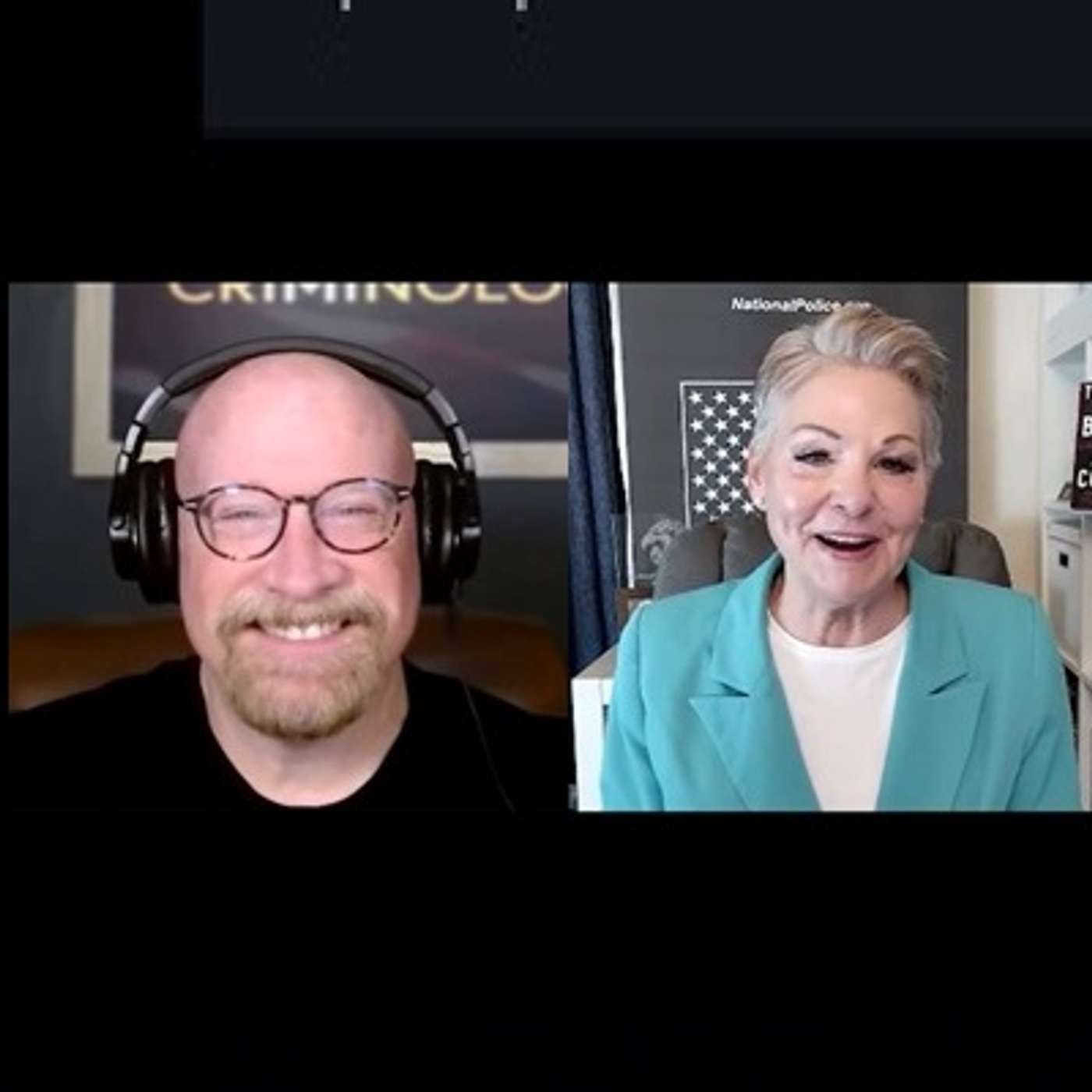
On this episode of the National Police Association Podcast, host Sgt. Betsy Brantner Smith (Ret.) welcomes retired Sheriff Dr. Currie Myers for a conversation about service, leadership, organizational culture, and the importance of caring for the whole officer. Myers traces his career from summer lake patrol assignments and the Kansas Highway Patrol to undercover investigations, homicide cases, a federal task force assignment, and service as sheriff of Johnson County, Kansas. He explains how those experiences shaped his commitment to supporting fellow officers, developing talented employees, and leading through service. The discussion also explores his transition into teaching, writing, radio, and podcasting, and his continuing mission to explain what police officers do, why their work matters, and what they need to succeed. In this episode: A childhood rooted in service: Growing up around law enforcement and military personnel helped Myers discover his calling, while a college ride-along set him on the path to becoming a Kansas state trooper. Professionalism and officer safety: Myers and Smith discuss the pride, discipline, and organizational identity that help shape effective officers. Leading an established agency forward: As sheriff, Myers pursued improvements in technology, specialized assignments, and recruiting while building on his predecessors’ work. Excellence in corrections: Myers describes the effort to earn American Correctional Association accreditation and explains his view of jail deputies as officers policing a community within the facility. Helping employees find their strengths: Strong leaders create opportunities for officers to develop their talents—and support their professional growth, even when it leads to another agency. Telling law enforcement’s story: Myers explains why agencies should communicate directly with the public, recognize good work, and take responsibility when problems arise. Experience informing criminology: Drawing on his investigative career and doctoral studies, Myers discusses the importance of connecting academic theories to what officers encounter on the street. Mind, body, and spirit: Myers shares his perspective on mental wellness, physical fitness, and faith as foundations for a sustainable law enforcement career. Looking ahead Myers previews his forthcoming book, The Feral Man, which he says is expected in spring 2027. He outlines his argument that weakening connections to conscience, self-control, and social responsibility are changing the challenges officers face and making leadership and mentorship increasingly important. A message worth remembering “Law enforcement is a mere reflection of the society in which it serves.” — Dr. Currie Myers Follow the guest https://rightoncrime.com https://www.kmet1490am.com/americas-criminologist https://www.linkedin.com/in/sheriff-retired-currie-myers-phd-mba-0a760414
Betsy Smith: Hi, this is Sergeant Betsy Brantner Smith at the National Police Association, and this is the National Police Association Podcast. I have a guest with me today. He has a long law enforcement career, and he also, during that career, began writing, he got involved in politics. He'll tell you a little about that. And he continues even in retirement to do so many things for, not just for his community, but really nationally in informing people about various issues via a podcast, AM radio, is one of the few real free places that we have left and and via Substack. So I thought this guy has got so much going on that you needed to meet him. Currie Myers, welcome to the show. Sheriff (Ret) Currie Myers: Betsy, you're a rock star. Thanks so much. I'm super excited to be with you today. Betsy Smith: Well, I'm so glad to have you here. And so, of course, I have to ask you because I ask everybody who's been in law enforcement. Why'd you become a cop? Sheriff (Ret) Currie Myers: Oh, I I I was instilled early on to serve something greater than yourself. And that was the mantra in our family. And and it didn't hurt that I grew up on a large federal reservoir, a lake. It's the third largest lake in Kansas and my dad worked for the US Army Corps of Engineers. He was an engineering geologist and when he he so he helped build most of those federal flood protection lakes and he liked the Perry Lake so much. He put in to be head of it and and run it. So, I grew up on this 45, zero acre playground with about 18, zero surface water and it was a substation as well for state troopers, for the Jefferson County Sheriff's Office, and of course, I saw military almost every day including colonels and generals who would come for inspections. So, I grew up not only with that service mindset but I was surrounded by it from a very young age. In fact, I used to go out when I was 12, 13, 14 with the sheriff of the county. My dad would split me up. He would go in another rowboat with a deputy. I would go in another rowboat with the sheriff and we would look for drowning victims and things like that. So, I got I got I I had experiences that most 12 or 13 year olds are aren't gonna experience in life. Betsy Smith: Well, in our generation, I grew up in the Midwest as well. And talk about free range kids right now. We were true free range kids, except that we were out in the country instead of in the city. And I think when we think about Kansas, which I was telling you, I just drove through a week ago, The thing about Kansas is people think it's wheat fields and cattle and things like that, but there's so much more to it than that, isn't there? Sheriff (Ret) Currie Myers: Well, I love I love the state. It's it's mainly because the people, those people are just so good and caring and and giving and that's everywhere in the state but in the East side of the state, it's around Kansas City where I was sheriff. I was the sheriff of the largest county in the Kansas City Metropolitan Area which is Johnson County Kansas is about six fifty, zero people. So, you get that kind of urban population and as the as you move west, the further you go west, the course, the flatter it becomes, the less trees there there are and there's huge cattle ranches. In fact, my son-in-law daughter have a Wagyu cattle ranch that's out in the middle middle part of of Kansas that I love to go out there and and be with them on occasion. So, you get that, you know, we have that urban fill to it in Kansas City which is a lot of people are moving here especially to Johnson County because of the low crime rate and and because it's the cost of living is is less but it's nice and but you also get, you know, you want to you want to go see rodeos, really good ones. If you want it, there's, you know, it's that that that view of Americana, if you will, is alive and well in Kansas. Betsy Smith: I love that. I absolutely love that. So you, you know, rose through the rose through the ranks. What was your favorite assignment on the Sheriff's Department? Sheriff (Ret) Currie Myers: Well, I didn't rise through the ranks of being sheriff. I started out as a state trooper. So, I I rode around with I saw state troopers when I was very young and when I was in college, I was kind of lost. I didn't know what I wanted to do and I came home on a my sophomore year and I did a ride along with a state trooper and I was hooked. I mean, this guy was lean, professional state troopers in Kansas have a very, they dress very well. They always have the best equipment, the best cars. So, I was hooked and he was very good to me and treated me well and I did it a couple of times. So, that's when I knew kind of what I wanted to do but you know, sophomore in college, you can't can't do it yet. So, the following summer, I I worked for the Jefferson County Sheriff's Office and they had what was called a lake patrol that would go around the the lake and enforce the law. So, back then, you could, as long as you were 18, you could be a cop, a gun toting cop, at least in Kansas. So I during my summers, after college, I would become a Jefferson County Sheriff's Deputy and I would do that lake and go around and enforce the law. And that got me even more connected to law enforcement and being a state trooper. But I always wanted to be a state trooper. And I was very blessed. I got recruited and hired in when I just as I turned 21. So I ended up becoming the youngest state trooper ever in the history of the Kansas Highway Patrol. And I went to my academy, which is an excellent academy. And so it was a wonderful experience and that that opened the door. And so I did five years as a trooper. I loved it. I stationed in Troop A, Kansas City. So, I got to be an urban cop and experience all those interesting events and then went to the after five years, went to the Kansas Bureau of Investigation and spent the the next majority of my life as a KBI agent. And so when I got stationed in Kansas City as a KBI agent, is an executive there. The sheriff died in office and it was opened up. He had been there forever. He had been the longest serving sheriff in in Kansas at thirty seven years. He was the sheriff And wife and I prayed about it and won the election. So that could put me in the sheriff's office. But to answer your question on the on the best job, I enjoyed every different one. It was different. I enjoyed riding motors. I was a state trooper that rode motors for the last two years. And I that was a blast. We had great motors and the Daner boots and the riding breeches and you know, the riding gauntlets as the gloves. I mean, we look good. So, that was always a fun thing but I loved working undercover. Loved working homicides. You know, I I I the best part about my career is I got so much different experiences because the KBI especially allows those. We work many different types of crimes. Betsy Smith: And I'll tell you, having trained at the KHP Academy and having been pulled over by you guys a couple of times, by the way. And you are very... And I'm married to a state trooper. Yeah. KHP, boy, you are extremely squared away. Also one of the things that I will never forget, the first time that I visited the academy was really the pride in the history of the organization, in the appearance of the organization. It wasn't a surface appearance. It was the appearance centered around history and with a knowledge of the officer safety element involved in that appearance. It's always been, since I've been in law enforcement training a very impressive organization and I'll tell you I've been on a couple of ride alongs and just always had a phenomenal time and boy do you guys drive fast so and so here Sheriff (Ret) Currie Myers: we were taught that so can't you can't go out and and be a I I this isn't the wrong I don't want people take it away but you can't go out on the highways and be a basically a roving hunter killer. I mean, you're you're out there looking for bad guys. I know. Betsy Smith: Yeah, you're hunting evil. Sheriff (Ret) Currie Myers: We're we're stopping people for trap. That's yes. That's what we do. We work accidents but we are hunting. Yep. We are looking for bad guys and so, that culture was ingrained in us. Some leadership matters because we had some very poor leaders who end up being superintendent. We had some awesome ones. So, leadership matters but the culture, the DNA within being a state trooper and I think that I that has that kind of feel regardless of what agency it's being that state trooper is just one of those things that I enjoy, and there's a DNA in it. Betsy Smith: So what was that transition like from a state organization and being an investigator? Now all of a sudden, you're thrust into politics, and now you're the sheriff running. It's a very different organization, Sheriff's Department, as opposed to the state police, you've got to run the jail, and you've got to kiss some babies, and you've got court issues. It's a whole different deal. And this is an extremely large county attached to a large city. Sheriff (Ret) Currie Myers: I had no idea that I would be experienced. I I knew the job. It wasn't the job that concerned me at all. And I felt like I was a good leader. I've always been kind of a servant leader. I I believe in leading from the bottom up as opposed from the top down. So, I think that was always ingrained to me. So, that part I didn't mind and I came with some skill sets that were nice when I went to the KBI. I, you know, I worked deep undercover. So, I got that understanding. The feeling I was I was TDY to DEA for five years. So, I got the experience of being a federal agent. I was in the nineteen ninety three federal building shootout and bombing incident and survived that. So, that gave me a perspective on things especially officer wellness and mental health and all the experiences that you go through in that trauma. I was a ten year tactical member of that group then worked homicides for a number of years as well which included public corruption, police shootings, you know, those kinds of things. So, it it it opened the door and I think the best part about working for the as a highway patrol and as a KBI agent is it taught me to to work well with others because our job was to support local law enforcement, not come in and take over. That wasn't the mindset of anything. So, I was always ingrained to me as working with others and so, I took that kind of mindset to the sheriff's office And the sheriff's office was was a leading sheriff's office in the nation. So it's not like you there's nothing to fix. There was just improvements that needed to be to be made because the person that was in in office were were before was the sheriff for thirty seven years. Not not in the sheriff's office. He was the sheriff for thirty seven years and and he was a hero. I mean, he was he would win by 85% of the vote. I mean, he would he would nobody would run against him at the final, I think, terms of his life. Nobody, not on primary or general elections. He would run unopposed because he was just an an idol, you know, to people and he was a good sheriff but as he got older, you know, I think sometimes it has an effect on the culture and you get kind of the same the same business and you don't you don't affect change as much as perhaps you should. So, I considered what I, my, my main goal was as a change agent to bring technology new understanding, things that we can do different, expand the sheriff's office into more than what they were, have different types of organizations. I brought back a motor unit, brought back directed patrol units, increased the quality of the hiring, opened it to not just inside the county, but you could live in the Kansas City Metro Area, which all of a sudden means that we got Kansas City, Missouri cops to come over because they would go, hey, I'm going go work at Johnson County because it's a safer place. They love us. They love police there. And they're paid well. And so, you know, we would bring on people from different agencies. And before we weren't able to do that because we, you know, we we had to hire, you had to live within the county in order to do that. And I thought, you know, why would you have to live in the county just to work here? Because we're missing out on some great opportunities to to hire people and so, that was kind of, you know, now, people don't think anything about that but that was that was cutting edge. When I was sheriff, not really people were doing that at that time And then as you said, you run you're you're running a jail and you're running not only just law enforcement but the correctional side and we had a thousand bed facility and we were full. Our average daily population was about 1,200 in a thousand bed facility. So, were outsourcing two fifty to 500 inmates across the state. It daily. Betsy Smith: Yeah, 1,200 people is a small town. Sheriff (Ret) Currie Myers: Yeah, yeah, yeah. It's, yeah, absolutely. And you got all of our staffs. We didn't do correctional officers. We do deputy sheriffs. And the mindset behind a deputy in the jail is that they have law enforcement authority. So they are a cop on a beat. Not any different than a cop on a beat out in the street. So, our mindset in the jail is you're a cop in the beat and we do directed jail which is, you know, you have pods in the in the sheriff's deputy is in the pods just like you would be living in a community and so and it's a makes for a safer jail than an indirect or linear method. You know, where you have people behind walls and you're just, you know, you're viewing them through the glass. I mean, that's those are zoos and you gets out of control quickly and we were recognized as one of the better jails in The United States because we had that system. We were on the cutting edge but there's one thing that we needed to do. We needed to have a new model or a new vision for the future and so I went to my jail administrator who was a major and I said, Major, we're this is an outstanding organization. We do very well but we need a new target. We need a new goal to hit. We're so good that we're missing out on a new mission and a new goal. I go, how about if we can become ACA accredited as a jail? And he went, wow. If we hit that standard, at that time, there was only about 50 jails in the nation that had ACA accreditation. Betsy Smith: Explain to people what that is. Sheriff (Ret) Currie Myers: American Correctional Association has standards that they follow, best practices and standards that they follow that have been addressed and you can become ACA certified if but you have to have outside people come in and inspect to make sure that you do everything right. The reason why that's important is there there's they call them best practices for a reason And best practices are professionalizing their organization where you have policy, procedures, training, outcomes, hiring that all meet standards of high quality. And that's that was the next step for us. We were so good. We were ready to to to do that and we spent the next three months preparing luckily. We had a very modern jail. Johnson County is a wealthy county. My county was blessed to have a where the economic engine for the state of Kansas. So, we can pay well. We can hire high quality. We can have the best equipment and we can have the best facilities. And they have that to this day. But that was an important mission for me. And within six months we became ACA certified. We got it on the first, the first inspection. Betsy Smith: That is no small feat having been. It is not. Accreditation. Sheriff (Ret) Currie Myers: Yeah. Betsy Smith: That's extraordinary. Sheriff (Ret) Currie Myers: Yeah. But it also shows you the level of of employees that I had, number one, already. The quality of work that was already there because, you know, we weren't we weren't having to redo a lot of policies and we weren't having to redo a lot of things and that we that we weren't already doing. So that was an important thing. And leadership matters. All the employees said, hell yeah, let's go do this. And it was a main culture thing, you know, was, yeah, we can be this. We can be the best we are. And we're going to prove it. We're going to prove it to the to the world. And as a result, we got on the map when it came to corrections. We had law enforcement agencies from across the country that would come to our facility to see how we operate and how we do things and so, we're now at about 1,500 bed facility. So, they were able to build you know, extra. So, we're at a point where we have our own facility that's just for booking. And so that's, you know, that used to be a long time ago just that was the jail. That had but we have a 500 bed facility that's just for booking and jail transportation back and forth and the cool part about the building of this, they they had great vision when they do it. The sheriff earlier on when they built the the original jail and courthouse. We have an we have about a football field long underground walkway that goes from the from the booking facility to the courthouse. So, the inmates never travel outside at all. You never see them that can come right up into the basement of the courthouse and then a courthouse deputies who are again deputy sheriffs, they're not security, can, you know, take them and work, you know, get them to their court appearance and be able to attend. So it's a it's a it's not it was wasn't just me, but I was building upon something that previous sheriffs had envisioned and and built upon themselves because the infrastructure was there to be successful. But employees matter. And I'll tell you that culture matters. And so that's probably the most important thing that you can have is a culture of an organization where you want to be the best. And then you're reinforced with good pay and attaboys and the ability to go do whatever you wanna do in a large organization, which we did. Betsy Smith: So how did you make that move into what you're doing now into media and writing and podcasting and all that? Where did that transition start to take place? I mean, you're doing things that you and I back in the nineties when we're young cops didn't even envision really doing. Sheriff (Ret) Currie Myers: Yeah. No doubt it was. Being a sheriff means that I had to kind of be my own public information officer. I mean, I had a PIO, but the I mean, the people need to know that I'm representing them. I'm the sheriff. I'm representing the constituents of the county. So, you know, they have to so part of that is ingrained in in I I think being a sheriff is that you have to be outward facing when it comes to good things but bad things. Taking responsibility if there's something bad but also shining a light on the organization and the good people and the so so we even back then, we were very conscious about, okay, if the media is not going to give something, we're going to we're going to provide it to the public. So, we were already doing things back then that was that was providing information to the public and not waiting on the media to take something. And we would get it out to people. And again, this is before even social media, you know, took any, you know, came into any kind of major play. Betsy Smith: And that's people need to understand that when you guys started doing that, we were still very much in law enforcement nationwide, under the atmosphere of something would happen, somebody puts out a press release. Yeah. And and that was kind of it. And you did things very differently. Sheriff (Ret) Currie Myers: Yeah. Yeah. We did a lot of media, our own media. We had our own our own television station, basically, where we would put out information and media. But again, it was because I had talented people. And the other thing is we would try to fix we would try to put people into places where not only they wanted to be, but they could excel in. You know, so so we were a big enough organization that if you wanted to go work patrol, that's great. You wanted to do director patrol if you wanted to be a SWAT team member, if you wanted to work undercover. But if you wanted to do media capabilities, there's a there's an opportunity for for you that that matches those, you know, different functions and I think from an employee, employer related and this is how I grew up at least in the in the in in the profession. I was always allowed because I had good leaders to go do what I did best and they would try to put me in that slot to make me successful. Now, I would try anything. I'd be the first one to raise my hand and volunteer to go do something but as you the maturation process on in law enforcement is you're going to find, as you probably know, Betsy, a niche. You're going to find your own niche on what you're really good at as a cop And I was blessed to be be able to to have niches that people would use. And allow me to to do. So I wanted to, you know, as a leader coming in as a new sheriff who wasn't a sheriff at all or didn't come from the department. I wanted to make sure that my team had the same opportunities that I had. So, really focused on those kinds of things. Here's the other thing. So many people get mad if they leave and go some place else. You know, if sometimes leaders do that but I wanted people. If you want to be an FBI agent, a DEA agent, I'll be your reference. I'll help you. I'll open the door. I was in a position where I knew every sack of every federal agency because I was the largest agency. We had 20 different deputies TDY to different federal organizations. And it's natural to want to recruit those. I said it's okay. Do what you want to do. And I'm going to be supportive of that. Yeah, we're going to hate to see you go because you've been great. But I want to see you fulfilled in your life. And I don't think there's enough of that in law enforcement where we're where leaders are happy to fulfill their employees' lives, not just have them go work, not just say we have overtime, go work this shift. It's how are you fulfilled in this job? Betsy Smith: Yeah, absolutely. Absolutely. So so you and you've got your your sign up, America's Criminologist. Tell people about that. Sheriff (Ret) Currie Myers: Well, it's when I went back when I still on the job, I went back and got my graduate school. So I got a Ph. D. In criminal justice and it would the focus was on organizational behavior. And so I became a criminal criminologist because I've had, you know, my history in working cases and from homicides to drug cases was was interesting. I always wanted to know why and the not just the theories but the application. There's so many criminologists today that just focus on theories and as you know, theories don't really come alive practically in the real world. So, I'm going to when I say I'm an applied criminologist in particular, that means that the street tells me what's going on and not just the theory. That's what's going on. So, wanted to share with the world that capability. So, when I retired and I lost my reelection by the way, which is, you know, he talked about politics. It was all because of politics, not because of the job that was being done. We were in the middle of a huge fight between I'm a Republican and I'm a conservative Republican. And we were in our county was suffering from this fight, internal fight between the moderates and the conservatives. And I happen to be at a place in time where I lost to a moderate Republican because that was what they wanted. And it was a big enough county lost by a couple percentage points but it was it was crushing. It it it hurts you inside because it's not like losing a race like you're a state senator. It was my job. Yeah. And I'd spent a career in law enforcement. And when I lost her, it's like, what am I going to do now? I was the sheriff of a county of 600,000 people. I had nearly a thousand employees, a $110,000,000 budget that I had to deal with. What am I going to do now? Am I going to where am I going to go? And it I I and I loved law enforcement. But I didn't want to go back. I thought if I go back to some work in the road again or something like that, I'm not going I'm going to be disgruntled. Because I've fallen, you know, in that in that way. So, I thought, you know, I need to teach and educate. So, I became a school dean and was involved in that for two years. I loved working with students but I did not like managing faculty because there's nothing worse than a bunch of PHDs especially when they're most of them were woke and I, you know, I'm used to giving marching orders and listen for listening for feedback but all they wanted to do is just, you know, dance around the room on issues and come up with, you know, new slogans as opposed to go work. So, I said, you know, I'm just going to go in the classroom. So, I was blessed to go to Benedict in College which is a Catholic very well known Catholic College and I spent the last fourteen years until last semester teaching in the criminology there department there as a professional in residence and I loved every minute of it but my last semester, when I walked in, I went I think I'm ready to go. I just, it's working with kids anymore. It's just, so, that's when I decided to, it's time to step down and it was a good thing and so now, I'm focused on doing this and my my mission in life is to call out how important law enforcement is. Number one, tell the story on what we do and how we do it and why we do it. Point out things that are not done right and ethical, you know, if if we're not doing something ethical, I'll be the first one to say we're not doing something right or we need to do something different or calling out leaders that aren't doing their job well but most importantly is why are we here? That's the great great question of the day and we're here. I'm writing a book called The Feral Man and it should be out in the in 2,027, the spring of twenty twenty seven and feral man is the wilding of humans and so the first volume is about how we got here from a wilding point of view where we're disconnected from conscience, self control, social responsibility now. I make the argument in this book that we're seeing a that the men and women in law enforcement today are seeing a different criminal archetype than you and I saw. Betsy Smith: Absolutely. Absolutely. Sheriff (Ret) Currie Myers: And and that criminal archetype is fueled by many different things but some of it is the dark Tetrads. Enhanced narcissism, Machiavellianism. They have their own psychopathies that are going on internally that could be that could difference on different to each individual. We have more sadism than we've ever had. And it's all because of the lack of faith, family, and formation in our lives. We don't have faith. We don't have family. We don't have formation. And my favorite saying, I used to tell this to the kids when I was teaching them is law enforcement is a mere reflection of the society in which it serves. And that means we're recruiting from the people. If our society is turning feral, then we're going to get officers that are going to turn feral. And it goes back to a culture and the culture that you're going to have as an organization. Leadership means more today than it's ever has. Because you gotta help change that culture when you go into an organization to guide it. And you have to be a mentor. And you have to be a father or mother figure. If you're a chief. Now, where you probably didn't have to do that. You know, the you experienced the leaders back in our day. Go out and do it. Shut up. Yeah. Be proud of the uniform you got on. Exactly. So. Exactly. You know, it's a it's a little different and we went, okay, yeah and that was the, you know, it was kind of like coaching's changed. We responded. Our our our age responded well to to coaching like that. Be proud of who you are now. Go out and do it. You know? Yeah. And stop complaining about it. Go out and do it. Oh, by the way, I care about you and I love you but go out and do it. You know, and it's Betsy Smith: just it's different today. I'll tell you what, we're going to have to have you back for sure when the book comes out. Sheriff (Ret) Currie Myers: Yeah. The Betsy Smith: people where they can find you on the radio, your podcast, your sub sack, your social media, all that stuff. Sheriff (Ret) Currie Myers: I have a weekly radio show in Southern California. I do it from Kansas City in my office, of course. But it's called America's Criminologist with Doctor. Currie Myers. I think people ought to check that out. I have a lot of different guests that come in and we explore many different options. I'm very involved in substack. So, I do a lot of work there. All that usually has companion videos and I I'm doing a lot of shorts now because I know attention spans are are waning and people don't have a lot of time. So, most of my stuff will end up in shorts. Doctor Currie Myers. Substack.com is that or I tell you what, if you just Google at Doctor Currie Myers, all kinds of stuff is going to come up. Both good and bad. Most of it's good But all kinds of stuff will will come up. So I encourage people to do that. You know I want to say something really important here. Law enforcement officers need three important pillars. This is going to be in my book. Foundational pillars for them to survive. Mind, body, and spirit. They have to challenge themselves not only academically but make sure that they're mentally safe, mentally well. Body, working on their body to make sure they can go out and do the type of work that we do, which is fitness. Some officers are good at one. They're not good at the other. But the most important one, Betsy, is spirit, our faith life. If we get disconnected from our faith life, we suffer. I was agnostic for many years when I was on the job because I looked at things and I said, how could god exist if he allows this to going on? It was until god spoke to me saying, what are you here? What are you doing? I I'm here. What are you waiting for? That I found out the reasons why. So, now, I go around the country and I talk about faith issues and the importance of faith, family, and formation in our lives in order to get people do it. I happen to be Catholic. So, I do it from a Catholic apologetics point of view but my mission today is to make sure police officers know that I am here for them and I want to guide them in the right decisions. So, I'm doing a lot of formation. If there's an officer out there that needs my help, needs my assistance, then I'm willing to help them. Betsy Smith: I love it. And I'm so glad that you spent time with us today. And I absolutely can't thank you enough. I want everybody to follow you. And if you'd like more information about the National Police Association, you can visit us at nationalpolice.org. NPA: Every day, the brave men and women of law enforcement put their lives on the line to keep us safe, But they need our help to continue their mission. Activist politicians, progressive prosecutors, the ACLU, and the rest of the anti police forces receive millions in donations from extremist pro criminal elements like George Soros and woke corporations. The National Police Association is fighting them in courts around the country, including the United States Supreme Court, defending officers who are being attacked for doing their jobs. Additionally, the National Police Association works year round to pass tough on crime legislation to put and keep criminals behind bars. Consider going to nationalpolice.org and donating to keep us in the fight. Together, we can win. That is nationalpolice.org.