
National Police Association Podcast · NationalPolice.org
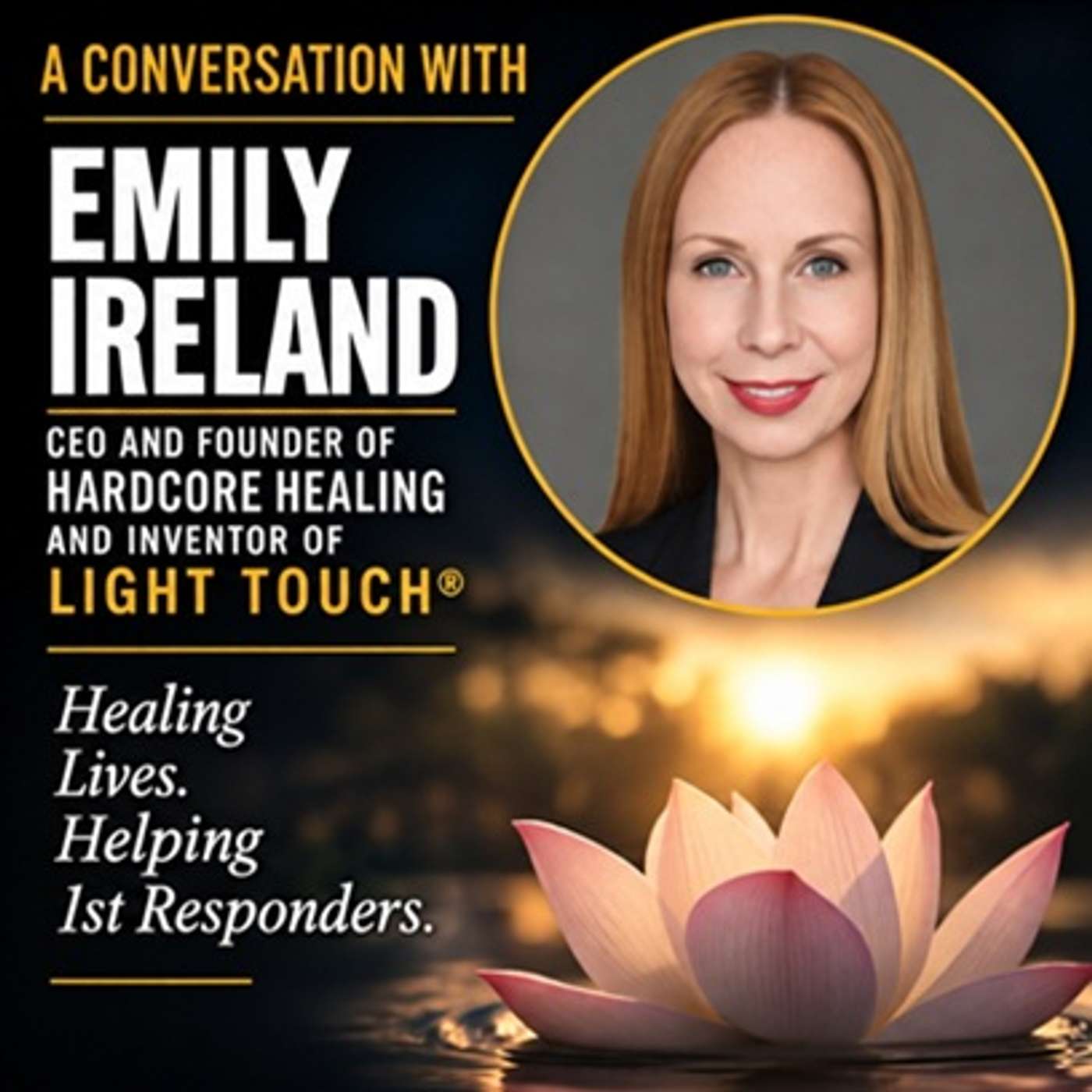
Police officers spend their careers responding to other people’s worst moments. But who helps them decompress when the call is over? On this episode of the National Police Association Podcast, host Sgt. Betsy Brantner Smith (Ret.) welcomes Emily Ireland, founder and CEO of Hardcore Healing and creator of LightTouch, for a conversation about first responder wellness, the demands of police work, and her personal commitment to supporting those who serve. Betsy reflects on the culture she entered as a young officer in the 1980s, when discussing trauma or seeking professional support was often discouraged. Together, she and Emily explore how that culture has changed and why officers need practical ways to address stress, disrupted sleep, and the emotional weight of the job. Emily shares how her background in functional movement and craniosacral therapy inspired LightTouch, an ear-worn device she describes as a nonmedical wellness tool. She discusses users’ reported experiences with calmness, focus, and restful sleep, along with her goal of complementing other wellness practices. The conversation centers on her approach and user testimonials, rather than established clinical findings. Listeners will also learn about Emily’s Hero Resilience Initiative and the family story behind her dedication to police officers, military personnel, and other first responders. Her grandfather, a Korean War veteran who lost a leg in combat, taught her lasting lessons about hardship, humor, love, and resilience. In this episode: How police culture has evolved from keeping trauma quiet to encouraging support. The physical and emotional demands of shift work, interrupted sleep, and repeated exposure to tragedy. Emily’s path from movement therapy to developing LightTouch. Her description of “relaxed alertness” and the experiences users have reported. Practical considerations for wearing an ear-mounted device, including equipment compatibility and officer safety. Why first responder wellness also involves spouses and families. How her grandfather’s experience shaped her mission to help those who protect others. The role of personal agency, clarity, and appropriate support in moving forward. Connect with Emily Ireland: https://www.linkedin.com/in/emily-ireland-02521275 https://www.mylighttouch.com https://www.instagram.com/my_light_touch
Betsy Smith: Hi, this is Sergeant Betsy Brantner Smith with the National Police Association, and this is the National Police Association Podcast. I have a guest today that I am so fascinated with. I just have to tell you, she absolutely is doing some amazing work, and she is doing it with such enthusiasm and optimism. And so I knew that you had to meet her. Emily Ireland, welcome to the show. Emily Ireland: Thank you so much for that wonderful warm intro, Betsy. I'm just delighted to be here. I'm so honored to meet you and to be able to discuss this important work. Thank you for having me. Betsy Smith: Yeah, you really are doing some amazing work. Now, you're first of all, CEO and founder of something called Hardcore Healing. Talk about what that is. Emily Ireland: So I called it Hardcore Healing because I started working with a high stress population and experiencing these very significant results through the device I created called LightTouch. And the people that were wearing this device, which came out of my craniosacral therapy work, they were not able to say a complete sentence. They were not regulated and just sort of having some problems. And what happened was, after forty minutes of wearing the light touch, they were reporting across the board the same results, which was, I feel like I didn't know how I'd get through this day. But right now I feel like I'm calm and clear, and I know exactly what I need to do today. And I'm actually looking forward to doing it. So this is a huge turnaround and when I saw this happening, I thought, well, this is really hardcore. So I thought, you know, we're going to have to bring this to our first responders, our heroes, and this is amazing what's happening. But I didn't think that I would be able to get into that population because I didn't really know anyone to talk to about it. However, when I discovered this huge wellness care movement within the police force and the first responders, I was so impressed and excited. So that's why you're probably hearing all that optimism coming not only from my clients who are wearing the device, but me. Betsy Smith: Well, and absolutely, and I'm so glad you brought that up because this is, and we talk about this often that my generation of police officers, I started in the early 80s. Basically we were told in the police academy, don't talk about it, don't take it home to your family. And the way that we dealt with any sort of stress or trauma or anything was, we went out and had a few beers, we talked to each other and then we didn't talk to our families about it. The idea of even talking to any kind of therapist was just verboten, you just didn't do that. And now forty years later, we've come to a place where we do now talk about different types of trauma that first responders deal with. But we're also fortunately talking about different methods of dealing with that because that's a whole other conversation. Because again, you can go back to the 90s when we started utilizing things like peer support and talk therapy. And those opened up some great doors and then they also opened up some can of worms. And then we started talking about psychotherapeutic drugs, things like that. And so now fortunately, think that we're at a place here, at least in The United States, where we are talking about more holistic things, both for first responders and just also for people in general. So that's where you come in because you're the, and I love saying this, you're the inventor of this device called LightTouch. And so I've gotta ask you that, are you like some kind of science nerd where you said I can come up with this thing that you wear on your ear and how did that Emily Ireland: That's so funny you say that because I was not good at science or so I thought in school as a child, but as I proceeded to do this more, what we were saying before Betsy was formerly fringe and is now a little more mainstreaming. So there's this tremendous opportunity, this window where we can apply holistic health healing. So I was, we called it, it's funny you asked because we called it nerdy Pilates when I started, I started, because I was like, we're the only people that are studying anatomy and you know, how the body works and physiology, you know, like, I don't think there are Pilates teachers that are doing this and we were training to become Pilates teachers. So it was a functional movement therapy Pilates, which is what I like to call nerdy Pilates. And we, you know, so I started training that way, started studying a lot, I studied how the body works and then when I went to craniosacral therapy training, I became probably even more nerdy, so to speak. And yeah, I started teaching my clients how to do this self help release, which was sort of a reboot for the nervous system. And I thought this is so easy, like it takes five seconds, like they'll do it really quickly. This will be great for them all day long, whenever they can't make it to see me or to see their other therapists or whatever they need. It's just something to help them get through the day. And they couldn't learn it because I'd been practicing it for so long. Of course, I thought it was easy, but it wasn't. It's hard for someone who is not, you know, this and practicing for a living. So I thought maybe there's something I can make for them that would emulate this and because it's, because to me it was so simple and easy and light, so I started making a device and it turned out that, you know, I had these reports coming back and I thought they were pretty astounding. So I decided to test it on a high stress population and I went to an outpatient clinic and I was working with people and that's where I got these testimonials. And I thought, have to bring this to our first responders, they're the ones that, you know, really could use this. And that's when I just started, you know, shifting my business plan, if you will, from only light touch, the device itself, to the Hero Resilience Initiative. And that's when I came up with that idea. So define high stress because, you know, especially now in today's day and Betsy Smith: age, ah, we're all stressed out, right? Everybody's stressed out and we live, in fact, when you talk to people, especially from other countries, you know, they look at Americans and they're like, you people are crazy, you know? You're working sixty hours a week and seven days a week, and you're also stressed out of your minds. And we don't always, you know, not just first responders, but just Americans in general. We don't always deal well with our stress. So first and foremost, define those first high stress people you were dealing with. What does that mean? Emily Ireland: Well, I'll give you a two part answer. So the first answer is about what you generalized, which is all true. We are all generally high stressed and there is a difference between, you Betsy Smith: know, Emily Ireland: like in the 80s, like it's a different kind of stress now, right? So there's other things we are not used to dealing with that we're having to integrate into our stress levels and actually try to decompress from those as well. So there's a little bit, if not more, at least different stress. So I think that this is really important for our evolution. As a species that has a nervous system that responds automatically without our willing it to, we don't, we can't always talk ourselves out of it or even, you know, visualizations and grounding and breath work are also effective. They all do help, but it's really great if you could have something enhance those things or just helps you automatically go into a reset or just stay calm and yet alert, like light touch brings a state of relaxed alertness, which is ideal for people who need to get the job done. And then this high stress population I was working with, you know, I'm able to sort of, I have to be careful that we're a non medical device. So I have to maintain compliance. I don't make medical claims. So, you know, but the people that I was working with had intense cravings. They had past negative experiences that they were dealing with and stress related behavior that was causing these specific issues for them, cravings, lack of focus. And they were also some of the people I were reporting enhanced restful sleep, which is huge, right? Because that's almost all of it, right? That if you can get a restful sleep and enough of it, you will change a lot about how you perceive and react within the world. Betsy Smith: Yeah, lack of sleep is one of the biggest issues for first responders, biggest mental issues, physiological issue, huge lack of sleep, go ahead. Emily Ireland: Yeah, so I think this can help for across the board, like in a number of ways. Because the way it works is through the nervous system. It's by balancing and it's self balancing. So it's not providing a stimulation. It's not causing anything. It's not to go into your brain or anything like that. It's actually relying on the body's innate energy, its own capacity to self balance. So in craniosacral therapy, if you were in a motor vehicle accident or had some kind of big fall or trauma, you know, there's so many things, right? That's really difficult to overcome, right? But when you go into alignment, it's really easy because your body already knows that. So that's how Craniosacral works. Believe it or not, I know it sounds counterintuitive, but the body knows where it needs to go. And we already have all the power inside of us. So all we need is to have this almost like a cue or a feedback and there's an energetic aspect and there's a myofascial aspect and a somato emotional aspect. So there are many layers that sound more complicated of craniosacral, but the basic mechanism is self balancing, so it's self correction. And that's what Doctor. Upledger called it, a self corrective mechanism. So that's how we are able to reset the whole system because the nervous system responds to all the systems of the body. In Western medicine we like to separate out like the cardiac rhythm from the respiratory rhythm and then there's the craniosacral rhythm. And these things are not separate, but they support each other, and so that's why the nervous system interacts with everything in the body, and that's why it's so effective to balance it. Betsy Smith: So how do you, well first of all, show everybody the device, because I want everybody to understand what this is, because when I first was reading all the research and stuff, I thought it was some big box or something you carried around. Emily Ireland: Oh, funny. So I styled it like an earbud so that people could wear it wherever they go whenever they want. And there's no stigma attached to wearing this either, so you don't have to be suffering to wear this. I'm wearing this all day when I do my work, cause it's enhancing my productivity. Sometimes I feel like I'm running like a computer and I'm like in a good mood and it blows me away because you know, I'm actually under some amount of stress. So you just turn it on and you put it around your ear, like I'll take out my earbuds so that you can see. You just put it around your ear and you just wear it like an earbud. You could wear it all day or you could wear it for an hour or so. Really people tend to know when they wanna wear it or not. And, yeah, so it's... It just goes on both ears. And it's really... I I tried to make it look simple and cool so that people could have it wherever, whenever they want. I hope it is having... I hope it's having that effect. Betsy Smith: So how does it, so you put these on, how does it work? What does it do here? Emily Ireland: Right, it sends a low signal, a very subtle signal to the temporal bones. It's actually so low you feel comfortable, you don't have any kind of, you know, discomfort while wearing it. And some people forget it's on, like they're just like, they just love wearing it all day. And it just, when we're working with the temple bones, the bones of the, the bones that house the ears, those are the same bones that house the cranium the way that the hip bones house the pelvis. So the temple bones and the hip bones, craniosacral, right? And so this is the whole system. Now what's in between the cranial bones, the head and the tail? The spine, that's your nervous system. So when you're balancing one end or the other, you're affecting great change on the opposite end and that's why craniosacral is holistic in a one shot technique because we're working with the whole body automatically as soon as we put our hands on it. So when we balance the temporal bones, we send a signal through the nervous system to rebalance everything And it has this effect. By design, craniosacral is made to balance the nervous system. It's also made for other things, but in this device, I'm only working with nervous system rebalance. Betsy Smith: So for police officers, you know, our physiology changes the minute that we get out of the police academy and get on the job. And we frankly really abuse, we abuse our bodies. We eat junk food, we're working weird shifts, we're wearing equipment on our bodies that is not natural or normal in any way. We're in and out of vehicles, things like that. We sit a lot, and then we go into explosive movement. So that's the physical aspects. Then the mental aspects of course are just a constant. We see as they say the average police officer sees more trauma and tragedy in the first two years of their career than most people see in a lifetime. We're dealing with all the mental and emotional aspects of that. So and again like you said you know lack of sleep things like that. So what is the device how does it help with all that is the first part of my question. The second is I want you to talk about the Hero Resilience Initiative and how that came to be. So that's two really big questions. Emily Ireland: Okay, great. Thank you so much, Betsy. Well, you definitely aren't gonna wear it if you're wearing headgear, right? But you can wear it sitting in the car, or you can wear it before and after shifts, before and after a call. Well, after a call, right, would be when you know that that's time to decompress. And that would be ideal. Also the spouses and the families could really benefit because they're stressed while you're out. So I think that it's more about the off times wearing it during those times and then when times when you know that you don't need to like jump out in full gear because you're not gonna wanna, I mean there's definitely you know, you don't want to risk like you know, tearing, just tearing it off your ear so it's Betsy Smith: Right, having somebody tear it out of your ear. Emily Ireland: Right, like, let's, we're, I'm here to help you de risk, like not So increased yeah, whenever it's convenient for you, really, that's the idea. And I think that and so the Healing Resilience Initiative came about when I saw immediately what's happening with people and I said, well, I'm gonna need to make this into something more important and special, something bigger. It's not that I don't, you know, want to do light touch for everybody, everybody else. It's just that I feel very strongly about this one particular population, the warriors and the first responders, so all of our heroes. I do have a very special place in my heart for this population who risks their own lives and for others and I feel like they deserve this and they should have, you know, as as there's, as much trouble as you are experiencing, I am finding the people that I'm speaking to in the wellness care world for first responders, I'm finding that they know exactly how to start helping each other and themselves. I feel like they know exactly what they need to do, and I'm really impressed by that. So I think this is going to help enhance a lot of those other therapies and techniques that are out there. Betsy Smith: I have to ask you, it's kind of a personal question, but Emily Ireland: a lot Betsy Smith: of people don't really everybody loves the firefighters, but a lot of people don't really have everybody loves the fire guys, right? But not everyone has a heart for police and military. Where does that come from? Emily Ireland: Isn't that funny? It's very ironic because I am not the type of person, I mean, I don't even look like I could, you know, be around those people, you know, like I'm just look very small, I'm a very small woman and I, you know, I'm a little girly, so it's just not, it doesn't seem, but I'm a little fiery, I'm a warrior inside, I'm a warrior healer. So not the same type of warrior, but I definitely have experience of, passed down to me. I feel like my family was torn in many ways. My grandfather was my first lesson in resilience. He was a Korean war hero. Betsy Smith: Like my dad, yeah. Emily Ireland: Oh, really? Oh, wow. That's so cool. Yeah, he was written up, I didn't know this, we found out later that he really was a hero, like he was written about in a book and everything, and we didn't, he never spoke of it, right? His leg was blown off and yeah, he had a, you know, back then when your, if your leg is blown off, it's not like, you know, we have so much more respect and accommodations and non judgment for people who go through life with these traumas, right? So back then, that was very hard for him. He was alpha male, you know, very felt very responsible and felt and he was a good man and he had such a sense of humor. I mean, he taught me, I was such a little girl and he would teach me like how to fish and play chess and he would make me laugh, you know, kind of the way, you know how Bill Murray makes makes you laugh without doing anything, like he's so ironic, like that, he was just really smart and really funny. And I just, you know, later growing up, how would I have known as a child what he'd been through, I couldn't possibly, and of course, you know, years and years later, I read his story and that really made an impression on me. Like, to know him in life and to know how he was despite, or maybe even partly because of all that, like he really, I think he came to this point where he just was able to let it go and be like, it's all about love. I just think that that is so phenomenal. Like that was a very, that that was a big impact on me. Betsy Smith: Love that because that is that generation. And and that generation came back from the Korean War, and and they got on with life. But you know they all had undoubtedly and I saw this with my dad so much inside that you know, like your grandfather, you know, came out really in a positive way. Emily Ireland: And he was tormented, don't get me wrong. So I came along as a grandchild, right? So this is different to be a grandparent than a parent, but he had a lot of, there was a lot of problems. So I think he worked through them though is my point because, you know, he felt when he became a father that he was finally useful again. I think that he felt useless. I think he felt just completely destroyed because his body was blown apart. And I think he worked through over his entire lifetime. So don't get me wrong, he definitely had some issues coming back and that was my lesson because by the time I was born, I saw love and light in him. Betsy Smith: See So and and you know now that's you know your what will be your legacy is part of his legacy which I just think is extraordinary. And so where do you see as your legacy? What's the future of light touch and what's the future of Hardcore Healing and all these initiatives that you are pushing forward with? Emily Ireland: Thank you so much for asking that. I see that we can bring this because the device is so easy to carry around. Anyone can put it in their pocket, anyone can wear it anytime they want. It's so easy to have and it's so effective. It's subtle, it's comfortable and what I see is that we can bring this to so many people. I'm thinking millions of people should be wearing this, why not? It's helping a lot of people that, you know, there's over ninety percent of our testers and users are reporting these positive effects and calmness, focus, relaxation, enhanced stressful sleep, optimism. And I think that that's really important. I think it helps people change their lives. They change their own lives around when they're feeling more clear, mental clarity, right? So making wiser decisions and better choices, even under duress. And when I saw what was happening with people, I, you know, I have an example of one person who was having a hard time getting through the day. And the first thing he did after, first of all, he wore light touch all the time, like every day. I was like, oh, I thought you don't have wear it all day long, but he wouldn't take it off, he loved it. So I'm like, okay, well that's fine too because I did all these testing, people wear like forty minutes to six hours, you know, whatever is comfortable for you. But what he did, the first thing he did was he found a better therapist. He wasn't having the support he needed. He changed his entire life around and now he's been supported in who he is and what he needs to work on rather than feeling wrong and bad all the time. So that was the most impressive change to me. Everyone else reported similar circumstances across the board in enhancing their sleep and feeling motivated and optimistic and improved task initiation and all of these things. But when someone made a life change, and I have a few of those people, it's because of how they responded. It's not because of what I did, it's because of what they did. So enhancing mental clarity is everything. You don't have to, that's, I mean, that's another reason why light touch is gonna be so good for our officers because they know what they need to do. They'll take it and use it, and they'll do it... I I have full faith they'll do it all in the right way when they can have the mental clarity that helps support them. Betsy Smith: I think that's so important because, you know, especially cops, we're control freaks. And we like to think if I'm gonna do something to help myself, it's gonna be my idea. And that's exactly what you're helping people work toward. And that is the true picture of resilience that you're doing it yourself with a little bit of help. Emily Ireland, where can people find you? Find out more about what you're doing, keep in touch with you, get in touch with you, tell us everything. Emily Ireland: Thank you so much. My website is mylighttouch.com, and you can email me at emilymylighttouch dot com. You can find me on LinkedIn, Emily Ireland with Hardcore Healing Inc. And I'm also on Instagram, mylighttouch. Betsy Smith: Fantastic. Well, tell you what, I can't thank you enough for what you're doing for our law enforcement heroes. I can't thank And Thank you Emily Ireland: you for what you're doing. Betsy Smith: Oh, thank... Absolutely. And I can't thank you enough for spending time with us today. And if you'd like more information about the National Police Association, you can visit us at nationalpolice.org. NPA: Every day, the brave men and women of law enforcement put their lives on the line to keep us safe, but they need our help to continue their mission. Activist politicians, progressive prosecutors, the ACLU, and the rest of the anti police forces receive millions in donations from extremist pro criminal elements like George Soros and woke corporations. The National Police Association is fighting them in courts around the country, including the United States Supreme Court, defending officers who are being attacked for doing their jobs. Additionally, the National Police Association works year round to pass tough on crime legislation to put and keep criminals behind bars. Consider going to nationalpolice.org and donating to keep us in the fight. Together, we can win. That is nationalpolice.org.