
National Police Association Podcast · NationalPolice.org
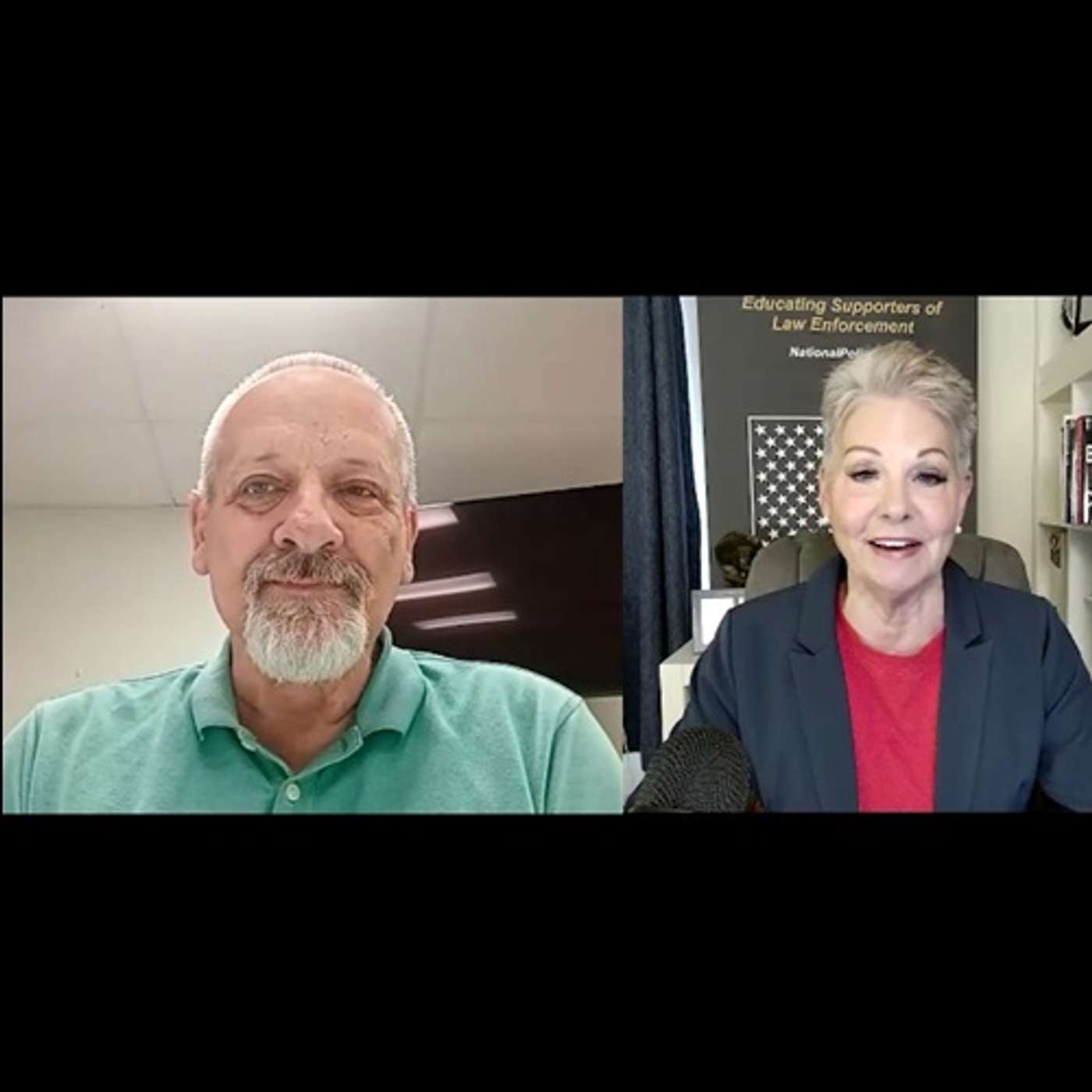
What happens when a police detective becomes an author, crime commentator, and stand-up comedian? Steven Lampley joins Sgt. Betsy Brantner Smith on the National Police Association Podcast for a conversation about unexpected career turns, the demands of police work, and why supporting officers begins with supporting their families. A veteran of 21 years in law enforcement, Lampley shares his unconventional path from the Army to banking and real estate appraisal before answering the call to police work. He also recounts a chilling realization: a quiet fellow soldier he encountered during Army medical training was Jeffrey Dahmer—a connection Lampley says he recognized only years later. The conversation follows Lampley’s move into writing and broadcasting, including how his short book, How to Catch a Liar, opened the door to radio appearances and crime commentary. He explains why his focus eventually shifted from criminal cases to helping police officers, their families, and department leaders. At the heart of the episode is a message drawn from personal experience: the entire family lives with the demands of a law enforcement career. Lampley discusses how stress, withdrawal, and unspoken frustrations can create misunderstandings at home, and why academies and departments should prepare families for those challenges from the beginning. In this episode: · An unexpected road to policing: How a downturn in appraisal work prompted Lampley to pursue a longtime interest in law enforcement. · A surprising connection to Jeffrey Dahmer: His recollections of their time at Fort Sam Houston. · From detective to published author: How self-publishing led to interviews and a recurring radio segment. · The family behind the officer: Why communication and understanding matter when the pressures of the job come home. · Family support and officer retention: How preparing spouses and families may help departments keep experienced personnel. · Lessons from academy “family night”: Bringing families together with chaplains and academy staff to discuss stress, home life, and firearm safety. · Finding a new audience through comedy: His first open-mic experience, homemade souvenir T-shirts, and plans for another chapter after police work. Lampley speaks from lived experience, emphasizing that his family-focused work comes from his career and personal life. His guiding priority is straightforward: “Family first.” Learn more: https://www.stevendavidlampley.com https://www.amazon.com/stores/Steven-David-Lampley/author/B072F5JYYP https://www.linkedin.com/in/stevenlampley https://www.facebook.com/StevenDavidLampleyPage
Betsy Smith: Hi. This is sergeant Betsy Brantner Smith with the National Police Association, and this is the National Police Association Pod Podcast. I have a guest today. This guy's got so many like titles and he just has some wild experiences. And when I kind of discovered him, if you will, I thought wow this is a guy that y'all need to meet. Mean he is he's a cop and he's an author and he's a criminologist he's a media guy he's a comedian he's funny so I thought I gotta bring him on. So Steven Lampley, welcome to the show. Steven Lampley: It's great to be here, and thank you for having me on. Betsy Smith: Absolutely. So, of course, I have to first ask you, why'd you become a cop? Steven Lampley: I don't know. No, I do know. I do know, actually. I'll give you the Reader's Digest version of all this. I was in the army, got out, did a stint in some medical stuff, and decided I wanted to be a banker. So, I was one. I went to work at a bank. Got hired and got hired in a nice position. I had my own office, my own secretary. I had the corporate plant in the corner and the corporate coat hall tree. I had all the stuff, you know. And I realized that bankers don't make any money. They handle everybody else's money, but it was like it goes from here to there, and we don't ever get to keep any of that. So I... They... The bank sent me to real estate appraisal school, and I found out I could make more money working my lunch hour at the bank in the afternoons than the bank was paying me, like, hands down much more. I'm like, Steve, if I could do this full time, what are the odds? You know? Excuse me. So I did that. I went to work in another city. It was booming, making really good money, hand over fist. And then I think it was... No. No. December '87 hit, and the stock market went... And we would... We were five of us appraisers in one office. And at any one time, there were 100 appraisals to do. We went from 100 in a week to, like, three. I'm like, well... And this was performance based performance based job. There was no money if we didn't work. So I said, okay, Steve. What have you always wanted to do? Was this time for a change? And, I thought, you know, you've always kinda wanted to be a police officer. Let's just give that a try. So I did. And that's how a logical progression from banking to police work. Betsy Smith: So you become a cop and and you had you had a really terrific career and you eventually became a detective and and so but first I gotta bring this up before you became a police officer you knew somebody who would become one of the most infamous serial killers in the country right? Talk about that. Steven Lampley: We besties or anything, thank God. Betsy Smith: But it is a fascinating story and I was a young cop when that was all going on. Talk about how you knew Jeffrey Dahmer. Steven Lampley: Well... And I didn't know I knew him, to be honest about it. He he was one of the guys. Long after he was in jail, in prison, and I don't know if it was before or after he was murdered in prison. But I joined the army with my best friend through the buddy program. I wasn't real sure I wanted to do that. He wasn't real sure he wanted to do it. So we did it together. It's like, okay, let's do this. And we were at Fort Sam Houston where the medical training facility is medical based. And how do I say this? The army is not like college. You don't take math, English, PE. When you study a topic, that's all you do. It's immersive. And by the end of the week, we were so sick of anatomy and physiology and syringes and it was where our brains were fried. So we would go to the NCO club and they would have these little round table. And we would put a bunch of them together, like, kind of make one big table. And there was always this guy that was... He wasn't part of our group necessarily. He was like a... I think a group behind us if I remember right. But he was part of the training listed under the group. We would all gather around. He had aviator, eyeglasses, sandy blonde hair. He's real quiet. He was spoken. We were spoken to. And I said years later, my best friend says, hey, remember that guy that used to sit across from us at the mess hall? And I didn't really remember that. But when he when he reminded me, yes, yeah, that's the same guy that was at the NCO club. He said, He said, do you know who that was? I said, well, I probably did, you know, when we were there, but no. I don't. Now there was this pause at the end of the phone. He says, that was Jeffrey Donner. And I remember leaning back in my seat thinking, I said some words. I won't repeat here. I'm like, you know? Betsy Smith: You might Steven Lampley: be I'm stammering and putting the yeah, that might. Are you sure? Anyway, I did some research and sure enough, he was there at the same time. I got his records and he was there. So, yeah, we didn't go off anywhere with him. Thank goodness for that. But, yeah, he had already murdered one person, Steven Hicks, I believe it was. But we didn't. He was one of the guys. He was polite, mannerly, quiet. No indication whatsoever. Betsy Smith: Yeah. Which is what we always hear, right, about serial killers and this. They were quiet. They were this. They were that. So anyway, let's go back to your police career. So you end up getting involved in media. You start writing, you've written books, you've written for Psychology Today, and then you started doing media hits, media interviews about various cases and things. How does all that progress? Because let me just say this and you know this too, but I don't know that the audience says. There's people are always asking in the law enforcement profession, know, how do I do that? How do I go from being a cop or a detective or whatever to getting involved in media? How did it happen for you? Steven Lampley: Write a book. Flatten down, write a book. Write a book and let a couple people know it'll blow up like... It'll blow up big time. Yeah. I I had no... This was about a goal of mine. This is not... I'm gonna write a book and la la la la la. No. Had some friends of mine who knew I had been involved in some rather high profile cases during my police career, and they kept asking me. Steven, you to write a book. You need to write a book. No. I'm not writing a book. Shut up. No. No. And then a month later, Steve, I said, shut up and I'm not. It's not happening. It's an all set here. It is not going to take place. And finally, I just told him to look, just be quiet. I'll write the book. Just be quiet. It took me about a year. And I was getting ready to find me an agent if I could find one to to handle, you know, the publishing and the marketing and all. And I have another friend who is also an author. And we were talking. He said, where'd you get your book finished? I said, yes. I did and I'm in the beginning stages of trying to find a an agent. And he's just like, no, no, no, no, no, no, no, do not do that. And so I I self published. And what what I actually did rather than publish the book, I spent a year writing. I didn't want to mess it up if I did it wrong. So I thought, well, I need to write another book just like a sacrificial book to throw out there and just see what happens. And so I I wrote a book. I thought, how to catch a liar? That's been a pretty interesting topic. It was, like, 70 pages. It was just real brief. Betsy Smith: Accurate. I read it. Steven Lampley: It's a good accurate, and it... But I thought, you know, I'm just gonna throw it out there. Just just test and test the the self publishing thing and see how it goes. Well, it took off. I'm like, oh, this is good. I like this. This is really good. And then I got a call. The first call I received was from a producer at KK and W up in, Seattle, I think it was. He said, we'd like to have you on as a guest to talk about your book. Okay. I'm not one real wild about it. I said, okay. We'll we'll do that. So, the interview went really well. I was I was quite pleased with it and that was that was like like an hour or maybe forty five minutes. I don't know. But it went well. About a month, maybe two later, I get a phone call from the same producer. He says, Steve, the interview went really well. He said, we would like to offer you a ten minute segment every Friday to talk about whatever you wanna talk about. Crime related, of course. And I'm like, initially, I'm like, no. I'm not really into that. And I'm thinking, woah. Wait a minute, Steve. That's a way that maybe that that's a way to promo your book. Maybe they'll let you promo the book. So I said, can I promote my book? And he said, well, certainly. I said, I'm in. So, what I did for that ten minutes was I I took a topic, a very brief topic, and taught that topic for ten minutes. Unbeknownst to me, one of my listeners was Nancy Grace. I did not know that till he had her on and said he was telling her about me. She says, oh, I know. I've listened. He has all this forensic knowledge. And, anyway, it just went from there for one interview to another to another. And ironically, the book that I spent maybe maybe a month if we stretch it. Working on, sold much better than the one I worked on for about a year. Betsy Smith: Which you eventually got that published too. Right? Steven Lampley: I did. Yes, sir. Yeah. I followed suit and self published it as well. Since then, all of my books have been self published, and I've been very pleased with every one of them. Betsy Smith: What do you like to write about? You know, is it fiction, nonfiction? What are your books about? Steven Lampley: I've always I've always had the desire to write to write the rate... The the great novel. I can't talk. I started out writing true crime forensics, criminology stuff, And I... I've... I'll be honest. I've gotten burned out just like I did when I retired. It was time... You know, you know when it's time. You can tell. Mhmm. Okay. It's it's probably time now that I that I changed courses, and I have written the last couple of books, I guess, I have written have been similar but they've not they've not been about police cases or cases that I've worked or I'm working on. They're more attuned to police families, police chiefs, retention, family, how how to deal with the police officer in your family, that that sort of thing. Well, it it's different but it's kind of in the same ballpark. Betsy Smith: Well, and that's the things... And that's one of the things that I was fascinated with about you is that you really... Because you're you're a speaker as well. And and you... One of your goals is to not just try and help that new police officer, that new police recruit, but also to involve and help their families. Right? Steven Lampley: Sure. Most certainly. Because the the police officer... I feel very strongly about this. I... I'm I'm a product of of twenty one years of law enforcement and two divorces. So I feel very strongly about this. Most police officers handled it okay. I say okay because I don't know anybody handles it perfectly or handles it well. When you... When a... When there's a police officer in the family, let's just... I'm just using the example of the husband. When when there's a husband in the family that's a police officer, he's not the only one. The whole family is a police officer. The whole family is part of that. Whether they wanna be or if they don't, they're part of that environment. When the when the husband again, I'm... That's just the example I'm using. When the husband comes home, he may be quiet. He may be irritated. Not at the family, but the family doesn't always know that. And the police officer may not know how to express that, how to get that out. And and the family's confused because they think they've done something wrong. You know, the husband or the wife goes to the husband or the kid's dad, what's been done wrong? And he's like, nothing's wrong. Just, you know, blah blah blah blah. And then he explodes and it just turns into a big situation and it didn't have... Doesn't have to. Betsy Smith: Well and you you know this you know back when I started I started in the very early 80s no one talked to you about any any kind of mental health issues that you might develop over the years or decades and in fact in my generation was told don't talk about it, don't take it home, don't talk to your family about it, shut up And, and you've seen that progression, over the decades, right, not just with your own career but in what you're doing now. Steven Lampley: Yeah. And not not... And I don't mean to I don't mean to discount the families, but that's that's that's more important than the second part of why I'm doing this. Far more important is the... Are the... Is the police officer and his or her family. But the second part of that as well is officer retention as far as the police department because this is kind of a two part deal. If you've got an officer that isn't handling it well at home, he may be looking... You know, I've I've gotta... I can't do this anymore. It's tearing my family apart. So they'll leave the police department. And the family life is better, which is awesome. But then it kinda leaves a void with the police department. The first five years, typically. And that's the most expensive time to lose an officer. So, yeah, it's a two part story. Most importantly, and I can't emphasize that enough, is the police officer and the family. That's... That is the most important. If they need to leave, if that's the only thing... Only option to have, by all means, leave. There's gonna be some police chiefs not gonna like that. But I just said, but I'm always I've always been family first, period. No matter what it is. Family first. But yeah. So, it was a two edge, the two edge sword so to speak is that I want to try to bring the families to understand that I'm not a psychologist. Let me say that. I'm not a psychologist. I'm not a psychiatrist and I'm not even a licensed counselor. I've just been there. I've seen it. I've lived it. So that's what I bring is the experience and knowing what works and what doesn't in the real world environment. Betsy Smith: Well, and we're seeing now today, again, you can go back to when I started, when you started, you might apply for a police department with a thousand other people. So there was no shortage of police applicants. Now, really, starting since 2014, but especially since 2020, you know, retention of young police officers has become wildly important, hasn't it? Steven Lampley: Yes, it has. I know when when I started to close the same time you did. We we started... We we had the largest academy class ever at that time with 72 officers starting out. First day, well, we went down to 55 after the PT, all day PT. But we retained... And then this is the difference, I think. We retained most of those officers, which is different. But different from the the class you were talking about, we did receive. We... It was called family night where we went ahead. It was required. There was no excuses. You had to be there. We had the police chaplain, the academy staff, and they talked about family life. They actually did, and then they talked about how to deal with certain situations. We talked about weapons at home. We talked about stress. We talked about what happens on the street. And I think that's part of why we retained most of our academy class. Betsy Smith: Yeah. Absolutely. That... And that's something you're carrying forward now in retirement. Right? Steven Lampley: Oh, yeah. I'm trying. I'm doing my best too. Because a lot of police departments, a lot of police academies should, but they don't. They don't they don't cover that. I don't know if they don't see it as important. I don't... Maybe if they think it's a time issue, they don't have enough time. Make time. Make time. But it's it's that important. And it does have an impact on the families. It does have an impact on officer retention. It does. Betsy Smith: Yeah. Absolutely. So so as you're moving through this... These second career, third career, you know, all this thing, you know, writing and and speaking and all of that, you're dipping your toe into something else, right, called comedy Steven Lampley: how do Betsy Smith: you go from uh-uh you know being a cop in a large urban center being a detective seeing all these bad things writing about people who lie this and that doing media, and now we're gonna be funny? What's that about? Steven Lampley: Well, actually, I started this back before I retired. I was... And I don't know why. Just just popped in my brain. We were searching for an individual who had gotten out and and run on the traffic stop. Well, it turns out we were all heading to the woods and I told I told my chief. I said, look, ain't no sense. We, all of us don't need to be. I'm gonna stay here and keep it safe with the car. Some of us needs, somebody needs to stay here with this car. So, I stayed with the car. I got in my car in the air conditioning. I'm not I'm not stupid. I get in the car with the air conditioning while they're out in the hot sun. And I'm just sitting there like, okay. And I'm thinking, you know, the thought of being a stand up comedian. Don't know why. I don't where it came from. You know, I don't know if it's a... I don't know. But I thought, nah. And I went back and forth. Yeah. Well, that would... No. It would be kinda cool having a job where your whole work, your whole tools are up here, you know? Nah. And I went back and forth. Finally, decided, well, I'm gonna try it. It doesn't hurt. So I contacted the Stardome, which is pretty reputable comedy club in Birmingham, Hoover. And they said, yeah. Well, you know, when can you... When you wanna do it? Blah blah blah. I scheduled it. And I... You'd think I was nervous in the police academy? No, sister. No. No. No. So nervous as and it was open mic. You know, had what? Four minutes, I think. I had worked. I had worked, and I had worked on this material. I had been in front of a mirror. I was sick of seeing myself, and I had worked and I really, really worked at this. And I was devastated when the guy before me bombed. He didn't even get a chuckle. I'm like, I'm so screwed. I am so screwed. You know? But, you know, it it went really well. I was shocked when they laughed. I really was. I was like, they laughed. I'm thinking this. They laughed. They're laughing. Betsy Smith: There's something very personal about people laughing or not laughing. Steven Lampley: Yeah. It's a Betsy Smith: very visceral thing. Steven Lampley: So it ended, and I got applause. We got ready to leave. Well, as a matter of fact, I had I had gone a little extra. I had gone to Walmart and bought some really cheap white T shirts, really cheap ones. And I had taken a black marker. I had taken cardboard and made a cutout, stuck it between the front and back of the T shirt, and drew a likeness of my face with glasses. And Steven at the top, a Lampley at the bottom. That's... It was very... It was Barker. You know? And I took them. I had, 10 of them. They came in a pack of 10. They were cheaper by 10. And I threw them out in the audience. They were all the same size, two x. Think I was thrown out in the audience. And they were actually people standing up trying to grab these stupid things. And I'm like, okay. This is this is different. This is not this is not writing a ticket. This is not arresting people who are cussing you. This is not trying to quell a domestic dispute where neither neither side wants it quelled. This is nice. And so I was married to my second wife at the time. We're we're about to leave the club, and she's she's violently shaking my right arm. I said, what? What was it? What? I thought I thought there was a fight. It's one of my first thought. And she said, look. Look. And there's three women standing over there holding my T shirt up, take... Having their picture made. And I just stood there like, do y'all not have anything else better to do? That's what I thought. So, anyway, they asked me to come back, and I thought nothing of it. I did it in any way about about two years ago. I thought, let's try that again. I went to the comedy catch in Chattanooga. Did a different set. They laughed. I'm like, they laughed again. And they asked me to come back. And I didn't go. Anyway, long story short. I talked to a a real comedian here about a year ago when I was talking to him. He's he's he's a well known comedian. And I was telling him my experience at the Stardome at the Comedy Catch and they had asked me to come back. And he said, well, did you? I said, no. And his word was, Steven, why? I said, well, they tell that to everybody. He says, no, they do not. Especially the stardom. If they told you to come back, you you need to get back. So, anyway, so I thought, you know, I'm retired now. No more crime books. Let's give it another shot. So, I've written a completely different set. Not related to the other two were related to law enforcement. This one is completely removed from law enforcement. I have run it by a few folks. They think it's great. It has been suggested that this set is coupled with a product launch, which is really weird. So, yeah, we're gonna give a shot and see what happens. Betsy Smith: So where... I mean, you know, again, you know, you've got, you know, books, articles, media stuff. You got comedy, and you got more stuff coming in the future. Where can people find you and catch up with you and follow you? Steven Lampley: The only... Well, I've got I've I've got a Facebook page, but probably the best place is to go to my website, dub dub dub Steven David Lampley. That's Steven with a z lamp like the lamp and l e y. Just, it's it's... That website is all centered, to helping police officers and and police chiefs, But there's some changes coming to that, but they can find me there. Betsy Smith: Perfect. Well, I want everybody to get on there, follow you, and keep up with what you're doing. And we can't thank you enough for spending time with us today. And And if you'd like more information about the National Police Association, you can visit us at nationalpolice.org. NPA: Every day, the brave men and women of law enforcement put their lives on the line to keep us safe, But they need our help to continue their mission. Activist politicians, progressive prosecutors, the ACLU, and the rest of the anti police forces receive millions in donations from extremist pro criminal elements like George Soros and woke corporations. The National Police Association is fighting them in courts around the country, including the United States Supreme Court, defending officers who are being attacked for doing their jobs. Additionally, the National Police Association works year round to pass tough on crime legislation to put and keep criminals behind bars. Consider going to nationalpolice.org and donating to keep us in the fight. Together, we can win. That is nationalpolice.org.